
Before You Buy: What “Super Clone” Really Means (and Doesn’t)
You’re Not Buying a Normal Online Product
If this is your first time trying to buy super clone watches safely, this page is written for you. Not to sell you something quickly, but to show you what actually happens in this grey market before money leaves your pocket.
Picture how this usually starts.
It’s late, you’re scrolling Reddit or YouTube or TikTok. A video pops up: “1:1 super clone from China, looks exactly like the real thing.” The lighting is perfect, the wrist shots look clean, and for a moment you feel like, “Why am I still just looking?”
That’s the moment you need to slow down.
Buying a super clone watch is not like buying from Amazon. There is no easy return label, no clear warranty, and very limited protection if something goes wrong. You are sending money to a stranger, often in another country, for a product that sits in a legal grey zone.
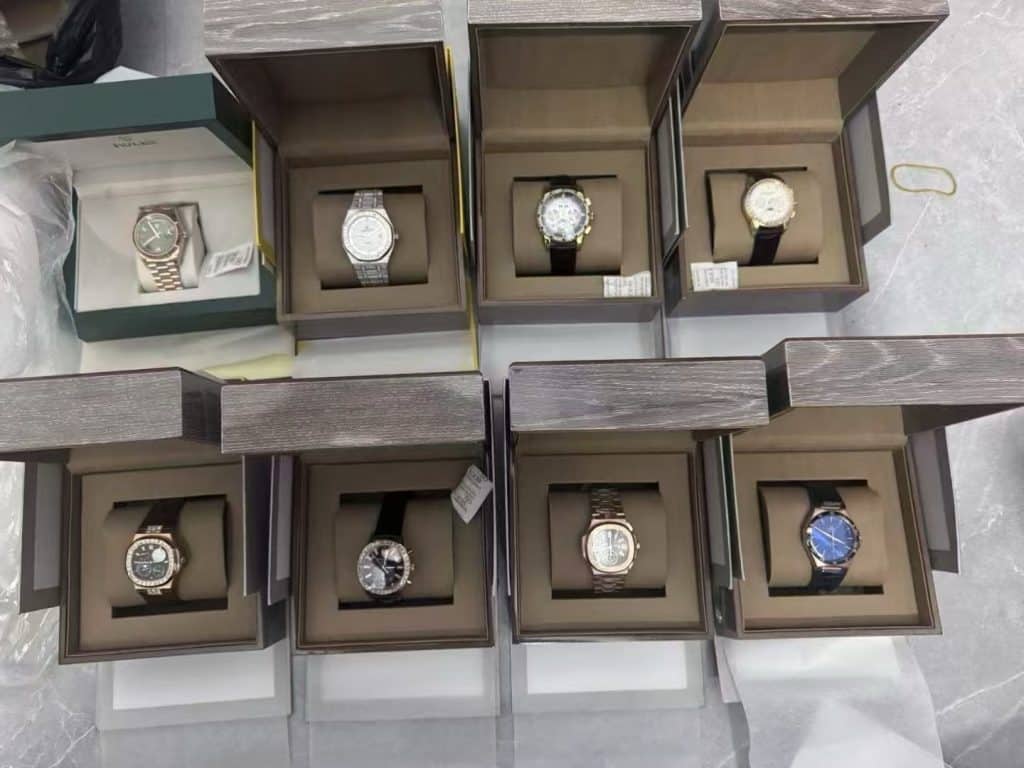
You’re not just paying for metal and a movement. You’re also accepting uncertainty. Shipping can be messy. Customs can be strict. After-sales support can be good, bad, or completely missing. A super clone watch might look smooth on your screen, but the process behind it is rarely smooth.
If you understand this and still feel comfortable, you are already ahead of many first-time buyers. If you expect a simple “click, pay, forget” experience, you will probably be disappointed.
“Super Clone” Is a Marketing Word, Not a Legal Promise
Let’s be honest about the language.
Words like “super clone”, “1:1”, “AAAA++ grade” sound very technical, but they are not standards. There is no international body that checks these labels. Most of the time, they are invented in the market and repeated in ads until everyone assumes they mean something fixed.
A personal rule I use is simple:
If a word only exists in sellers’ ads, don’t treat it like a contract.
When a seller says “super clone,” you still have to ask: Which factory? Which version? What movement? What has actually improved compared to a normal clone? Without those details, “super clone” is just a nice sticker on the box. There is another layer people prefer not to talk about. Super clone Rolex, AP or Cartier pieces sit in an intellectual property grey area. The designs, logos and brand names are protected in many countries. That means laws, customs and platforms may treat these watches differently from normal products. I am not here to lecture you, but I am not going to pretend this part doesn’t exist.
You need to decide how comfortable you are with this. Some buyers accept the risk and keep their watches quiet. Others step back once they understand the legal side. Both reactions are normal. What is dangerous is pretending there is no risk at all.
What a Realistic Super Clone Can and Cannot Do
Now the practical part: what can you reasonably expect from a good super clone?
A solid piece from a known factory – whether it is VSF, something in the old Clean style, or another serious maker – can look very convincing on the wrist. In most social situations, people will not question it. From a distance, a super clone Rolex will pass casual checks easily. Up close, under good light, the differences start to appear: printing, rehaut, case shape, hands, brushing, tiny things that real watch nerds live for. Most high-grade super clones are fine for daily wear if you treat them with some respect. The movement can keep decent time. The rotor may be a bit louder. The power reserve may not match a brand brochure. If you expect “Rolex service center performance,” you are setting yourself up for frustration. This is still a mass-modified movement, not a factory-supported calibre with global service.
Water resistance, durability and after-sales support are where expectations often break. Some watches survive swimming. Some die in the first heavy rain. Some sellers help when a problem appears. Some disappear. The watch in your hand might be good, but the system behind it is still fragile.
So here is the honest version:
A super clone can give you a lot of look and a lot of fun for the money. It cannot give you the same safety net, long-term value or peace of mind as a genuine piece from an authorised dealer. If you walk in with that expectation, you will probably enjoy the watch. If you ignore it, you will probably feel cheated, even if the watch itself is not terrible.
Where People Actually Buy Super Clone Watches Today
Social Media Sellers, DMs and “Factory Direct” Live Streams
Most mistakes happen because people rush to buy super clone watches before they learn how to buy super clone watches safely. Spotting the red flags first will save you more money than any “special factory discount.”For many people, the first “factory direct super clone” does not appear in a shop. It appears in a short video. Someone flashes a watch under bright lights, shouts prices into the camera, and the comments are full of “DM me for factory price” and “last batch tonight”. Within seconds, your inbox has a message: “Brother, factory direct, best deal, trust me.” It feels simple. No website, no forms, just one person talking to you. But you know almost nothing about who that person is, where they work, or how long they have been around. If something goes wrong, the only “customer service” you have is a chat history and a profile picture that can disappear overnight.
My view is blunt:
If someone is shouting “factory direct” at scale, you’re usually seeing the loudest reseller, not the real factory.
The upside of social media replica watch sellers is speed and convenience. The downside is that your protection is close to zero. If you choose this route, you have to slow yourself down: don’t rush because of “today only” prices, don’t send money just because a video looks sharp, and don’t confuse confidence on camera with real responsibility.
Forums, Reddit and Niche Watch Communities
The second route is slower, but usually smarter.
On forums, Reddit threads and niche watch communities, you will see long discussions about “trusted dealers”, factory comparisons, and also “disaster stories”. Nothing is officially guaranteed here either, but you can see time and history.
You can check:
- Does this seller’s name show up for years, or only in one excited post?
- Are there only “perfect first impressions”, or also honest reports about issues and how they were handled?
- When something goes wrong, does the community say “it happens, but he fixed it” or “he blocked me and disappeared”?
The best use of these communities is not to grab the first name on a list and send money. It is to watch patterns. Look at after-sales stories, not just unboxing photos. Follow a few usernames for months, not minutes. When you do that, you start to see who treats this as a long-term job and who is just flipping quick deals.
Forums and Reddit will not make your purchase safe by themselves. But they give you a wider view than any single seller ever will.
Independent Websites and “Boutique-Style” Online Shops
The third route is what I would call the “boutique” or independent website path.
Instead of only selling through DMs, some sellers build a site, write guides, publish comparisons, and slowly show how they think about this grey market. You are reading one of those pages right now.
A good independent site should answer a few questions before you even talk to anyone:
- Do they publish long-form content, or just “Buy Now” buttons?
If a site only says “perfect quality, fast shipping” and nothing about risks, problems or limits, it is either very new or not very honest. - Can you see who is behind the site and how to reach them?
Clear contact details, consistent names and a bit of history matter more than glossy banners. - Do they explain how they handle issues, not just how they take orders?
Serious sellers talk about returns, defects and customs problems because they have lived through them.
Payment is another big difference.
Many DM-only sellers will push you toward methods that are cheap and hard to reverse. On a more established independent site, you’ll often see safer options. On our own site, for example, we support PayPal for first-time buyers. It’s not magic, and it doesn’t remove all risk, but it does add another layer: you have a clear transaction record, and if something goes seriously wrong, you can open a dispute and ask for your money back. For most new customers, that alone feels very different from sending a one-way transfer to a random username.
To be clear, no route is perfect. Social media is fast but fragile. Forums are informative but messy. Independent websites, including ours, still ask you to trust a small group of people. The only real advantage we can offer is this: we put our thoughts, our policies and our name in writing, where you can read them, question them, and walk away if they don’t feel right to you.
Red Flags: How to Spot a Scam in 10 Minutes
Prices That Ignore Reality
Start with the number. It usually tells the truth faster than the seller does.
High-grade pieces from known factories – the kind of watches people describe as VSF level, old Clean factory quality or APS build – do not cost “$59 with free worldwide shipping”. That kind of price does not match the real VSF price or anything close to a genuine Clean factory price. It matches something else: no watch at all, or a cheap super clone scam that looks tired as soon as you open the box.
Scammers know one thing very well: most first-time buyers have no idea what the real price range is. So they push numbers that feel like a miracle. “Factory direct”, “closing down sale”, “special batch for followers”. All the same trick.
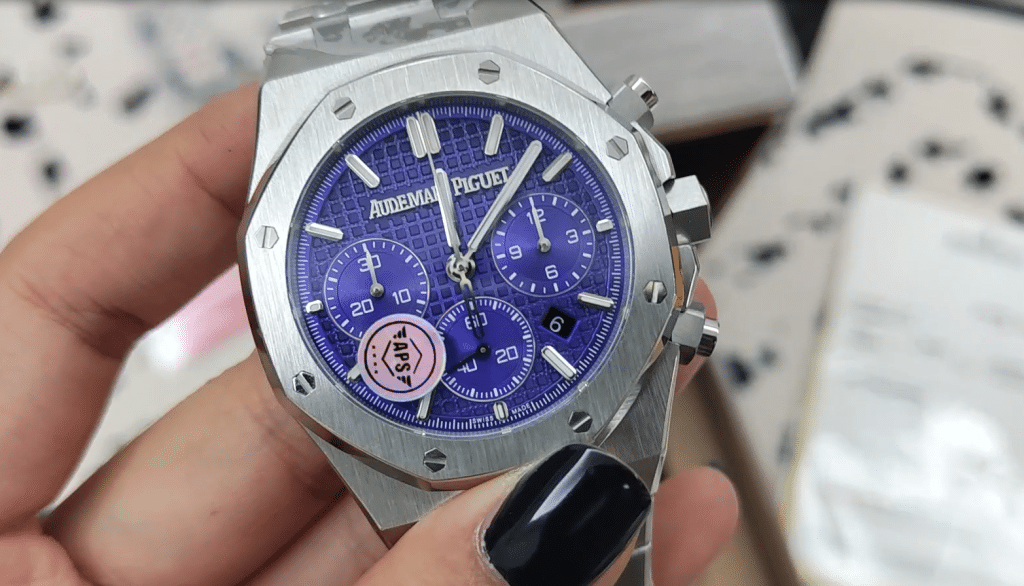
A rule I repeat to people is simple:
If the price looks like a typo, the “watch” will probably feel like one too.
You don’t need an exact market chart in your head. But if every other source says a serious super clone sits in the few-hundred range, and one seller is shouting a number that looks like fast food money, you already have your first red flag.
Endless Stock Photos, No Real Wrist Shots
The second red flag lives in the pictures.
Look closely at what you are shown. Are you seeing the same glossy catalog shots that appear on dozens of sites when you search the model name? Or are you seeing a watch on a real wrist, in bad lighting, on a messy desk, with details that only make sense if the watch is actually in front of the camera?
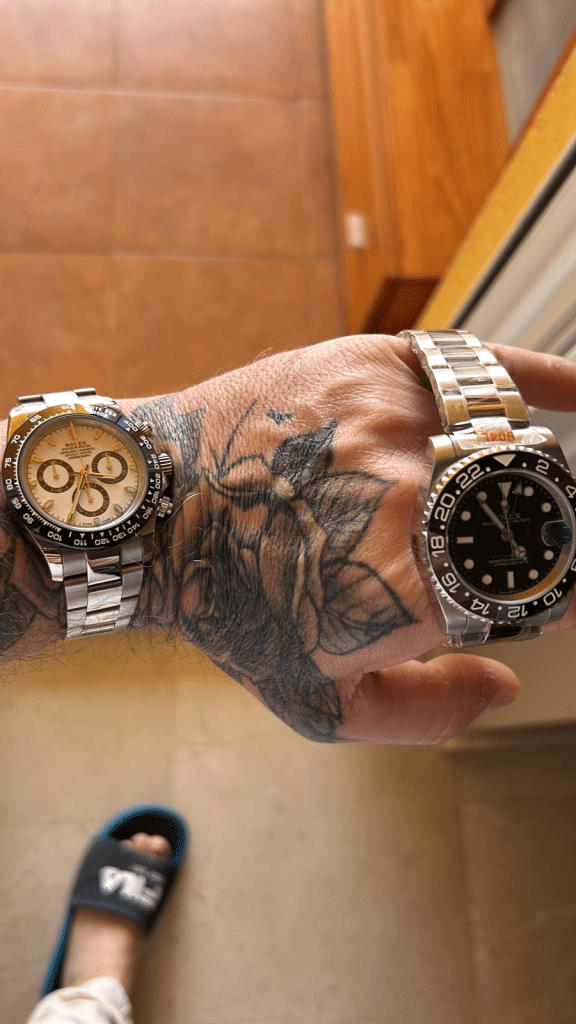
A scammy seller’s gallery usually looks too clean and too generic:
- identical angles on every model,
- no skin, no desk, no dust,
- the exact same photo you can find on Google in two seconds.
When you ask for something specific – the rehaut engraving, the clasp, a quick video of the seconds hand sweeping – the answers tell you a lot. A serious seller might sigh, but they will send new photos. A scammer will dodge, stall, or send you the same three stolen pictures from another angle.
One line sums it up for me:
A serious seller is tired of taking photos. A scammer is tired of stealing them.
If after a few messages you still haven’t seen today’s wrist shots or a short video of the actual piece, you are not buying a watch. You are buying a promise.
Payment Only Through Suspicious Methods and No Receipts
The third red flag shows up when it is time to pay.
If someone insists on a one-way, untraceable method – no invoice, no order confirmation, no screenshot of a proper payment page – you should assume that your money is leaving and may never come back.
Common patterns look like this:
- “Only bank transfer / crypto / strange app, no exceptions.”
- “No need for invoice, brother, I remember you.”
- “Don’t write anything about watches in the note, just send.”
You don’t need a perfect system, but you do need a trail. At the very least, you should walk away with:
- a clear written summary of what you are buying (model, color, factory, price, shipping);
- saved chat history;
- proof of payment that actually shows where the money went.
Sellers who expect to be around next year usually understand why this matters. They are willing to give you an order record, an email, even a proper payment processor that offers some level of dispute and refund. Sellers who plan to disappear prefer methods that leave you shouting into a void.
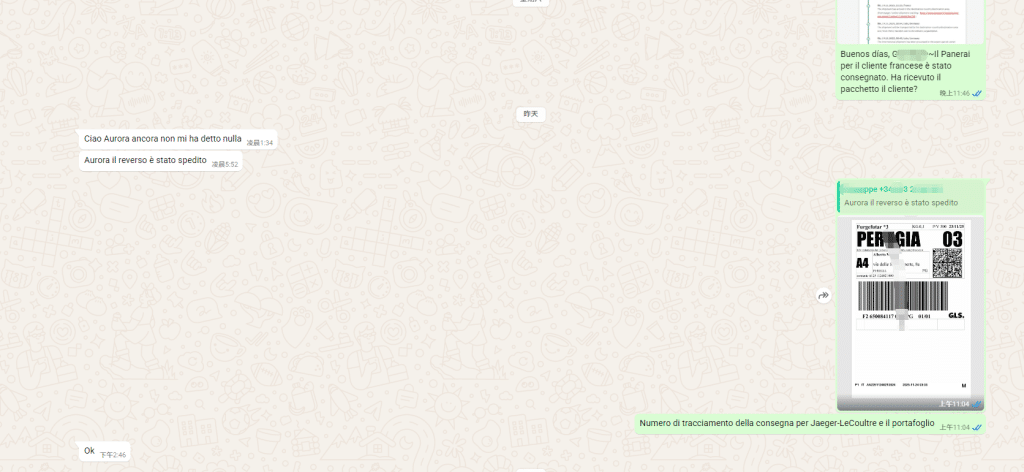
Zero Stories About After-Sales Problems
This last red flag is quieter, but it’s one of the most important.
Anyone who has been in the super clone world for more than a few months has seen problems: movements that stop, hands that misalign, parcels that go missing, customs that decide to play tough. This is not a clean industry. It never will be.
So if a seller’s content is only perfect success stories – no delays, no defects, no repairs, no refunds – you should not think “wow, impressive”. You should think “what are they hiding, or how long have they really been doing this?”
When I look at a seller, I pay attention to how they talk about the bad days:
- Do they admit that some batches were weaker?
- Do they describe how they handled a lost package or a dead-on-arrival movement?
- Do any past customers mention that issues were solved, even if it took time?
A person who pretends nothing ever goes wrong is selling you a fantasy, not a service. In this market, honesty about problems is not a weakness. It is usually the only proof that someone plans to stay long enough to fix them.
If you spend ten minutes checking these four areas – price, photos, payment, and how they talk about problems – you won’t catch every scam. But you will quietly delete at least eighty percent of the worst options before you ever reach for your wallet.
What a “Normal” Super Clone Deal Looks Like
From First Message to Payment – A Simple Timeline
If you have never done this before, the whole process can feel mysterious.
In reality, most normal super clone deals follow a simple line: you ask, they answer, you check, then you pay. When things look very different from this, you should slow down.
Step 1: You Ask, They Answer with Details
A serious seller does not panic when you ask questions.
When you say you want a specific model, they should come back with real information: which factory style it follows (VSF style, old Clean style, APS style, or something else), what movement is inside, what the estimated shipping time is, and what options you have. The answers do not need to sound like a brochure. In fact, it is usually better when they don’t. What matters is that they are concrete. “Good quality, brother, best in market” is not concrete. “VSF-style build, decorated 4130 clone, around two weeks to your country, no box” is.
If you feel like you know more about the watch after a few messages, that is a good sign. If you feel just as confused, only more pressured, that is a bad one.
Step 2: Photos, Videos and Small Checks
Next comes proof.
You ask for a few simple things: a dial close-up, the rehaut engraving, a quick wrist shot under normal light, maybe a short video of the movement running. Nothing crazy. You just want to see that the watch exists, and that it looks like what you are paying for.
We have seen this many times:
- Serious sellers sigh, then pick up their phone and send new photos.
- Scammers keep recycling the same three perfect stock pictures and hope you stop asking.
You do not need to be an expert to read the reaction. Someone who expects to ship watches every week gets used to taking photos on demand. Someone who never had the watch in their hands has nothing fresh to show you.
Step 3: Clear Agreement Before You Send Money
Only after questions and photos should money enter the conversation.
Before you pay, you both should be able to write one clean line that covers everything:
“Submariner, black dial, VSF-style build, oyster bracelet, price X, shipping Y, estimated dispatch next week.”
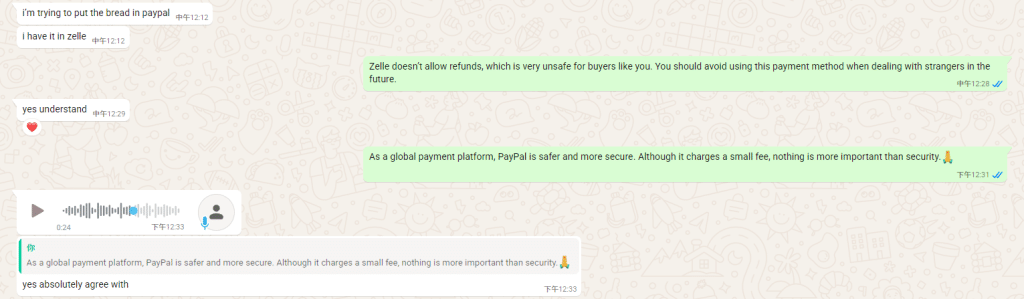
This is not paperwork. It is just clarity. When something goes wrong later, you can both look back at the same sentence instead of arguing about who “remembered” what. Payment itself is part of the deal, not just a button at the end. We see a lot of buyers who hold their funds in Zelle, Cash App or similar tools, and then try to move them into PayPal for a first order. There is a good reason for that. Services like Zelle are built as person-to-person transfers. Once the money is gone, there is usually no structured way to ask for it back, especially when you are dealing with a stranger. That is why we often tell new customers, “Avoid using non-refundable methods with people you don’t know yet.”
PayPal, on the other hand, is a global payment platform with clear records and a dispute process. It charges a small fee, yes. But for a first-time deal with a seller in another country, that fee is a cheap lesson in safety. If something goes seriously wrong, at least you have a channel to raise a claim and a transaction history that is bigger than a screenshot in a chat.
For our own first-time customers, we prefer PayPal for exactly this reason. It protects you, and it forces us to stay organised and transparent. In a market that lives in the grey, that little bit of structure helps both sides sleep better.
Realistic Price Bands for High-Grade Super Clones
Once the flow makes sense, the next question is always price.
You will see everything: “$80 super clone!”, “factory deal $150!”, “premium grade $1,200!”. Without any context, it is hard to tell what is real and what is noise.
Here is the short version from what we have actually seen:
High-grade super clones from factories on the level of VSF or similar usually sit in the few-hundred-dollar range. Not fifty dollars. Not five thousand. If the number is way below that, it usually means corners have been cut everywhere. If it is way above that, you might be paying more for the story than for the watch.
My personal view is simple:
If your budget is under a couple of hundred dollars, I would rather see you wait than push yourself into the worst corner of this market.
Could you still find something to wear for less? Of course. But the chance of bad movements, bad finishing and no support goes up fast when the price drops below what a decent build actually costs.
You do not need to memorise exact VSF price lists or Clean factory price tables. You just need to know roughly where the “serious” part of the market starts, and be honest with yourself about whether you are ready to play in that zone.
How Long You Usually Wait – and What Delays Mean
The last piece of a “normal” deal is time.
People dream of “three days to my door”. Sometimes it happens. Often it doesn’t. Between factory stock, dealer queues, packing, export and your local customs, a lot of small delays can stack up.
In our experience, a typical timeline for a watch that is actually in stock looks something like this:
- a couple of days from payment to dispatch;
- then about one to two weeks for international shipping, depending on the route and how strict customs is at that moment.
The key is not speed alone, but visibility. You should receive a tracking number. The seller should be willing to check it with you, not just say “wait, brother” every time you ask. When a parcel is stuck, they should explain what they think is happening and what options you have, even if the answer is “we need to wait a few more days.”
Delays by themselves are not always a red flag. This is a grey industry that depends on real world logistics. What matters much more is how the seller behaves when things slow down. Someone who only talks nicely until they get paid, then ignores you when the tracking freezes, is not running a normal operation. A normal super clone deal is not perfect or risk-free. But it is understandable. You see the watch, you know what you agreed to, you pay through a method that leaves a trail, and you get honest communication while you wait. When any of those pieces are missing, you are no longer dealing with “normal”.
Photos, Videos and Details You Should Always Ask For
The Three Shots That Tell You Most of the Truth

You don’t need a full inspection kit.
For a first super clone watch, three simple shots already tell you more than most people ever ask for. If a seller can’t provide these, you have your answer.
Dial and Printing Close-Up
Ask for a close, slightly angled shot of the dial. Not a zoomed-in catalog picture, but a real photo from their phone.
When you look at it, focus on three things:
- Markers and text – are the indices straight, is the printing sharp, or does it look fuzzy and thick?
- Logo – is it centered and clean, or slightly crooked?
- Date window – is the date centered inside the frame, or sitting too high/too low on some days?
You don’t have to analyse it like a watchmaker. You just need to see if it looks like a watch someone cared about, or a quick copy that hoped you would never zoom in.
Case, Bezel and Edge Finishing
Next, ask for a photo that shows the case and bezel together. Ideally on a wrist or on a desk, not on a black gradient background.
Look at the edges:
- Are they clean and consistent, or random and sharp?
- Does the brushing or polishing look even, or does it catch the light in a messy way?
- Does the bezel sit flat and aligned, or does something feel “off” when you stare at it for a few seconds?
Good factories spend time on finishing. Cheap copies don’t. You can often feel the difference before you can fully describe it.
Movement or Caseback (If Possible)
If the model allows it, ask for one more shot: the movement, or at least the caseback opened. If that’s not possible, a clear caseback photo from the outside is still useful.
You are not trying to verify every screw. You only need to check three simple points:
- Cleanliness – is the movement or inside of the case dirty, scratched, or full of random marks?
- Overall layout – does it look like a real calibre layout, or like a decorative plate pretending to be a movement?
- Smooth running – in a short today’s video, does the balance wheel move cleanly, or start and stop in a nervous way?
A serious seller will not be offended by this. We see more and more buyers asking for these three shots, and it is completely reasonable in this market.
How Serious Sellers React When You Ask Questions
The way a seller reacts to your questions is often a better test than the answers themselves.Anyone who wants to buy super clone watches safely needs to see that the process is not magic. It’s simply clear communication, real photos, written terms, and a payment method that leaves a trail.
Some buyers worry they are being annoying when they ask for extra photos or details. From our side, it usually looks different. When someone takes time to ask clear questions, we think, “OK, this person understands what they are doing. If there’s a problem, they will talk, not scream.”
In our experience, serious sellers tend to:
- answer calmly, even if your English is not perfect;
- admit limits (“this is close, but not 100% like the gen”);
- explain why one version might be better for you than another, even if it is not the most expensive option.
The other type of seller reacts very differently.
They get impatient as soon as you slow the deal down. They copy-paste the same template message into every reply. They push “last chance”, “price going up”, “decide now”. And if you keep asking, they flip the script: “If you don’t trust me, don’t buy.”
My view is simple:
Someone who gets angry before you pay will not suddenly become patient after you pay.
I remember one first-time client who asked for so many details that the chat looked like a checklist: dial close-up, clasp photo, today’s video, movement clip, even a shot of the packaging. It took time, but at the end I felt more comfortable sending him the watch than someone who just says “OK, send address” in ten seconds. Careful questions usually mean careful expectations.
You don’t need to interrogate anyone. But you have every right to ask for basic, reasonable proof. A serious seller may be busy, but they will understand. A seller who treats your questions as an insult is showing you exactly how much they value you—before they even have your money.
Payment, Shipping and Customs: Risks You Can’t Ignore
Why No Payment Method Is 100% “Safe” Here
It’s easy to think, “If I just pick the right payment method, nothing bad can happen.”
I wish it worked like that. In this grey market, it doesn’t.
Even with well-known platforms, the rules are not written for “buying super clone watches from strangers in another country.” Disputes can go either way. Sometimes they help you. Sometimes they don’t. A payment logo on the checkout page is not the same as a guarantee that every problem will be solved in your favour. That doesn’t mean all methods are equal. Some are clearly worse for buyers. Direct bank transfers, Zelle-type instant payments and crypto are brutal if something goes wrong. Once the money is gone, there is usually no structured path back. That’s why, when new customers tell us, “I have money in Zelle,” we often reply with something like:
“Zelle doesn’t allow refunds, which is very unsafe when you’re dealing with strangers. You should avoid using this method with people you don’t really know.”
On the other side, platforms like PayPal at least give you a transaction record, an order frame, and a dispute mechanism. They charge a fee, yes. But as I told one buyer recently:
“As a global payment platform, PayPal is safer and more secure. It takes a small cut, but nothing is more important than your security.”
The point is not that PayPal (or any other method) is some magic shield. The point is: no payment method replaces the need for a trustworthy seller. You still need someone who has a track record, who writes things down clearly, and who doesn’t vanish when there is a problem. Payment is one layer of safety. The seller’s attitude and history are the other, more important layers.
What You Should Clarify Before Sending Money
Before you hit “send”, there are a few things you should always have in writing. Not as a formal contract, just as a clear agreement between two people.
At minimum, you should know:
- Estimated dispatch time and shipping method
You should be able to repeat it in one sentence: “You’ll ship with X courier within Y days.” - What happens if the parcel is lost or delayed
Ask directly: “If the tracking stops or the parcel is lost, what will you do for me?”
The answer may not be perfect, but it should be specific. - What happens if the watch arrives with a serious issue
That means dead movement, wrong model, wrong color, or obvious big defects.
You don’t need a full legal policy, but you should at least hear: “If it’s clearly our mistake, here is how we handle it.” - Proof of shipping
You should be told you’ll receive a tracking number, and ideally screenshots when the watch is handed over to the courier. A seller who refuses to share tracking at all is asking you to trust blind.
You don’t have to ask in a cold, formal way. Simple, human sentences are enough:
“Before I pay, I just want to understand what happens if the parcel is lost or if there’s a big problem with the watch when it arrives.”
A serious seller might not give you the answer you dream of, but they will give you a straight one. That difference matters more than you think.
Customs and Legal Risk Are Real
There is one more layer many first-time buyers try not to think about: customs and law.
Different countries treat replica and super clone watches very differently. Some shipments pass with no questions. Others are opened, inspected and seized. In some places, fines are possible. In others, they simply destroy the goods.
No seller can honestly promise “zero customs risk”. Anyone who says “100% no problem, guaranteed” about something that clearly sits in a legal grey zone is selling you more than a watch—they’re selling you denial.
I will not tell you what to do in your country. I live and work on the China side of this market; you live with your own rules. That means:
- You should check your local laws about importing replica or trademark-like products.
- You need to know how strict your customs usually are, and what could happen if a parcel is stopped.
- You must decide for yourself whether that level of risk is acceptable for you.
As a seller, I can try to pack discreetly and choose routes that have worked in the past. I cannot rewrite your country’s laws. I also cannot take responsibility for decisions your customs make. Being honest about that is part of treating you like an adult, not a child.
There is one line I repeat a lot, because it stays true in every situation:
A watch that never arrives is the most expensive watch you will ever buy.
If you understand the payment risk, the shipping risk and the customs risk, and you still decide it’s worth it, then at least you are making a clear, conscious choice. That is all this guide is trying to give you: enough information so that, whatever you do next, you know what you are really saying yes to.
After-Sales: How Serious Sellers Handle Problems
What Happens When the Watch Has an Issue in the First Week
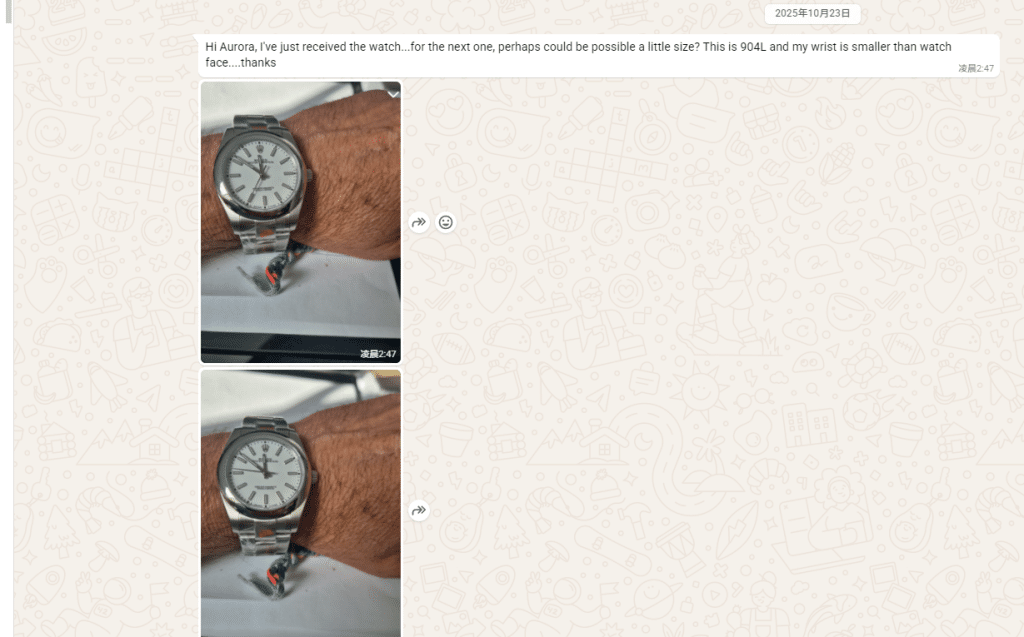
Let’s talk about the part nobody likes but everybody eventually meets: problems in the first few days. Even good super clones can arrive with issues. We’ve seen:
- a movement that stops after a few hours on the wrist;
- a watch running very fast or very slow;
- a date wheel that sticks between two numbers;
- a bracelet screw that wasn’t tightened enough;
- a light scratch that somehow survived QC and packing.
None of these are fun. But they are not science fiction. In a market built on modified movements and long shipping routes, they are part of reality. The real test is not “does a problem ever happen?” The real test is what the seller does when it happens.
You’ll see a few common reactions:
- The serious one:
They look at your photos and videos, ask a few questions, and then offer options: local repair with support, partial refund, or a return/exchange if that’s possible between your countries. It may not be instant, but you can feel they are trying to fix, not escape. - The lazy one:
They tell you “it’s normal, just wear it more” for everything. Fast? “Normal.” Stopped? “Normal.” Date stuck? “Normal.” After a few messages, they start replying slower and slower, then disappear.
You can’t control every watch. But you can choose which kind of reaction you are likely to get. And that starts before you pay, by paying attention to how a seller talks about problems in general. Someone who has never once mentioned a defect, delay or repair is not living in the same market you are about to enter.
Why Clear, Written Rules Matter More Than Sweet Promises
“Brother, don’t worry” is not a policy.
It’s just a sentence people say when they want you to stop thinking.
Before you send money, you should know the basics of how the seller handles the first days after delivery. You don’t need a 10-page PDF. One or two clear lines are enough, for example:
- “If the watch arrives dead or with a serious issue in the first 3–7 days, here is what we normally do…”
- “If the parcel is clearly lost, here is how we handle it…”
A serious seller will answer in plain language and, ideally, will be willing to repeat that answer in a message you can save. It may still include limits (you pay return shipping, certain countries are harder, etc.), but at least you know the rules before anything goes wrong. Sweet promises are easy: “I treat every customer like family”, “I guarantee 0% problem”. Clear rules are harder, because they commit the seller to action later. That’s exactly why you should value written clarity more than warm words.
What We’ve Learned from Fixing Our Own Mistakes
No seller is perfect, including us.
We’ve had pieces arrive with issues. We’ve had parcels delayed so long that both sides were stressed. We’ve had movements that behaved fine in our hands and then acted up after a few days on someone else’s wrist.
What we try to do, every time, is the same:
- listen first instead of arguing;
- ask for photos, videos and a clear description;
- offer a realistic solution instead of the “ideal” one we wish we could always give.
Sometimes that means helping the buyer find a local watchmaker and covering a repair. Sometimes it means sending parts. Sometimes, when it’s obviously our mistake, it means taking a financial loss to keep our word. None of these are fun. All of them are part of doing this long term. We don’t enjoy solving problems. But we accept that in this industry, problems do happen, and how you respond is part of your reputation. If you are choosing a seller, don’t just look at how they talk about “perfect watches”. Look at whether they are willing to say, “This version has had issues in the past,” or “Here is how we handled that bad batch,” or “This is what we will do if something goes wrong with yours.” That honesty is worth more than any promise of perfection.
In the end, you are not only buying a watch. You are also buying the way someone will behave when things don’t go exactly as planned.
Our Position as a China-Based Super Clone Seller
How We Choose Which Factories and Versions to Work With
We work in China, close to the factories, but we don’t “worship” any of them.
When we choose which versions to offer, we look at very simple things:
- how stable the feedback has been over time;
- how often a model comes back with issues or needs repair;
- whether the factory can keep supplying the same quality for months, not just one lucky batch.
Names like VSF, old Clean-style builds, APS and others are useful as labels, not as religion. Some VSF-style pieces are excellent. Some are just “OK”. The same is true for every big name. We try to judge each reference by how it behaves on real wrists, not by how loudly it is promoted on social media.
If we see a version that looks great in photos but creates a long line of complaints in real life, we slowly step away from it, no matter how hot the name sounds that month.
What We Refuse to Do Even If It Means Losing Orders
There are a few lines we try not to cross, even when it costs us business.
- We don’t take orders from people who only say, “Give me the lowest price, any factory is fine.”
That mindset usually ends in frustration for both sides. If someone doesn’t care which version they get, they won’t care about realistic expectations either. - We don’t promise “totally risk-free customs” or “100% guaranteed, no chance of trouble”.
We can share our experience with certain routes, but we can’t control your country’s laws or customs officers. Pretending we can would be dishonest. - We don’t push versions that we believe will have a high chance of problems later.
Some references look amazing on camera and fall apart in daily wear. When we see that pattern repeat, we quietly stop offering them, even if they are popular online.
That’s not “good marketing”. It’s just what lets us sleep at night and keep talking to old customers without hiding.
Why We Built an Information-First Site Instead of a “Just Buy Now” Shop
Cleanvsfactory.com could have been a plain shop: product photos, prices, “Buy Now” on every line, nothing else.
We chose a harder route.
We built an information-first site because we want you to understand what you are stepping into before you decide anything. That means writing guides like this, comparing factories, explaining movements, and talking openly about payment, shipping and risk. It takes time, and sometimes it scares people away. We are fine with that. If you read our pages and decide that super clones aren’t for you, that is a good outcome. You saved your money and your nerves. If you read everything, understand the risks, and still decide to work with us, then at least we are having an honest relationship from day one.
Our job is to explain the reality as we see it from the China side.
Your job is to decide whether this world makes sense for you or not.
A Simple Checklist Before You Buy Your First Super Clone
The Five Questions You Should Answer Honestly
Before you send money to anyone, pause for one quiet minute and ask yourself a few simple questions. Do you really understand what you’re buying, or are you just chasing the word “super clone” because it sounds safe? Do you know who you’re paying – their name, how long they’ve been around, what other people say about them – or are you trusting a fresh account with a nice profile picture? Do you have today’s photos or video of the actual watch and a clear agreement in writing, or are you relying on vague chat promises and catalog shots? Do you honestly accept the legal and shipping risks in your own country, including the chance that customs or a lost parcel may turn this into a very expensive lesson? And, most important, are you ready to walk away if any answer feels shaky, instead of forcing yourself to believe a story because you “really want this one”? If you can’t look at these questions and say “yes, I’m comfortable”, you are not ready to buy yet – no matter how good the deal looks.
Our Honest View – and Your Final Decision
I make a living in this grey corner of the watch world, helping people buy super clone watches safely, not blindly.. I like good super clones. I enjoy seeing a VSF-style or Clean-style build on someone’s wrist when they fully understand what it is and what it is not. I enjoy helping people avoid the obvious scams and end up with a piece they actually wear, not just unbox for a video. But I also believe this: no logo on a dial is worth your savings, your peace of mind, or a level of risk you secretly can’t accept. If, after reading all of this, you feel that buying a super clone watch safely is still possible for you, with your budget and your local rules, then you will probably enjoy the journey and the watch. If you feel a knot in your stomach, it’s perfectly fine to close the page and do nothing. Now that you’ve seen the risks and the reality, the decision is yours, and it should stay yours.
