
Most people start with the wrong question. You open a chat with a seller, scroll through a few photos, and think you’re choosing a style: Nautilus or Aquanaut, blue dial or green, steel or rose gold. It feels like a simple “pick the one I like” moment. In reality, what you are choosing is not the look—you are choosing a factory’s rhythm, its movement approach, and how consistent that specific batch will be. The design is obvious; the real quality is hidden in how it was made, when it was made, and under what standards that batch followed.
This isn’t about blaming buyers for not knowing. Nobody is born understanding dial layers, or why one factory does color matching better while another takes months just to fix a small index issue. What matters is recognizing that super clone Patek watches are not mass-produced like Rolex clones; their production is slower, the details are harder, and the improvements come in smaller steps. If you know that before you buy, you won’t be misled by a sharp photo, a loud promise, or a price that feels surprisingly “reasonable.”

Understanding what you are actually choosing makes the process calmer. You stop rushing, you ask for current photos instead of recycled ones, and you judge a watch by its consistency instead of its advertisement. With Patek super clones, the less mystery there is, the less regret there will be.
Why Patek Super Clones Are Harder to Judge Than Rolex
Low Volume Means Slower Improvement
With Patek super clones, you are not looking at a “fast-moving” product. A factory might make many Submariners in a week, but only a small number of Nautilus or Aquanaut pieces in the same time. That sounds romantic at first—low volume, more care—but there is another side to it. When a mistake shows up on a Patek model, it may take months and several tiny batches to fully correct it, simply because there are fewer watches moving through the line.
Think about a small bakery instead of a big chain. If the recipe is slightly off, they need a few days of new bread to test, adjust, and test again. Patek super clones work in a similar way. Each adjustment to the dial color, hand length, or case finishing takes time to show up in real orders. That is why “new batch fixed everything” is rarely true overnight. The rhythm is slower, and if you understand that, you stop expecting sudden miracles from any factory name.
The Dial and Hands Matter More Than the Logo
On a Patek-style watch, the logo is usually the last thing that truly gives it away. The real weakness often hides in the dial and hands: the thickness of the markers, how the printing sits on the surface, how the color shifts when you move from indoor light to daylight. Two watches can look almost identical in a front-facing studio shot, but feel very different when you tilt them slightly and let the light move across the dial.
This is why many people feel confused. They get a super clone Patek that looks fine in photos, yet something feels “off” on the wrist and they cannot explain why. Most of the time, it is not the brand name at 12 o’clock that causes that feeling. It is a small mismatch in hand length, a dial that looks flat instead of layered, or a color tone that only shows its problem when you step outside. If you pay more attention to these details than to the logo, your judgment becomes much sharper, even without a loupe.
Quality Comes from Consistency, Not a Single Batch
Almost everyone in this grey market has seen the same story. The first watch from a factory arrives and looks great. The finishing is clean, the dial is close, the customer is happy. A few months later, you reorder “the same” super clone Patek from the same factory code… and the feeling is different. Maybe the brushing changed slightly, or the clasp feels lighter, or the dial print looks a bit thicker. The name on paper is the same, but the batch is not.
This is why we try to look at consistency over time, not just one lucky piece that made it into a perfect photo. A factory that delivers 8 watches out of 10 at the same level is more valuable than a factory that makes one “hero sample” and then never repeats it. If you are reading reviews, focus on long-term feedback and repeated orders, not only on the one watch that everyone reposts. In this part of the watch world, stability is the real luxury.
Factory Landscape — What PPF, 3K, GR and Others Actually Do
PPF — Conservative but More Predictable
PPF is often the quiet one in the room. You rarely see big marketing around “new ultimate super clone Patek Philippe” from them, and their pace feels slower compared with some louder China factories. But that slower rhythm has a pattern: they usually push fewer models, with more conservative choices on dial color and case finishing, and try to keep those choices stable over time.
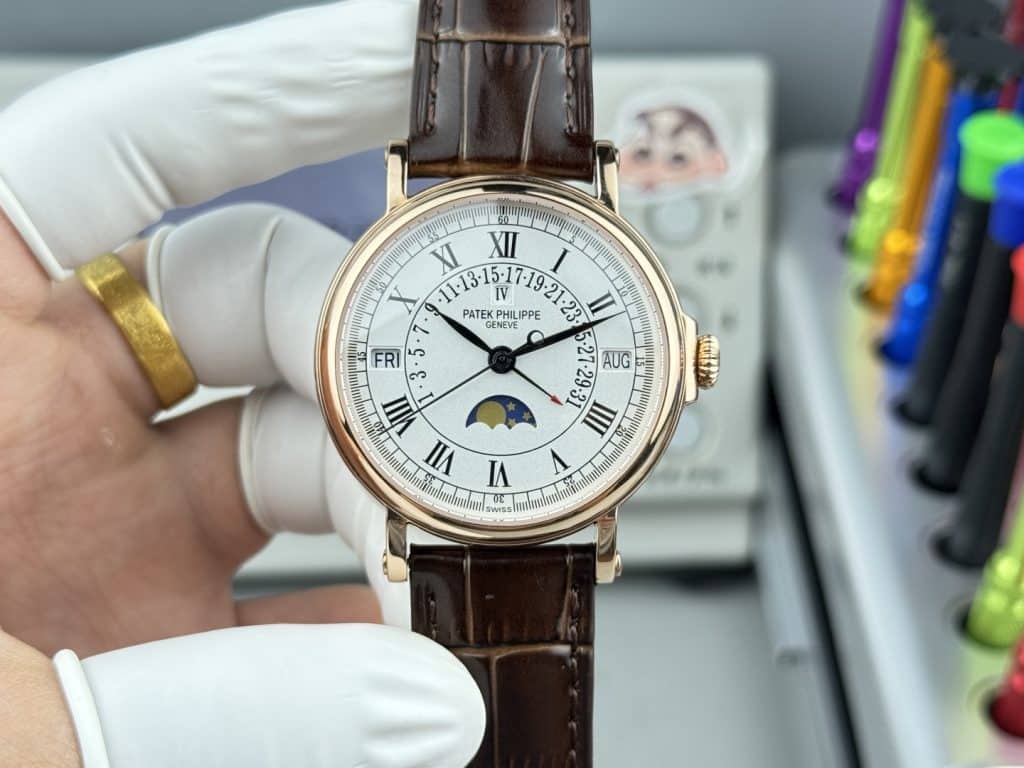
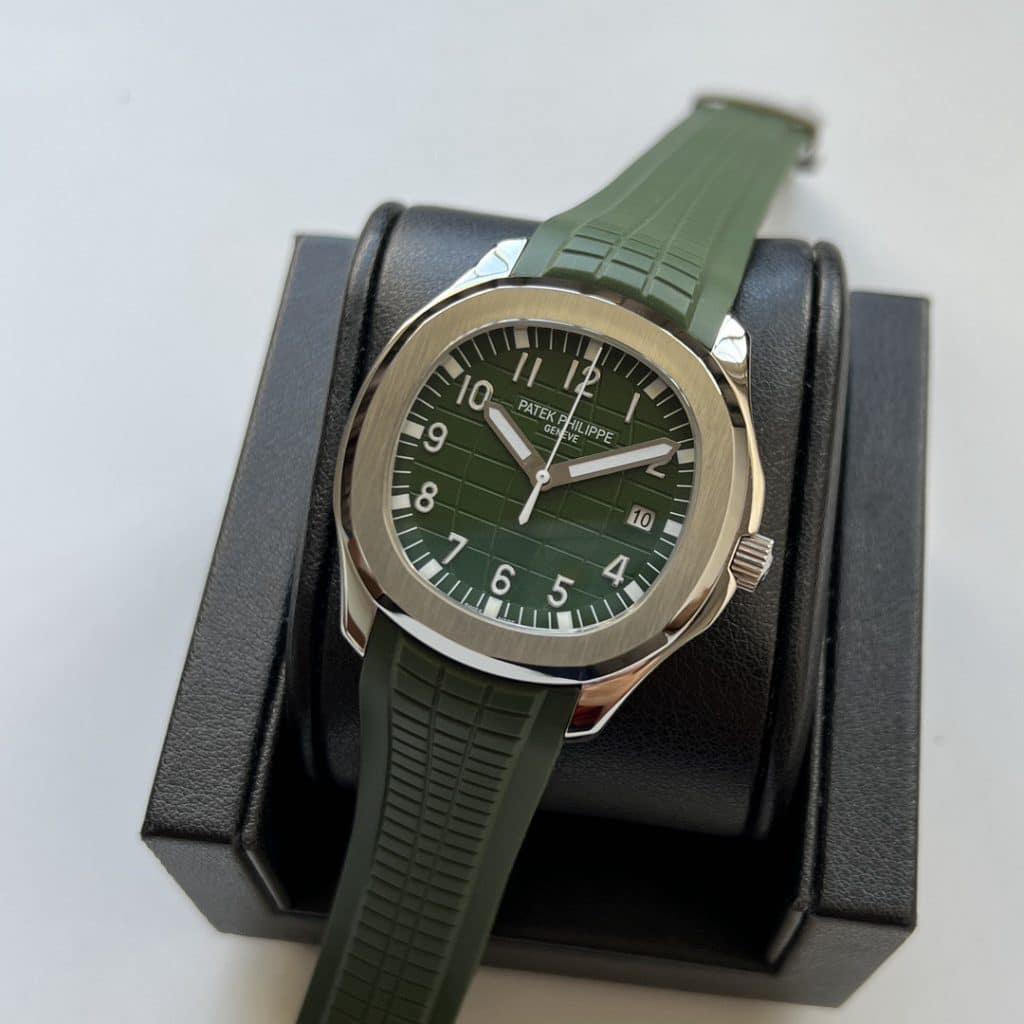
On many Nautilus and Aquanaut pieces, PPF will not chase the most aggressive blue or the brightest green. They prefer a safer shade that may not shock you in photos, but tends to look more natural on the wrist and under normal light. If you are the kind of buyer who hates surprises between the first watch and the fifth watch, this “conservative but predictable” style can be a good thing. You give up a bit of excitement, but you gain fewer swings in quality from batch to batch.
3K — Strong Craft on Certain Models, Not All
3K feels more sharp-edged. When they focus on a specific Patek Philippe model, like a Nautilus 5711 or an Aquanaut 5167, the case lines and brushing can be very satisfying. On the better runs, the mid-case shape, the bezel transition, and even the way the bracelet drapes over the wrist show that someone cared about the geometry, not just the surface polish.
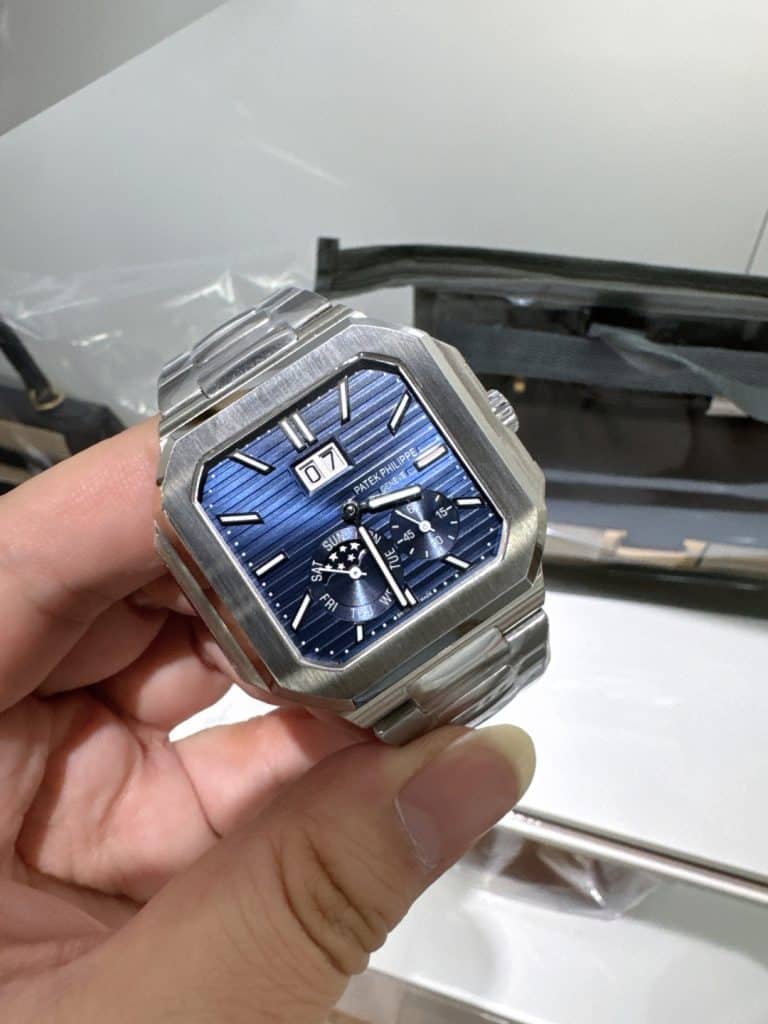
But that strength is not equal across every reference that carries a 3K tag. Some models clearly receive more attention than others, and you can feel the gap. This is not a criticism; it is simply how a factory allocates energy. If you want a 5711-style or 5167-style super clone from China, 3K can be a serious candidate. If you look at a more niche Patek reference, you should judge that piece on its own, not just assume “because the 5711 is good, everything else is the same.” With 3K, the story is: when they focus, they do it well—but you still need to check which watches actually got that focus.
GR and Others — Value Depends on Expectation
GR and some other smaller factories sit in a different lane. They often aim to offer a way into the super clone Patek world at a lower price, or with faster availability, rather than trying to win every close-up comparison. That does not make them “bad.” It just means the product is built around a different promise. Imagine someone who likes the look of a Patek-style watch, wears it a few times a month, and does not plan to put macro photos online. For this person, a GR or similar factory piece can make sense: you get the basic design, a working movement, and a lighter hit to your wallet. The trade-off is clear: you should not expect dial print perfection, ultra-tight case finishing, or the same level of bracelet refinement you’d look for in a higher-priced clone.
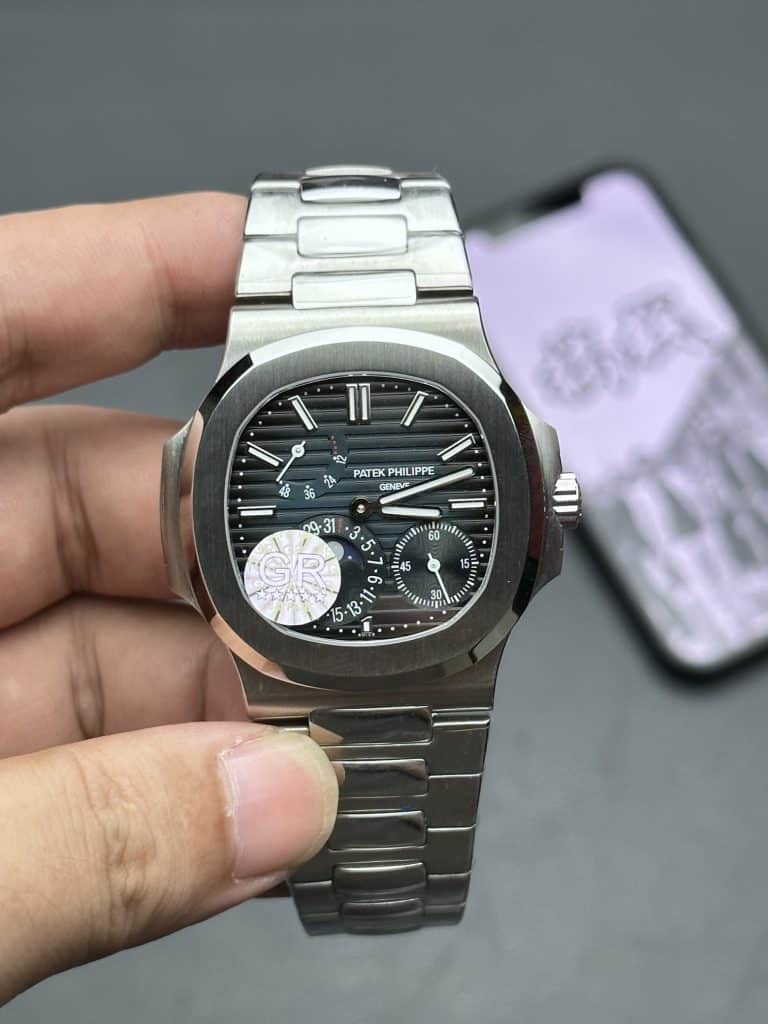
If your budget is limited but you still want to try a Patek super clone without stressing over every hairline detail, these factories are not the wrong choice. They are simply serving a different type of buyer. The key is to match your expectation with what they actually offer, instead of hoping a “value” watch will behave like a top-tier showpiece.
One Important Rule Across All Factories
No matter if the name is PPF, 3K, GR, or anything else, one rule stays the same:
Judge by feedback over time, not a single studio photo.
How to Judge a Super Clone Patek in 30 Seconds
Check Dial Layers Under Soft Light
If you only have half a minute with a super clone Patek, start with the dial, not the logo. Hold the watch under a soft light source, not a harsh flashlight. Move the lamp or your wrist a little farther away and watch how the color and shadows change. On a better China super clone, the markers look like they sit in the dial, not just printed on top. The surface shows a slight depth, and the printing stays clean when the light comes in from the side. If the dial looks flat, the color turns “dead” as soon as you step away from direct light, or the print starts to blur at an angle, that tells you more than any close-up shot can. Don’t glue your eyes to the screen or the loupe; give the dial some distance and let the light expose what the photos try to hide.
Feel the Bracelet, Not Just Weigh It
Many people still judge a super clone Patek by weight. They put it in the hand, feel it’s “heavy enough,” and stop there. Weight is the easiest thing to fake. What is harder to copy is how the bracelet and clasp feel when you move. Let it hang down from your fingers and watch how each link falls. A better bracelet has a calm, even rhythm; it doesn’t kink in strange angles and it doesn’t twist like a loose chain. Then run a finger slowly along the edges. The best PPF, 3K or other higher-grade bracelets from China don’t bite your skin, and they don’t feel like sharp stamped metal. You are looking for clean, rounded transitions that don’t scratch but also don’t feel melted. If the bracelet moves like a toy and the clasp feels thin or hollow when you close it, the scale may still say “OK,” but your wrist will tell you the truth after a few hours.
Ask for Today’s Photos with the Same Lighting
Before you send money for any super clone Patek Philippe, one simple request can protect you more than a long chat ever will: ask for today’s photos in the same lighting from start to finish. Not old album shots, not mixed images from different days and different rooms. When all pictures are taken in one light, you can read the dial color, the case brushing, and the bracelet tone in a more honest way. It also shows you how that specific piece looks now, not how a sample looked six months ago when the factory or seller was at its best. The biggest risk in this market is not what you see; it is what you never get to see before paying. Current, consistent photos don’t remove all risk, but they turn a blind decision into a conscious one—and that alone makes a big difference.
Movement Reality — What Super Clone Calibers Can and Cannot Do
Decorated Plates Do Not Make a Real Caliber
When you turn a super clone Patek over and see an open caseback, the first reaction is always the same: “Looks amazing.” Bridges are brushed, screws are polished, the rotor has Geneva stripes. On photos, many China super clone movements can pass a quick glance, especially when the seller chooses the right angle and focus. But decoration is the easy part. The harder part is how the movement behaves after six months on a real wrist, not a photo table.
A decorated plate does not change the gear train design, the tolerances, or how carefully the watch was regulated. You can have a beautiful rotor on a movement that gains 20 seconds a day and stops randomly when the power reserve is low. You can also have a plainer rotor on a movement that just keeps going, day after day, quietly. With Patek-style super clones, it is common to see “photo-level” finishing on bridges that still sit on a basic architecture. That is why we try to look past the art on top and pay attention to rate stability, winding feel, and how often owners report issues after a year. The engraving is for your eyes; the design and regulation are for your time.
Thin Doesn’t Always Mean Better
Many people associate Patek Philippe with thin, elegant movements. It is tempting to chase the thinnest possible super clone caliber and treat every extra millimeter as a failure. But in the clone world, pushing too thin without the same materials, tooling, and control often means more stress on parts, more sensitivity to shocks, and more unstable timing. A watch that looks impressively slim in photos can turn into the one you are always adjusting or sending back.
If you wear your watch all day, type on a keyboard, drive, and move your wrist a lot, the difference shows up over time. Slightly thicker, more relaxed movements often handle light daily impact better, even if they don’t win side-profile comparison shots. For many China super clone Patek pieces, a balanced height with clear service access is a smarter choice than absolute thinness that nobody sees once the watch is on the wrist. The goal is not to win a micrometer game; it is to have a watch you can wear without constantly worrying about the next bump on the door frame.
When a Japanese Movement Is the Smarter Decision
Not every Patek-style watch needs a complex clone of an in-house caliber. In some builds, a well-known Japanese automatic movement brings something that is underrated in this grey area: peace of mind. It may not have a fully decorated bridge under a sapphire back and it may not match the original architecture, but it is built for long-term use, easy servicing, and predictable behavior. You wind it, you wear it, it runs.
For a lot of people, especially on daily-wear or travel pieces, that trade feels fair. You keep the design you like on the front and accept a more “honest” engine inside. Parts are easier to source, any decent watchmaker can understand the layout, and small issues don’t turn into drama. Our own view is simple:在百达翡丽克隆里,稳定不等于没追求。Choosing a Japanese movement in some super clone Patek builds is not giving up; it is a different type of respect for your own time and money.
Price Logic — How China Pricing Actually Works
Small Batches Mean Less Price Competition
Patek-style super clones don’t follow the price behavior we see with popular Rolex reps. Factories don’t push thousands of pieces a month, and they can’t rely on volume to reduce cost. The batches are small, the case structures are more complex, and dial color calibration takes longer. When a factory needs extra rounds to correct printing depth or adjust the shade of a 5711 blue, the time spent doesn’t translate into more sales immediately. Fewer watches pass through the line, which leaves less room for aggressive price wars.
So the price rarely “drops with popularity.” It moves slowly, because production itself moves slowly. You’re not paying for hype—you’re paying for a niche product that doesn’t benefit from mass repetition. In this part of the market, the lack of competition is not because sellers want to keep prices high; it exists because the product does not scale easily in the first place.
Why a Slightly Higher Price Sometimes Saves Money
When two super clone Pateks look similar on the screen, it is tempting to choose the cheaper one and feel clever. But the deeper cost doesn’t show up at checkout. It shows up months later—when a clasp fails, the dial shows aging or patchy color, or the movement needs adjustment and nobody wants to touch it. Sometimes the real “difference in price” is just the difference in how long you get to wear the watch without worrying.
A watch that stays stable over time doesn’t need negotiation, return shipping, or repeated fixes. Even a more expensive super clone becomes cheaper when it keeps running without drama. You’re not paying to impress someone else; you’re paying to avoid spending twice. In this world, value is measured by how long you stay relaxed after you buy, not by how thrilled you feel when you press “send payment.”
When a Lower Price Is Not a Red Flag
There are also moments when a lower price is perfectly reasonable. Not every Patek model is a hot topic, and not every build needs a heavy clone movement with complex decoration. Entry-level designs, simpler dials, and models without pressure to match sapphire-open movements can be made more efficiently. When a piece is not competing to look spectacular under macro photos, it doesn’t need an inflated budget to justify its existence.
A lower price becomes a problem only when someone expects top-tier finishing and clone-level movement architecture from a model that was never meant to chase those standards. A calm piece with a simpler build can offer a stress-free way into the category. It’s not “cheap and risky.” It’s priced for what it is supposed to do.
不是便宜伤人,是误解预算伤人。
Who Should Consider a Super Clone Patek — And Who Should Not
Good Fit:People Who Enjoy the Design More Than the Logo
Super clone Patek Philippe pieces make the most sense for people who really like the design first. You might already have a small box at home, a few watches you rotate, and you pick what to wear based on mood rather than brand status. For this kind of light collector, the Nautilus lines, the Aquanaut curves, or a clean Calatrava dial are already enough. The name on the movement plate matters less than the feeling when you glance at your wrist during a quiet moment.
It also suits people who do not wear the same watch every day. Maybe you put on a Patek-style piece for dinner, weekends, or a trip, then go back to something more practical during the week. You enjoy the super clone version from China because it lets you explore that design language without turning your life into a museum around one original. The watch becomes a way to enjoy proportions, textures, and light play, not a permanent test of how close you stand to the brand itself.
If you already know you are buying a replica, accept that fully, and still feel drawn to the shape and character of these references, then a well-chosen Patek super clone can be a calm, honest choice. You are not pretending it is something else; you are using it as a way to live with a design you like, on terms you can handle.
Not a Good Fit:Expect Zero Risk or Perfect Safety
On the other hand, a Patek Philippe replica—no matter how “super clone” it claims to be—is a bad fit if you need complete peace on every front. If you want a watch that never makes you think, never brings a trace of doubt, and never raises questions in your own head, this path will keep pulling at your nerves. Even the best factories can change batches, even the best sellers can face shipping problems, and even the most stable movement can have a bad sample. When you choose a super clone Patek from China, you are choosing a grey zone. You are accepting that things are not black and white, that the dial might not be perfect, and that some situations will feel complicated. If you know you will replay every small worry at night, or keep checking your wrist wondering “is this really okay,” then a replica Patek will not make you happy. It will just give your anxiety a new object.
This doesn’t mean you are wrong. It just means your mind needs a cleaner line. If you need everything around a watch to feel officially safe and simple, it is better to step away from super clone Patek pieces completely. Wanting that kind of clarity is normal. For you, the most comfortable decision might be not to enter this corner of the market at all.
Who Should Consider a Super Clone Patek — And Who Should Not
Good Fit:People Who Enjoy the Design More Than the Logo
Super clone Patek Philippe pieces make the most sense for people who really like the design first. You might already have a small box at home, a few watches you rotate, and you pick what to wear based on mood rather than brand status. For this kind of light collector, the Nautilus lines, the Aquanaut curves, or a clean Calatrava dial are already enough. The name on the movement plate matters less than the feeling when you glance at your wrist during a quiet moment.
It also suits people who do not wear the same watch every day. Maybe you put on a Patek-style piece for dinner, weekends, or a trip, then go back to something more practical during the week. You enjoy the super clone version from China because it lets you explore that design language without turning your life into a museum around one original. The watch becomes a way to enjoy proportions, textures, and light play, not a permanent test of how close you stand to the brand itself.
If you already know you are buying a replica, accept that fully, and still feel drawn to the shape and character of these references, then a well-chosen Patek super clone can be a calm, honest choice. You are not pretending it is something else; you are using it as a way to live with a design you like, on terms you can handle.

Not a Good Fit:Expect Zero Risk or Perfect Safety
On the other hand, a Patek Philippe replica—no matter how “super clone” it claims to be—is a bad fit if you need complete peace on every front. If you want a watch that never makes you think, never brings a trace of doubt, and never raises questions in your own head, this path will keep pulling at your nerves. Even the best factories can change batches, even the best sellers can face shipping problems, and even the most stable movement can have a bad sample.
When you choose a super clone Patek from China, you are choosing a grey zone. You are accepting that things are not black and white, that the dial might not be perfect, and that some situations will feel complicated. If you know you will replay every small worry at night, or keep checking your wrist wondering “is this really okay,” then a replica Patek will not make you happy. It will just give your anxiety a new object.
This doesn’t mean you are wrong. It just means your mind needs a cleaner line. If you need everything around a watch to feel officially safe and simple, it is better to step away from super clone Patek pieces completely. Wanting that kind of clarity is normal. For you, the most comfortable decision might be not to enter this corner of the market at all.