
I. Why Movement Choice Matters in VC Replica Watches
Movement as the Heart of Any Watch
In Vacheron Constantin replicas, the movement is not a background component but the defining factor that determines whether a watch feels refined, reliable, and worth wearing long term. Case shape, dial printing, and bracelet finishing may catch the eye first, but it is the movement that governs daily accuracy, winding feel, noise level, service life, and ownership stability over years rather than weeks.
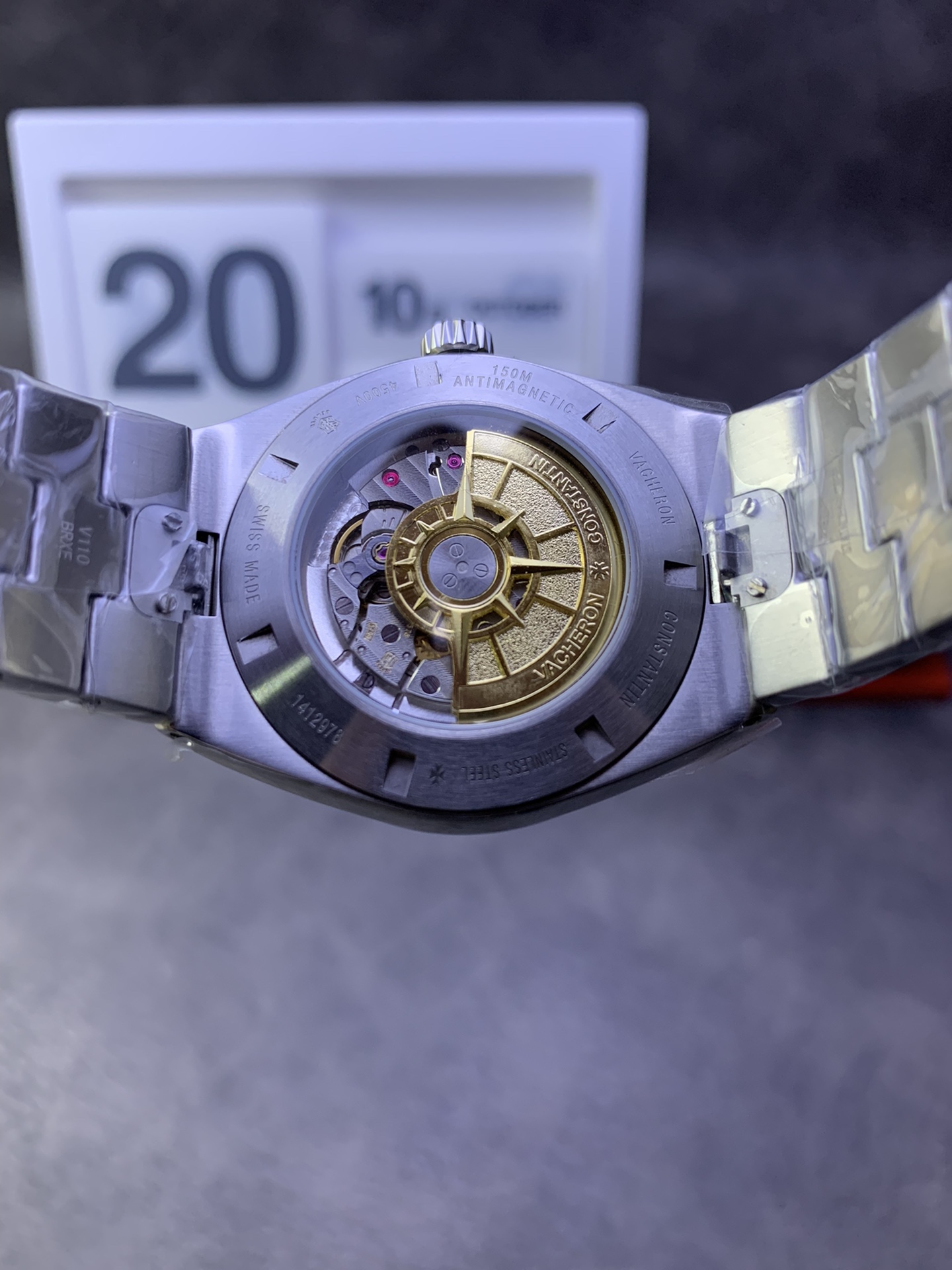
In practice, two VC replicas that look almost identical on the wrist can behave very differently once worn. The difference usually traces back to the movement base: how it was designed, how much it was modified, and how carefully it was regulated before assembly. Finishing quality also matters, especially for models with sapphire casebacks such as the Overseas 4500V, Patrimony 85180, or Fiftysix Complete Calendar. Rotor engraving, bridge layout, and balance placement directly affect whether the watch can withstand close inspection without immediately revealing its origin.
Across the replica market, movement choice effectively defines the quality tier. Case and dial differences between mid-level and top-tier VC replicas are often subtle, but the movement gap is not. Owners notice it through winding resistance, power consistency, and long-term reliability.
What Buyers Need to Know Before Choosing a Movement
Accuracy Expectations & Regulation Standards
Accuracy in VC replicas depends less on headline specifications and more on regulation quality and structural stability. China 2824-based movements typically settle within a moderate daily range once broken in, provided the movement is properly lubricated and not overloaded with decorative plates. Miyota 9015-based builds tend to show more consistent rate stability due to their modern architecture and higher torque reserve, especially in thin cases where friction margins are tight.
Custom super clone movements occupy a different category. When executed correctly, such as modified 5100-style or 2460-style clones, they can maintain stable amplitude across multiple positions. However, this stability is conditional. These movements rely heavily on correct assembly and post-assembly regulation. A poorly regulated super clone can perform worse than a basic 9015, while a well-executed one can rival entry-level Swiss calibers in daily consistency.
Power Reserve & Daily Wear Realities
Power reserve figures printed in listings often obscure real-world behavior. Most China 2824 derivatives deliver usable performance for roughly a day and a half under normal wear, but amplitude drop-off becomes noticeable if the watch is left untouched overnight. Miyota 9015 movements, with their efficient winding system and balanced torque curve, handle intermittent wear better and recover faster after partial depletion.
Custom VC-style clone movements often advertise longer reserves to mirror genuine specifications, but in practice many still operate within the 40–45 hour range. What matters more than total hours is how stable the movement remains during the final third of the reserve. A movement that loses ten seconds in its last eight hours creates more frustration than one that simply stops earlier.
Serviceability & Long-Term Maintenance
Ease of Servicing Standard China Clones
From a practical ownership standpoint, China 2824-based movements remain the easiest to live with. Their layout is familiar to most watchmakers, replacement parts are widely available, and complete movement swaps are straightforward when repair costs exceed replacement value. This makes them particularly attractive for daily-wear VC replicas where long-term service access matters more than visual authenticity.
Miyota 9015 movements offer similar advantages. They are robust, tolerant of light neglect, and rarely develop catastrophic faults. Their unidirectional winding noise is a known characteristic rather than a defect, and most issues can be resolved with basic servicing rather than specialized parts.
Availability of Parts & Technical Support
Custom super clone movements complicate the service equation. While they may be visually convincing and mechanically impressive, they often rely on proprietary bridges, modified gear trains, or decorative components that cannot be sourced independently. In practice, this means servicing is limited to lubrication, regulation, and minor repairs. Major failures often require full movement replacement rather than component-level repair.
For owners planning multi-year use rather than short-term ownership, this trade-off deserves serious consideration. Movement realism has a cost beyond purchase price.
II. The Main Movement Families in VC Replicas
Overview of Common Movement Bases in Replicas
VC replicas generally fall into three movement families, each aligned with different design goals and model types. China clone movements prioritize reliability and ease of service. Japanese movements emphasize thinness and operational stability. Custom super clone movements focus on architectural and visual similarity to genuine Vacheron Constantin calibers.
The choice is rarely arbitrary. Overseas sports models tend to favor sturdier bases, Patrimony dress watches demand thin profiles, and Fiftysix calendar models require more complex movement customization. Understanding these families clarifies why the same factory may use different movements across its VC lineup.
Classic China Clone Movements (ETA/2824-Based)
What “China 2824” Means in Replica Context
An China 2824 clone refers to a movement patterned after the ETA 2824-2 architecture, manufactured in Asia with varying grades of finishing and tolerance. In VC replicas, these movements are typically used in models without display casebacks or where visual accuracy is secondary to reliability.
Structurally, the design is proven. Balance placement, automatic winding system, and gear train layout have decades of accumulated refinement behind them. This heritage explains why even modestly finished versions can perform reliably when properly assembled.
Typical Specs & Use Cases
Most China 2824 derivatives operate at 28,800 vibrations per hour, with power reserves around 38 to 42 hours. Parts compatibility remains one of their strongest advantages. In practice, these movements suit daily-wear replicas, thicker cases, and users who value service access over aesthetic fidelity.
They are less suitable for ultra-thin cases or open casebacks where bridge layout and rotor design are visible and easily compared.
Japanese Movements (Miyota 9015 & Variants)
Miyota 9015: A Premium Japanese Base
The Miyota 9015 occupies a distinct position in the replica market. With a thin profile, high beat rate, and modern construction, it enables slim VC replicas that would be difficult to execute with older architectures. Its approximately 42-hour power reserve and stable amplitude make it well-suited for Patrimony-style dress watches and refined Overseas builds.
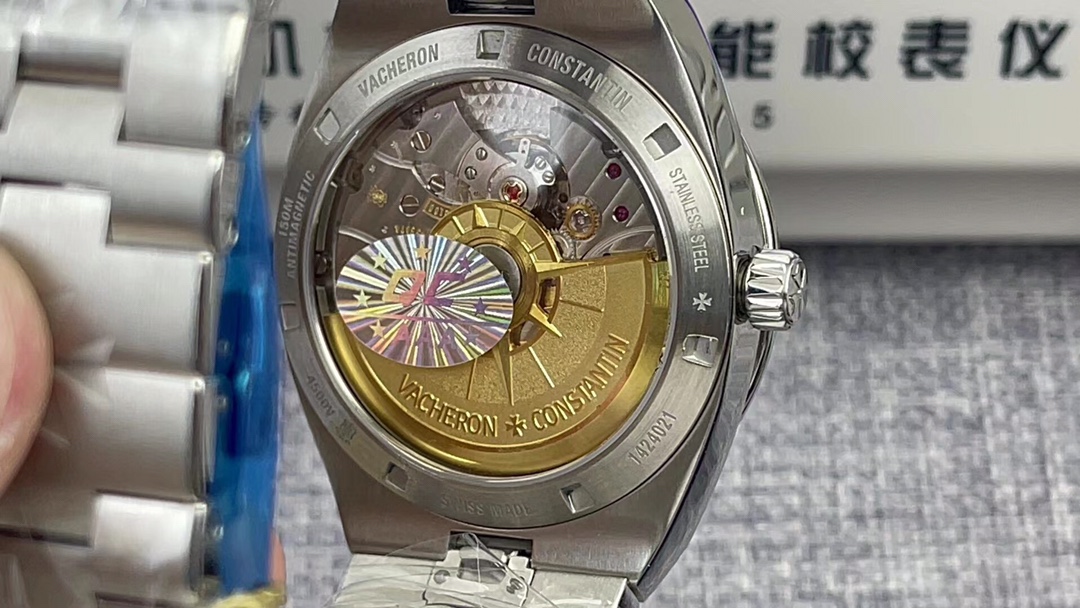
Its reliability record over long-term use is strong, particularly in replicas that avoid excessive decorative modifications.
Advantages & Limitations
The strength of the 9015 lies in consistency. It tolerates daily wear, infrequent servicing, and moderate shock better than many heavily modified clones. However, it does not naturally resemble Swiss haute horology movements in layout or finishing. Even with decorative rotors and plates, an experienced eye can usually identify its origins through balance position and winding behavior.
For many owners, this trade-off is acceptable. Performance often outweighs architectural purity.
Super Clone / Customized Movement Tier
What Makes a Custom Clone “Super Clone”
A super clone movement goes beyond cosmetic decoration. It involves structural modification to approximate genuine VC calibers such as the 5100, 5200, or 2460 families. This may include repositioned bridges, altered gear train layouts, customized rotors with Maltese cross engraving, and revised balance placement.
The goal is not only visual similarity but also functional alignment with genuine specifications, including calendar behavior and hand stack geometry.
Super Clone Movement Examples in VC Replicas
In the VC replica ecosystem, examples include modified 5100-style movements used in Overseas 4500V replicas and customized 2460-style movements powering Fiftysix Complete Calendar models. These movements often use established bases like Miyota 9015 or Chinese automatics, heavily reworked to support VC-specific layouts and complications.
When executed well, they deliver the most convincing experience available outside of genuine ownership. When executed poorly, they introduce complexity without corresponding reliability gains. This duality defines the super clone tier and explains why factory execution matters as much as movement type.
Conclusion: The best VC replica movement is not the most complex or the most visually convincing, but the one whose engineering choices align with how you actually plan to wear, maintain, and live with the watch.
III. Movement Feature & Performance Comparisons
Head-to-Head: Asian 2824 vs Miyota 9015 vs Custom Clone
When comparing VC replica movements side by side, the differences are less about raw specifications and more about how each movement behaves over extended ownership. Asian 2824 derivatives rely on a conservative, time-tested structure with straightforward materials and predictable wear patterns. Miyota 9015 movements reflect a more modern engineering philosophy, emphasizing efficiency and thinness. Custom clone movements attempt to replicate not just function, but the architectural identity of genuine Vacheron Constantin calibers.
In terms of structure and material quality, Asian 2824-based movements prioritize durability over refinement. Bridges are thicker, tolerances are forgiving, and the overall build favors longevity. Miyota 9015 movements use lighter components and tighter layouts, which improves efficiency but leaves less margin for poor assembly. Custom clones vary the most. Well-executed examples use reinforced plates, repositioned balance assemblies, and upgraded finishing, while weaker executions suffer from added complexity without proportional material upgrades.
Timekeeping stability follows a similar hierarchy. Miyota 9015 movements tend to maintain consistent rates across daily wear cycles, particularly in watches worn intermittently. Asian 2824 movements can be equally accurate when freshly regulated, but they are more sensitive to lubrication quality and positional variance. Custom clone movements can perform exceptionally well, but only when regulation and assembly quality are high; otherwise, added components increase the risk of amplitude loss.
Repairability strongly favors standard movements. Both Asian 2824 and Miyota 9015 bases are familiar to most watchmakers and easy to replace entirely if necessary. Custom clone movements are far more dependent on factory-level support. Once proprietary parts fail, replacement often becomes the only realistic option.
Suitability depends heavily on case design. Dress models benefit from thinner, quieter movements, while sport models tolerate thicker, more robust constructions that emphasize shock resistance and serviceability.
Precision & Regulation Differences
Beating Rate & Stability
All three movement families commonly operate at 28,800 vibrations per hour, but identical beat rates do not guarantee identical stability. Miyota 9015 movements tend to hold amplitude more evenly across their power reserve, resulting in smoother second-hand motion and less rate drift as the mainspring unwinds. China 2824 movements can match this performance when properly regulated, but they show greater variance if lubrication degrades.
Custom clone movements often inherit the beat rate of their base architecture, yet their added components can influence stability. Decorative plates, calendar modules, or relocated balance assemblies introduce additional friction points. When engineered correctly, these do not compromise precision. When shortcuts are taken, stability suffers first.
Impact on Daily Wear
In real-world use, these differences become noticeable over weeks rather than hours. A Miyota 9015-powered VC replica typically recovers quickly from partial winding and maintains consistent accuracy even if worn only a few hours per day. An China 2824-based watch performs best with regular, full-day wear and benefits from occasional manual winding.
Custom clone movements reward attentive ownership. Regular wear, careful winding habits, and avoidance of shock preserve performance. Neglect exposes their weaknesses faster than simpler designs.
Size Fit & Case Thickness Impact
Choosing Movement for Thin Models (e.g., Patrimony)
Thin VC replicas leave little room for compromise. The Miyota 9015 excels here due to its slim profile and efficient winding system. It allows cases like the Patrimony 85180 to remain proportionally correct without sacrificing reliability. China 2824 movements struggle in these designs unless heavily modified, which often introduces new problems.
Custom clone movements can work in thin cases, but only when engineered specifically for that purpose. Poorly adapted clones add thickness or require design compromises that undermine the elegance of the original model.
Movement Impact on Sportier Models (e.g., Overseas)
Sport-oriented VC replicas tolerate thicker movements more easily. Overseas models benefit from the robustness of China 2824 derivatives, especially for daily wear involving movement, vibration, and occasional impact. The added case thickness aligns with the design language of the original watch.
Custom clone movements in sport models emphasize visual authenticity, particularly for display casebacks. They succeed when durability matches appearance, but owners should recognize that complexity increases maintenance sensitivity.
IV. Movement Finishing & Aesthetics (Why It Matters)
How Movement Decoration Influences Perceived Quality
Movement decoration shapes how a replica feels to own, even when it does not directly improve performance. Geneva stripes, perlage, and engraved rotors transform a functional mechanism into something visually engaging. In VC replicas with exhibition casebacks, finishing quality determines whether the watch feels cohesive or compromised.
Decoration also reveals intent. Minimal finishing suggests a movement chosen purely for function. Detailed finishing signals an attempt to mirror the visual language of Vacheron Constantin, where movement aesthetics are integral to the brand’s identity.
Rotor Design & Branding
Replica Rotors with Maltese Cross / Brand Aesthetics
The rotor is the most visible component in many VC replicas. Well-executed examples feature correct Maltese cross geometry, balanced engraving depth, and appropriate weight distribution. These details influence winding behavior as much as appearance. A poorly weighted decorative rotor increases noise and reduces efficiency.
High-quality replicas integrate branding without sacrificing mechanical balance, preserving smooth winding while delivering visual authenticity.
Balance Between Aesthetics & Functionality
Excessive decoration introduces risk. Heavy rotors and thick decorative plates add mass where precision matters most. The best replicas maintain restraint, prioritizing mechanical integrity while applying finishing only where it does not interfere with performance.
Plate & Bridge Decoration
Perlage vs Côtes de Genève Patterns
Perlage adds depth and texture, often used beneath bridges to enhance visual complexity. Côtes de Genève provide directional elegance across visible surfaces. In VC replicas, accurate application of these patterns contributes significantly to perceived realism, especially under magnification.
However, consistency matters more than presence. Uneven striping or shallow perlage undermines the effect immediately.
Realism vs Cost Constraints
Perfect finishing requires time, skill, and cost. Replica movements operate within constraints that genuine manufacture does not. The most convincing executions allocate resources strategically, focusing on visible areas and preserving functional tolerances elsewhere.
Excessive pursuit of visual accuracy without mechanical discipline results in movements that look impressive briefly but age poorly. A balanced approach produces replicas that remain satisfying long after the novelty fades.
V. Power Reserve & Practical Performance Metrics
Understanding Power Reserve & Efficiency in Replica Movements
Power reserve affects convenience more than most buyers initially expect. In daily use, the difference between a movement that reliably runs through a full day and one that fades overnight determines whether a watch feels dependable or demanding. Most VC replica movements operate within a realistic range of approximately 38 to 42 hours, regardless of higher figures sometimes implied by listings. Some modified clone movements can exceed this range, but extended reserve alone does not guarantee better ownership experience.
What matters is how the movement delivers that reserve. A watch that maintains stable amplitude and timing until near depletion is easier to live with than one that technically runs longer but becomes erratic during its final hours. In practice, movements with moderate but predictable reserves integrate more smoothly into normal wear cycles.
Movement Efficiency in Everyday Use
Stability Over 24h / 48h
Across repeated wear patterns, Miyota 9015-based movements tend to remain stable through a full 24-hour cycle, even when worn intermittently. Their torque delivery stays consistent, which minimizes rate drift overnight. Asian 2824-based movements perform best when worn for a full day, maintaining accuracy across the first 24 hours but showing more variation if left untouched into the second day.
Custom clone movements vary widely. Well-executed examples hold timing effectively through a full day and part of the next, but their added components increase sensitivity to lubrication quality and assembly precision. When stability drops, it usually appears between the 30 and 40-hour mark rather than at full depletion.
Winding Efficiency & Wear Patterns
Winding efficiency shapes how forgiving a watch is to irregular wear. Movements that wind efficiently recover quickly from partial depletion, making them suitable for owners who rotate watches. Miyota 9015 movements excel here, building reserve rapidly with modest wrist movement.
Asian 2824 derivatives require more sustained motion but reward consistent daily wear with predictable performance. Custom clone movements often demand more attention. Their winding systems are tuned to support decorative rotors and altered layouts, which can reduce efficiency if the watch is worn lightly. Owners who wear such watches sporadically may find manual winding becomes part of the routine.
VI. Serviceability & Long-Term Maintenance Planning
What to Expect for Repair & Service of Replica Movements
Replica movements require the same fundamental care as any mechanical watch: periodic lubrication, regulation, and inspection for wear. The difference lies in how accessible these services are. Movements based on standard architectures align well with common watchmaking tools and practices, allowing routine servicing without specialized intervention.
Service intervals typically range from three to five years, depending on wear intensity and environmental exposure. Movements with heavier decoration or added modules benefit from more conservative maintenance schedules, as additional components increase friction points and lubrication demands.
Parts Availability & Watchmaker Support
Standard Base Movements (Easy Parts)
Asian 2824-based movements and Miyota 9015 variants offer the strongest long-term service outlook. Replacement parts are widely available, and complete movement swaps remain economically viable. Most independent watchmakers are comfortable working on these calibers, which reduces downtime and repair cost.
For owners planning extended use, this accessibility translates into confidence. Minor issues rarely escalate into terminal failures.
Custom Clone Movements (Parts Scarcity)
Custom clone movements introduce a different ownership calculus. Proprietary bridges, modified gear trains, and decorative components are rarely available outside factory channels. While routine servicing is possible, major component failures often require full movement replacement rather than repair.
This limitation does not negate their value, but it reframes expectations. Custom clone movements reward careful use and attentive maintenance, but they are less forgiving over long ownership cycles. Understanding this trade-off helps align movement choice with realistic maintenance planning.
VII. How to Read Movement Codes in Listings (Practical Buyer Tips)
Movement Keyword Signals in Product Titles
Movement codes in replica listings function as shorthand, but they are rarely precise in the way genuine specifications are. Understanding what these terms usually imply helps separate meaningful information from marketing noise.
A listing that states “Asian 2824” typically refers to a movement built on the ETA 2824-2 architecture, manufactured in Asia with varying levels of finishing. This label suggests mechanical familiarity, straightforward serviceability, and predictable performance rather than visual authenticity. When paired with dress models or display casebacks, it often signals a compromise in movement appearance.
“Miyota 9015” is generally the most transparent designation. When used accurately, it indicates a Japanese-made base movement with modern construction and reliable performance. In VC replicas, this tag often correlates with thinner cases and more stable daily accuracy. Listings that explicitly state 9015 usually reflect a genuine component choice rather than a rebranded clone.
Terms like “custom clone” or “super clone” require closer scrutiny. These labels suggest structural modification beyond simple decoration, but the depth of customization varies by factory. Some represent genuine architectural rework to resemble VC calibers such as 5100 or 2460, while others describe little more than engraved rotors and cosmetic plates. The absence of specific caliber references often indicates superficial modification.
Reading between the lines matters. Precise movement references, clear base identification, and restrained language tend to accompany higher-quality builds. Vague phrasing and stacked adjectives usually do not.
Factory & Movement Label Interaction
Factory Names + Movement Tags
Factory names provide context for how movement tags should be interpreted. Certain factories are known for conservative, reliable builds that favor proven bases, while others focus on visual fidelity and complex customization. When a trusted factory pairs its name with a specific movement code, the implication carries more weight than the code alone.
For example, a Miyota 9015 listed by a factory known for thin dress replicas suggests intentional alignment between case design and movement choice. A “custom clone” designation from a factory with a track record of movement development signals deeper modification than the same phrase from an unknown source.
What Each Tag Generally Implies
In practical terms, “2824 clone” implies serviceability and resilience. “9015” implies efficiency, thinness, and consistency. “Custom clone” implies visual and architectural ambition with increased complexity. “Super clone” implies the highest level of effort, but also the greatest dependence on factory execution.
Understanding these implications allows buyers to evaluate listings based on likely outcomes rather than headline claims.
VIII. FAQ — Replica Movement Questions Answered
Which Movement Is Most Accurate for VC Replicas?
Across extended use, movements based on the Miyota 9015 platform tend to deliver the most consistent real-world accuracy for VC replicas. Their stable amplitude and efficient winding produce reliable daily performance, particularly for owners who rotate watches. Well-regulated China 2824 movements can match this accuracy, but they are more sensitive to wear patterns and maintenance quality.
Custom clone movements can achieve excellent precision when executed and regulated properly, but their performance range is wider. Accuracy depends heavily on factory assembly and post-assembly adjustment rather than movement type alone.
Can Super Clone Movements Be Serviced Like Genuine?
Super clone movements can be serviced, but not in the same way as genuine calibers. Routine lubrication and regulation are usually possible, but proprietary components limit repair options when failures occur. Genuine movements benefit from standardized parts supply and documented service procedures, while super clones rely on factory-specific solutions.
For this reason, servicing a super clone often means maintaining it carefully to avoid major failures rather than expecting full component-level repairability.
Do More Expensive Clones Always Use Better Movements?
Higher price does not guarantee a superior movement. Increased cost often reflects case finishing, dial accuracy, and movement decoration rather than fundamental mechanical improvement. Some mid-priced replicas use reliable, well-regulated movements that outperform more expensive builds burdened by excessive modification.
The best value emerges when movement choice aligns with case design, wear habits, and realistic maintenance expectations, rather than price alone.