
Audemars Piguet Super Clone Factories – Factory-Centric Comparison Table
| Factory | Core Positioning | Main AP Focus | Movement Strategy | Case & Finishing Style | Bracelet & Wear | QC Stability | Typical Strengths | Typical Limitations | Best Fit User |
|---|---|---|---|---|---|---|---|---|---|
| VS Factory | Stability-first, conservative engineering | Royal Oak 15500, selected modern RO | Integrated-style movement optimized for reliability, not visual extremes | Controlled geometry, slightly softened edges, consistent brushing | Comfortable, predictable articulation | High | Long-term wear stability, low defect rate, calm ownership | Limited model coverage, less aggressive visual sharpness | Daily wear users, first-time AP replica owners, low-maintenance preference |
| APS Factory | AP-specialist, accuracy-driven | Royal Oak 15500 / 15510 core | Visually closer integrated architecture, tighter tolerances | Sharper bezel edges, flatter case profile, stronger architectural tension | Excellent when aligned, but less forgiving | Medium | Case accuracy, visual realism, modern RO proportions | QC variance, higher ownership responsibility | Experienced collectors, appearance-focused users |
| ZF Factory | Former high-tier, now transitional | Older Royal Oak references | Conventional movement solutions, proven but dated | Softer finishing by current standards | Adequate, less refined articulation | Medium | Acceptable on older models, historical relevance | Outpaced by VS/APS in modern super clone standards | Budget-conscious buyers, older RO interest |
| JF Factory | Legacy AP producer | Broad Royal Oak & Offshore coverage | Modified base movements with decorative plates | Solid but thicker profiles | Heavier feel, robust build | Medium | Model variety, proven durability | Thickness deviation, visual aging | Users seeking variety over precision |
| 3KF (AP-related output) | Peripheral, not AP-focused | Occasional niche AP models | Non-specialized movement solutions | Inconsistent geometry | Varies by batch | Low–Medium | Covers obscure references | Not true super clone standard | Collectors chasing rare references only |
| Other Minor Factories | Opportunistic production | Edge or discontinued models | Generic movement setups | Compromised finishing | Often stiff or uneven | Low | Availability where others don’t produce | High variance, short ownership lifespan | Short-term curiosity buyers |
(Inside the China Supply Chain)
Why People Ask “Where Are AP Replicas Made?”
The question usually comes from a mix of reasonable concerns rather than idle curiosity. People worry about quality because Audemars Piguet is a benchmark brand, not a casual purchase even in replica form. They worry about being misled because the replica market is crowded with exaggerated claims and recycled phrases. And they carry inherited assumptions about “China” or “Guangzhou,” often equating geography with quality, scale, or legitimacy.
These doubts are not naïve. In practice, many buyers have seen wildly different results all described under the same vague origin story. One watch labeled “Guangzhou factory” feels solid and well-finished after months of wear; another with the same description develops issues within weeks. The instinct to ask where something is made is an attempt to find a stable reference point in an unstable market.
The problem is that location feels like a concrete answer, but in this industry it rarely is. The question itself is valid. The expectation that it will produce clarity is where the misunderstanding begins.
The Reality: There Is No Single “Replica Factory Location”
High-end Audemars Piguet replicas are not produced in a single building, district, or city that can be circled on a map. There is no address where cases are cut, dials printed, movements finished, assembled, regulated, and inspected under one roof. That mental model belongs to marketing, not manufacturing reality.
What actually exists is a distributed production system. Cases, bezels, and bracelets come from specialized metal workshops. Dials are produced elsewhere, often by suppliers who focus exclusively on surface treatment and printing accuracy. Movements follow their own path, shaped by availability, modification capability, and long-term reliability rather than proximity. Assembly and final quality control sit at the end of this chain, not at its center.
This separation is not a weakness. It is the reason high-end replicas exist at all. Precision watch replication depends on specialists doing one narrow job well, not on a single factory doing everything acceptably. When people ask for a “factory location,” they are really asking for assurance that this system was managed correctly. Geography alone cannot provide that answer.
Why China Became the Center of High-End Replica Watch Production
China did not become central to high-end replica watch production because of secrecy or shortcuts. It became central because it already had the industrial conditions required for this kind of work, long before replicas entered the conversation.
Industrial Clusters & Skilled Labor
The skills involved in producing convincing Audemars Piguet replicas are not abstract. They are physical, repetitive, and learned over time. Case finishing requires consistent brushing and sharp transitions. Bracelet construction demands tolerances that remain comfortable after years of flexing. Decorative elements like applied markers or textured dials depend on steady hands and process discipline, not improvisation.
China’s manufacturing regions accumulated these skills through decades of adjacent industries: consumer electronics, precision hardware, metal finishing, and micro-mechanical assembly. Workers and small workshops moved laterally between sectors, carrying techniques with them. By the time replica watchmaking matured, the labor base already understood how to work within tight tolerances at scale.
This is why quality varies so dramatically between producers operating in the same country. The capability exists, but it is unevenly applied.
Component Supply Chains & Tooling Infrastructure
High-end replicas rely less on any single breakthrough and more on alignment across many small processes. CNC machining, mold development, polishing compounds, bracelet pin systems, sapphire treatment, and surface coatings all have to interact smoothly. If one link underperforms, the final product exposes it immediately.
China’s advantage lies in the density of these capabilities. Tooling can be modified quickly. New molds can be cut, tested, discarded, and reworked without collapsing the project. Feedback loops between component suppliers and assembly teams are short, practical, and continuous.
This environment favors replication because replication is not static. Each generation responds to flaws found in the last. Without a full supply chain capable of absorbing constant revision, that kind of iterative improvement stalls.
Cost, Speed & Iteration Capability
Replica watch production is shaped by failure as much as success. Many parts never make it past testing. Entire case batches are rejected for minor visual inconsistencies. Dial colors are reworked because they look wrong under natural light. These are normal outcomes, not exceptions.
China can absorb this friction. The cost of iteration is low enough to encourage experimentation, and the turnaround time is fast enough to keep momentum. In Switzerland or most of Europe, the same cycle would be prohibitively slow and expensive, even if the technical skill were available.
This does not mean corners are cut. It means feedback is acted on instead of ignored. Over time, that difference compounds into the quality gap people actually experience on the wrist.
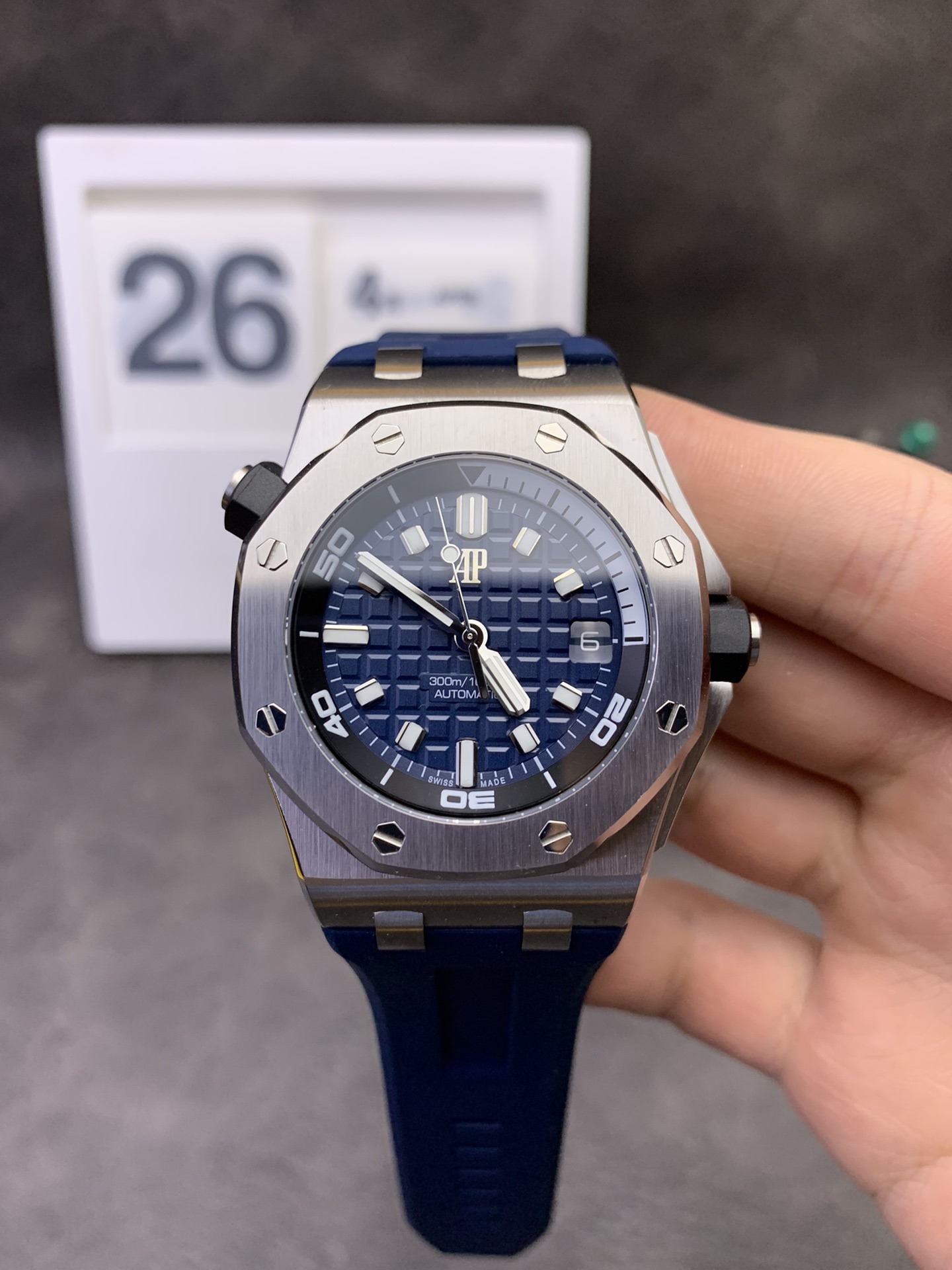
The Role of Guangzhou in the Watch Industry (Not What You Think)
Guangzhou as a Trading & Coordination Hub
Guangzhou matters in the watch world, but not for the reason most people assume. It is not a hidden city of factories humming behind locked doors. Its real function is coordination. Information moves through Guangzhou faster than almost anywhere else in the supply chain. Samples arrive, feedback circulates, revisions are discussed, logistics are arranged, and finished pieces are redistributed outward.
Over time, this concentration of trading activity created the illusion that production itself must also be concentrated there. In reality, Guangzhou operates more like a switchboard. It connects component suppliers, assembly teams, distributors, and quality controllers who may be physically spread across different regions. The city’s importance comes from density of communication, not secrecy of location.
This distinction matters because it reframes responsibility. When something goes wrong, it is rarely because a watch was “made in Guangzhou.” It is because decisions taken within this coordination layer favored speed, cost, or convenience over control.
Why “Guangzhou Factory” Is a Misleading Term
“Guangzhou factory” is one of the most overused phrases in the replica watch vocabulary, and one of the least informative. It compresses a complex system into a comforting label that sounds specific while explaining almost nothing.
Factories are not cities. Cities contain thousands of workshops operating at wildly different standards. Two producers can sit within the same urban boundary and deliver products that feel worlds apart in finishing, durability, and long-term consistency. The difference has little to do with rent prices or postal codes.
What actually separates outcomes is the factory system behind the watch: how parts are sourced, how tolerances are defined, how many stages of inspection exist, and how often flaws are allowed to pass. Using “Guangzhou” as a proxy for quality shifts attention away from these questions, which is exactly why the term persists.
Factory System vs Location: What Actually Determines Quality
Quality in high-end Audemars Piguet replicas is determined by structure, not geography. Within the same city, one system may prioritize stable suppliers, consistent case finishing, and conservative assembly tolerances. Another may rely on opportunistic sourcing, minimal inspection, and cosmetic fixes that look fine at first glance but fail over time.
This is why factory names matter more than locations. Labels like VS or APS are not addresses. They are shorthand for repeatable processes, accumulated decisions, and a specific tolerance for error. When these systems work, watches age predictably. When they don’t, problems appear quickly and repeatedly, regardless of where the parts physically came from.
The uncomfortable truth is that location offers emotional reassurance but little practical guidance. Systems determine whether a watch holds alignment after months of wear, whether the bracelet loosens evenly or unevenly, and whether finishing remains crisp once novelty fades. Geography does none of that work.
How High-End Replica Watches Are Actually Produced (High-Level Overview)
At a high level, production follows a familiar arc, but the value lies in how each stage feeds the next. Design begins with reference analysis rather than invention, focusing on proportions and surfaces that define the watch’s character. Mold development translates those observations into tooling, often revised multiple times before results stabilize.
Component manufacturing then splits across specialists: cases, bezels, bracelets, dials, and movements progress in parallel rather than sequence. Assembly is where these streams converge, and it is also where weaknesses become visible. Poor upstream decisions surface immediately during fitting and regulation.
Quality control is not a single gate at the end. In better systems, it appears repeatedly, rejecting parts early and often. In weaker ones, it becomes cosmetic, correcting what can be seen and ignoring what cannot. The difference between a convincing replica and a disposable one is usually decided here, long before any box is closed.
Understanding this flow clarifies why origin questions miss the point. High-end replicas are not born in a place. They are assembled through judgment.
