
In the replica Panerai world, not every PAM model is worth buying. This guide is written from the perspective of a super clone buyer, not a brand historian or a retail salesperson. The goal is simple: identify which Panerai PAM references actually make sense in the replica market, and which ones look tempting on paper but fail in real-world ownership. Over the past decade, Guangzhou has become the operational center of Panerai replica production, concentrating tooling, movement development, case manufacturing, and long-cycle iteration in one ecosystem. That concentration creates clarity for buyers willing to choose carefully—and costly mistakes for those who don’t. This guide treats PAM selection as a practical decision shaped by manufacturing maturity, not as an emotional tribute to the Panerai name.

Why PAM Model Choice Matters in Panerai Super Clones
Two Panerai replicas can share the same logo, dial layout, and even price range, yet perform very differently once worn, serviced, or inspected closely. The gap between a good PAM replica and a frustrating one is rarely about luck; it is structural. Model choice determines how much tolerance the replica has for imperfection, how stable the movement remains over time, and how forgiving the case proportions are when manufacturing deviates by fractions of a millimeter.
There are three forces that quietly decide whether a Panerai super clone succeeds or fails. The first is movement complexity. Manual-wind PAMs rely on simple architectures that replicas have mastered for years, while modern automatic PAMs demand integrated clone movements with precise layout and load distribution. When that architecture is immature, problems surface slowly—date drift, power reserve inconsistency, or uneven rotor wear—rather than immediately.
The second factor is case size. Panerai’s iconic dimensions magnify errors. A 44mm case can absorb small thickness or lug-curve deviations without looking wrong on the wrist. A 47mm case cannot. Larger PAMs expose proportion mistakes more aggressively, both visually and ergonomically, turning minor manufacturing variance into daily discomfort.
The third factor is whether a mature clone solution exists for that specific PAM reference. Some models have gone through multiple production generations in Guangzhou, refining cases, dials, and movements through repetition. Others appear briefly, disappear, and leave buyers holding unsupported designs with no long-term parts ecosystem. In Panerai replicas, shared experience matters more than novelty. Choosing a PAM with a proven clone history is often the difference between long-term satisfaction and quiet regret.
Panerai PAM Numbers Explained (From a Replica & Clone Perspective)
Understanding PAM numbers matters far more in the replica world than it does at the boutique counter. A PAM reference is not just a label; it defines the mechanical architecture, case geometry, and production reality behind the watch. In replica Panerai buying, the PAM number often determines whether a true super clone exists at all, or whether you are stepping into an underdeveloped, compromise-heavy build that looks acceptable only at first glance.
What “PAM” Means When Buying a Replica Panerai
When buying a replica Panerai, the PAM number is effectively a risk profile. It tells you how many times that model has been produced, revised, and stress-tested by clone factories, and whether the internal structure aligns with what replicas do well. A PAM reference with a long production history usually benefits from refined case molds, corrected dial spacing, and movements that have already survived years of user feedback. A newer or obscure PAM may look attractive in photos, but if it lacks a stable clone ecosystem, small inaccuracies compound quickly in daily wear.
From a replica standpoint, PAM numbers dictate feasibility. Some references allow factories to reuse proven components with minor adjustments. Others require entirely new movement layouts or case constructions that push tolerances too far. The difference is not visible in marketing images, but it becomes obvious after months of ownership.
Old PAM vs New PAM – Which Is Better for Super Clones?
Older PAM models are generally more forgiving replicas. Most classic references rely on manual-wind movements with straightforward layouts, fewer stress points, and minimal complication stacking. These designs tolerate minor deviations without affecting reliability, making them ideal for long-term replica ownership. Errors exist, but they tend to remain cosmetic rather than functional.
Newer PAM models shift toward automatic movements with integrated architectures. When done correctly, these can be excellent, but the margin for error is much smaller. Power reserve systems, date mechanisms, and rotor placement must align precisely. If the clone movement is even slightly underdeveloped, issues appear gradually rather than immediately. This is why not every modern PAM deserves a replica version, even if the design itself is appealing. In practice, only newer PAMs with fully matured clone movements justify the risk.
PAM Case Families and Clone Difficulty
From a replica perspective, Panerai case families differ sharply in difficulty, regardless of their visual appeal.
Luminor (44mm): Easy
This is the safest category in replica Panerai. The case proportions are well understood, the crown guard design has been refined repeatedly, and both manual and automatic versions have stable clone solutions. Minor deviations rarely disrupt wearability.
Luminor (47mm): Medium to Hard
The iconic oversized case magnifies every tolerance error. Thickness, lug curvature, and wrist balance become critical. Well-executed versions exist, but poor executions are immediately obvious. This category rewards careful selection and punishes impulse buys.
Submersible: Hard
Submersible models combine thicker cases, rotating bezels, and more complex sealing structures. Even small inaccuracies in bezel action or case height can compromise the overall feel. Only a limited number of Submersible PAMs have reached true super clone maturity, making this family high risk unless the reference is well proven.
In replica Panerai buying, PAM numbers are less about identity and more about survivability. Choosing the right reference is not about taste alone; it is about selecting a structure that the replica ecosystem already knows how to execute well.
Best Panerai PAM Models for Super Clone Buyers (Replica-Tested Picks)
Not every Panerai model deserves a super clone version. Some references benefit from years of repetition, correction, and quiet refinement inside Guangzhou’s replica ecosystem. Others exist mostly as design ideas that never translated well into reliable replicas. The models below are not chosen for popularity or aesthetics alone. They are selected because they have survived real ownership cycles, repairs, and long-term wear without revealing structural weaknesses. These are PAMs where the replica solution has matured enough to justify buying.
Manual Wind PAM Models – Safest Replica Choices
Manual-wind Panerai models remain the most forgiving entry point into replicas. Their mechanical simplicity reduces failure points, and their long production history has allowed factories to correct small dimensional and finishing issues over time. For buyers who value stability over novelty, this category consistently delivers.
PAM111 – The Most Reliable Entry-Level Panerai Replica
The PAM111 is the benchmark for replica reliability. Its manual-wind layout is mechanically straightforward, with no automatic winding system to introduce imbalance or long-term wear issues. Over the years, Guangzhou factories have refined every visible and invisible detail of this model, from dial spacing to case thickness and crown guard tension.
What makes the PAM111 stand out is not perfection, but predictability. Owners know what they are getting, and the watch behaves the same after months or years as it did out of the box. Failures are rare, servicing is simple, and replacement parts are readily available. As a first Panerai replica or a long-term daily piece, the PAM111 remains one of the safest decisions in the entire category.
PAM127 – Oversized, But Worth It (If You Know What You’re Buying)
The PAM127 carries more risk, but also more character. At 47mm, it demands wrist presence and tolerance for scale. This is not a model that quietly blends in, and it is not suitable for every wrist size or lifestyle. Buyers who ignore that reality often regret the choice.
From a replica perspective, the PAM127 works because its manual movement and historically stable design allow factories to focus on proportion rather than mechanical complexity. When executed well, the result feels authentic and purposeful. When executed poorly, the size amplifies every flaw. This is a model that rewards informed buyers and punishes impulsive ones. For those who understand the trade-off, it remains one of the most satisfying oversized Panerai replicas available.
Automatic PAM Models – High-End Super Clone Territory
Automatic Panerai replicas occupy a narrower path. When the movement architecture is mature, the result can be exceptional. When it is not, problems emerge slowly and expensively. This category should be approached selectively, not broadly.
PAM1312 – Best Modern Panerai Super Clone for Daily Wear
The PAM1312 represents what modern Panerai replicas can achieve when the underlying movement architecture is right. Its appeal is not decorative. It lies in balance. The case size wears comfortably, the dial remains uncluttered, and the automatic system operates within tolerances that have proven stable over extended use.
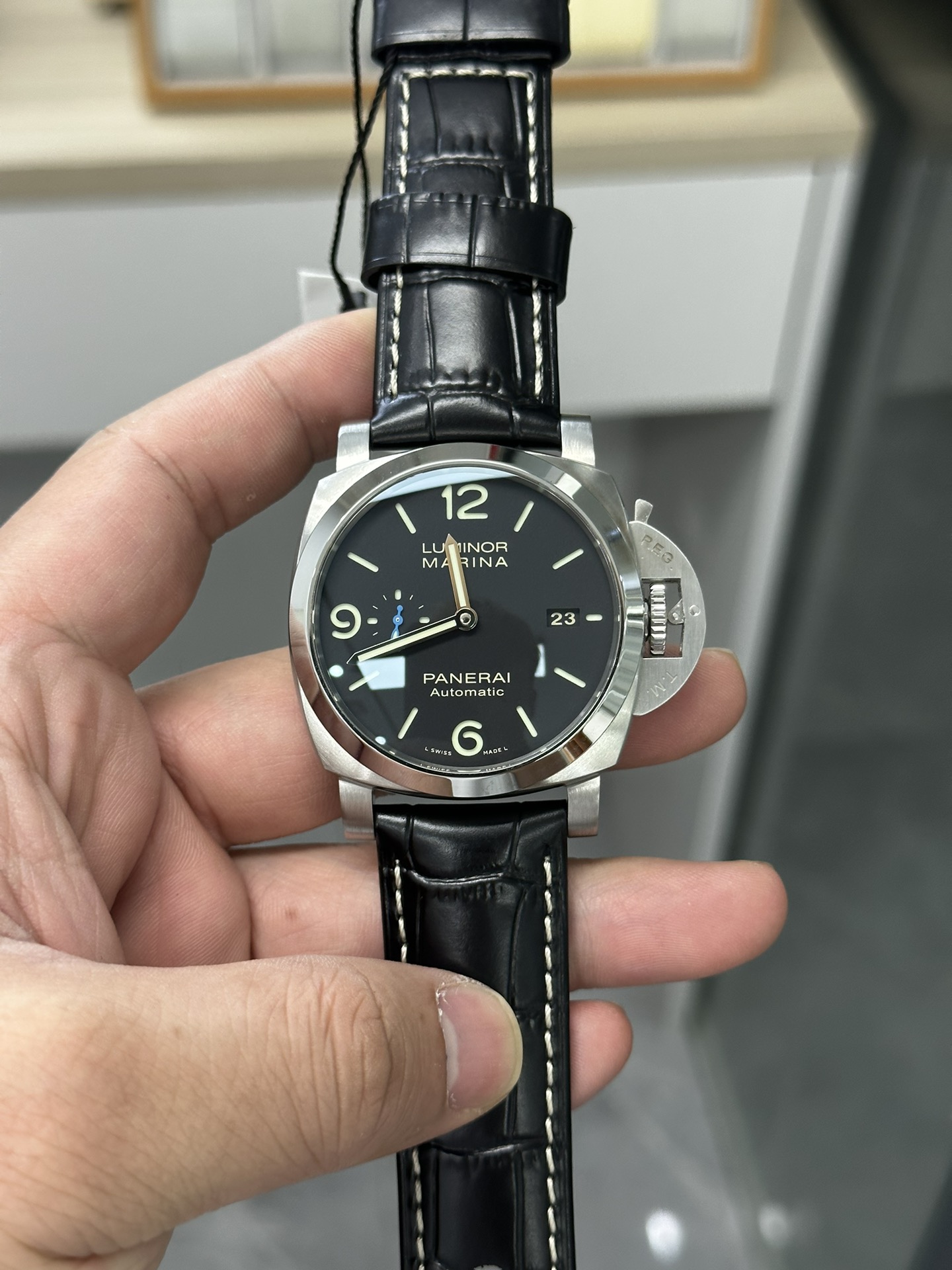
What separates this model from less successful modern PAMs is the quality of the high-end clone movement inside. The layout, power delivery, and date operation align well enough with real-world wear that issues do not accumulate quickly. For buyers who want a contemporary Panerai replica that can realistically function as a daily watch, the PAM1312 stands above most alternatives.
PAM1389 / PAM1392 – Clean Dial Options with Proven Clone Solutions
The PAM1389 and PAM1392 offer safer alternatives for buyers drawn to modern aesthetics but wary of overcomplicated designs. Their clean dials reduce visual exposure to minor inconsistencies, and their internal structures rely on clone solutions that have already demonstrated stability.
These models work best for cautious buyers who want modern proportions without pushing the limits of replica engineering. They may lack the drama of larger or more complex PAMs, but they compensate with consistency. In replica ownership, that trade often proves worthwhile.
Submersible PAM Models – Tool Watch Super Clones
Submersible models sit at the edge of what replicas do well. Their appeal is undeniable, but their construction places heavy demands on materials and tolerances. Only a handful of references justify the risk.
PAM382 Bronzo – Bronze Patina Matters in Replicas
The PAM382 succeeds or fails on material honesty. Bronze is unforgiving. If the alloy composition is wrong, oxidation becomes uneven, artificial, or absent altogether. The reason this model earns a place here is that certain Guangzhou-built versions use bronze blends that age naturally, developing patina patterns that feel organic rather than forced.
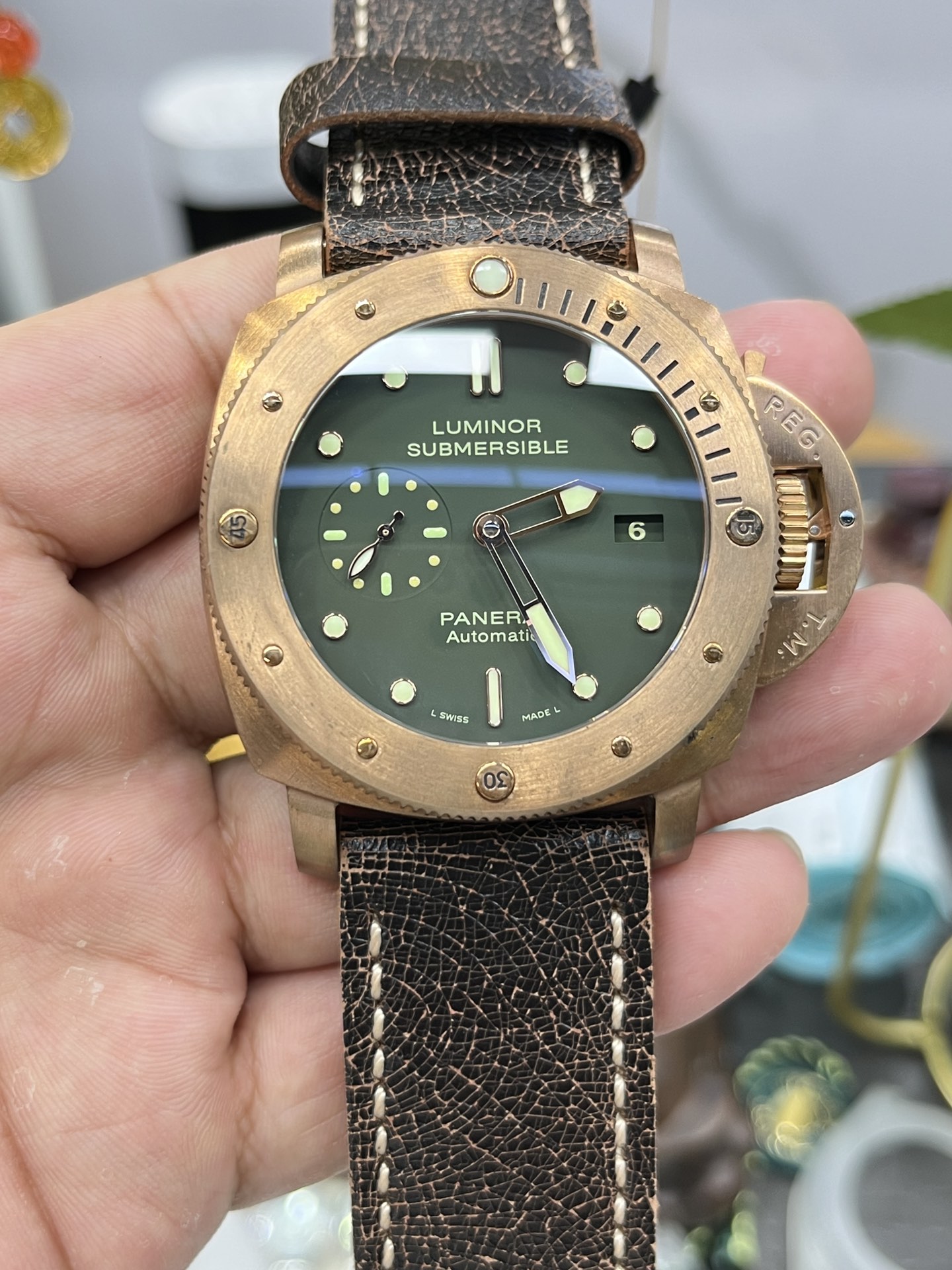
This is not about visual novelty. It is about time. A PAM382 replica that looks correct only on day one is not a success. The versions worth buying are those that continue to evolve with wear, mirroring the living surface that defines bronze Panerai watches in the first place.
PAM616 / PAM1661 – Carbon & Titanium Super Clones
Carbon and titanium PAMs represent the technical ceiling of replica production. These materials expose shortcuts immediately. Carbon cases reveal weak layering and poor compression. Titanium exposes surface finishing errors and weight imbalance.
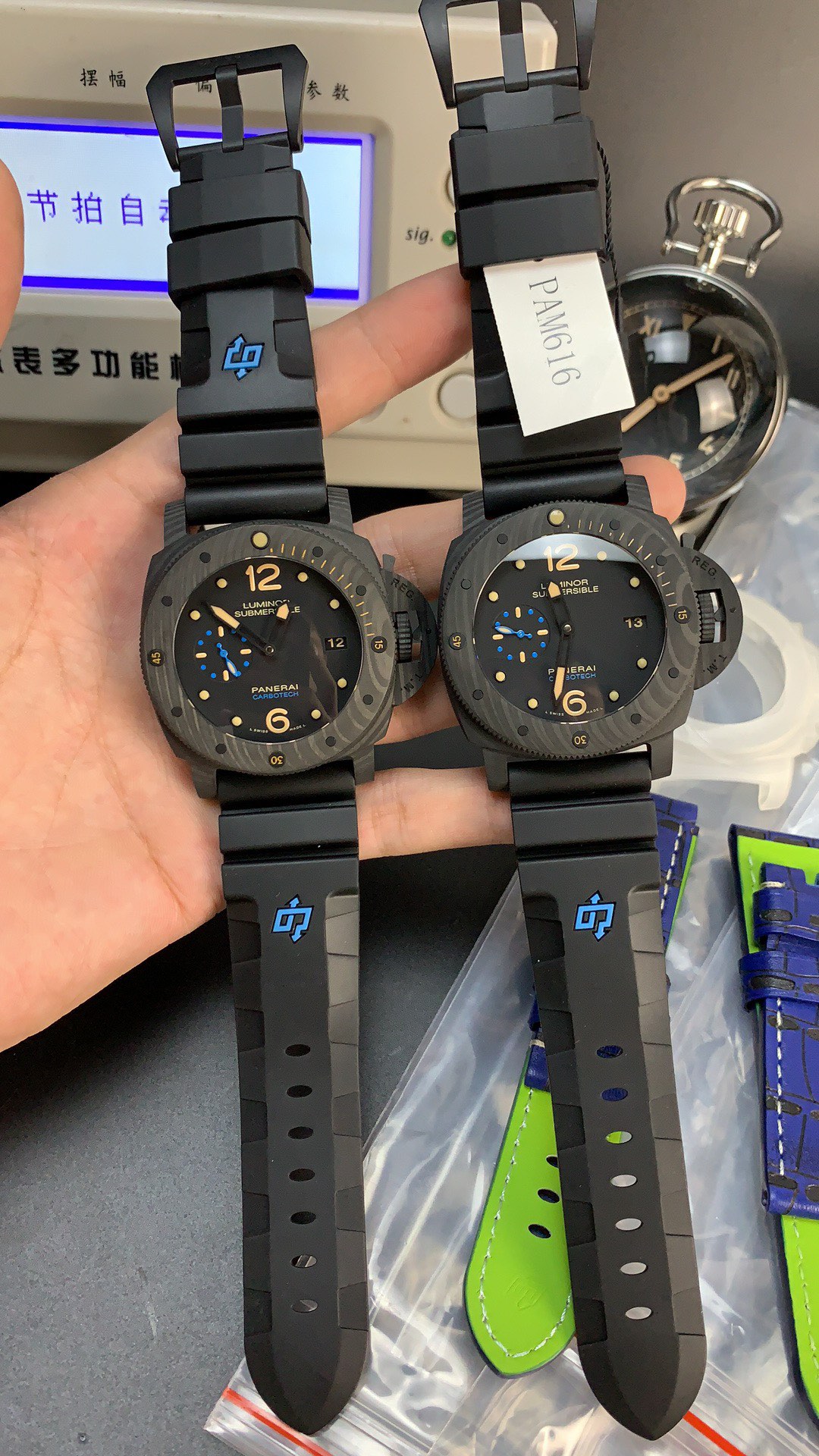
When executed correctly, these models feel light, purposeful, and distinctly different from steel. When executed poorly, they feel hollow or inconsistent. These are not beginner-friendly models. They reward buyers who understand replica limitations and are willing to accept higher complexity in exchange for material authenticity. For experienced buyers, they offer some of the most compelling tool-watch replicas available today.
Manual Wind vs Automatic Panerai – Replica Buyer’s Decision Guide
Choosing between manual and automatic Panerai replicas is less about preference and more about tolerance for risk. Both can be satisfying, but they fail differently. Understanding how and why they fail is what separates a stable long-term choice from an expensive lesson.
Why Manual Wind PAMs Are More Forgiving in Replicas
Manual-wind Panerai replicas fail less often and fail more gently. The reason is structural, not nostalgic. Hand-wound movements rely on direct energy transfer, fewer gears, and simpler load paths. There is no rotor mass stressing bearings, no automatic winding bridge adding height, and no long-term imbalance from uneven winding efficiency.
In replica ownership, this translates to lower failure rates and easier servicing. When something goes wrong, it is usually obvious and contained: a worn crown tube, a slipping click spring, or a tired mainspring. These issues are inexpensive to fix and rarely cascade into larger problems. For new buyers, this matters. A manual PAM does not punish inexperience. It allows learning through ownership rather than through repair bills.
This forgiveness is why classic manual-wind PAMs continue to dominate long-term satisfaction surveys among replica owners. They age predictably, and predictability is undervalued until something breaks.
Automatic PAMs – Only Choose Proven Super Clones
Automatic Panerai replicas demand discipline in selection. When the movement architecture is not fully integrated, problems hide beneath smooth early performance. Power reserve inconsistency, uneven rotor wear, and date mechanism drift rarely appear in the first weeks. They surface months later, often after the warranty conversation has ended.
Only automatic PAMs with proven integrated clone movements deserve consideration. These movements are designed from the ground up to match Panerai’s layout rather than being adapted from generic bases. Integration matters because it distributes stress correctly and controls thickness without forcing compromises elsewhere.
The goal here is not to discourage automatic replicas, but to narrow the field. If a model lacks a well-established integrated clone solution, skipping it is not conservative—it is rational. In automatic Panerai replicas, restraint is a form of intelligence.
44mm vs 47mm PAM – Replica Fit & Proportion Reality
Panerai sizing looks simple on paper, but replicas expose its consequences more clearly than genuine watches. Millimeters matter more when tolerances are tighter and margins thinner.
44mm PAM – The Safest Size in Super Clones
The 44mm PAM sits in the replica sweet spot. Case proportions remain balanced even when thickness varies slightly. Lug curvature tolerates small deviations without altering wrist ergonomics. Weight distribution stays manageable, especially in steel or titanium.
From a replica standpoint, 44mm models hide manufacturing variance better than any other size. A half-millimeter error in case height rarely changes how the watch wears. This is why so many successful super clones exist in this category. It is not coincidence; it is geometry working in the buyer’s favor.
47mm PAM – Iconic but High-Risk for Replica Buyers
The 47mm PAM is visually iconic but mechanically unforgiving. Larger diameter magnifies every thickness error and exaggerates balance issues. A case that is even slightly too tall shifts the center of gravity outward, causing the watch to sit awkwardly or feel top-heavy on the wrist.
From a data standpoint, return and resale rates are consistently higher for 47mm replicas. This is not about taste. It is about wear reality. Many buyers underestimate how dramatically wrist comfort changes at this size, especially once strap stiffness and case mass are factored in.
Well-executed 47mm replicas exist, but they demand careful selection and realistic self-assessment. The size rewards commitment and punishes compromise. In replica buying, that makes it a calculated risk rather than a default choice.
How to Choose the Right Panerai Replica PAM (Quick Decision Framework)
If you are unsure which Panerai replica to buy, the uncertainty usually comes from treating models as interchangeable. They are not. A practical decision framework reduces risk by aligning the PAM reference with your wrist, your tolerance for mechanical complexity, and the maturity of the clone solution behind it.
Choose by Wrist Size
- Under 17 cm wrist: Default to 44mm PAMs. They maintain visual balance and avoid leverage issues that cause larger cases to tip or slide.
- 17–18.5 cm wrist: 44mm remains the safest choice, with selective 47mm options only if case thickness is proven and strap flexibility is high.
- Over 18.5 cm wrist: 47mm becomes viable, but only with models known for correct proportions. Size alone does not guarantee comfort.
If the watch feels stable when you rotate your wrist and does not fight the strap, the size is working. If it constantly needs adjustment, the PAM is wrong for you, regardless of how iconic it looks.
Choose by Movement Tolerance
- Low tolerance for maintenance: Manual-wind PAMs. Fewer failure points, simpler servicing, predictable aging.
- Moderate tolerance: Automatic PAMs with long-established integrated clone movements only.
- High tolerance: Complex automatic models, understanding that long-term reliability depends heavily on movement maturity and service access.
If you do not want to think about the movement after purchase, manual wind is not a compromise—it is an advantage.
Choose by Replica Maturity Level
- High maturity: Models with years of continuous production, multiple revision cycles, and stable parts availability.
- Medium maturity: Models with proven solutions but shorter production history; acceptable if risk is understood.
- Low maturity: New or rarely produced PAMs with limited feedback and support; best avoided regardless of design appeal.
A mature replica is one that has already survived other owners’ mistakes before it reaches you.
Panerai PAM Super Clone Reviews & Product Pages
This guide functions as a decision hub. Each recommended PAM reference leads to its own in-depth review or product page, where details such as movement behavior, case tolerances, material aging, and long-term wear observations are examined individually. These pages are not substitutes for this guide; they are extensions of it, focused on a single model rather than cross-model judgment. If a PAM does not have a dedicated deep review, that absence itself is information.
Final Advice – In Panerai Replicas, Model Choice Beats Price
In Panerai replicas, choosing the right PAM matters more than paying more, and the best super clone is the one whose structure aligns with how replicas actually succeed rather than how watches are marketed.
| Section Anchor | Core Judgment | Key Factors | Replica Buyer Implication |
|---|---|---|---|
| PAM Model Choice | Not every Panerai model deserves a super clone | Movement architecture, case tolerance, clone maturity | Choosing the wrong PAM creates long-term ownership problems, not just cosmetic flaws |
| Manual vs Automatic | Manual wind PAMs are more forgiving | Fewer failure points, simpler load paths, easier servicing | Best entry point for new replica buyers and long-term daily wear |
| Automatic PAMs | Only proven integrated clones are worth buying | Integrated movement layout, power reserve stability, date mechanics | Avoid models without long-term movement validation |
| 44mm Case Size | 44mm is the safest replica size | Thickness tolerance, balance, strap behavior | Hides manufacturing variance better than larger cases |
| 47mm Case Size | Iconic but high-risk | Amplified proportion errors, center-of-gravity shift | Suitable only for informed buyers with appropriate wrist size |
| Old vs New PAM | Older PAMs age better as replicas | Manual architecture, simpler design | Lower maintenance risk and higher long-term satisfaction |
| Submersible Models | Tool watches push replica limits | Bezel tolerance, material accuracy, case height | Choose only models with proven material execution |
| Bronze PAMs | Patina behavior defines success | Alloy composition, oxidation pattern | Cosmetic accuracy over time matters more than initial appearance |
| Carbon / Titanium PAMs | Material skill separates top factories | Carbon layering, titanium finishing | Not beginner-friendly, but rewarding when done correctly |
| Replica Maturity | Repetition beats novelty | Production cycles, revision history | Mature replicas reduce hidden risk |
| Price vs Value | Higher price does not mean better replica | Structural fit over cost | Model choice matters more than spending more |