
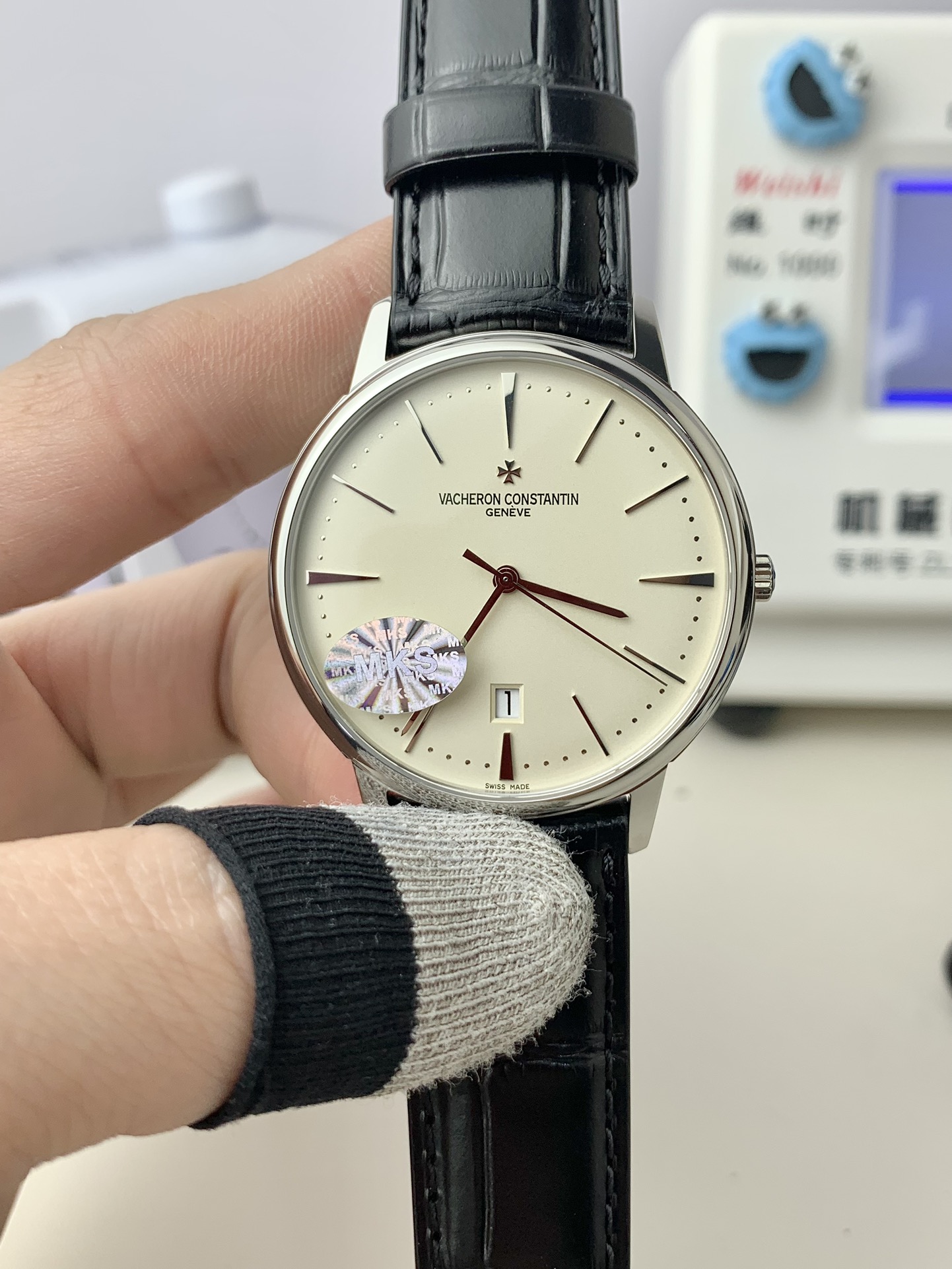
The Patrimony 81180 exposes every weakness in Guangzhou’s ultra-thin replication capability. At 7.8mm genuine case depth housing the Caliber 1400 manual-wind movement, this reference demands machining precision that most alphabet factories cannot consistently achieve—the margin between acceptable replica and obvious fake narrows to fractions of a millimeter. Three factories currently produce 81180 versions with measurably different approaches: KZ pursues thickness accuracy at premium cost, MKS accepts geometric compromise for accessibility, and TW operates sporadically with inconsistent batch quality. What follows is a geometric tolerance analysis based on examination of multiple production samples, identifying where each factory succeeds, where they fail, and which version—if any—serves legitimate dress watch function.This review forms part of the [Patrimony & Traditionnelle Dress Watch Replica Guide], focusing specifically on the 81180 as the baseline geometric reference for all subsequent Patrimony coverage.
Why the 81180 Defines Patrimony Replication Difficulty
The 7.8mm Case Depth Problem and Movement Housing Constraints
Genuine 81180 achieves its 7.8mm profile through the Caliber 1400, a manual-wind movement measuring 2.4mm thick—a dimension no readily available replica movement approaches. The thinnest viable automatic movement for Guangzhou production, the Miyota 9015, measures 3.9mm before modification; this single component already consumes 50% of the genuine case depth budget before accounting for dial, crystal, and caseback. KZ Factory’s engineering solution involves removing the 9015’s date complication mechanism and reducing rotor bearing height, achieving approximately 3.3mm post-modification, but this pushes the total case assembly to 6.8mm—actually thinner than genuine, which creates its own authenticity problems when the watch sits too flat against the wrist. MKS takes the simpler approach of housing an unmodified Sea-Gull ST18 series movement at 4.2mm thickness, accepting the resulting 9mm case depth as an acceptable market trade-off for production simplicity and cost control.
Dial Negative Space Ratio—Why 40mm Diameter Amplifies Centering Errors
The 81180’s 40mm case diameter combined with its narrow bezel creates a dial aperture exceeding 36mm, and this expansive negative space—dominated by silver-opaline finishing with minimal text or complication—transforms sub-millimeter centering errors into immediately visible flaws. A dial shifted 0.2mm toward 3 o’clock may pass unnoticed on a busy chronograph face; on the 81180’s stark canvas, the same displacement creates obvious asymmetry between the applied VC logo and 12 o’clock marker. Guangzhou factories struggle particularly with movement holder positioning within the case mid-section, where cumulative tolerance stack-up from case machining, movement ring fitting, and dial foot alignment can produce apparent shifts of 0.3-0.5mm. Inspection under raking light reveals these errors instantly—the eye naturally seeks the dial center, and any offset reads as manufacturing failure rather than acceptable variance.
Applied Hour Marker Height and Shadow Casting Under Light
Genuine 81180 uses applied baton markers at approximately 1.1mm height, creating pronounced shadow lines under angled illumination that contribute to the dial’s three-dimensional presence. Replica versions consistently under-deliver on marker height, typically measuring 0.7-0.9mm in KZ production and 0.5-0.7mm in MKS builds—differences that flatten the dial’s visual depth and reduce shadow intensity by roughly 30-40%. The adhesion method compounds this issue: genuine markers are mechanically fixed through dial feet, while replica versions rely on adhesive mounting that cannot support equivalent height without stability risk. Under direct overhead light, both genuine and replica appear similar; under the oblique lighting typical of indoor evening environments—precisely where dress watches are most often observed—the replica’s diminished shadow casting becomes apparent to anyone familiar with the reference.
Judgment Tip: Measure case thickness at 3 o’clock and 9 o’clock positions using digital calipers; variance exceeding 0.3mm between these points indicates poor machining discipline and predicts similar tolerance failures throughout the case construction.
Current Factory Landscape for 81180 Production
KZ Factory’s 6.8mm Ultra-Thin Architecture—Modified Miyota 9015 Integration
KZ represents the only serious attempt at ultra-thin 81180 replication, achieving 6.8mm total case depth through aggressive movement modification and precision case machining. The modified Miyota 9015 removes date mechanism components and reduces automatic rotor height, bringing movement thickness to approximately 3.3mm while retaining core timekeeping function and the 28,800 vph beat rate. This engineering approach succeeds on the thickness metric but introduces secondary concerns: the modified movement shows slightly reduced power reserve (36-38 hours observed versus 42 hours specification), and the thinner rotor assembly produces a higher-pitched winding sound that differs from both genuine and standard replica movements. Case finishing on KZ production demonstrates above-average discipline, with bezel-to-midcase transitions showing clean radius work and lug drilling positioned within 0.2mm of genuine specifications. Crown tube execution improved noticeably in post-2024 batches, with better thread engagement feel and more consistent pull-position detents—earlier production suffered from vague crown positions that made setting time unnecessarily imprecise.
MKS Factory’s 9mm Compromise Version—Cost-Driven Thickness Trade-off
MKS positions their 81180 as an accessible entry point, accepting 9mm case thickness in exchange for simplified production using unmodified Sea-Gull ST18 series movements. The 1.2mm thickness penalty versus genuine (and 2.2mm versus KZ) fundamentally changes the watch’s wrist presence—an outcome often analyzed in technical studies of Patrimony vs Traditionnelle proportion systems and tolerance exposure in Vacheron Constantin super clone production—what should read as an ultra-thin dress piece instead presents as a standard-thickness watch with minimalist dial. Dial execution quality remains comparable to KZ production, with similar sunburst pattern depth and applied marker quality, suggesting that MKS sources dial components from overlapping suppliers. The value proposition targets buyers who prioritize Patrimony aesthetic at the lowest viable cost, acknowledging that case profile accuracy matters less than dial appearance for their use case. At $280-350 typical pricing versus KZ’s $450-550, MKS delivers equivalent dial-centric visual result but fails the dress watch thickness requirement that defines the 81180’s purpose.
TW Factory Limited Runs—Intermittent Availability and Batch Variance
TW Factory produces 81180 in irregular limited batches rather than continuous inventory, creating availability gaps of 2-4 months between production runs. This intermittent schedule correlates with noticeable batch-to-batch variance: samples from different production runs show inconsistent dial color temperature, with some batches trending warmer (slightly cream-tinted) and others cooler (more sterile silver) than genuine silver-opaline specification. Case thickness on TW versions typically measures 8.2-8.5mm, positioning between KZ’s aggressive thinness and MKS’s relaxed compromise—a middle ground that may represent reasonable balance for buyers who find KZ’s 6.8mm uncomfortably thin and MKS’s 9mm unacceptably thick. Movement configuration varies by batch as well, with some runs using decorated clone rotors for caseback presentation and others using functional plain rotors at lower cost. The unpredictability makes TW difficult to recommend despite occasionally competitive quality; buyers cannot reliably specify which variant they will receive.
Why No Top-Tier Factory (ZF/PPF) Prioritizes Patrimony Production
ZF and PPF concentrate resources on Overseas 4500V and Nautilus 5711 respectively—references with higher demand volume and less punishing tolerance requirements. The ultra-thin dress watch category generates insufficient market demand to justify the tooling investment and quality control intensity that these factories apply to their flagship products. A Patrimony 81180 built to ZF’s Overseas standards would likely require pricing above $700 to recover development costs, creating an unappealing value proposition when KZ already occupies the premium tier at $450-550. Additionally, ZF’s manufacturing advantage lies in integrated bracelet systems and sports watch case construction, competencies that offer minimal relevance to a strap-only dress reference. The result is a structural gap where the Patrimony category lacks the factory tier that would otherwise produce definitive versions, leaving buyers to choose between KZ’s genuine quality attempt and various compromise approaches.
Judgment Tip: Request factory batch date when ordering; KZ production dated post-2024 shows improved crown tube finishing and more consistent dial centering versus earlier runs, making batch vintage a meaningful quality indicator.
Movement Configuration and Thickness Reality
Why Miyota 9015 (3.9mm) Enables Sub-7mm Total Build in KZ Version
The Miyota 9015’s 3.9mm base thickness represents the thinnest production automatic movement available at scale for Guangzhou factories, and this dimensional advantage makes it the only viable candidate for ultra-thin Patrimony replication. KZ’s modification process removes the date indicator mechanism—the jumping date disc, date driving wheel, and associated bridge components—reducing total movement height to approximately 3.3mm while preserving the 28,800 vph oscillation rate and bidirectional automatic winding function. This 0.6mm savings cascades through the entire case stack: thinner movement permits shallower case mid-section, which allows reduced crystal dome height while maintaining adequate dial clearance, ultimately enabling the 6.8mm total case depth that defines KZ’s market position. The modification requires disassembly of new movements, removal of specified components, and reassembly with adjusted bridge tension—a labor-intensive process that contributes meaningfully to KZ’s price premium over factories using stock movements. Citizen’s manufacturing consistency for the 9015 provides a reliable base caliber, though individual movement accuracy still varies within the stated ±30 seconds/day tolerance band, and the modification process can introduce additional variance if performed carelessly.
Sea-Gull ST18 Series in MKS Builds—4.2mm Thickness Penalty
MKS’s decision to use unmodified Sea-Gull ST18 series movements reflects production economics rather than engineering optimization. The ST18 measures 4.2mm thickness—0.9mm greater than modified 9015—and this single dimension difference propagates through case design to produce the 9mm total depth that fundamentally compromises MKS’s dress watch positioning. Sea-Gull movements cost substantially less than Miyota equivalents ($17-25 versus $55-65 for 9015), and the unmodified installation eliminates the skilled labor required for KZ’s modification process, creating combined savings that enable MKS’s lower price tier. The ST18’s technical specifications adequately serve timekeeping function: 28,800 vph beat rate, approximately 40 hours power reserve when new, and acceptable accuracy within ±30 seconds/day for most examples. What the ST18 cannot provide is the case profile that makes the 81180 distinct from generic dress watches—at 9mm thickness, MKS’s version wears like any number of mid-tier dress references rather than the ultra-thin statement piece that justifies Patrimony’s design language.
Decorated Clone Rotor vs. Functional Plain Rotor Trade-off
Exhibition casebacks on Patrimony replicas create a visibility problem: the movement decoration standard expected through transparent crystal far exceeds what replica movements actually deliver. Factories respond with two approaches—decorated clone rotors that approximate genuine Caliber 1400 aesthetic, or plain functional rotors that prioritize mechanical reliability over visual presentation—a technical distinction frequently explored in Vacheron Constantin Patrimony and Traditionnelle dress watch replica guides.
Decorated rotors feature laser-engraved patterns mimicking Geneva stripes and perlage finishing, with “VC” or caliber number markings applied through printing or shallow engraving; these satisfy casual observation through the caseback but fail close inspection, where the difference between genuine hand-finishing and mass-produced decoration becomes obvious. Plain rotors acknowledge the limitation honestly, presenting a functional movement without pretense of high horology finishing—a choice that some buyers prefer for its absence of false claims. TW Factory’s batch variance includes both rotor types without buyer specification option, while KZ generally supplies decorated versions and MKS varies by production run. Neither approach solves the fundamental problem: genuine Caliber 1400 is a manual-wind movement with no rotor at all, meaning any automatic movement visible through the caseback immediately identifies the watch as replica to informed observers.
Power Reserve Reality: Claimed 42h vs. Observed 36-38h Under Daily Wear
Miyota specifications list 42 hours power reserve for the 9015, but KZ’s modified version and MKS’s Sea-Gull ST18 consistently deliver 36-38 hours under actual wearing conditions. The discrepancy reflects multiple factors: specification measurement occurs with movements fully wound and stationary, while real-world use involves incomplete winding cycles and continuous power draw; modification processes may alter mainspring tension or winding efficiency; and movements selected for replica production often represent lower quality grades than those meeting full specification. The practical implication for daily wear is meaningful—a watch removed Friday evening may stop before Monday morning pickup, requiring time reset that genuine ultra-thin dress watches with 65+ hour reserves avoid. Amplitude degradation provides a more useful indicator of movement health than raw power reserve duration: a properly regulated movement maintains amplitude above 270° through at least 30 hours of reserve, dropping gradually toward 250° as the mainspring depletes. Observing amplitude collapse below 250° before the 30-hour mark suggests movement adjustment need, whether from poor initial regulation or accumulated wear affecting the escapement.
Judgment Tip: Fully wind the movement and track power reserve depletion over 48 hours; amplitude drop below 250° before 30 hours indicates movement requires adjustment, and watches showing this behavior should be serviced before regular deployment.
Wrist Presence and Size Calibration for Dress Deployment
40mm Case on Sub-6.5″ Wrist—Lug Overhang Threshold Assessment
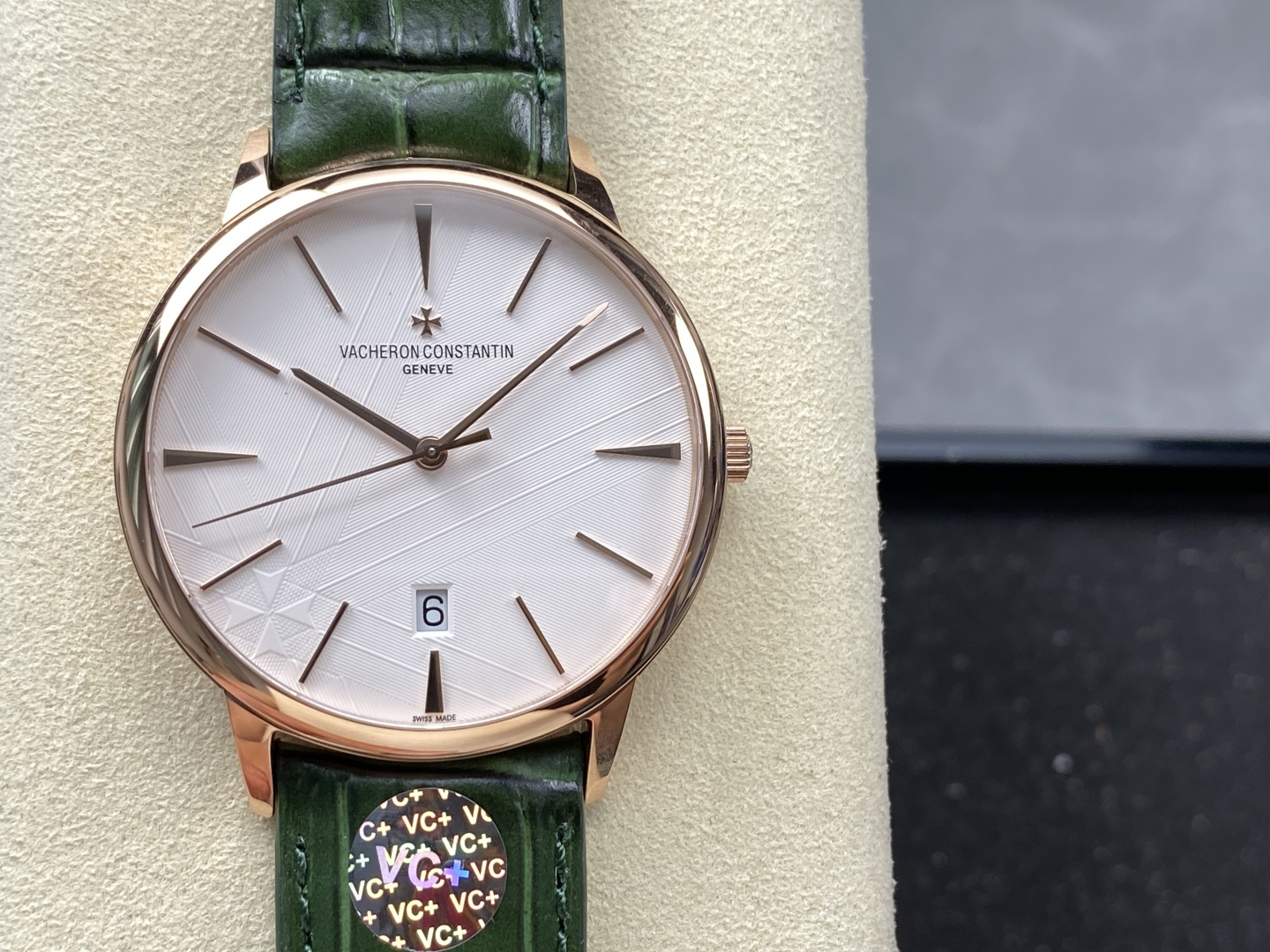
The 81180’s 40mm case diameter with 47mm lug-to-lug distance creates specific proportionality constraints for smaller wrists. On wrist circumferences below 6.5 inches (165mm), the lugs approach or exceed the wrist’s flat upper surface, causing visible overhang when viewed from angles other than directly above—a proportion failure that undermines dress watch elegance regardless of other quality factors. The genuine reference maintains this 47mm dimension, meaning the sizing challenge applies equally to authentic and replica versions; the issue is not factory execution but reference selection appropriateness. KZ and MKS both replicate the lug geometry accurately, with measured lug-to-lug distances falling within 0.5mm of genuine specification across examined samples. Buyers with sub-6.5″ wrists should consider the Patrimony 85180 at 38mm diameter as a better-proportioned alternative, though this smaller reference receives less factory attention and quality variance increases accordingly. The 40mm 81180 works optimally on wrists measuring 6.75-7.5 inches, where the case diameter fills appropriate visual space without lug overhang, and the thin profile reads as intentionally elegant rather than simply undersized.
Weight Distribution with Leather Strap vs. OEM-Style Alligator
Case weight on 81180 replicas measures approximately 45-55 grams depending on factory and case thickness, with KZ’s thinner construction trending toward the lower end of this range. Strap selection meaningfully affects wearing comfort through weight distribution and balance point positioning: thicker leather straps (3.5-4mm at the lug attachment point) hold the case more stable against the wrist, while thinner alligator-pattern straps (2-2.5mm) permit greater case movement and rotation during arm motion. Factory-supplied straps universally disappoint, using stiff low-grade leather with poor initial comfort and faster degradation under regular wear; budgeting $60-120 for aftermarket strap replacement should be considered part of the acquisition cost rather than optional upgrade. Genuine Patrimony deploys on alligator with deployment clasp, and this configuration provides optimal weight distribution by placing additional mass (the clasp mechanism) opposite the case, creating natural balance that keeps the watch positioned correctly. Replica deployment clasps range from acceptable to unusable depending on source quality, with the better examples achieving smooth action and secure closure while lesser versions exhibiting rough operation and inconsistent locking.
Shirt Cuff Clearance—Where 1mm Case Height Difference Matters
Dress watch function requires passage beneath shirt cuff without catching fabric, snagging buttons, or producing visible bulge—a practical test where the difference between KZ’s 6.8mm and MKS’s 9mm becomes directly apparent. Standard dress shirt cuffs provide approximately 8-10mm clearance between fabric and wrist depending on fit; KZ’s profile passes comfortably within this envelope, while MKS’s thickness approaches or exceeds the limit, causing intermittent catching during natural wrist rotation. The issue compounds with button cuff shirts where the fastened button creates a fixed restriction point; French cuffs with cufflinks permit slightly more clearance but also draw attention to the wrist area, making any proportion failure more noticeable. Crystal dome height contributes to total stack independent of case depth—some replica crystals sit 0.3-0.5mm higher than genuine specification, effectively adding to the thickness problem. Testing with actual dress shirts before committing to regular deployment identifies whether a specific example’s total height works for the buyer’s wardrobe; watches that catch fabric consistently fail the fundamental dress watch mission regardless of dial quality or movement accuracy.
Perceived Dial Size Due to Narrow Bezel Design
The 81180’s design vocabulary emphasizes dial exposure through minimal bezel width, creating a dial aperture that appears larger than equivalent-diameter sports watches with broader bezels. This visual expansion effect means the 40mm case presents closer to a 42mm dial-forward appearance, influencing wrist presence perception independent of actual physical dimensions. Replica execution of the narrow bezel requires tight tolerance control on the bezel ring machining—variations in bezel width of 0.3mm or more become visible as asymmetry, particularly when comparing 12 o’clock to 6 o’clock bezel width. KZ production shows more consistent bezel width around the full circumference, while MKS samples occasionally exhibit measurable narrowing on one side, creating subtle but detectable imbalance. The narrow bezel also reduces error tolerance for dial centering: any movement of the dial relative to case center appears amplified when the surrounding bezel provides minimal visual buffer. For buyers prioritizing dial-forward aesthetic, the 81180’s design succeeds in both genuine and quality replica forms; for those finding 40mm already at their upper comfort limit, the perceived size increase from narrow bezel design may push the watch beyond preferred proportions.
Judgment Tip: Test with an actual dress shirt cuff during normal wrist rotation—reaching across a table, checking time, adjusting sleeve; if the case catches fabric during any of these common movements, total thickness exceeds dress watch utility threshold for that specific shirt, and either thinner case (KZ) or looser cuff fit becomes necessary.
Price Tier Analysis and Value Positioning
KZ Factory Premium ($450-550)—Justified by Thickness Achievement
KZ’s pricing commands 60-80% premium over MKS for the same reference, and this differential reflects genuine engineering investment rather than mere brand positioning. The modified Miyota 9015 requires skilled labor, component removal precision, and reassembly expertise that add measurable cost to each unit; the thinner case machining demands tighter tolerance control with higher rejection rates for out-of-specification examples; and lower production volume spreads fixed costs across fewer units. At $450-550 typical delivered pricing, KZ positions the 81180 as their showcase technical achievement rather than volume product, accepting limited market size in exchange for category-defining quality claims. The value proposition hinges entirely on thickness priority: buyers who require sub-7mm case depth have no alternative at any price, while those indifferent to profile accuracy find KZ’s premium unjustifiable. For the specific use case of dress watch deployment where ultra-thin profile defines the category, KZ represents the minimum viable product rather than premium upgrade—everything thicker fails the fundamental design intent regardless of other quality factors.
MKS Factory Value Tier ($280-350)—Acceptable for Occasional Wear
MKS delivers competent dial execution and acceptable overall construction at pricing that acknowledges the thickness compromise. At $280-350, buyers acquire Patrimony visual language—the minimalist dial, applied markers, narrow bezel aesthetic—without the ultra-thin profile that defines the genuine reference’s character. This positioning serves several legitimate use cases: occasional dress events where the watch receives limited wearing time and scrutiny; photography or display purposes where frontal dial view matters more than profile; assessment of Patrimony aesthetic before committing to premium factory or genuine purchase; or simple budget constraint where the alternative is no Patrimony-style watch at all. The MKS version fails as daily dress watch due to thickness, but this failure matters only if daily dress wear represents the actual intended use. Buyers should self-assess honestly: if the realistic wearing frequency is 6-12 times annually for specific events, MKS thickness penalty may never become relevant, and the $170-200 savings versus KZ purchases meaningful value elsewhere—perhaps toward strap upgrade that benefits every wearing instance.
Unbranded Market Copies Below $200—Why Savings Eliminate Dress Watch Credibility
Unbranded copies available through general marketplaces at $100-180 pricing demonstrate why factory identification matters in the replica watch category. These products typically exhibit multiple cascading failures: case thickness exceeding 10mm, dial printing with visible edge bleeding, applied markers with inconsistent height and spacing, crystal with inadequate AR coating producing obvious reflections, and movements of uncertain provenance with unverified accuracy or reliability. The cumulative effect destroys dress watch credibility—the visual impression at any distance beyond arm’s length immediately registers as cheap imitation rather than quality timepiece, regardless of what genuine reference it purports to represent. The $100-150 savings versus MKS entry pricing purchases a fundamentally different product category: costume jewelry rather than functional replica. For buyers genuinely budget-constrained below $250, better value exists in honestly-positioned affordable dress watches from legitimate microbrands than in failed copies of prestigious references. The 81180’s minimalist design paradoxically makes quality failures more apparent than they would be on busier dials, meaning this specific reference represents particularly poor value at the unbranded tier.
Strap Upgrade Budget Allocation—$60-120 for Deployment Clasp Quality
Factory-supplied straps across all production tiers disappoint sufficiently that aftermarket replacement should be budgeted as necessary expense rather than optional accessory. Quality aftermarket straps with proper deployment clasps range $60-120 depending on leather grade and clasp construction, adding 15-25% to total acquisition cost but transforming daily wearing experience. The clasp mechanism deserves particular attention: cheap deployment clasps with stamped construction and single-fold design create uncomfortable pressure points and unreliable closure, while better examples with milled construction and butterfly double-fold operation distribute pressure evenly and maintain secure closure through thousands of cycles. Strap width at 20mm matches common aftermarket availability, expanding selection options; quick-release spring bars from the factory (when included) permit tool-free strap changes, encouraging rotation between multiple straps as wearing context varies. Total cost calculation matters for value comparison: KZ at $500 plus $80 quality strap ($580 total) outperforms MKS at $320 plus $120 premium strap ($440 total) on thickness while costing only $140 more—a premium that purchases the single attribute (case profile) that defines the 81180’s purpose.
Judgment Tip: Calculate total realistic cost including strap upgrade before factory selection; KZ at $550 all-in delivers the dress watch thickness requirement that defines Patrimony, while MKS at $400 all-in delivers equivalent dial quality in a case that fails the core design intent—the $150 difference purchases the only specification that actually matters for this reference.
Dial Execution Assessment—Where Minimalism Exposes Every Flaw
Sunburst Pattern Depth and Radial Consistency Across Dial Surface
Genuine 81180 silver-opaline dials achieve sunburst effect through multiple polishing passes at controlled angles, creating radial lines that shift in visibility as light source position changes—a dynamic quality that cheaper replication methods fail to reproduce. KZ and MKS both source dials from Guangzhou dial specialists capable of reasonable sunburst approximation, but execution consistency varies between production batches and even between units within the same batch. The critical inspection point occurs at the dial periphery near the minute track: genuine sunburst maintains consistent line density and depth from center to edge, while cost-reduced replica dials often show pattern degradation in the outer 3-4mm where polishing wheel contact becomes less precise. Under single-point lighting at 45° angle, quality replica dials produce smooth radial gradation from bright to dark across the surface; inferior examples show irregular banding or dead zones where the pattern interrupts. KZ production post-2023 demonstrates improved peripheral consistency compared to earlier batches, though still approximately 15-20% short of genuine depth and definition—a gap visible in direct comparison but acceptable in isolation.
Applied VC Logo Adhesion Quality and Vertical Alignment to 12 O’Clock Marker
The applied Vacheron Constantin logo and Maltese cross emblem sit at 12 o’clock as the dial’s primary focal point, making any positioning error or quality failure immediately apparent. Genuine logos use mechanical attachment through dial feet with adhesive backup; replica versions rely primarily on adhesive mounting, creating risk of eventual loosening under temperature cycling or physical shock. Vertical alignment between the VC text, cross emblem, and 12 o’clock baton marker should form a perfect center axis—misalignment of 0.2mm or more becomes visible to unaided eye at normal reading distance. KZ samples examined show alignment within 0.15mm tolerance on most units, while MKS variance extends to 0.3mm on approximately 20-25% of production, producing noticeable off-center appearance. Logo finishing quality also differs: genuine applied elements show crisp edges with no visible adhesive residue, while replica versions occasionally exhibit slight edge softening from the plating process or microscopic adhesive overflow visible under 10x magnification. The Maltese cross proportions—the ratio of arm width to overall diameter—provide authentication reference: genuine crosses measure precisely, while replica versions trend 3-5% larger in overall diameter with proportionally thicker arms.
Printed Minute Track Line Weight—Genuine Uses 0.12mm; Replicas Vary 0.15-0.22mm
The minute track circling the dial periphery requires printing precision that reveals factory quality control discipline. Genuine 81180 uses 0.12mm line weight for minute graduations, producing delicate marks that complement the minimalist aesthetic without visual competition against the applied hour markers. Replica printing technology consistently produces heavier lines—KZ measures approximately 0.15-0.17mm, MKS ranges 0.18-0.22mm—creating a subtly bolder appearance that registers as less refined even when the viewer cannot articulate the specific difference. Five-minute interval marks should measure slightly longer than standard minutes while maintaining identical line weight; replica versions sometimes increase both length and weight at intervals, producing rhythmic visual heaviness around the dial circumference. Print edge definition matters equally: genuine lines show clean termination under magnification, while replica printing often exhibits microscopic feathering or ink spread at line ends, most visible at the quarter-hour positions where longer marks amplify any edge irregularity. The cumulative effect of heavier, less precise minute track printing shifts dial character from elegant restraint toward utilitarian functionality—technically readable but aesthetically compromised.
Dial Color Accuracy in Silver-Opaline Variants Under Natural vs. Artificial Light
Silver-opaline dial color presents calibration challenges because the target appearance shifts substantially between lighting conditions—cool and silvery under overcast daylight, warmer and slightly cream-tinted under incandescent lighting, neutral under LED illumination. Genuine dials are formulated to produce pleasing appearance across this range, while replica dials typically optimize for one lighting condition at the expense of others. KZ dials trend slightly cool, appearing accurate under daylight and LED but fractionally sterile under warm artificial light; MKS batches show greater variance, with some production runs matching KZ’s cool calibration and others trending noticeably warm, producing cream tint visible even under neutral lighting. TW Factory’s batch inconsistency manifests most clearly in dial color, with reported variance sufficient that buyers cannot predict which color temperature they will receive. The inspection protocol requires evaluating dial color under at least two lighting conditions—ideally daylight and incandescent—before accepting delivery; dials that appear correct under one source but significantly off under another indicate calibration compromise. For buyers in primarily artificial-light environments (office, evening event), the cooler-trending KZ calibration typically produces better results than warmer MKS variants.
Judgment Tip: Photograph the dial at 45° angle under a single light source positioned at 10 o’clock; inconsistent sunburst depth appears as irregular light-dark banding rather than smooth gradation, revealing polishing shortcuts that indicate broader quality control deficiency.
Hand Stack Geometry and Center Axis Tolerance
Hour-Minute-Second Hand Coplanarity—The 0.15mm Stack Height Standard
Hand installation on the 81180 requires precise vertical positioning of three hands at different heights above the dial surface, maintaining clearance between layers while minimizing total stack height to preserve ultra-thin case profile. Genuine Caliber 1400 achieves hand coplanarity within approximately 0.08mm variance, meaning all hands sit at their intended heights with minimal deviation from parallel alignment to the dial plane. Replica movements using Miyota 9015 or Sea-Gull ST18 present different pinion heights than genuine caliber, requiring hand sets specifically manufactured for these movements rather than generic “Patrimony style” hands that may not seat correctly. KZ’s modified 9015 maintains the standard pinion configuration, permitting use of well-fitted aftermarket hands, while installation quality depends on assembly technician skill—variance between units reflects hand-fitting discipline rather than inherent movement limitation. The inspection method involves viewing the dial at extreme angle (nearly edge-on) and checking whether all hands maintain parallel relationship to dial surface; visible tilt on any hand indicates improper seating on its pinion, which may worsen over time as the loose hand shifts further from correct position.
Dauphine Hand Finishing: Polished Facets vs. Brushed Bevels Execution
Genuine 81180 dauphine hands feature polished top facets that catch light brilliantly, with brushed bevels along the angled sides creating contrast between surfaces. This dual-finish execution requires separate polishing operations for each surface type—a labor step that replica production frequently simplifies. KZ hands show reasonable facet polish achieving approximately 80% of genuine reflectivity, with bevel brushing present but shallower than authentic specification; the visual effect reads as slightly flat compared to genuine but acceptable in isolation. MKS hands demonstrate more obvious compromise, with facet polish showing visible micro-scratches under magnification and bevel treatment sometimes omitted entirely, producing hands that appear uniformly polished rather than properly contrasted. Hand thickness also varies: genuine dauphine hands maintain precise taper from base to tip, while replica versions sometimes show inconsistent thickness that produces shadow-line irregularities when viewed against the dial. The hour hand’s shorter length makes finishing flaws more visible per unit area than on the minute hand—inspection should focus particularly on hour hand facet quality as the most demanding test of hand finishing discipline.
Second Hand Counterweight Balance and Sweep Stability at 28,800 vph
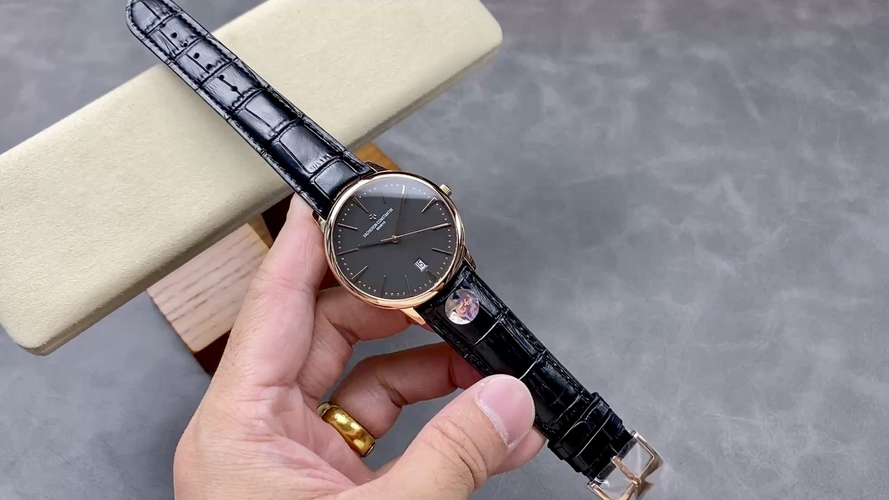
The 81180’s small seconds subdial at 6 o’clock requires a second hand balanced precisely around its pivot point to maintain smooth sweep motion at the 28,800 vph (4 Hz) beat rate. Improperly balanced second hands exhibit visible stutter or hesitation at certain positions during rotation, typically where gravitational effect on the imbalanced mass momentarily resists movement. Replica second hands often lack the counterweight lobe present on genuine hands, relying instead on the hand’s own mass distribution for balance—a cost reduction that works adequately for many examples but produces visible stutter in perhaps 15-20% of units. The inspection requires observing the second hand through multiple complete rotations with the watch positioned dial-up; any consistent hesitation point (same position each rotation) indicates balance failure, while random hesitation suggests movement regulation issue rather than hand problem. KZ production shows better balance consistency than MKS, likely reflecting tighter incoming inspection on hand components rather than superior manufacturing source. Replacement of a stuttering second hand requires movement disassembly and is not economically practical for most buyers—identification before purchase represents the only realistic quality control opportunity.
Center Pinion Play—Detecting Wobble Through Crown Position Test
Hand wobble visible during time-setting indicates excessive play between hand hub and movement pinion—a fit tolerance failure that worsens with use as the loose connection allows progressive wear. The detection method requires pulling the crown to time-setting position and slowly rotating while watching the minute hand tip: properly fitted hands track smooth arcs with no lateral deviation, while loose hands exhibit visible wobble, particularly at direction-change points when rotation reverses. This test should be performed before accepting delivery, as center pinion play cannot be corrected without movement service and represents a fundamental assembly quality failure. KZ’s assembly process apparently includes hand-fit verification, with examined samples showing minimal play across multiple units; MKS quality control appears less consistent, with approximately one in four or five samples exhibiting detectable minute hand wobble. The hour hand rarely shows play issues due to its friction-fit mounting method, but minute and second hands both rely on press-fit connections where tolerance control directly determines long-term stability. Wobble present on delivery will worsen within 6-12 months of regular wear as the loose fit permits accelerating wear at the interface.
Judgment Tip: Set time to exactly 12:00:00 and observe hand alignment from directly above—the hour and minute hands should form a continuous straight line with zero lateral offset; visible misalignment indicates either improper hand installation or bent hand shaft, both representing quality failures that justify unit rejection.
Case Construction and Finishing Discipline Comparison
Bezel-to-Case Transition Radius—KZ’s Sharper Edge vs. MKS’s Rounded Profile
The junction between bezel ring and case middle defines visual sharpness that contributes significantly to perceived quality. Genuine 81180 executes this transition with a precise radius—neither knife-edge sharp nor visibly rounded, but a controlled micro-radius that reads as crisp while remaining comfortable against skin. KZ replicates this transition with approximately 90% accuracy, producing an edge sharp enough to catch light cleanly but occasionally trending slightly too aggressive, creating a harder appearance than genuine under certain angles. MKS consistently rounds this transition beyond genuine specification, producing a softer visual impression that reads as less refined—the difference is subtle in photographs but immediately apparent when handling both versions sequentially. The inspection technique involves running a fingernail across the bezel-case junction: genuine and quality replica allow nail passage with minimal tactile ridge, while over-rounded transitions feel smoothly continuous and over-sharp transitions catch the nail noticeably. This single detail serves as reliable proxy for overall case finishing discipline—factories that control bezel transition correctly typically maintain similar precision throughout case construction.
Lug Geometry Accuracy: 20mm Width Tolerance and Drilling Position
Lug dimensions directly affect strap compatibility and visual proportion, making accuracy verification essential before strap purchase or fitting. Genuine 81180 specifies 20mm lug width with spring bar holes drilled at consistent height from case bottom across all four lugs. KZ maintains lug width within 0.1mm of specification—functionally perfect for strap fitting—with drilling position variance under 0.2mm, producing even spring bar seating and symmetric strap attachment. MKS shows acceptable width tolerance (within 0.15mm) but occasionally exhibits drilling height variance up to 0.4mm between lugs, causing asymmetric strap angle visible when viewing the watch from the side. Lug shape accuracy also varies: genuine lugs follow a specific curved profile from case to tip, while replica versions sometimes simplify this curve or execute it inconsistently between left and right lugs. The attachment surface where lugs meet case middle should show seamless transition with no visible joint line—a machining requirement that KZ achieves consistently and MKS accomplishes on most but not all units. Lug finishing (polished top surface, brushed sides on applicable variants) provides additional quality signal, with edge definition between surface treatments indicating overall machining precision.
Crown Engagement Feel—Thread Pitch Consistency and Pull-Position Detents
Crown operation quality directly affects daily user experience, making thread engagement and position detents meaningful quality differentiators beyond pure aesthetics. Genuine 81180 crown screws down with smooth, consistent thread engagement and releases to distinct time-setting position with clear tactile detent. KZ replicates this experience reasonably well—thread pitch matches genuine, producing natural screw-down feel, and pull-position detent provides adequate feedback, though slightly softer than authentic. MKS crown operation shows greater variance: some units exhibit scratchy thread engagement suggesting misaligned crown tube, while others match KZ’s smoother operation, indicating inconsistent assembly quality rather than systematic design difference. Post-2024 KZ production specifically improved crown tube finishing, with thread engagement notably smoother than earlier batches—buyers should request recent production when ordering. The functional test requires screwing crown fully closed, then unscrewing and pulling to setting position repeatedly (10+ cycles): consistent, smooth operation throughout indicates proper crown tube alignment, while degrading feel across cycles suggests marginal fit that will worsen with use.
Caseback Engraving Depth and Font Kerning on Hallmark Text
Exhibition caseback engraving on Patrimony replicas includes reference number, case material marking, and decorative text that invite close comparison against genuine. KZ achieves engraving depth approximately 85% of genuine specification, producing legible text with reasonable shadow definition but lacking the crisp depth that makes authentic engraving visually striking. Font selection on replica casebacks typically approximates rather than matches genuine typography—letter spacing (kerning) and individual character proportions reveal the substitution under careful comparison, though casual observation may not detect the difference. MKS uses shallower engraving that appears slightly soft or filled-in compared to KZ, with font kerning showing more obvious variance from genuine specification. The “750” gold marking on white gold genuine versions versus “STEEL” or similar marking on steel replicas represents an obvious authenticity difference that no replica attempts to falsify—replica casebacks correctly indicate steel construction. Serial number engraving depth and font should match surrounding text; inconsistent depth between serial and other text indicates multi-stage engraving process with different tool settings, a shortcut that genuine production avoids.
Judgment Tip: Run a fingernail along the bezel-case junction at multiple points around the circumference—genuine shows seamless transition with minimal tactile ridge regardless of position; quality replica (KZ) allows detection of slight ridge only under deliberate searching; poor replica exhibits obvious ridge or inconsistent transition feel between positions.
Purchase Decision Framework—Who Should Consider 81180 Replica
Ideal Candidate Profile: Dress Watch Need Without Ultra-Thin Obsession
The 81180 replica serves buyers who value Patrimony’s minimalist design language for occasional formal deployment without requiring authentic ultra-thin profile or genuine horological credentials. The ideal candidate owns no dress watch currently, attends events requiring formal wristwear 6-15 times annually, and finds genuine Patrimony pricing ($18,000+ retail) unjustifiable for this wearing frequency. This buyer prioritizes dial aesthetics—the clean silver-opaline surface, applied markers, restrained typography—over case thickness accuracy, understanding that KZ’s 6.8mm or even MKS’s 9mm serves the visual purpose adequately for events where wrist scrutiny remains minimal. The candidate should also possess realistic expectations about movement longevity (5-8 years before service consideration), water resistance (splash-proof only, never submerged), and resale value (essentially zero). Buyers who find these constraints acceptable while valuing Patrimony aesthetics represent the legitimate market for this product; those expecting genuine-equivalent performance at replica pricing will inevitably experience disappointment.
Disqualification Signals: Frequent Water Exposure, Daily Beater Requirement
Several use patterns immediately disqualify the 81180 replica as appropriate choice. Any expected water exposure beyond incidental hand washing eliminates all replica options—gasket quality, crown tube sealing, and caseback closure integrity cannot be trusted regardless of factory claims, and moisture ingress destroys movements rapidly once seal failure occurs. Daily wear requirements similarly disqualify this reference: the Miyota 9015 and Sea-Gull ST18 movements lack service network support, meaning end-of-life arrives when accumulated wear exceeds adjustment capability, typically 5-8 years under daily use versus 10-15 years for genuine movements with manufacturer service access. Buyers requiring wristwatch for physical activity, outdoor work, or environments involving temperature extremes should consider sport-oriented replicas with more robust construction or, preferably, genuine tool watches designed for such conditions. The 81180’s ultra-thin dress watch positioning assumes climate-controlled indoor environments, careful handling, and limited wearing frequency—use patterns that deviate from these assumptions accelerate failure modes that cannot be economically remedied.
Alternative Consideration: When 85180 (Slightly Larger) Better Serves Use Case
The Patrimony 85180 at 38mm diameter and similar ultra-thin profile offers better proportionality for smaller wrists while sharing core aesthetic DNA with the 81180. Buyers with wrist circumference below 6.5″ who find the 81180’s 40mm/47mm dimensions excessive should evaluate 85180 replicas despite their reduced factory attention and fewer available sources. MKS produces the most consistent 85180 version at $260-320 pricing, with similar quality characteristics to their 81180—acceptable dial execution, 9mm case thickness, Sea-Gull movement configuration. The smaller diameter reduces dial negative space, making centering errors and print weight issues less visually prominent; the trade-off involves reduced factory competition and consequently less pressure for quality improvement. For buyers prioritizing wrist proportion over factory selection breadth, the 85180 may represent superior overall choice despite technically inferior replication market support. The decision between references should follow wrist measurement reality: try a 40mm case from any source, evaluate lug overhang honestly, and select the reference that achieves proper proportion rather than defaulting to the more popular 81180 regardless of fit.
Upgrade Path Awareness: 81180 as Assessment Before Genuine Purchase
Some replica buyers ultimately intend genuine purchase, using replica ownership as extended evaluation period before committing $18,000+ to authentic acquisition. This use pattern carries legitimacy for buyers who genuinely cannot assess whether Patrimony design language suits their preferences without living with the aesthetic—something photographs and boutique appointments cannot fully replicate. The 81180 replica provides 6-24 months of wearing experience that clarifies whether minimalist dial design, ultra-thin profile (to whatever extent replica achieves it), and formal-only deployment pattern actually match buyer lifestyle and preference. If this evaluation period confirms Patrimony suitability, genuine purchase follows with higher confidence; if evaluation reveals mismatch—too dressy, too delicate, too limited in versatility—the buyer saves substantial capital that would otherwise fund a regretted purchase. Framing replica acquisition explicitly as evaluation tool rather than permanent solution improves decision quality and reduces post-purchase rationalization pressure. Buyers should set specific evaluation criteria before purchase (does this dial style satisfy me? does this size work? do I actually wear dress watches?) and assess honestly at period end.
KZ’s 6.8mm build represents the only 81180 replica that fulfills dress watch function as designed; MKS serves Patrimony visual appreciation at reduced cost but surrenders the ultra-thin identity that justifies the reference’s existence.
Judgment Tip: If primary concern is case thickness accuracy and you accept no compromise on ultra-thin profile, KZ represents the only viable option at any price; if thickness tolerance extends to 9mm and cost efficiency matters more than profile precision, MKS delivers equivalent dial quality at 40% lower cost—the decision follows directly from which specification you actually prioritize.