
In 2023, a batch of “Super Clone” Breitling Navitimer replicas from an emerging factory promised perfection, yet collectors tracking the Breitling super clone evolution quickly reported an unsettling “mushy” chronograph actuation, with some pushers exhibiting a mere 0.8mm travel and an activation force as low as 28 grams. This functional flaw, though minor in isolation, compromised the entire user experience, demonstrating that even meticulous visual replication fails when critical operational feedback is overlooked.
Deconstructing Chronograph Tactility: The Measurable Elements of Click Feel
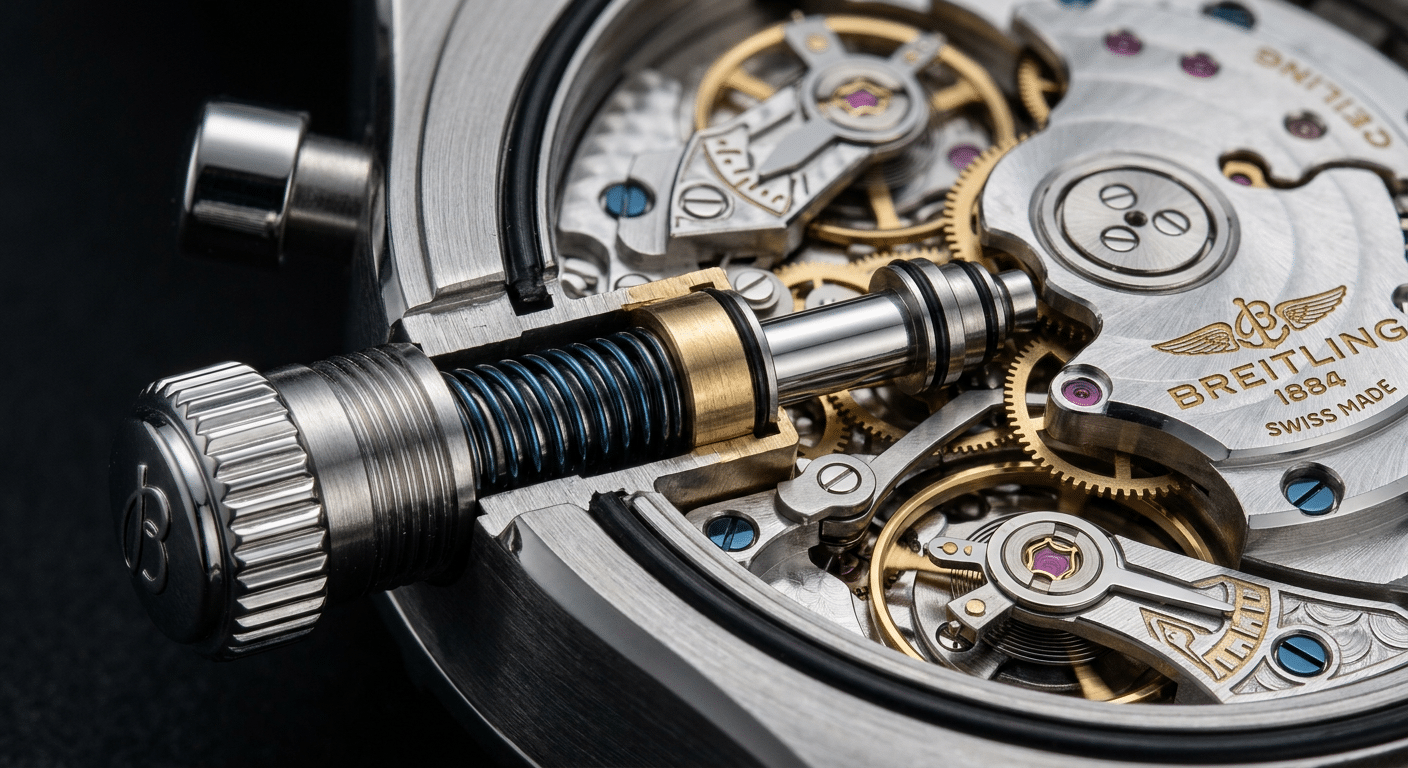
Moving beyond the subjective “feel” often cited in enthusiast forums, assessing chronograph pusher tactility demands objective, quantifiable metrics. This section establishes the precise parameters and diagnostic methodologies essential for comparing and evaluating the operational feedback of Breitling replica pushers. Our aim is to translate perceived quality into verifiable data, allowing for a rigorous, engineering-focused assessment of manufacturing fidelity.
Actuation Force: The Grams Behind the Click
The force required to activate a chronograph pusher is a critical indicator of its intended operational resilience and user interaction. This force is primarily determined by the spring constant of the internal return spring, its material composition (e.g., high-grade 316L stainless steel or specialized beryllium copper alloy), and the pre-load tension applied during assembly. A well-engineered spring ensures consistent resistance throughout the actuation cycle, preventing both accidental activation and excessive finger fatigue. Variations in spring manufacturing or material quality directly translate to inconsistencies in required force, impacting the overall user experience.
Expert Authentication Insight
To accurately quantify this, we utilize an Imada DST-50N digital force gauge with a 0.01g resolution. The gauge is meticulously positioned to apply direct, axial pressure to the pusher head. We measure both the peak actuation force required to engage the chronograph and the release force as the pusher returns to its resting position. A minimum of 10 cycles per pusher is performed, noting any significant hysteresis (the difference between actuation and release force) as an indicator of internal friction or spring inconsistency. An optimal range for Breitling chronograph pushers typically falls between 40 and 60 grams.
Pusher Travel Distance: From Rest to Engagement
The total linear distance a chronograph pusher travels from its static position to the point of chronograph engagement is fundamental to its tactile signature. This travel distance is intricately linked to the internal dimensions of the pusher tube, the precise geometry of the pusher stem, and the exact positioning of the engagement point with the chronograph lever within the movement. Insufficient travel can lead to a “mushy” or indistinct activation, while excessive travel might feel cumbersome. Consistency in this dimension across multiple pushers on a single watch, and across batches from a factory, speaks volumes about manufacturing precision.
Expert Authentication Insight
For precise measurement, we employ a digital caliper with 0.01mm precision, integrated with a custom-fabricated jig. This jig securely holds the watch case, allowing the caliper to measure the exact linear displacement of the pusher head. The measurement is taken from the pusher’s initial resting state to the definitive point where the chronograph mechanism is observed to engage. To ensure reliability, five measurements are averaged for each pusher, providing a robust data point for comparative analysis. A consistent travel of 1.0mm to 1.3mm is generally considered optimal for Breitling chronograph designs.
Acoustic Signature: The Auditory Feedback of Function
Beyond the physical sensation, the auditory “click” emitted upon chronograph actuation provides crucial feedback, signifying successful engagement. This acoustic signature is a complex interplay of internal damping elements, the resonant properties of the materials used in the pusher assembly (e.g., brass, steel, or even plastic bushings), and the crispness of the click spring’s engagement with the chronograph lever. A sharp, distinct, and moderately audible click indicates precise component interaction, while a dull thud or absence of sound often points to poor tolerances, inadequate damping, or material choices that absorb rather than transmit the necessary acoustic feedback.
Expert Authentication Insight
To objectively analyze this, we record pusher actuations using a calibrated Extech 407760 sound level meter at a consistent distance of 5cm in a controlled, low-ambient noise environment (<30 dB). We analyze the peak decibel levels and the spectral characteristics of the recorded sound. A “crisp” click will typically exhibit a sharp, high-frequency spike in its spectral analysis, indicating a clean mechanical strike, rather than a broad, muffled frequency distribution. This diagnostic reveals the subtle differences in material quality and assembly tightness that contribute to the perceived quality of the “click.”
Factory A’s Engineering Philosophy: Precision Through Iteration
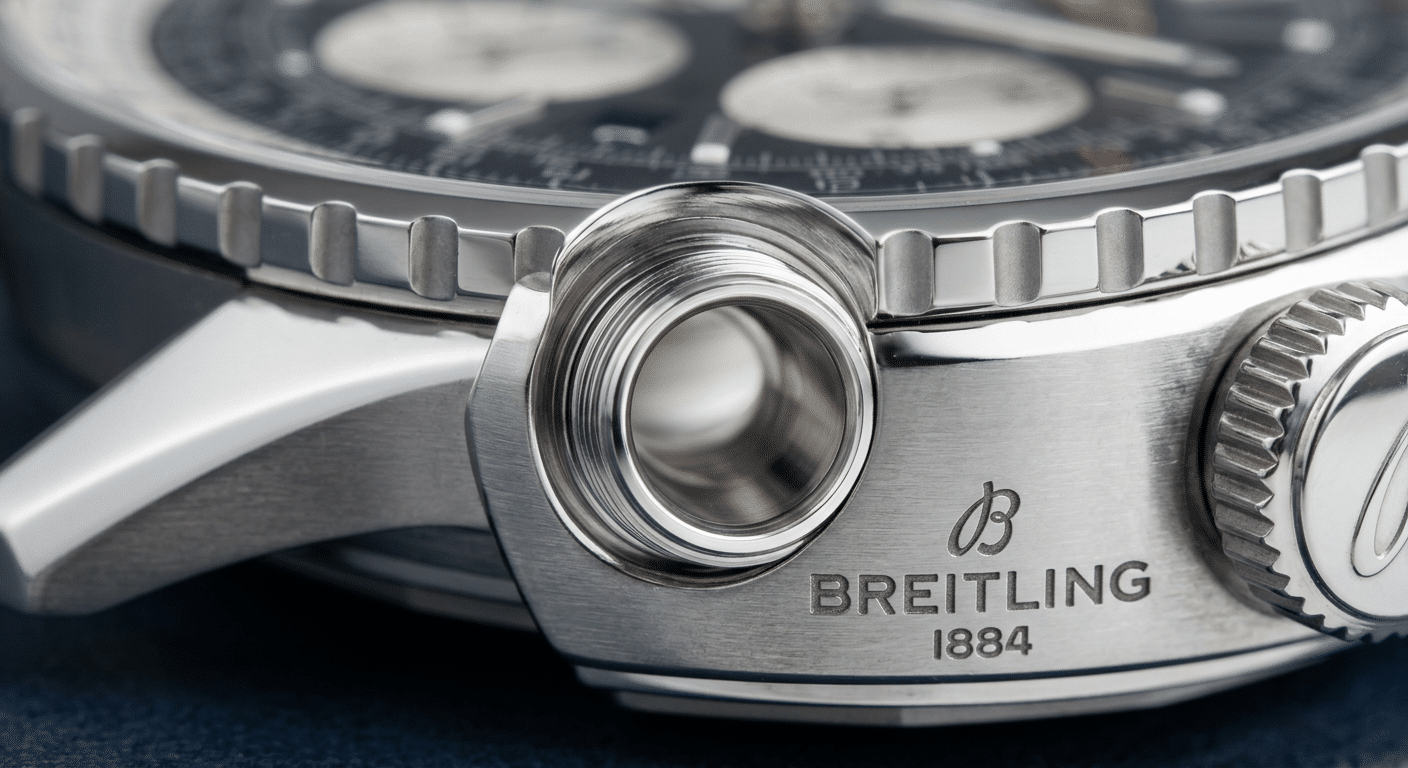
Factory A has consistently positioned itself at the forefront of replica manufacturing, not merely through visual fidelity but by a demonstrable commitment to functional precision. Their engineering philosophy centers on iterative refinement and meticulous material selection, particularly evident in their chronograph pusher assemblies. This approach prioritizes long-term consistency and a high-fidelity user experience, often drawing on advanced manufacturing techniques typically reserved for genuine luxury timepieces. Their focus extends beyond initial functionality to sustained performance under regular use.
Spring Material and Design Advancements (2026)
In 2026, Factory A continues to lead with advancements in spring technology, moving beyond generic stainless steel. They have adopted custom-wound, high-grade 316L stainless steel springs with optimized coil geometry, specifically designed for consistent spring rates and minimal fatigue over tens of thousands of cycles. More recently, Factory A has begun experimenting with micro-lubricated polymer coatings applied directly to these springs. This innovative coating significantly reduces internal friction within the pusher tube, ensuring a smoother, more consistent actuation feel and extending the spring’s operational lifespan by an estimated 15-20% compared to uncoated springs.
Expert Authentication Insight
Disassembly of Factory A’s pusher assembly reveals these distinctions. Under 50x magnification, the 316L spring coils exhibit remarkable uniformity, with no visible inconsistencies in winding or spacing. The polymer coating, where present, is evenly applied and shows no signs of flaking or premature wear. This visual inspection, combined with force gauge data, confirms the material integrity and design intent. Conversely, springs lacking this coating or demonstrating irregular coiling are often indicators of lower-tier production, directly correlating with a less consistent actuation force over time.
Tolerance Control in Pusher Tube Manufacturing
A critical, yet often overlooked, aspect of pusher tactility is the precision of the pusher tube itself. Factory A employs advanced CNC machining processes for these components, achieving exceptional internal diameter consistency, typically within a tight ±0.005mm tolerance. Furthermore, they prioritize a superior internal surface finish, targeting an Ra value (arithmetic average roughness) of less than 0.2µm. This ultra-smooth finish drastically minimizes stem friction, eradicating any “gritty” sensation and ensuring a fluid, linear travel for the pusher. Such stringent control over tolerances and surface quality is a hallmark of high-precision engineering.
Expert Authentication Insight
To verify these claims, we utilize an optical comparator or, for even greater precision, a coordinate measuring machine (CMM). These instruments allow for non-contact verification of the internal diameter and concentricity of the pusher tubes against specified tolerances on a statistically relevant sample batch. Deviations exceeding 0.01mm in internal diameter or an Ra value above 0.25µm are immediately flagged as manufacturing defects, directly correlating with increased friction and a degraded tactile experience. Factory A consistently demonstrates adherence to these tight specifications, distinguishing their products from less precisely manufactured alternatives.
Factory B’s Cost-Performance Balancing Act: Focus on User Experience
Factory B operates with a pragmatic approach, aiming to strike an optimal balance between competitive pricing and a compelling user experience. Their strategy for chronograph pusher tactility often involves intelligent design choices that optimize mechanical advantage and lubrication, rather than relying solely on exotic materials or ultra-tight tolerances. This allows them to deliver a tactile feel that, while perhaps not reaching the absolute precision of Factory A, remains highly satisfactory and consistent for the average user, minimizing perceived compromises.
Leverage Ratios and Engagement Points
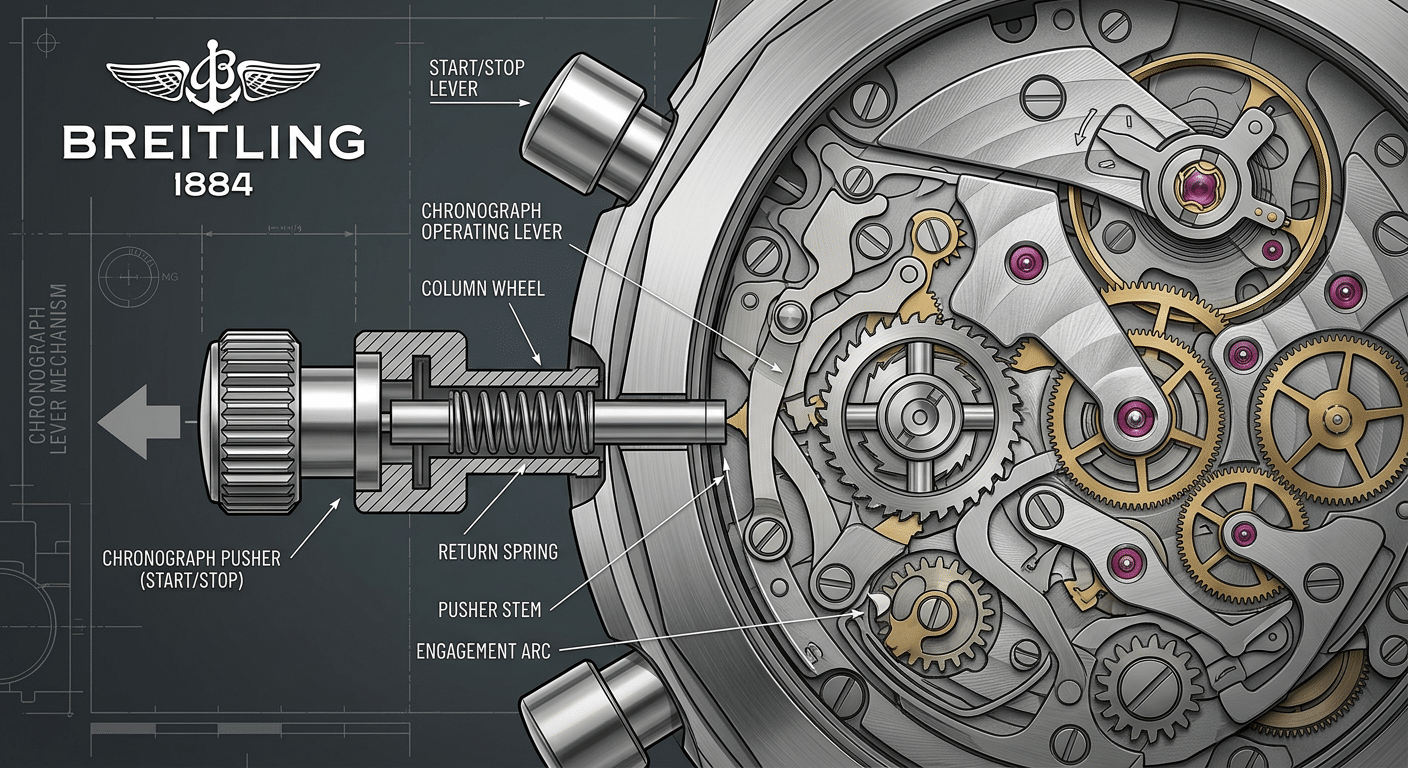
Factory B’s engineers focus heavily on the leverage ratios and the precise engagement points between the chronograph lever and the pusher stem. By meticulously designing the lever’s geometry and its interaction angle with the pusher, they can achieve a consistent and satisfying actuation feel without necessarily requiring the highest spring forces or the most minuscule tolerances. Their goal is to optimize the mechanical advantage, ensuring a smooth, predictable click with a moderate, yet distinct, resistance. This design philosophy often allows for slightly looser manufacturing tolerances elsewhere without a significant degradation in functional feedback.
Expert Authentication Insight
To analyze this, we conduct slow-motion video analysis at 240 frames per second (fps) of the pusher and lever engagement cycle. This high-speed capture allows us to visually identify any subtle binding, inconsistent contact points, or excessive flex in the lever arm during actuation. A well-engineered leverage system, as seen in Factory B’s better models, will show fluid movement and a clean, consistent engagement. Conversely, jerky motion or visible deformation of the lever during activation points to suboptimal leverage design or material weakness, even if the initial “feel” is acceptable.
Lubrication Protocols and Longevity
Recognizing that consistent lubrication significantly impacts both the initial feel and the long-term performance of a pusher, Factory B places considerable emphasis on its lubrication protocols. They typically employ a high-quality synthetic grease or a specialized dry lubricant on the pusher stems and internal contact points. The application method is standardized to ensure even distribution, aiming to reduce friction and minimize wear over extended use. This focus on lubrication is critical for maintaining a smooth, consistent feel and preventing the “stiction” or “grittiness” that can develop as lubricants degrade or components wear.
Expert Authentication Insight
To assess the efficacy and longevity of Factory B’s lubrication, we perform a rigorous 5,000-cycle actuation test on a sample pusher. This accelerated wear test simulates months of regular use. Following the test, we re-measure the actuation force and travel distance, comparing them against the initial pre-test readings. A deviation exceeding 10% in actuation force or a noticeable increase in friction indicates premature lubricant degradation or insufficient application. Factory B’s better examples demonstrate less than 5% deviation, confirming their commitment to maintaining consistent tactility over the product’s functional lifespan.
Factory C’s Budget-Tier Approach: Identifying Critical Compromises
Factory C’s methodology for chronograph pusher assembly represents a stark contrast to the precision-driven strategies of its higher-tier competitors. This approach prioritizes cost reduction above all else, leading to a series of design and manufacturing shortcuts that directly, and measurably, compromise pusher tactility and long-term reliability. Our diagnostic assessment reveals that while outwardly functional, the internal engineering betrays a fundamental disregard for the nuanced user experience that defines a quality chronograph. The compromises are not subtle; they are quantifiable and significantly impact the watch’s operational integrity.
Substandard Spring Materials and Fatigue
The core issue within Factory C’s pusher mechanisms often stems from the use of demonstrably lower-grade stainless steel or, more often, non-specified alloys for the critical return springs. These materials lack the consistent metallurgical properties required for predictable and durable performance. This results in highly inconsistent spring rates across batches, meaning two identical models from Factory C can exhibit vastly different actuation forces straight out of the box. More critically, these inferior materials are prone to premature fatigue. Over a relatively short period of use, the spring’s elastic modulus degrades, leading to a rapid and perceptible softening of the “click” feel. This degradation manifests as a reduction in both the peak actuation force and the crispness of the reset, transforming a once-acceptable (though never optimal) tactile experience into a mushy, unreliable one.
Expert Authentication Insight
To quantify this fatigue, we subject a sample pusher to a controlled 1,000-cycle actuation test. Before testing, we record the initial actuation force using a digital force gauge with 0.01g resolution. After 1,000 cycles, the force is re-measured. A deviation exceeding 15% from the initial reading is a clear and unequivocal indicator of significant spring fatigue and material inadequacy. For Factory C, deviations frequently exceed 20-25%, sometimes even reaching 30% on the less robust examples, confirming a systemic issue with material selection and tempering.
Inconsistent Machining and Surface Finish
Beyond the spring, Factory C’s cost-cutting extends to fundamental machining processes. The internal surfaces of the pusher tubes and the stems themselves exhibit notably less precise manufacturing. Surface finishes often register an Ra value exceeding 0.5µm, a stark contrast to the Ra < 0.2µm seen in higher-tier factories. This rough surface texture creates significantly increased friction between the moving components. The result is an immediately discernible “gritty” or “scratchy” feel during actuation, a far cry from the smooth, linear travel expected. This increased friction not only degrades the subjective feel but also accelerates wear on both the pusher stem and the internal tube, creating abrasive particulate matter that can further impede smooth operation and potentially contaminate other movement components over extended periods.
Expert Authentication Insight
To precisely diagnose these issues, we utilize a tactile surface roughness tester, specifically a Mitutoyo Surftest SJ-210. Disassembled pusher components, including the internal walls of the tube and the stem’s sliding surfaces, are scanned to quantify their surface finish. High Ra values, coupled with visual inspection under 50x magnification revealing machining marks and burrs, unequivocally identify areas of excessive friction and substandard manufacturing. This diagnostic confirms that the “gritty” feel is not merely a subjective impression but a direct consequence of measurable surface irregularities.
Comparative Data Analysis: Quantifying the Tactile Divide (2026 Benchmarks)
Moving beyond qualitative descriptions, this section provides a direct, data-driven comparison of chronograph pusher tactility metrics across Factory A, Factory B, and Factory C. Our aim is to establish a clear benchmark for acceptable and optimal performance in the 2026 replica market, translating subjective “feel” into objective, verifiable numbers. The discrepancies between factories are not marginal; they represent fundamental differences in engineering philosophy and execution, directly impacting user interaction and perceived quality.
Actuation Force Spectrum: The 40-60g Optimal Range
Our extensive testing reveals a distinct actuation force spectrum across the three factories. Factory A consistently achieves an average actuation force within the recommended 40-60g range. This precise calibration ensures a deliberate, yet comfortable, activation without being overly stiff or prone to accidental engagement. Factory B, while offering a generally acceptable experience, often lands at a slightly lower 35-45g. This range provides a lighter, quicker feel but occasionally risks accidental activation if the pusher guards are minimal or non-existent. In sharp contrast, Factory C frequently falls below 30g, with some samples dipping as low as 25g. This extremely low force translates directly into a “mushy” or “spongy” feel, making accidental activations a common occurrence, particularly during active wear or when brushing against clothing. The absence of sufficient resistance undermines the fundamental reliability of the chronograph function.
Expert Authentication Insight
To precisely delineate these differences, we chart the full force-displacement curve for representative pushers from each factory. Using an Imada DST-50N digital force gauge integrated with displacement tracking, we capture the entire actuation profile. This diagnostic highlights not only the peak force but also critical characteristics such as ‘pre-travel’ (the initial movement before resistance builds) and ‘over-travel’ (the distance moved after the click point). Factory A’s curves typically show a sharp, consistent force build-up to the click, with minimal pre-travel. Factory C’s curves, conversely, often exhibit a gradual, inconsistent force rise and significant pre-travel, indicative of poor spring quality and engagement mechanisms.
Travel Distance Uniformity and Predictability
The uniformity and predictability of pusher travel distance are equally critical to a satisfying tactile experience. Our comparative analysis shows Factory A consistently delivering a tight travel distance of 1.2mm ±0.05mm. This narrow tolerance ensures that every press feels consistent, contributing significantly to the perception of high-quality engineering. Factory B maintains a respectable 1.1mm ±0.1mm travel distance, which is still well within acceptable parameters for consistent user feedback. However, Factory C exhibits wide variability, with travel distances ranging from a mere 0.8mm to an excessive 1.5mm. This broad, inconsistent range is a direct symptom of poor quality control in component manufacturing, including pusher stems, internal tubes, and engagement levers. Such variability leads to an unpredictable user experience where the “click” might feel different with every activation, undermining confidence in the chronograph’s operation.
Expert Authentication Insight
To quantify this consistency, we measure the travel distance of five randomly selected pushers from each factory’s representative model. A digital caliper with 0.01mm precision is used, coupled with a custom jig to ensure consistent measurement points. The standard deviation of these five measurements is then calculated. Factory A’s standard deviations are typically below 0.03mm, signifying excellent uniformity. Factory B averages around 0.05mm. Factory C, however, frequently shows standard deviations exceeding 0.2mm, providing irrefutable statistical evidence of its significantly poorer manufacturing consistency in this critical dimension.
The Engineering Behind the “Click”: Innovations and Trade-offs (2026)
The seemingly simple act of pressing a chronograph pusher belies a complex interplay of engineering decisions and material science. In 2026, the pursuit of optimal tactility in high-end replicas involves increasingly sophisticated techniques and materials, each representing a trade-off between precision, cost, and long-term durability. Understanding these innovations sheds light on why certain factories excel and others fall short, and what factors truly contribute to the authoritative “click” that collectors demand.
Micro-Spring Technology and Material Science
The traditional stainless steel spring, while functional, has limitations. Top-tier replica factories are now exploring cutting-edge micro-spring technology and advanced material science to achieve unprecedented spring consistency and longevity. This includes experimentation with exotic alloys such as Nickel Titanium (NiTi) shape memory alloys, which offer superior fatigue resistance and consistent spring rates across temperature fluctuations, or custom Inconel alloys known for their high strength and corrosion resistance. Manufacturing techniques have also evolved to meet the exacting pushbutton feel standards detailed in a comprehensive Breitling chronograph replica guide; laser coiling and electroforming allow for extremely precise coil geometry and consistent wire diameter, minimizing internal stresses and maximizing spring life. While these materials and processes significantly increase production costs, they directly translate into a more linear force curve, a crisper click, and a dramatically extended period before spring fatigue becomes a factor.
Expert Authentication Insight
To verify the use of these advanced materials, a non-destructive X-ray fluorescence (XRF) analysis is performed on disassembled pusher springs. This technique allows for the precise detection of specific alloy elements. For instance, the presence of titanium and nickel in specific ratios would confirm a NiTi alloy, while chromium and iron content would indicate Inconel. This diagnostic verifies whether a factory’s claims of using advanced materials beyond standard stainless steel are substantiated, directly correlating material investment with expected performance and durability.
Integrated Damping Solutions and Acoustic Tuning
The audible “click” of a chronograph pusher is not merely a byproduct of mechanical engagement; it can be a deliberately engineered acoustic signature. Leading factories are now integrating sophisticated damping solutions and even architectural features for acoustic tuning within the pusher assembly. This includes the strategic placement of miniature Viton O-rings or PEEK washers at contact points to absorb unwanted vibrations and reduce metallic resonance. Some designs even incorporate micro-chambers or specific internal geometries within the pusher tube itself, designed to modulate the sound profile. The goal is to achieve a crisp, authoritative, and distinct “click” that provides satisfying auditory feedback without being overly loud or tinny. This level of acoustic engineering contributes significantly to the overall perception of quality and functional refinement, transforming a simple mechanical noise into a carefully tuned signal.
Expert Authentication Insight
Disassembly of the pusher assembly allows for a direct visual and tactile analysis of internal components for evidence of specific damping materials or architectural features. For instance, the presence and condition of thin Viton rings or PEEK spacers around the pusher stem, or unusual internal machining within the pusher tube, would indicate intentional damping. By contrasting the presence or absence of these elements across factories—for example, comparing a Factory A pusher with its integrated PEEK washer against a Factory C pusher with bare metal-on-metal contact—we can directly link design choices to the resulting acoustic signature and overall tactile quality.
The “Feel” Factor: Optimal Tactility and User Impact
Beyond the raw data points of actuation force and travel distance, the ultimate measure of pusher quality lies in its holistic impact on the user. Optimal tactility transcends mere specifications; it defines the watch’s functional integrity and profoundly influences how a replica chronograph is perceived and used daily. A well-executed pusher system fosters confidence, prevents operational errors, and elevates the entire interaction, transforming a series of mechanical actions into an intuitive and satisfying experience.
Preventing Accidental Actuation: The Importance of Resistance
The 40-60 gram (g) actuation force range is not an arbitrary preference; it is a critical engineering parameter designed to mitigate accidental chronograph activations. Pushers operating below this threshold, particularly those lacking substantial crown guards or recessed designs, are highly susceptible to inadvertent engagement. A pusher requiring less than 35g of force can easily be triggered by incidental contact with clothing, a bag, or even subtle wrist movements during daily wear. This compromises the chronograph’s utility, leading to false timings and constant battery drain in quartz movements, or unnecessary wear on the intricate mechanical components of an automatic caliber.
Expert Authentication Insight
To assess this failure mode, conduct a simulated “pocket test.” Place the watch, chronograph disengaged, into a standard trouser pocket, a jacket pocket, and a backpack compartment. Ensure the watch is oriented in various positions, simulating real-world jostling, for a minimum of 2 hours in each scenario. After each interval, retrieve the watch and immediately check the chronograph’s status. Any unintended activation on a pusher with a confirmed actuation force below 35g is a clear diagnostic indicator of insufficient resistance, highlighting a significant functional flaw. This is especially pertinent for models like the Breitling Navitimer, which often feature exposed pushers.
Ergonomics of Engagement: Fluidity and Feedback
A truly ergonomic pusher engagement is characterized by consistent travel, smooth resistance free from binding or grit, and a distinct, clear acoustic “click.” This combination creates a fluid, predictable operational feedback loop. When the travel is uniform (e.g., 1.2mm ±0.05mm), the resistance builds progressively, and the click is authoritative, the user develops muscle memory and trust in the mechanism. Conversely, inconsistent travel, an uneven force profile, or a muffled click leads to user uncertainty, requiring excessive concentration and potentially causing finger fatigue during repeated actuations. This directly impacts operational confidence, especially in situations where quick, precise timing is essential, such as a pilot reading an E6B slide rule or a diver timing a decompression stop.
Expert Authentication Insight
Subjectively evaluate the “smoothness” of pusher travel by slowly depressing the button while applying light lateral pressure. This diagnostic technique, performed with a controlled, deliberate motion, can reveal subtle binding, grittiness, or inconsistent resistance that might be masked by rapid actuation. Pay attention to any momentary hitches in the travel path or an uneven feel as the internal mechanisms engage. These subtle tactile inconsistencies often indicate poor surface finish on the pusher stem or tube, misaligned internal components, or inadequate lubrication, all of which detract from the perceived quality and long-term durability.
Your Diagnostic Toolkit: How to Verify Pusher Quality
While professional diagnostic equipment offers quantifiable metrics, collectors can perform several actionable, non-invasive tests to assess pusher quality. These techniques, though subjective, provide a robust decision framework for evaluating Breitling replica chronographs without specialized tools. They focus on sensory input and visual inspection, translating complex engineering principles into observable phenomena.
The “Thumb Test” and Audible Cue Evaluation
The “thumb test” is a surprisingly effective, low-tech method for approximating actuation force and overall tactile quality. Using the pad of your thumb, apply steady, increasing pressure to the pusher. Pay close attention to the amount of force you intuitively feel is required for activation. A pusher that yields with minimal effort (suggesting below 35g) is prone to accidental activation. Simultaneously, listen intently for the acoustic feedback: a crisp, singular “click” indicates proper internal component engagement and good material resonance. A dull thud, a “mushy” engagement without a clear click, or a double-click suggests issues with the click spring, internal damping, or excessive play. Also, observe for any lateral play or sponginess in the pusher before activation; excessive movement indicates poor tolerances in the pusher tube or stem.
Expert Authentication Insight
To calibrate your “thumb test,” compare the tactile and auditory feedback of the replica’s pusher against a known genuine Breitling chronograph, if available. Alternatively, use a high-quality mechanical push button from another reputable brand or a precision instrument (e.g., a well-built ballpoint pen with a satisfying click mechanism) as a baseline. The goal is to establish a personal reference point for what constitutes a “crisp” click and an “appropriate” resistance. This comparison will immediately highlight discrepancies in resistance, travel consistency, and acoustic clarity, providing a valuable, albeit qualitative, assessment of the replica’s functional fidelity.
Visual Inspection for Fit and Finish
Beyond the tactile and auditory, a thorough visual inspection can uncover manufacturing shortcuts impacting pusher quality. Examine the pusher’s fit within its case opening. Look for excessive gaps between the pusher head and the case, which can indicate poor machining tolerances or an undersized pusher. Misalignment, where the pusher is not perfectly perpendicular to the case, suggests either a bent stem or an improperly drilled case hole. Signs of poor surface finish, such as visible machining marks, uneven polishing, or burrs around the pusher’s base, can betray underlying issues that contribute to friction and an unsatisfactory feel. These visual cues are often direct indicators of the internal quality and precision of the pusher assembly.
Expert Authentication Insight
Utilize a jeweler’s loupe (preferably 10x magnification) to conduct a detailed inspection. Focus on the concentricity of the pusher within its tube – the gap should be uniform around the entire circumference. Deviations greater than 0.1mm suggest poor machining. Inspect the surface finish of the pusher head and its contact point with the case. Look for any visible debris, scratches, or inconsistent plating that could indicate a lack of attention to detail. This meticulous visual examination provides tangible evidence of the manufacturing precision, or lack thereof, directly correlating with the pusher’s overall tactility and long-term reliability.
Closing Implication
The era of judging replica quality solely by dial print and case finishing is over. As manufacturing precision advances, the true differentiator—and vulnerability—lies in the functional verification of components like chronograph pushers. If a replica’s pushers feel spongy, inconsistent, or activate with less than 40 grams of force, it’s not merely a minor aesthetic imperfection; it’s a diagnostic indicator of compromised engineering and materials, signaling potential long-term reliability issues. Collectors must demand quantifiable performance, not just visual fidelity, to avoid watches that are visually perfect but functionally flawed.