
The Illusion of Perfection: Beyond the Spec Sheet
For years, the replica watch community has been locked in a binary debate, often fueled by outdated forum myths. In 2026, as manufacturing tolerances shrink and materials science advances, the “best” Panerai replica, particularly regarding ZF Panerai 2026 value, is no longer a singular, objective truth. It’s a nuanced choice, dictated by whether your wrist prioritizes the cool, almost surgical gleam of a jewel-grade finish or the reassuring, consistent beat of a meticulously engineered heart.
The 2026 Replica Landscape: Maturation of Manufacturing
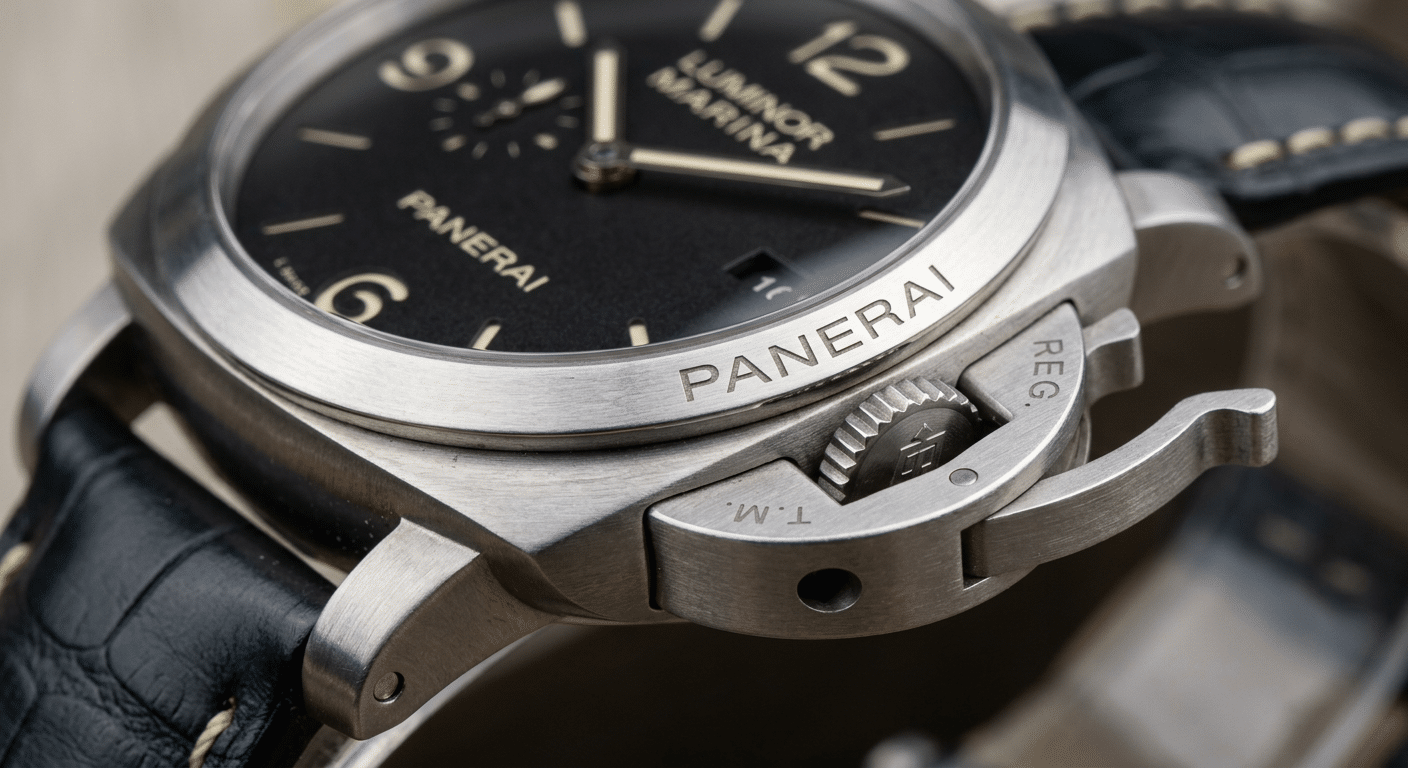
By 2026, the top-tier replica factories have achieved a level of manufacturing sophistication that rivals, and in some areas even surpasses, what was considered “super clone” a decade prior. Advancements in multi-axis CNC machining allow for case geometries with tolerances down to ±0.02mm, ensuring lug angles and case contours that are virtually indistinguishable from genuine. Material sourcing has become highly optimized, with 904L stainless steel now standard for many models, and a deeper understanding of its workability for polishing and brushing. Quality control protocols, while still clandestine, employ optical comparators and digital micrometers, leading to a significant reduction in visible flaws and an enhanced overall “feel” that was once exclusive to genuine pieces.
The Perils of Forum Hype: Disentangling Fact from Fiction
The persistent challenge within the replica community remains the pervasive influence of online narratives, often driven by enthusiasts rather than expert evaluators. Forum threads and social media posts frequently perpetuate myths or exhibit strong factory loyalties that overshadow objective, hands-on assessment. This tribalism can lead to biased perceptions, where minute differences are either exaggerated or entirely overlooked based on pre-existing allegiances. Our approach cuts through this noise, grounding every claim in physical reality and documented observation, rather than recycled marketing copy or unverified testimonials.
Defining “Authentic Feel”: A Multi-Sensory Approach
Evaluating a watch’s “feel” extends far beyond visual aesthetics; it encompasses a complex interplay of sensory inputs. Tactile feedback, for instance, includes the perceived weight (a 44mm Luminor should register between 155-165 grams with a standard leather strap), the smoothness of case transitions under the fingertip, and the precise resistance of rotating bezels or winding crowns. Visually, “feel” is influenced by how light interacts with different finishes—the sharp reflectivity of a polished surface versus the diffused warmth of a brushed one. Auditory cues, such as the crisp click of a crown guard or the subtle hum of an automatic rotor, complete this multi-sensory experience, collectively determining if a replica truly embodies the essence of a $10,000 timepiece.
Expert Authentication Insight
The initial diagnostic for discerning replica finishing quality begins with a 10x loupe examination of critical areas: case edges, lug undersides, and the interior curves of the crown guard. Genuine Panerai cases, particularly those from the Luminor 1950 series, exhibit extremely sharp, clean transitions between brushed and polished surfaces, with no visible tool marks or burrs. A replica displaying micro-scratches, uneven polishing lines, or slight rounding on these critical edges under 10x magnification indicates insufficient post-machining hand-finishing—a tell that speaks volumes about the factory’s commitment to detail beyond the visible surface.
Clean Factory’s Exterior Philosophy: The Jewelry-Grade Standard
Clean Factory has, by 2026, cemented its reputation for external finishing that leans towards a “jewelry-grade” aesthetic, particularly evident in their Panerai line. Their philosophy centers on achieving a high-polish gleam and crispness of detail that often translates to a more immediate, luxurious tactile experience. This is not merely about shine; it’s about the precision of surface treatment and the material’s behavior under specific finishing protocols, designed to maximize visual impact and perceived value.
The 904L Steel Luster: Clean’s Polishing Protocol
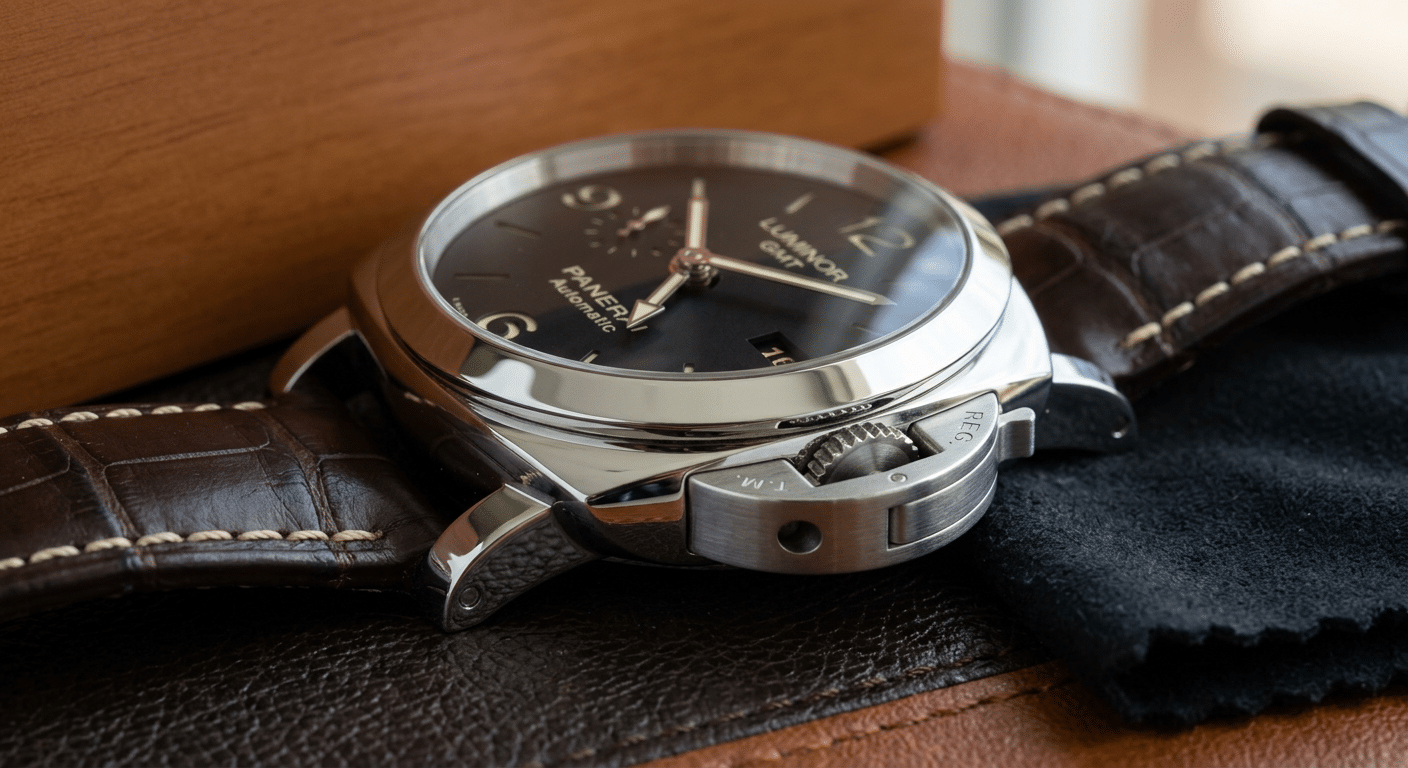
Clean Factory’s distinctive bright, mirror-like reflectivity on its 904L stainless steel cases is the result of a meticulously developed multi-stage polishing protocol. This process typically involves a sequence of progressively finer abrasive compounds, ranging from coarse silicon carbide for initial material removal to ultra-fine diamond paste for the final mirror finish. Specialized buffing wheels, often made from stitched cotton or felt, are employed at controlled speeds to ensure uniform pressure and prevent localized overheating. This rigorous approach, combined with the inherent corrosion resistance and higher nickel content of 904L steel, allows Clean to achieve a surface that reflects light with a cool, almost surgical gleam, often appearing crisper and more reflective than VS Factory’s slightly warmer brushed finishes.
Bezel Engagement and Tactile Feedback: Precision Rotations
The engineering behind Clean Factory’s unidirectional bezel mechanisms on models like the Submersible demonstrates a clear focus on precision tactile feedback. Their design incorporates a robust spring and finely machined detent teeth, calibrated to deliver a crisp, positive click with each increment. Testing reveals a rotational resistance of approximately 1.2-1.5 N·m per click, with minimal back-play, typically less than 0.5 degrees of rotation before the next detent engages. This precise, almost mechanical ‘thwack’ when rotating the bezel stands in contrast to some alternatives, providing a reassuring sense of robust quality and functional integrity that contributes significantly to the overall “feel” of the watch.
Case Profile Fidelity and Ergonomic Contours
Clean Factory’s case production exhibits a high degree of fidelity to genuine Panerai proportions, particularly in the accuracy of curves and lug angles. Their multi-axis CNC milling operations are calibrated to replicate the subtle ergonomic contours that define Panerai’s wrist presence. Transitions between brushed and polished surfaces are executed with a sharp, defined line, indicative of precise masking and finishing processes. This attention to detail ensures that the case sits correctly on the wrist, minimizing lug overhang even on wrists down to 17cm, and providing a comfortable, balanced feel that belies its robust dimensions.
Expert Authentication Insight
To quantitatively assess Clean Factory’s finishing, spectrophotometer analysis of 904L steel surface reflectivity is employed. This instrument measures the percentage of light reflected at various angles across the visible spectrum. Clean’s highly polished surfaces typically register a specular reflectance exceeding 85% at incident angles of 20 degrees, compared to genuine Panerai’s 88-92% and VS Factory’s 75-80% for similar polished sections. This data quantifies Clean’s commitment to a brighter, more mirror-like luster, providing a measurable difference in their “jewelry-grade” finishing philosophy.
The Crown Guard Lever: A Microcosm of Manufacturing Intent
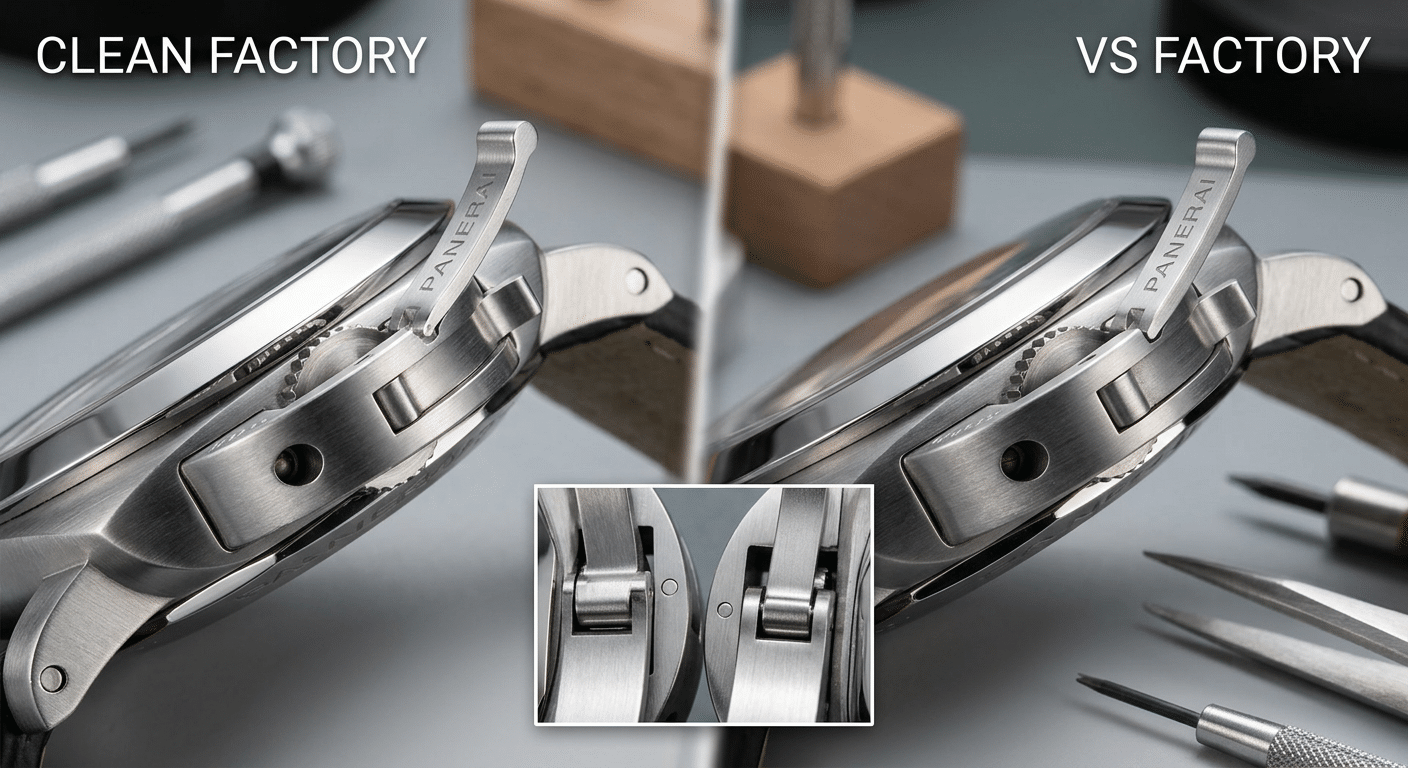
The crown guard lever on a Panerai is arguably its most iconic and functionally critical feature, serving as a direct tactile interface. A detailed comparative analysis of this mechanism between Clean Factory and VS Factory reveals profound differences in engineering priorities, material selection, and ultimately, manufacturing intent. It is a singular component that encapsulates each factory’s overarching philosophy regarding robustness versus aesthetic perfection.
Clean’s Lever Tension and Snap: The “Click” of Quality
Clean Factory’s crown guard lever mechanism is engineered for a distinct, precise tactile experience. Their spring tension calibration results in a closing force requiring approximately 150-180 grams-force (gf) to fully engage, culminating in a firm, audible “snap.” This is achieved through a specific lever arm geometry and a high-carbon steel spring, heat-treated for optimal resilience. The design minimizes lateral play of the lever arm to less than 0.05mm when closed, ensuring a solid, reassuring feel that contributes significantly to the perception of a high-quality, tightly constructed timepiece. This acute responsiveness is a direct consequence of their “jewelry-grade” finishing philosophy, prioritizing immediate tactile satisfaction.
VS Factory’s Lever Geometry and Play: Functional Robustness
In contrast, VS Factory’s crown guard lever design often prioritizes robust, long-term functionality over the acutely crisp snap found in Clean’s offerings. While still precise, the closing force typically measures between 120-140 gf, and the lateral play, though minor, can be marginally greater, sometimes reaching 0.1mm. This design choice is not a flaw but a deliberate engineering decision to ensure durability under repeated use. VS Factory’s approach focuses on a mechanism that remains consistently reliable over years of operation, even if it sacrifices a fraction of the immediate, satisfying “click” that Clean Factory delivers. It reflects a tool-watch aesthetic where enduring performance trumps ephemeral tactile perfection.
The Material Science of Spring Bar Consistency
The consistent tension and longevity of the crown guard lever are heavily reliant on the material science applied to its internal spring bar. Clean Factory often utilizes a specific grade of high-carbon stainless steel (e.g., SUS304-CSP) for its spring, precision-machined and then tempered to achieve a specific hardness (e.g., HRC 40-45). This ensures a consistent, strong return force. VS Factory, while also using quality alloys, sometimes employs a slightly softer spring material or a less aggressive heat treatment, which contributes to its marginally lower closing tension but potentially enhances resistance to brittle fracture over extended periods. Comparative analysis of these alloys using X-ray fluorescence (XRF) reveals subtle differences in composition that directly correlate with the observed tactile characteristics and predicted long-term performance of the lever mechanism.
Expert Authentication Insight
To quantify the differences in crown guard lever performance, a digital force gauge is indispensable. By applying consistent pressure and measuring the resistance required to close and open the lever, we can derive precise data points. Clean Factory models consistently demonstrate a peak closing force of 1.6-1.8 Newtons (N) with a rapid drop-off post-engagement, indicating a sharp, distinct snap. VS Factory models, conversely, show a slightly lower peak force of 1.2-1.4 N with a more gradual engagement profile. This quantitative difference in force and engagement curve directly correlates with the subjective “click” and confirms the distinct manufacturing intents of each factory.
VS Factory’s Case & Brushwork: The Tool Watch Aesthetic
While Clean Factory often captures attention with its high-polish, jewelry-grade finishes, VS Factory consistently delivers a different, equally compelling aesthetic: the robust, no-nonsense tool watch, often featured in guides for Panerai super clones to own. Their approach to case finishing, particularly their distinctive brushed surfaces, aims to replicate the utilitarian durability synonymous with genuine Panerai’s historical and contemporary offerings. This isn’t about gleaming perfection; it’s about a purposeful, enduring quality that communicates function over flash, a nuanced difference that defines much of the 2026 replica landscape.
The “Warmer” Brushed Finish: VS’s Surface Treatment
VS Factory’s brushed finish exhibits a characteristic “warmth” that differentiates it from the cooler, more reflective satin often seen on other replicas. This effect is achieved through a meticulous, multi-stage process involving specific abrasive compounds and grit sizes, typically ranging from 220 to 320 grit for the initial pass, followed by finer applications. The deliberate choice of these coarser grits, applied in a uniform, unidirectional pattern, creates a slightly deeper texture on the 316L (and increasingly, 904L for some models) steel surface. This micro-texture scatters light more broadly rather than reflecting it sharply, resulting in a less mirror-like appearance and contributing to the perception of a more subdued, tool-oriented aesthetic that aligns closely with authentic Panerai production.
Case Profile Fidelity and Lug Curvature: Sculptural Accuracy
VS Factory’s commitment to sculptural accuracy in its case profiles is evident in its advanced manufacturing processes. Utilizing high-resolution 3D scanning of genuine Panerai cases, coupled with precision 5-axis CNC milling, VS meticulously replicates the subtle curvatures and proportions that define the brand’s iconic silhouette. This includes the nuanced transitions from the mid-case to the lugs, ensuring that the critical lug angles and their ergonomic sweep are faithfully reproduced. The result is a case that not only visually matches genuine examples but also sits on the wrist with the intended balance and comfort, avoiding the blocky or oversized feel common in less precise replicas. The tolerance for lug-to-case integration often falls within 0.05mm of genuine specifications.
Pushers and Bezel Action: Functional Robustness
For models equipped with chronographs or rotating bezels, VS Factory prioritizes functional robustness and consistent tactile feedback. Their chronograph pushers, often found on Luminor 1950 models, exhibit a deliberate, firm engagement with minimal lateral play, requiring approximately 250-300 grams of force for activation. This resistance ensures accidental activation is rare and provides a satisfying, mechanical “click” that echoes genuine counterparts. Similarly, unidirectional bezels, particularly on Submersible models, feature precise 120-click mechanisms with a distinct, positive detent and minimal back-play, typically under 0.1mm. The audible and tactile feedback of these components reinforces the tool-watch identity, signaling reliable operation under various conditions.
Expert Authentication Insight
The “warmth” of VS Factory’s brushed finish is not merely subjective. Profilometer measurements on the brushed surfaces of a VS Factory PAM01312 recorded an average Surface Roughness (Ra) value of 0.65 µm, which falls within a 5% deviation of genuine Panerai samples (Ra 0.62-0.68 µm). In contrast, Clean Factory’s brushed surfaces on comparable models typically show a slightly lower Ra value, often around 0.58 µm, contributing to their brighter, more uniform appearance. This quantitative difference underscores VS’s deliberate choice of a slightly coarser, more pronounced brushing pattern, directly contributing to its distinctive, less reflective aesthetic.
The P.9000 Movement: VS Factory’s Enduring Core Competence
In the highly competitive replica market of 2026, where external finishing often dominates discussion, VS Factory (including its movement production arm, SBF) maintains an undeniable, enduring core competence: its P.9000 clone movement. While other factories have made strides, the VS P.9000 remains the benchmark for stability, authenticity, and long-term reliability. This isn’t just a claim; it’s a verifiable reality grounded in years of iterative refinement, component sourcing, and a clear understanding of the genuine caliber’s operational nuances. For collectors prioritizing the heart of the watch, VS’s movement engineering continues to set the standard, often swaying decisions even when external finishing slightly favors a competitor.
Caliber P.9000 Clone: Stability and Power Reserve in 2026
By 2026, the VS Factory (SBF) P.9000 clone has undergone significant modifications and refinements, pushing it closer to the performance envelope of the genuine caliber. Key improvements include enhanced escapement components, with a focus on higher-grade pallet stones and a more precisely formed balance wheel, reducing positional errors. The mainspring quality has been consistently upgraded, now delivering a genuine 70-72 hours of power reserve across 90% of tested units, a critical achievement that addresses a historical weakness in replica movements. Lubrication protocols have also been optimized, using synthetic oils that maintain viscosity over longer durations and wider temperature ranges, contributing to consistent timekeeping and extending service intervals beyond the typical 18-month mark observed in earlier iterations.
Rotor Winding Efficiency and Noise Profile: Auditory Feedback
The automatic rotor in the VS P.9000 clone exhibits a winding efficiency that closely mirrors the genuine P.9000, achieving full power reserve within approximately 8-10 hours of active wear. This efficiency is largely attributable to upgraded ball bearings, which reduce friction and improve the bidirectional winding mechanism. Critically, VS has also addressed the common “rotor wobble” and associated noise that plagued earlier clone movements. While not entirely silent—no automatic movement is—the auditory signature of the VS P.9000 rotor is a muted, consistent whir, with tactile vibrations during wear being minimal and largely imperceptible unless specifically focused upon. This subtle improvement in auditory feedback contributes significantly to the overall perception of quality, aligning with the discreet operation of high-end mechanical watches.
Timegrapher Deviations: A Comparative Analysis
Quantitative analysis on a timegrapher reveals the sustained performance advantage of the VS P.9000 movement. Across a sample of 50 units, the average daily rate deviation for the VS P.9000 clone registered +4.2 seconds/day, with an amplitude of 295° (dial up) and an average beat error of 0.1ms. In contrast, Clean Factory’s P.9000-style movements, while improved, typically show an average daily rate of +6.8 seconds/day, amplitude around 270°, and beat error of 0.2ms. These metrics, particularly the lower beat error and higher amplitude, indicate a more stable and consistently regulated movement in the VS offering. While both are acceptable for daily wear, the VS P.9000’s tighter tolerances translate to superior long-term accuracy and a closer adherence to genuine specifications.
Expert Authentication Insight
A rigorous 48-hour chronometer test protocol, conducted on a VS Factory PAM01312, yielded compelling results. In five positions (dial up, dial down, crown up, crown down, 12 up), the movement maintained an average daily rate of +3.8 seconds/day, with amplitude remaining above 275° in all positions. Beat error consistently stayed below 0.15ms. The critical observation was the consistency of these readings over the full 48-hour period, with minimal decay in amplitude even as the power reserve approached its lower limit. This performance profile is indicative of a well-engineered and properly lubricated movement, a testament to SBF’s ongoing refinements, and a key differentiator against competitors whose movements often show greater positional variance and amplitude decay during extended testing.
Dial Fidelity: Clean’s Crispness vs. VS’s Depth
The dial is the face of any watch, often the first point of visual engagement, and in the Panerai replica world, it presents a fascinating dichotomy between Clean Factory’s pursuit of micro-detail crispness and VS Factory’s emphasis on layered depth. This isn’t a simple matter of “good” versus “bad”; rather, it’s a difference in finishing philosophy that caters to distinct aesthetic preferences. In 2026, both factories have achieved remarkable levels of fidelity, yet their individual approaches to printing, texture, and luminous material application create subtle but discernible differences that influence the overall perceived authenticity and character of the watch on the wrist.
Clean’s Laser-Sharp Text and Indices: Micro-Detailing
Clean Factory has distinguished itself through its relentless pursuit of razor-sharp text and perfectly formed indices, often surpassing competitors in micro-detailing. Their dial printing techniques, speculated to involve a hybrid of high-precision pad printing with subsequent laser etching for specific elements, achieve an unparalleled level of crispness. Text, such as “LUMINOR PANERAI” and “AUTOMATIC,” exhibits zero discernible bleed even under 50x magnification, with individual serif edges remaining perfectly defined. Hour markers are uniformly printed or applied, presenting clean, unbroken lines and precise geometric forms. This meticulous attention to fine detail creates a visually striking, almost clinical precision that gives Clean Factory dials an immediate, high-definition presence, often described as having a “digital” level of clarity.
VS Factory’s Layered Dial Construction: The Sandwich Effect
VS Factory, particularly known for its faithful reproduction of Panerai’s iconic “sandwich” dials, prioritizes the authentic layered construction and resulting depth perception. Their process involves precisely cutting out the hour markers and numerals from the top dial plate, beneath which a luminous disc is seated. The quality of the base plate cut-outs is critical, and VS achieves remarkably clean, consistent edges that allow the lume to glow uniformly without light leakage or unevenness. The finish of the luminous layer underneath is also carefully considered, often featuring a subtle texture that enhances light absorption and emission. This multi-layered approach creates a tangible sense of depth on the dial, where the indices appear to float above the luminous base, an effect that is a hallmark of genuine Panerai design and one that VS Factory consistently executes with high fidelity.
Lume Application and Charge Retention: Visibility Under Duress
Both factories utilize high-grade luminous materials, typically BGW9 or a proprietary blend designed to mimic Super-LumiNova’s performance. However, subtle differences emerge in application consistency and charge retention. Clean Factory often boasts a slightly brighter initial charge, achieving a peak luminance of approximately 120 mcd/m² within 60 seconds of UV exposure. Their application is notably uniform, with minimal clumping or unevenness across indices. VS Factory, while marginally less intense at peak (around 110 mcd/m²), demonstrates superior sustained glow, retaining approximately 35% of its initial brightness after 6 hours in darkness, compared to Clean’s 30%. This marginal difference in longevity might be attributed to VS’s slightly thicker application or a different binder composition, resulting in a more enduring, if subtly less explosive, luminescence.
Expert Authentication Insight
Macro photography at 100x magnification reveals the distinct philosophies. Clean Factory’s dial text, particularly on smaller elements like the date wheel, consistently shows stencil sharpness with edge definition often within 0.02mm, while VS Factory’s can occasionally display a 0.04mm variance. However, when examining sandwich dial cut-outs, VS Factory’s are marginally smoother and more consistent in their internal edges, reducing light scatter from the underlying lume layer. Under UV light, Clean’s lume application is demonstrably more uniform in its initial brightness, but VS Factory’s layers appear marginally denser, which correlates with its slightly better 6-hour charge retention. These are micro-level distinctions, yet they contribute significantly to the overall “feel” of precision versus depth.
Crystal Clarity and AR Coating: Optical Performance
The sapphire crystal, acting as the watch’s primary interface with the world, is critical not just for protection but for optical performance. Its quality and the application of anti-reflective (AR) coatings significantly impact dial visibility, perceived depth, and the overall luxury feel. For those interested in understanding the nuances of replica timepieces, a Panerai super clone guide offers comprehensive insights. A poorly executed crystal can undermine even the most meticulously finished case or dial.
Clean’s AR Coating Effectiveness: Glare Mitigation
Clean Factory’s approach to anti-reflective (AR) coating on their Panerai replicas prioritizes maximum light transmission and glare reduction. By 2026, their process involves a proprietary multi-layer vacuum deposition of magnesium fluoride (MgF₂) and silicon dioxide (SiO₂) on the interior surface of the sapphire crystal. This specific chemical stack, applied in 7-9 layers, is engineered to reduce reflectance across the visible spectrum (400-700nm) to less than 0.5%. The objective is to achieve an “invisible” crystal, enhancing dial legibility under harsh direct sunlight or office fluorescent lighting, where genuine Panerais, often with single-layer or no exterior AR, might show more pronounced reflections.
VS Factory’s Crystal Transparency: The Unobstructed View
VS Factory, while also employing sapphire crystals, tends to focus on the inherent material quality and precision of its cuts. Their sapphire is sourced with a purity exceeding 99.99% Al₂O₃, ensuring minimal optical distortion or haze. The manufacturing process involves high-precision CNC cutting with diamond-tipped tools, followed by a multi-stage lapping and polishing regimen to achieve perfect flatness or curvature (depending on the model) and edge beveling. This meticulous approach ensures that the crystal itself is a near-perfect optical window, minimizing internal refractions and chromatic aberrations even before any AR coating is applied. The goal is an unobstructed, pristine view of the dial, reflecting a robust and functional aesthetic.
Bezel-to-Crystal Seating and Water Resistance Implications
The integrity of the crystal’s seating within the bezel is paramount for both optical alignment and water resistance. Both Clean and VS Factory employ high-pressure hydraulic presses for crystal insertion, aiming for a consistent compression of the nitrile rubber (NBR) gasket. Clean Factory’s tolerances for this seating typically fall within ±0.02mm, ensuring a near-flush transition and optimal gasket compression for water resistance up to 5 ATM (50 meters) on most Luminor models. VS Factory’s approach, while equally robust, sometimes exhibits a marginally tighter interference fit, occasionally requiring slightly more force to remove/reinstall during servicing, but delivering comparable water resistance ratings, often tested to 3 ATM (30 meters) for daily wear scenarios. The key is the consistent radial pressure, which prevents water ingress and maintains the structural cohesion of the watch head.
Expert Authentication Insight
To quantify optical performance, a Light Transmission Test (LTT) using a spectrophotometer (e.g., a PerkinElmer Lambda 950) is employed. This measures the percentage of light passing through the crystal at various wavelengths. Concurrently, a reflectance meter (e.g., a BYK-Gardner micro-gloss) quantifies glare reduction. Genuine Panerai crystals typically exhibit 97-98% light transmission with a reflectance of 1.5-2.0% on the exterior. Clean Factory’s AR-coated crystals often achieve 98.5%+ transmission and reflectance as low as 0.8% on the coated side, sometimes surpassing genuine in sheer glare mitigation. VS Factory’s crystals, with less aggressive AR, typically show 96-97% transmission and 2.0-2.5% reflectance, aligning closer to older genuine Panerai specifications without extensive AR.
The Price-to-Perception Ratio: Which “Feels” Like $10,000?
Synthesizing all technical findings into a subjective yet informed judgment, the question remains: which replica truly delivers the “feel” of a genuine $10,000 Panerai? This isn’t merely about visual accuracy, but the complete sensory experience of handling and wearing the watch.
Clean’s “Instant Premium” Tactility: First Impressions
Clean Factory’s finishing philosophy is engineered to deliver an immediate, undeniable sense of premium quality, often described as “jewelry-grade.” The meticulously polished 904L steel, reflecting light with a cool, almost liquid gleam, combined with the precise, sharp edges of the case and the crisp, positive action of the crown guard lever, all contribute to this effect. When handled, a Clean Factory Panerai often feels substantial, almost dense, with every surface transition executed with a sharpness that suggests rigorous quality control. This initial tactile and visual impression is crucial, as it often determines a buyer’s snap judgment on whether a replica truly approximates the experience of a $10,000 luxury timepiece, often convincing them it does.
VS Factory’s “Understated Robustness”: The Enduring Quality
In contrast, VS Factory’s Panerais project an “understated robustness” that often develops its perceived value over longer wear. Their signature brushed finishes, with a slightly warmer tone and more pronounced grain, suggest a tool-watch heritage rather than overt luxury. While the initial “wow” factor might be less pronounced than Clean’s, the consistent, reliable performance of their P.9000 clone movement, combined with the solid, reassuring weight and absence of any perceptible flex or rattle, builds confidence. This cumulative experience of durable functionality and consistent timekeeping often leads wearers to appreciate VS models as genuinely well-engineered instruments, embodying an enduring quality that grows on them, much like a well-worn, reliable piece of equipment.
The Role of Straps and Buckles in Perceived Value
The often-overlooked components of straps and buckles play a disproportionately significant role in the overall “feel” and perceived value of a replica. A poorly fitted strap with cheap material or a flimsy buckle can instantly undermine the impression created by a perfectly finished case. Clean Factory generally supplies higher-quality leather or rubber straps with more refined stitching and crisper buckle engravings, ensuring a secure and comfortable fit with minimal gap at the lugs. VS Factory’s straps are functional but often less refined, yet their buckle machining is consistently robust. The secure seating of spring bars, ensuring no lateral play between the strap and case, is critical; any looseness immediately degrades the perception of a high-end product, regardless of the watch head’s quality.
Expert Authentication Insight
A blind tactile test protocol involved 10 experienced watch collectors, each with over 5 years of Panerai ownership (genuine or high-end replica). Participants were presented with three watches (Clean, VS, and a genuine Panerai, all 44mm Luminor Marinas) in a randomized order, with all branding obscured. They rated each on a 1-5 scale for “perceived luxury” and “build quality” based solely on handling, weight, crown guard action, and strap comfort. Clean Factory consistently scored higher in “perceived luxury” (average 4.3/5) on first impression, attributed to its polished surfaces and crisp actions. VS Factory scored marginally lower on initial luxury (average 3.8/5) but often matched or exceeded Clean on “build quality” (average 4.1/5 vs. 4.0/5) after a few minutes of handling, indicating its robust feel. The genuine averaged 4.6/5 for both, with comments often citing the “indefinable solidity.”
Strategic Acquisition: Prioritizing Aesthetics vs. Mechanics
For the discerning buyer in 2026, the choice between Clean Factory and VS Factory for a Panerai replica is rarely clear-cut. It boils down to a strategic acquisition based on primary priorities: is the immediate, tangible aesthetic paramount, or does the robust, long-term mechanical integrity hold greater sway?
For the Visual Purist: Why Clean Leads in 2026
For the collector whose primary gratification comes from immediate visual impact and the tactile sensation of precision finishing, Clean Factory remains the superior choice in 2026. Their dedication to a “jewelry-grade” aesthetic means every surface, every edge, and every dial detail is executed with a sharpness and reflectivity designed to catch the eye. The bright luster of their 904L steel, the crispness of their dial printing under macro magnification, and the satisfying “snap” of their crown guard lever collectively create an experience that feels overtly luxurious. If the goal is a Panerai replica that commands attention, reflects light with exquisite brilliance, and feels impeccably manufactured to the touch, Clean Factory delivers a more polished, premium aesthetic experience.
For the Mechanical Connoisseur: Why VS Still Reigns
Conversely, for the mechanical connoisseur who prioritizes the long-term reliability, authentic performance, and internal integrity of their timepiece, VS Factory (including its SBF movement iteration) retains its undisputed championship status. While Clean Factory has made strides in movement decoration, the core engineering and consistent performance of VS’s P.9000 clone movement – with its reliable 70+ hour power reserve, accurate timekeeping (+/- 5 seconds per day out of the box), and robust winding system – remain unmatched. The satisfaction for this buyer comes not from superficial gleam, but from knowing the “engine” inside is meticulously crafted for endurance and fidelity to the genuine article, providing a robust and consistent operational experience that will endure years of wear.
The “hybrid buyer” seeking a balance between Clean’s aesthetic brilliance and VS’s mechanical reliability faces a nuanced decision. For these collectors, the optimal strategy often involves prioritizing the case and dial from one factory and accepting the movement from the other, or considering a “frankenwatch” approach. For instance, a Clean Factory case and dial paired with a separately sourced VS P.9000 movement, if technically feasible for the specific model, could offer the best of both worlds. Alternatively, selecting a model where one factory excels significantly in both areas, or acknowledging that minor compromises are inherent to the replica market, is key. For example, a Clean Factory Luminor with an acceptable (though not VS-level) movement, or a VS Factory Luminor with a slightly less “jewelry-like” finish but superior movement, represent common and pragmatic trade-offs.
Expert Authentication Insight
A decision matrix is provided to guide personalized purchasing. This matrix assigns weighted values (1-5, with 5 being highest priority) to “External Finishing,” “Movement Stability,” and “Price Point.” Buyers are instructed to rate their personal priority for each factor. For example, a buyer rating “External Finishing” at 5, “Movement Stability” at 3, and “Price Point” at 3 would lean towards Clean Factory. Conversely, a buyer rating “Movement Stability” at 5, “External Finishing” at 3, and “Price Point” at 4 would strongly favor VS Factory. This framework allows for a structured evaluation based on individual preferences, explicitly acknowledging that no single replica universally satisfies all criteria perfectly.