
Navigating the Richard Mille replica market requires moving past marketing labels and focusing on structural maturity. The central challenge for buyers is not finding the most visually striking design, but identifying which model generation and price band actually delivers reliable daily wearability. Entry-tier versions often compromise on movement stability and strap integration, while premium tiers, according to model-specific price guide, frequently add decorative skeletonization that weakens case support and increases servicing risk. True value sits in the mid-range, where established calibers and refined tonneau geometry balance visual presence with mechanical consistency.
This article breaks down how pricing logic, movement architecture, and factory iteration maturity intersect to determine long-term reliability. Rather than chasing unverified claims of factory superiority, the focus remains on practical verification: checking rotor clearance, date alignment, engraving crispness, and clasp security. By aligning model complexity with actual wearing habits, buyers can avoid common mechanical compromises and select a watch that prioritizes functional honesty over decorative extremes.
| Focus Area | What to Verify | Practical Implication |
|---|---|---|
| Pricing Tier | Mid-range allocation | Funds proven movement stability and routine quality control |
| Movement Layout | Simple automatic or established chronograph | Reduces structural stress and simplifies future servicing |
| Factory Updates | Iteration maturity via timestamped photos | Avoids unannounced production changes that alter case dimensions |
| Strap & Clasp | Rubber curvature and clasp engagement | Determines wrist comfort, weight balance, and secure fit |
| Visual Details | Hand clearance and date wheel centering | Reveals assembly precision and long-term mechanical reliability |
Quick Questions Before You Read
Q: Is a higher-priced replica automatically more reliable?
No. Premium models often carry a complexity tax for heavy skeletonization, which can compromise structural integrity and complicate servicing. Mid-range versions typically offer better mechanical consistency and proven engineering.
Q: How can I verify a factory’s current production quality?
Request natural-light photos and timestamped videos of the actual watch. Check hand clearance, bezel alignment, and movement finishing to confirm iteration maturity rather than relying on batch names or marketing claims.
Q: Which Richard Mille style is most suitable for regular wear?
Simple automatic layouts with time-and-date functions. They use proven base movements, maintain better weight distribution, and avoid the maintenance risks associated with highly decorative complications.
Editorial Perspective: At cleanvsfactory.com, evaluating a Richard Mille replica is approached as a model-specific decision rather than a search for a universally “best” factory. The replica market for tonneau-shaped watches operates on different technical constraints than round-case sports models, meaning that factory strength often varies by reference, iteration window, and movement route. Visual accuracy and daily reliability are separate priorities; a dial that photographs perfectly under macro lighting may not align with the internal spacing required for long-term winding consistency. Our guidance focuses on narrowing factory claims to specific model behaviors, separating marketing labels from verifiable assembly details, and aligning movement complexity with realistic wearing habits. Buyers benefit most from treating factory names, QC images, and price tiers as useful filtering signals, not as final guarantees of ownership experience.
Understanding the Replica-to-Genuine Reference Boundary
Before evaluating specific models or pricing tiers, it is essential to establish a clear distinction between the reference designs discussed here and the products available on the market. Brand names such as Richard Mille are used strictly to identify the original luxury watch architecture being referenced for comparison. Replica watches are not genuine products from the original luxury brand, nor are they affiliated with, authorized by, or certified by the original manufacturer. The term “super clone” or “replica-market watch” describes an independently produced item that attempts to visually approximate a genuine reference design. Factory names discussed in this context are buyer-facing market labels rather than official production facilities or brand-approved workshops. Understanding this boundary ensures that readers evaluate these items with realistic expectations regarding craftsmanship, servicing pathways, and long-term ownership limits.
Movement descriptions in the replica market should be checked carefully because they may refer to layout, decoration, clone architecture, or seller terminology rather than an official brand-manufactured caliber. Brand names are used for reference and comparison only; they do not imply authorization, endorsement, or affiliation with the original luxury watch brands. The purpose of this comparison framework is to help buyers understand visible quality differences and practical risks, not to represent a replica watch as genuine.
Why the Middle Ground Wins in Richard Mille Replica Selection
The most common mistake in the Richard Mille replica market is assuming that value sits at either extreme of the pricing spectrum. Entry-tier tonneau clones often fail at the most basic level: they look convincing in promotional images but reveal misaligned layers, stiff cases, and unstable movements under normal wrist angles. Conversely, the highest-priced decorative builds frequently sacrifice functional integrity for visual novelty, adding fragile skeleton bridges, exaggerated complications, and aggressive thinness attempts that increase ownership risk rather than reducing it. The rational Richard Mille replica value band exists precisely where these two failure points converge. It is the intersection of mature architecture, proven movement routing, and wearable geometry. Buyers who target this zone are not hunting for bargains or prestige pricing; they are purchasing risk reduction.
Value in this space should be treated as a deliberate compromise, not a feature checklist. A super clone watch tradeoff becomes sensible when the factory has already cycled through early version flaws, the case proportions sit naturally on average wrists, and the movement prioritizes stability over openworked theatrics. The best value RM replica does not try to replicate every experimental design choice of a six-figure original. Instead, it respects the structural reality of tonneau manufacturing while delivering consistent daily-wear performance.
Defining Structural Honesty in Replica Watches
Structural honesty in a replica watch means the case, movement, and strap integration behave as a single coherent system rather than three mismatched components forced together. This baseline matters because Richard Mille originals rely heavily on a specific tripartite construction that distributes weight and tension across a curved profile. When a replica ignores that engineering logic, the watch may still pass a casual glance, but it will feel stiff, unbalanced, or overly heavy during extended wear.
Case thickness alignment is the first checkpoint. A mature replica manages its height by respecting the original’s mid-case sandwich design instead of stacking generic plates that create visible step gaps. Movement layout accuracy follows closely behind. If the rotor clearance is too tight, the automatic winding becomes inconsistent. If the date window or dial markers are misaligned with the actual movement positioning, the watch looks artificially crowded even if the individual components appear sharp. Finally, strap integration determines whether the watch sits flush against the wrist or rocks forward due to rigid lugs and poorly matched curvature. These three factors form the foundation of a reliable piece. When they work together, the watch feels intentional. When they do not, no amount of dial decoration can compensate for the underlying imbalance.
The Cost of Chasing Decorative Complexity
Marketing often pushes buyers toward the most visually dramatic replicas, assuming that maximum skeletonization equals maximum quality. In reality, aggressive decorative complexity is one of the fastest ways to undermine long-term reliability. Openworked plates and exaggerated cutouts frequently reduce structural support around the rotor axis, leading to premature wear, increased rotor noise, or uneven winding tension. Thinness claims that ignore functional clearance often force movement parts into compromised positions, raising the likelihood of date-change friction, hand interference, or timing drift over time.
This does not mean decorative elements are inherently flawed. It means they must be engineered, not applied. When a factory prioritizes visual transparency over mechanical spacing, the buyer pays a premium for a watch that looks impressive in macro photos but behaves unpredictably on the wrist. A sensible risk reduction strategy acknowledges that functional spacing, stable gear trains, and accessible service routes matter more than how many bridges are visible through the dial. The mid-range pricing logic rewards factories that refine layout balance rather than those that chase forum-driven aesthetic extremes.
Factory names in the replica watch market are useful buyer-facing references, but they should not be treated as official luxury-brand affiliations or automatic guarantees of quality across every model. Market labels often shift as production runs update, meaning a workshop’s reputation for one reference does not guarantee identical execution for another tonneau variant. Buyers should treat factory names as starting points for comparison rather than final endorsements.
Why Factory Reputation Does Not Transfer Across Models
In broader replica watch discussions, certain factory names develop strong reputations for specific reference families. That same naming logic breaks down when applied to Richard Mille clones. A manufacturer that consistently delivers excellent round-case finishing or reliable date-window execution for mainstream sport models does not automatically translate that expertise to a highly curved, multi-layered tonneau architecture. The tooling, CNC routing, carbon composite layering, and strap-curve calibration required for an RM replica operate on a different manufacturing track.
For buyers, this means the phrase “best factory” should always be narrowed to a specific model and a specific iteration window. At cleanvsfactory.com, we observe that a workshop’s strength often lies in how it handles a particular reference’s geometry rather than a blanket claim of superiority across an entire brand line. When evaluating an RM clone, the useful question is not which factory has the loudest forum presence, but which version has already resolved the case-to-strap transition, rotor clearance, and dial-print alignment for the exact reference you want. Cross-referencing seller batch photos with actual wrist shots will usually reveal that maturity varies by model, not by brand label alone.
Case Architecture and Thickness: The Real Cost of the Tonneau Shape
The tonneau silhouette is visually striking but mechanically demanding. Cloning a curved case with consistent lug curvature and accurate profile geometry requires more than shaping a standard round watch into a barrel. Factories must account for how the bezel, mid-case, and caseback interact under curvature, how the lug-to-lug measurement aligns with natural wrist angles, and how the overall weight distributes across the strap. When these elements are mismanaged, tonneau case replica thickness becomes the most visible and uncomfortable compromise.
Many buyers assume that thinner automatically means better. In practice, chasing absolute thinness often results in uneven polishing, reduced water resistance margins, or case walls that feel brittle. A slightly thicker but consistently finished case usually outperforms a thinner alternative because it preserves the original’s structural integrity and allows for proper internal spacing. The real metric is profile accuracy, not height alone. A well-executed RM clone case geometry maintains the original’s visual flow from bezel to lugs, matches the strap curvature naturally, and avoids the rigid, blocky appearance that signals rushed manufacturing. This balance is what separates a daily-wearable piece from a display-only object.
How Layered Construction Affects Wearability
The tonneau shape relies on layered case construction to achieve its signature depth. The challenge is aligning those layers without creating visible gaps, sharp transitions, or strap lift that pulls the case away from the wrist. Entry-level versions frequently use simplified mid-case stamps that leave uneven step heights around the bezel or caseback. These gaps trap dust, disrupt visual continuity, and make the watch sit higher on the wrist than intended.
Mature factories address this by refining lug curvature and adjusting the internal stacking sequence so the case transitions smoothly into the strap. Proper strap gap alignment ensures the watch flexes with the wrist rather than resisting it. When the lug profile matches natural wrist curvature, weight distribution improves significantly, and the perceived thickness decreases even if the millimeter measurement remains unchanged. Buyers evaluating a piece should look for consistent transitions along the case sides, even bezel seating, and a strap attachment that does not force the case into an upright position. These details determine whether the watch feels integrated or merely assembled.
Material Verification and Carbon Composite Expectations
The official Richard Mille catalog relies heavily on proprietary material engineering, utilizing specific grades of forged carbon, quartz TPT, and grade 5 titanium to achieve their signature weight-to-strength ratios. Replica manufacturers attempt to replicate these visual and tactile properties, but buyers should not assume material equivalence simply because a dial displays a carbon pattern or a case is labeled titanium. In practice, replica carbon composites often use layered resin or stamped acrylic overlays rather than genuine pressure-fused TPT sheets. Titanium clones may also utilize 316L steel with PVD coating instead of authentic titanium alloys. These substitutions do not always degrade visual accuracy, but they directly impact long-term wear weight, heat conductivity, and scratch resistance. A careful buyer verifies material claims by observing edge layering, checking magnetism responses on titanium pieces, and treating any “identical material” marketing as aesthetic simulation rather than engineering fact.
Movement Route Priorities: Reliability Over Decorative Complexity
The movement inside a Richard Mille replica defines its actual ownership experience far more than the dial window suggests. While openworked dials create an immediate visual impact, replica watch movement reliability depends on the underlying architecture, rotor behavior, power reserve stability, and long-term serviceability. A proven automatic route adapted to fit the RM layout consistently outperforms heavily modified or overly thin decorative plates because it preserves mechanical spacing, reduces friction points, and maintains predictable winding tension.
Movement descriptions in the replica market should be read as configuration references, not as official brand-caliber claims unless there is clear, verifiable evidence. Buyers should distinguish between movement layout, decoration, reliability, and actual serviceability, and [Richard Mille super clone value] is a critical factor in this assessment. A visually open base plate does not guarantee improved winding efficiency, and market terms like “custom caliber” typically refer to adapted Asian automatic architectures rather than original manufacture components.
The most functional Richard Mille automatic clone calibers prioritize base movement maturity over visual novelty. When a factory builds on an established platform, rotor noise remains controlled, date changes occur smoothly without grinding, and timing stays within acceptable daily tolerances. Serviceability also improves, as watchmakers can source compatible parts and understand the gear train without navigating custom decorative bridges that obscure standard components. Buyers who focus on movement track record rather than dial transparency usually experience fewer surprises during daily use.
Timing Standards and Replica Accuracy Expectations
Authentic high-horology movements are typically regulated to strict chronometric tolerances and undergo extensive positional testing across multiple temperatures and angles before leaving the manufacture. Replica movements, regardless of marketing claims about “Swiss precision” or “COSC-level performance,” operate on entirely different quality-control and regulation pathways. The automatic base calibers adapted for tonneau layouts are generally regulated for functional daily use rather than precision timing competitions. Buyers should expect acceptable variance in daily gain or loss, typically ranging from -10 to +15 seconds per day depending on the movement condition, wearing posture, and winding habits. Treating a replica as a precision instrument sets unrealistic expectations; evaluating it as a mechanically adapted accessory focused on structural stability and visual harmony aligns better with the actual ownership experience.
Base Caliber Adaptations That Work
Successful base caliber adaptations start with a proven automatic foundation that already handles winding tension and rotor clearance effectively. Instead of redesigning the entire movement, mature factories adjust the bridge layout, position the date wheel accurately, and modify the rotor shape to fit the tonneau case without scraping or binding. This approach preserves the original movement’s reliability while matching the visual expectations of the RM dial architecture.
The result is a super clone watch that delivers consistent power reserve, smooth crown winding, and stable hand alignment. When evaluating a movement, the key question is whether the automatic winding feels deliberate or forced, and whether the dial-side layout aligns with the movement’s actual gear train. A well-adapted base caliber rarely produces excessive rotor drag or unpredictable timing drift. It functions quietly, which is exactly what a daily-wear complication should do.
Serviceability Limits and Movement Architecture Realities
When considering long-term ownership, buyers must recognize that replica watch movements operate within a different maintenance ecosystem than genuine luxury watches. Clone calibers and adapted automatic platforms are assembled from widely available base architectures that are modified to fit tonneau dimensions. While a well-executed clone can provide stable daily function, it does not share the same parts interchangeability, lubrication standards, or official service network as the original brand-manufactured movement. Over time, routine wear may require cleaning, regulation, or part replacement that must be handled by independent technicians familiar with replica-market architectures. Official brand service centers will not accept or repair replica movements, and attempting to force genuine service pathways can void any seller-provided return options.
Additionally, decorated plates and skeletonized bridges in the replica segment are often aesthetic modifications rather than functional engineering upgrades. These modifications can restrict a technician’s access to core gear trains, making routine servicing more labor-intensive and costly. Buyers should factor in that a movement’s longevity depends heavily on initial assembly precision, lubrication quality, and careful handling rather than factory reputation alone. A movement route that prioritizes standard part accessibility and conservative modification typically offers a more practical ownership experience than highly decorative layouts that obscure standard components.
When Skeleton Plates Become a Liability
Decorative skeletonization becomes problematic when cutouts remove material from structural support zones rather than purely aesthetic areas. Aggressive thinness claims often force factories to shave down bridges, reduce jewel count, or compress the mainspring barrel to fit the case profile. These shortcuts increase friction, accelerate wear on the train wheels, and make the movement highly sensitive to minor shocks or positional changes. Additionally, heavily cut plates complicate servicing because watchmakers must navigate fragile decorative elements to reach core components, raising repair costs and turnaround time.
A decorated skeleton movement should never be confused with a functionally upgraded caliber. The presence of visible gears or open bridges does not improve winding efficiency or timekeeping stability. It only changes what the wearer sees. If a movement route sacrifices clearance for visibility, the buyer is accepting higher long-term risk for a short-term visual payoff. Recognizing this difference prevents overpaying for decorative complexity that does not translate into better ownership experience.
Visual Accuracy Versus Long-Term Mechanical Reality
A frequent buying trap is equating dial-side visual accuracy with long-term ownership reliability. A replica may match the skeleton bridge angles, rotor shape, and hand proportions of the genuine layout with striking precision, yet still suffer from tight gear-train spacing or inadequate jewel protection at the pivot points. In many cases, factories prioritize the visual window because it is what buyers photograph and compare first. The hidden tradeoff emerges after twelve to eighteen months of regular wear, when marginal rotor clearance leads to increased oscillation noise, or when compressed mainspring tension causes the watch to lose consistent amplitude on the wrist.
For buyers who plan to wear the watch regularly, it is worth separating what looks correct under macro inspection from what behaves predictably under daily motion. A slightly less open dial or a more conservative bridge layout often preserves the necessary internal spacing for stable lubrication and consistent power delivery. If a movement choice forces a thinner case profile at the expense of rotor swing or crown-stem alignment, the buyer is accepting accelerated wear. Understanding this distinction helps shift the decision from “which clone photographs best” to “which clone will maintain its timekeeping and winding consistency through routine use.”
Version Details to Confirm
Before finalizing a purchase, buyers should request clear, unfiltered photos of the actual base caliber stamp rather than generic promotional images. Verify rotor bridge clearance by checking whether the rotor spins freely without touching surrounding plates. Confirm date-change alignment under magnification to ensure the disc sits squarely within the window without cutting off numerals. Ask explicitly whether the movement uses a proven automatic route or relies on a decorative overlay that masks an older or unstable platform. Sellers who provide these details in writing demonstrate batch consistency; those who offer only vague claims or dial-side photos usually lack transparency. Written confirmation protects against version substitution and ensures the buyer receives a movement that matches the described architecture.
Movement Transparency Note: Movement references in this article describe the replica-market movement type or configuration, not an official Richard Mille, Swiss-manufactured caliber, or chronometer-certified platform unless explicitly stated with verifiable evidence. Replica calibers adapted for tonneau layouts are regulated for functional daily use, and long-term stability depends on assembly precision, lubrication quality, and realistic wearing habits rather than factory marketing labels.
Model Families That Deliver Consistent Value
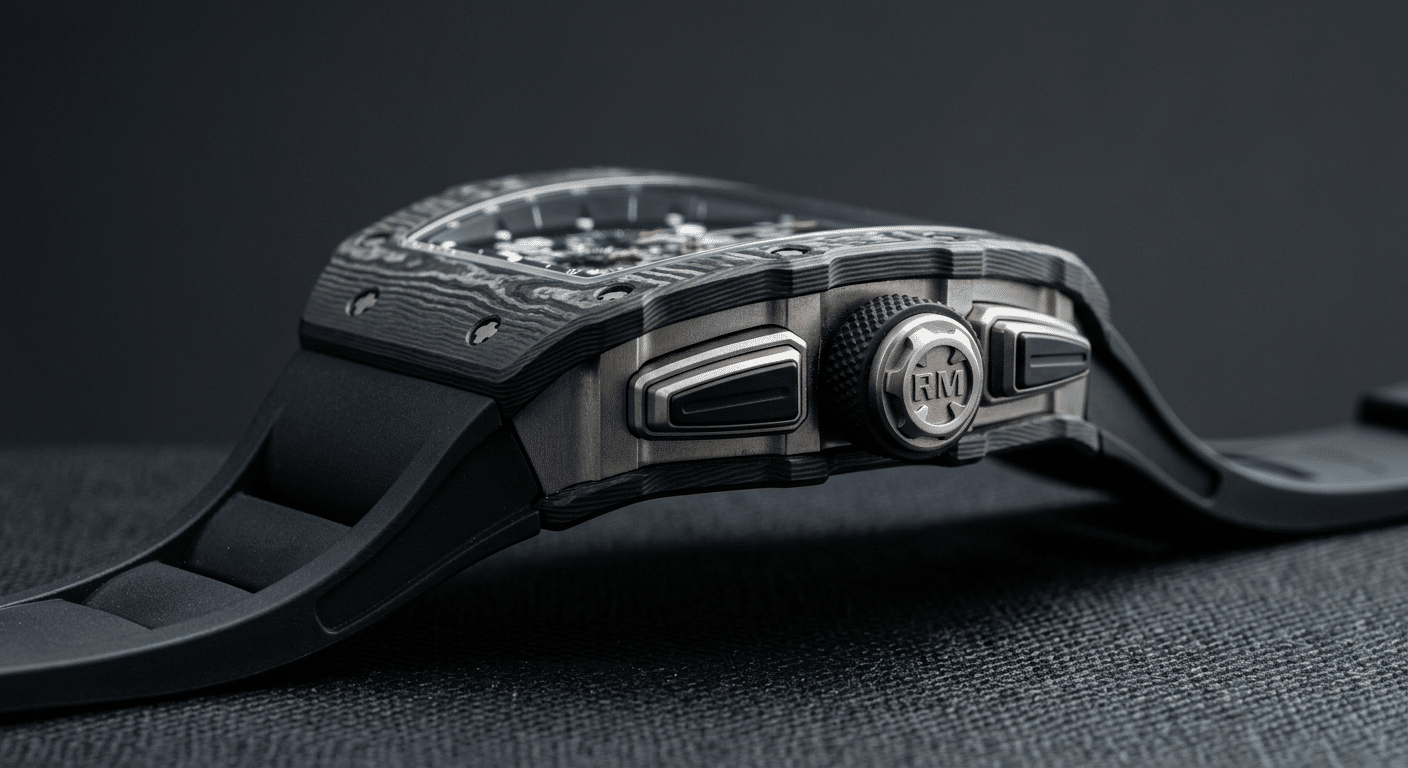
When evaluating mature Richard Mille replica models, the most reliable buying path is rarely the newest release or the most visually aggressive design. Value in the replica market accumulates over time. Established model lines that have remained in production across multiple factory versions naturally filter out early-batch failures, dial printing inconsistencies, and movement routing flaws. The longer a reference stays in the active cloning cycle, the more factories can refine the tonneau curvature, stabilize hand alignment, and synchronize movement behavior without constantly reinventing the architecture.
Buyers looking for the safest model to start with should group their search by functional layout rather than chasing specific reference numbers. Proven replica designs share a common trait: their dial architecture gives the movement breathing room. When a dial is cluttered with experimental complications or overly aggressive skeleton cutouts, factories are forced to compromise on rotor clearance, date-change mechanisms, or dial depth to force the movement into the case. Models that prioritize functional simplicity allow factories to focus on external finishing and structural consistency, which directly improves daily-wear reliability.
This is why dial layout stability matters more than brand marketing. A reference that has matured over several generations will show tighter subdial spacing, sharper rehaut transitions, and a carbon fiber pattern that aligns consistently across the case. Newer iterations or limited-run variants often carry higher QC variance because the tooling has not settled. If you are evaluating which RM clone to buy first, prioritize references where the factory has already solved the geometry problems.
Automatic and Date Layouts as Value Anchors
Time-and-date automatic layouts serve as the structural anchors of the replica market because they strip away the mechanical variables that usually cause ownership friction. Without chronograph modules or additional calendar wheels, the base movement can be adapted to the tonneau shape without excessive modification. This simplicity reduces the likelihood of rotor drag, minimizes hand-stack collisions, and allows the date window to sit cleanly within the dial architecture.
In practical terms, these non-tourbillon RM clones benefit from extended production runs. Factories can dedicate their machining time to perfecting the case curvature, polishing the spline screws, and refining the carbon layer consistency rather than troubleshooting a fragile complication. For buyers, this means fewer unexpected timing drifts and a movement that responds predictably to winding and time-setting. The visual impact remains strong because the clean dial architecture allows the tonneau shape to dominate the wrist presence without fighting against visual clutter.
This does not mean automatic layouts are flawless. The tradeoff is usually found in the date wheel alignment and the depth of the dial printing under macro inspection. However, for daily wear, these are minor considerations compared to the mechanical stability gained by avoiding complex subdial stacks. When a reference has spent years in this configuration, the movement routing has typically been optimized to sit as flat as possible within the case, preserving the watch’s wearable profile.
Chronograph Variants With Proven Layouts
Chronograph references introduce inherent mechanical and spatial challenges. Adding a timing module to a tonneau case demands additional vertical space, which often forces factories to mill the case thinner or stack the movement higher. The value in chronograph variants depends entirely on whether the factory has solved the subdial spacing and pusher-action problems that plagued early production runs.
Proven chronograph layouts stand out because the subdials are evenly distributed, the hand stacks sit at correct heights without grazing the crystal, and the pushers engage with a firm, consistent click. Factories that have refined these references over multiple iterations typically achieve a balanced weight distribution and a dial that reads clearly at a glance. The chronograph functions actually reset without sticking, and the elapsed minute counters align predictably with the markers.
Conversely, experimental or heavily layered chronograph designs should be approached with caution. When a dial features overlapping skeleton plates, exaggerated date apertures, and tightly packed subdials, the clone movement often struggles to drive all the complications smoothly. Buyers frequently encounter pushers that feel mushy, chronograph hands that fail to return to zero, or date wheels that change halfway through the rotation cycle. These are not cosmetic flaws; they are symptoms of a movement being forced into a layout it was not engineered to support. Prioritizing chronograph references with clean, proven dial geometry is the only way to ensure the watch functions as reliably as it looks.
Price Tier Logic: Where Budget Meets Structural Honesty
Pricing in the super clone price bands does not follow a linear progression from “worse” to “perfect.” Instead, cost reflects how a factory chooses to allocate resources between structural finishing, movement adaptation stability, and decorative marketing. Understanding the Richard Mille replica cost analysis requires separating functional improvements from aesthetic upselling. The mid-range value zone consistently outperforms higher-priced tiers because it funds rigorous QC screening and proven movement routing, rather than speculative complications.
Tier pricing logic in this market is shaped by three distinct phases. Entry-tier pricing focuses on achieving basic visual parity at a distance, often accepting compromises in movement stability and strap integration. The rational mid-tier invests in refined case polishing, stabilized automatic movements, and tighter dial printing consistency. Premium pricing frequently shifts away from structural honesty, funding aggressive skeletonization, experimental material treatments, or ultra-thin milling that weakens the tonneau profile. Recognizing these distinctions prevents buyers from paying dealer markup transparency costs that yield no actual durability gains.
A higher price does not automatically guarantee a more reliable watch. In many cases, top-tier pricing introduces mechanical fragility to justify the cost. The smartest allocation of budget sits where the factory has already solved the major alignment and movement-clearance issues, but has not yet added decorative complexity that increases long-term failure rates. Replica watch prices can vary by factory label, version, movement configuration, finishing quality, seller channel, availability, and after-sales support. Buyers should compare like-for-like details before treating one option as better value.
Entry-Tier Tradeoffs
Entry-level pricing targets buyers who want the tonneau aesthetic without funding advanced factory iterations. At this stage, budget constraints directly impact micro-level execution. Dial printing may appear slightly softer under magnification, and hand alignment might drift by a fraction of a millimeter at the extremes. The carbon fiber patterns often lean toward generic forged carbon rather than tightly layered composites, resulting in a more uniform, less organic appearance.
The most significant tradeoff, however, lies in movement stability and strap integration. Older generation movements or decorated base calibers are common in this tier. They may keep acceptable time initially but tend to develop timing drift or rotor noise faster than refined clones. Factory rubber straps are frequently stiffer, with quick-release pins that sit slightly unevenly, causing the watch to lever awkwardly on the wrist. For cautious buyers, these are manageable risks if the goal is occasional wear and visual impact. However, treating an entry-tier model as a heavy daily wearer usually accelerates the emergence of these flaws.
The Premium Complexity Tax
Top-tier pricing in the replica market often pays for a premium complexity tax rather than proportional durability gains. When factories attempt to push case thickness down aggressively or maximize the visible skeleton area, a rigorous factory comparison reveals that removing material from the tonneau structure itself compromises the rigidity of the caseband, making the watch more susceptible to micro-flexing and water ingress over time.
Decorative bridges and heavily milled plates look striking in studio photography, but they complicate servicing. If a rotor bearing fails or a gear tooth breaks in a highly skeletonized layout, finding a compatible replacement bridge or reassembling the movement becomes significantly more difficult than working with a standard automatic configuration. Furthermore, experimental layouts often require factories to stretch movement tolerances to make the chronograph or calendar functions fit. Buyers who choose the most expensive tier should expect higher maintenance risk and accept that the watch prioritizes visual drama over mechanical longevity.
Daily-Wear Reality: Weight, Strap Integration, and Clasp Security
A tonneau case only feels convincing on the wrist if the strap integration and weight distribution work in harmony with its geometry. The distinctive curved profile of these watches means that poor strap execution will magnify perceived thickness, cause the case to lift off the skin, and create uncomfortable pressure points near the lugs. Richard Mille replica strap fit is not a cosmetic detail; it is a structural necessity that dictates whether the watch sits naturally or fights against the wrist curvature.
Factory-supplied rubber straps are generally calibrated to match the exact radius of the case lugs. High-quality versions use fluoroelastomer compounds that soften slightly with body heat, allowing the strap to mold to the wrist while maintaining a secure hold. Cheaper aftermarket alternatives often use rigid silicone or misaligned quick-release pins that force the tonneau shape into an unnatural angle. When the strap does not curve seamlessly from the lugs, the watch will appear thicker and heavier than it actually is, breaking the intended visual flow.
Weight distribution also relies heavily on clasp security and deployment mechanism quality. A reliable clasp should engage firmly without play, center the watch evenly on the wrist, and allow minor micro-adjustments for temperature changes. If the deployment buckle feels flimsy or the spring bars are poorly aligned, the watch will shift during movement, causing the heavier crown side of the tonneau case to drag downward. Addressing these ergonomic elements through proper strap selection and clasp verification ensures that super clone daily wear comfort matches the visual ambition of the design.
A replica watch should be evaluated with realistic ownership expectations. Even a strong super clone can have limits in water resistance, long-term movement stability, servicing convenience, and close inspection compared with a genuine reference. Daily use places mechanical stress on tonneau cases and modified base calibers, meaning regular servicing intervals and careful strap maintenance remain necessary for sustained performance.
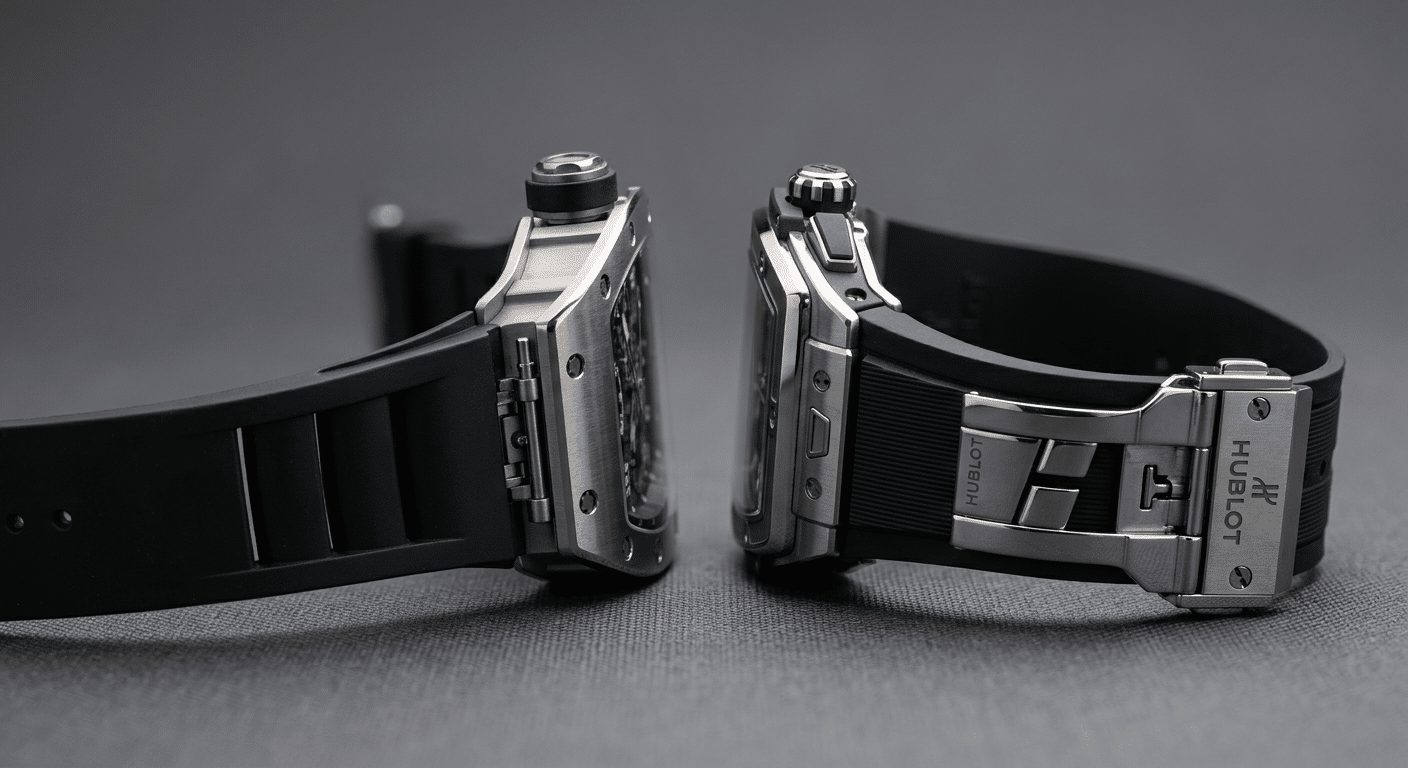
Material choice between rubber, fabric, and metal bracelets further alters the ownership experience. Fabric NATO-style straps reduce overall weight dramatically and breathe better in warm climates, but they often sit higher on the wrist, increasing the perceived case thickness. Metal bracelets, while available in some clone executions, add significant mass and require precise SEL (solid end link) integration to avoid rattling or misalignment. For most buyers, a high-quality rubber strap remains the most balanced option, as it dampens vibration, reduces overall wrist load, and preserves the intended curvature of the tonneau architecture without sacrificing security.
Version Tracking and Factory Consistency in RM Replicas
In the Richard Mille replica market, a factory name is a starting point, not a finish line. Unlike traditional watch categories where a model number guarantees a fixed specification, RM clones operate on a continuous cycle of silent updates, material substitutions, and case polishing revisions. A watch labeled as the latest version from a leading manufacturer may still ship with early-run tolerances if the seller pulls from an older warehouse batch. True value in this space depends entirely on iteration stability. Buyers who focus solely on factory branding often end up comparing different production windows, while those who track batch consistency and manufacturing cycles secure the watch that actually matches modern expectations.
Reading Production Dates and Iteration Claims
Factories rarely publish formal update logs for their tonneau models. Iterations are typically driven by machining feedback, supplier changes for carbon composites, or movement layout corrections. When a dealer claims a watch is the final version, the burden of proof shifts to the buyer. The most reliable way to verify iteration maturity is to cross-reference the physical watch with known production updates rather than relying on marketing labels.
- Movement stamping and layout: Ask for clear photos of the caseback movement. Later iterations usually show sharper bridge finishing, corrected gear linkage visibility, and more consistent rotor placement. If the movement bridge looks overly flat or the gear train spacing appears crowded, you are likely looking at an older batch.
- Dial text refinement: Early runs often suffer from slightly heavy printing or misaligned chapter rings. Refined batches feature crisp, sharp text with proper spacing around the brand markers and hour indices. A zoomed-in dial photo under neutral light will quickly reveal whether the printing has settled.
- Caseback and clasp engravings: Factory updates frequently touch the rear case curvature and the inner clasp font. Newer batches tend to use cleaner, more consistent laser engraving rather than deeply stamped or uneven characters.
If a seller cannot provide recent, timestamped photos of these specific areas, they are likely selling from a stagnant inventory pool. At Clean VS Factory, we treat replica version tracking as a verification step rather than a marketing label. A version designation means nothing if the physical watch inside the box matches an older production run. Buyers should prioritize dealers who openly confirm batch age and are willing to pull a specific unit that matches the photos shown.
What Recent QC Photos Should Actually Show
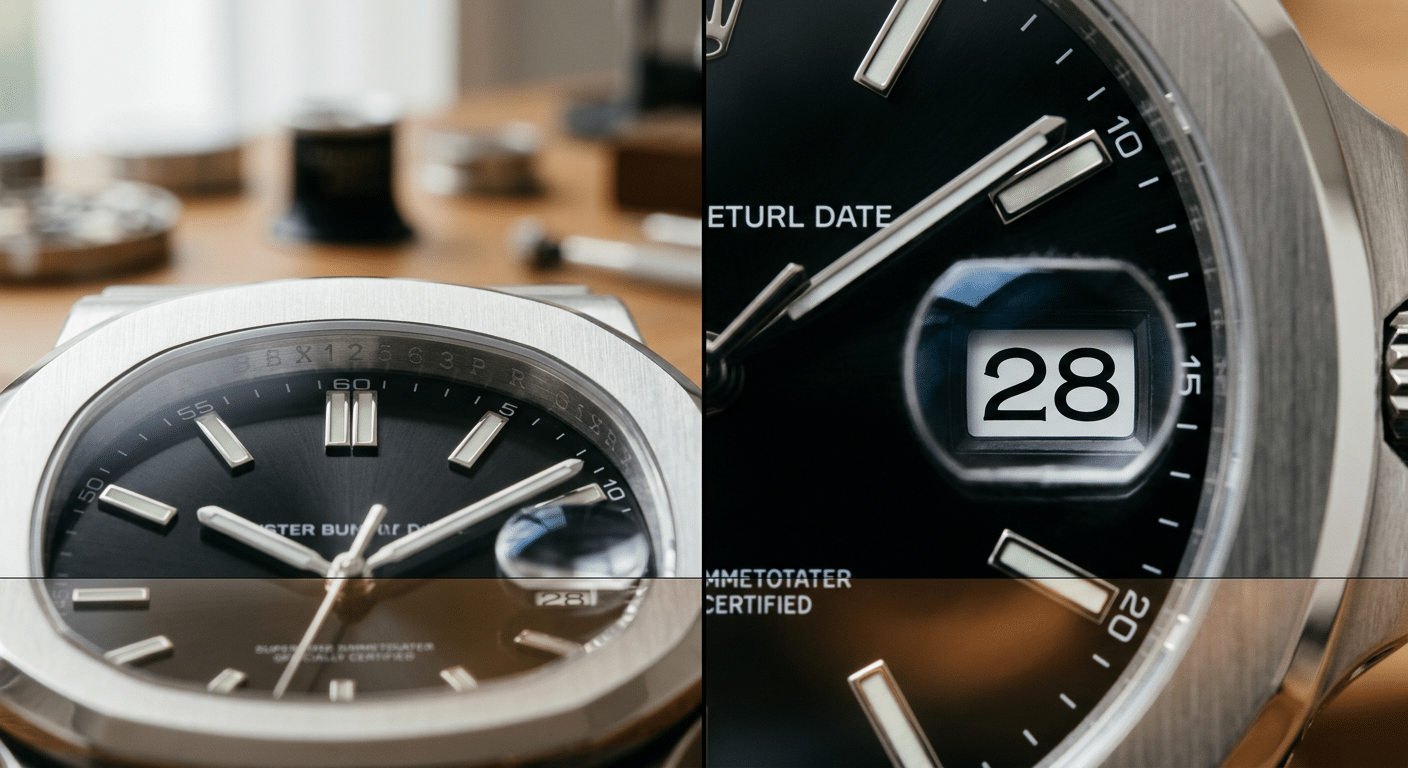
Studio photography is useless for evaluating a Richard Mille clone. Controlled lighting and heavy post-processing can hide step gaps, misaligned hands, and uneven bezel markers. Real factory batch consistency is only visible under straightforward, overhead lighting that reveals how the watch actually catches light on the wrist.
When reviewing quality control photos before payment, focus on functional checkpoints that directly impact ownership:
- Hand stack clearance: View the dial from a sharp side angle. The chronograph or automatic hands should sit cleanly above each other without any visible rubbing at the 12 o’clock or 6 o’clock markers. Rubbing indicates poor movement seating or a misaligned dial base, which will degrade over time.
- Date wheel centering: On automatic and date models, the date window is a critical reference point. The numerals should sit exactly in the middle of the aperture. Off-center dates are rarely fixable without opening the movement, signaling a rushed batch or poor QC screening.
- Bezel and rehaut alignment: Check the alignment of the bezel hash marks against the dial indices. While perfect symmetry is impossible on a complex tonneau shape, obvious gaps or a skewed bezel ring point to case finishing shortcuts.
- Strap-to-lug transition: The most common wearability complaint is a visible gap where the rubber strap meets the curved lugs. QC photos should show a tight, flush fit. If the strap lifts away from the case, the watch will sit awkwardly and feel heavier on the wrist.
Before making a decision, buyers should review real QC photos where available, including dial printing, hand alignment, bezel position, datewheel centering, bracelet fit, clasp engraving, case thickness, and overall finishing. Factory labels and stock photos alone are not enough for a reliable judgment.
Legal Boundaries and Import Realities for Tonneau Replicas
Purchasing and importing replica watches involves navigating a complex landscape of trademark enforcement, customs regulations, and intellectual property law. The distinctive tonneau silhouette, specific case proportions, and brand typography associated with Richard Mille are protected intellectual property in most major markets. While personal possession of an imitation watch is generally not prosecuted in many jurisdictions, cross-border shipping frequently encounters customs inspections, seizure protocols, or return-to-sender policies depending on local enforcement priorities. Buyers should understand that these products are unauthorized imitations, not licensed alternatives, and that sellers rarely provide legally binding warranty coverage or official repair pathways. Managing expectations around import delays, potential customs holds, and the absence of manufacturer-backed service ensures a more realistic and legally informed purchasing process.
A dealer who provides these exact angles without filtering or rotating the watch to hide gaps is demonstrating batch confidence. Buyers should request natural-light videos of the clasp opening and closing as well. A stiff clasp or misaligned quick-release pin creates more daily frustration than a slightly imperfect carbon pattern ever will.
How to Treat QC Photos and Seller Descriptions
Quality control photos and batch videos are essential signals in the replica buying process, but they should not be treated as absolute proof of long-term performance. Sellers often provide well-lit, carefully angled shots that highlight sharp printing, aligned bezel markers, and polished case edges. While these images confirm that a specific unit passed an initial visual check, they cannot reveal how the movement behaves after repeated winding, how the rubber strap will soften and settle over weeks, or whether a particular batch uses updated lubrication on the date-change gears. A flawless QC set indicates good assembly control at the time of shipment; it does not guarantee identical results across all production runs or predict how the watch will age under regular wrist motion.
Beyond photography, seller descriptions frequently rely on marketing shorthand such as “latest generation,” “final version,” or “flawless execution.” These labels are useful for filtering inventory but should be verified against observable details. When a dealer claims a movement upgrade or case refinement, ask for the specific physical change: has the rotor bridge thickness increased, has the quick-release pin been repositioned, or has the dial print been sharpened? If the answer remains vague or relies solely on batch codes, the claim should be treated as unverified. Practical buyers use QC photos to rule out obvious misalignment or assembly errors, then cross-reference those details with recent independent reviews to gauge whether the factory’s current output matches its marketing language.
Water Resistance Assumptions and Usage Boundaries
Water resistance should not be assumed from a model name, case appearance, or seller marketing language. Many tonneau replicas feature decorative screw-down elements or gasket-like seals that are not pressure-tested to standardized depths. Even if a specific watch has undergone basic splash testing during assembly, replica watches should be treated more cautiously around moisture than genuine watches designed and serviced through official engineering channels. Exposure to rain, handwashing, or sudden temperature shifts can compromise unverified seals, and prolonged exposure to water may damage uncoated clone movements. Buyers who require reliable water resistance for swimming or active sports should consult the seller directly about testing methods, pressure ratings, and after-sales liability. In the absence of verified testing documentation, it is safest to treat tonneau replicas as splash-resistant accessories rather than water-ready instruments.
The purpose of factory and movement information is to help readers understand quality and risk, not to represent a replica watch as genuine. A strong super clone may look convincing in casual use, but it should not be represented, sold, or used as an authentic luxury watch under any circumstances. Close inspection by trained professionals will typically reveal differences in case finishing, movement architecture, hand alignment, material density, and brand typography. The safest use of replica-market research is to avoid overpaying, understand structural limitations, and select a watch that aligns with realistic daily wear expectations.
Quality Control Disclosure: For replica and super clone watches, buyer confidence depends on visible quality-control details such as case finishing, dial printing, bezel alignment, bracelet fit, clasp engraving, datewheel position, and movement configuration. These details should be checked model by model rather than assumed from a factory name alone. Requesting timestamped, natural-light photos of the specific unit before shipment can help reduce uncertainty, but no pre-sale inspection guarantees how the watch will age under daily wear.
The Smart Compromise Checklist: Finalizing a Value-Driven Choice
CleanVSFactory’s editorial approach is to make replica watch decisions more traceable by connecting factory claims to visible details, movement behavior, version differences, and practical QC checks. The goal is to separate marketing language from verifiable assembly logic so buyers can evaluate risk, cost, and structural honesty without relying on unverified factory authority.
Identifying the best value Richard Mille replica is never about finding a flawless watch. It is about matching a proven model layout, a stable movement route, and a mature case batch to your actual wearing habits. The rational value band sits squarely in the middle ground, where buyers pay for reliability and structural honesty instead of speculative decorations. Before committing to a purchase, the goal is to strip away forum noise and dealer positioning to focus on what actually survives daily use.
Aligning Priorities With Model Selection
The most expensive mistake buyers make is choosing a watch based on its most aggressive visual feature rather than its structural foundation. Use your primary wearing goal to filter the options before finalizing a decision:
- If daily wear is the priority: Target simpler automatic or time-only layouts with established movement routes. These watches have lower center stacks, thinner cases, and proven strap integration. You sacrifice the visual drama of a skeletonized chronograph, but you gain a watch that sits flat on the wrist, tracks time consistently, and does not punish your routine with excessive rotor noise or date misalignment.
- If dial accuracy and visual impact drive the decision: Focus on mid-tier iterations of popular references where the factory has already corrected dial printing, hand alignment, and bezel geometry. Accept that carbon patterns will vary slightly and lume brightness will differ from genuine. The goal here is strong conversational distance accuracy, not laboratory perfection.
- If you are tempted by tourbillon props or extreme complications: Understand that you are paying for visual theater. Replica tourbillon apertures are usually non-functional balance wheel covers, and heavily layered chronograph plates increase the likelihood of gear friction and movement strain over time. Choose these only if you fully accept the maintenance risk and the thicker case profile.
A smart replica buying decision is conditional. It acknowledges that no single RM clone excels at everything, but a carefully selected model in its mature iteration will perform reliably for years.
Final Verification Before Purchase
Once a model aligns with your priorities, the final step is securing transparent dealer communication. The quality of the pre-sale conversation is often the best predictor of how the transaction will unfold if an issue arises later. Before sending payment, confirm the following:
- Dated, unedited photos of the specific watch: Verify the movement layout, case profile, and strap fit under neutral light. Ensure the photos match the actual iteration you discussed, not a generic stock gallery.
- Written confirmation of the movement route: Ask the dealer to specify the exact caliber or movement base used. Whether it is a mature automatic clone or an adapted skeleton plate, having this stated clearly prevents bait-and-switch scenarios.
- Clasp and strap function video: Watch the quick-release mechanism and clasp engagement in motion. Stiff springs or misaligned pins are immediate comfort killers that are often masked in still photos.
- Explicit acknowledgment of known flaws: Reputable sellers will openly state minor limitations, such as slight lume color shifts, carbon pattern variations, or the expected daily accuracy of the movement. If a dealer promises absolute perfection or claims a watch passes genuine authentication, they are not selling you a realistic product.
The best value Richard Mille super clone watches are not defined by maximum specifications or aggressive marketing. They are defined by structural maturity, proven movement stability, and transparent sourcing. When buyers accept reasonable trade-offs and focus on verified iteration rather than hypothetical perfection, the result is a watch that delivers exactly what the price promises: reliable, convincing daily wear without the fragility of cheap builds or the inflated cost of decorative complexity.
Disclosure: This article is for general educational and comparison purposes only. Replica watches are not genuine products from the original luxury brands, and brand names are used only to identify reference designs or comparison topics. Factory names, movement descriptions, prices, availability, QC details, seller policies, and version information can change, so readers should verify important details with the seller before making a purchase decision. Replica watches should not be represented, resold, or used as genuine watches.