
What This Omega Super Clone Hub Is Really For
Who This Page Is For (And Who It Isn’t)
This page is not here to convince you that “super clone Omega” is a life upgrade. It is here to explain what you are really walking into when you look at these watches, especially China super clone Omega pieces from factories like VSF. If you have seen a real Omega in a boutique or on a friend’s wrist, and now catch yourself scrolling late at night, wondering whether a super clone could give you a similar feeling for a smaller price, you are the person we have in mind. Maybe you already know the words “VSF Seamaster” or “super clone Speedmaster,” and you are tired of posts that only shout “1:1” without talking about failure rates, customs risk, or what happens two years later.
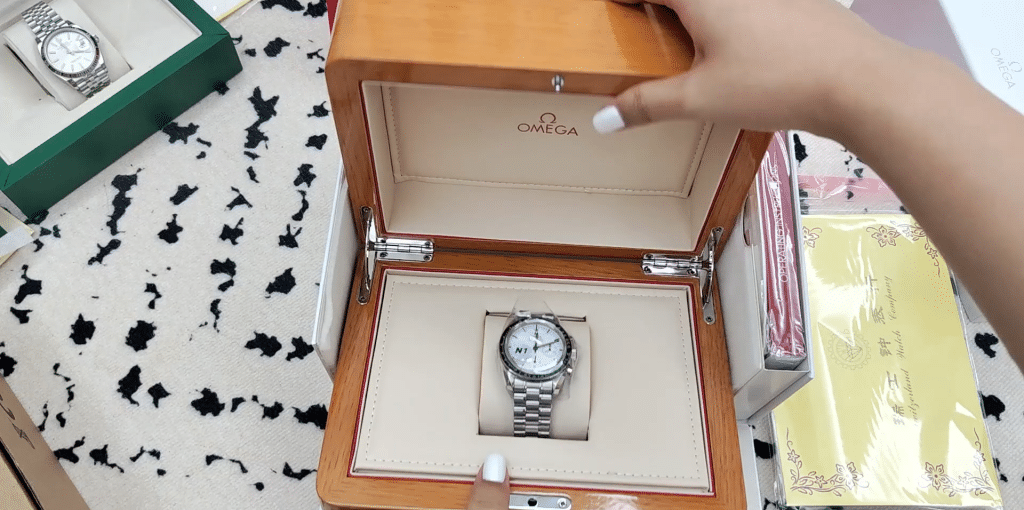
It is also for people who live in the grey area already. You know replicas are not “safe collectibles.” You know brands protect their designs. You still want information because you would rather see real photos and honest defects than smooth marketing lines. You want someone to say, “This is good enough for daily wear,” or, “This version still has problems,” instead of “This batch is perfect.”
If you want a watch with zero legal doubt, clean paperwork, and support from an official boutique, then this page is not for you. In that case the answer is simple: buy a genuine Omega from an authorised source and stop reading super clone content. You will sleep better, even if your card hurts for a while. If you feel deeply uncomfortable about grey products, or if you would lose sleep every time you walk past a customs officer, we would rather you close this page than push yourself forward. No VSF logo, no China super clone Omega, and no “top version” is worth constant anxiety.
This hub is written for people who understand that this is a niche corner of the watch world, who accept that there are risks, and who still want clear, detailed information before they make a choice — even if that choice is to walk away.
The One Question We Try to Answer Here
We will not try to prove that every super clone Omega is “almost like the real thing.” They are not. Some are impressive for the money. Some are just noisy marketing with a VSF label attached. Our job is not to cheer for any factory. Our job is to show you what we actually see. So we built this hub around one simple question:
“Is a super clone Omega, often made in China, actually worth the money and the risk for you?”
“Worth it” does not mean “closest to genuine under a loupe.” It means something more boring and more honest. How does the watch feel on your wrist after six months? How many pieces come back with movement issues? How often do shipping or customs problems happen on this route? When a VSF Seamaster or Speedmaster goes wrong, who really pays for the mistake — you, the seller, or the factory?
We will talk about Omega lines that people ask most about in super clone form, including VSF builds. We will describe what looks and feels good, where the main flaws still sit, and how these watches behave in daily use rather than only in studio photos. We will also keep repeating one idea: factory names are not magic words. They are only part of a long chain that can fail at many points.
By the end of this page, we do not want you to feel pushed in any direction. We want you to be able to answer that core question for yourself, with clearer eyes and fewer illusions — even if your final answer is, “No, this is not worth it for me.”
What People Really Want When They Ask for a “Super Clone Omega”
Wanting the Look Without the Full Omega Price
Most people do not start with “I want a fake.” They start with a moment. You try on a Seamaster Diver 300M in a boutique. The blue dial catches the light when you move your wrist. The salesperson tells you the price. You nod, smile, and walk out knowing it does not fit your budget this year.
A few weeks later you see the same wave dial on someone’s wrist at work. In a meeting, your eyes go back to the bezel when they reach for their coffee. In that moment you do not care about the exact calibre number. You care about how the watch looks in normal office light and how it sits under a shirt cuff. On a weekend trip or a beach holiday, it is the same story. You want something that feels like a real Omega on your wrist when you reach for your suitcase handle, or when you stand at a bar with friends. No one around you is checking the escape wheel or counting the jewels. They see the dial, the hands, the way the bracelet lays on your skin.
That is why “super clone Omega” gets typed into search bars. Not because everyone wants to trick the world, but because many people hope for that same visual experience and wrist presence, without committing several thousand dollars at once. The gap between those two numbers is where this whole grey industry lives.
Chasing the Feel of a Real Omega on the Wrist
When people talk to us about super clone Omega watches, they rarely open with “What is the exact movement reference?” They say things like, “Does it have the same weight?” or “Will the bracelet feel sharp on the edges?” That tells you where the real priority sits.
The first thing you notice is weight. A 41 mm Seamaster with solid links and a steel bracelet should not feel like a toy. A good super clone gets close enough that, when you pick it up from the table in the morning, your hand expects that density. A weak one feels hollow the moment you close the clasp.
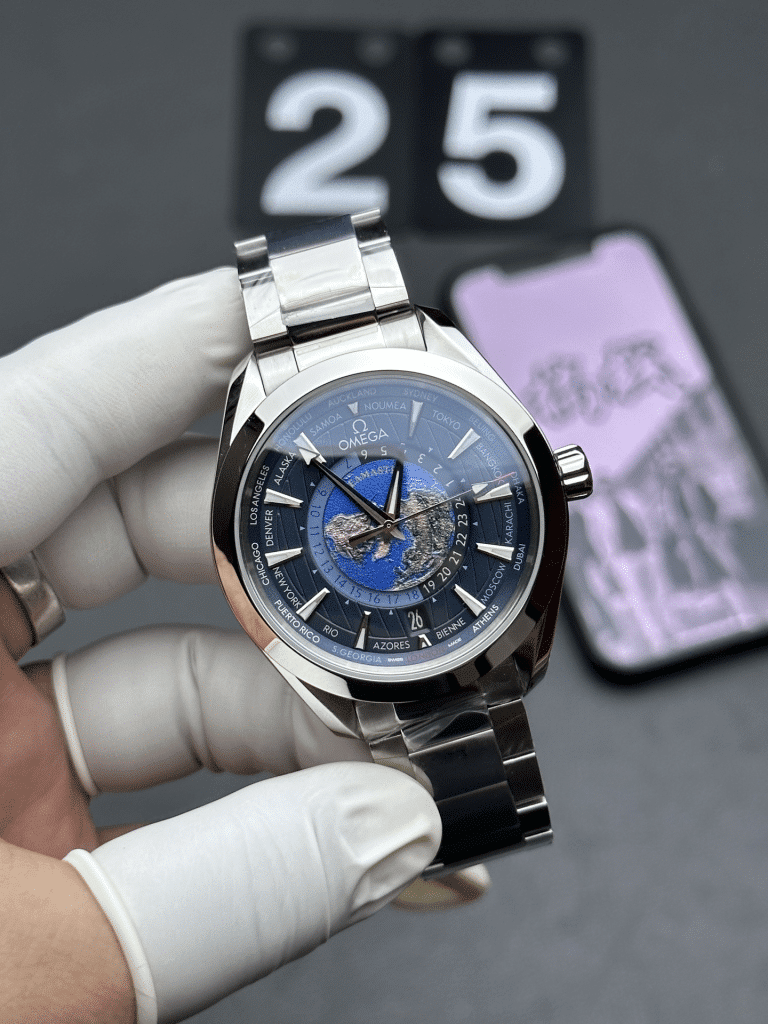
Then there is the bracelet. You feel the finishing long before you see the dial printing under bright light. If the links grab your skin or the edges bite when you type on a keyboard, you will notice it every single day. People care less about whether the clasp engraving is 100% correct, and more about whether the clasp opens smoothly or snaps open with a cheap click. The case tells a story too. Steel with some real substance stays cool when you first put it on, then warms slowly with your body. Many buyers describe this more than they describe specs. And at night, the lume is either there or it is not. On a decent super clone Omega, the lume plots and hands should glow long enough for you to read the time in a dark hallway or after waking up at 3 a.m., even if it never matches factory Omega standards on a lab chart.
In the end, most people are not collecting PDF spec sheets. They are chasing a daily routine: put the watch on, feel the weight, close the clasp, see the dial, forget about it until they need the time. If a super clone cannot deliver that simple routine without constant irritation, the numbers on paper do not matter.
Trying to Avoid Cheap, Embarrassing “Fakes”
When someone writes, “I want the best super clone Omega,” the word they rarely say out loud is “embarrassing.” Very few people want a low-end copy that a friend spots from across the room. The fear is simple: you go to dinner, someone who likes watches sits next to you, and your watch becomes a joke.
That fear is why the term “super clone” became so attractive. It promises a step away from the market full of light, noisy pieces with thin plating and crooked markers. People want to avoid bezels that misalign, hands that jump when you set the time, and bracelets that rattle like cutlery. They are not asking for miracles. They just do not want to feel stupid when someone with watch experience looks at their wrist.
We see this when buyers ask very direct questions. They ask whether the rehaut lines up, whether the ceramic bezel insert has clean numerals, or whether the chronograph hands reset properly to zero. They ask if the anti-reflective coating is too strong and gives a blue flash from every angle. Behind each question is the same worry: “Will this scream cheap from one meter away?” This is also where factory names like VSF come in. People do not study production lines; they collect stories. “My friend’s VSF Seamaster still runs after two years” feels safer than “I bought a random Omega copy for 100 dollars from a marketplace.” The goal is not to own a museum-level clone. The goal is to stand in normal light, around normal people, and not feel like the watch on your wrist will betray you at first glance.
Most buyers who reach this point already know that a super clone Omega sits in a legal and ethical grey zone. They are not trying to turn that grey into pure white. They are only trying to avoid the bottom of the market, where the watch looks and feels cheap and the regret shows up the moment they open the box.
Types of Omega “Replicas” You See in the Real Market
Cheap Omega Copies vs Factory Super Clone Builds


In the watch-grey market, not all “Omega replicas” are created equal. It helps to draw a line between what I’ll call cheap copies and factory super-clone builds.
Cheap copies often sell for a few hundred dollars (or less in some markets). Walkthrough of what you’ll frequently encounter:
- The case feels light, almost toy-like when you pick it up; edges may be sharp, polish inconsistent.
- The bezel insert may be aluminium or cheap ceramic substitute; the numerals might look correct at first glance, but under magnification you’ll see sloppy edges or faded print.
- The night-glow (lume) is weak or disappears quickly after a couple of minutes; on real use (e.g., waking at 3 a.m.), you might not read the time without using a phone.
- Sounds: when you move the watch, you might hear rattles in the bracelet links, or winding the crown feels loose or sloppy.
- Many cheap copies use generic automatic or even quartz movements; the date may jump incorrectly, the crown resistance is light, no real trust in water-resistance claims.
By contrast, factory super-clone builds attempt a far higher bar. For example: the VS Factory (often abbreviated “VSF”) builds of the Omega Seamaster 300m (with “super clone 8800 movement”) are a prime example.
Here are key phenomena you’ll see:
- The case dimensions match the genuine model (diameter, thickness), the wave-pattern dial, ceramic bezel look almost right in photos.
- The movement (in some recent builds) claims 50-52 hours power reserve, and smoother date change compared to older clones.
- The finishing on dial printing, bezel insert and bracelet end-links is significantly better than cheap copies; for many buyers the difference is “you’d have to look under strong light” instead of “can spot straight away”.
- But and this is important: they are still not indistinguishable from genuine. One forum comment: “Short Answer, yes, they are amazing… Are they 1:1, no rep is, but they are as close as they can be.”
The takeaway: If someone uses the term “super clone,” that usually signals they’re operating in the higher quality end of the grey market. But “higher quality” does not mean “gen-identical” or “zero risk.”
What “China Super Clone Omega” Usually Means in Practice


When you read “China super clone Omega,” don’t imagine one mythical factory doing everything flawlessly. The reality is more like a network of specialized suppliers combining forces. Here’s how it usually breaks down:
- One factory (for example VS Factory) may design and finish the case and dial. Another supplier may make or modify the movement plates. A third may supply bracelets, and yet another may handle quality control or packaging. So the phrase “super clone” often means “a supply-chain mix built to our spec,” not a single perfect machine.
- Some batches look great at first, then later versions may slip—maybe lighting in photos hides flaws, maybe a material supplier changed. That means batch variation matters more than factory name alone. For example, a review noted: “Although these Seamaster replica watches are made very well … people who know Omega movements a little can tell these are fakes just through the crystal back”
- In forums, buyers often refer to “v4” or “version 2” of a model, meaning the factory made incremental improvements: improved crown guards, modified bracelet end-links, movement upgrade.
- Price can still vary wildly depending on whether the build is claimed “super clone,” whether the movement is a true independent design or just modified base movement, whether finishing is hand-finished or mass-polished.
- Reviews remind you: just because it says “VSF” doesn’t guarantee that the movement inside is the latest super-clone spec; always ask for clear photos, serial numbers, and ideally a time-in-use report.
In short: “China super clone Omega” means “a high-grade replica built via multiple Chinese factories, often using improved movements and materials compared to cheap copies.” But it also means: you still need to check which version, which batch, what the actual quality is rather than rely purely on label.
Where Even the Best Super Clones Still Fall Short of Genuine Omega


Even the strongest super clone builds of Omega watches still have real gaps when compared to genuine Omega models. Understanding those gaps helps you decide whether the trade-offs are acceptable for you. Here are key areas:
- Movement architecture and finishing: Genuine Omega uses in-house calibres (e.g., the 8800, 8900) with Co-Axial escapements, silicon parts, METAS certification in many cases. The super clone 8800 movement from VS Factory is a big step forward: “the polishing is greatly improved … power reserve about 50 hours” But reviewers still note differences under magnification—bridge shapes, finishing lines, regulator arms may differ.
- Material and finishing durability: Genuine Omega uses ultra-high-grade materials, rigorous finishing, tight tolerances for water-resistance, long-term durability. A super clone might LOOK the same for a while, but you may see faster wear on the bracelet, fading of lume, slight misalignment of bezel after months.
- Water resistance & real-world stress: The naming “Diver 300m” means a genuine watch has been tested under pressure at factory standards. With super clones, you might get “50 Meters” or “>50 Meters” printed but the sealing, crown gasket, caseback thickness or testing might not match genuine specs. For someone who actually dives or swims regularly, this is a real gap.
- After-sales support and parts network: With a genuine Omega, you have authorised service centres, factory parts, warranty, resale value. With a super clone, if movement fails or you need a new crown tube, you’re on your own in a grey market: parts may be generic, service costs may escalate, the chain of support is absent. A forum user wrote: “Omega is kind of a nightmare to look up parts… Does the Seamaster Spectre have same issue?”
- True 1:1 is still mythic: Many community members accept super clones as “as close as they can be,” but stop short of “indistinguishable even under loupe.” Example: “Are they 1:1, no rep is, but they are as close as they can be.”
That means if you care deeply about micro-details (etching depth, correct shade of blue on dial, exact rotor engraving) you may still find differences. - Resale or collectible value: Genuine Omega holds or grows value (depending on model). A super clone has little to no resale value in legitimate markets because it’s not a brand-authorized piece. If you treat it as a financial asset, expect different rules.
Key Omega Lines People Ask About in Super Clone Form
Super Clone Omega Seamaster Diver 300M
What Buyers Usually Check First
When someone asks about a super clone Omega, the Seamaster Diver 300M is usually the first name that comes up. People have a very fixed picture in their head: the wave dial, the ceramic bezel, the skeleton hands, and that helium escape valve at ten o’clock. If any of these look “off,” the watch feels wrong before they even touch it.
Most buyers start with the dial. They zoom in on the waves to see if the pattern is crisp or soft. On better super clone builds, the wave depth and spacing are close enough that, in normal indoor light, you forget to think about it after the first week. On weak ones, the waves look shallow or blurred, and the dial loses that “Seamaster face” you saw in the boutique.
Then the bezel. People run a finger along the ceramic insert and check the click. If the action is mushy or the insert alignment is out by half a minute marker, the watch loses trust instantly. The numerals should sit cleanly inside the bezel recess, not bleeding over the edges like cheap paint. The helium escape valve is a small detail, but many buyers focus on it. On real Omegas, the valve is sharp but not harsh, with neat brushing and a consistent angle. On low-effort copies, the valve is either too big, too shiny, or drilled into the case at an odd angle. Even if your friends never notice, you will.
Finally, there is the bracelet. People run their nails along the edges of the links and along the clasp. If the links catch the skin or feel sharp when you flex your wrist, the whole “super clone” story collapses. A good Seamaster super clone bracelet feels tight but not stiff, with a clasp that closes with a solid, dull “thunk” instead of a light snap.
Typical Weak Spots Compared to Genuine
Even the better Seamaster super clone builds still have weak spots once you live with them. The most obvious one for many owners is lume. Out of the box, it may look bright in a dark room. But after half an hour, the difference shows. A genuine Seamaster’s lume stays readable deep into the night. Many super clones fade faster. At 3 a.m., you might see faint plots where the real thing still gives you clear time.
Another place where differences show is at the edge of markers and bezel numerals. Under strong light or a macro photo, you can see tiny roughness, small dust points, or uneven printing. Day to day you may not notice, but once you have seen a genuine dial under loupe, the memory stays.
Inside the case, the movement structure is where the gap really lives. Some VS-style super clone calibres try to copy the look of an Omega 8800 or similar. Through the display caseback, bridges and rotors may look close enough for casual eyes. But under real watchmaker tools, the architecture, finishing depth, and choice of parts are still different. The watch might keep time well enough for normal wear, yet you do not get the same long-term serviceability or tested shock resistance that genuine Omega offers.
Water resistance is another quiet difference. A good super clone case with fresh gaskets can survive daily hand-washing or rain. But it is not built or tested to the same standard as a rated 300-meter diver from an authorised factory. If you buy a Seamaster super clone for heavy water use, you are betting on something it was never truly certified for.
Super Clone Omega Speedmaster “Moonwatch”
Dial Layout, Chronograph Pushers and Case Profile
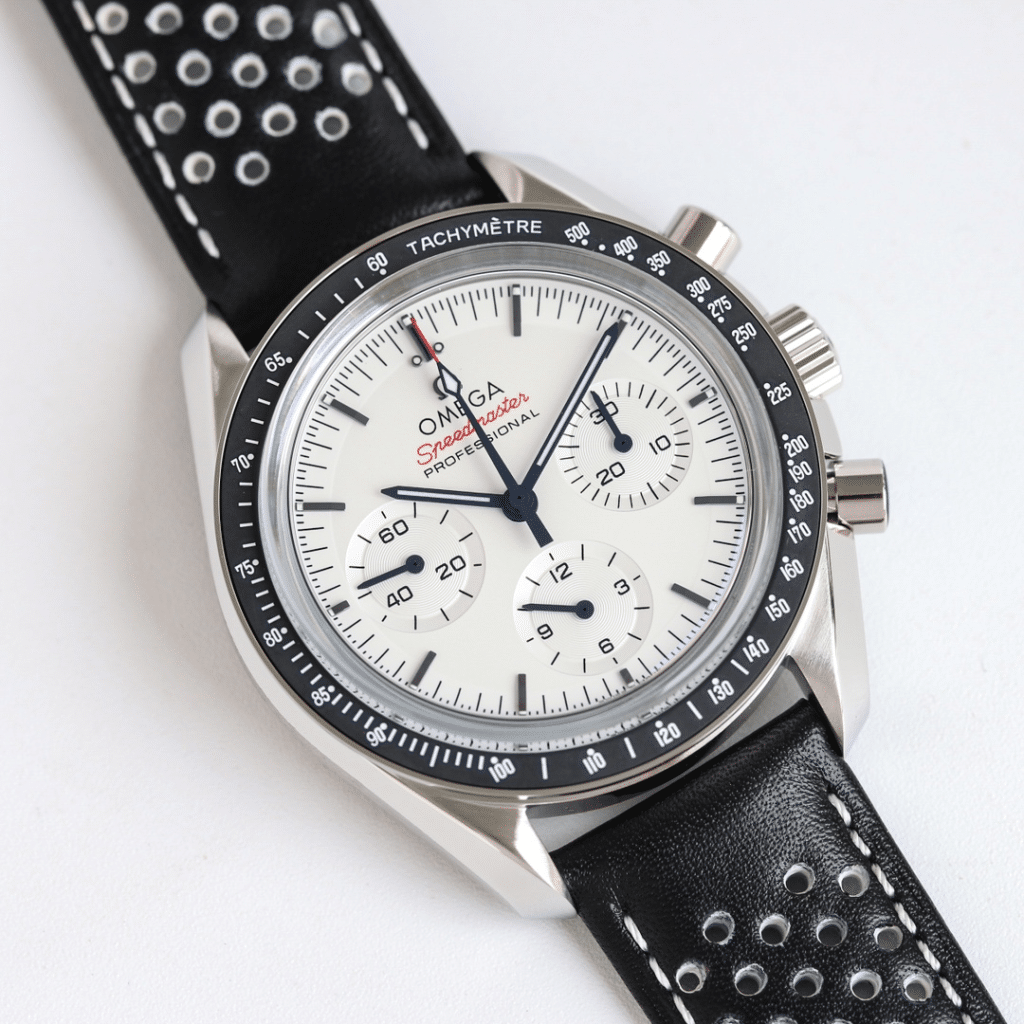
With Speedmaster super clones, the conversation usually shifts from water and lume to layout and proportion. The Moonwatch is simple on paper, but very unforgiving in real life. The dial has three sub-dials at fixed positions, and any tiny shift can make the whole face feel wrong. Buyers often send side-by-side photos asking if the sub-dials are too close to the center or too far toward the edge.
Chronograph pushers are another tell. On a genuine Moonwatch, the pushers have a firm, progressive feel. The start, stop, and reset clicks feel confident but not harsh. Many super clones get the look right, but the feel wrong. Some pushers are too soft and spongy. Others require so much force that people hesitate to use the chronograph at all. You can wear that watch, but you won’t enjoy timing anything with it. The case profile is where Speedmaster lovers often become picky. The Moonwatch has a very specific side view: twisted lugs, gentle curves, a certain balance between thickness and diameter. A decent super clone gets close enough that the watch looks right in a wrist shot. A weaker build has lugs that are too thick, too fat at the tips, or polished in a way that loses the flow of the original design.
When people ask for “a good Speedmaster super clone,” they are usually not asking for extreme water resistance or wild complications. They just want to look down at their wrist and feel like the proportions and design language match the watch they’ve always had in mind. If the dial spacing, pusher feel and case profile are off, the watch becomes a reminder of compromise instead of a quiet pleasure.
Movement Reality Behind the Sapphire Caseback
The modern Moonwatch often comes with a sapphire caseback, and that creates a new issue for super clones. People can see the movement. On genuine Omegas, the calibre has depth, layered bridges, sharp anglage, and clear engraving. It looks like a machine built to be stared at.
Super clone makers try to copy this view, sometimes with decorated bridges and rotors that echo the original layout. In photos, especially with good lighting, the effect can be convincing. For many owners, it is “good enough” when they flip the watch over to show a friend. But once you look closely, the differences stack up. Screws may be a different color tone. Edges of bridges look flatter. Some parts are only cosmetic, not functional. There is also the question of how the movement behaves over time. A genuine Moonwatch movement is built to be serviced, regulated and kept alive for decades. A clone movement can run fine for years, but service options sit in a grey space. If something fails, you rely on a watchmaker who is willing to touch a replica, plus parts that may or may not be easy to source.
So when you see a super clone Speedmaster with a sapphire back and a nice-looking calibre, it is worth asking yourself what you really expect from it. If you treat it as a fun daily watch with an interesting view through the back, you may be happy. If you expect “museum-grade” finishing or long-term collectability, the gap will show.
Aqua Terra, Planet Ocean and De Ville Super Clones
When a Dressy Super Clone Makes Sense, and When It Doesn’t
Not everyone wants a diver or a chronograph. Many people look at Omega’s dressier lines and ask for super clones of the Aqua Terra, Planet Ocean in more refined configurations, or De Ville models. The logic is simple: they want a clean watch they can wear to the office, a dinner, or a family event without the busy look of a tool watch.
In these lines, proportions and finishing matter even more. On an Aqua Terra super clone, the vertical teak pattern on the dial, the sharpness of indices, and the polishing on the hands make or break the watch. A slightly fuzzy marker or uneven brushing stands out more on a simple dial than on a crowded one. The same goes for De Ville pieces. The whole point is quiet elegance. If the printing is thick or the case polishing is uneven, the illusion collapses. Planet Ocean sits in the middle. It is still a diver, but many people choose it as a statement piece rather than a pure tool. Super clones of Planet Ocean tend to be thicker and heavier, and small differences in case height can make them feel top-heavy on the wrist. Buyers often ask whether they can wear such a watch under a cuff, or if it will always sit on top of the shirt.
A dressy super clone can make sense if you know exactly where your risk tolerance sits. For example, you might work in an environment where colleagues like watches, but nobody brings a loupe. You want something that looks sharp in meeting rooms and evening light, and you are comfortable with the legal and ethical grey zone we talked about earlier.
It makes less sense if you already feel guilty or anxious about the idea of a replica. Dress watches invite more slow, close looks. At a small dinner table, people sit close to your wrist. If that thought alone makes you tense, a super clone De Ville or Aqua Terra may not bring the calm pleasure you’re looking for. In that case, a clean, well-made homage watch without logos might suit you better.
Movement and Build Quality in Super Clone Omega Watches
Decorated Asian Movements vs Omega Co-Axial Calibres
If you flip a lot of super clone Omega watches over, you’ll notice something strange. Through the crystal back, many movements look like Omega. Bridges have similar shapes. Rotors carry familiar engravings. Jewels sparkle in the right places. On photos, it’s easy to believe you’re looking at a real Co-Axial calibre.
But most of these are decorated Asian movements. Under the decoration, the structure is different. Factories add “倒模桥板” — bridges shaped to copy Omega’s layout — on top of a simpler base. They sometimes use fake screws that only sit in shallow holes, or “装饰用红宝石” that exist to catch light, not to reduce friction. The movement works, but it is not built with the same engineering logic as a genuine Omega calibre 8800 or 8900. On the wrist, this matters less than marketing suggests. You feel accuracy, winding feel, and reliability. You don’t feel silicon parts or METAS certificates. A good decorated movement can keep time well enough for normal life. But when you ask a watchmaker to open the case, the difference becomes obvious. Parts availability, service tools, and long-term repairability are not in the same league.
So when a listing says “super clone Co-Axial movement,” it usually means “looks similar through the caseback, built on a different base.” If you are okay with that truth — and you just want a watch that runs reliably and looks right under casual inspection — these movements can make sense. If you expect true Omega architecture under a loupe and service support for the next twenty years, a super clone will not close that gap.
What Water Resistance Really Means on a Super Clone Omega
On paper, many super clone Omega divers look brave. You’ll see claims like “100 m” or “300 m” in listings, sometimes even higher. Buyers read that and think about swimming, surfing, or taking the watch on holiday without worry. From a production and repair side, the picture is less romantic.
We see more returns after heavy water use than advertising suggests. Gaskets are often decent, but not always installed with the same care or testing as a factory-sealed Omega. Casebacks might be opened at the seller’s side for photos, then closed again without fresh seals. Crowns may feel smooth, yet the tube tolerances are slightly looser than on the genuine watch. None of this shows in a product photo. For daily life — hand washing, a bit of rain, a short shower you forgot to remove the watch for — a well-built super clone usually survives. That doesn’t turn it into a reliable dive tool. If you jump into pools, swim in the sea, or regularly use saunas and hot tubs, you are stacking heat and pressure on a case that has never seen proper factory pressure-testing.
The honest advice is simple and boring: no matter what number is printed on the dial or written in the chat, treat a super clone Omega as “splash-proof with caution,” not as your only dive partner. If you want a watch you can beat in water year after year with real peace of mind, that is one of the areas where a genuine diver still earns its price.
Bracelet, Clasp and Lume – The Parts You Feel Every Day
Movement photos attract attention, but most of your real contact is with the outside. You pick the watch up every morning, close the clasp, type on a keyboard, grab door handles, carry bags. That’s where bracelet, clasp and lume quality quietly decide whether a super clone Omega feels satisfying or slightly wrong.
On the bracelet, the first test is how the links move. When you hold the watch by the case and let the bracelet hang, links on a better build fall in a smooth curve. On cheaper ones they either stick or rattle. Run a fingertip along the edges. If the corners feel sharp when you flex your wrist or rest your arm on a desk, that irritation will come back hundreds of times a week.
Clasp feel is another daily reminder. A good clasp closes with a firm, muted click. It opens with enough resistance that you trust it, but not so much that you fight it every morning. On weaker super clones, the clasp can feel tinny, with a hollow sound and play in the hinge. You may not notice it in the first five minutes, but after a month of on-off cycles the difference becomes obvious. Lume is the part you forget about until you need it. In a cinema, on a late drive, during a power cut, you glance down. A decent super clone Omega will give you a clear read right after exposure to light, then slowly fade. A genuine Omega diver or Aqua Terra usually holds usable glow longer. This doesn’t make the clone useless; it just means expectations should match reality. If reading the time in darkness is critical for you, the gap matters.
When people say “this super clone feels close to the real thing,” they’re often describing these small, daily interactions. The curve of the bracelet on the wrist. The way the clasp behaves. Whether the watch disappears into your routine instead of constantly reminding you where it cuts corners. Movement specs and factory names are important, but your hand, wrist and eyes judge build quality long before any spec sheet does.
How to Read Super Clone Omega Photos and Listings Without Lying to Yourself
Studio Photos vs Real Wrist Shots
Most people fall in love with a watch under perfect light. That’s how studios work. Strong lamps, soft reflection, angles chosen to hide every rough edge. On a screen, even a weak super clone Omega can look convincing if the seller controls the scene tightly enough. In real life, you will not be standing under a light tent. You will be in an office with yellow ceiling lights, in a car at night, on a street in winter. That is why studio photos are only a starting point, never the proof. A clean dial shot tells you something. It does not tell you how the watch looks when you glance at it on your wrist while pulling a door handle.
When you look at listings, ask for at least three types of images: a straight wrist shot in normal indoor light, a side view that shows case thickness and lug curve, and one close-up that is not “smoothed” to death. A good seller is not afraid of showing a tiny dust speck or a small reflection line on the ceramic bezel. Real watches have small imperfections. A page full of unreal perfection often means heavy filters.
Also pay attention to skin tones and background. If every shot looks like a brand campaign, with identical color grading and zero noise, assume strong editing. Natural photos can still be clean, but they show small texture in skin, fabric and light. That is the environment your super clone Omega will actually live in, not the pure white background where all watches look better than they really are.
If a seller refuses to provide real wrist photos for a specific piece, you are not “too demanding.” You are simply trying to see the watch in a context close to your daily life instead of buying a Photoshop project.
Red Flags in Any “Super Clone Omega” Offer
You do not need a long checklist to filter bad offers. A few simple patterns already cut out a lot of trouble.
The first one is no real photos at all. If a listing only shows brand website pictures or obvious stock images, you have no idea what you are actually buying. Even factories like VSF have differences between batches. The watch you receive might not match the version in that old promo image.
The second red flag is language that says everything and nothing. Phrases like “1:1 perfect,” “mirror of the genuine” or “absolutely same as boutique” sound good but explain nothing. Serious sellers talk about details. They mention which version of the movement is used, how the bezel has changed compared to older runs, or where the biggest remaining flaws sit. The third one is silence about the movement and after-sales. If a seller avoids naming what type of calibre is inside, or only writes “automatic movement, super quality,” be careful. The same goes for warranty. “Don’t worry bro, we take care” is not a plan. Clear statements like “12-month repair support on movement issues, you pay shipping one way” are boring, but they are real.
You do not need to chase a perfect seller. You only need to avoid the ones who hide behind big words, no photos, and zero structure. If you feel that you are being rushed past your questions, treat that as your last answer and step back.
What an Honest Listing Usually Tells You Up Front
An honest super clone Omega listing does not try to pretend it is an Omega brochure. It speaks in plain terms about what the watch is, and just as clearly about what it is not.
On the movement, you should see a clear line such as: “Decorated Asian movement built to look like calibre 8800 from the back, based on [base movement name].” That tells you immediately: the view is similar, the internal structure is different. You may also see timing notes like “regulated to around +/–10 seconds per day,” which is more useful than vague claims of “Swiss accuracy.”
On the case and dial, a good listing mentions which generation it follows: “Case based on the latest Seamaster Diver 300M design with ceramic bezel and wave dial,” or “Older case profile, pre-ceramic version.” That matters if you care about matching a specific reference you have tried on in a boutique or seen on a friend. Most importantly, a honest offer points out limits. It may say that the bezel font is still slightly off under macro, or that the lume color is a tone warmer than genuine. It might admit that water resistance is suitable for daily use but not recommended for diving, no matter what the dial claims. This is the kind of small, concrete admission that builds more trust than shouting “no difference with original.”
When you read a listing like that, you still need to judge whether the trade-offs fit your life. But at least you are deciding with open eyes. The goal is not to find magic words that erase all risk. The goal is to see enough real detail that you do not have to lie to yourself about what is on your wrist once the package finally arrives.
Legal and Ethical Reality of Omega Super Clones
What Replica and Super Clone Mean for Brand Rights
When you see “Omega,” you are not just looking at a logo. You are looking at a registered brand, protected designs, and a name that the company spends real money to defend. The same is true whether we talk about a Seamaster Diver 300M, a Speedmaster “Moonwatch,” or an Aqua Terra.
Super clones do not live outside that system. A watch that carries the Omega name, logo and model design without Omega’s permission is not a neutral “alternative.” In many countries, it is treated as a counterfeit product. Some regions focus on sellers. Some also hold buyers responsible. The details change from country to country, but one thing does not: this is not a “safe zone” where laws look the other way because the watch is “only for personal use.” So when we talk about a “super clone Omega,” we are talking about a product that borrows a lot: the brand’s history, designs, marketing work, even specific model names like “Seamaster 300M” or “Planet Ocean.” You may still decide to buy one, but it’s important to do that with a clear understanding: this sits in conflict with the rights that Omega and its partners hold.
This page is not legal advice, and we are not your lawyer. We are simply telling you that, from the brand’s side, a super clone Seamaster is not seen as “a cheaper version.” It is seen as a watch that uses their identity without permission.
Customs, Shipping and the Risk You Need to Own
The second layer is practical, not theoretical: getting a super clone Omega from “factory photos” to your wrist. That path always crosses some kind of border, and borders come with rules.
When a parcel moves from China to Europe, the U.S., the U.K. or anywhere else, customs officers have the legal power to open it. If they believe there is a counterfeit Omega inside, several things can happen: the package can be returned, held, or destroyed. In some places you may get a notice or a fine. In others, the watch simply disappears and nothing comes back. None of these outcomes are rare enough to ignore.
There is no shipping method that can promise “zero risk.” Sellers might talk about “safe lines” or “VIP channels,” but even they cannot control how a single box will be treated on a given day. If someone tells you there is “no chance” of customs problems on a super clone Omega that costs a fraction of the boutique price, they are either overconfident or not honest with you. You also need to think about what happens if things go wrong after delivery. If your super clone Speedmaster has an issue at six months, you cannot walk into an Omega boutique and ask for help. You are dealing with a grey product sent through a grey route. Whatever “warranty” you have is based on the seller’s promise and willingness, not on any official network.
The key point is simple: the risk belongs to you once you decide to send money. A responsible seller should remind you of that instead of pretending the gap between a genuine $5,000 Omega and a $500 super clone is only “marketing cost.” Part of that price gap is legal and logistical safety that does not exist in the replica world.
Your Own Comfort Zone Matters More Than Any Watch
Different people react very differently to this grey zone. Some can wear a super clone Seamaster every day, enjoy the look, accept the risk, and sleep well at night. Others put a clone Aqua Terra on the wrist for one day and feel uncomfortable every time they see the Omega logo, because they know it is not the real thing and not fully legal.
Only you know which group you are in. If you already feel tense when you read about customs or brand rights, that feeling will not disappear just because the watch looks good in photos. You might find yourself hiding your wrist from Omega fans, or worrying every time you travel with the watch. In that case, even the best VSF build will not fix the basic problem: the watch is pushing you outside your own comfort zone. The price gap between a boutique Omega and a super clone is big, and it tempts a lot of people. But that gap also reflects different levels of legal safety, after-sales support and mental comfort. A genuine Seamaster hurts your wallet more on day one. A super clone may cost you in other ways later — stress, lost parcel, arguments with a seller, or simply the nagging thought that you cut a corner you weren’t fully okay with.
Our view is straightforward: no Omega logo is worth living with a level of risk or discomfort you cannot genuinely accept. If, after reading this section, you feel that the whole idea still sits wrong with you, the smartest move might be to step back, save longer, or choose a clean, unbranded watch instead. The right choice is the one that lets you enjoy looking at your wrist without a story you have to justify to yourself every time.
Our Position as a China-Based Seller Working with Omega Super Clones
How We Choose Which Super Clone Omega Models to Offer
Because we sit in China, we see a lot of versions long before they reach public listings. New Seamaster, new Speedmaster, “improved” Aqua Terra, “v2 Planet Ocean,” “latest VSF batch” – the names change every few months. If we chased every loud announcement, our shelf would be full of watches that look good in photos but come back after a few weeks on the wrist.
So our first filter is not “who shouts the highest version number.” It’s feedback. We watch what happens after the first groups of pieces go out:
- How many come back with movement issues in the first months.
- How many owners complain about dust on the dial, loose bezels, sharp bracelets.
- Whether the factory actually fixes a known problem in the next batch, or just changes the marketing line.
If a super clone Seamaster or Speedmaster looks strong in photos but has a high return rate, we quietly stop pushing it, even if the factory name is popular. If a less hyped build stays stable in real use, we are more willing to keep it. From our side, “boring and stable” is more valuable than “hyped and fragile.” We do pay attention to factories like VSF, ZF and others, but not as a religion. Names help us understand where a watch comes from; they don’t decide whether it deserves your money. Our internal rule is simple:
We don’t worship factory names. We pay more attention to how many pieces come back with problems.That is not a heroic slogan. It is just how you have to think when you see both the best and the worst sides of this market every day.
What We Tell People Before They Send Money
Before anyone sends us money for a super clone Omega, we try to slow the conversation down. Not because we enjoy delaying orders, but because the risk sits with the buyer once the parcel moves. If we only talk about dials and movements, we are not doing our job. There are a few points we always try to check in plain language: First, do you really understand this is a grey area?
We remind people that an Omega logo on a clone dial is not legally neutral. Some buyers already know and accept this. Others go quiet when they hear it put so directly. That reaction tells us a lot.
Second, are you genuinely okay with shipping and after-sales risk?
We explain that customs can hold or destroy a parcel, that timelines are not as clean as official e-commerce, and that any “warranty” depends on us and the factory, not Omega. If someone expects boutique-level safety for a super clone price, we would rather adjust that expectation now than argue later. Third, do you actually need this specific model, or are you just being pulled by photos and forum noise?
Sometimes people send us three different Omega references in one message: a Seamaster, a Moonwatch and an Aqua Terra, all in a rush. That is usually a sign of impulse, not a clear choice. We may send more photos, explain differences in thickness, daily comfort and risk, and then ask them to think for a few days.
From our side, losing one order is still better than pushing someone into a watch they are not ready for. There are moments when, after a real conversation, we say something like:
“If you feel this nervous, you are not ready for a super clone yet. Maybe wait, or consider a clean homage instead.”
It is not the most profitable sentence in the short term. But in this niche, the only way to sleep well is to let some deals go and keep the ones where both sides know exactly what they are getting into.
Super Clone Omega FAQs – Questions People Actually Ask
Can a Super Clone Omega Really Pass as Genuine in Daily Life?
In normal daily life, for most people, yes, a good super clone Omega can pass. At the office, in a café, walking through an airport, almost nobody studies your wrist. They see the size, the dial layout, the bracelet style, and move on. A decent Seamaster or Aqua Terra super clone from a stronger factory will look “like an Omega” to almost everyone around you.
Where that changes is when you meet real watch people or bring the watch into bright, close light. Under a loupe or harsh boutique lighting, differences show up in dial printing, lume, movement architecture and finishing. If you stand at a counter in an Omega boutique and hand the watch to a trained staff member, do not expect it to survive the inspection. The question is not “Can it fool every expert?” The real question is “Are you comfortable with a watch that is visually close enough for daily life, but would not pass a serious check?”
How Long Can a Good Super Clone Omega Last with Normal Use?
With normal, sensible use, a solid super clone Omega can run for years. Many owners report two to three years of regular wear from a VSF-style Seamaster or similar piece before any service is needed. The movement is still an automatic mechanical engine. With reasonable care, it can keep time well enough for daily life.
The difference sits in how predictable that lifetime is, and how easy service will be. A genuine Omega is built around a long-term service plan and a global network. A super clone is not. If your decorated “8800” clone develops a problem, you will need a watchmaker willing to touch replica pieces, plus whatever parts they can source. Some watches handle this well. Others die early, and the cost of repair does not feel worth it. So yes, a good super clone Omega can last, but you should not buy it as a forever watch for your heirs. Think of it as a grey-area daily piece that may give you several good years, not as a multi-decade asset.
Is a Seamaster Super Clone Safer Than a Speedmaster Because of Water Resistance?
On the dial, the Seamaster Diver 300M looks like the obvious “safer” choice. It is a dive watch. It says 300 m. The crown screws down. The case looks ready for water. Many people assume that even a replica version must be more robust than a Speedmaster-style chronograph. That assumption is only half true.
In practice, water resistance on a super clone depends more on assembly quality and testing than on the model name. A well-built Seamaster clone with fresh gaskets may handle daily splashes better than a dressy De Ville clone. But if the caseback was opened after the factory, the crown tube is a little loose, or the seller never pressure-tested it, that 300 m print becomes decoration. A Speedmaster super clone that never sees more than rain and hand-washing may live a calmer, safer life than a Seamaster clone that goes into the pool every weekend. If water safety is important to you, the honest advice is simple: treat all super clones as “light water only,” regardless of whether the dial says Diver or Moonwatch.
What Happens If Customs Stops a Super Clone Omega Parcel?
If customs flags a parcel and believes there is a counterfeit Omega inside, the situation usually goes one of three ways. The package can be returned to sender, held for clarification, or destroyed. In some countries you may receive a letter asking for an explanation or giving you the option to abandon the goods. In others, the watch simply disappears inside the system and never reaches you. You normally do not get a polite phone call asking if you still want it.
Money is the other part of the story. An official Omega will be insured and traceable through normal channels. A super clone rarely is. Whether you get a partial refund, a new attempt, or nothing at all depends entirely on the seller’s policy and honesty. No shipping line or “secret route” can guarantee safety, no matter what is promised in chat. So before you pay, assume there is a real chance that customs may cut the story short, and be sure you’re emotionally and financially ready for that risk.
Should I Start with a Cheaper Replica Before Jumping to a Super Clone?
A lot of people think of this as a clever test: “I’ll try a cheap Omega copy first. If I like it, I’ll upgrade to a super clone later.” In reality, that path often does more harm than good. Cheap replicas usually have weak finishing, noisy movements, bad lume and rattling bracelets. Wearing one for a few weeks often makes people hate the whole idea of replicas, even though the better super clone builds live in a completely different quality tier.
If you are already uncomfortable with the legal and ethical side, a cheap copy will not fix that. If you are comfortable with the grey area and want to try, it’s usually better to jump straight to one carefully chosen super clone from a stable batch than to burn money on a low-end experiment you know you will never enjoy. The real decision is not “cheap vs expensive fake.” It is “Am I truly okay with owning any Omega clone at all?” If the answer is yes, start with one good piece, treat it gently, and see how it fits into your life. If the answer is no, even a cheap tester is a waste.
Our Honest View – and The Decision Only You Can Make
What We Personally Value in a Super Clone Omega
We work in this grey corner every day, so we might as well be direct. We like watches. We like a good Seamaster or Speedmaster on the wrist. We also pay our bills in this business. Pretending to be “neutral observers” would be fake.
At the same time, we do not wake up excited about “extreme 1:1” slogans. When we look at a super clone Omega, we care about a few boring things first: does it keep decent time, does the bracelet feel right, how many pieces come back with issues in the first year. If those answers are bad, the dial can look perfect and we still don’t trust it.
We also care about after-sales that is at least reasonable for a grey market product. That means we should be able to fix common movement problems, get parts, and support you when something goes wrong, instead of hiding behind “all sales final.” It will never be boutique-level service, but it shouldn’t be a ghost town either. Feedback matters more than factory flyers. When people send us wrist shots three months later and say, “still happy,” that tells us more than any “v4, v5, v6” label. When we see patterns of crown issues, dust on dials or dead movements, we stop recommending that version, even if the internet still calls it “top tier.”
So our priorities are simple: stable timekeeping, decent build, honest description of flaws, and support that doesn’t disappear the moment the parcel is marked delivered. We enjoy good super clones, but we respect your money more than a factory name.
One Rule We Hope You Remember Before You Buy
If the price of the genuine Seamaster would damage your basic life, it is not your time for that watch. If the risk around a super clone Seamaster makes you anxious every time you see a customs desk or an Omega ad, it is not the right route either. A watch is metal, glass and oil. Your savings, your mood and your relationships cost more.
Your Money, Your Wrist, Your Call
We can show you real photos. We can tell you which batches of VSF or other factories behaved well and which ones caused headaches. We can explain where super clone Omegas shine and where they clearly fall short of the real thing. What we cannot do, and will not try to do, is make the decision for you.
For some people, a single good super clone Seamaster is the perfect compromise. They know the grey zone, accept it, and enjoy the watch without drama. For others, even the cleanest super clone still feels like a line they do not want to cross. Both positions make sense. You know your country, your risk tolerance and your budget better than we ever will. You also know how you sleep at night.
Now that you’ve seen what super clone Omega really means – the good, the bad and the grey – whether you walk away or go ahead should be your own clear decision, not the result of a perfect photo or a loud promise.
More in-depth analysis of relevant information about replica omega
- Super Clone Omega Movement Technical Guide
- Super Clone Omega Buying Guide: How to Choose the Right One Without Overpaying
- Super Clone Omega Models Comparison
- How to Choose the Right Super Clone Factory for Omega Replicas
- Super Clone Omega Maintenance & Service Guide
- Super Clone Omega Price & Value Guide