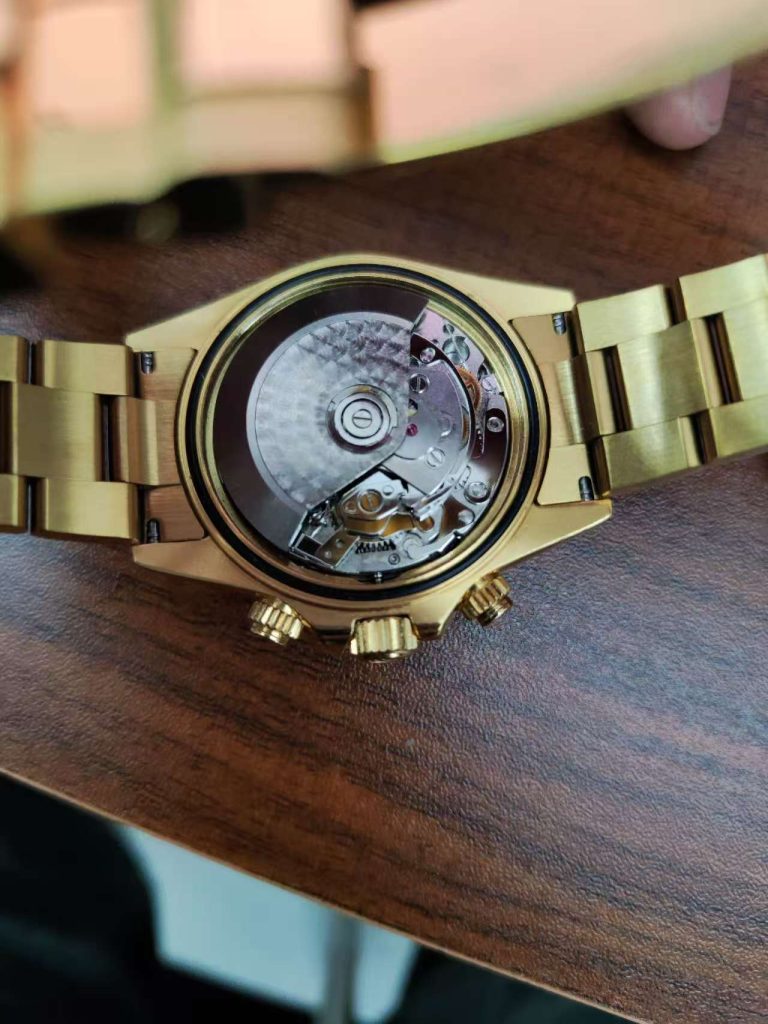
Why AP Replica Buyers End Up Comparing Factories Instead of Models
When people look for a replica Audemars Piguet, they often begin with a reference number. It feels logical. A 15500 should be a 15500. A Diver should be a Diver. But anyone who has been in this space for more than a week learns the same lesson: the reference number barely tells you what you’re actually getting. The factory behind the watch matters more than the watch itself.
The Same Reference Number Can Mean Five Different Products
A single model—say a 15500, 15710, 26240, 15450, or 15407ST—can turn into five completely different objects depending on the factory. They share a silhouette, but once you look past the first impression, the gap becomes obvious. One version may use a true integrated movement, while another hides a 9015 with decorative plates. One may keep correct proportions, while another feels bulky the moment it sits on your wrist.
15500, 15710, 26240, 15450, 15407ST Are Not “One Model” in the Replica Market

In the authentic world, these references point to specific designs and engineering choices. In the replica world, the same reference is more like a general direction. A 15500 from APS has a sunburst dial with real depth, a correct screw pattern, and a head-link that actually moves. A 15500 from a smaller workshop may look similar in a photo but feels loose when you set the time and reveals a different dial texture the moment you tilt your wrist. The watch is the same on paper, but it behaves like a different product in real life.
Structural differences matter more than color or strap
Buyers often begin by choosing colors. Blue or grey? Rubber or steel? But structure decides whether the watch feels right when you wear it. It decides whether the crown clicks firmly, whether the date jumps as it should, whether the hands move cleanly, and whether the watch thickness matches the real piece. These are things you don’t see in photos. You feel them ten seconds after putting the watch on.
APS Factory: The Current Technical Ceiling for Most AP Super Clone Models
APS didn’t become a reference point through marketing. It became one because users noticed small things—how the crown feels, how the date moves, how the rotor stays quiet, how the screws sit flush—long before they learned the factory name. APS is not perfect, but its foundation is built on real engineering instead of decorative shortcuts.
Why APS Became the Reference Point (3120 / 4302 / 4401 True Integrated Movements)
APS uses true integrated movements for models where the structure actually matters. The 3120, 4302, and 4401 builds are not decorative. They show real gear engagement, real transmission, and correct thickness. That difference becomes obvious the moment you wind the watch.
15710 / 15703: The Dandong 3120 is a genuine all-in-one printer; it does not use a fake 2824 motherboard or have additional gears attached.
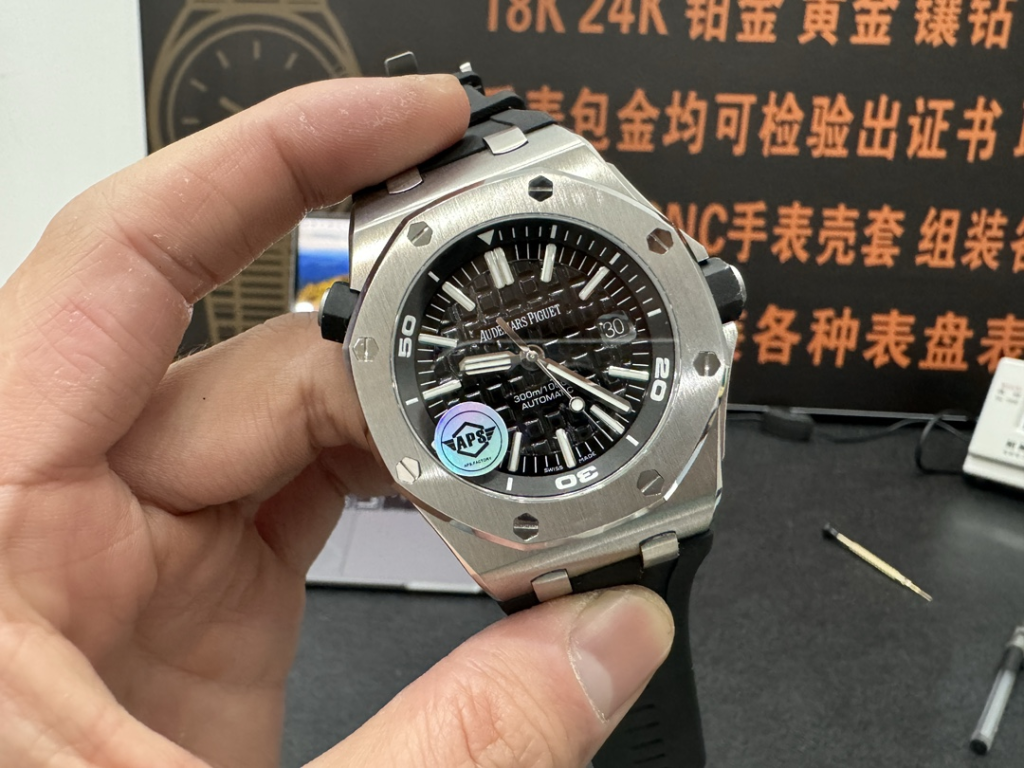
The Diver line shows this clearly. APS uses the Dandong 3120 integrated movement. No clip-on plates. No static gears. When you wind it, every wheel in the train responds. The crown engages firmly, not with the loose feel that Sea-Gull 2824 conversions often create. The watch stays quiet, without the rattling that many people associate with older GF pieces.
15500 / 15510: Sunburst dial, micro-four layout, recessed screws, moving end links, tactile winding
APS’s 15500 and 15510 feel different as soon as you tilt the dial. The sunburst is strong and clean. The micro-four dial layout is consistent across batches. Screws sit below the bezel surface and align into a clean circle. The movable end link behaves like the real piece. Time-setting has a tight, deliberate resistance you don’t get from 9015-based conversions.
26240: The only factory delivering a structurally accurate 4401, proper thickness, correct button logic, and a real upgrade path
The 26240 series highlights why APS gained so much credibility. It is the only replica that mirrors the real 4401 structure instead of hiding a 7750 under decorative plates. The watch keeps correct thickness and maintains real flyback-style operation. And unlike any other factory, APS has a publicly confirmed upgrade path: a true no-regulator 4401 (Weight adjustment mechanism) scheduled for release. The market’s “fake no-regulator” versions simply removed the arm without adding balance weights, leaving no way to regulate accuracy. APS addressed the issue instead of pretending it didn’t exist.
APS Strengths You Can See Without Opening the Caseback
Many readers never open casebacks, so visible cues matter. APS watches carry several “tells” that buyers can spot in seconds.
Screws sit recessed and form a perfect circle
The bezel screws don’t float above the surface. They sit low and follow the circular pattern AP is known for. Factories that get this wrong rarely get anything else right.
Rehaut engravings have real borders; the “1” uses the correct curved tail
APS engravings look cut rather than printed. The “1” has a curved downward hook, not the straight stick you see in GF or lesser builds.
Clean brushing, sharp bevels, and a polished edge that catches light the way AP intended
The brushing is directional and consistent. The bevel line doesn’t fade halfway down the lug. These are things you notice even before you look at the dial.
Movable end links, a detail only APS and old GF ever executed correctly
A static end link changes how the bracelet drapes on the wrist. APS keeps it functional, which makes the watch settle more naturally.
APS Weaknesses: Even the Ceiling Has Problems
No factory is flawless. APS succeeds because it solves more problems than others, not because problems disappear.
26240 and VWB03157 parts occasionally show micro-pitting or early oxidation from high iron content
These cases are rare but real. Some two-tone components showed faint oxidation—nothing structural, but enough for attentive users to notice. APS offers replacements, though the issue reminds us that even top factories work within material constraints.

Date fonts sometimes appear thinner than the genuine thick-stroke style
Most buyers never notice it, but collectors do. The thin stroke can look slightly under-filled compared with the real AP window.
4401 V1 still uses a regulator, while the true “no-regulator” version arrives later
The V1 movement remains stable, but purists prefer a weight-regulated balance like the real AP. APS announced a true no-regulator version, not the “fake no-regulator” approach some workshops used by simply removing the arm.
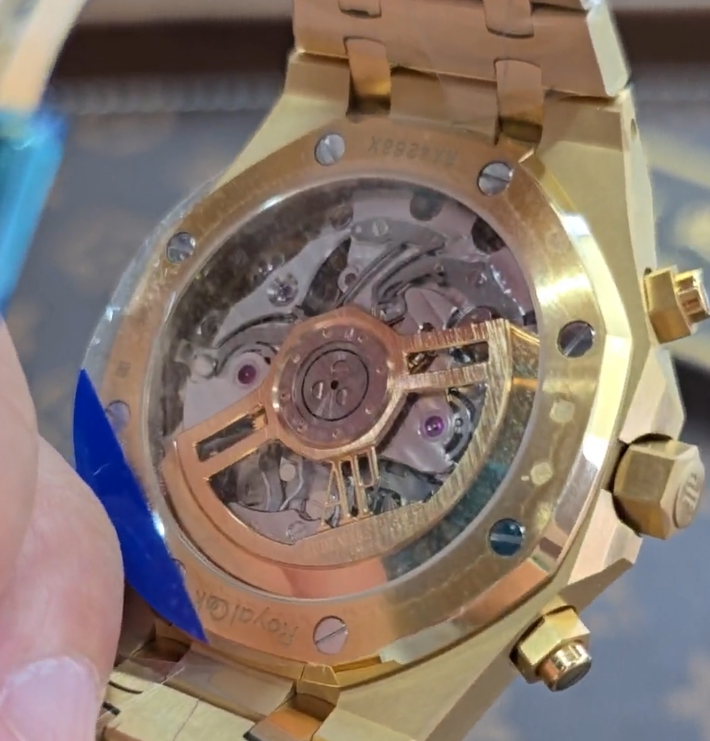
THB Factory: Good Casework, Weak Movement Architecture
THB sits in an interesting position in the AP replica space. Many buyers first encounter the brand because its watches look convincing from a distance. Under soft lighting or in a quick wrist-roll video, a THB 15400 or 15202 can appear surprisingly close to a more expensive APS build. THB tends to invest most of its effort into the exterior: the brushing across the case flows cleanly, the lines remain sharp around the bezel edges, and the overall silhouette of the watch keeps the familiar Royal Oak presence. For someone who cares mainly about the surface impression, THB can feel like a safe entry point. The issues appear only when the watch is handled more closely, or when a user compares it side-by-side with a true integrated-movement model.
Where THB Actually Performs Well
THB’s strongest area is its casework. In the 15400, 15202, and 15300 families, the factory manages to keep the case lines crisp enough that many casual observers would not notice anything wrong. The brushing across the bezel and lugs has a steady grain, and the transitions between brushed and polished surfaces feel deliberate rather than rushed. When the watch sits upright on a table, the light catches the facets in a way that resembles higher-tier builds. This is why many new buyers assume THB watches “look the same as APS” in photos.
When viewed with the naked eye, the gap between THB and APS is not immediately obvious. The case proportions are reasonably accurate, and the overall stance on the wrist feels familiar. Only when the crown is pulled out or when the watch is wound do the mechanical differences start to reveal themselves. The crown does not have the tight, confident resistance found in APS or in integrated movement builds. The winding feels lighter, almost hollow. The sensation is subtle, but once you feel it, you notice it every time you handle the watch. These differences do not make the watch unwearable, but they signal that THB focuses on presentation more than mechanical authenticity.
The Major Limitations
The core limitation of THB is its reliance on decorative or modified movements rather than true integrated structures. Many of its three-hand models use plate systems designed to mimic the layout of higher-end calibers. On the surface, the movement may look convincing, but the function layer tells a different story. When the crown is pulled to adjust the date, the mechanism behaves in a way that does not match the genuine AP architecture. Gears that should move together stay still, and the motion lacks the coordinated feel of an integrated gear train. Buyers who have handled a real 3120 or even an APS build will sense the difference immediately. The same structural shortcuts become more obvious in chronograph references. THB’s 26331-style models rely on 7750 conversions, which create significant compromises. The thickness jumps far beyond the genuine watch, resulting in a profile closer to a diving instrument than a Royal Oak chronograph. On the wrist, the piece feels tall, and the weight distribution changes how the watch settles against the skin. At a glance, the dial may look balanced, but the spacing of the sub-dials or the push-button feel often reveals the 7750 root. This is not a fault unique to THB—many factories attempt the same conversion—but it highlights THB’s mechanical ceiling.
Dial structure is another area where THB falls short of APS and the newer integrated-movement factories. The tapisserie pattern lacks depth, especially under angled light. The grooves feel shallow, and the texture does not create the same sense of shadow and contrast that a stronger dial delivers. The bottom texture around the crosshatch grid appears soft, as if the cutting tools lacked the precision needed to create clean edges. For many buyers, this is not a deal-breaker, but once you compare THB to an APS dial—especially the newer micro-four versions—the difference becomes clear.
THB is not a factory to avoid; it simply fits a specific type of buyer. If someone prefers a watch that looks correct at arm’s length, does not care about integrated movement architecture, and wants a lower entry cost, THB can make sense. It offers solid exterior work without the price of a true structural clone. But if movement behavior, dial depth, or correct mechanical logic matters, THB will feel limited the moment the crown is pulled or the watch is tilted into direct light. The factory delivers what it intends to deliver, and that makes it a reasonable option for some users—but not for those who want the full AP experience.
APW Factory: Dial Accuracy Without the Mechanical Depth
APW often appeals to a specific type of Audemars Piguet replica buyer. You want a watch that looks clean on the wrist. You care about color, symmetry, and how the dial reads in daylight. You do not plan to study the movement architecture every weekend. In that lane, APW can feel like a practical middle ground. It rarely tries to win the “true integrated movement” argument. Instead, it aims to deliver a visually convincing super clone impression, with stable execution and fewer surprises across batches.
APW’s Position in the AP Replica Ecosystem
The clearest example is the APW Audemars Piguet replica 26331 Panda-style chronograph. In this segment, one problem ruins most builds: thickness. Many 7750-based conversions end up far too tall, and the watch sits on the wrist like a bulky tool rather than a refined Royal Oak Chronograph. APW’s approach is different. The 26331 case profile lands around the correct 11mm range, which immediately changes the wearing experience. The watch feels flatter, more natural under a cuff, and more like the authentic design intent. For many buyers, that single detail matters more than any spec sheet.
Dial execution is where APW earns attention, but it is also where its limits show up. From normal viewing distance, the Panda layout reads correctly. The printing is tidy. The visual balance is convincing. Under closer inspection, you begin to see the differences that separate a “good-looking replica” from a truly correct super clone. The most noticeable mismatch sits around the sub-dials. APW often finishes the sub-dial borders in a deep black ring, which creates a strong contrast but does not match the genuine look. On the authentic Audemars Piguet 26331, those edges have a metallic gray-blue tone and sit with a different depth relationship to the main dial. That detail sounds small, but it changes the dial’s mood. In certain lighting, APW’s sub-dials can look heavier and flatter than they should.
The movement choice explains the trade-off. APW commonly uses a Dandong 4801 base with an added date module. This setup can be reasonably stable in daily use, but it does not mirror the true integrated chronograph architecture seen in higher-tier builds like APS’s 4401 direction. You can also see it in behavior. The calendar change tends to be a slow transition rather than the crisp quick-jump you expect from the genuine reference. If you know what you are looking for, this is an easy tell. If you do not care, it will not ruin your day. But it is an important distinction for any buyer who wants a replica Audemars Piguet to feel mechanically correct, not just visually convincing.
APW’s Real-World Strength: Predictable QC and a Clean Look
Where APW performs best is consistency. In a market filled with “one good batch, one bad batch” stories, predictable QC has real value. APW pieces tend to arrive with restrained color choices, even polishing, and hands that look sharp rather than soft at the edges. The overall presentation is calm. It does not try to shout. On the wrist, that matters more than people admit. A watch that looks clean in natural light often feels more satisfying than a watch that is technically ambitious but visually messy.
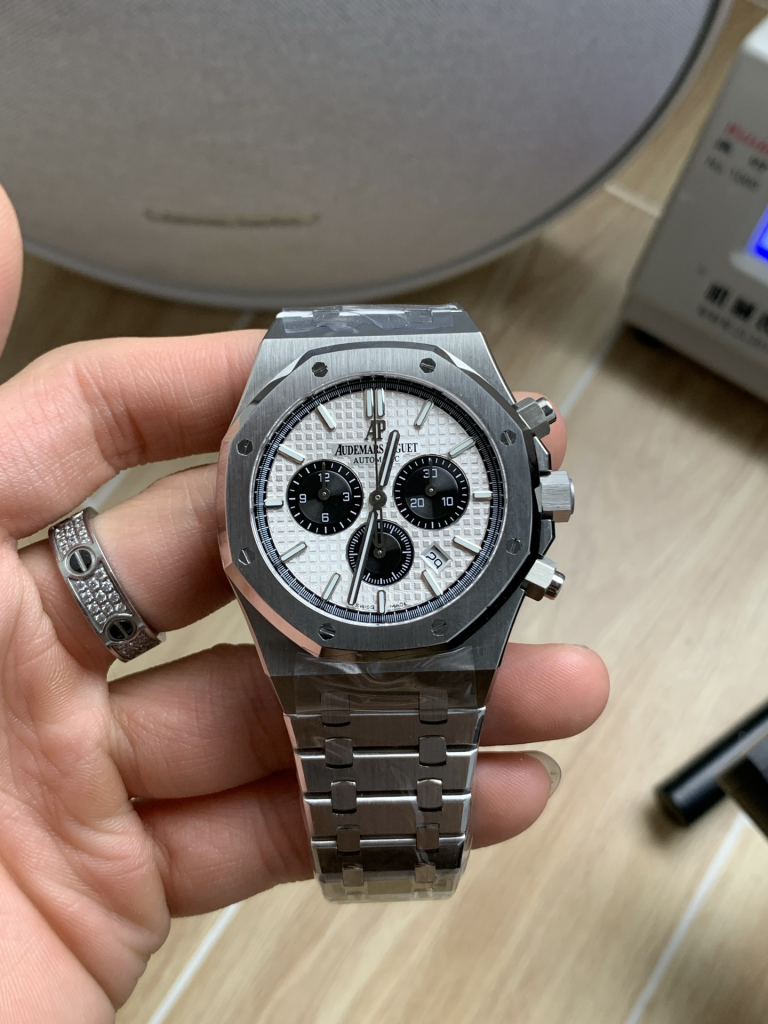
APW is also a comfortable choice for buyers who prioritize wearing experience over movement purity. If you want an Audemars Piguet super clone look for daily rotation—something that sits with the right thickness, photographs well, and does not demand constant worry about odd behavior—APW fits that use case. You trade away mechanical authenticity, but you gain a smoother ownership experience. That is not a universal win. It is a personal preference. If your goal is to own a replica that “acts like AP,” you will likely outgrow APW quickly. If your goal is to own a replica that “looks right most of the time,” APW can be a rational pick—especially in references like the 26331 where thickness and dial layout dominate the first impression.
CF Factory and Other Workshops: Cosmetic-First, Structure-Second
In the replica Audemars Piguet world, CF and many smaller workshops tend to compete on surface impact. You get strong photos. You get a shiny first impression. You also get a wider range of models that “exist” on paper, even when the underlying engineering is not there. This is why these builds spread fast through livestream deals and short clips. The watch looks right for three seconds, and that is often enough to trigger a purchase. The problem is that AP designs punish shortcuts. Once you handle the watch like a watch—winding it, setting it, wearing it for a week—the structural compromises start to show.
Where CF / Other Factories Usually Compromise
The most common compromise is the movement presentation. Many cosmetic-first builds use decorative plates, static gear shapes, or a skeleton look that is more theater than mechanics. You might see something that resembles a balance wheel, but it is not actually doing what it should. You might see gears, but they do not engage or respond when you wind the crown. In a true integrated movement build, you can feel and sometimes even see the drivetrain respond. In many workshop builds, the “mechanical look” is separate from the mechanical function. The result is a watch that can look busy and impressive, while behaving like a much cheaper base movement underneath.
This becomes obvious in popular references like the Royal Oak 15500 replica. A common approach is a Miyota 9015 conversion dressed to imitate the correct layout. The watch can be wearable, but the structure is wrong. Thickness often ends up off, especially once the factory tries to hide the conversion with added layers. The time-setting and calendar behavior can also differ from the genuine logic. If you have ever handled an APS 15500 super clone with a true integrated approach, the contrast is immediate. The crown feel, the date behavior, and the overall “tightness” are simply not the same.

Chronographs expose these shortcuts even faster. For models like the Audemars Piguet 26240 replica, many factories rely on 7750-based conversions. This usually creates three visible problems at once. First, the sub-dial spacing often drifts, giving the dial a slightly cross-eyed look. Second, the pushers feel different. The start-stop action can feel mushy or uneven, and the reset does not always snap back with confidence. Third, the case gets thick. The watch sits tall and heavy, and it can lose the flat, integrated stance that makes the real 26240 wear so well. Even if you do not know the movement name, your wrist will tell you something is off.
The Real Risk: Buyers Often Can’t See the Flaws Until They Wear It
The bigger risk is not that these watches are “bad.” The risk is that buyers judge them using the wrong test. A quick photo test rewards surface shine. Real ownership tests punish weak tolerances. After a few days of wear, small issues start to appear. Bracelet links can pinch or bite, especially around the clasp and first links. Bevel lines can look inconsistent when sunlight hits the case from the side. Some builds produce more wind noise from the rotor, and the winding sound can feel loose and rattly. These are not dramatic failures. They are the kind of annoyances that slowly reduce satisfaction.
Many flaws also hide until you do normal, everyday things. You adjust the time after a weekend. The crown feels rough or vague. You take a close wrist shot, and the dial texture looks flat. You walk into a dark room and check the lume, and the color looks uneven or the fill looks thin. On day one, you may not care. On day ten, you start noticing. On day thirty, you either accept it as the price of a cosmetic-first build, or you wish you had chosen a Audemars Piguet Super Clone factory that prioritized structure.
If you are shopping in this category, the best approach is to be honest about what you want. If you only need a watch that looks good from arm’s length and you rarely touch the crown, a cosmetic-first replica can work. If you want a super clone Audemars Piguet that feels right in your hands, these shortcuts will eventually bother you. That is not a moral judgment. It is just how AP designs react to compromised engineering.
A Special Category: TP Factory and the Rise of Real Skeleton Work
Skeleton Royal Oaks are where the replica market usually gets exposed. A watch can look impressive in a photo and still be mechanically dead. That is exactly why the Audemars Piguet 15407ST replica became a turning point when TP Factory started doing it the hard way. For years, other factories offered “skeleton” options that looked busy but felt fake in real use. You would see gears, but they would not respond. You would see a balance area, but it would not behave like a real train. Once you wind the crown, nothing really comes alive. That disconnect is what made many buyers give up on skeleton builds.
Why the TP 15407ST Changed the Market
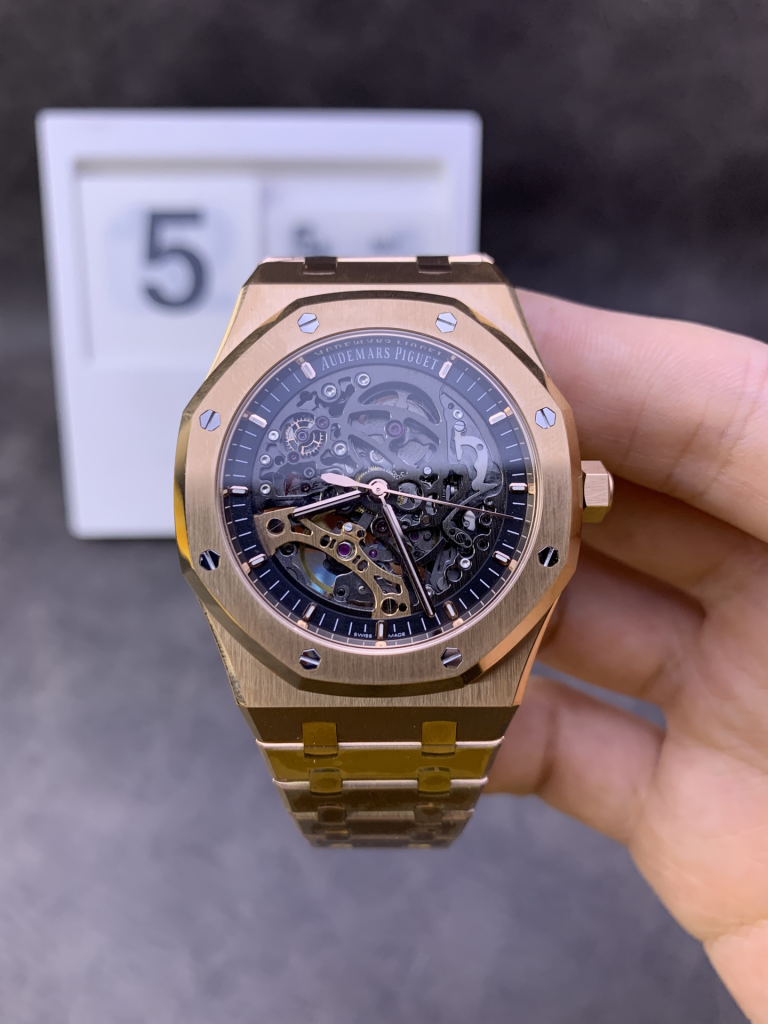
TP’s 15407ST super clone works because it starts from a real integrated base and then removes what should not be there. The core is a 3120-style integrated movement architecture, then opened up for a true skeleton layout. When you wind the crown, you can watch multiple wheels move through the train. When you set the time, you see the system react instead of staying static. This is the simplest test of honesty. A real skeleton watch should behave like a machine, not like a stage prop.
What makes this build more convincing is that it keeps the proportions that usually break skeleton replicas. Many buyers assume a skeleton case must end up thick. TP avoids that. The watch stays around the same slim profile people expect from the 15400 family, roughly in the 9.7–9.9 mm range. That matters more than most people think. A thin case lets the bracelet sit flatter and keeps the Royal Oak silhouette intact. If the watch turns into a tall block, the whole point of the design is lost.
TP also gets the visual mechanics right. The rotor is skeletonized. The seconds wheel is visible. The mainspring area is not just a decoration. You do not have to imagine how power moves through the watch. You can see it and you can feel it in the crown. That is why this 15407ST replica feels different on day three, not just day one. The watch keeps giving you feedback, and that is the entire appeal of skeleton work.
What TP Gets Right That Others Still Cannot
The biggest difference is that TP does not rely on fake gear styling to sell the idea. The structure is meant to run, so it runs. Many cosmetic skeleton builds use static gears or plate tricks that look good until you wind the watch. TP’s build passes the “hand test.” You wind it and the movement reacts. You set the time and the system responds. That is the kind of detail you cannot fake for long, because the owner interacts with it every day.
There is also a real market reason people care about this watch now. Before this kind of build existed, the only way to get a convincing 3120-based skeleton experience was heavy modification using genuine parts, and the cost was in a different universe. People talked about prices above 300,000 RMB, which is roughly $42,000 USD. TP pushed that experience into a price band closer to 30,000 RMB, roughly $4,200 USD at early December 2025 exchange rates. That change is why this model created so much discussion. It is not just about saving money. It is about making a “real skeleton” ownership experience possible for buyers who were never going to chase a genuine-parts build.
TP is not a magic solution, and it still has trade-offs. Some versions keep a visible regulator arm, and purist buyers may want it removed for a cleaner look. That kind of finishing choice depends on your tolerance and budget. What TP proves, though, is simple: when a skeleton Audemars Piguet replica is built on real integrated behavior, the watch stops being a photo object and becomes something you actually enjoy operating.
✅ Royal Oak Super Clone Market — Structural & Buyer Decision Summary Table
| Category | Model / Scenario | Factory / Option | Key Structural Characteristics | Main Weaknesses / Risks | Best For |
|---|---|---|---|---|---|
| Three-Hand Models | Royal Oak 15500 / 15510 | APS | True integrated movement architecture, real gear interaction, correct thickness, solid central axis, strong light-angle response, accurate dial color | Higher cost, limited batch stability | Buyers who care about real mechanical structure |
| THB | Good exterior case set, acceptable finishing | Decorative movement plate, non-functional internal gear layout | Daily wear users on a tighter budget | ||
| Other small factories | None structurally convincing | Incorrect thickness, incorrect calendar-setting logic, non-synchronized gearing | Not recommended | ||
| Diver Models | Royal Oak Diver 15703 / 15710 | APS | Articulated first bracelet link, true integrated 3120-style architecture, correct inner bezel structure | Higher price | Structural purists |
| GF (older versions) | Basic visual resemblance | Seagull 2824 base, fake architecture, loose crown setting, loud movement noise | Budget-only buyers | ||
| Small factories | Low price | Random screw directions, incorrect internal reflections, unstable tolerances | High risk | ||
| Chronograph | Royal Oak Chronograph 26240 | APS | Correct 4401-style architecture, correct sub-dial logic, thickness around ~13mm, proper functions | Limited production capacity | Enthusiasts who want true chrono behavior |
| APW | Acceptable exterior appearance | Incorrect sub-dial edges, 4801 modular chronograph, not true integrated | Visual-only buyers | ||
| Others | Cheap availability | 7750-based structure, far from genuine architecture | Avoid if structure matters | ||
| Mid-Size Models | 15450 / 15451 | APS (new dial) | Strong CD texture, sharp radial brushing, blue tone close to genuine metallic blue | Dial batches vary | Dial-sensitive buyers |
| Diamond-set versions | Bright stone appearance | Must verify carat spacing and cut depth | Jewelry-focused buyers | ||
| Movement across all versions | Unified 3120-based layout, correct hand stack | Calendar is slow-jump, not instant | Needs buyer education |
✅ Movement-Based Buyer Decision Guide
| Buyer Priority | Recommended Option | Technical Reason |
|---|---|---|
| Movement accuracy | APS / TP-type builds | True integrated architecture, real gear transmission, correct thickness, authentic setting logic |
| Clean looks & stable QC | APW-type builds | Strong cosmetic consistency, stable appearance, less structural accuracy |
| Lower budget but wearable case | THB / workshop builds | Acceptable daily wear, but decorative internal structure |
| “Too cheap to be real” pricing | Workshop builds | Common in livestream sales, short videos, discount marketplaces |
✅ Chronograph Movement Reality Check (Educational Summary)
| Movement Type | Architecture Type | Used In | Structural Accuracy vs Genuine |
|---|---|---|---|
| 7750 | Modular cam-driven chronograph | Many low-cost chronographs | ❌ Structurally far from genuine |
| 4130 | True integrated chronograph | Rolex Daytona | ✅ Correct architecture |
| 4131 / 4132 | Upgraded integrated chronographs | New-generation Daytona | ✅✅ Full structural evolution |
Core Reality:
A 7750-based chronograph cannot be structurally compared to integrated chronographs like 4130, 4131, or 4132, regardless of how good the finish looks.
✅ Core Buyer Philosophy (Extracted Principle)
| Key Insight | Meaning |
|---|---|
| “Never let numbers distract you” | Price alone hides structural shortcuts |
| “Cheap always shows up in the details” | Errors appear in thickness, gearing, calendar logic, and movement noise |
| “There is no single ‘best’ choice” | Only priority-based matching |
✅ Final Buyer Priority Summary
| Your Priority | Logical Choice |
|---|---|
| Real gear movement & architecture | APS / TP-tier |
| Visual correctness & stable pricing | APW-tier |
| Entry-level daily wear | THB / small-factory builds |
Model-by-Model Comparison Based on Real Structure, Not Just Cosmetics
Most people meet a Royal Oak for the first time through photos. A bright dial. Sharp edges. A clean logo. At that stage, everything looks “close enough.” The real differences only show up after weeks of wearing—when you set the time at night, when the date changes, when the bracelet flexes as you move your wrist at a desk.
That’s where most China super clone Royal Oak watches quietly separate into very different categories. Not by looks. By structure.
Royal Oak 15500 / 15510
APS is still the only Audemars Piguet Super Clone factory that treats this model as more than a cosmetic project. The light behavior on the dial shifts as you tilt your wrist. The center shaft feels solid when you adjust the hands. The date changes with the same rhythm as the genuine 4302-based watch. These are not details you notice in a showroom. You notice them after living with the watch for a few weeks.
THB gets the external case right. The brushing is clean. The chamfers look sharp from arm’s length. But inside, the structure is decorative. The movement does the job, but it doesn’t behave like a real 4302. You feel the difference when you set the date or wind the crown slowly at night.
Most other versions miss several fundamentals at once—thickness that sits too tall on the wrist, date-setting logic that feels “off,” and gear systems that only exist for looks. They may resemble a Royal Oak in photos, but they don’t age like one on your wrist.
Royal Oak Diver 15703 / 15710
With the Diver, structure matters even more because the watch is meant to be handled roughly. You rotate the inner bezel. You grip the crown. You use it in salt air, heat, and water.
APS builds this with a true integrated 3120 layout. The first bracelet links move naturally. The inner bezel responds with proper resistance. The crown doesn’t feel loose or hollow. After weeks of wear, the watch still feels tight and deliberate.
Older GF versions rely on a Seagull 2824 with a decorative top. They run fine, but the rotor noise is louder. The setting feel is softer. After some time, many owners notice the watch feels “mechanically empty,” even if the case still looks good.
Small workshop builds often show their flaws in quiet ways—screw slots that face odd directions, inner shadows that look too deep or too flat, edges that don’t catch light the way forged steel should. These are not flaws you see in TikTok clips. You see them when the watch sits under real daylight.
Royal Oak Chronograph 26240
This is where many buyers get confused. On photos, most 26240 replicas look “acceptable.” On the wrist, the difference can be dramatic.

APS uses a true integrated 4401-style chronograph layout. Push the start button and the sub-dials react the way they should. Reset the hands and they snap back clean. Thickness stays around the real 13mm range. The watch feels dense without feeling bulky.
APW looks fine on the outside. But inside, it relies on a 4801 modular setup. The sub-dial edges sit slightly wrong. After daily use, some wearers notice the chronograph feels more “stacked” than integrated.
Most remaining versions use 7750. This movement is reliable in general. But structurally, it has nothing to do with Audemars Piguet’s 4401 logic. The gear stack height, the reset behavior, and the sub-dial geometry can never match the real architecture.
This difference matters more than people think. Especially if you actually use the chronograph function instead of leaving it untouched forever.
Royal Oak 15450 / 15451
APS recently updated the dials for the smaller Royal Oak. The CD brushing is stronger. The radial texture shows under window light. The blue finally looks metallic instead of painted. These changes sound minor on paper, but on the wrist, they completely change how the watch feels after a few hours of wear.
Diamond-set versions often look bright out of the box. But long-term quality depends on how evenly the stones are spaced and how deep they are set. Shallow settings lose their crisp look quickly.
All versions of this model use a 3120-based architecture. That means the date changes slowly, not instantly at midnight. Many buyers think this is a flaw—until they realize the genuine watch behaves the same way.
How to Choose: A Practical Playbook for Buyers Who Don’t Want to Guess
Most buyers don’t actually want “the best Audemars Piguet Super Clone factory.” They want a watch that fits how they live, how often they wear it, and how deeply they care about mechanics.
If you focus on movement behavior and structural realism, APS and TP make the most sense. These watches feel correct when you interact with them. The gears talk back when you wind. The calendar behaves with purpose. The proportions make sense after long wear.
If you care more about clean appearance and stable batch quality, APW may suit your habits better. Many collectors rotate through several watches each week. For them, visual consistency matters more than internal architecture.
If your budget is tighter but you still want a solid daily wearer, THB offers a workable middle ground. The watch looks right on the wrist. Just don’t expect the movement to mirror genuine behavior.
When a deal looks too cheap to be true, it usually is. Most of those watches come from small workshops built for speed, not longevity. They perform fine at first. The shortcuts show later.
Price always comes back in the details. It just doesn’t show up immediately.
Final Thought: What You Choose Reflects What You Care About
The replica market is not about finding a single “best” answer. It’s about understanding what kind of compromises you are willing to live with.
If you want real mechanical behavior and true gear interaction, APS and TP are built for you. If you care more about clean looks and price stability, APW fits that profile. If you just want a wearable entry point, THB and even some workshop builds can still serve their purpose.
One last point that matters to many Daytona buyers: a 7750-based chronograph can never behave like a VS factory Rolex 4130, 4131, or 4132—no matter how good the case looks. The architecture is different. The power flow is different. The reset logic is different. This is not brand bias. It’s engineering.
My personal view is simple: don’t chase headlines or price tags. Pay attention to how a watch behaves after a month of real wear. In the end, only you know what kind of compromises you can accept—and which ones will quietly bother you every time you check the time.