
If you’ve been researching Richard Mille super clone watches for a while, chances are you already feel stuck between ZF and APS. On paper, both look convincing. On video, both look impressive. And in real life, the decision rarely feels as simple as “one is better than the other.”
This comparison is not about proving which factory is “the best.” It’s about helping you understand what you are actually paying for, how each watch behaves after real wear, and which one fits your expectations — not a spec sheet.
Who This Comparison Is For (Real Buyer Scenarios)
This guide is not written for collectors looking for museum-level replicas. It’s written for real buyers who are standing at a practical crossroads.
You are probably here if this sounds familiar:
You are considering your first Richard Mille super clone and trying to avoid a costly mistake.
Your budget falls somewhere between $1,500 and $4,500, and you want that money to feel well spent.
You’ve gone back and forth between ZF and APS more times than you can count.
You’ve watched twenty videos, paused every macro shot, and still can’t make a confident decision.
If that feels close to your situation, this article is written for you.
Here, we talk about what actually changes after two weeks on the wrist. How the case feels during daily wear. How the movement behaves when you adjust the time repeatedly. And which factory’s priorities line up better with the way you use a watch in real life — not under studio lights.
Throughout this guide, you’ll also see naturally referenced terms like Richard Mille super clone buyer, China factory, and the Guangzhou RM market — not as marketing labels, but as part of the real background where these watches are made and traded.
What This Article Will Not Do
This article will not “stand with” any factory.
It will not label any version as a “ceiling-tier,” “ultimate,” or “flawless” build. Those words don’t help you choose a watch you’ll actually live with.
Instead, we focus on a short list of things that matter after the excitement fades:
How the movement is built, not just how it looks.
How the case is made, not just how it photographs.
How the watch wears over long hours, not just how it feels on first try.
How stable it remains, weeks and months later.
And most importantly — where your money actually goes.
This is not a factory promo. It’s a practical comparison built around structure, mechanics, wear, and long-term value. If you finish this section already leaning toward one side, that’s not because a factory was praised. It’s because your own priorities became clearer.
The Two Factories, Two Completely Different Paths
Before comparing details, it helps to understand one simple truth: ZF and APS are not chasing the same goal. They may both work on Richard Mille super clone models, but their design logic, cost structure, and priorities are fundamentally different.
ZF is not trying to win on price.
APS is not trying to win on visual deception alone.
They are solving two different problems for two different types of buyers. And that difference becomes very clear once you look at how ZF approaches the RM 055.
ZF Factory: Swiss-Structure Priority
ZF’s core philosophy has never been “cheap.” It doesn’t compete in the low-budget segment, and it doesn’t try to compress costs to reach the widest audience. Instead, ZF focuses on one thing above all else: making the structure look as close to genuine Swiss architecture as possible.
Its key battlefield in the Richard Mille lineup is the RM 055, a model that visually exposes movement complexity at every angle. This is where ZF chooses to invest its resources.
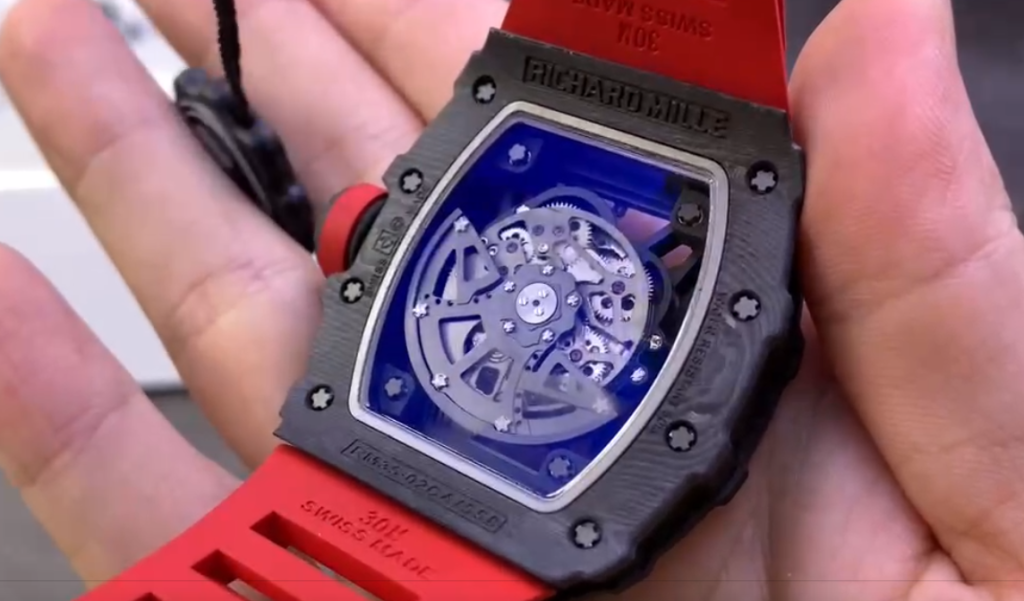
The defining feature of the ZF Richard Mille 055 super clone is its Swiss-slot style movement architecture. This structure is designed to mimic the original visual layout under magnification, especially around the tourbillon, bridges, and gear train positioning. When viewed through the case back, the movement doesn’t just look busy — it looks mechanically intentional.
On the wrist, the physical specifications follow the genuine template closely. The case sits at approximately 43mm in diameter with a thickness around 13.7mm, which keeps the profile close to the real RM 055 and avoids the bloated feel seen in older generation replicas. The tourbillon is fully active, not decorative. You can observe continuous rotational motion, not a simulated spin cycle. When adjusting the time, the crown coupling feels mechanically linked, not electronically staged — you feel resistance, engagement, and release instead of hollow movement.

This is why many buyers who prioritize “visual credibility under close inspection” naturally drift toward ZF. Especially within the Guangzhou ZF factory RM supply chain, the RM 055 remains the signature model where ZF’s Swiss-structure logic is most clearly expressed.
ZF is not trying to reinvent Richard Mille engineering from the inside out. It is trying to present the same mechanical story to the eye — even if the internal logic follows a different route. For some buyers, that visual truth matters most.
APS Factory: One-Piece Mold & Open-Architecture Movement
APS follows a completely different logic from ZF. It is not trying to “imitate” the Swiss structure visually. Its approach is closer to rebuilding a second mechanical system from the ground up, using open-mold architecture instead of decorative layers.

APS RM 35-02 Parmigiani APRF Movement Overview
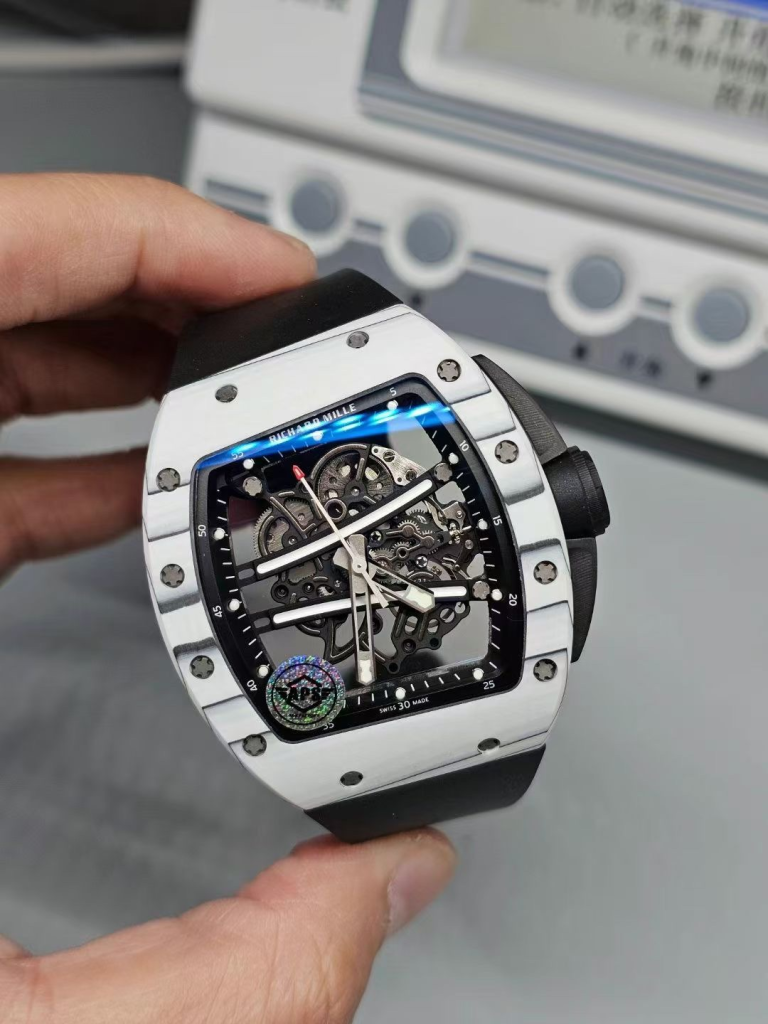
The Parmigiani APRF movement used in the APS RM 35-02 is not a decorative add-on built to look mechanical. It is developed as an open-architecture movement platform, designed to support real structural function rather than visual illusion. Unlike plate-stacked modules seen in older replica constructions, this movement is built without glued decorative layers. The screws you see are functional. The rotor is fully disassemblable. The gear train is mechanically connected rather than staged for display.
What makes this APRF movement especially relevant for the RM 35-02 is how it handles power transmission and winding behavior. The dual barrel system engages in true mechanical sequence, which results in a more stable torque delivery over daily wear. When adjusting time, the crown transfers motion directly into the movement with no empty ghost position in between. That tactile feedback is one of the clearest signs that this is not a cosmetic build.
From a structural standpoint, the APRF architecture also allows APS to control thickness more accurately. Without stacked plates, the movement sits naturally within the case profile instead of forcing the case to grow upward to hide added layers. Over time, this improves wrist balance and long-term comfort.
This is why the APS-built Parmigiani APRF movement is often described as a rebuild-level solution rather than a visual replica. It is not built to impress under a loupe first. It is built to behave correctly under daily use — during winding, during time setting, and during continuous wear.
The core advantage of APS comes down to three things:
a true one-piece molded structure,
a non-layered movement,
and the use of Dandong IML1 / IML2 architecture as a real mechanical foundation — not as a display shell.
The most representative model for this path is the APS RM 35-02 super clone.
Unlike older generations of RM replicas that relied on plate-added movements, the APS version is built on a non-decorative open movement platform. The automatic rotor is fully functional and can be disassembled as real components, not glued or printed elements. The dual barrel system engages mechanically. When power transfers through the gear train, you can observe continuous interaction rather than staged motion.
Time setting behavior also reflects this logic. There is no empty ghost position when pulling the crown. Rotation transfers directly into motion, which mirrors how genuine open-mold RM movements behave. This is one of those details you only notice after adjusting the time repeatedly over several days.The carbon TPT case on the APS RM 35-02 is another visible marker of this rebuild-oriented route. Under strong light or direct sunlight, the fiber layers show a subtle granular brightness, not a flat printed texture. It doesn’t look like studio polish. It looks like layered material reacting to light at different angles — especially noticeable on the curved surfaces around the bezel.
Internally, APS uses a Dandong movement Richard Mille architecture rather than a Swiss-slot visual platform. This keeps thickness, gear layout, and structural support aligned with open-mold tolerances. The case, screws, and crown components are all executed in titanium rather than plated steel. That difference becomes obvious once you remove the watch from the wrist and feel the weight distribution between case and strap.Within the China APS factory RM supply chain, this kind of build philosophy is difficult to replicate quickly. It demands long movement development cycles and tight tolerance control between the case and movement shell. That is why APS tends to hold temporary exclusivity on models like the RM 35-02 for extended periods.
APS is not chasing the illusion of authenticity under a loupe. It is trying to recreate how an RM behaves mechanically when worn, adjusted, and lived with. That difference defines everything that follows in this comparison.
Movement Reality: Swiss Slot vs Dandong Open Architecture
At this stage, the real difference between ZF and APS stops being a visual question and becomes a behavior question. Not how the movement looks on the first day — but how it works after weeks of use, repeated adjustment, and everyday wear.
This is where the idea of an open-mold movement starts to matter in ways that are not obvious in a showroom.
What “Open-Mold Movement” Actually Changes
An open-mold Richard Mille movement does not simply aim to “look right.” It changes how thickness is controlled, how power moves through the gear train, how the crown feels when you set the time, and how serviceable the watch remains months down the line.
With APS, the movement is not built on decorative plates. The screws you see are not glued visual elements. They are structural parts that can actually be removed and reinstalled. The automatic rotor is not a sealed cosmetic disk — it can be disassembled into multiple components. That alone changes the long-term repair logic of the watch. More importantly, the dual barrel system truly engages. When the mainsprings wind, you can observe real power transfer between barrels instead of staged motion. This becomes noticeable after a few days, when the winding feel stabilizes and torque delivery becomes consistent. Time-setting behavior also reveals the difference. On an open-mold platform, there is no empty ghost position when pulling the crown. Rotation transfers immediately into motion. You feel resistance, engagement, and release in one continuous action. It doesn’t feel theatrical. It feels mechanical.
Thickness control improves as a result of this architecture. Without stacked cosmetic layers, APS is able to keep case height aligned with authentic tolerances instead of compensating for added plates. Over long wear, this directly affects wrist balance. The watch no longer feels top-heavy. It settles.
From a maintenance perspective, this architecture matters even more. A non-decorative RM super clone movement can actually be regulated, serviced, and corrected through real mechanical access. That keeps long-term ownership realistic, rather than disposable.
This is why terms like open mold Richard Mille movement are not marketing language in this context. They describe a real shift in how the watch behaves once it leaves the display tray and becomes part of daily life.
Why ZF Uses Swiss-Slot, and APS Refuses To
ZF and APS made opposite philosophical decisions at the movement level.
ZF prioritizes visual structure first. The goal is to recreate the original bridge layout, the geometry of the tourbillon cage, and the visual storytelling of a genuine RM when viewed under magnification. That choice makes sense for buyers who evaluate authenticity mainly through appearance.
APS made a different decision. It prioritizes mechanical participation — how power actually flows, how components interact, and how the watch responds to physical inputs. The result is a movement that may not present the same staged symmetry under a loupe, but behaves more like a self-contained mechanical system over time.
F RM 055 Vaucher Movement Overview (Second-Tier Architecture)
The Vaucher-based movement used by ZF is built on a very different technical philosophy from APS. Rather than rebuilding the mechanical system from the ground up, ZF prioritizes Swiss-style visual structure and layout accuracy. This movement is not designed to behave like a raw open-architecture platform. It is designed to look and present itself like a genuine Swiss RM caliber under inspection.
The strength of the Vaucher movement lies in its bridge geometry, gear placement symmetry, and tourbillon presentation. When viewed through the caseback, the layout feels organized, proportional, and immediately recognizable to anyone familiar with genuine RM architecture. This is where ZF invests most of its engineering effort — in how the structure reads to the eye, not in how deeply every component participates mechanically.
In daily use, the winding and time-setting behavior reflects this design priority. The crown engagement feels smooth and controlled, but more regulated than raw. Power delivery is stable, but its character is tuned for visual stability rather than mechanical interaction. The movement is reliable in presentation and consistent in behavior, even if it does not offer the same level of open mechanical feedback found in Dandong-based builds.
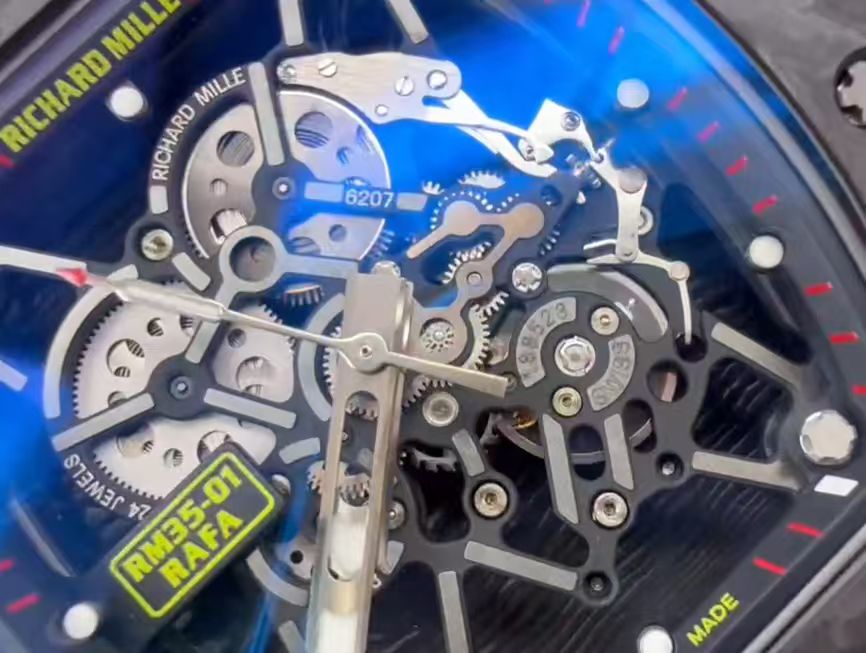
This is why the ZF Vaucher movement is often regarded as the second-best solution in the current Richard Mille super clone landscape. It does not chase experimental mechanical participation. Instead, it delivers structural credibility, visual confidence, and inspection-level reassurance. For buyers who care most about how a Richard Mille looks under magnification rather than how it feels during repeated interaction, this movement still holds strong appeal.
This leads to a simple truth that many buyers only realize after months of ownership:
If you care more about how it looks under a loupe, ZF feels safer.
If you care how it behaves after six months, APS starts to make more sense.
Neither approach is objectively “right.” They simply answer different expectations. One satisfies visual scrutiny. The other satisfies mechanical interaction. And this philosophical split is exactly why choosing between ZF and APS often feels so difficult — because you are not choosing between two factories. You are choosing between two definitions of what “authentic” really means to you.
Case, Weight, Wearing Feel: What You Notice After Two Weeks
On the first day, most Richard Mille super clones feel similar on the wrist. The size surprises you. The presence feels bold. The strap feels tight and structured. But those first impressions are not what decide long-term comfort.
The real differences appear later — after commuting, after desk hours, after summer heat, and after the watch has settled into your daily rhythm.
Ceramic Case: Imported CNC vs Domestic CNC
At a glance, you won’t see a difference between imported CNC ceramic and domestic CNC ceramic cases. Under normal lighting, both finishes look clean. The edges are sharp. The color tone is consistent. On the wrist, neither version gives away which machining process was used.
You only notice the difference when you take it off the wrist and tap the case lightly on a desk.
The imported CNC case gives back a crisper, faster sound. The domestic CNC case answers with a slightly softer, slower tone. It’s not a quality judgment. It’s a response difference. Something you usually discover by accident, not during inspection.
Weight tells a similar story. The two builds sit almost exactly together, hovering in the 93 to 94 gram range. On the wrist, that one-gram difference disappears. What matters instead is how that weight distributes over time. After two weeks of wear, both feel stable. Neither drags forward on the strap. Neither feels hollow.
This is where many buyers realize that “case quality” is not about shine or polish. It shows through behavior over time.
Strap, Buckle & Daily Comfort
The rubber strap defines how often a watch gets worn. With Richard Mille, this matters even more because the watch head already carries visual and physical weight. The fluorine rubber used on these builds conforms naturally to the wrist after repeated wear. On the first day, it feels firm. By the second week, it begins to soften and follow the curve of your wrist instead of fighting it. In summer heat or light rain, the surface does not turn sticky. It stays neutral. That’s what makes daily wear realistic.
The titanium buckle adds another layer of this experience. Its weight is real, not plated. When you fasten it, you feel the pressure distribute evenly instead of snapping shut with a hollow click. Over long desk hours and city commuting, this makes a difference. The watch feels balanced instead of top-heavy.
This is where comfort becomes practical, not theoretical. Keywords like Richard Mille rubber strap comfort and titanium buckle super clone sound technical on a product page. In daily life, they translate into whether you forget the watch on your wrist — or keep adjusting it every hour.
No-Regulator Balance Upgrade: Real Progress or Just a Talking Point?
This is where the APS RM 35-02 enters technically new territory. The discussion around the no-regulator balance is not just a marketing phrase. It represents one of the few real mechanical shifts we’ve seen in recent Richard Mille super clone development.
But the key question is simple:
Is it a meaningful upgrade for daily wear, or just something that sounds impressive on paper?
What “True Free-Sprung” Actually Means
A true free-sprung balance is not achieved by simply removing the regulator arm. That shortcut existed before, and it never solved anything mechanically.
A real free-sprung system requires functional balance weights, an active hairspring control fork, and error adjustment through mass rather than lever pressure. In other words, regulation happens through weight distribution, not spring compression.
On the APS side, the balance weights are no longer decorative. They physically exist. The triangular hairspring fork is no longer cosmetic. It participates in motion. And when timing is adjusted, it is done through the weights rather than a traditional regulator arm. That distinction matters because it changes how shock response, power consistency, and long-term rate behavior interact. It also changes how watchmakers calibrate the movement during servicing. What makes this especially notable is timing. This level of free-sprung structure only began appearing at a mass-production factory level in 2026. Before that, it was limited to high-cost studio builds at prices most buyers never approached.
Whether this system proves perfectly stable over several years still requires long-term observation. But from a mechanical standpoint, it is not a superficial upgrade. It is a genuine architectural step forward.
Why APS Still Keeps a Traditional Regulator on 35-02
Despite this advancement, APS has not completely abandoned the traditional regulator on the RM 35-02. And that decision is deliberate.
Stability testing is ongoing. Free-sprung systems behave differently under daily shock, temperature shifts, and frequent time adjustment. APS is choosing to balance innovation with controlled risk.
Cost is also a factor. Full free-sprung systems increase tuning complexity and production loss rate. Maintaining accessibility at the current APS price level requires compromise.
Most importantly, daily wear favors predictability. For many owners, a slightly more conservative regulation system reduces real-world risk. It keeps the watch easier to stabilize if issues appear down the road.
This is not hesitation. It is controlled evolution.
Real Price Logic: Where Your Money Actually Goes
At some point, all technical discussions return to a practical question:
What are you truly paying for?
Once converted into U.S. dollars, the pricing gap between APS and ZF becomes very concrete.
RM 35-02 APS Price Range (USD Converted)
In the domestic China market, the APS RM 35-02 stays below 10,000 RMB.
Converted realistically, that places it around:
≈ $1,300 – $1,500 USD
At this level, you’re paying primarily for:
- One-piece case molding
- Open-architecture movement foundation
- Early-generation free-sprung balance structure
- Titanium hardware and real carbon TPT construction
You are buying mechanical participation and structural authenticity, not visual illusion.
RM 055 ZF Swiss Slot Version
The ZF RM 055 operates in a very different cost range.
Domestic pricing commonly exceeds 30,000 RMB, which converts to roughly:
≈ $4,200 – $4,600 USD
Here, the price reflects:
- Swiss-slot visual architecture
- Higher decorative precision
- More complex cosmetic finishing
- Greater emphasis on magnified inspection accuracy
You are paying for how closely the watch resembles the original when viewed, not for how deeply it recreates internal mechanical logic.
Sonic Crystal Richard Mille RM 055 Overview
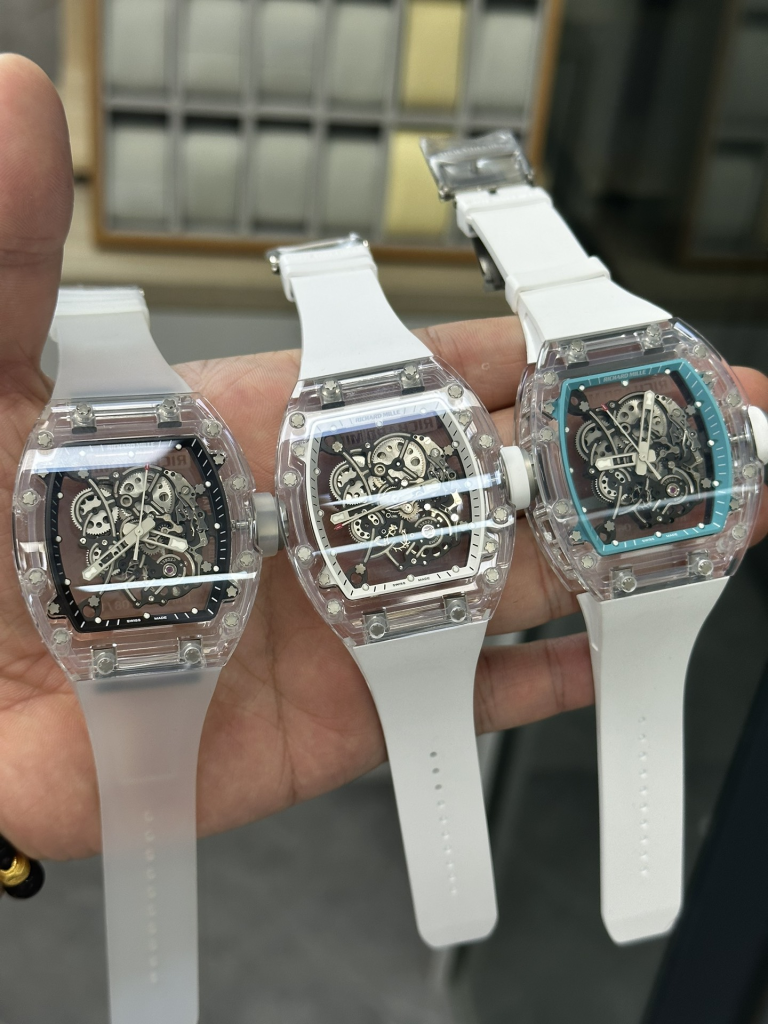
The Sonic Crystal edition of the Richard Mille RM 055 is defined less by color and more by how it interacts with light. Unlike standard ceramic or carbon cases that absorb reflections, Sonic crystal reacts sharply to movement. Under indoor lighting, it appears calm and glassy. Under direct sunlight, the entire case comes alive with layered refraction and internal glow. It is not mirror-like. It is dimensional.
What makes the Sonic crystal case especially distinctive is its optical depth. The material does not behave like coated sapphire or polished resin. Light travels through the structure unevenly, creating subtle internal shadows along the edges, lugs, and bezel curves. When you tilt the watch slowly, the brightness shifts across the surface rather than bouncing off in a single flash.
On the wrist, the Sonic crystal RM 055 feels lighter than ceramic, yet firmer than traditional composite cases. The surface stays cool to the touch, even in warm environments. It does not trap heat the way metal cases often do. Over long wear, this contributes to comfort in summer or humid conditions.
Visually, the transparency also transforms how the movement is perceived. The tourbillon appears to float, suspended within the case rather than framed by it. This changes the entire emotional character of the watch. It no longer feels purely mechanical. It feels architectural.
The Sonic Crystal RM 055 is not designed for subtlety. It is designed for those who want light, structure, and motion to remain visible at all times — not as a statement, but as a constant interaction between material and environment.
What You’re Actually Paying For
APS and ZF are expensive for different reasons.
With APS, your money goes into:
- Structural rebuild
- Non-decorative mechanics
- One-piece case engineering
- Real mechanical engagement
With ZF, your money goes into:
- Swiss-style architecture replication
- Visual geometry
- Movement layout accuracy
- Finishing precision
Neither path is wrong. They simply reflect two different definitions of value.
Which One Should You Personally Choose?
At this stage, the decision becomes less technical and more personal. It comes down to what you want to feel satisfied by — interaction or impression.
Choose APS If You Are This Kind of Buyer
APS tends to fit buyers who:
Care more about real mechanical involvement than visual storytelling.
Enjoy how a movement behaves when adjusted repeatedly.
Like feeling how power transfers, not just seeing it displayed.
Prefer staying below the $2,000 mark without stepping into disposable-tier builds.
Want to explore what modern China factory RM engineering can actually do under structure, not just surface.
For these buyers, APS feels experimental in a good way — something to live with, not just show.
Choose ZF If You Are This Kind of Buyer
ZF tends to fit buyers who:
Care most about how close the watch looks to genuine under inspection.
Regularly show the caseback to friends.
Value symmetry, bridge layout, and visual depth first.
Are less sensitive to price and more sensitive to appearance.
View the watch more as a statement piece than a mechanical companion.
For these buyers, ZF delivers reassurance through visual authority.
My Honest Take After Handling Both
After spending time with both APS and ZF, one thing became very clear to me: this is not a question of which factory is “better.” It is a question of what kind of satisfaction you are actually looking for.
APS feels like a watch you live with. You notice it when you wind it. You notice it when you adjust time. You notice it when power transfers through the movement instead of just passing behind decorative plates. It feels mechanical in a way that quietly grows on you over weeks, not minutes.
ZF feels like a watch you present. The structure looks right. The layout tells the right visual story. The impression is immediate. Under a loupe, it reassures you quickly. It does what many buyers secretly want — it convinces the eye first. If someone asked me, without bias and without sales pressure, what I would personally wear long term, I would lean toward APS for the way it behaves over time. Not because it is cheaper, and not because it is newer — but because I care more about interaction than inspection. That said, I also understand why many people still choose ZF. For some buyers, how a Richard Mille looks across a table still matters more than how it feels after six months. Both answers are reasonable. And the right one depends entirely on what you want to feel when you look down at your wrist.