
Why Panerai Is the One Brand Where Factory Choice Actually Matters
Panerai Is Not About Decoration, It’s About Mechanical Behavior
If you’ve handled a few Panerai pieces—real or super clone—you already know the trap. Many replica listings look “right” in photos. The dial fonts look close. The case shape looks close. But Panerai is a brand you don’t judge across a table. You judge it with your fingers, in the first 30 seconds of interacting with the watch. That’s why factory choice matters more here than it does for many other models coming out of Guangzhou, China.
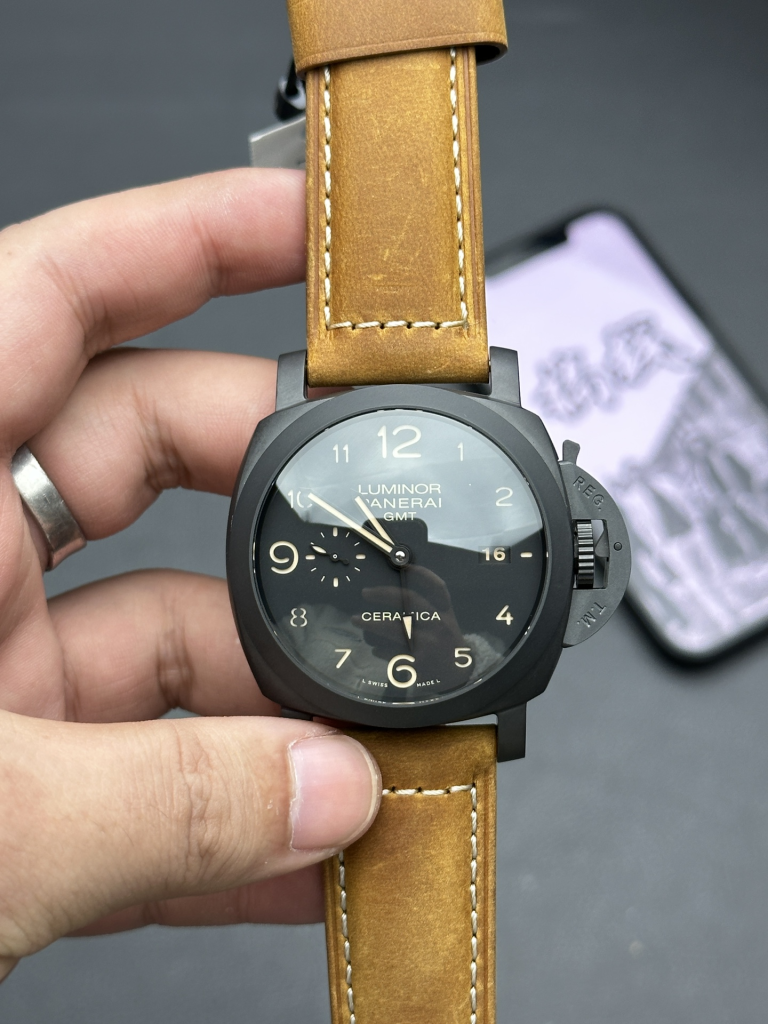
Start with the crown guard. A Panerai crown guard is not just a signature silhouette. It’s a mechanism you open, close, and feel every day. On many market versions, the lever action feels light, hollow, or oddly stiff. The “click” lands in the wrong place. The rebound feels absent or inconsistent. With a VS Factory Panerai super clone, the guard tends to feel more like a designed system, not a decorative add-on. You notice it because you use it—often. And if that one piece of daily interaction feels off, the whole watch starts to feel off.
Then there’s the GMT behavior on models like the PAM441 GMT style builds. A GMT hand isn’t impressive because it exists. It’s impressive when it moves the way your hands expect it to move. Many China replica Panerai watches show a GMT hand that looks correct but behaves like an afterthought. The adjustment logic can feel disconnected from the rest of the watch, as if the watch is asking you to “work around” it. That’s the key difference you feel in real life: not “accuracy,” but whether the watch behaves like a coherent tool.
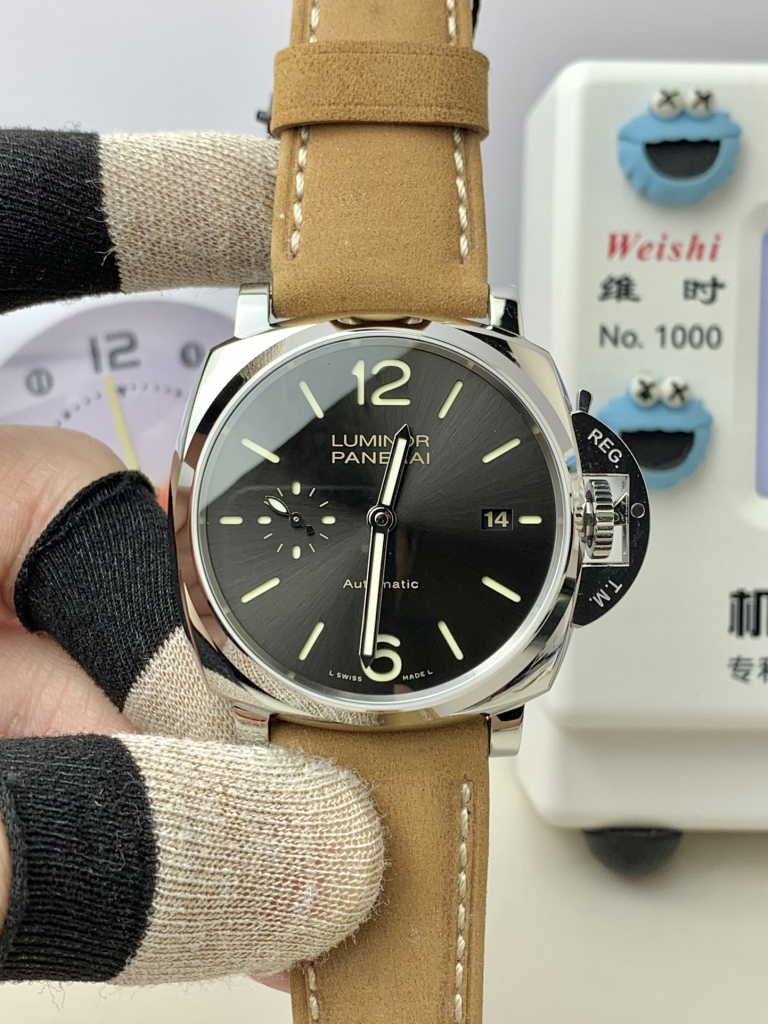
And finally, the power reserve. This is where Panerai exposes shortcuts faster than most brands. A power reserve display should be an interaction, not a sticker. If the indicator doesn’t respond to winding in a believable way—or if it moves in a vague, delayed, or purely cosmetic manner—the watch stops feeling like a functional instrument. It starts feeling like a costume. In the VS Factory lane, especially on Panerai super clone builds coming from Guangzhou, the goal is not to impress you with specs. It’s to pass the “hands-on truth test” that happens the moment you start using the watch like a watch.
Why Many “Good Looking” Panerai Replicas Still Feel Wrong on the Wrist
Here’s a pattern I see a lot with Panerai replica buyers: day one feels fine. Day two still feels fine. Then around day three, the friction shows up—literally. The watch may still look good, but living with it starts to feel like living with compromises you didn’t sign up for. That’s why pictures alone don’t protect you. Wearing behavior does.
The first thing that reveals a market version is how easy it is to use basic functions. Calendar adjustment is a perfect example. You don’t need to be a watch expert to notice when the date change feels clumsy, inconsistent, or “fussy.” On some China super clone Panerai options, you end up adjusting slowly because you don’t fully trust what the watch will do. That’s not a small detail. It’s the difference between a tool you enjoy using and an object you handle carefully because it feels unpredictable.
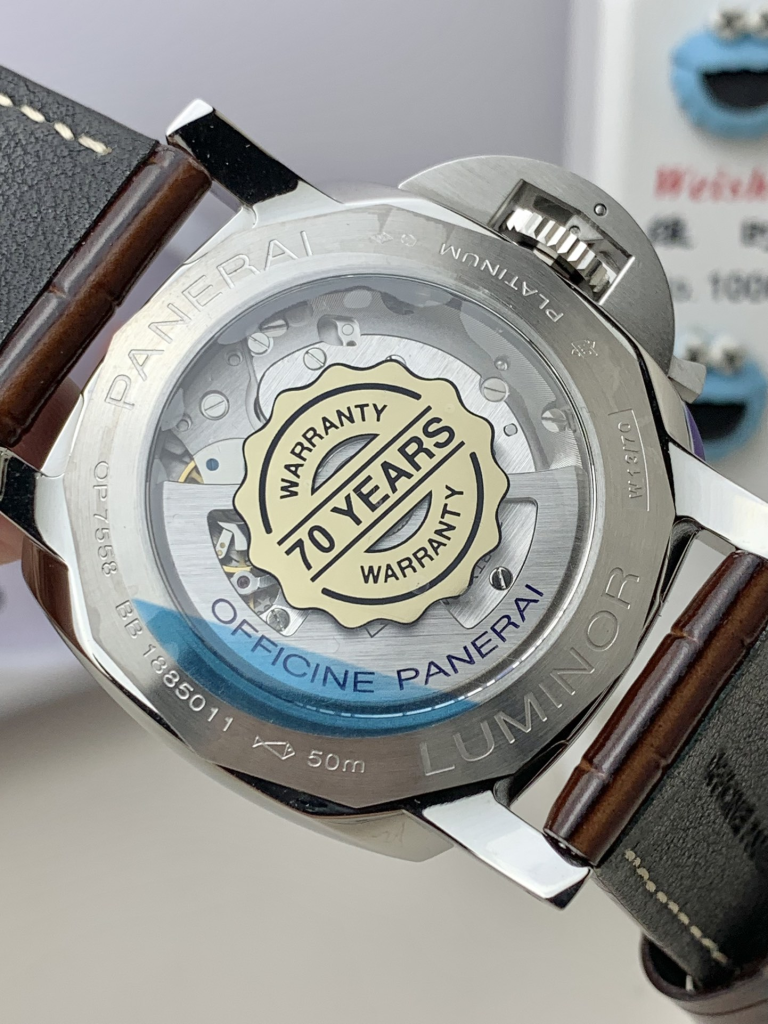
Then comes the lume. A lot of listings brag about bright lume, but brightness isn’t the full story. The real tell is how it behaves across time—especially after you’ve worn it for a few nights. On day three, you start noticing whether the glow looks layered and purposeful, or whether it looks flat and uneven. You notice whether the dial reads cleanly at night or whether certain areas flare up while others fade early. This is where Panerai’s identity—especially the sandwich dial style—makes weak builds hard to hide.
And finally, case comfort. Panerai cases look smooth in product shots, but edges are real when they meet skin. After a few days, you learn whether the case edges feel refined or whether they feel slightly sharp. You notice whether the watch settles naturally on the wrist or whether the shape creates tiny pressure points that you keep adjusting throughout the day. Many “good looking” market versions from the Guangzhou supply chain miss this. They deliver a photo-friendly replica. They don’t always deliver a wearable Panerai.
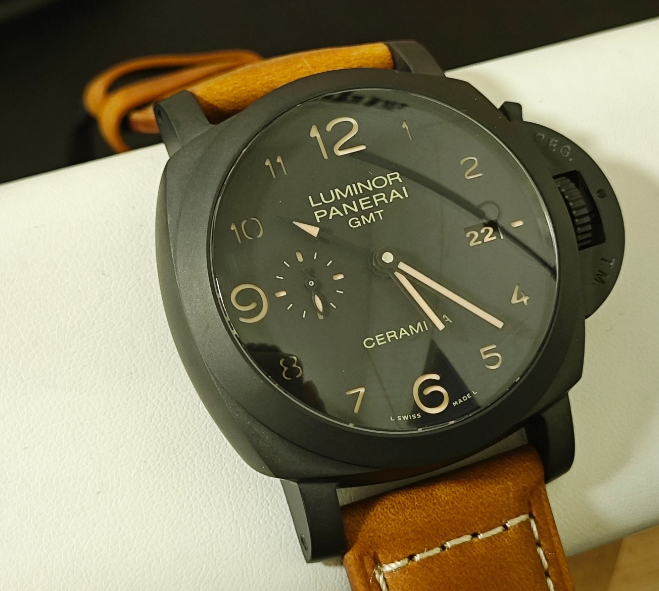
That’s why people keep circling back to VS Factory Panerai when they want a super clone that holds up beyond the first impression—especially for larger case references like PAM441-style builds. Not because it’s “the best,” but because Panerai punishes cosmetic thinking. If the watch doesn’t behave correctly, you’ll feel it—by day three—whether you planned to or not.
Dial, Lume, and Case: Where Wearers Notice the Difference After a Week
Why Panerai Sandwich Dials Expose Weak Factories Immediately
A Panerai dial can look “fine” in a bright room and still be wrong in daily life. That’s especially true with the classic sandwich dial. It’s not just a style choice. It’s a construction choice. And construction is where weak China replica factories get exposed fast—usually within the first week of wear.
On a proper sandwich dial, the lume isn’t painted on top like a quick decoration. You’re looking at a recessed luminous layer sitting under cut-out markers. That recessed structure creates a specific kind of depth. In hand, it reads like a tool watch dial, not a printed graphic. When the factory cuts corners, that depth disappears. The dial can start to look flat, or “overfilled,” or strangely glossy around the markers. The next tell is the edge work—whether the cutouts and borders look clean. A good sandwich dial has sharp, consistent cut lines. The edges look intentional. On market versions from the Guangzhou pipeline, you often see tiny inconsistencies that your brain picks up even if you can’t name them. The marker openings may look a bit soft. The inner walls can look rough. In photos, you might never notice. After a week on your wrist, you will. This is exactly why VS Factory Panerai super clone buyers talk about “feel” more than “finish.” The dial doesn’t just look right. It reads right in real light.
The Night Test: What You See at 2 A.M. Tells You More Than Studio Photos
Here’s the rule I use when someone asks whether a Panerai replica dial is “good.” I don’t start with macro shots. I start with darkness.
No dark room test at midnight, no real judgement. Because Panerai lume isn’t just about being bright. It’s about being readable and layered in a calm, consistent way. Weak factories often produce lume that looks impressive for a moment and then collapses into uneven patches. You’ll see hotspots. You’ll see certain markers flare while others fade early. Sometimes the hands glow at a different tone than the dial, so the whole watch looks slightly “mixed” in the dark.
On a better VS Factory build, the experience tends to feel more organized. The glow comes up evenly. The layers light up in a way that matches the sandwich structure, so the dial keeps its depth instead of turning into a flat neon disc. This matters more than people think because it changes the entire character of the watch at night. If you wear your Panerai the way people actually wear Panerai—late dinners, dim rooms, early mornings—lume behavior becomes part of ownership, not a party trick.
Calendar Window Alignment: A Boring Detail That Ruins Many Watches
Most buyers don’t get excited about a date window. They also don’t realize how often a date window quietly ruins an otherwise decent-looking China super clone.
Panerai date windows look simple, which is exactly why alignment matters. If the font isn’t centered, your eye notices it every time you check the date. If the numbers vary in size, it reads cheap—even when you can’t explain why. And if the window lacks that slightly recessed look, it can feel like the date sits on top of the dial instead of belonging inside it. This is one of those “week one” details. On day one, you might overlook it. By day seven, you won’t. The date is something you glance at without thinking. That’s why small misalignment becomes a constant irritation. On a stronger VS Factory Panerai execution, the date tends to sit more confidently: centered, consistent in scale, and visually seated into the dial rather than floating awkwardly. It’s not exciting. It’s just what makes the watch easier to live with—every single day.
Why Closed Casebacks Quietly Solved a Big Problem for VS Factory
Why Display Backs Exposed Too Much on Non-VS Movements
In the Panerai replica world, an exhibition caseback looks like an easy win. It photographs well. It signals “mechanical.” It gives sellers something to point at. But Panerai is one of the few brands where a display back can also become a liability—because it forces the movement architecture to stand in the open. A lot of China super clone makers tried to “solve” that problem the obvious way: make something that looks similar from a distance. The issue is that movement structure isn’t a surface problem. It’s a layout problem. When the core architecture can’t be fully matched, you end up with a watch that looks convincing in a product photo but feels like a compromise once you start comparing how things sit and how they function.
So the smarter approach is not to fight a battle you can’t win with decoration. It’s to change the battlefield. Structure can’t be broken through → strategy changes → closed caseback. That isn’t a downgrade when it’s done for the right reason. It’s a way to keep the watch coherent: correct behavior up front, and fewer “forced explanations” on the back.
How VS Uses Closed Backs to Protect Structural Accuracy
When VS leans into closed casebacks, it isn’t just about hiding something. It’s about protecting the parts of accuracy that actually matter in daily ownership—especially on builds tied to the P9010 family. First, it lets VS keep the focus on real 9010-style layout logic rather than chasing a “pretty” display that invites scrutiny in the wrong places. Second, it avoids the mismatch problem that happens when a movement’s visible architecture doesn’t align with what the caseback is claiming.
You mentioned a key reality that experienced buyers pay attention to: the position differences tied to the balance/shock area (the quick layout tell). On the wrist, most people never open a caseback. But when someone does—maybe a buyer verifying a watch in hand—layout tells a story faster than finishing. That’s why a closed back becomes a clean solution: it removes the pressure to “perform” visually and keeps the watch honest where Panerai owners actually live: crown feel, adjustment logic, and dial legibility.
And VS doesn’t waste the closed back, either. A good closed caseback still has to feel like Panerai: restrained engraving, even brushing, and raised, crisp lettering that catches light the way it should. It’s not loud. It’s not shiny for attention. It’s the kind of finishing that looks correct in normal daylight, not just under a camera flash. That quiet competence is exactly what many Guangzhou market versions miss—they chase impact, while VS tends to chase believability.
The Crown Guard Test: The Fastest Way to Spot a True VS Factory Panerai
What Opening and Closing the Guard Should Feel Like
If you only remember one practical check for a Panerai super clone, make it the crown guard. Not the logo. Not the dial text. The guard.
A real Panerai-style crown guard isn’t just a lever you flip. It has a specific feel that you notice without thinking—especially after you’ve worn the watch for a week. When you open it, you should feel controlled resistance, like the parts are guided rather than scraping. When you close it, you should feel a clean landing with spring damping, not a flimsy snap. On many China replica “market versions,” the guard tells on itself immediately. It can feel hollow, like the lever is only there for appearance. Or it can feel oddly loose, like it never fully settles. Sometimes it feels tight in the wrong way—stiff with friction rather than firm with structure.
With a VS Factory Panerai, the interaction tends to feel more intentional. You get that small, satisfying rebound when it seats. The lever doesn’t wobble. The action doesn’t feel gritty. It feels neither hollow nor loose. That’s not a luxury detail. It’s a daily-use detail. And Panerai is a daily-use brand.
The One Adjustment Test You Can Do Without Any Tools
After the crown guard feel test, this is the fastest “behavior check” you can do—no loupe, no case opener, no guessing.
- Open the guard.
- Pull the crown one position.
- The hour hand should jump in steps.
- The minute hand stays still.
- Keep advancing the hour hand. The date changes after two full hour-hand rotations for a single date jump.
That’s it. The test works because it checks logic, not cosmetics. A watch can look like a Panerai in photos and still fail this instantly. And if it fails this, you don’t need more debate. You already learned what kind of movement approach sits inside. This is also why the VS reputation stuck in the Guangzhou / China super clone market. Not because of a slogan, but because the behavior is repeatable. You can hand the watch to someone else and they can perform the same steps and feel the same result. In my experience, that repeatability is the real line between a “photo replica” and a Panerai super clone you can actually live with.
Wearing Experience After 7–14 Days: What Specs Never Tell You
Thickness, Weight, and Balance on 44mm Ceramic Models
On paper, a 44mm Panerai—especially a ceramic build—sounds like it will wear like a brick. The first surprise for many buyers is that it often doesn’t. With a PAM441-style 44mm ceramic case, you get the visual presence Panerai is known for, but the weight can feel more manageable than steel once you put real days on it. Ceramic doesn’t “shrink” the watch, but it changes the way it sits. The watch feels present without constantly reminding you it’s there. The second surprise is thickness. On the wrist, a VS-style build around ~14.9mm can feel slimmer than people expect for a Panerai profile, especially once the strap breaks in and the watch stops riding high. You don’t notice thickness by looking at a number. You notice it when the watch slides under a jacket cuff, when it doesn’t tip forward, and when you stop re-centering it throughout the day. After a week, balance matters more than diameter. You either forget you’re wearing it—or you keep “fixing” it every hour.
If you’re evaluating a China super clone Panerai from the Guangzhou market, this is the part you can’t learn from a listing. Photos don’t tell you how the case distributes weight, or whether the watch settles into the wrist or stays perched like a display piece. That’s why many buyers only understand what they bought after 7–14 days, not after 7–14 minutes.
Strap, Stitching, and Buckle: Where Cheap Factories Always Cut Corners
Most straps look decent on day one. That’s exactly why strap quality becomes a long-game tell.
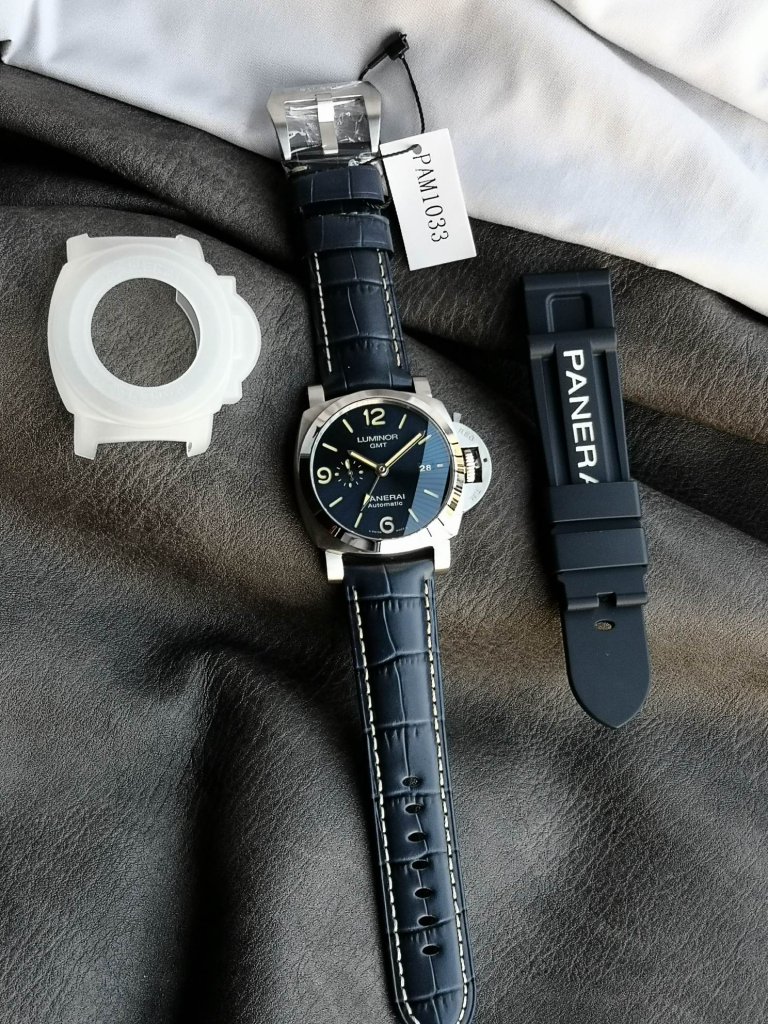
On a better VS-style Panerai build, the strap usually starts with decent structure: cowhide on the outside, a more comfortable genuine leather lining on the inside, and stitching that doesn’t look “puffy” or rushed. Early on, it’s easy to think all straps are the same. Then you wear it for a month and the truth shows up.
Cheap straps tend to fail quietly. The edges start to fuzz. The lining begins to feel sticky or overly dry. The strap develops a weird bend that never sits flat again. Stitching can loosen in the areas that rub your wrist the most. None of this is dramatic. It’s just annoying—because it changes how the watch feels every time you put it on.
The buckle is the same story. A proper Panerai-style tang buckle should feel sturdy and calm. The finishing matters because your fingers touch it daily. A VS-level build typically uses a brushed tang buckle that holds up better visually and feels more consistent in hand. A cheaper buckle can look fine in a photo and still feel thin, sharp, or oddly light when you actually use it.
So if you care about long-term wear—not just “unboxing day”—strap and buckle quality is where the market versions often start losing ground. You don’t always see it on day one. You feel it after a month.
Who Should Choose VS Factory Panerai (and Who Probably Shouldn’t)
If You Care About How a Panerai Behaves, Not Just How It Looks
I don’t think the choice comes down to “looks people” versus “movement people.” That framing is too simple and honestly a bit outdated. The better question is whether you care about behavior—the small moments when you interact with the watch and it either feels coherent or it doesn’t.
If you like the Panerai identity because it feels like a tool, then you’ll notice tool-like behaviors. You’ll notice the crown guard action. You’ll notice whether the hour-jump logic makes sense. You’ll notice whether the power reserve responds to winding instead of acting like a prop. These are not watchmaker details. They’re owner details. They show up in normal life, especially on a Panerai super clone where factory choice decides whether the watch acts like a watch or like a costume.
If you’re shopping in the China / Guangzhou replica space, VS Factory tends to appeal to buyers who want fewer “workarounds.” They want the watch to cooperate. They want to adjust it without anxiety. They want it to feel settled, not temperamental. That’s what behavior means in practice.
If You Never Adjust the Watch, You Might Not Notice the Difference
This part matters, so I’ll say it plainly: if you rarely adjust your watch and you don’t care about mechanical interaction, you might not feel the full value of VS.
If your watch lives in a rotation, stays on a winder, or you mostly wear it as a visual piece, then many differences shrink. You might still appreciate dial quality and case finishing, but you won’t be stress-testing the adjustment logic, the crown guard feel, or the power reserve response often enough for it to become a daily advantage.
And that’s okay. Not every buyer wants the same experience. Some people want a Panerai replica that looks the part in photos and casual wear. Others want a super clone that behaves convincingly when they actually live with it. My view is simple: pay for the behaviors you’ll actually use. If you won’t use them, you don’t need to force the “best” choice. You just need the right one for your habits.
My Personal Take After Handling Real VS and Market Versions
Crown Feel
When I handle a Panerai, I don’t start by staring at the dial. I start by touching the crown guard. On market versions, the lever action often feels inconsistent—either too light and hollow, or stiff in a frictiony way that doesn’t feel engineered. On VS, the action usually feels calmer. The lever closes with a cleaner landing, and the small rebound feels controlled instead of random. It’s the kind of difference you notice without trying to notice.
GMT Adjustment
This is where “spec sheet Panerai” separates from “wearable Panerai.” I pay attention to whether the watch lets me adjust time in a way that feels logical. On market builds, GMT-related adjustments can feel like you’re fighting the watch—minute hand drifting, jump behavior not matching expectations, or date changes that feel disconnected. On VS, the hour-jump behavior tends to feel more deliberate, and I feel more confident making corrections without babying it.
Lume After Midnight
Most lume looks good right after you charge it. I care more about what it looks like later—when you wake up at night and glance without thinking. Market versions often show uneven brightness across markers or a mismatch between hands and dial that makes the watch read “messy” in darkness. VS tends to look more even and layered, which matches the sandwich dial idea better. It doesn’t scream. It just reads cleanly.
Power Reserve Interaction
Power reserve is one of my favorite “honesty checks” because it’s interactive. On weaker builds, the indicator can feel like decoration—slow to react, vague, or flat-out non-responsive. On VS, I usually see a more direct relationship between winding and what the dial shows. I don’t need tools to validate it. I just wind for a minute and watch whether the watch responds like it’s supposed to. That simple interaction tells me more than a page of sales claims ever will.