
Why Movement Matters in Audemars Piguet Replicas
In Audemars Piguet replicas, the movement is not a background component. It is the structural center of the watch, visually exposed, mechanically influential, and impossible to hide. This is fundamentally different from Rolex replicas, where closed casebacks and standardized layouts allow factories to prioritize durability and timekeeping with fewer visual penalties. In a Royal Oak, the movement defines whether the watch feels convincing or collapses under scrutiny.
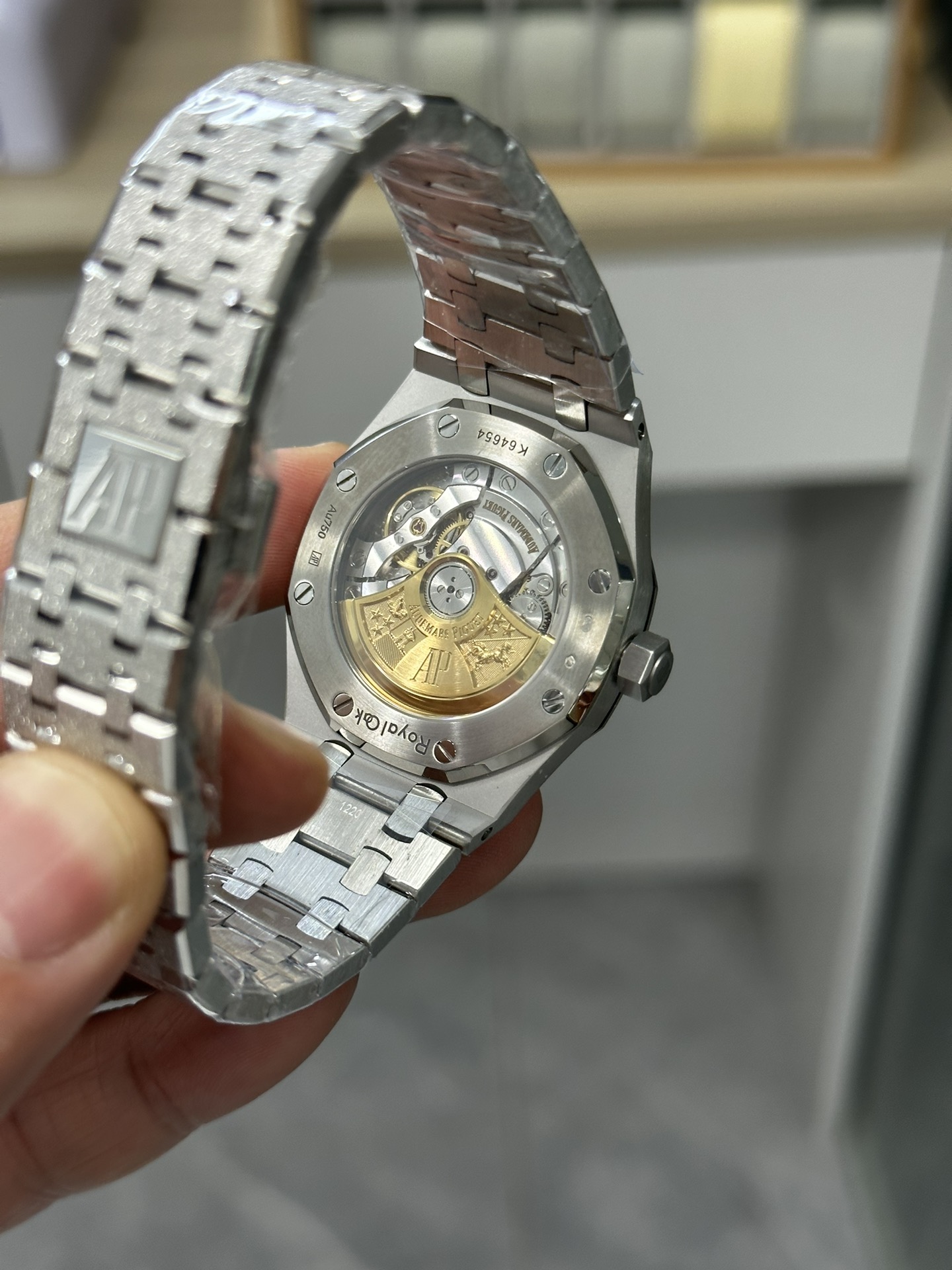
The open caseback changes everything. You are not only judging whether the watch keeps acceptable time, but whether the balance wheel sits where experience tells you it should, whether the bridges occupy believable space, and whether the movement fills the case with the correct visual density. A replica that runs well but reveals a misplaced balance or hollow architecture through sapphire immediately loses credibility to anyone familiar with AP.
This is why priorities shift. In practical use, timekeeping accuracy matters, but not as much as structural plausibility. Decorative finishing matters, but only after the layout stops triggering alarms. In the AP world, structure comes first, stability second, decoration last. Any factory that reverses this order usually ends up producing something that looks impressive in photos but fails in ownership.
Understanding Genuine Audemars Piguet Calibers (Reference Only)
Before discussing replicas, it is necessary to understand what genuine Audemars Piguet calibers are trying to achieve, at least at a structural level. This is not a guide to imitation and not an argument about equivalence. It is context, nothing more.

AP movements are designed around spatial balance and mechanical visibility. They are not ultra-thin showpieces, nor are they overbuilt tool movements. They sit in a narrow band where visual symmetry, winding efficiency, and long-term stability must coexist inside a case that exposes almost everything. Replicas succeed or fail based on how well they respect that balance, not on how many decorative stripes they add.
Caliber 3120: Classic Royal Oak Movement
The Caliber 3120 defines what most people still imagine when they think of a Royal Oak movement. It powered references such as the 15400 and shaped a generation of expectations about how an AP should look and feel from the back.
Structurally, the 3120 is balanced and predictable. The balance wheel sits in a position that feels natural once you have seen enough genuine pieces. The bridges are broad, mechanically honest, and visually legible. Nothing looks compressed or artificially stretched to fit a case. This matters because replica factories can approximate this architecture without resorting to extreme compromises.
That is why the 3120 is more forgiving to replicate. Even when factories rely on modified base movements, the overall proportions can be made believable. Layered or decorated solutions still have room to hide their shortcuts, and integrated clone attempts can reach acceptable visual parity without chasing impossible tolerances. In daily wear, 3120-based replicas tend to feel stable, predictable, and less temperamental, which aligns with what long-term owners actually experience.
Caliber 4302: Modern Generation Movement
The Caliber 4302, used in references like the 15500 and 15510, looks like an evolution on paper but behaves like a different challenge in reality. It is more open, more modern, and less tolerant of approximation.
AP redesigned the architecture to improve winding efficiency and power reserve, but the side effect is a layout that exposes flaws immediately. The balance position, bridge geometry, and negative space are less forgiving. Any deviation becomes obvious the moment you turn the watch over. This is where many replica attempts fail, even when the finishing looks impressive at first glance.
From a replication standpoint, the 4302 demands either a true integrated clone approach or an acceptance that visual accuracy will be compromised. Layered solutions struggle here because the added height and altered geometry disrupt the proportions that the eye expects. The result is often a watch that runs acceptably but never fully convinces, especially to someone who has handled a genuine 4302-equipped Royal Oak.
This is why 4302 replicas tend to divide opinions. They can look excellent from the dial side and disappointing from the back, or visually strong but mechanically delicate. The movement itself is not the problem. The problem is that the design leaves very little room for shortcuts, and shortcuts are the foundation of most replica movements.
Why Genuine AP Movements Cannot Be Used in Replicas
Genuine Audemars Piguet movements do not appear in replicas for reasons that are neither mysterious nor negotiable. The limitation is not technical ambition. It is legal, logistical, and economic reality acting at the same time.
From a legal standpoint, original AP calibers are serialized, traceable, and protected across manufacturing, servicing, and distribution. There is no surplus channel, no gray inventory, and no legitimate path for these movements to exit the authorized ecosystem intact. Even damaged or decommissioned movements are controlled. The idea that factories can “source original movements” misunderstands how tightly AP manages its supply chain.
Cost alone makes the concept collapse. A genuine Caliber 3120 or 4302 costs more than most complete replica watches several times over, before any casing, fitting, or loss adjustment. Even if acquisition were possible, which it is not, the economics would make no sense outside of isolated custom projects, not scalable production.
This is where the common confusion around Swiss ETA movements enters the picture. ETA is not AP. A Swiss-made base movement does not become an Audemars Piguet movement by proximity, nationality, or decoration. AP designs its calibers around proprietary architecture, proportions, and finishing logic that ETA does not share. Using an ETA movement may offer baseline reliability, but it does nothing to replicate the structural identity that defines an AP. Treating “Swiss” as a shortcut to authenticity is one of the most persistent misunderstandings in the replica watch space.
Types of Audemars Piguet Replica Movements on the Market
Replica AP movements fall into a few clear categories. Understanding these categories matters more than memorizing factory names, because each type carries predictable strengths and predictable compromises.
Decorated Clone Movements (Visual-Oriented)
Decorated clone movements are designed to satisfy the eye first. They aim to resemble AP calibers through surface treatment, engraved bridges, faux jewel placement, and rotor design. In photographs and casual inspection, they can appear convincing, especially to buyers unfamiliar with genuine movement layouts.
The compromise sits underneath. These movements often rely on simplified or rearranged mechanics that ignore correct balance placement, bridge geometry, or winding architecture. The watch may run acceptably, but the internal logic does not match what the caseback promises. Over time, owners tend to notice noise, uneven winding feel, or visual inconsistencies that cannot be unseen once recognized.
This category suits buyers who prioritize visual similarity in static viewing and are less concerned with long-term mechanical behavior or deep inspection. It does not suit anyone who handles the watch regularly with the caseback exposed and expects internal coherence.
Modified Base Movements (Stability-Oriented)
Modified base movements take the opposite approach. Instead of chasing visual accuracy, they start with proven, mass-produced automatic movements and adapt them to fit AP-style cases. Decoration is secondary. Reliability comes first.
The stability comes from decades of known behavior. These movements wind efficiently, regulate predictably, and tolerate daily wear without drama. Factories choose this route because it reduces returns, simplifies servicing, and produces watches that behave consistently over time. The trade-off is visual compromise. Even when decorated, the underlying proportions rarely align perfectly with genuine AP architecture.
In daily use, these movements tend to feel reassuring. They keep reasonable time, resist minor shocks, and do not surprise their owners. For long-term wearers who value predictability over illusion, this approach often proves more satisfying than visually ambitious alternatives.
Integrated vs Layered (One-Piece vs Stacked)
The deepest dividing line in AP replica movements is between integrated and layered construction. Integrated movements are designed as a single architecture intended to resemble AP calibers in layout and proportion. Layered movements stack decorative plates over a base movement to simulate that appearance.
Integrated designs offer superior visual coherence. Balance position, bridge flow, and spatial density can approach genuine layouts when executed well. The cost is complexity. These movements are harder to produce, harder to regulate, and harder to service. When problems occur, repair options narrow quickly.
Layered movements are easier to maintain and replace. Servicing is more accessible, parts are more interchangeable, and failures are less catastrophic. The downside is thickness, altered geometry, and visual shortcuts that become obvious through a sapphire caseback.
Neither approach is universally correct. Integrated movements reward owners who value authenticity of structure and accept higher maintenance risk. Layered movements suit those who prefer durability, simpler servicing, and lower long-term friction. The mistake is assuming that one is objectively superior without considering how the watch will actually be worn and maintained.
VS Factory Movement Strategy Explained
VS Factory approaches AP replica movements from a position that favors mechanical stability over visual ambition. The strategy is conservative by design. Instead of attempting to fully replicate AP architecture, VS focuses on movements that behave consistently under long-term wear.
The core principle is control. VS limits variation by relying on movement platforms with predictable tolerances and then applying incremental modifications rather than structural reinvention. Quality control reflects this mindset. Fewer versions, fewer experimental components, and stricter rejection standards result in watches that feel uniform across batches. This reduces the likelihood of silent defects that only appear after months of use.
For daily wear, this approach shows its value. VS-equipped AP replicas tend to wind smoothly, maintain regulation longer, and tolerate minor shocks without drifting unpredictably. They may not impress when the caseback is scrutinized side by side with a genuine AP, but they rarely frustrate owners during ownership cycles. For someone who wears the watch often rather than rotating it as a display piece, this trade-off aligns with real-world use.
APS Factory Movement Strategy Explained
APS Factory takes a more aggressive stance. The priority is visual and structural alignment with genuine AP movements, even when that introduces additional complexity. APS aims to replicate layout first and accepts the consequences that follow.
This strategy results in movements that look correct at a glance and often continue to look correct under closer inspection. Balance placement, bridge shapes, and negative space are treated as non-negotiable elements. When executed well, the effect is convincing in a way layered or heavily modified movements cannot achieve.
The cost is operational friction. Integrated designs leave less room for error and less tolerance for neglect. Servicing requires more experience, and replacement parts are not always interchangeable with common base movements. When issues arise, solutions tend to be more specialized and more expensive. APS movements reward careful ownership and regular maintenance. They are less forgiving, but for many, the visual payoff justifies the responsibility.
Movement Accuracy, Reliability & Daily Use
Accuracy in AP replica movements should be discussed realistically. Most well-regulated examples fall within a daily deviation of plus or minus ten seconds. Some perform better, some worse, but expecting chronometer-level consistency misunderstands the category.
Reliability depends less on factory claims and more on design philosophy. Movements built around proven bases tend to hold their behavior longer, while visually ambitious designs demand closer attention. Neither path guarantees failure or success. What matters is alignment between expectation and use.
Shock resistance and anti-magnetic performance are adequate for normal daily activity. These watches tolerate desk work, commuting, and casual movement without issue. They are not sports instruments. Sudden impacts, strong magnetic fields, and careless handling accelerate wear regardless of movement type. Treating a replica AP as a refined mechanical object rather than a tool extends its usable life significantly.
Servicing, Maintenance & After-Sales Reality
Replica AP movements can be serviced, but not without limits. Simpler constructions benefit from wider parts availability and familiarity among independent watchmakers. Integrated or heavily customized movements narrow the pool of technicians willing to work on them.
Parts availability follows the same pattern. Common base components are replaceable. Custom bridges, rotors, and decorative elements often are not. When these fail, repair becomes substitution rather than restoration.
The most effective maintenance strategy is restraint. Avoid unnecessary disassembly. Do not chase marginal gains in regulation. Let the movement run unless a clear problem emerges. Frequent intervention introduces more risk than benefit. Owners who treat replica AP movements as stable systems rather than projects tend to experience fewer issues and longer service intervals.
Common Myths About Audemars Piguet Replica Movements
The phrase “original factory movement” is the most common fiction in the AP replica world. It sounds authoritative, but it has no practical meaning. There is no parallel production line, no shared tooling, and no sanctioned overlap between genuine AP calibers and replica manufacturing. When this phrase appears, it usually describes decoration level, not origin or equivalence.
“Swiss movement” is another misleading shortcut. Swiss origin does not imply Audemars Piguet architecture, layout, or behavior. A Swiss-made base movement may offer solid timekeeping, but it does not replicate balance placement, bridge geometry, or winding logic specific to AP. Conflating nationality with authenticity obscures the real question, which is whether the movement behaves and appears coherent within an AP-style case.
The idea of a “complete 1:1 structure” collapses under inspection. No replica movement fully reproduces materials, tolerances, finishing processes, and long-term durability of genuine AP calibers at scale. Some approach the layout closely, others prioritize function, but none cross the boundary into equivalence. Believing otherwise usually leads to disappointment, not better watches.
Choosing the Right AP Replica Movement for Your Needs
Choosing an AP replica movement is less about ranking and more about alignment. Visual-focused buyers tend to gravitate toward integrated or layout-accurate designs that reward inspection and satisfy the desire for structural correctness. These owners usually accept higher maintenance risk and treat the watch as a considered object rather than a daily tool.
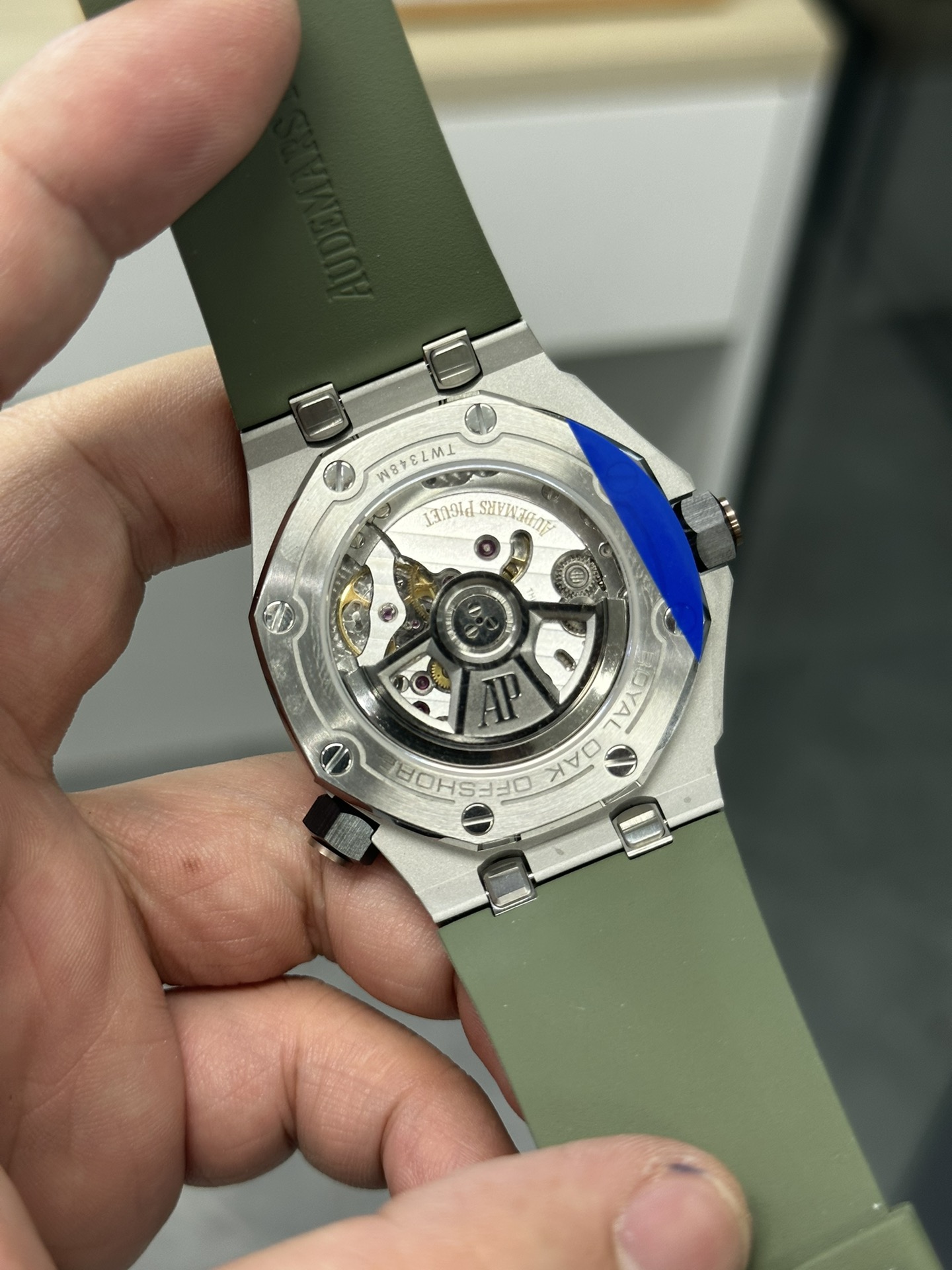
Stability-focused wearers prefer modified base movements that behave predictably. These watches integrate more smoothly into daily routines, demand less attention, and tolerate imperfect conditions. The visual compromise is real, but so is the reduction in ownership friction.
Experience level matters. Newcomers often benefit from conservative designs that minimize surprises. Long-term collectors, having lived through servicing cycles and ownership fatigue, are better positioned to decide whether visual fidelity outweighs operational simplicity. The same logic applies to usage. A watch worn frequently should favor reliability. A watch kept as part of a rotation can afford to be more demanding.
Final Thoughts: How Close Are AP Replica Movements Really?
AP replica movements can approach convincing structure or dependable behavior, but never both at once, and choosing wisely means deciding which limitation you are willing to live with.
Audemars Piguet Replica Movements & Factory Strategies — Full Comparison
| Dimension | Genuine AP Caliber 3120 | Genuine AP Caliber 4302 | JF Factory | ZF Factory | VS Factory | APS Factory |
|---|---|---|---|---|---|---|
| Typical References | Royal Oak 15400 | Royal Oak 15500 / 15510 | 15400 / 15450 / Offshore | 15400 / 15500 | 15400 (stability-focused) | 15400 / 15500 |
| Movement Type | In-house integrated | In-house integrated (new generation) | Miyota 9015 + decorative plates | Modified 9015 + refined plates | Modified base movement | Custom integrated clone |
| Structural Approach | Fully native architecture | Fully native architecture | Layered (stacked) | Layered with thickness control | Base-first, structure secondary | Integrated (one-piece) |
| Case Thickness | ~9.8 mm | ~9.8 mm | ~10.8–11.0 mm | ~9.8–10.0 mm | ~10.0–10.5 mm | ~9.7–9.8 mm |
| Balance Wheel Position | Correct | Correct | Offset | Near-correct | Offset | Largely correct |
| Bridge Proportions | Fully correct | Fully correct | Decorative approximation | Restrained approximation | Simplified | Close to genuine layout |
| Caseback Visual Credibility | Authentic | Authentic | Moderate | Medium–high | Medium | High |
| Realistic Daily Rate | ±2–4 s/day | ±2–4 s/day | ±10–15 s/day | ±8–12 s/day | ±6–10 s/day | ±8–12 s/day |
| Winding Efficiency | Optimized | Improved generation | Average | Average | High | Medium–low |
| Long-Term Stability | Very high | Very high | Moderate | Moderate | High | Medium |
| Shock / Wear Tolerance | Designed for longevity | Designed for longevity | Daily-use level | Daily-use level | Daily-use focused | Daily-use level |
| Anti-Magnetic Capability | Factory standard | Factory standard | Basic | Basic | Basic | Basic |
| Quality Control Philosophy | AP internal | AP internal | Batch tolerance | Batch optimization | Consistency-first QC | Layout-first QC |
| Return / Failure Risk (Observed) | Extremely low | Extremely low | Medium | Medium | Low | Medium–high |
| Servicing Difficulty | Authorized only | Authorized only | Medium | Medium | Low–medium | High |
| Parts Availability | Restricted | Restricted | Medium | Medium | High | Low |
| Factory Core Priority | — | — | Model coverage | Balance of look & wear | Long-term wearability | Structural accuracy |
| Ideal User Profile | Genuine ownership | Genuine ownership | Entry-level / variety seekers | Appearance-focused | Daily wearers | Structural purists |
| Primary Advantage | Benchmark | Benchmark | Wide selection | Controlled thickness | Reliability | Layout realism |
| Inescapable Trade-Off | Cost & access | Cost & access | Thickness & structure | Not truly integrated | Visual compromise | Maintenance cost |