
BBR Factory Richard Mille: The Risky Reality of Transitional Super Clones
Navigating the high-end replica market requires more than spotting the “best” factory. It demands an understanding of history, progress, and the specific kind of compromise you’re buying into. This is especially true for Richard Mille replicas from BBR Factory, a landscape where the JB Factory Richard Mille tourbillon replica guide provides crucial context on where super clone builds become relevant. Today, they exist in a peculiar limbo—often available, sometimes temptingly priced, but carrying a legacy of specific, dated shortcomings. This isn’t a story of good versus bad, but of evolution. BBR represents a critical, yet transitional, chapter in the quest to clone Richard Mille. Understanding this transition is the key to assessing risk, value, and whether a BBR watch could ever make sense for you now.
BBR Defined: The Archetype of a Transitional Factory
To evaluate BBR fairly, you must first understand what a transitional super clone factory truly means. In the evolutionary timeline of replication, factories occupy distinct roles. Pioneers (like the early KV Factory) made crude first attempts, proving a model could be copied in basic form. Current-generation leaders (like today’s APSF and ZF) refine those copies to near-obsessive levels of detail and integration.
BBR sits squarely in the middle. Its peak era, roughly from 2018 to 2020, was defined by solving major, previously intractable problems that stumped the pioneers. BBR didn’t just make a watch that looked “kind of” like a Richard Mille; it produced the first replicas that crossed the threshold from “fantasy build” to “credible clone.” This transitional leap moved the entire market forward, setting a new baseline that current factories now work from—and inevitably, improve upon.
The Pioneer-to-Transitional Leap: What BBR Actually Solved
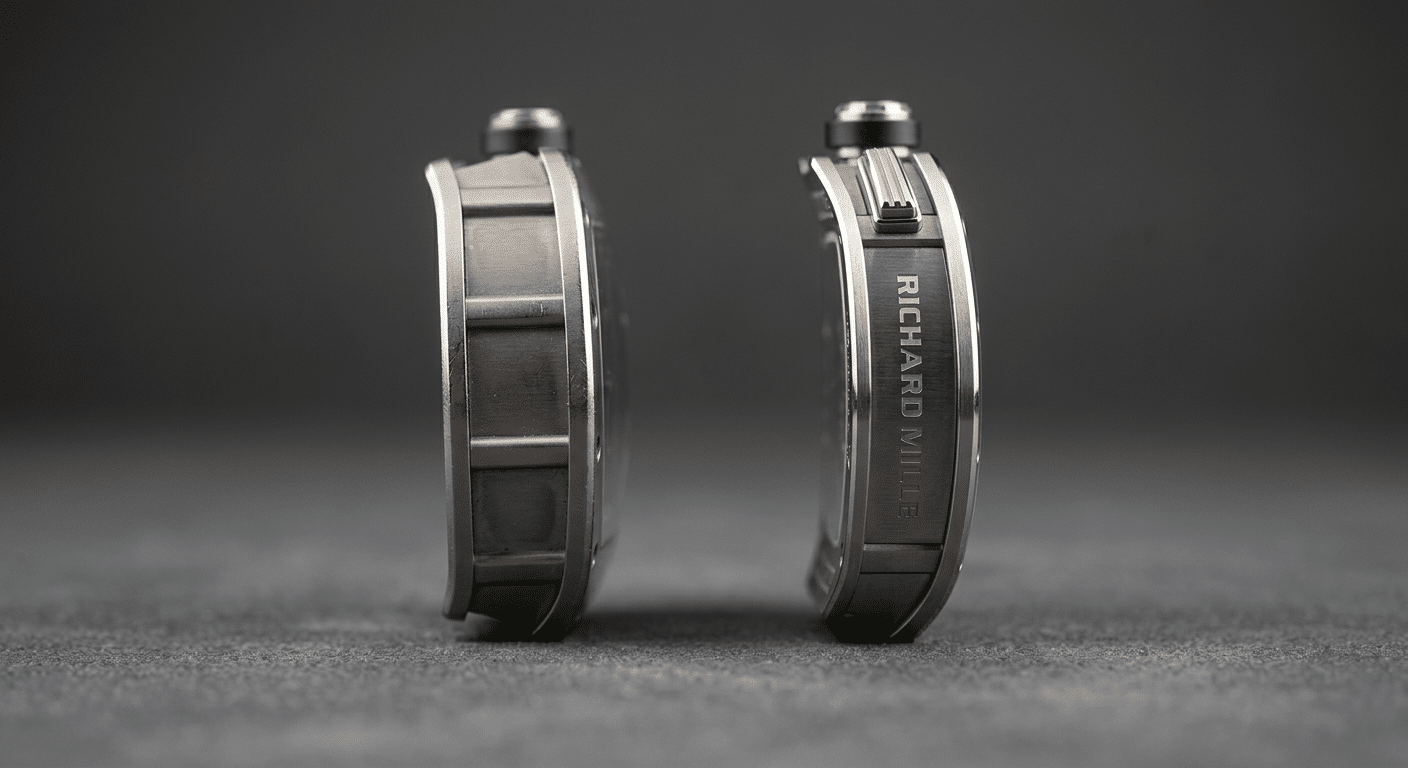
Before BBR, high-end RM replicas were often a collection of good ideas poorly executed. Cases were the wrong shape—too flat, too bulbous, missing the distinctive tonneau curvature. Skeletonized dials were dark, murky plates that blocked light rather than showcasing mechanics. BBR’s fundamental contribution was achieving basic architectural correctness.
For the RM011, BBR was the first to consistently produce a case profile that genuinely echoed the genuine article’s complex curves. For the RM035, it delivered a skeletonized movement bridge layout where you could actually see through the watch, with a balance wheel in roughly the right position. These weren’t perfect 1:1 copies, but they solved the core visual problems that made earlier replicas instantly recognizable as fakes at a glance. BBR moved the goalpost from “is it a watch?” to “is it an RM?”
Transitional vs. Current-Gen: The Defining Gap
The gap between a transitional factory like BBR and a current-generation leader like APSF is not one of intent, but of execution and refinement. BBR proved the concept was replicable; APSF and ZF perfected the details. This gap manifests in three key areas:
Integration over Assembly: BBR watches can feel like a sum of parts—a movement dropped into a case, attached to a strap. Current-gen factories engineer the components as a system, leading to better caseback fit, smoother crown action, and more cohesive weight distribution.
Finishing as a Priority: BBR focused on getting the shape and function right. Current-gen factories obsess over the surface: the bead-blasted texture of titanium, the depth and realism of carbon fiber layers, the razor-sharp bevels on movement bridges. This is the difference between a convincing silhouette and a convincing object.
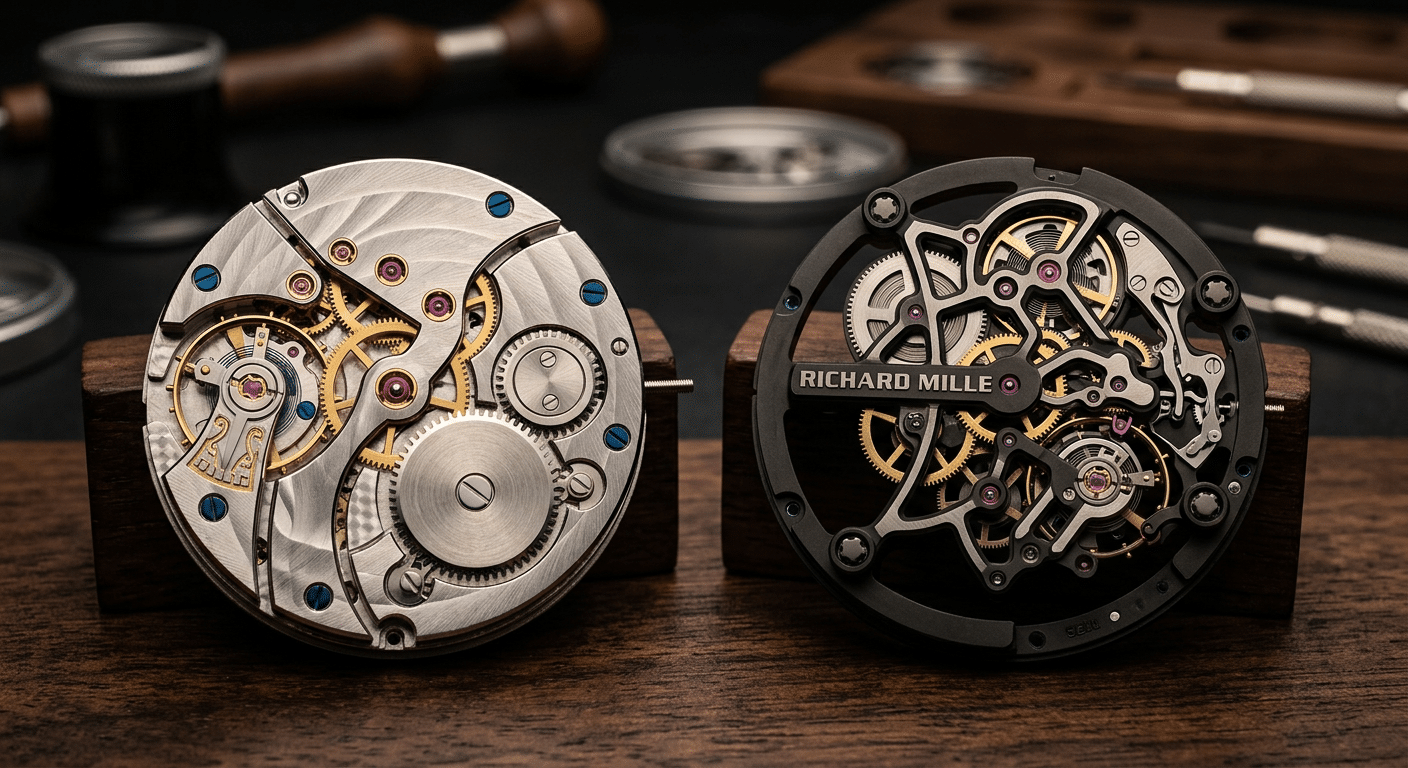
Movement as a Centerpiece: BBR often used heavily decorated existing calibers (like modified Seiko or 7750 architectures) to approximate RM’s look. Today’s leaders invest in custom-cloned movements that replicate not just the appearance, but the layout and even some functionality of genuine RM calibers, like the Dandong RMUL series.
Expert Authentication Insight
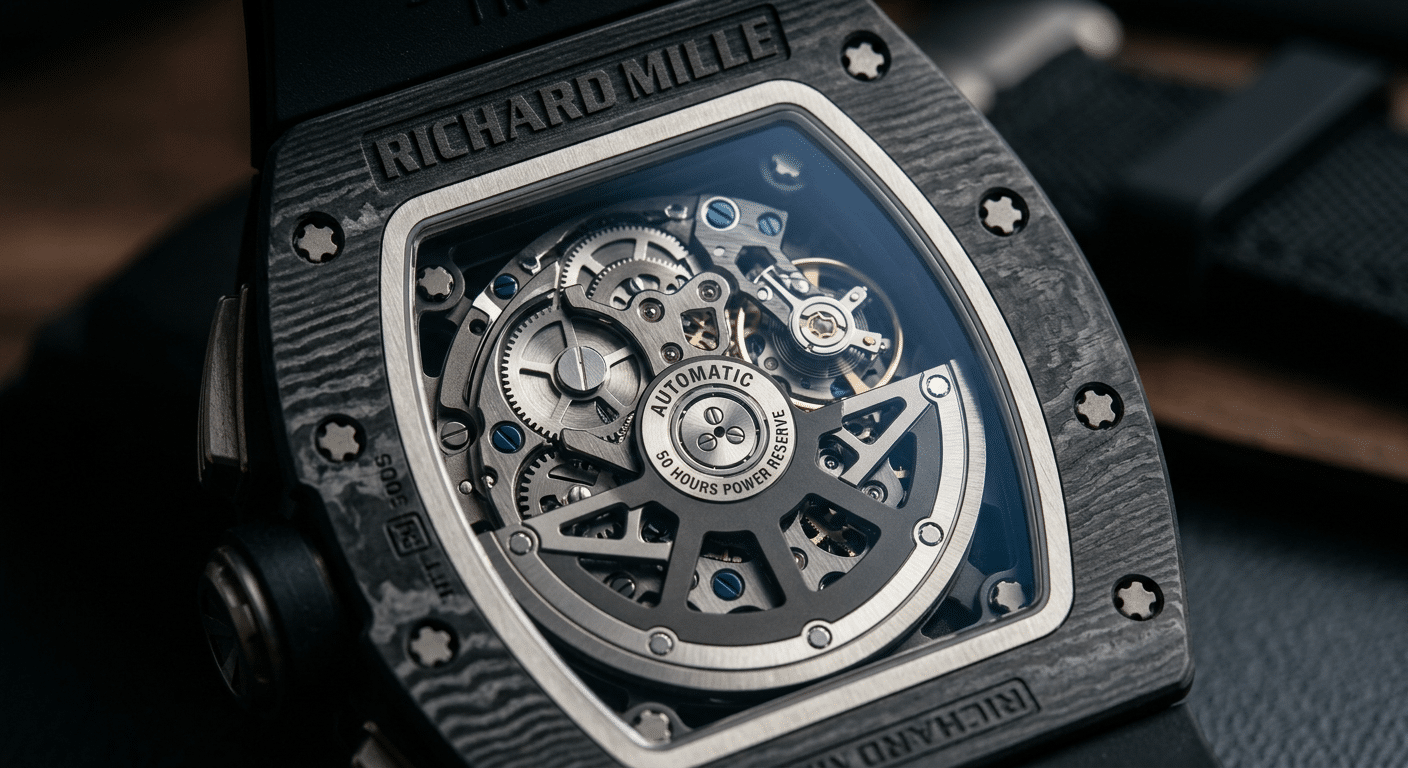
From an authentication perspective, BBR watches are often identified by a specific, tell-tale characteristic of their era: the use of generic, high-gloss black plating on movement bridges. Genuine Richard Mille movements use grade 5 titanium, which has a distinctive, matte grey-black appearance that absorbs light. BBR and other factories of its time defaulted to a shiny, almost painted-black finish on brass bridges—a clear visual shortcut. This one macro feature, visible through the caseback, is a hallmark of the transitional period, a compromise that current factories have largely moved beyond in favor of more accurate satin-finished or properly colored coatings.
The BBR Stronghold: Models and Versions That Once Mattered
To understand BBR’s place in history, you need to look at the specific models where it shifted the market. Before its arrival, the RM replica landscape was a mix of KV Factory’s chunky, fantasy-like attempts and various low-tier efforts with printed carbon dials and solid casebacks. BBR didn’t just make a better copy; for a few key models, it created the first credible replica that could be discussed in the same breath as the genuine article, however briefly.
Case Study 1: The RM011 Felipe Massa – Defining a Benchmark
The RM011 chronograph was a grail for replica makers, and a nightmare. Pre-BBR versions, primarily from KV Factory, were fundamentally wrong. They used thick Shanghai 7750 chronograph movements crammed into cases that ballooned to nearly 19mm—over 2.5mm thicker than the genuine watch. The pushers were often poorly aligned, and the “carbon” was frequently a glossy, unconvincing pattern. BBR’s intervention was decisive. Its version was the first to tackle the case profile with serious intent, bringing the thickness closer to reality (though still not perfect) and using a layered carbon composite that had a far more authentic, matte texture and deep, organic patterning. For a deeper analysis of factory comparisons and technical specifications, the comprehensive ZF Factory Richard Mille super clone guide provides essential context on why certain replicas remain significant. Crucially, BBR engineered a working chronograph where the subdial layouts and pusher feel approached functionality, moving the replica from a decorative object to a working facsimile. For a period around 2019-2020, on forums like RWI, the BBR RM011 was the default answer for anyone asking about a high-end Felipe Massa replica.
Case Study 2: The RM035-01 – Skeletonization Breakthrough
If the RM011 was about conquering complexity, the RM035-01 was about mastering transparency. Earlier skeletonized RM replicas were a mess of stamped metal plates that blocked the view, with balance wheels placed in obviously wrong positions. BBR’s RM035-01 represented a skeletonization breakthrough. It utilized a custom, decorated movement based on a Japanese Seiko architecture that was significantly thinner than the Chinese alternatives. This allowed for a more credible case profile. More importantly, BBR’s movement decoration—with its black PVD-coated bridges, faux jewel settings, and openworked gear train—created a visual density and depth that, from a foot away, convincingly mimicked the intricate architecture of a genuine RM. It was the first replica where you could actually see through the watch in a way that felt intentional, not accidental.
The “Peak BBR” Batch Identifiers
Not all BBR watches are equal, even from its heyday. The peak batches, often referred to in old dealer catalogs and forum posts as “V2” or “V3” for the RM035, have specific identifiers. For the RM011, look for a caseback engraving with exceptionally crisp, deep font—a hallmark of better CNC tooling during that period. The serial number “BBR XXXX” is typically etched, not laser-printed. On the RM035-01, the best batches feature a movement bridge with a specific, finer grain of Geneva striping and a balance wheel positioned at 11 o’clock, a deliberate attempt to mirror the genuine RMUL1 caliber’s layout. The carbon texture on these watches also shows a more randomized, less “striped” pattern, indicating a higher-grade forged carbon process.
Expert Authentication Insight
One definitive, physical marker of a peak-era BBR RM011 is the depth and finish of the caseback screw slots. On the best batches, these are machine-cut with sharp, clean edges and a uniform satin finish inside the slot. Later, cost-cut batches or lower-tier factories have softer, more polished, or uneven screw slots. It’s a small detail, but it speaks to the level of tooling and care present during BBR’s manufacturing peak, a level of finish that has since been both surpassed and abandoned in different ways by its successors.
The Architecture of Obsolescence: Where BBR Falls Short Today
The historical impact is clear, but history doesn’t wear well on the wrist. When you place a peak BBR watch next to a current-generation super clone from ZF or APSF, the gaps aren’t subtle—they’re architectural. These aren’t minor quibbles; they are fundamental compromises that define BBR’s place as a transitional, not current, product.
Movement Showdown: Decorated 7750 vs. Cloned RMUL
This is the core of the obsolescence. BBR movements, whether the Seiko-based NH05 in the RM035 or the decorated 7750 in the RM011, are adaptations. They are standard movements dressed up with custom plates. The new generation from ZF and APSF uses true cloned RMUL calibers. The difference is stark. A BBR movement has a balance wheel that’s often in the wrong position (a telltale sign of the base movement underneath), and its decoration is superficial—machined stripes on a plate. The cloned RMUL movements have the correct gear train layout, the proper bridge shapes, and a balance wheel in the genuine position. The rotor on a BBR is often noisy and spins freely; on a modern clone, it’s quieter and has a more refined bi-directional winding feel. You’re comparing a convincing costume to an attempt at reverse-engineering the actual skeleton.
Material Fatigue: NTPT and Carbon Fiber Comparison
BBR’s carbon was once groundbreaking, but material science has moved on. The forged carbon used in its cases often has a slightly more uniform, “laminated” look compared to the more organic, variable patterning seen in newer APSF cases. The color can be off—leaning too gray or too greenish-black under certain light, whereas the latest factories have dialed in a richer, truer black. Furthermore, the finishing on the case edges and the integration of the sapphire crystal are less refined. On a BBR, you might feel a sharper transition or see a more pronounced gasket line. The overall package lacks the seamless, monolithic feel that current top-tier factories achieve.
The Strap and Lug Problem: A Dead Giveaway
Perhaps the most immediate and unfixable flaw is at the lugs. BBR’s lug design and the corresponding strap hardware are a generation behind. The screws that secure the strap are often poorly finished, can sit proud or recessed unevenly, and strip easily. The strap itself is a lower-grade rubber or fluoroelastomer that lacks the supple, dense quality of the straps now supplied by ZF or APS. Most damningly, the shape of the lugs and their curvature often doesn’t match the genuine watch’s profile, leading to a visible gap or an awkward angle where the strap meets the case. This isn’t just a comfort issue; it’s a visual tell that screams “replica” from across a room.
Expert Authentication Insight
For a quick, decisive test that separates old BBR from new-generation clones, listen to the rotor. Wind the crown about 20-30 times, then give the watch a sharp, gentle shake in a quiet room. A BBR movement (especially the Seiko-based ones) will often produce a distinct, hollow, and slightly grating metallic whirr as the rotor spins freely. A modern ZF or APSF cloned RMUL caliber has a much tighter, quieter, and more damped sound—more of a soft *whir* than a grinding *zzzt*. It’s the sound of an integrated design versus an adapted one.
The Modern Marketplace: Where You Still Find BBR and Why
Given these shortcomings, why do BBR watches still flood certain corners of the market? The answer is a mix of inventory clearance, secondary market dynamics, and deliberate obfuscation. Navigating this space requires understanding not just the watch, but the ecosystem selling it.
Trusted Dealer Clearance: The “New-Old-Stock” Gamble
Some trusted dealers (TDs) still list BBR models, often at a significant discount—think $400-$550 for an RM035 where a new ZF costs $800+. This is typically new-old-stock (NOS) clearance. The pro is that you get a new watch with full TD QC photos and a warranty (usually 1-2 years on the movement). The con is that you’re still paying a substantial sum for a technologically obsolete product. You’re betting that the “new” condition outweighs the inherent generational flaws. For most buyers, this is a poor gamble; that $400 is better put toward a used but newer-generation watch.
The secondary market on forums (Reddit’s RepTimeBST, RWI’s M2M section) is the primary home for BBR watches today, a reality well-documented in the Richard Mille replica factory guide. Here, pricing reflects their status: a BBR RM011 in good condition might sell for $450-$650, roughly 40-50% of the cost of a new ZF equivalent. Seller narratives are key. “Mint, worn twice” is common, but often masks the simple fact that the watch was disappointing upon arrival. Listings that say “needs service” or “rotor is noisy” are being more honest. The savvy buyer here isn’t looking for a steal; they’re looking for an honest seller of a known quantity, ideally at a price low enough ($350-$500) to justify it as a modding base or a temporary placeholder.
Red Flag Vocabulary: How BBR Gets Mis-sold
The greatest risk isn’t buying a known BBR—it’s buying a BBR misrepresented as something else. Unscrupulous sellers on non-forum platforms (Instagram, eBay, DHgate) use specific red-flag terms. Be hyper-skeptical of listings for “RM035 Latest Version 2025” at a $500 price point—BBR is not producing “latest versions.” Watch for ambiguous factory names like “KOR Factory,” “APS Version,” or “U1 Factory,” which are often used to rebrand old stock. The phrase “upgraded movement” is particularly egregious when applied to these watches; the movement cannot be upgraded without a complete rebuild. Always, always demand a clear, high-resolution photo of the movement through the caseback. If the seller refuses or provides a blurry image, walk away.
Expert Authentication Insight
When verifying a watch in a secondary market listing, don’t just ask for “movement pics.” Be specific. Request: “A clear, head-on photo of the movement through the caseback, with the balance wheel at the top of the frame.” This angle will immediately reveal the movement architecture. A BBR will show the distinct layout of its base caliber (like the large, central balance bridge of a Seiko NH). A modern clone will show the more compact, geometrically arranged bridges of the RMUL clone. This one photo can cut through a seller’s vague claims and confirm the factory generation you’re actually dealing with.
The Value Equation: When a BBR Might Still Make Sense
After detailing BBR’s position as a transitional factory and its specific shortcomings, the conversation must pivot to a practical conclusion. The goal isn’t to dismiss BBR outright, but to define the narrow, conditional logic under which buying one could be a rational, informed decision. For the overwhelming majority of buyers eyeing a Richard Mille replica in 2025, a BBR is not the answer. However, through a strict filter, we can identify the specific profiles for whom it might represent a viable, if limited, path.
Filter 1: The Absolute Budget Ceiling
This is the most straightforward filter. Only consider a BBR if your absolute maximum budget is firmly capped in the $400-$550 range for a complete watch. At this price point, you are entering the territory of used or clearance BBR pieces. For context, a new super clone from APSF or ZF starts around $800 and climbs quickly. The value proposition here is pure aesthetics per dollar: you are paying for the iconic RM silhouette and a semblance of its complex skeleton dial. You must understand that you are not buying a “best-in-class” replica, but a historical artifact of the replica market’s evolution. The movement will be noisy, the strap will feel cheap, and the finishing details will not withstand scrutiny. This is for the enthusiast who wants the RM look on their wrist and is willing to accept significant compromises to get there, with the full understanding that they are buying a watch whose core technology is half a decade behind.
Filter 2: Intent to Modify and Upgrade
For a small subset of hobbyists, a BBR watch isn’t an end product—it’s a platform. If you plan to immediately disassemble the watch for upgrades, a cheap BBR can serve as a donor case. The rationale is that the cost of a genuine forged carbon case or a quality ceramic mid-case from scratch is prohibitive. A BBR provides that structure. The immediate plan should involve: swapping the stock strap for a high-quality aftermarket option (a ~$100+ necessity), potentially having the case lugs professionally refined or re-brushed, and most ambitiously, considering a movement swap. While swapping in a true cloned RMUL movement is often cost-prohibitive and technically challenging, some modders use BBR cases as hosts for more reliable standard calibers. Only embark on this if you have a trusted watchmaker, a clear budget for parts and labor (easily adding $300-$500), and the mindset of a tinkerer, not a finished-goods buyer.
Filter 3: The Discontinued Model Exception
This is the rarest but most legitimate exception. The replica market is fickle, and factories follow hype. There are certain Richard Mille models that BBR replicated during its peak that newer, top-tier factories have simply never gotten around to producing, or have produced in inferior quality. The specific example can vary, but it often involves older “RM0X” references or specific colorways of the RM035-01 that haven’t been revisited by APSF or ZF. In this very narrow scenario, a BBR might be the only game in town for a super clone-level attempt. The buyer’s calculus changes: it’s not BBR versus a better version; it’s BBR versus nothing, or versus a much worse version from a budget factory. Here, the historical significance of BBR’s work becomes a practical asset. However, extreme due diligence is required to confirm that no better modern alternative exists.
Expert Authentication Insight
When evaluating any potential BBR purchase—especially in the secondary market—shift your QC priorities. Do not fixate on the movement decoration, which you already know is inferior. Instead, prioritize inspecting the case lugs and strap screws. These are often the most poorly machined parts on a transitional-era BBR. Check for strippage on the screw slots, uneven gaps where the strap meets the case, and poor finishing on the lug backs. These are structural and aesthetic flaws that are virtually impossible to fix and will constantly remind you of the watch’s compromised origins. A sharp, well-fitted lug is a sign of higher-tier manufacturing; its absence is a hallmark of a factory cutting corners.
Final Verdict & Buyer’s Checklist
The clear verdict is that a BBR Factory Richard Mille is not recommended for most buyers in 2025. It is a product of a past generation, outclassed in nearly every meaningful metric by current offerings from APSF and ZF. For the vast majority seeking the best possible replica, the additional $300-$400 for a modern super clone is the only sensible investment.
However, if you have passed through the three filters above and a BBR still seems like a possibility, use this checklist before committing any funds. All conditions should be met:
- Verify the Model Was a BBR Stronghold: Confirm the specific reference (e.g., RM011 Felipe Massa V2, RM035-01 NTPT) was one where BBR was genuinely competitive during its era. Avoid models where BBR was always a second-choice option.
- Secure a Compelling Price: The total cost should not exceed $550 for a complete watch. Anything higher edges too close to the entry point for a new, superior replica. For modding bases, the case set alone should be under $300.
- Plan for Immediate Strap Replacement: Budget for and source a high-quality aftermarket rubber or leather strap before the watch even arrives. Consider the stock strap non-existent.
- Accept the Movement for What It Is: Mentally categorize the movement as a visual placeholder with basic timekeeping functions. Expect rotor noise, lower power reserve, and do not expect it to fool anyone familiar with genuine RM calibers.
- Insist on Unforgiving QC for Lugs and Case: Purchase only from a source that provides high-resolution, angled photos of the case lugs, screw holes, and the interface with the strap. Reject any piece with visible machining flaws here, as these are permanent.
If you cannot satisfy every point on this list, walk away. The allure of a lower price is a trap that leads to immediate regret in a market where the gap between transitional and current-generation clones has never been wider.