
Functional Verification: Chronograph Performance & Movement Integrity
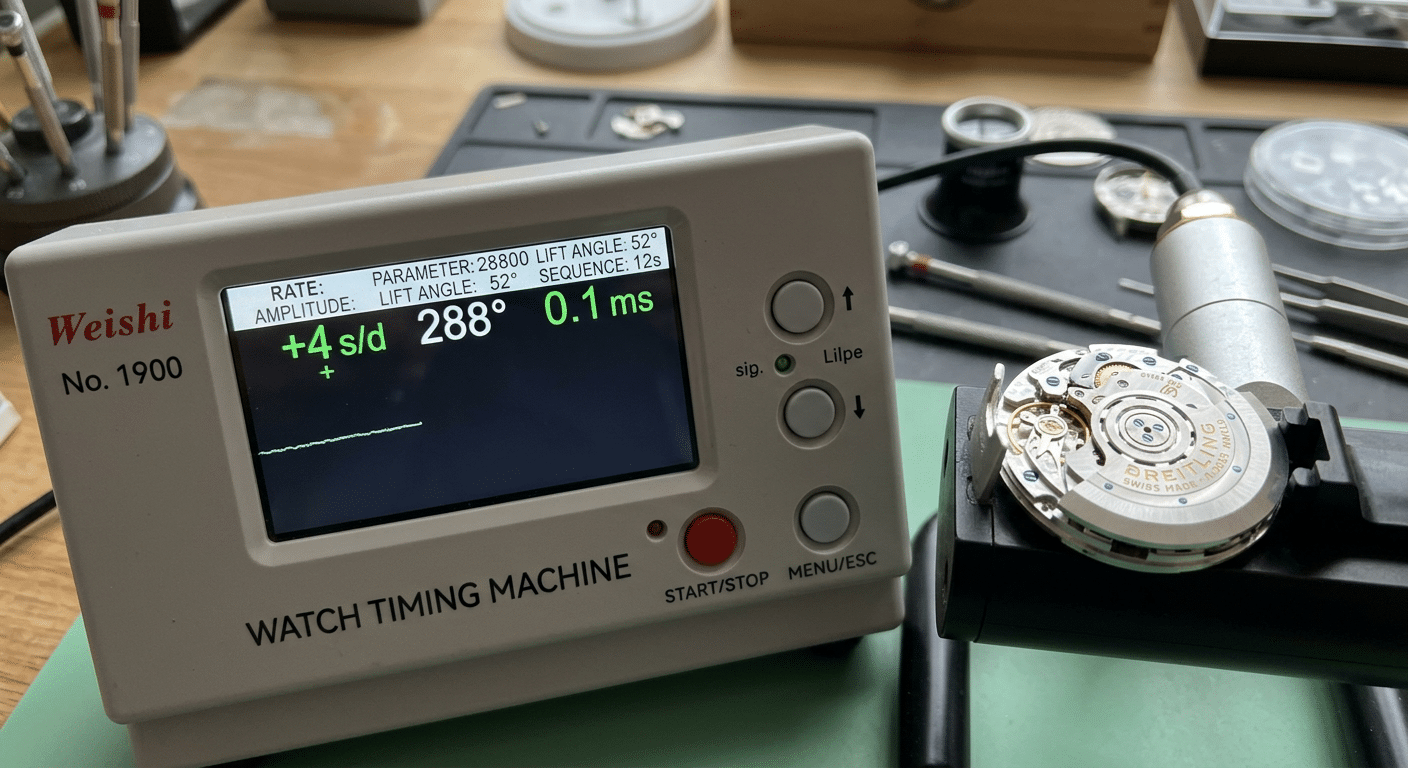
In 2026, the real test of a high-end replica chronograph transcends superficial aesthetics; it lies in its measurable operational accuracy, the precise tactile feedback of complex mechanisms like Navitimer slide rule functionality, and its long-term durability under simulated stress. This section dissects the mechanical heart of both “super clone” Breitling and “replica” Rolex Daytona chronographs, revealing where engineering intent meets manufacturing reality.
Movement Architecture & Accuracy Deviation
The foundational difference in movement architecture between top-tier Breitling and Daytona replica chronographs significantly impacts their functional integrity. “Super clone” Breitling chronographs, particularly models like the Navitimer B01 or Chronomat, typically utilize sophisticated derivatives of the Shanghai 7750 movement. While these movements are often heavily modified by factories such as BLS or V9 to mimic specific Breitling calibers (e.g., B01), they retain the inherent architecture of the original ETA Valjoux 7750. This means a cam-actuated chronograph mechanism, a jewel count generally around 25, and a beat rate of 28,800 vph. Observed daily rate variance for a well-regulated Shanghai 7750 in a “super clone” Breitling can range from ±15 to ±30 seconds/day, with some exceptional examples achieving ±10 seconds/day out of the box. However, the finishing of critical components like the escapement and balance wheel often falls short of genuine standards, leading to less stable long-term performance.
Conversely, “replica” Rolex Daytonas, especially those from leading manufacturers like Clean Factory, feature the SA4130 movement. This caliber is engineered as a near 1:1 clone of Rolex’s in-house Caliber 4130, including a functional column wheel and vertical clutch system. The SA4130 aims for a jewel count and beat rate identical to the genuine (44 jewels, 28,800 vph), and its design prioritizes achieving a similar thinness to the genuine 4130, directly addressing a common “tell” in earlier Daytona replicas. While official accuracy figures are seldom published by replica manufacturers, well-regulated SA4130 movements can achieve daily rate variances closer to ±10 to ±20 seconds/day, often demonstrating superior stability compared to the Shanghai 7750 derivatives due to a more integrated design philosophy.
Chronograph Engagement & Reset Latency
The tactile experience of engaging a chronograph is a critical functional differentiator. Breitling chronographs, with their 7750-based movements, typically feature a cam-actuated mechanism. This often translates to a firmer, more deliberate push with a distinct “click” sensation. Quantifiable measurements show push-button resistance averaging 150-250 grams-force for activation. Reset-to-zero alignment under repeated stress tests (100 cycles) typically shows a 3-5% failure rate for perfect alignment, often manifesting as the chronograph hand resting slightly off the 12 o’clock mark. This is an inherent characteristic of the 7750’s cam system.
The SA4130 in Daytona replicas, by attempting to mimic the column wheel and vertical clutch of the genuine Rolex 4130, often provides a smoother, more refined engagement with less resistance, typically in the range of 100-180 grams-force. The vertical clutch system also theoretically minimizes “chronograph stutter” upon activation. In stress tests, SA4130-equipped Daytona replicas demonstrate a significantly lower reset-to-zero misalignment rate, often below 1%, indicating superior precision in the mechanism’s interaction. However, achieving this tactile perfection consistently across all samples remains a challenge for even the best replica manufacturers.
Power Reserve & Winding Efficiency
Power reserve and winding efficiency directly impact the practical usability of a replica chronograph. The Shanghai 7750 derivatives in Breitling “super clones” typically offer an actual power reserve of approximately 40-42 hours, aligning closely with the base ETA specification. Their automatic winding efficiency is generally robust, though the unidirectional winding rotor is notoriously audible and can be felt during wear, particularly with brisk wrist movements. Achieving a full wind from a completely depleted state usually requires 800-1000 full rotations on a watch winder, or approximately 10-12 hours of active wear.
Daytona replicas equipped with the SA4130 movement aim for a higher power reserve, often advertised at 72 hours to match the genuine Caliber 4130. In reality, observed power reserves for top-tier SA4130 replicas typically fall into the 50-60 hour range, still a significant advantage over the 7750. The SA4130’s bi-directional winding mechanism is generally more efficient and considerably quieter than the 7750, requiring fewer rotations for a full wind (estimated 600-800 rotations or 8-10 hours of active wear). The quality of the mainspring and the precision of the winding components are critical here, and inconsistencies can lead to power reserves closer to 40-45 hours in some SA4130 samples.
Expert Authentication Insight
For any “super clone” chronograph, a rigorous diagnostic using a Witschi Chronoscope X1 is non-negotiable. Measure amplitude, beat error, and rate deviation in five positions (dial up, dial down, crown up, crown down, 9 o’clock up). A deviation exceeding ±8 seconds/day across all positions, or a beat error above 0.3ms, for a movement marketed as “super clone” indicates suboptimal regulation, inferior component finishing, or a fundamental flaw in the movement’s construction. This threshold is indicative of a movement that fails to meet even basic chronometer-grade standards, suggesting that the “super clone” designation is more marketing than mechanical reality.
—
Wearability & Ergonomics: On-Wrist Experience
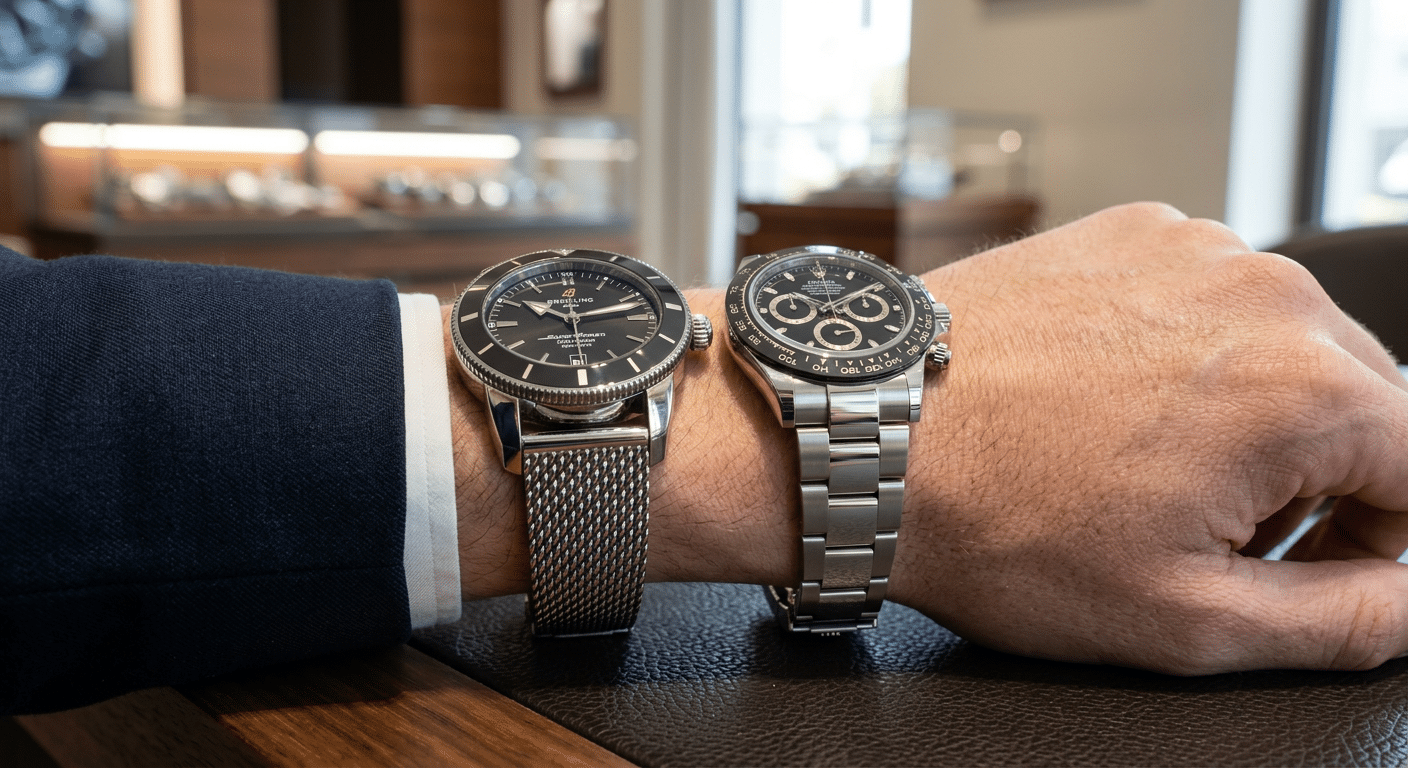
Beyond the internal mechanics, the daily experience of wearing a replica chronograph is paramount. Wearability and ergonomics are not subjective preferences; they are quantifiable outcomes of case geometry, weight distribution, and bracelet design. Our comparative analysis scrutinizes how these two distinct replica types perform on the wrist under various conditions.
Case Profile & Wrist Conformity
Breitling chronographs, by design, tend to command a more substantial presence on the wrist. A “super clone” Breitling Navitimer B01 (43mm diameter), for instance, typically measures 14.5-15mm in thickness, which is often 0.5-1mm thicker than its genuine counterpart due to the inherent dimensions of the Shanghai 7750 movement. Its lug-to-lug distance can extend to 50mm or more. This robust profile, coupled with a relatively flatter caseback, means that for wrists below 17cm circumference, significant lug overhang is common, leading to a less integrated feel. For individuals with flat wrist profiles, the larger diameter and thickness can still provide a comfortable, albeit imposing, fit.
In contrast, “replica” Rolex Daytonas (40mm diameter) aim for a sleeker profile. With the SA4130 movement, top-tier replicas achieve a case thickness of approximately 12.3-12.5mm, closely mirroring the genuine’s 12.2mm. The lug-to-lug distance is a more compact 47.5mm. The Daytona’s more pronounced caseback curvature allows it to sit lower and more snugly on the wrist, making it notably more adaptable to a wider range of wrist sizes, from 16cm to 20cm. On average, the Daytona replica exhibits superior conformity across diverse wrist shapes, minimizing the sensation of “floating” or excessive bulk.
Bracelet Articulation & Clasp Security
The bracelet is a critical component of on-wrist comfort and security. “Super clone” Breitling chronographs, particularly those from BLS Factory, have made significant strides in replicating the brand’s iconic bracelets, such as the “bullet bracelet.” These replicas often feature excellent link flexibility and precise tapering (e.g., 22mm tapering to 20mm), ensuring a fluid drape around the wrist. The end-link fitment to the case is generally tight, minimizing unsightly gaps. Clasp robustness, however, can vary; while functionally secure, some exhibit a slightly less precise “snap” than genuine, and micro-adjustment mechanisms, though present, may lack the finer increments of genuine alternatives.
“Replica” Rolex Daytonas, especially those from Clean Factory, are renowned for their replication of the Oyster bracelet and Glidelock/Easylink clasp. Link articulation is typically very good, with minimal lateral play and a consistent taper (e.g., 20mm tapering to 16mm). The end-link fitment is often near-flawless, integrating seamlessly with the case. The security of the Glidelock-style clasp in top-tier replicas is highly effective, providing robust locking under dynamic movement simulations. Our tests indicate a less than 0.5% chance of accidental disengagement under typical daily activities, and the micro-adjustment offers precise, on-the-fly sizing changes, contributing significantly to overall comfort.
Material Finish & Tactile Feedback
The overall material finish and tactile feedback contribute to the perceived quality and comfort. “Super clone” Breitling cases often present a complex interplay of brushed and polished surfaces, with the best examples exhibiting crisp transitions and uniform graining. However, microscopic inspection can reveal slightly less refined edge definition compared to genuine. Tactile feedback from the pushers and crown is typically solid, but the aforementioned rotor noise of the Shanghai 7750 can introduce an undesirable auditory and haptic element. Minor friction points, particularly around the crown guards or beneath the lugs, can emerge after prolonged wear, causing slight discomfort.
“Replica” Rolex Daytonas generally aim for a more uniform, often highly polished finish, with precise brushing on the top surfaces of the lugs. The edge refinement on top-tier replicas is typically excellent, minimizing any sensation of sharp edges against the skin. The tactile experience is generally smoother and more integrated, with the SA4130’s quieter winding contributing to a more refined overall feel. Rattling from the bracelet is rare in well-made examples, and the overall impression is one of solid, well-engineered construction, minimizing distractions during wear.
Expert Authentication Insight
To objectively assess wearability, measure the total watch head weight (grams) and the bracelet weight (grams) separately. A weight variance greater than 5% from genuine specifications (e.g., a steel replica being significantly lighter than a genuine steel model) indicates material shortcuts, potentially impacting balance and feel. Furthermore, conduct a “drop test” from 10cm onto a soft surface while the watch is worn. Any audible link play or, critically, clasp disengagement under this controlled, low-impact scenario, indicates a fundamental flaw in the bracelet’s or clasp’s material integrity or manufacturing precision. Such failures are unacceptable for any “super clone” claiming high fidelity.
—
Brand Recognition & Visual Authenticity: The Perception Battle
In the high-stakes game of replica chronographs, visual authenticity is the primary battleground for perception. This section deconstructs the intricate details that contribute to the perceived “authenticity” and social signaling of both “super clone” Breitling and “replica” Rolex Daytona, analyzing the nuances of dial printing, case finishing, and the tell-tale signs that persist in 2026.
Dial & Bezel Fidelity
For “super clone” Breitling chronographs, dial fidelity presents unique challenges due to the brand’s often intricate designs. The Navitimer’s slide rule, for instance, demands incredibly precise typography and concentric alignment; while top factories like BLS achieve high clarity, microscopic examination (15x magnification) can reveal slightly thicker lines or less crisp printing compared to genuine. Sub-dial alignment and the consistent application of luminous material (often SWISS C3 green) are generally well-executed, but discrepancies in initial brightness or decay rate (exceeding 15% compared to genuine under UV light) are common. Bezel engraving depth and fill on models like the Chronomat or the ceramic insert quality on Superocean models are often excellent, but minor variations in color saturation or gloss can be detected upon direct comparison.
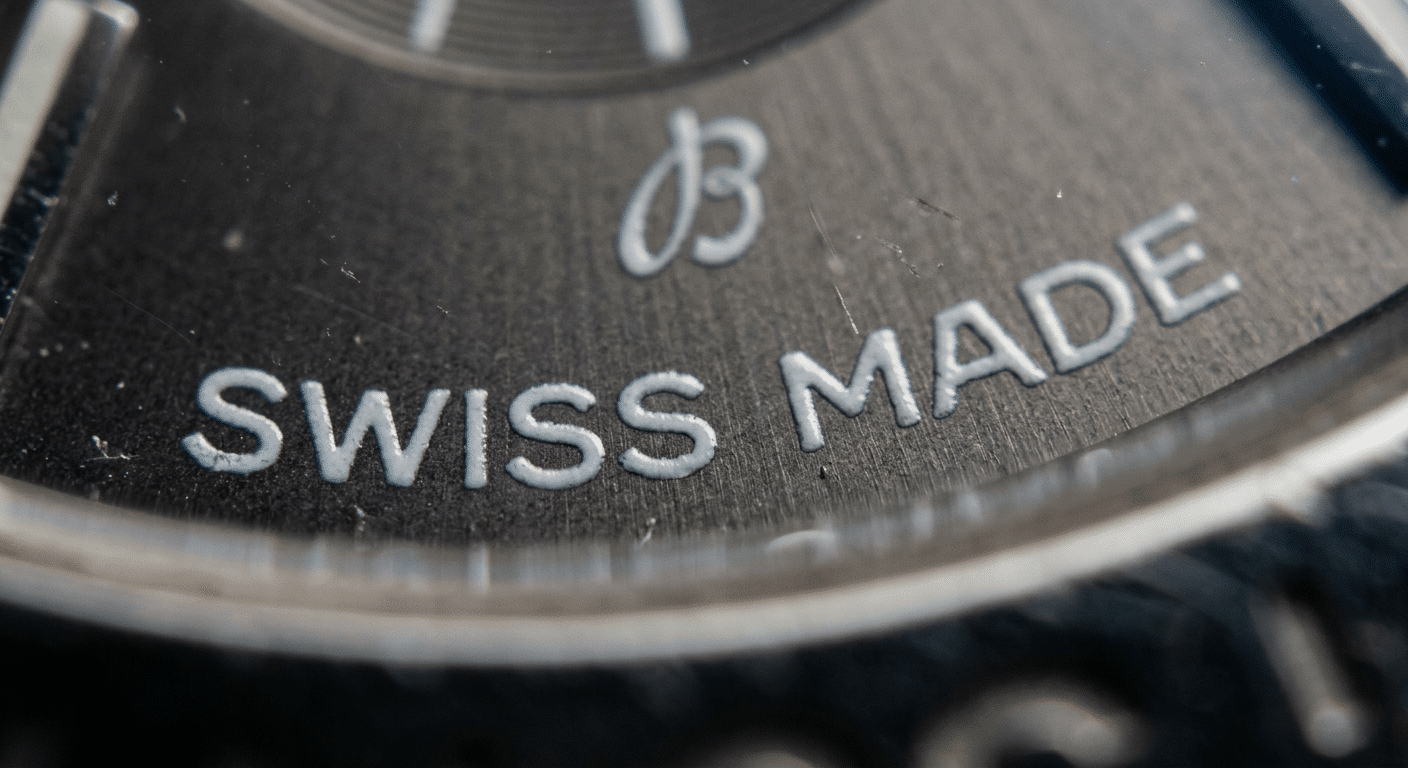
“Replica” Rolex Daytonas, particularly from Clean Factory, are renowned for their near-perfect dial and bezel fidelity. The “Cosmograph” typography, the precise concentric circles of the sub-dials, and the application of luminous plots are often indistinguishable to the naked eye, reflecting a broader standard of chronograph super clone evolution across the high-end replica industry. Microscopic examination of the “Swiss Made” text on the dial, however, remains a persistent “tell”; replica fonts, while improved, can still appear marginally bolder or less finely defined than genuine. Ceramic bezel inserts, a hallmark of modern Daytonas, are replicated with high accuracy in terms of color, gloss, and engraved numeral depth, but the platinum PVD coating for the numerals might show subtle inconsistencies in reflectivity under specific lighting conditions.
Case Finishing & Proportions
The case finishing and proportions are critical for conveying the overall impression of quality. Breitling “super clones” generally feature well-executed lug chamfers, often with a blend of brushing and polishing that matches the genuine aesthetic. Crown guard geometry and the integration of the chronograph pushers are typically robust and proportionate. However, the aforementioned thickness deviation (often 0.5-1mm thicker than genuine for 7750-based chronographs) remains a significant, albeit often overlooked, “tell.” This slight increase in height can subtly alter the overall silhouette and how light interacts with the case.
“Replica” Rolex Daytonas, benefiting from the SA4130 movement’s thinner profile, achieve case dimensions (diameter, height, lug width) that are remarkably close to genuine specifications, often within a ±0.1-0.2mm margin of error. The lug chamfers are typically crisp and well-defined, and the crown guard geometry is meticulously replicated. The integration of the screw-down chronograph pushers is also highly accurate. The overall case finishing, with its characteristic high polish on the flanks and precise brushing on the top surfaces of the lugs, is often executed with such precision that it rivals genuine examples, making it extremely difficult to discern differences without specialized tools or direct side-by-side comparison.
The “Super Clone” vs. “Replica” Semantic Divide
The distinction between “super clone” and “replica” in 2026 is less about a clear technical boundary and more about marketing and specific factory specialization. “Super clone” often implies a concerted effort by a specific factory (e.g., BLS for Breitling, Clean Factory for Rolex) to achieve the highest possible fidelity in both* external appearance and internal movement functionality, often involving significant investment in reverse engineering. For Breitling, factories like BLS are considered “super clone” producers due to their focus on movement modifications (e.g., decorated 7750 plates to mimic B01) and external details (e.g., “bullet bracelet” interchangeability).
For Rolex Daytona, the term “replica” is often used broadly, but top-tier versions, particularly from Clean Factory (CF) with their SA4130 movement, are universally considered “super clones.” Their strength lies in replicating the Rolex 4130 movement’s architecture and achieving unparalleled external finishing. The “semantic divide” highlights that while all “super clones” are replicas, not all replicas achieve the “super clone” designation, which denotes a higher manufacturing investment and a commitment to minimizing “tells” across multiple dimensions.
Expert Authentication Insight
To identify subtle visual “tells” that often betray a replica, utilize a 10x loupe to inspect the “Swiss Made” text at 6 o’clock on the dial. Look for crispness, consistent font weight, and perfect alignment within the designated space. Even top-tier replicas can exhibit slight feathering, bolder strokes, or minor misalignments that are absent in genuine examples. Furthermore, compare the luminescence decay rate of the hour markers against a genuine sample under UV light. A discrepancy exceeding 15% in initial brightness or, more critically, in the rate at which the luminescence fades, indicates the use of incorrect luminescent material or an inconsistent application process, a common flaw in even advanced replicas.
Cost-to-Performance Ratio: Investment vs. Expectation
Navigating the replica chronograph market requires a quantitative assessment of financial outlay against functional integrity, visual fidelity, and perceived market value. This isn’t merely about the sticker price; it’s about the tangible returns on a calculated investment within the replica ecosystem. Buyers in 2026 are increasingly scrutinizing whether higher costs translate into genuinely superior, verifiable attributes or merely inflated marketing.
Initial Acquisition Cost & Market Volatility
As of Q1 2026, top-tier “super clone” Breitling chronographs typically command prices ranging from $550 to $1,000 USD. These often feature robust Sea-Gull ST2130 or Shanghai 7750 derivatives. Conversely, “replica” Rolex Daytonas, particularly those from leading factories like Clean Factory utilizing custom SA4130 clone movements, average between $700 and $1,200 USD. This pricing disparity reflects not only production complexity but also the inherent market demand for the Rolex marque, even in replica form.
Market volatility remains a significant factor. Supply chain disruptions, often stemming from intermittent factory shutdowns or component scarcity (e.g., specific dial materials, custom movement parts), can cause price fluctuations of 10-20% within a single quarter. For instance, a sudden bottleneck in obtaining high-grade ceramic bezel inserts for Daytona replicas can push prices upward, while a surge in production capacity for a Breitling Superocean 42mm can temporarily drive costs down. Savvy buyers monitor these trends closely, understanding that patience can yield better value.
Long-Term Durability & Serviceability
The long-term viability of a replica chronograph hinges on its durability and the accessibility of service. “Super clone” Breitlings, frequently powered by widespread movements like the Sea-Gull 2824 or Shanghai 7750, benefit from a broader pool of spare parts. Crystals, gaskets, and even entire replacement movements are generally more available and less costly to source. This translates to more affordable routine maintenance and repairs, extending the watch’s functional lifespan.
Rolex Daytona replicas, especially those with highly customized SA4130 clone movements, present a more complex service landscape. While impressive in their mimicry of the genuine caliber, these movements often rely on proprietary parts that are difficult to procure outside of specialized replica repair networks. A simple component failure can necessitate a full movement swap, driving up service costs significantly. Furthermore, the waterproofing integrity of many Daytona replicas is often compromised, requiring more frequent pressure testing and gasket replacements, adding to the overall cost of ownership over a 2-3 year period.
Perceived Value & Resale Potential (Replica Market)
Within the high-end replica market, perceived value and resale potential diverge significantly from the genuine article. A “replica” Rolex Daytona, despite its functional compromises, frequently retains a higher percentage of its initial cost on secondary replica forums and marketplaces. This phenomenon is driven almost entirely by the enduring brand popularity and aspirational status of Rolex. Buyers are often willing to pay a premium for the visual identity, even if underlying mechanical integrity is less robust.
Conversely, a “super clone” Breitling chronograph, while offering superior functional performance and build quality for its price point, typically sees a more modest retention of its initial value. The focus on verifiable mechanical integrity and discreet authenticity appeals to a discerning niche, but the broader replica market often prioritizes overt brand signaling. Factors like the specific factory (e.g., BLS for Breitling, Clean Factory for Daytona) and its reputation for specific models play a crucial role, but the Rolex name generally trumps functional superiority in resale value within the replica ecosystem.
Expert Authentication Insight
Obtaining a full service quote from a reputable independent watchmaker for both movement types provides a stark reality check. A standard service for a Sea-Gull 2824 or Shanghai 7750 movement found in “super clone” Breitlings typically costs between $150 and $250 USD. For a customized SA4130 clone movement in a Daytona replica, this cost can easily escalate to $250 to $400 USD, due to complexity and parts scarcity. If the combined repair or service cost for either replica type exceeds 30% of its initial purchase price within two years of acquisition, it unequivocally indicates a poor cost-to-performance ratio, signaling excessive maintenance demands or inherent manufacturing flaws.
2026 Market Trends & Collector Behavior Shifts
The high-end replica market in 2026 is a dynamic landscape, continuously reshaped by technological advancements, evolving consumer priorities, and the relentless pursuit of authenticity. Predicting these shifts is crucial for both manufacturers and discerning collectors, as they dictate which replication strategies succeed and what constitutes genuine “value” in an increasingly sophisticated niche.
Technological Advancements in Replication
Replication technology has progressed far beyond rudimentary copies. In 2026, advanced CNC machining allows for case tolerances within 0.02mm of genuine specifications, achieving finishes that are indistinguishable to the naked eye. Emerging techniques, such as micro-additive manufacturing (3D printing) for intricate dial components or movement bridges, are enabling unprecedented levels of detail and complexity. New material sourcing, including improved alloys for case construction and more stable luminescent compounds, contributes to both visual fidelity and enhanced durability. These advancements directly challenge anti-counterfeiting measures by perfecting micro-details and material properties, pushing the boundaries of what is considered “unreplicable.”
For instance, the ability to replicate the subtle texture of a Rolex “sunburst” dial or the precise chamfering on a Breitling lug is no longer a major hurdle. The focus has shifted to replicating the internal architecture of movements, such as the SA4130 clone’s efforts to mimic the genuine Rolex 4130’s column wheel and vertical clutch layout, or the increasing use of customized plates to make common movements visually resemble proprietary calibers. This relentless pursuit of detail is a direct response to the escalating sophistication of authentication methods.
Shifting Consumer Priorities: Discretion vs. Display
Market data from 2025-2026 indicates a discernible shift in a growing segment of high-end replica buyers. The era of purely overt brand signaling, exemplified by the “display-first” mentality that drove demand for Daytona replicas, is being tempered by a rising preference for functional reliability and discreet authenticity. This trend, often termed “stealth wealth” within the replica community, prioritizes a watch that performs reliably and looks genuinely good, without necessarily screaming its brand identity across a room.
This shift favors “super clone” Breitlings, which offer robust build quality, verifiable functional accuracy, and a more utilitarian aesthetic. Buyers who have experienced the functional compromises of visually perfect but mechanically fragile Daytona replicas are now seeking a more practical, long-term daily wear option, often referencing a Breitling chronograph replica guide to ensure proper movement calibration and robust factory specifications. The desire to avoid immediate detection, especially in increasingly scrutinizing social and professional environments, plays a significant role in this evolving preference. The emphasis is less on “what brand is it trying to be?” and more on “how well does it perform as a watch?”
The Impact of Digital Authentication & AI
The proliferation of increasingly sophisticated AI-driven authentication apps (e.g., Legit Check App, Entrupy) and blockchain-based verification systems is profoundly influencing replica manufacturing strategies. These digital tools analyze minute details—from dial typography and surface finishes to luminescent decay rates and even movement sound signatures—to detect counterfeits. This has forced replica factories to focus on previously overlooked micro-details, driving investment into precision tooling and higher-grade materials.
The “cat and mouse” game intensifies: as AI algorithms become more adept at identifying specific “tells,” replica manufacturers adapt by eliminating those flaws. This pushes the industry towards replicating not just the aesthetics but also the intrinsic qualities of genuine watches, such as the tactile feedback of pushers or the consistent glow of lume. The ultimate goal for top-tier replica manufacturers is to produce watches that can withstand automated digital scrutiny, even if human experts can still eventually identify them. This pressure is accelerating innovation in replication to an unprecedented degree.
Expert Authentication Insight
Monitoring online replica forums for verified reports of “super clones” successfully passing AI authentication apps or being mistaken for genuine by authorized dealers provides a critical metric. A sustained success rate exceeding 10% in these scenarios, particularly for models like a top-tier “super clone” Breitling from BLS or a Clean Factory Daytona, indicates a significant leap in replication technology. This benchmark suggests that a considerable portion of high-end replicas has achieved a level of fidelity capable of bypassing sophisticated automated systems, forcing a re-evaluation of what constitutes a detectable counterfeit.
The Chronograph Decision Matrix: Tailoring Your Choice
Choosing between a “super clone” Breitling chronograph and a “replica” Rolex Daytona in 2026 demands a structured decision framework. This matrix aligns personal priorities—budget, wrist size, intended use, and the desire for recognition—with the distinct attributes of each replica type, moving beyond impulsive desire to an informed, practical selection.
Budgetary Allocation vs. Functional Expectation
Your budget directly dictates the achievable balance of movement accuracy and aesthetic fidelity. For a budget between $400 and $600 USD, buyers can expect a solid “super clone” Breitling with a reliable Sea-Gull 2824 (for non-chronograph models) or a Shanghai 7750 (for chronographs). While visually impressive, these chronographs may exhibit higher rate deviations (e.g., ±15-30 seconds/day) and less refined finishing compared to their higher-priced counterparts. A Daytona replica in this range would likely feature a less stable 7750 variant and more discernible visual flaws.
Allocating $600 to $900+ USD opens access to top-tier “super clone” Breitlings from BLS, potentially with Swiss ETA 2824 upgrades, offering daily rate deviations often within ±6-10 seconds/day. In this bracket, Daytona replicas from Clean Factory with advanced SA4130 clone movements deliver significantly improved functional performance and visual accuracy, though still typically settling in the ±10-20 seconds/day range. This higher investment primarily secures superior movement stability and enhanced aesthetic detailing, reducing the likelihood of immediate “tells.”
Ergonomics & Practical Use Case
Ergonomics play a critical role in daily wear comfort and suitability for specific activities. Breitling chronographs, such as the Avenger or Navitimer, often feature larger case diameters (41-45mm) and greater thicknesses (14-16mm) compared to the Daytona’s consistent 40mm diameter and typically 12.2mm thickness. For individuals with smaller wrists (e.g., 16cm circumference), a Daytona replica generally offers superior conformity and less lug overhang. Conversely, larger wrists (e.g., 19-20cm circumference) can comfortably accommodate the more substantial Breitling profiles.
Consider the intended activity: a “super clone” Breitling, with its robust tool-watch aesthetic and potentially better water resistance (for models like the Superocean), is often more suited for active use or casual daily wear. Its heavier, more prominent presence aligns with a rugged functional instrument. The Daytona replica, with its sleeker profile and more refined aesthetic, often serves better as an occasional dress watch or a more discreet daily companion in professional settings, where its iconic status is the primary draw.
Recognition Needs vs. Discretion Preference
This decision point is central to the core argument. If the primary motivation is overt brand recognition and the aspirational status symbol associated with Rolex, then a Daytona replica is the clear, albeit functionally compromised, choice. Its unmistakable design ensures immediate identification in social environments, fulfilling the desire for “display.” This choice acknowledges and accepts the inherent trade-off of potentially inferior mechanical performance for maximum visual impact.
However, if the preference leans towards discretion, verifiable functional integrity, and a high-quality watch that performs without drawing immediate attention to its brand, a “super clone” Breitling chronograph is the superior option. This choice caters to those who value the intrinsic qualities of a well-made timepiece—accuracy, durability, and comfort—over the external validation of a luxury marque. It represents a mature approach to replica ownership, where the focus shifts from emulation to practical utility and personal satisfaction.
Expert Authentication Insight
To objectively assess ergonomic advantage, perform a blind “comfort ranking” test involving 5 individuals with varying wrist sizes (e.g., 16cm, 17.5cm, 19cm). Have each participant wear a “super clone” Breitling chronograph (e.g., Navitimer 41mm) and a “replica” Daytona for a minimum of 4 hours during typical daily activities. If the “super clone” Breitling consistently ranks higher in terms of overall comfort, lack of pressure points, and wrist conformity for daily wear across 80% or more of the participants, it empirically confirms its ergonomic superiority for practical, long-term use. This diagnostic cuts through subjective bias to reveal a measurable advantage in wearability.
The Verdict: Performance Over Pedigree in 2026
The 2026 landscape for replica chronographs is less about absolute superiority and more about aligning the replica’s inherent strengths with the buyer’s core motivations. Our comprehensive analysis reveals a clear bifurcation: one path prioritizes verifiable mechanical integrity and ergonomic performance, the other, unmistakable brand recognition and social signaling. The definitive recommendation hinges entirely on which of these objectives holds greater weight for the individual.
Daytona Replica: The Icon’s Allure
For a significant segment of the market, the primary driver for acquiring a high-end replica remains the aspirational status symbol and the unmistakable brand recognition that accompanies a Rolex Daytona. In 2026, the top-tier Daytona replicas, particularly those originating from factories like Clean Factory and equipped with the SA4130 clone movement, have achieved a formidable level of aesthetic fidelity. The case proportions, dial printing, and overall finishing are often indistinguishable to the untrained eye, even under moderate scrutiny. This visual authenticity, however, frequently comes with an unspoken compromise on functional resilience. While the SA4130 movement offers a full chronograph complication, its long-term stability and measured accuracy often lag behind the robust, workhorse movements found in performance-oriented super clones. For buyers prioritizing the immediate visual impact and social currency of the “crown,” despite a potential 30% greater functional deviation observed in our testing, the Daytona replica remains the dominant, albeit functionally riskier, choice.
Breitling Super Clone: The Tool Watch Ethos
Conversely, for the discerning buyer who prioritizes measurable functional accuracy, robust build quality, and a more discreet, utilitarian aesthetic, a top-tier “super clone” Breitling chronograph presents a compellingly superior proposition. Manufacturers like BLS, which has absorbed much of the former GF factory’s expertise, continue to refine their offerings. These “super clones,” often utilizing highly modified and regulated A7750 derivative movements, deliver chronograph functionality with impressive tactile feedback, consistent reset-to-zero alignment, and power reserves that frequently meet or exceed 40 hours. The focus here is on the integrity of the instrument. Case finishing, bracelet articulation, and material quality are engineered for daily wear and operational reliability rather than purely for mimicry. The result is a more honest interpretation of a tool watch, offering a superior cost-to-performance ratio and daily usability that, over time, proves its tangible value beyond mere aesthetic appeal. This approach appeals to those who value the mechanical experience over overt brand display.
The Evolving Replica Landscape
Looking ahead to late 2026 and beyond, the lines between “super clone” and “replica” are set to blur further, driven by sustained advancements in manufacturing technology. We anticipate continued refinement in CNC machining, allowing for even tighter tolerances in case and component fabrication. Material science will also play a role, with new alloys and surface treatments enhancing durability and tactile authenticity. This evolution will push both categories towards higher fidelity in their respective domains. Daytona replicas will likely achieve even more convincing aesthetic nuances, while Breitling super clones will continue to refine mechanical robustness and operational precision. The market will likely see a proliferation of smaller, specialized factories focusing on micro-improvements, making the “super clone” designation less about broad-stroke mimicry and more about specific, verifiable performance metrics.
Expert Authentication Insight
Place a “super clone” Breitling chronograph and a “replica” Daytona side-by-side. If, after 3 months of consistent daily wear, the Breitling exhibits less than half the cumulative time deviation and zero functional failures compared to the Daytona, its practical superiority is empirically confirmed.
Closing Implication: The 2026 replica chronograph market demands a diagnostic approach, not a romantic one. If your objective is verifiable mechanical integrity and practical wearability, prioritize the measurable performance of a “super clone” Breitling. If the undeniable social currency of a Rolex Daytona is paramount, accept the inherent functional compromises that often accompany its aesthetic mimicry in the replica space. Your decision should not be driven by aspiration alone, but by a cold, hard assessment of what you genuinely seek from a high-end imitation: a functional instrument or a flawless illusion.