
Most bad Cartier replica purchases come from wrong decisions, not bad watches.
That distinction matters more with Cartier than with almost any other brand. People usually assume a disappointing purchase means poor quality, but in practice it’s far more common that the watch was simply the wrong Cartier to begin with—wrong size, wrong movement type, or the right factory applied to the wrong model. When those choices are misaligned, even a top-tier super clone will feel off on the wrist and quietly remind you that something isn’t right.
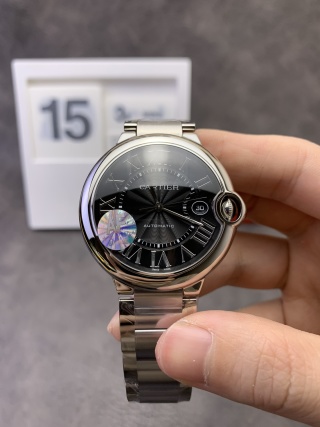
Buying a Cartier super clone isn’t about chasing the “best version” in abstract terms. It’s about choosing the version that fits how Cartier actually works as a brand and how you actually wear a watch.
Why Choosing a Cartier Super Clone Is Different from Choosing Other Replicas
Cartier does not follow the same logic as Rolex, AP, or Patek, and trying to buy it as if it does is where most mistakes start. With sports watch brands, buyers can often default to a factory-first mindset: pick the strongest factory, then pick a model within that factory’s lineup. Cartier punishes that approach. The brand is design-driven, proportion-sensitive, and heavily split between quartz and automatic across legitimate use cases.
Cartier Requires a Different Buying Logic
With Cartier, roughly 80% of replica buying errors fall into three categories: size, movement type, and factory mismatch. Size issues show up because Cartier plays with case dimensions more aggressively than most brands, often making small watches feel intentional rather than compromised. Movement mistakes happen because quartz is not a downgrade in the Cartier world, yet many buyers are conditioned to avoid it at all costs. Factory mismatch occurs when people buy into the reputation of a factory without checking whether that factory actually excels at the specific Cartier line they want.
Rolex tolerates brute-force logic. Cartier does not. A Santos that wears perfectly and feels “right” can come from one factory, while that same factory’s Tank might be a poor choice. The brand demands a sequence of decisions, not a shortcut.
Step 1 – Start with the Right Cartier Collection (Not the Factory)
The most counterintuitive but critical step is choosing the collection before thinking about factories, versions, or movements. Cartier collections are not cosmetic variations; they define how the watch sits on the wrist, how thick it can realistically be, and which movements make sense without compromising proportions.
Choosing the Right Cartier Series for Your Use Case

Each Cartier line has a built-in personality and a set of constraints. Ignoring those constraints is how people end up with watches that look impressive in photos but feel wrong in daily wear.
Ballon Bleu – Everyday, unisex, size-sensitive
Ballon Bleu is the most forgiving Cartier line, but also one of the easiest to get wrong. Its rounded case and integrated crown guard make size differences immediately noticeable. In super clone form, Ballon Bleu works best as an everyday watch, especially for buyers who want a single piece that transitions between casual and semi-formal use. The catch is thickness and diameter balance. A Ballon Bleu that is slightly too thick or oversized loses its softness and starts to feel generic.
Santos – Sporty, bracelet-focused
Santos is Cartier’s most modern and structured line. It works best for people who want a sport-leaning watch with a strong bracelet presence. In replicas, Santos is less forgiving of movement thickness and bracelet quality. The integrated bracelet and squared case amplify any imbalance. When done correctly, Santos feels solid and purposeful. When done wrong, it feels stiff or toy-like, even if the finishing looks decent.
Tank – Dressy, proportion-first
Tank is where most replica buyers misjudge Cartier entirely. Tank is not about wrist presence or specs; it’s about proportion and restraint. Small cases are not a compromise here—they are the point. Many buyers ruin the Tank experience by chasing mechanical movements or oversized cases, ending up with a watch that technically functions but visually misses the essence of the line.
Pasha – Statement, detail-driven
Pasha is the most polarizing Cartier collection. It is bold, rounded, and full of design details that either resonate or don’t. In replica form, Pasha rewards buyers who care about finishing, symmetry, and secondary details like crown chains and case contours. It is not a safe choice, but when aligned with the wearer’s style, it becomes a strong statement piece rather than an awkward experiment.
Choosing the correct collection sets boundaries on size, movement, and factory options before money ever enters the picture. Once that foundation is in place, the rest of the decisions become clearer—and far less expensive to get wrong.
Step 2 – Size First, Always (The #1 Cartier Replica Mistake)
If there is one decision that causes more regret than any other, it’s size. Not factory. Not movement. Size. Cartier exposes size mistakes faster than sports watches because its designs are proportion-driven rather than mass-driven. A Cartier that is slightly off in scale doesn’t look “a bit wrong.” It looks like a different watch.
Why Size Matters More Than Gender in Cartier Watches
Gender labels are one of the most misleading ideas in Cartier buying. Many of Cartier’s most iconic watches were never designed with strict gender boundaries in mind. What matters is wrist size, wrist shape, and how the watch is actually worn day to day. A 36mm Ballon Bleu can look perfectly balanced on a man with a slimmer wrist, while a larger version may feel bulky and blunt. A small Tank can look intentional and elegant on a larger wrist if the proportions align, whereas a mechanically oversized Tank often feels forced.
Cartier replicas fail when buyers treat size as a status signal rather than a design constraint. Bigger does not mean more presence in Cartier. Often it means less. The brand’s strength lies in restraint, and when size overwhelms that restraint, the watch loses its identity.
Common Size Traps in Cartier Super Clones
Too thick case
Thickness is the silent killer of Cartier replicas. Even a millimeter too much can turn a refined watch into something awkward. This happens most often when buyers insist on automatic movements in models that were never meant to carry them. The result is a watch that sits high, catches cuffs, and feels wrong every time it’s worn.
Wrong lug-to-lug balance
Cartier cases often look compact on paper but wear larger—or smaller—depending on lug shape and integration. Santos bracelets and Tank lugs exaggerate this effect. A watch can have a “safe” diameter but still overhang or feel unstable because the lug-to-lug distance isn’t suited to the wrist. This is especially common in replicas where case geometry is correct, but the buyer’s wrist size wasn’t considered.
Choosing “bigger for value”
This is one of the most expensive mental shortcuts. Buyers assume larger means more material, more presence, or better value. In Cartier, larger often means compromised proportions. The watch may photograph well but feel clumsy in real life. Cartier rewards fit, not scale.
Step 3 – Quartz or Automatic? (This Choice Changes Everything)
Movement choice reshapes the entire buying experience, not just how the watch runs. In Cartier, choosing between quartz and automatic is not about prestige. It’s about whether the watch stays true to its design.
When Quartz Is the Smarter Cartier Choice
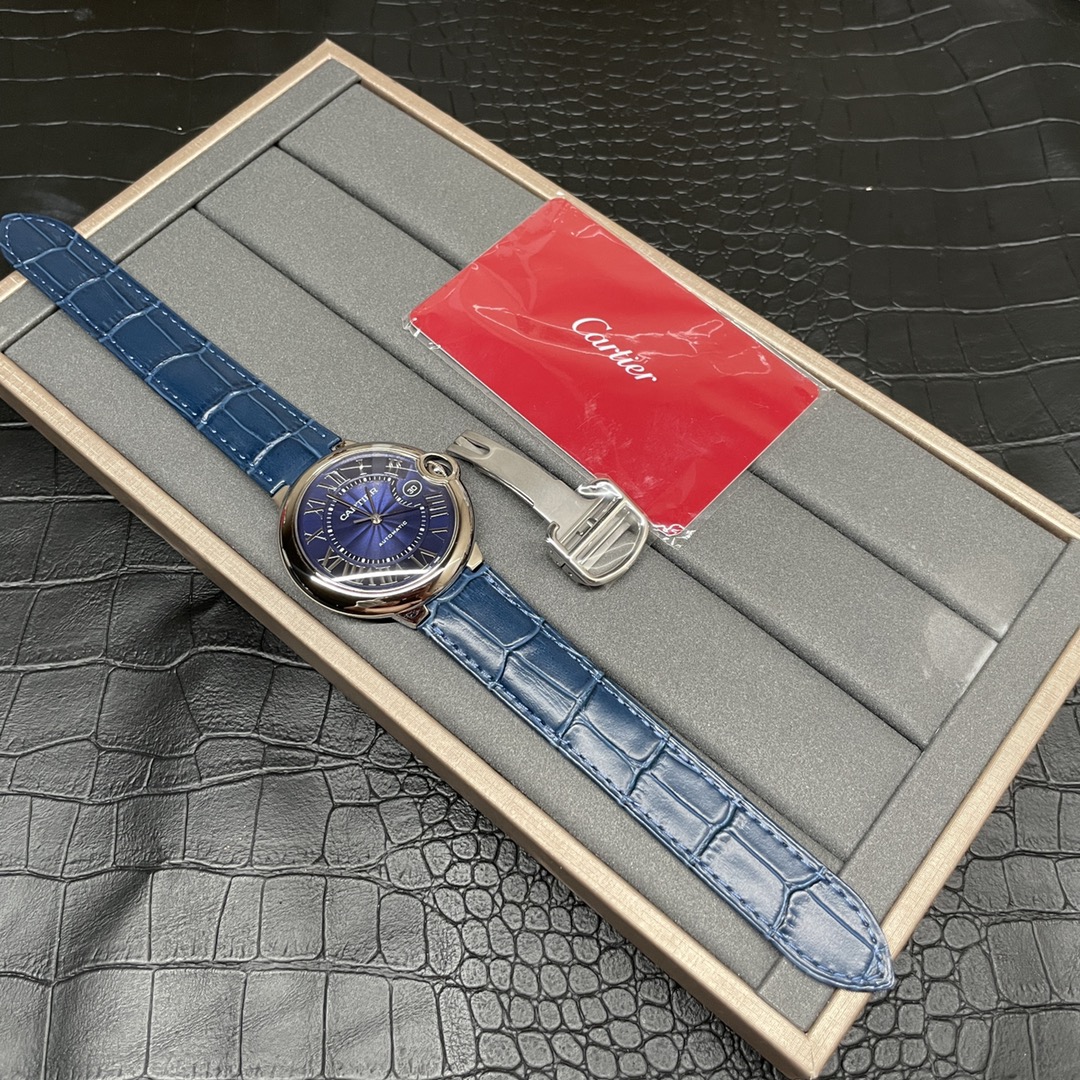
Quartz is not a downgrade in Cartier. In many cases, it is the correct choice. Tank models, smaller Ballon Bleu sizes, and most ladies’ Cartiers were designed around thin, stable quartz movements. For these watches, quartz preserves case thickness, dial spacing, and overall balance. The watch wears closer to the wrist, feels lighter, and behaves exactly as intended.
Insisting on automatic movements in these models usually introduces problems: thicker cases, altered hand heights, or subtle dial distortions. The irony is that buyers chasing “mechanical value” often end up with a watch that feels less refined and less Cartier.
When Automatic Cartier Replicas Make Sense
Automatic movements make sense when the design supports them. Larger Ballon Bleu models, Santos, and certain Pasha configurations benefit from automatic calibers because the case architecture allows for the extra thickness without distortion. In these scenarios, a well-chosen automatic movement can feel natural and satisfying, especially for daily wear.
Where automatic stops making sense is when it’s driven by marketing rather than design. Small Tanks with automatic movements, ultra-thin Cartiers forced to carry bulky calibers, or models where the movement is completely hidden but compromises the case—all of these are examples of the wrong question being asked. The goal isn’t to own an automatic Cartier. It’s to own a Cartier that feels right every time you put it on.
Step 4 – Factory Selection Comes After (Not Before)
Factory choice matters, but only after the earlier decisions are locked in. Treating the factory as the starting point is one of the fastest ways to end up with a technically “top-tier” watch that still feels wrong on the wrist. In the Cartier world, factory reputation is contextual, not universal.
Why Factory Choice Only Works When Previous Steps Are Correct
No Cartier factory is good at everything. This isn’t a failure of manufacturing; it’s a consequence of specialization. Some factories are optimized for rounded cases, others for rectangular proportions, others for bracelet engineering. When buyers hear “this is the best factory” and skip straight to checkout, they often ignore whether that factory’s strengths align with the specific Cartier model they want.
The common mistake follows a simple pattern: someone hears that a factory dominates the market, assumes that dominance applies across all models, and buys without checking fit, movement type, or case behavior. The result is rarely catastrophic, but it’s quietly disappointing. The watch works, looks decent, yet never quite earns wrist time.
Matching Factory to Model (Simple Logic)
Factory choice should feel obvious once the model is fixed. Certain pairings have proven reliable through repeated use and long-term ownership patterns.
Ballon Bleu → V6 / AF
V6 remains the most consistent choice for Ballon Bleu, particularly in mid and larger sizes where case shape and crown integration matter most. AF enters the picture when buyers prioritize thinner profiles or higher-end finishing, especially in smaller or more delicate executions.
Tank → K11 / AF
Tank rewards restraint and precision. K11 excels in quartz Tank models where proportions and thinness define success. AF makes sense for buyers who want closer material fidelity or higher-end component sourcing without disrupting the core design.
Santos → GF / BV
Santos lives or dies by case geometry and bracelet execution. GF delivers strong balance and wearability, while BV pushes detail accuracy and finishing further for those who care about tactile refinement and long-term satisfaction.
Pasha → AF / V9
Pasha is unforgiving of shortcuts. AF focuses on detail integrity and overall cohesion, while V9 appeals to buyers who value mechanical credibility and structural faithfulness, particularly in automatic configurations.
These pairings are not rules, but they reflect patterns that repeat themselves in real ownership. When the factory matches the model’s demands, the watch disappears on the wrist in the best possible way.
Step 5 – Movement Reality Check (Avoid Paying for Myths)
Movements generate more noise than clarity in the Cartier replica space. Many buyers fixate on labels instead of outcomes, paying premiums for words that don’t meaningfully change how the watch wears or performs.
Why “Swiss Movement” Is Often the Wrong Question
Cartier movements are almost always hidden. The brand does not build identity around exposed calibers or decorative finishing. In this context, asking whether a movement is Swiss misses the point. What matters is whether the movement is stable, appropriately sized, and thin enough to preserve the case design.
A reliable Asian or Japanese movement that keeps time and allows the case to sit correctly will outperform a poorly integrated Swiss movement every day of the week. Thickness is the real variable. Add unnecessary height, and the watch loses its balance. Remove that excess, and even a modest movement feels correct.
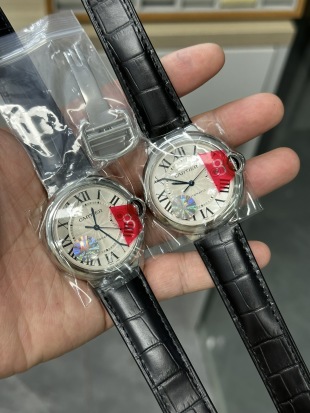
Paying extra for “Swiss” in a Cartier super clone often buys peace of mind rather than functional improvement. In many cases, it buys nothing at all.
Step 6 – Decide Based on How You’ll Actually Wear It
The final filter is not technical. It’s personal. A Cartier that fits your lifestyle will outlast one chosen on specs alone.
Daily Wear vs Occasional Wear
How often and where the watch is worn should shape every prior decision.
Office daily
For daily office wear, comfort and subtlety matter most. Thin cases, balanced sizes, and reliable movements win. Quartz often makes sense here, especially for Tanks and smaller Ballon Bleu models that need to disappear under cuffs and avoid constant adjustment.
Dress / formal
Formal wear favors proportion over presence. Smaller cases, restrained designs, and minimal thickness feel intentional rather than showy. Mechanical complexity adds little value in this context and can even detract from the watch’s purpose.
Gift purchase
Gifts amplify risk. The safest Cartier gifts are those that avoid extremes: moderate sizes, quartz movements, and classic collections. A gift Cartier should feel natural to wear, not impressive to explain. When the recipient forgets they’re wearing a replica, the gift has succeeded.
Choosing a Cartier super clone is not about chasing perfection. It’s about avoiding regret through alignment. When collection, size, movement, factory, and lifestyle point in the same direction, the watch stops being a decision and becomes part of your routine.
Red Flags to Avoid When Buying a Cartier Super Clone
Most bad outcomes share the same warning signs. They don’t look dramatic at first, but they quietly increase the odds of regret.
Over-Promising Descriptions
When every detail is described as “1:1,” “perfect,” or “indistinguishable from genuine,” something is being glossed over. Cartier replicas succeed through balance, not perfection. Honest descriptions acknowledge trade-offs: thickness differences, movement substitutions, or model-specific compromises. Over-promising usually signals that the seller is compensating for a mismatch somewhere else.
One-Factory-Fits-All Claims
Any claim that a single factory is the best choice for all Cartier models should immediately raise doubt. Cartier does not work that way. Factories specialize, and strong performance in one collection often says nothing about another. These claims are convenient shortcuts for sellers, not reliable guidance for buyers.
Extreme Discounts on “Top Versions”
Deep discounts on supposed top-tier versions often mean one of two things: outdated batches or downgraded components being quietly pushed under familiar names. Cartier super clones don’t need urgency pricing to sell. When the price feels unusually low, the watch usually explains why after a few weeks of wear.
A Simple Decision Framework (If You Remember Only One Thing)
Complex decisions become manageable when ordered correctly. This sequence filters out most mistakes before money changes hands.
The Cartier Super Clone Decision Order
Start with the collection that fits your style and intent.
Confirm the size that works for your wrist and wearing habits.
Decide between quartz or automatic based on design, not status.
Choose the factory that excels at that specific model.
Only then look at movement details, not labels.
If this order feels restrictive, that’s a good sign. Cartier rewards constraint.
How This Page Connects to Our Cartier Guides
This page exists to anchor decisions, not replace deeper dives. Once the framework is clear, model- and factory-specific guides become far more useful. Detailed breakdowns of factory strengths, movement behavior, and individual collections expand on each step without changing the order of decisions. The goal is not more information, but better alignment between what you choose and how you actually wear it.
Final Thoughts – Buying a Cartier Super Clone Is About Avoiding Regret
A good Cartier super clone doesn’t impress strangers; it makes you forget you’re wearing a replica.