
Before We Begin — Why This Story Matters
Every industry has its own “origin stories”. In the super clone watch industry, people often talk about factories as if they appeared out of nowhere: C Factory, VS, N, ZF… just code names and rumors. But behind those names are real people, real risks, and real decisions that shaped what buyers and sellers see today.
The story of Clean — or C Factory, as many call it — is one of those threads that quietly changed the China replica watch scene. It influenced how ceramic bezels are made, how super clone Rolex models are judged, and how other factories think about investing in molds and movements. Whether you like, dislike, or simply don’t care about Clean, its footprint is written into the daily conversations of dealers, hobbyists, and collectors.
This page is not written to praise or attack any factory. It’s an attempt to document what many in the scene have seen and heard: how one watch enthusiast turned into a factory owner, how one ceramic bezel insert set a new standard, and how that shaped the wider market. If this piece adds a bit more context to the ongoing “Clean Factory history” people discuss in private chats and forums, then it already has value.
The Early Days — Before Clean Became “Clean”
One Enthusiast, One Camera, and a Small Media Account

Before anyone spoke about C Factory, there was just a guy with a surname Hu, a camera, and a strong obsession with watches. He wasn’t born as a “boss” in the super clone watch industry. He was another watch lover hanging around Guangzhou Zhanxi, trying to understand how this grey market really worked — who made what, where parts came from, and why some pieces felt alive while others felt hollow.

At that time, instead of hiding behind a factory code name, he started with something much smaller and more public: a media account called roughly “Clock & Watch Companion” (钟表半生). It wasn’t a marketing machine; it was more like a diary of a watch nerd drifting between shops, factories, and conversations. He took photos, shared impressions, and tried to explain watches in a way that made sense to normal enthusiasts, not just industry insiders.
Looking back, this was the real beginning of Clean Factory. Not a production line, not a CNC machine, but curiosity. The later C Factory brand — the one people argue about in forums and group chats — grew out of this phase: one person trying to bridge the gap between what he loved on the wrist and what factories were actually producing.
The First Experiments — NOMOS and Knights of the Round Table
Every factory has “embarrassing” first products if you dig deep enough, and Clean is no exception. The first serious attempt was a NOMOS-style piece powered by the Miyota 8215. On paper, nothing legendary: a reliable, workhorse movement used in many mid-range watches. In practice, it was a safe choice — stable timekeeping, not too fragile, accessible to the kind of customers who were willing to try something new but not ready to spend big on high-end super clones.
It wasn’t a masterpiece, but it showed something important: this was a project trying to be practical rather than flashy. No grand claims of “1:1 perfect” or “absolutely same as genuine”. Just a watch that worked and gave people a taste of what could be done.
The second notable experiment was a “Knights of the Round Table” style watch. This time, ambition jumped ahead of capability. The design tried to follow the famous concept, but it wasn’t a full re-engineering. It was closer to “copying the outline” than truly opening new molds from scratch. To many eyes, it looked interesting but not fully convincing — a piece that revealed both the factory’s potential and its limitations.
These early attempts are easy to criticize with today’s standards, especially in a scene where people now talk about laser-precise rehaut, correct fonts under macro, and near-genuine finishing. But if you look at them as “Version 0.9” of a future C Factory, they make sense. They were prototypes, training grounds, and tuition paid to the industry.
A Small Breakthrough — The Fifty Fathoms Export Edition
Around 2018, something changed. Instead of chasing exotic dials or niche concepts, Hu focused on a more grounded project: an export-oriented Fifty Fathoms style diver. This watch didn’t explode on every forum, but it quietly did something crucial — it sold, it worked, and it didn’t come back on a flood of complaints.
By then, the production logic was maturing. Case finishing improved, lume application was more controlled, and the overall feel of the watch began to cross that invisible line from “interesting attempt” to “actually usable daily watch.” It was still far from what people today associate with top-tier super clone Rolex pieces, but you could already see the pattern: focus on stability, wearability, and repeatable quality instead of chasing hype.
The export Fifty Fathoms became, in many insiders’ minds, Hu’s first real “pot of gold” in Zhanxi. Not a fortune that changed his life overnight, but enough proof that his way of doing things — studying the original, fixing obvious flaws, and respecting the user on the wrist — could support a larger vision.

The Turning Point — When Ceramic Changed Everything
The Rise of High-Tech Ceramics in China
To understand why C Factory became such a reference point, you have to step outside the watch world for a moment and look at smartphones. Around the late 2010s, Chinese smartphone brands were in a race to climb the high-end ladder. Glass and metal were no longer enough; high-tech ceramic backs started appearing on premium models.
Behind those glossy surfaces was a massive, invisible supply chain: specialized ceramic powders, precise sintering temperatures, advanced polishing techniques, and strict quality control. Factories learned how to produce ceramic parts that were strong, color-stable, and visually clean enough to sit on a flagship phone that millions of people would see and touch every day.
Hu recognized something many others missed: the same expertise that produced ceramic phone backs could also be used to make watch parts. If you could tap into that supply chain and adapt it, you might be able to solve one of the hardest problems in the China replica watch scene — making a ceramic bezel insert that didn’t look like a toy compared with the genuine piece.
Cracking the Formula — The Birth of the C Ceramic Bezel Insert
The real turning point in Clean Factory history came when Hu connected his watch obsession with that high-tech ceramic ecosystem. Instead of guessing from photos or copying an existing replica bezel, he went directly to suppliers who were already producing ceramic components for leading smartphone brands.
From there, the work was part science, part stubbornness. Adjusting formulas, testing color tones, experimenting with engraving depth and filling, checking how the ceramic reacted to light from different angles. The goal was not just to make something “black and shiny,” but to get as close as possible to what genuine ceramic bezels looked and felt like in real life.
The result was what the market soon knew simply as the “C bezel” — a ceramic bezel insert that many people considered “genuine-swap level.” On super clone Rolex models, especially the popular sports references, the C bezel became a default choice for those who cared about details: crisp fonts, refined shine, and a color that didn’t scream “cheap” under daylight.
For a while, it seemed like every serious build or upgrade involved that same phrase: “use the C bezel.” It wasn’t a marketing slogan; it was a practical decision shared quietly among modders, sellers, and experienced buyers who had seen too many dull or inaccurate ceramic inserts before.
Why C Ceramic Became a Ceiling
In most parts of this scene, each year brings a new “V2,” “V3,” or “upgraded edition.” But with the C ceramic bezel insert, something unusual happened: after reaching a certain level, there wasn’t much left to “upgrade.” The bezel didn’t become perfect in an absolute sense — very few things in this industry are — but it had crossed the threshold where further changes would be mostly cosmetic, not meaningful.
The ceramic formula worked. The colors were consistent. The engravings looked convincing on the wrist and under casual inspection. For many builders and collectors, this was “good enough” in the best sense of the phrase: reliable, predictable, and not obviously wrong.
That is why some people say C Factory’s ceramic work “hit the ceiling.” Not because the team became lazy or stopped caring, but because certain parts of the craft had already reached a point where the real limitations were no longer in the factory, but in the physics of materials and the economics of the scene. To go significantly further would mean costs and risks that the market wasn’t ready to support.
In a world where many products are sold on promises of endless improvement, the C bezel story is almost the opposite. It shows that sometimes progress in the super clone watch industry doesn’t look like endless upgrades; it looks like finding a level of quality where the best proof of success is simple: people stop talking about the part, because it just works.
The Leap — When Clean Took the 4130 Movement Exclusive
The Collapse of N Factory and the Opening of a New Era
For years, N Factory operated like a quiet backbone of the super clone Rolex scene. People debated its accuracy, argued about its finishing, but no one questioned the size of its footprint. Then, almost overnight in 2021, it disappeared. No warning, no transition — just a sudden vacuum.
The disappearance wasn’t just “one factory gone.” It was the collapse of a supply line, thousands of unfinished watches, and a whole category of Daytona builders losing their main source of movements. The market didn’t just feel the loss; it staggered.
That kind of vacuum doesn’t appear often. And in an industry where timing is everything — literally and metaphorically — Clean stepped in exactly when everyone else hesitated. While many factories tried to survive the shock or play it safe, Clean treated the collapse as an opening, a moment when the entire super clone watch industry needed a new anchor.
A High-Risk Decision — Buying the Dandong 4130 Exclusive
What happened next is a detail that many outsiders underestimate. Hu, the man behind Clean Factory, took a risk almost nobody else dared to consider. He didn’t buy leftover stock. He didn’t negotiate a partial supply. He took a loan — a real financial burden — to secure the exclusive rights to the Dandong 4130 movement.
To understand the weight of this decision, imagine a factory betting its future on a single component. If the movement failed, or if the market didn’t accept it, Clean would have been crushed under its own ambition. But Hu wasn’t guessing. He believed that controlling the movement was the only way to build watches that didn’t rely on unstable external supply.
This was the moment when Clean Factory stopped being “the factory that makes good ceramic bezels” and became “the factory that shapes the Daytona category.” It was the leap that defined the years to come — the kind of decision that separates a participant from a leader.
The Product Philosophy — Buy the Original, Open a Mold, Repeat
Clean’s philosophy didn’t change with success; it simply became clearer. Instead of copying photos, recycling someone else’s dial, or tracing another factory’s work, Clean kept doing the one thing the industry respected most: buying genuine pieces, measuring them, and opening molds based on actual physical watches.
Every color variation was treated as its own project. A green dial wasn’t just a different paint job — it meant buying the genuine green dial. A new ceramic tone wasn’t an edit — it meant examining the authentic one under different light sources.
This method was expensive, slow, and sometimes frustrating. But it was also the foundation of Clean’s reputation. Buyers didn’t love Clean because of marketing; they loved Clean because the products felt like the result of care rather than shortcuts. Inside the super clone Rolex scene — where accuracy is debated frame-by-frame in macro photos — this philosophy mattered more than anything else.
The Age of Dominance — When Clean Stood Alone
Owning the GMT Field — The 3285 Movement Story
As the dust settled after 2021, the competition reshaped itself. VS obtained the exclusive 3235 movement, securing its strength in models like the Datejust and Submariner. Clean, instead of competing head-on, took a different route and locked down the Dandong 3285 — the movement behind the Rolex GMT-Master II.
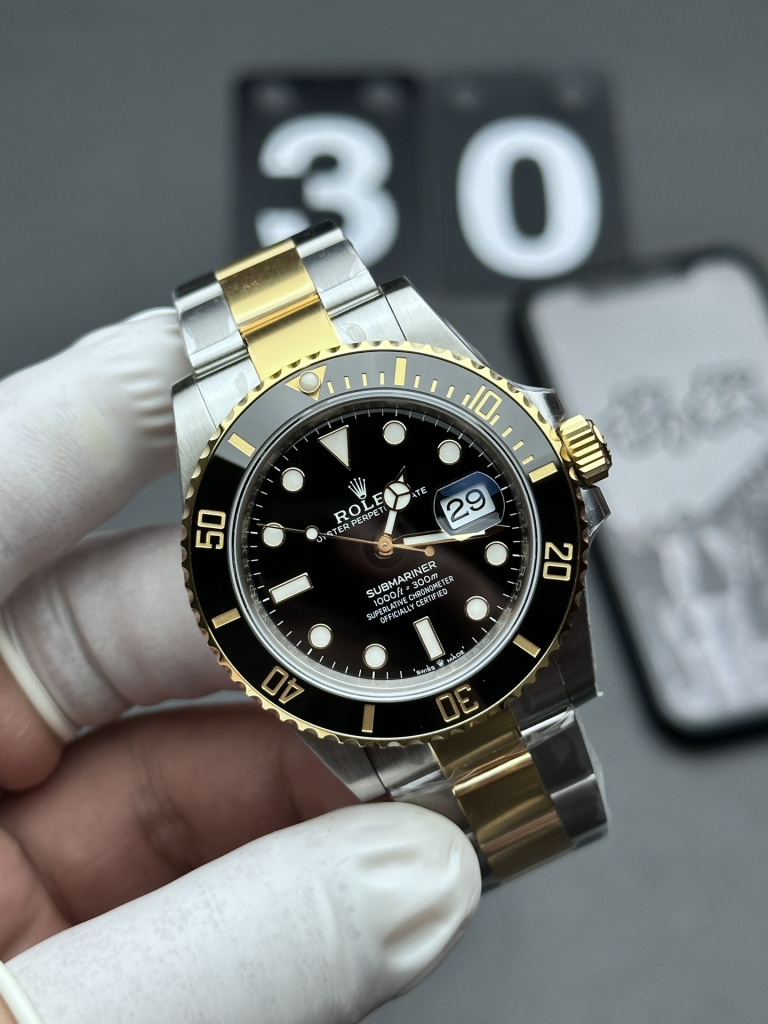
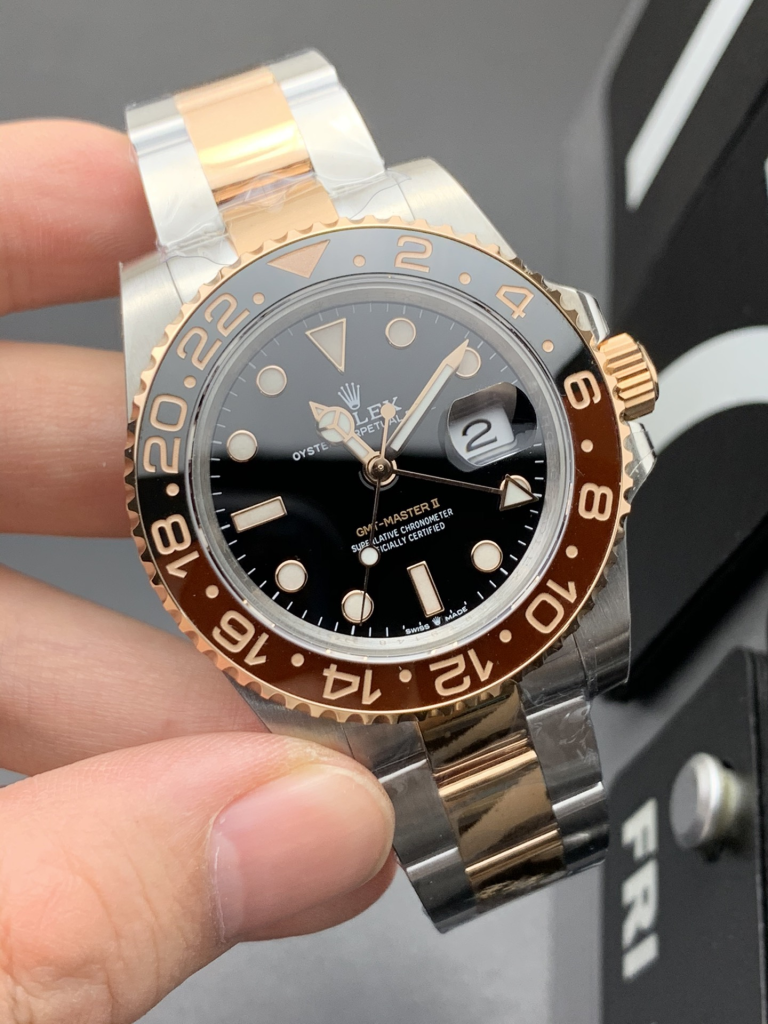
This split shaped the industry for years. With the 3285 in its hands, Clean didn’t just “enter” the GMT field; it became the reference point. Every new batch of Pepsi, Batman, Sprite, or Root Beer models carried Clean’s signature approach: clean dial printing, refined ceramic, and the kind of consistency that sellers didn’t have to explain or apologize for.
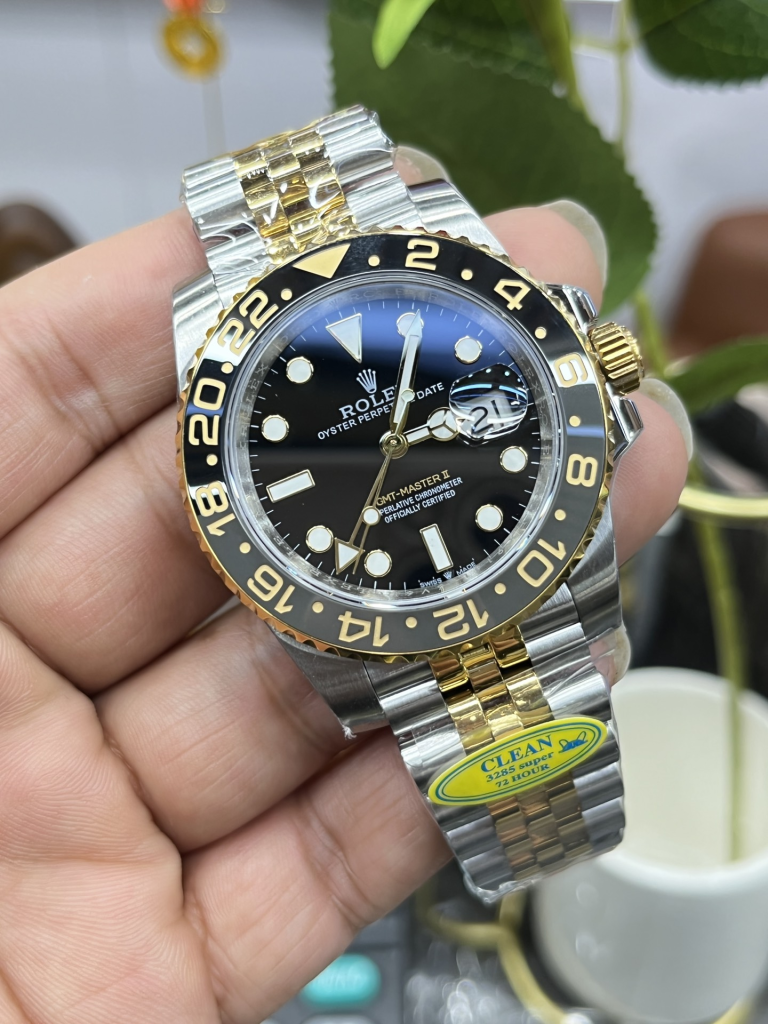
From 2022 onward, calling Clean “dominant” wasn’t exaggeration — it was a description of the market reality.
Why Clean Became the Reference Standard
Clean didn’t dominate because others were weak. It dominated because its system worked.
- Supply was stable, even during volatile periods.
- Measurements were based on actual genuine watches, not edited files or market gossip.
- Each mold was built with intent, not assembled from spare parts other factories left behind.
- Finishing stayed consistent, making it easy for sellers to match expectations.
In truth, Clean’s strength said as much about the rest of the industry as it did about Clean itself. Achieving that level of consistency in a grey market — where supply chains shift constantly and many factories rely on improvisation — is incredibly difficult. Clean didn’t just win; it maintained a standard others found hard to chase.
How Buyers and Sellers Benefited
Clean’s rise created a ripple effect that reached far beyond the factory itself.
For buyers, it meant fewer headaches. A C Factory Pepsi or Daytona generally arrived without the usual roulette of flaws or surprises. For sellers, it meant fewer returns, fewer late-night complaints, and far more predictable after-sales conversations. And for the scene as a whole, Clean’s consistency pushed the industry toward transparency. When one factory proves that stable quality is possible, others can’t hide behind excuses as easily. In a quiet way, Clean helped raise the baseline of what people expected from a super clone Rolex — even from competitors.
The Fall — When August 15 Became a Marker in Industry History
What Happened and What It Meant
On August 15, 2025, news spread that Clean Factory had stopped operations. No dramatic announcement, no long explanation — just a sudden halt that moved through group chats, sellers’ networks, and forums within hours. People didn’t react with excitement or gossip alone. They reacted with a sense of shock. Clean had become such a central piece of the super clone economy that its absence created immediate confusion. What happens to GMT builds now? Who controls the 4130 line? What about mold ownership, ceramic supply, and future batches?
The fall of Clean wasn’t a dramatic movie moment. It was quiet, abrupt, and real. And in a scene where most players rely on stability behind the scenes, the impact was enormous.
Why Clean’s Story Is More Than One Person
It’s easy to frame this story around Hu alone — his choices, his risks, his success, and the moment everything stopped. But Clean was never just one man. Behind every dial, case, bezel, and movement were dozens of technicians, suppliers, engineers, and subcontractors. There were ceramic specialists from the smartphone industry, CNC machinists from Guangdong, QC workers who handled watches day after day, and logistics teams that kept the pipeline moving.
Even after Clean’s doors closed, parts of its work live on. Some molds still circulate. Some suppliers still use the standards Clean helped establish. Some builders still judge ceramic by comparing it to the old C bezel.
Factories rise and fall, but techniques, expectations, and benchmarks don’t disappear with them. Clean’s influence is woven into the industry now, whether people speak about it openly or not.
Our Reflection — What Clean’s Story Says About This Industry
When Passion Shapes a Product
If Clean’s story proves anything, it’s that the super clone watch industry is driven less by mystery and more by passion. A factory doesn’t dominate because it hides in the shadows; it dominates because someone cares enough to open molds repeatedly, to measure tiny differences, and to solve problems most people never notice.
Hu’s path — from an enthusiast with a camera to the head of a defining factory — shows how far personal obsession can carry an entire supply chain.
Why Transparency Helps Everyone
The more the community understands how factories actually work, the fewer unrealistic expectations people carry. Buyers become more cautious and informed. Sellers build trust more easily when they don’t need to oversell.
Transparency doesn’t remove the grey nature of the scene, but it reduces unnecessary risk. And in a place where misunderstandings often cost money, time, or peace of mind, that matters.
No Factory Is Perfect — And That’s Okay
One useful lesson from Clean’s rise and fall is that perfection has never existed in this industry. Every factory has strengths and blind spots. Every batch has variations. Every movement has quirks. The value comes from understanding, not idealizing. When you see the real stories — the risks, the setbacks, the small breakthroughs — the industry becomes less mythical and more human.
One Thought to Keep in Mind Before You Buy Any Super Clone Rolex
Your Money, Your Wrist, and Your Level of Understanding
Clean’s story is one part of a much bigger ecosystem. It explains why certain models looked better during specific years, or why some batches became benchmarks. But it shouldn’t pressure anyone to buy, avoid, or chase any factory. A good choice in this scene doesn’t come from hype; it comes from clarity — knowing what you’re buying, what risks exist, and what matters on your own wrist. If this story helps you see the industry with clearer eyes, then it has already served its purpose.
What We Hope This Story Gives You
This article is not written to sell anything. It is written to give context — the kind of background that usually stays buried in private chats or whispered among experienced sellers. If it helps you make your own decisions with more confidence, whether that decision is to buy, to wait, or to walk away entirely, then the story has done its job.
In the end, the choice always belongs to you.