
DD324 and DD330 are not magic labels that automatically make a Patek Philippe-style super clone better. Their real importance is architectural: in slim Nautilus and Aquanaut-style replicas, the movement route can influence case thickness, dial height, date position, crown alignment, and comparisons around Miyota 9015 thickness can clarify why caseback depth and wrist presence matter so much. That makes the movement choice especially important when the model depends on a thin side profile and a believable display back.
This article helps separate useful movement advantages from common buyer assumptions. A DD324 or DD330 version may be the stronger choice when proportions and case construction matter most, but a Miyota-based version can still make sense for easier ownership, simpler servicing, or closed-caseback models. The better decision comes from checking the finished watch, current batch, QC photos, and basic function behavior rather than trusting the movement name alone.
| Buyer Check | DD324 / DD330 Route | Miyota-Based Route |
|---|---|---|
| Best fit | Slim Nautilus or Aquanaut-style models | Casual wear or less profile-sensitive models |
| Case profile | Can support thinner case and flatter caseback | May add thickness or change side proportions |
| Display back | More relevant when movement layout is visible | Less convincing if bridge and rotor layout matter |
| Ownership risk | Parts and servicing may be less straightforward | Generally more familiar for basic servicing |
| QC priority | Side profile, date height, crown side, movement view | Rotor noise, date change, crown feel, power reserve |
| Common mistake | Assuming the movement name proves the best batch | Ignoring case thickness on thin Patek-style models |
Quick Questions Before You Read
Q: Does DD324 or DD330 mean the watch is automatically better?
No. It can help the architecture, but the finished case profile, QC photos, regulation, and assembly quality matter more than the name alone.
Q: When is a DD324 or DD330 worth choosing?
It makes the most sense for thin Nautilus and Aquanaut-style replicas where case height, date position, and display-back credibility strongly affect the result.
Q: Is a Miyota-based Patek-style replica always a bad choice?
No. It can be practical for easier ownership, closed-caseback models, or buyers who care less about exact movement architecture.
Q: What should buyers check first in QC?
Start with true side-profile photos, caseback depth, date alignment, crown-side fit, strap or bracelet integration, and basic function checks.
Replica watches should be clearly understood as replica-market products, not genuine watches from the original luxury brands. In this article, Patek Philippe, Nautilus, Aquanaut, 5711, and 5167 are used to identify the genuine reference designs being compared, not to imply authorization, endorsement, production relationship, service compatibility, or authenticity.
Factory names, movement names, and seller labels are most useful when they help buyers ask better questions. They should not be used as proof that a replica watch contains an official brand-manufactured caliber, can pass authentication, or can be represented as genuine. The purpose of the DD324 and DD330 discussion is buyer education around architecture, proportion, QC evidence, and ownership limits.
Why DD324 and DD330 Matter in Patek Philippe Super Clones
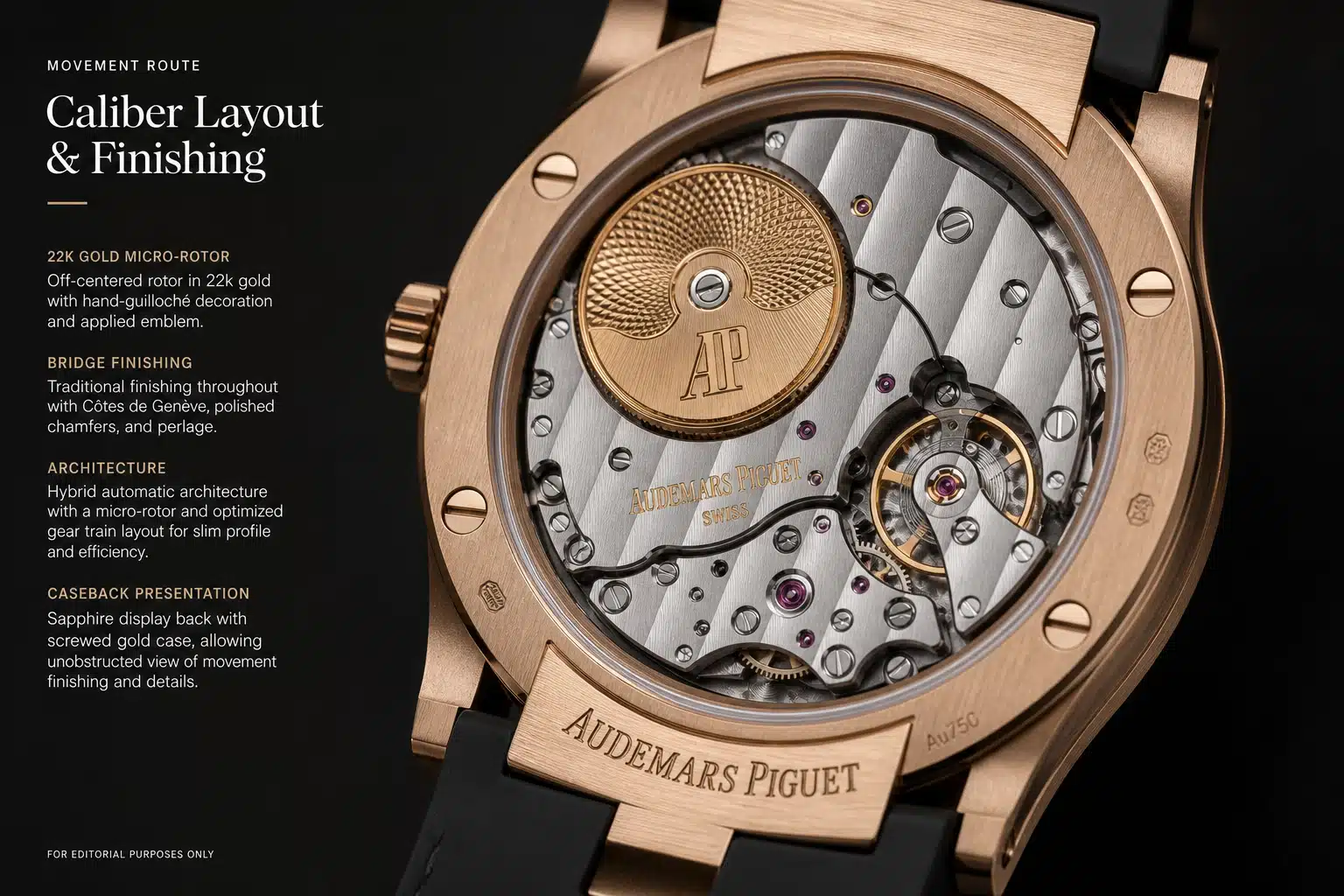
The DD324 movement and DD330 movement matter because they change the way certain Patek Philippe super clone watches are built, not just how the movement looks through the caseback. In slim models, especially Patek-style sports watches, the movement route can affect case thickness, dial height, date placement, rotor layout, and how believable the watch feels on the wrist.
This is the part many buyers misunderstand. The real question is not whether a DD324 or DD330 is equal to a genuine Patek Philippe caliber. It is not. These are clone-style replica movements used in some high-end Patek Philippe replicas, and they should be judged as replica movement solutions. The practical question is whether the clone 324 movement or clone 330 movement improves the final watch enough to justify the extra complexity and ownership risk.
For buyers comparing a Patek Philippe super clone movement, the movement architecture matters most when the original watch is thin, flat, and proportion-sensitive. A bulky movement route can force the case to become thicker, raise the dial position, deepen the caseback, or make the watch sit higher than expected. On a Nautilus-style or Aquanaut-style watch, those changes are easier to notice than on a thicker sports model.
Evidence matters most at the boundary between authentic-model facts and replica-market claims. Official Patek Philippe pages can confirm details about authentic collections, such as the Aquanaut 5167A being listed with a steel case, composite strap, date, and sweep seconds, and the Nautilus 5811/1G being listed as a white-gold Nautilus with a blue-gradient dial; those official facts help explain the design target, but they do not prove that any replica case, dial, strap, or movement is equivalent to the authentic watch.[1][2]
Editorial Perspective: At cleanvsfactory.com, DD324 and DD330 are treated as model-specific buying signals, not proof that a watch is automatically the best version. The movement name can help narrow the comparison, but the more useful judgment is whether the movement route supports the case thickness, date height, crown position, display-back layout, and daily ownership expectations of the specific Nautilus or Aquanaut-style replica being considered.
The Buyer Question Behind the Movement Name
When buyers search why DD324 matters or ask whether DD330 is worth it, they are usually trying to answer a simple buying question: will this movement make the watch look and wear more convincing, or is it just a more expensive label? That question is reasonable, because factory descriptions often make the movement sound like a guarantee. It is not.
A 3KF movement with a DD324 or DD330 route can be valuable when the watch design actually benefits from closer movement architecture. The advantage is not only decorative bridges or a rotor that looks more model-appropriate. The more important benefit is structural: the movement can help the replica maintain a slimmer case profile and a more natural relationship between the bezel, dial, mid-case, and display back.
The strongest reason to care is proportion. A Patek Philippe sports watch is not supposed to feel like a heavy dive watch. If the case becomes too tall, even a good dial and bracelet cannot fully hide it. That is why the best movement for a Patek super clone is not automatically the most complicated one; it is the movement route that supports the specific model’s shape without creating bigger ownership problems.
Why This Is More Than a Caseback Detail
Many buyers treat the movement as something to inspect only through the display caseback. That misses the point. In this category, movement thickness and layout can influence the entire construction of the watch. A thinner or more suitable automatic clone movement can allow the caseback to sit flatter, the dial to sit at a more natural height, and the date window to appear less forced.
This is why clone movement vs decorated movement is not just a cosmetic debate. A decorated movement may look acceptable in a listing photo, but if its height or layout forces the case to become thicker, the compromise moves from the caseback to the wrist. The buyer may not stare at the movement every day, but they will feel the case height every time the watch sits under a cuff or angles across the wrist.
Rotor behavior is another practical issue. A closer movement layout can improve the visual impression through the caseback, but it does not guarantee silent winding, smooth crown feel, perfect regulation, or trouble-free long-term use. The better judgment is to separate two ideas: DD324 and DD330 can improve model credibility, but they do not remove the normal risks of replica watch ownership.
The Short Answer for First-Time Buyers
For a first-time buyer, the simple rule is this: DD324 and DD330 are worth considering when the watch depends on a thin case, convincing display-back layout, and model-specific movement architecture. They are most useful when the movement helps the whole watch look and wear closer to the intended design.
If the buyer mainly wants basic daily use, lower mechanical anxiety, and easier service familiarity, a simpler movement route may be more rational. The mistake is assuming that the clone movement is always the best choice just because it sounds more advanced. In practice, the right choice depends on the model, the version, the batch, and how much the buyer values visual and dimensional accuracy over simpler ownership.
What DD324 and DD330 Are Trying to Replicate
DD324 and DD330 are replica clone movement routes intended to mimic the general layout and behavior associated with Patek Philippe’s automatic 324-style and 330-style movement families in relevant models. They are not genuine Patek Philippe calibers, and they should not be described as official, authorized, or identical. Their purpose in the super clone market is to support closer movement architecture, better case proportions, and a more believable display-back presentation.
For buyers asking what is DD324 or what is DD330, the useful answer is not a long parts list. The useful answer is that these movements are designed to solve a specific replica problem: how to make a thin Patek-style watch look structurally coherent instead of simply placing a decorated generic automatic movement inside a case. That difference matters because Patek Philippe designs often depend on restraint, thinness, and clean proportions rather than obvious bulk.
The term Dandong movement is sometimes used around these clone routes, but buyers should be cautious with sourcing claims. Factory language can blur movement origin, version updates, and decoration level. A movement name may tell you the intended route, but it does not prove the exact assembly quality, lubrication, regulation, or current batch execution.
Movement Transparency Note: Movement references in this article describe replica-market movement routes or configurations, not official Patek Philippe calibers or brand-authorized parts. Buyers should judge DD324 and DD330 by visible architecture, case fit, function behavior, and current-version evidence rather than treating the name as proof of origin, finishing quality, or long-term reliability.
What DD324 and DD330 Claims Should Not Be Used For
DD324 and DD330 claims should not be used to suggest that a replica watch is authentic, brand-approved, or safe to sell as a genuine Patek Philippe watch. A strong super clone may look convincing in normal wear, but close inspection can still reveal differences in finishing, movement architecture, case proportions, bracelet or strap feel, dial details, and service compatibility.
Movement descriptions in the replica market should be checked carefully because they may refer to layout, decoration, clone architecture, or seller terminology rather than an official brand-manufactured caliber. A DD324 or DD330 label can be a useful comparison point, but it is not a certificate, authentication result, factory audit, or guarantee of long-term accuracy.
Buyers should also be careful with phrases such as “same movement,” “official caliber,” “Swiss original,” or “passes inspection” when they appear in listings or informal reviews. Those phrases can create unrealistic expectations and increase misrepresentation risk. A safer reading is to ask what the actual watch shows in QC photos and what the seller can confirm about the specific supplied version.
DD324 as a 324-Style Clone Route
The DD324 is usually discussed as a clone 324 movement route for slim Patek Philippe replicas historically associated with the 324-style automatic layout. In buyer terms, that means a central rotor layout, a movement height intended to work with thinner cases, and a caseback presentation that looks more purpose-built than a basic decorated automatic.
The most important point is that the DD324 route is not valuable simply because the name resembles a Patek caliber number. It is valuable only when it helps the finished watch. If the case is still too thick, the date is poorly aligned, or the assembly is rough, the movement label alone does not rescue the watch. A good DD324-based build should make the watch feel more coherent, not just more impressive in a product description.
Buyers also need to avoid micro-rotor confusion. Some Patek Philippe watches use different movement architectures, and not every Patek-style replica should be judged through the same movement expectation. The DD324 discussion is most relevant where the original design logic supports this central-rotor, thin automatic layout.
DD330 as a Later 330-Style Clone Route
The DD330 is usually framed as a later clone 330 movement route tied to updated Patek Philippe references and newer buyer expectations. In practical terms, buyers often look at DD330 when they want a more current movement route for models where the market has moved beyond older 324-style descriptions.
This does not make DD330 automatically better than DD324 in every watch. The more useful question is whether the DD330 route matches the reference being replicated and whether the factory version uses it well. A later movement name can sound reassuring, but it still has to support the correct case profile, rotor position, date behavior, and overall movement presentation.
For serious buyers, DD324 vs DD330 should be understood as a model and version question, not a simple hierarchy. A well-executed 324-style route in the right reference can be more sensible than a poorly executed 330-style route used mainly as a marketing upgrade.
What the Movement Name Does Not Prove by Itself
A DD324 or DD330 label does not prove the watch is the best batch, the best factory version, or the safest long-term ownership choice. It does not guarantee fine finishing, perfect regulation, quiet rotor action, strong power reserve, or easy service. It only points to the movement route the watch is claiming to use.
This is where many buyers overpay for the wrong reason. They see the movement name and assume the decision is finished. It is not. The movement must be judged together with the case construction, dial height, date alignment, rotor behavior, and current factory execution. At Clean VS Factory, we usually treat a movement name as the start of the comparison, not the final answer.
The responsible way to read DD324 explained or DD330 explained claims is to ask what the movement improves in the finished watch. If the improvement is only a more attractive caseback photo, the value is limited. If it helps the case stay thin, the dial sit correctly, and the watch wear more naturally, then the movement route becomes a real buying factor.
How to Read Seller Movement Claims
Seller descriptions can be useful, but they often compress several different issues into one phrase. A listing that says “DD330 movement” may be referring to the claimed movement route, the decoration style, the factory’s current version, or simply the seller’s shorthand for a higher-priced build. Before treating the claim as evidence, the buyer should connect it to visible details: caseback layout, movement plate shape, rotor position, date window height, and whether the side profile matches what a thin Patek-style case should look like.
QC photos also have limits. A polished movement shot can show the rotor and bridge layout, but it may hide crown feel, winding resistance, automatic winding efficiency, and whether the movement has been regulated well. A useful seller should be able to provide current photos of the actual watch and basic function confirmation; older factory photos or reused listing images should be treated as reference material, not final proof.
Price should be read with the same caution. A higher DD324 or DD330 price may reflect the movement route, harder availability, improved case construction, seller margin, after-sale risk, or simple market hype. The practical question is whether the extra cost buys a visible or usable improvement for the specific reference. On a thin Nautilus-style replica, the answer may be yes if the side profile and caseback architecture improve. On a less profile-sensitive model, the same premium may be harder to justify.
Before making a decision, buyers should review real QC photos where available, including dial printing, hand alignment, datewheel centering, crown position, side profile, caseback depth, bracelet or strap fit, clasp engraving, and movement view. Factory labels, movement names, and stock photos alone are not enough for a reliable judgment.
How DD324 and DD330 Help Nautilus and Aquanaut Case Thickness
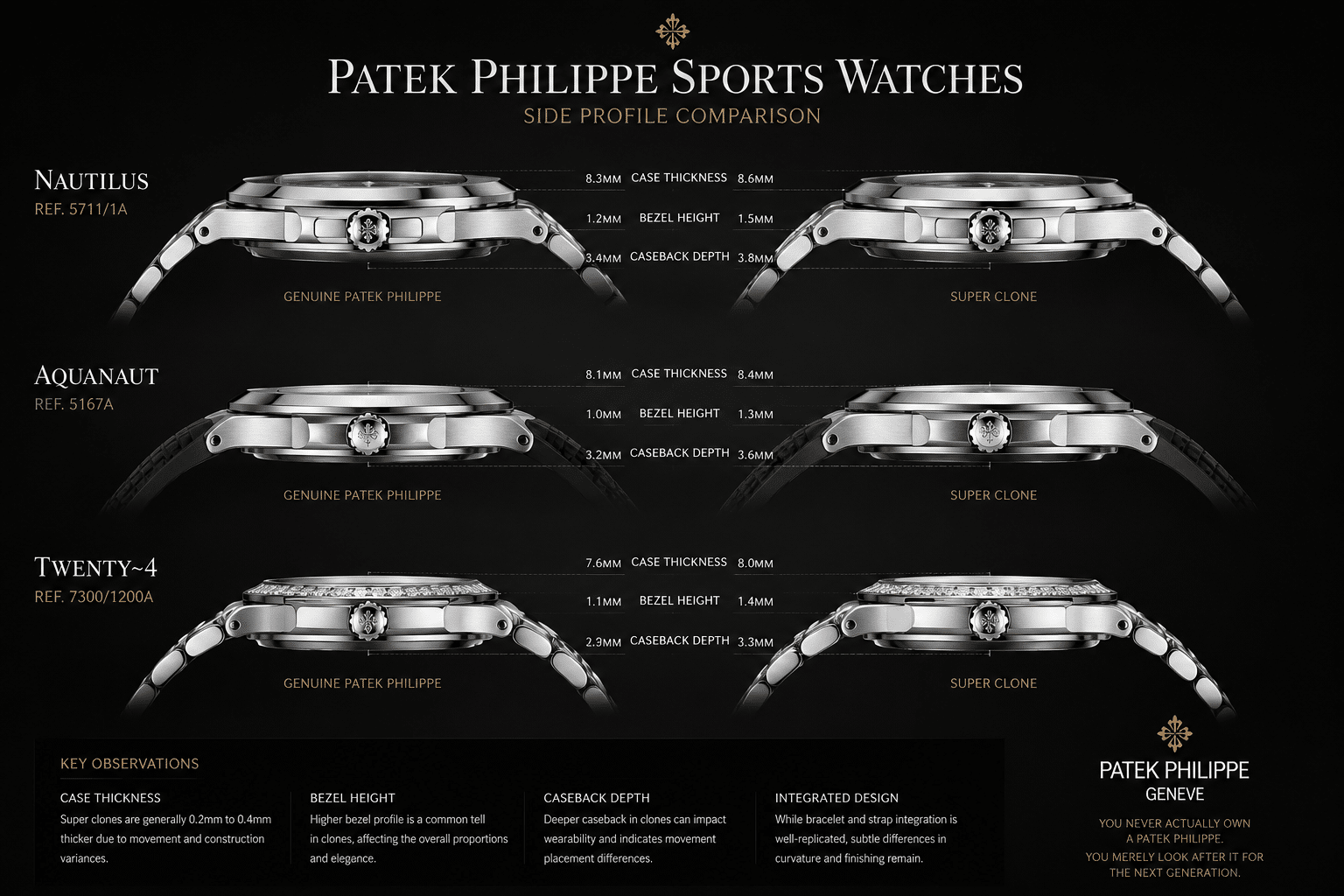
The strongest practical argument for DD324 and DD330 is case thickness. On a Nautilus 5711 movement discussion or an Aquanaut 5167 movement comparison, movement height is not an abstract specification. It can decide whether the finished watch has a slim, integrated profile or a slightly inflated shape that looks acceptable in front photos but less convincing from the side.
Nautilus and Aquanaut designs are unforgiving because their identity comes from thinness, flat case lines, and controlled transitions. A 3KF Nautilus or 3KF Aquanaut using a suitable clone movement route can often aim for a more convincing slim case profile than a version built around a thicker decorated automatic movement. That does not mean every DD324 or DD330 example has correct case thickness, but it explains why buyers care so much about the movement route.
The buyer mistake is looking only at the dial. A good blue dial, clean markers, and acceptable printing can make a watch look strong in straight-on photos. But if the caseback bulges too much or the mid-case looks too tall, the watch loses the quiet, thin character that makes these Patek-style sports models work.
Why Thinness Matters More on Patek Sports Models
Extra thickness is easier to forgive on a dive watch, a chronograph, or a large sports watch. It is much harder to forgive on a Nautilus or Aquanaut because those watches rely on low wrist presence. The case is supposed to spread across the wrist rather than sit like a tall block above it.
That is why correct case thickness is not just a spec-sheet obsession. It changes the way the bezel meets the mid-case, how deep the caseback appears, how the bracelet or rubber strap leaves the case, and how naturally the watch slides under a sleeve. A thin Patek replica can look more convincing in normal wear even if a few small dial details are still imperfect.
For the Nautilus especially, the side profile is part of the design. The watch has a wide, flat, integrated feel. If the movement forces the case to gain height, the whole silhouette changes. For the Aquanaut, the rubber strap can make thickness even more obvious because the strap exits the case cleanly and leaves the side wall exposed.
The Side Profile Test
The quickest way to see whether the movement route helped is to look at side-profile photos. A straight front image can hide thickness. A low side angle shows whether the bezel, mid-case, and caseback work together or whether the case looks stacked.
For a Nautilus thickness comparison, buyers should pay attention to the relationship between the bezel lip and the caseback depth. A watch can appear thin at the bezel but still look too deep if the back drops heavily below the mid-case. On an Aquanaut, the test is slightly different: look at how the rubber strap leaves the case and whether the case feels flat and natural or visually top-heavy.
This is where DD324 and DD330 can earn their place. If the clone movement affects case size in a way that produces a cleaner side profile, the upgrade is meaningful. If the side profile still looks bulky, the movement name is doing less work than the listing suggests.
Where Thickness Still Can Go Wrong
A DD324 or DD330 movement route does not automatically fix the whole case. The factory still has to execute the bezel shape, mid-case geometry, caseback height, crown position, and bracelet or strap integration. A thin movement inside a poorly shaped case will not create a convincing watch by itself.
There is also a difference between being thin and being correctly proportioned. A case can be made thinner while still having the wrong side wall angle, awkward bezel transition, or caseback that looks too flat or too proud. The goal is not just a lower number; the goal is a balanced architecture that matches the model’s visual language.
This is why buyers should avoid choosing only by claimed movement route. The DD324 or DD330 should support the case design, because a replica Patek complication function should not be used as a shortcut to ignore the rest of the watch.
Case Details to Verify in QC Photos
For a DD324 or DD330 Patek Philippe super clone, side-profile QC photos are not optional if thickness matters to the buyer. Ask for angles that show the full case side, including bezel height, mid-case thickness, and caseback depth. The watch should look slim as a complete object, not only from the dial side.
Also check the bezel-to-case transition, lug flow, crown seating, and the way the bracelet or rubber strap exits the case. On a Nautilus, the bracelet integration should not make the case look tall or disconnected. On an Aquanaut, the rubber strap should leave the case cleanly without making the watch appear thicker at the shoulders.
The practical judgment is simple: if the buyer is paying attention to DD324 or DD330 because of case architecture, the QC photos must prove that advantage. A movement route that cannot be seen in the wearing profile is less valuable than the name suggests.
3KF, Nautilus 5711, Aquanaut 5167, and the Models Most Associated With DD324/DD330
Buyers usually encounter DD324 and DD330 discussions around slim Patek Philippe sports replicas, not across every Patek-style watch in the market. The reason is simple: the Nautilus and Aquanaut do not hide thickness well. On a 3KF Patek Philippe replica, the movement route can influence whether the watch keeps the flat, low case profile that makes these models look correct on the wrist.
This is why the phrase 3KF movement can be useful but also incomplete. In many buyer conversations, 3KF is commonly associated with DD324 and DD330 routes for models such as the 3KF Nautilus 5711 and 3KF Aquanaut 5167. Still, the smarter question is not only which factory made the watch. It is which model, which version, which Patek Philippe replica movement, and whether the current batch actually uses the movement route being advertised.
Nautilus 5711 and the Thin-Case Problem
The Nautilus 5711 is one of the models where movement choice matters most because the whole design depends on slimness. The case is not meant to feel like a thick sports watch with a decorative bezel. It should sit flat, with a controlled side profile, a shallow caseback, and a dial that does not appear buried too deeply under the crystal.
That is why buyers searching for a 3KF Nautilus movement often focus on DD324-style construction. A movement route that supports a thinner case helps the replica keep the visual rhythm of the 5711: thin bezel, clean mid-case, flat caseback, and integrated bracelet flow. If the movement forces the case taller, the watch may still look acceptable from the front, but the side view starts to lose the Nautilus character.
The non-obvious point is that the caseback is not the only issue. A thicker or less suitable movement route can affect dial height, date position, crown alignment, and how the bracelet exits the case. For the 5711, those small dimensional relationships matter more than buyers expect because the watch has very little visual bulk to disguise them.
Aquanaut 5167 and the Daily-Wear Question
The Aquanaut 5167 is often treated as the more casual, easier Patek clone, but the movement route still matters. The rubber strap makes the watch feel more relaxed than a Nautilus, yet it also exposes the case shape differently. If the caseback is too proud or the mid-case feels too thick, the watch can sit higher and lose the low, comfortable profile that makes the Aquanaut appealing for daily wear.
For buyers asking which Patek clones use DD324 or which models use DD330, the Aquanaut is usually part of that conversation because it benefits from a movement that helps preserve thinness without turning the watch into a chunky sports replica. The DD324 or DD330 route is not automatically the only acceptable answer, but on a 3KF Aquanaut 5167 it can make the case profile and display-back layout more convincing than a thicker decorated movement route.
The practical judgment is this: Aquanaut buyers should care less about the factory label in isolation and more about whether the movement, case thickness, strap fit, and crown position work together. A visually strong dial will not save the watch if the case feels too tall or the rubber strap leaves the case at an awkward angle.
Why Factory Reputation Still Needs Version Context
3KF is often discussed with DD324 and DD330 because the factory has been closely associated with higher-end Patek Philippe super clone routes, especially in Nautilus and Aquanaut models. That reputation is useful as a starting point, but it should never replace version checking. Factories can update batches, change movement routes, or offer different configurations under similar product names.
At Clean VS Factory, we usually treat “3KF movement” as a prompt for verification, not as a final answer. The buyer still needs to confirm whether the listing refers to a DD324-style route, a DD330-style route, or another movement base, and whether the current version matches the photos being reviewed. This matters because older reviews, dealer descriptions, and forum posts may not describe the exact watch currently being sold.
The safest approach is to ask for the current movement route, review caseback and side-profile photos, and compare the watch as a complete build. A model-specific movement route can be a real advantage, but only if the case, dial spacing, date alignment, and strap or bracelet integration also support the model correctly.
Factory Name Clarification: Factory names such as 3KF are buyer-facing references used in the replica watch market. They should be treated as practical comparison labels, not official brand affiliations, audited manufacturer identities, or guarantees that every model and batch will share the same case accuracy, movement configuration, or assembly quality.
Traceability Checklist for 3KF DD324 and DD330 Listings
A traceable 3KF DD324 or DD330 comparison should connect the factory name to the exact reference, current version, movement route, and visible execution. “3KF Nautilus” is less useful than a listing that makes clear whether the watch is a Nautilus 5711-style build, whether the claimed route is DD324 or DD330, whether the caseback view matches that route, and whether the side profile supports the thin-case claim.
Buyers should also separate stock reference photos from actual-watch evidence. A factory image can show the intended configuration, but it does not confirm the specific watch being supplied. Real QC photos are more useful because they show the actual dial alignment, date height, crown seating, caseback depth, bracelet or strap fit, and movement presentation of the watch under consideration.
The safest use of factory and movement information is to avoid confusion or overpaying for a weaker version, not to represent a replica as genuine. A careful comparison should help the buyer understand quality, version differences, and ownership limits while keeping the boundary clear: these are replica-market terms, not official Patek Philippe authorization or authentic brand manufacturing claims.
Factory Labels, QC Evidence, and Buyer Protection
Factory names are useful market references, but they do not guarantee identical quality across every model or version. A factory can be strong in one Nautilus-style build and less convincing in another reference if the case shape, movement route, bracelet construction, dial execution, or batch control changes. That is why a factory comparison is most useful when it is tied to the exact reference and current version being reviewed.
Buyers should be careful with listings that rely heavily on broad claims such as “best factory,” “perfect version,” or “factory-direct guarantee” without showing current-watch evidence. Those claims are not a substitute for side-profile photos, caseback photos, date-window close-ups, crown-side photos, and basic function confirmation. QC photos can reduce uncertainty, but they do not guarantee perfection.
CleanVSFactory’s buyer-facing approach is to make replica watch comparison clearer by connecting factory names, movement claims, visible QC details, version differences, and realistic ownership limits. That approach should help buyers understand tradeoffs and avoid exaggerated claims, not encourage anyone to represent a replica watch as a genuine Patek Philippe product.
DD324 and DD330 Versus Miyota 9015 Decorated Movements
The DD324 vs Miyota 9015 decision is not a simple “better movement” question. It is a tradeoff between structural accuracy and ownership simplicity. DD324 and DD330 routes usually make more sense when the buyer cares about thin case architecture, movement layout, and a more convincing display-back presentation. A decorated Miyota movement can still be a rational choice when the buyer values a familiar automatic base and is less sensitive to caseback accuracy or small dimensional compromises.
This is especially important in slim Patek designs. Miyota’s official 9015 specifications list it as a 3.90 mm-thick automatic movement with 24 jewels, a 28,800 vibrations-per-hour frequency, hand-winding, second-stop function, and an approximate 42-hour running time; those specifications explain why it is attractive as a thin automatic base, but they do not prove that a particular replica contains a genuine Miyota 9015 or that the decorated package preserves the same thickness in the final watch.[3]
Where the Clone Movement Usually Wins
DD324 and DD330 usually win when the watch needs a movement route that supports the original design logic of the model. In a Nautilus 5711 or Aquanaut 5167-style super clone, the advantage is not only that the movement looks closer through the caseback. The bigger benefit is that the movement architecture can help the case stay thinner and better proportioned.
A clone 324 or clone 330 route can also make the rear view more believable for buyers who care about rotor position, bridge layout, and overall caseback presentation. This does not mean the finishing is equal to a genuine Patek Philippe movement. It means the layout and proportions are closer to what the model is trying to represent, which matters on watches with display casebacks and strong collector scrutiny.
The strongest reason to choose DD324 or DD330 is model fit. If the movement helps the watch keep the correct case height, dial position, and display-back architecture, it is doing more than decorating the inside. It is supporting the whole shape of the replica.
Where Miyota-Based Versions Can Make Sense
A Miyota-based Patek clone can still make sense for the buyer who wants a simpler ownership experience and does not spend much time looking at the caseback. Miyota 9015 movements are common, thin by themselves, and familiar to many independent watch repairers. That does not make every Miyota-based version better for daily wear, but it can reduce some of the anxiety that comes with more specialized clone movements.
The decorated Miyota movement route becomes more acceptable when the model is less dependent on ultra-thin proportions or when the buyer is realistic about the compromise. If the watch is worn casually, rarely shown from the back, and the case thickness remains within the buyer’s tolerance, a Miyota-based version may be the more practical route.
The mistake is assuming “Miyota” automatically means low quality or “DD” automatically means trouble-free. A cleanly assembled Miyota-based watch can be easier to live with than a poorly assembled clone movement. A well-executed DD324 or DD330 can be more convincing than a decorated movement that forces the case into the wrong shape.
The Caseback Versus Ownership Tradeoff
The display caseback is where many buyers overestimate their own priorities. Before choosing DD330 vs Miyota or DD324 vs Miyota 9015, the buyer should ask a simple question: will the movement view actually matter after the first week, or will the watch mostly be judged by comfort, timekeeping, winding feel, and how it sits on the wrist?
For a collector-style buyer, the caseback matters. The wrong rotor layout or decorative plate construction can make the watch feel less satisfying, especially on a Patek Philippe replica where the original watch’s movement architecture is part of the appeal. For a daily wearer, the better choice may be the route that creates fewer mechanical concerns, even if the caseback is less accurate.
The right answer depends on where the compromise will bother the buyer most. If extra thickness is immediately visible on the wrist, the clone movement route is usually worth stronger consideration. If the difference is mostly hidden through the caseback and the buyer prefers lower mechanical complexity, Miyota-based options deserve a fair look.
Quick Decision Filter
Choose DD324 or DD330 if the watch is a thin Nautilus or Aquanaut-style model, case profile matters, and the buyer values closer display-back architecture. Consider a Miyota 9015 decorated movement if basic daily use, service familiarity, and lower movement anxiety matter more than the most accurate rear view or the thinnest possible case construction.
The safest judgment is not “clone movement always wins.” It is this: choose the movement route that best serves the specific reference. On some Patek Philippe super clones, DD324 or DD330 changes the whole watch. On others, the benefit may be less important than the added ownership complexity.
Non-Hacking, Power Reserve, Rotor Feel, and Winding Behavior
DD324 and DD330 buyer questions often become more practical after the watch arrives. The owner is no longer only looking at side-profile photos or movement decoration. They are setting the time, winding the crown, listening to the rotor, checking whether the seconds hand stops, and wondering whether the behavior is normal.
This is where expectations matter. A clone movement can improve case architecture and movement presentation, but it should not be expected to feel exactly like a genuine Patek Philippe caliber. The important ownership checks are non-hacking behavior, power reserve consistency, rotor noise, winding feel, date change behavior, and whether the watch behaves consistently over normal wear.
Non-Hacking Is Not Always a Red Flag
Non-hacking means the seconds hand may continue running when the crown is pulled to the time-setting position. Buyers often ask, “does DD324 hack?” because many modern automatic watches stop the seconds hand during setting. With certain 324-style movement routes, non-hacking behavior can be expected and should not automatically be treated as a defect.
The practical issue is not whether hacking is “better” in a general sense. The issue is whether the buyer understands the behavior before purchase. If precise second-setting matters to you, non-hacking may feel annoying. If you mainly care about daily-wear appearance, thinness, and movement layout, it may be an acceptable compromise.
A real red flag is not simply that the seconds hand keeps moving. More concerning signs would be rough crown engagement, slipping setting positions, irregular hand movement, a date that does not advance properly, or a watch that stops unexpectedly during normal use.
Power Reserve Expectations Need Version Context
DD330 power reserve claims should be treated with caution unless they are tied to a specific tested version. Replica movement descriptions often quote attractive numbers, but actual run time can vary by movement version, assembly quality, lubrication, regulation, and how fully the mainspring was wound before testing.
For buyers, the useful question is not whether the power reserve matches a brochure-style claim. It is whether the watch runs consistently through normal use. If it stops overnight after a full day of wear, that may point to weak winding efficiency, insufficient activity, poor lubrication, or an issue with the individual movement. If it runs through a typical day and remains predictable, the practical ownership experience may still be acceptable even if the reserve is not impressive on paper.
The best way to judge power reserve is to test it calmly: fully wind the watch by hand, set it down, and note how long it runs before stopping. One test is not perfect, but it gives more useful information than relying only on a movement label.
Rotor Feel and Winding Feel in Daily Use
Rotor noise is one of the first things buyers notice because it makes the movement feel less refined. Some rotor sound can be normal in automatic replica movements, but loud scraping, grinding, or inconsistent spinning deserves attention. DD324 and DD330 rotor feel can vary from one watch to another depending on assembly, lubrication, rotor clearance, and case construction.
Winding feel also varies. A healthy movement should not feel like the crown is fighting the owner. Some resistance is normal, especially compared with quartz or very loose-feeling automatics, but gritty winding, sudden binding, or an unstable crown position is not something to ignore. The crown should engage cleanly across winding, date setting, and time setting positions.
Date behavior matters because it reveals how well the movement is assembled and adjusted. Buyers should look for a centered date, a clean date change, and crown operation that does not feel fragile. No replica movement route should be treated as risk-free, but a watch that feels rough during basic setting is more likely to become frustrating than one with a harmless non-hacking seconds hand.
Servicing Risk and Long-Term Ownership Reality
The strongest reason to choose a DD324 or DD330 is also the reason to think carefully before buying one: these movements are more model-specific than a common automatic base. They help a Patek Philippe super clone achieve a thinner case, a closer display-back layout, and a more convincing architecture, but DD324 servicing and DD330 reliability should be judged with more caution than the first set of photos usually suggests.
A buyer asking “is DD324 reliable” is usually asking the wrong question too narrowly. The better question is whether the specific watch has been assembled well, regulated properly, handled carefully, and supported by a movement route that can be repaired if something goes wrong. Clone movement serviceability is not only about whether the movement works on day one. It is about what happens after a year of daily wear, a dry winding feel, a noisy rotor, a date issue, or a drop that shifts something out of alignment.
Why Clone Movements Can Be More Specialized
DD324 and DD330 clone movements are designed to serve a specific visual and structural purpose. They are not generic engines placed inside a decorative case. That closer architecture can be a real advantage in a thin Nautilus or Aquanaut-style replica, but it also means parts availability and repair familiarity may be less predictable than with a simpler movement base.
Some independent watchmakers are comfortable working on common Japanese or Swiss-style automatic movements but less interested in troubleshooting a specialized clone movement with unusual parts sourcing. That does not mean the movement is automatically fragile. It means the ownership path is narrower. If a wheel, date component, rotor assembly, or setting part needs attention, the solution may not be as straightforward as replacing a widely available movement or ordering standard parts.
This is where buyers often misread the upgrade. A closer movement layout is not the same as easier long-term ownership. In practice, the DD324 or DD330 route is best viewed as an accuracy-focused choice with a higher responsibility to inspect, handle, and maintain the watch realistically.
Reliability Depends on More Than the Caliber Label
The label on the listing does not tell the whole story. DD330 reliability can vary by version, assembly quality, lubrication, regulation, and how the owner treats the watch. Two watches using the same named movement can feel different at the crown, wind differently, show different rotor behavior, or run with different accuracy because the final assembly and adjustment matter.
For a Patek replica daily wear risk, the most important point is not whether the movement is “clone” or “not clone.” It is whether the movement has been installed cleanly, the crown action feels controlled, the date changes without drama, the rotor does not scrape, and the watch is not being treated like a sealed sports instrument. A thin Patek-style case also leaves less room for sloppy tolerances, so small assembly issues can become more noticeable.
At Clean VS Factory, we usually separate visual accuracy from ownership experience. A DD324 or DD330 can make the watch more convincing on the wrist, but the buyer still needs to accept that long-term reliability is conditional, not guaranteed by the movement name.
When Simpler Can Be Smarter
A simpler movement route can be the more rational choice for a buyer who values low-anxiety daily use over display-back accuracy. This is especially true if the buyer rarely looks at the movement, does not care about the last fraction of case thickness, and wants a movement base that more watchmakers may recognize.
The tradeoff is visual and dimensional. A simpler or decorated movement may make the watch slightly thicker, less accurate through the caseback, or less faithful to the intended movement layout, which is why discussions of Patek Philippe super clone movements often focus on architecture, finishing, and serviceability in real wear. On a Nautilus or Aquanaut-style case, that can matter. But for a buyer who mainly wants a casual wearable replica watch and does not want to think about specialized parts, the simpler choice can be easier to live with.
The wrong move is assuming the most technically ambitious option is automatically the safest. DD324 and DD330 are more compelling for buyers who understand why the architecture matters. They are less ideal for buyers who expect the easiest repair path and no mechanical anxiety.
Maintenance Expectations to Keep Realistic
Owners should expect normal mechanical variation, not laboratory precision. Timekeeping can vary, power reserve can depend on winding and wear pattern, and winding feel may change if the movement is dry or poorly lubricated. Careful crown use matters, especially on thin-case replicas where the setting system should not be forced.
Water resistance should not be assumed from the model style or factory description. A Nautilus or Aquanaut-inspired replica may look sporty, but replica watch maintenance should treat moisture as a real risk unless the individual watch has been properly pressure tested by a qualified independent professional.
If servicing is needed, the practical route is a qualified independent watch repair option that is willing to work on replica movements. The watch should not be presented to an official brand service center or represented as genuine. The goal is responsible ownership, not misuse of the brand’s service or authentication channels.
Legal, Trademark, and Disclosure Boundaries
DD324, DD330, 3KF, Nautilus, and Aquanaut discussions should stay clear about product identity. These are replica or imitation watches, not authorized Patek Philippe products, and movement names used in the replica market should not be read as permission, endorsement, or official compatibility. The USPTO describes counterfeit goods in relation to unauthorized use of marks that are identical or substantially indistinguishable from registered trademarks, which is why disclosure and careful language matter in this category.[4]
Buyers should also avoid assuming that a personal order is automatically free of customs or import risk. U.S. Customs and Border Protection identifies intellectual property rights enforcement as a trade priority and discusses counterfeit and piratical goods within that enforcement context; that source supports caution about import and seizure risk, but it does not predict the result of any individual shipment or replace jurisdiction-specific legal advice.[5]
The practical takeaway is simple: do not represent a replica watch as genuine, do not use official service channels as if the watch were authentic, and do not treat seller reassurance as legal certainty. A careful buyer guide can compare design, movement route, and QC logic, but it should not imply that replica watches are authorized goods or that cross-border outcomes are guaranteed.
QC Checks for DD324 and DD330 Patek Philippe Super Clones
DD324 QC and DD330 QC should focus on what the movement route is supposed to improve: correct architecture, a controlled case profile, and basic functional behavior. QC photos cannot prove long-term reliability, but they can catch obvious problems before the buyer accepts a watch that already shows warning signs.
The most useful QC approach is to connect the movement photo with the case photo. A caseback movement view may help verify DD324 movement or confirm DD330 movement visually, but the side profile QC tells you whether that movement route is actually helping the watch wear and look thinner. For a thin Patek Philippe super clone, those two checks belong together.
Movement Photos: Useful but Limited
A movement photo can show the general layout, rotor position, bridge decoration, and whether anything looks obviously misaligned or careless. It may help confirm that the watch is not using a completely different movement route than described. For buyers asking what to check in QC photos, this is a useful first filter.
But a movement photo is not a reliability test. It cannot tell you whether the movement is properly lubricated, whether the automatic winding system will stay quiet over time, or whether the date mechanism will remain trouble-free after months of wear. Do not let an attractive caseback replace basic caution.
Look for obvious red flags: rotor sitting strangely, visible debris, rough screw marks, crooked decoration plates, or a caseback view that does not match the claimed route. These are not fine collector details; they are signs that the watch may have been assembled or handled carelessly.
Side Profile Photos: The Thickness Check
The side profile photo is one of the most important checks for a DD324 or DD330 Patek Philippe super clone. If the movement route is being chosen for thinness and architecture, the case should not look swollen from the side. The bezel, mid-case, and caseback should read as one balanced structure, not as a thin top case sitting on a thick underside.
Lighting can hide thickness. A straight-on wrist shot may make almost any watch look acceptable. Requesting a true side profile helps reveal caseback depth, crystal height, bezel transition, and how the bracelet or rubber strap exits the case. On a Nautilus or Aquanaut-style watch, strap or bracelet integration matters because a bulky caseback can make the whole watch sit awkwardly.
The judgment here is simple: if the side profile still looks heavy, the clone movement has not delivered its most important practical benefit. At that point, the buyer is carrying the service risk of a specialized movement without getting the full dimensional payoff.
Date, Crown, and Setting Behavior
Date alignment is worth checking because a strong movement route does not automatically guarantee a well-centered datewheel. The date should sit cleanly in the window, with neither the top nor bottom of the numeral looking squeezed. Slight photo angle distortion is possible, but repeated off-center images should not be ignored.
Crown setting also matters. Ask for confirmation that winding, time setting, and date setting work cleanly. For some 324-style routes, non-hacking behavior may be normal, so the buyer should not confuse that with a defect. What matters more is whether the crown feels secure, whether the hands move smoothly, and whether the date changes without sticking or jumping halfway.
A short function confirmation is more useful than a dramatic photo set. If the seller can show or confirm basic winding, setting, date change, and timekeeping behavior, the buyer has a better read on the actual watch rather than only its appearance.
QC Photos to Request
- Front dial photo to check hand alignment, date position, marker placement, and overall dial balance.
- Angled dial photo to reveal crystal height, dial depth, and whether reflections hide obvious issues.
- True side profile photo to judge case thickness, caseback depth, bezel transition, and strap or bracelet exit.
- Caseback movement photo to confirm the claimed DD324 or DD330 route and check for obvious assembly concerns.
- Date window close-up to review centering and font placement under normal lighting.
- Crown-side photo to check crown position, case thickness, and side-case finishing.
- Bracelet or rubber strap fit photo to confirm the watch sits naturally at the case connection.
- Short timing or function confirmation where available, especially for winding, date setting, and basic running behavior.
QC review should be model-specific rather than generic. On a Nautilus-style watch, bracelet integration, bezel shape, blue dial tone, date height, and side-case flatness often reveal more than a single movement close-up. On an Aquanaut-style watch, rubber strap fit, case shoulder shape, crown-side thickness, and caseback depth deserve the same attention because the strap leaves the case in a way that makes proportion mistakes easier to see.
QC photos reduce uncertainty, but they do not remove every risk. They help buyers judge visible execution before accepting a watch, especially when factory names or stock images do not show the exact watch being supplied. Movement route, factory label, and price should all be checked against the actual watch evidence before the buyer treats a DD324 or DD330 claim as meaningful.
Which Buyers Should Choose DD324 or DD330
DD324 and DD330 are most sensible for buyers who understand that movement choice is part of the whole watch, not a trophy specification. If the goal is the best movement for Patek Philippe super clone accuracy in a thin sports model, these clone routes deserve serious attention. If the goal is the lowest-maintenance daily beater, they may not be the automatic answer.
The right DD324 buyer guide should be honest about the tradeoff. You choose this route because case accuracy, display caseback layout, thin profile, and movement architecture matter enough to accept more specialized ownership. You do not choose it because it removes all risk or turns a replica movement into a genuine Patek Philippe caliber.
The Accuracy-Focused Nautilus or Aquanaut Buyer
A Nautilus buyer who cares about the side profile, caseback proportions, dial height, and integrated bracelet flow is the clearest fit for DD324 or DD330. These watches are not forgiving designs. Extra case thickness can change the character of the watch faster than a small dial-printing flaw because the entire design depends on slimness and proportion.
An Aquanaut buyer may reach the same conclusion for slightly different reasons. The rubber strap makes comfort and case balance very noticeable. If the case is too thick or the strap exits awkwardly, the watch can feel less convincing even if the dial looks strong in photos. For buyers who notice this, the clone movement route is often worth considering.
The strongest judgment is this: choose DD324 or DD330 when the movement helps the specific model solve a visible structural problem. Do not choose it just because the movement name sounds more advanced.
The Buyer Who Accepts More Mechanical Complexity
DD324 and DD330 make more sense for buyers who are comfortable reviewing versions, asking for proper QC photos, and accepting that service access may be more specialized. This buyer does not expect guaranteed trouble-free ownership. They understand that a more accurate architecture can bring more complicated maintenance questions later.
If you are asking “should I choose DD324” or “should I choose DD330,” your tolerance matters as much as the model. A buyer who worries about every rotor sound, every second of daily accuracy, or every small change in winding feel may be happier with a simpler route. A buyer who understands the compromise and values the case result may find the clone movement worth it.
This is especially true in Patek-style replicas because the movement can shape the watch’s physical proportions. In some Rolex replica models, the movement may be mostly an ownership and function question. In a thin Patek sports replica, it can become a case architecture question.
The Collector Who Notices Case Architecture
More experienced buyers tend to notice the details that beginners overlook: the height of the caseback, the way the bezel sits over the mid-case, the depth of the movement under the display back, and whether the watch wears flat or feels slightly inflated. For this buyer, DD324 and DD330 are not just movement names. They are part of the visual grammar of the replica.
A serious Patek replica buyer may also care about whether the movement presentation matches the model’s identity. The display caseback is not the only reason to choose DD324 or DD330, but it does matter on a watch where the original design invites the owner to see the movement. A decorated movement that looks generally mechanical may be acceptable to some buyers, but it will not satisfy the collector who studies layout and proportion.
The best fit is a buyer who wants a more convincing complete object and accepts that it still has limits. DD324 and DD330 are not universal upgrades for every Patek Philippe replica, but in the right Nautilus or Aquanaut-style super clone, they can be the difference between a watch that only photographs well and one that makes more sense on the wrist.
Which Buyers May Prefer a Miyota-Based Patek Clone
A Miyota Patek clone is not automatically the “wrong” choice. It is the more compromised choice visually, especially in slim Patek Philippe sports designs, but it can still be rational for a buyer who values a familiar automatic movement route over the closest possible movement architecture. The mistake is assuming that DD324 or DD330 is always the smarter answer simply because it sounds more advanced.
The decorated Miyota movement route usually makes the most sense when the buyer is realistic about what they are giving up: caseback accuracy, some thin-case credibility, and a movement layout that will not look as close through a display back. In return, the buyer may get a simpler movement base, lower mechanical anxiety, and a route that some independent watch repairers may find more familiar than a specialized clone 324 or clone 330 movement.
The Daily-Wear Buyer With Lower Display-Back Priorities
Some buyers wear the watch casually, rarely look at the movement, and care more about whether the watch starts, winds, sets, and wears comfortably. For that buyer, a decorated Miyota movement can be good enough if the case is not overly thick and the dial-side execution is acceptable. This is especially true for someone who wants a simple movement for daily wear and does not study rotor shape, bridge layout, or caseback engraving.
The important question is not “is Miyota good enough” in the abstract. The better question is whether the specific model exposes the Miyota compromise. On a watch with a closed caseback or a thicker case design, the compromise may feel minor. On a Nautilus 5711 or Aquanaut 5167-style case, it becomes harder to hide because thinness is part of the entire design language.
The Buyer Who Wants Simpler Maintenance Expectations
A Miyota 9015-based route can appeal to buyers who want lower complexity and more service familiarity. That does not mean it is risk-free, silent, or automatically better for reliability. Miyota-based replicas can still have rotor noise, inconsistent decoration work, imperfect regulation, and assembly issues. But the base architecture is more familiar than many specialized clone movements, which can matter if the buyer is thinking beyond the first few weeks of ownership.
This is where the DD324 alternative becomes practical rather than inferior. A buyer who dislikes uncertainty around parts availability, clone movement troubleshooting, or version-specific behavior may feel more comfortable with a decorated Miyota movement. The tradeoff is clear: less convincing Patek Philippe movement architecture, but potentially less worry about owning a more specialized replica movement.
Where the Compromise Becomes Too Visible
The Miyota route starts to lose its logic when the movement forces the watch away from the proportions that make the model desirable in the first place. Patek Philippe sports replicas are unforgiving because the Nautilus and Aquanaut rely on thin mid-cases, restrained caseback depth, and a clean transition from case to bracelet or rubber strap. Extra height can make the watch feel less like a slim luxury sports watch and more like a generic automatic watch wearing a Patek-style costume.
The caseback is another pressure point. A decorated Miyota movement may look acceptable in a quick photo, but the layout is usually not the same kind of model-specific architecture that serious Patek super clone buyers are looking for. If the buyer cares about display-back credibility, side-profile accuracy, and case thickness, choosing Miyota only to save complexity can become a false economy.
The cleanest judgment is this: a Miyota-based Patek clone is sensible for buyers who prioritize simple ownership and can tolerate visible compromises. It is less sensible for buyers choosing a Nautilus or Aquanaut specifically because they want the thin, integrated-case feel that DD324 and DD330 routes are designed to support.
The Final Decision: DD324, DD330, or Miyota-Based Route
The right Patek super clone movement choice should start with the watch, not the movement name. DD324 vs DD330 is not a universal quality ladder where one label automatically beats the other. DD324 usually matters where a 324-style movement route fits the reference being replicated. DD330 matters where the model and version are built around a later 330-style expectation. A Miyota-based route belongs in the conversation when simplicity and movement familiarity matter more than structural closeness.
For a thin-case Nautilus buyer, the clone movement decision is usually about case thickness priority. If the movement helps the watch keep a slimmer side profile, better dial height, and a more convincing display-back layout, DD324 or DD330 can justify its extra ownership risk. For an Aquanaut daily wearer, the decision is slightly more balanced: thinness and strap integration still matter, but comfort, winding feel, and lower anxiety may weigh more heavily depending on how the watch will be worn.
Choose the Movement Route Around the Watch, Not the Name
A movement route is only valuable if it serves the reference. DD324, DD330, and Miyota-based options should be judged by how well they support the case architecture, date position, caseback depth, and daily-use expectations of the specific watch. A factory listing that simply says “3KF movement” or “clone movement” is not enough by itself.
At Clean VS Factory, we usually treat this as a version comparison, not a guarantee. The same movement label can feel convincing in one batch and less convincing in another if the case profile, assembly quality, or QC execution is weaker. Buyers should separate the appeal of the movement name from the evidence shown in the actual watch photos.
The Safest Buyer Logic
| Buyer Priority | More Sensible Route | Reason |
|---|---|---|
| Thin Nautilus or Aquanaut case accuracy | DD324 or DD330 | The clone movement route is more likely to support a convincing slim profile and closer caseback architecture. |
| Display-back appearance | DD324 or DD330 | The layout is usually more model-specific than a decorated Miyota movement. |
| Lower complexity and service familiarity | Miyota-based route | The movement base may feel less specialized, though assembly quality still matters. |
| Casual daily wear with limited caseback concern | Miyota-based route, if proportions are acceptable | The buyer may not benefit enough from the clone movement to accept the added uncertainty. |
| Model-specific credibility | DD324 or DD330, version-dependent | The movement route can help the watch look and wear closer to the intended reference, especially from the side. |
The safer Patek replica choice is not always the most technically ambitious one. DD324 and DD330 are more attractive for buyers who understand why the movement affects the whole watch. Miyota-based versions are more attractive for buyers who are honest about their priorities and do not need the thinnest or most movement-accurate build.
What to Confirm Before You Decide
Before choosing DD324, DD330, or a Miyota-based route, confirm the current version, the actual movement route, and whether the case profile matches what the model requires. Ask for QC confirmation that shows more than the dial. Side-profile photos, caseback photos, date alignment, crown operation, strap or bracelet fit, and basic function checks all matter because they reveal whether the movement route is working inside the complete watch.
The final answer is simple but conditional: choose DD324 or DD330 when the specific Patek Philippe super clone benefits from thinner architecture, closer movement layout, and stronger caseback presentation. Consider a Miyota-based option when daily simplicity, movement familiarity, and lower mechanical anxiety matter more than exact structural accuracy. Neither route is perfect. The best choice is the one whose compromise you will still accept after the first excitement of the watch has worn off.
For CleanVSFactory, the goal is to make this decision more traceable by connecting factory names, movement claims, visible QC details, version differences, and realistic ownership limits. A buyer should come away knowing what can be checked in photos, what must be confirmed version by version, and what should never be assumed from a movement label alone.
References
[1] Patek Philippe, “Aquanaut 5167A Official Specifications,” official product information for the authentic Aquanaut 5167A, available at Patek Philippe Aquanaut 5167A Official Specifications.
[2] Patek Philippe, “Nautilus 5811/1G Official Specifications,” official product information for the authentic Nautilus 5811/1G, available at Patek Philippe Nautilus 5811 Official Specifications.
[3] Miyota, “Caliber 9015 Official Movement Specifications,” official technical specifications for the Miyota 9015 automatic movement, available at Miyota 9015 Official Movement Specifications.
[4] United States Patent and Trademark Office, “Counterfeit Goods Basics,” official overview of counterfeit goods and trademark-related issues, available at USPTO Counterfeit Goods Basics.
[5] U.S. Customs and Border Protection, “Intellectual Property Rights,” official CBP trade-priority information on intellectual property rights enforcement, available at U.S. CBP Intellectual Property Rights.
Disclosure: This article is for general educational and comparison purposes only. Replica watches are not genuine products from the original luxury brands, and brand names are used only to identify reference designs or comparison topics. Factory names, movement descriptions, prices, availability, QC details, seller policies, and version information can change, so readers should verify important details with the seller before making a purchase decision. Replica watches should not be represented, resold, or used as genuine watches.