
How can I make sure the Cartier Ballon Bleu I’m buying is a real AF Factory super clone — not a dressed-up lower-tier copy from China?
Why the Ballon Bleu Is So Easy to Fake in the China Market
Walk down one street in the China replica market and you might see three Ballon Bleu watches within ten steps. Same blue crown. Same Roman numerals. Same polished case. At a glance, they feel almost identical. One is priced “comfortably cheap.” One sits in the middle. The last one feels clearly expensive. Most buyers stop there and assume the highest one must be better. That’s usually where the confusion begins.
Finding a Cartier Ballon Bleu super clone in China is not difficult anymore. What’s difficult is knowing what you are actually looking at. Many factories can get the shape right. Many can copy the shine. Some even get the weight close. The problem is that these surface details flatten the differences that actually matter. Under natural light, under daily wear, and after real use, these watches start to separate quickly.
This is why AF confusion exists in the first place. Too many sellers label their watch as an AF Factory version, even when only part of the structure truly matches. The rest is filled in with look-alike components that pass a quick glance but fail under slow inspection. To a new buyer, all three might look “good enough.” To someone who has handled real AF, the gaps show up within minutes.
It’s not hard to find a Ballon Bleu in China.
It is hard to know which one is actually AF Factory.
And that gap between “looks fine” and “is truly AF” is exactly where most buyers get trapped.
What “AF Factory” Really Means for the Ballon Bleu
What AF Does Better Than Most Factories (Without Overhyping It)
With a real AF Factory Ballon Bleu, the differences don’t jump out at you in five seconds. They show up slowly, in normal situations. Under sunlight, the dial texture doesn’t sit flat. It catches light in soft waves. The surface looks calm, but it never looks dead. That’s something many China AF super clone imitations miss. Their dials often look clean, yet strangely empty when light moves across them.
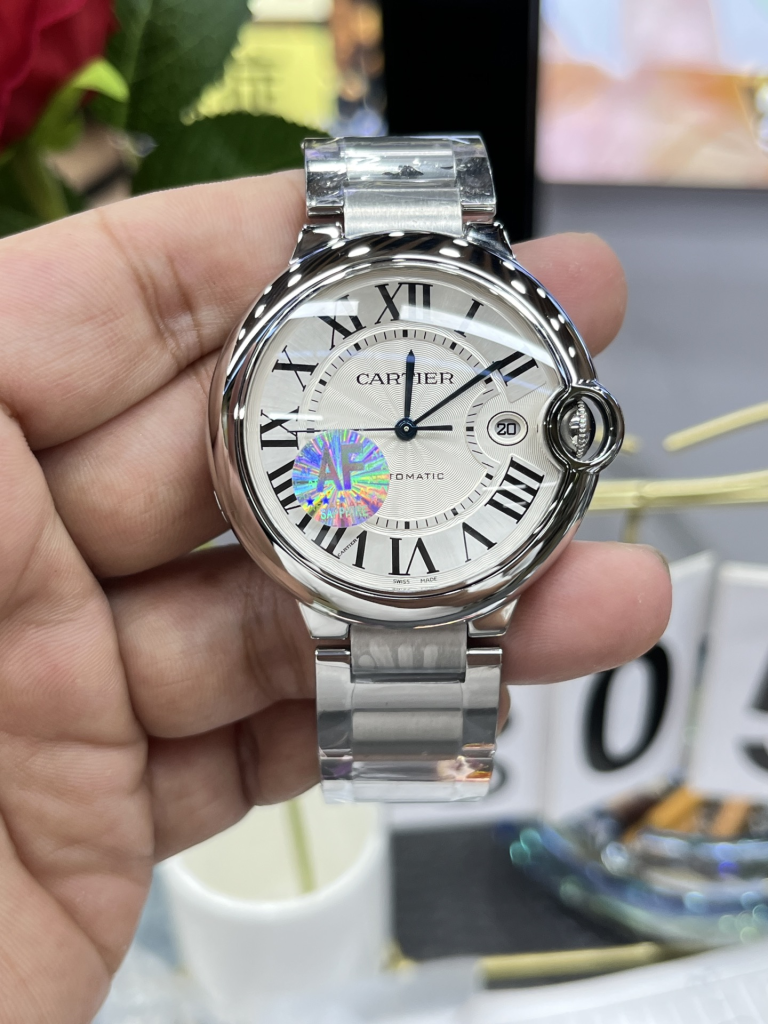
The hands behave the same way. Straight on, they appear almost black. Tilt the watch slightly and a deep blue comes alive along the edge. This color shift is subtle. It doesn’t shout for attention. But once you notice it, you stop mistaking painted blue for real heat-blued steel.
Then there is the calendar. On the first day, most copies look “fine.” After a week or two of wear, contrast starts to matter. On a Cartier Ballon Bleu 42mm from AF, the date window does not blend into the dial. It holds a soft separation in tone. Your eyes keep finding it without effort. On many non-AF pieces, the date either feels too white or sinks too far into the background. You don’t notice it at first. You do later.
AF doesn’t feel different because of one dramatic feature. It feels different because the watch behaves correctly in ordinary light, on ordinary days, not just in photos.
Why Price Gaps Exist Even When Sellers All Say “AF”
On the surface, everything is labeled the same. Scroll through listings or walk through stalls and you will hear the same words again and again: “AF version.” The problem is that not everyone holding that label is holding the same watch.
Some sellers work with real AF supply. Others mix parts from smaller factories and build what buyers later learn to call “AF-style.” To a quick look, both seem close enough. To pricing, they are not. That’s where the gap appears. One price feels “reasonable.” Another feels oddly low. A third one looks uncomfortably high. If the market is already transparent, extreme discounts always come from somewhere. Either the movement is swapped. The dial is from a secondary batch. Or the calendar wheel is simply not AF at all. The seller still says “AF.” The watch quietly says something else after you start wearing it.
This is why comparing prices alone does not protect you. You are not comparing the same watch. You are comparing labels.
The Only 6 Physical Checks That Actually Separate Real AF from “Almost AF”
If you only remember one thing from this guide, remember this: AF is not defined by logos, labels, or what a seller promises. It is defined by how the watch behaves when you slowly look at it, tilt it, and live with it. These six checks don’t require tools, certificates, or marketing language. They only require patience and natural light.
1. The Sapphire Crystal Must Show a Real Five-Layer “Fish-Eye” Curve
The easiest place to start is the sapphire crystal. Don’t stare at it straight on. Tilt the watch slightly in your hand. When you do this on a real AF Ballon Bleu crystal, the dial does not stay flat. It bends inward, then gently pushes back out again. The edge looks slightly thicker. The center feels deeper. Your eyes sense movement even though nothing moves. That slow inward-outward feeling is what people call the fish-eye curve, but the word matters less than the experience. On many “almost AF” pieces, the crystal stays visually flat no matter how you tilt it. Light slides across the surface without depth. It looks clean, but lifeless.
Once you see this difference in person, it becomes very hard to unsee.
2. Heat-Blushed Blue Hands That Shift From Black to Blue
Now move to the heat-blued hands. Look at them straight on. On a real AF, they don’t flash bright blue at you. They look nearly black. Under indoor light, they stay quiet and controlled. Now tilt the watch about forty-five degrees. That’s when the blue wakes up. A deep, liquid blue runs along the edges. Not painted. Not loud. It appears and disappears as your angle changes. This slow color shift is the behavior you are looking for.
On many copies, the Cartier blue hands look blue all the time. They never change. They don’t hide, and they don’t reveal themselves. That constant color is the giveaway.
3. The Dial Is Never Pure White — It Has a Soft Warm Tone
A real Ballon Bleu dial color is not snowy white. It carries a soft, slightly warm tone. Some people describe it as faintly creamy. Others describe it as “sun-touched.” The exact word is not important. The feeling is.
Hold a pure white dial next to an AF dial and the difference becomes clear. Pure white feels cold. It reflects light sharply. The AF Factory dial tone feels calmer. Softer. It absorbs just a little more light than it throws back.
This warmth does not mean the watch looks old. It means it looks balanced. That balance is missing on many small-factory versions.
4. The Guilloché Texture Must Look Deep, Not Printed
Next, let your eyes follow the guilloché dial texture. On a real AF, the fine lines don’t sit on the surface like ink. They sink into the dial. When light moves, shadows move with it. The pattern feels three-dimensional, not decorative. On printed textures, everything looks correct in a photo. But in motion, the surface stays flat. The shadows do not travel. The Cartier texture becomes a visual sticker instead of a surface structure.
This is one of those details that looks “correct enough” until you spend a full minute watching light walk across it.
5. The Date Window Background Must Be Gray, Not White
This is where many “got-it-right-everywhere-else” copies still fail.
On a real AF, the Ballon Bleu date wheel does not sit on a bright white background. The base tone is soft gray. It separates gently from the dial without shouting. Your eyes register it naturally. On many Bao builds and small-factory versions, the background turns white. It looks clean, but it breaks the visual harmony. The date jumps forward too aggressively. Once you notice this, it becomes one of the fastest exclusions for fake AF. The AF date window never looks stark.
6. The Blue Cabochon Crown Must Turn Red Under UV
Finally, move to the crown. You don’t need a lab. A simple UV light is enough. Shine it directly onto the Cartier crown cabochon. On a real AF, the stone does not stay blue. It shifts into a deep red — often described as pigeon-blood red. This reaction is not decorative. It comes from the material itself. If the cabochon does not change color under UV, there is no need to debate further. You can stop immediately. It is not AF.
The UV test cabochon method alone has eliminated more fake AF pieces than any other single check.
Why “Five Out of Six Right” Still Means It’s Not AF
There is a quiet trap many buyers fall into. They check a few details. Most of them look correct. One feels slightly off, but not “bad enough” to reject. So they accept it. This is exactly how a fake AF Factory piece passes through the door.
But AF is not a percentage game. It is an identity. If one core detail fails, the whole identity fails with it. You wouldn’t accept a passport that’s right on five lines and wrong on one. A watch works the same way. The crystal, the hands, the dial tone, the texture, the date, the crown — these don’t exist as isolated decorations. They work together. When one breaks the logic, the whole watch breaks its claim. This is why a dressed-up China super clone is more dangerous than a clearly cheap copy. The cheap copy announces itself immediately. The dressed-up one asks you to compromise. It asks you to forgive one flaw because everything else “looks fine.” That single compromise is the moment AF stops being AF.
Most buyers who later feel uneasy about their purchase trace that feeling back to this exact step — the moment they accepted “almost right” as “right enough.”
Price Traps: Why the “Too Good” AF Offers Keep Appearing
What Sellers Gain by Calling a Copy “AF”
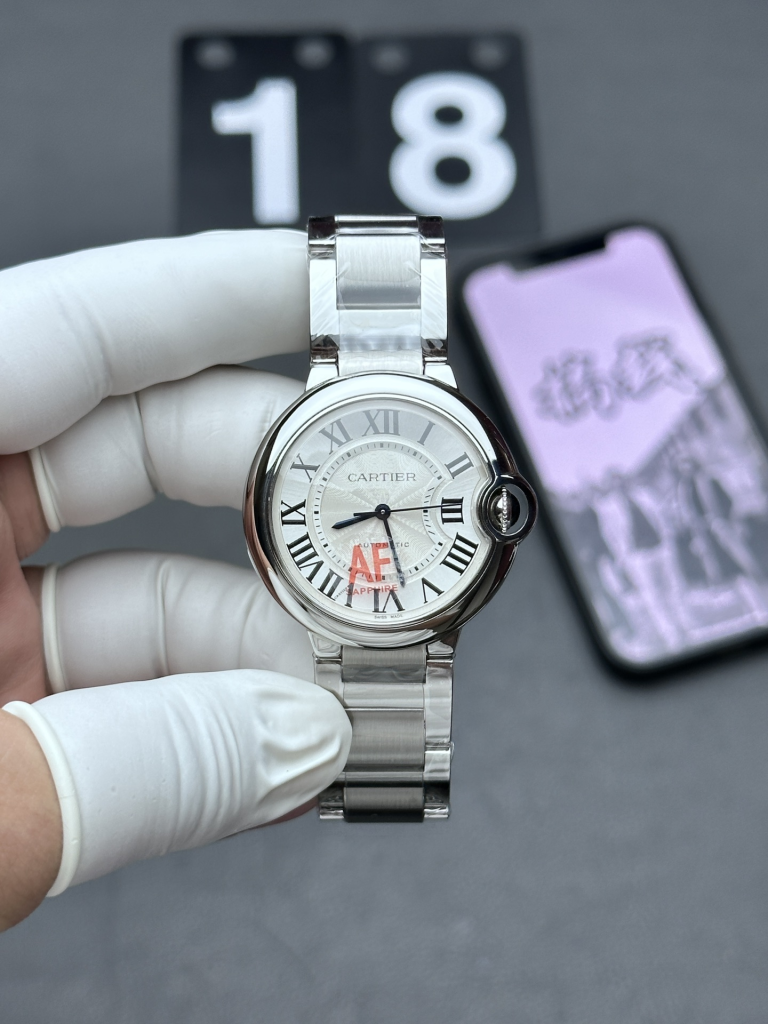
The words “AF version” cost nothing to say. They add instant weight to a listing. Once that label is spoken, the watch no longer has to compete as an ordinary replica. It now competes as “top tier.” That gap in perceived status creates room in the AF Factory price range. Some sellers stay inside the real range. Others stretch it downward. That stretch is where substitutions happen. A non-AF date wheel here. A secondary dial batch there. The watch still looks convincing enough to carry the AF label, but the supply chain quietly shifts underneath it.
Calling a copy “AF” increases perceived value without increasing production cost. That spread is the incentive. And as long as buyers focus only on labels and not on physical behavior, the incentive stays alive.
What Buyers Actually Lose Long Term
The first loss rarely shows up on day one. It shows up later.
Resale fails first. When you try to move the watch on, experienced buyers pause. They inspect the same six points you once skipped. The watch that was called AF in the beginning now struggles to defend its identity in front of someone who knows where to look. Parts mismatches come next. A crown that doesn’t match AF threading. A date wheel that sits differently. Servicing becomes negotiation instead of routine. What once felt like a “small detail” turns into a functional inconvenience.
Then buyer confidence collapses. Not in the watch alone, but in future purchases. You start second-guessing. Every label sounds weaker. Every description needs proof. This is the real cost hidden behind aggressive China Ballon Bleu replica price drops. The money is only part of it. The trust erodes quietly in the background.
If You Can’t Verify All 6 Details, Don’t “Guess” an AF
There’s a simple truth many buyers don’t like to hear. If you can’t verify all six physical details with your own eyes, guessing doesn’t protect you. Guessing just makes you feel better in the moment. It doesn’t change what’s actually on your wrist.
This isn’t about skill. It’s about preference. Some people enjoy slowing down, learning each layer, and building confidence piece by piece. Others don’t want the learning curve at all. Both choices are valid. The mistake happens when buyers drift into the middle — not verifying, but still assuming.
When It Makes Sense to Learn the Details Yourself
If you enjoy the process, learning the details can be deeply satisfying. You start noticing how light moves across the crystal at different times of day. You begin to sense the difference between painted blue and heat-blued steel without thinking about it. These details stop feeling like “tests” and start feeling like familiar habits.
This path makes sense when:
- You plan to handle more than one watch over time
- You like comparing, not just owning
- You find confidence in your own judgment
Over time, your hands learn faster than your eyes. The watch tells you what it is before the seller ever does.
When It’s Smarter to Rely on Someone Who Can Verify
Not everyone wants that kind of learning curve—and that’s fine.
Some buyers enjoy learning every detail.
Others just want a clean answer.
If your goal is simple ownership, not study, then relying on someone who can verify properly is often the calmer choice. The key is not who you rely on, but what they can demonstrate. Real verification is never emotional. It’s quiet. It’s slow. It’s repeatable. It holds up under questions without needing persuasion.
What doesn’t work is outsourcing judgment to branding, slogans, or price tags alone. Those don’t verify anything.
My Personal Take After Handling Real AF and Imitations
After spending time with both real AF and well-made imitations, I stopped thinking in terms of “good” and “bad.” I started thinking in terms of behavior. The first thing I notice now is the crown feedback. On real AF, the crown doesn’t feel loose or stiff. It feels settled. Resistance builds evenly as you wind. The motion doesn’t hesitate. Many imitations feel fine at first, but over time the winding gives off a faint uncertainty. Nothing breaks. Nothing fails. It just never quite disappears from your awareness. Light interaction is the second giveaway. Real AF doesn’t sparkle aggressively. It responds. Under soft indoor light, it stays calm. Under sunlight, it wakes up slowly. Imitations tend to be brighter earlier—but flatter later. The effect looks impressive in photos and feels louder in real life than it should. Then there is weight balance. It’s subtle. You don’t notice it in the first minute. You notice it after hours. Real AF settles on the wrist without drifting. Imitations often feel top-heavy or slightly restless once your arm relaxes.
None of these things make AF perfect. They just make it quiet. And over time, that quiet is what separates something that looks right from something that feels right.