
In the world of high-end watchmaking, a timepiece is worth far more than its retail price. It embodies precision engineering, centuries of heritage, and, most importantly, the manufacturer’s long-term commitment to maintenance and after-sales support. Yet in 2026, when buyers are tempted by “better deals” from unauthorized channels, they often overlook the importance of verifying authenticity through 2026 digital authentication tools and the critical value of that support commitment. A watch without official warranty coverage and professional service backing faces substantial risks to its future reliability and long-term value.
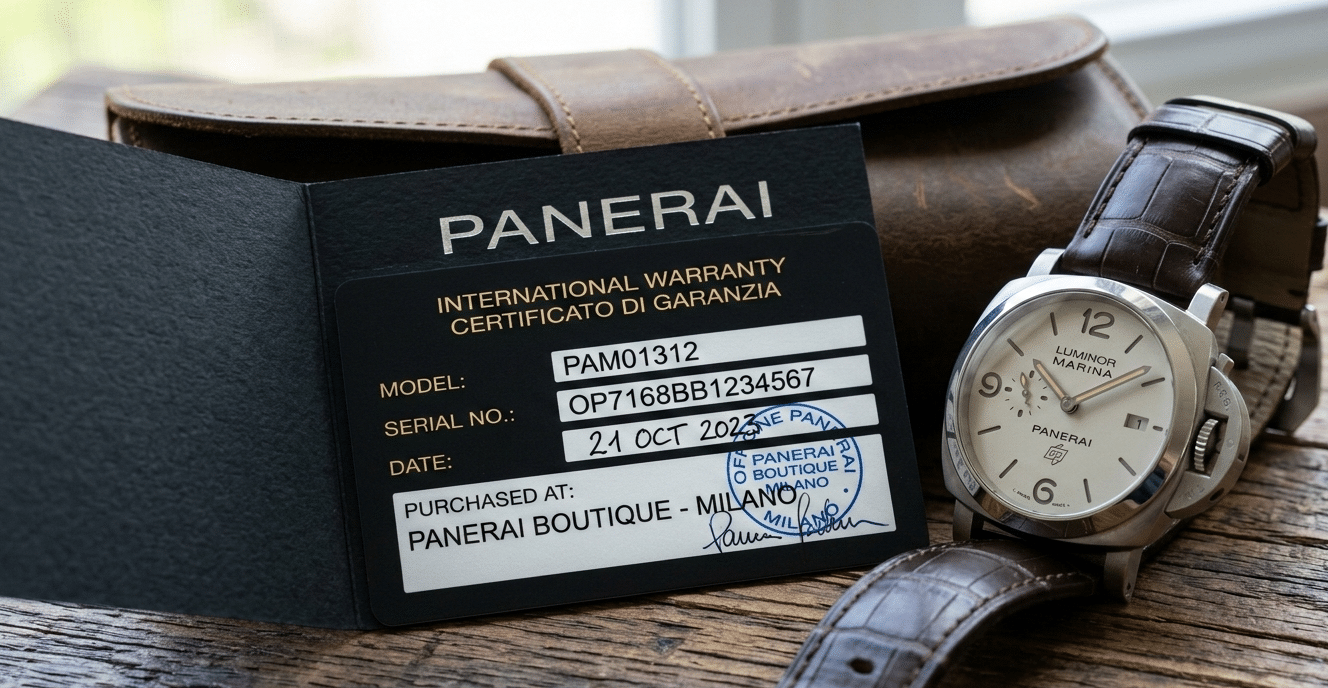
A close-up of a luxury watch warranty card with an official stamp and serial number, highlighting the importance of proper documentation.
The Foundation of Trust: Understanding Official Manufacturer Warranties in 2026
An official manufacturer’s warranty is an implicit contract between you and the brand. Under specific conditions, it guarantees that the brand will preserve your watch’s intended performance and quality standards over the years ahead. This warranty is more than a piece of paper; it is a core layer of protection for a high-value timepiece.
Standard Coverage and Exclusions: What’s Truly Protected
Manufacturer warranties generally cover manufacturing defects rather than damage caused by the owner. In 2026, most major brands offer warranty periods ranging from 2 to 8 years, depending on the brand and movement type. Rolex and Omega, for example, commonly provide 5 years of coverage, while Patek Philippe provides 2 years, and some brands such as A. Lange & Söhne may offer longer terms.
Typical covered components include:
- Movement defects: Any timekeeping inaccuracy or functional failure caused by faulty manufacturing or assembly.
- Case integrity: Material or structural defects in the watch case under normal use.
- Water-resistance sealing: Failure of water-resistance performance when the watch has not been impacted or opened by an unauthorized party.
- Dial defects: Noticeable printing, marker, or handset flaws originating from the manufacturing process.
However, warranties also contain clear exclusions, and these are often the areas that unauthorized sellers gloss over:
- Accidental damage: Damage caused by drops, impacts, or severe shocks, including broken crystals, scratches, or deformation of the case.
- Normal wear and tear: Natural wear to straps, clasps, and non-functional bezel surfaces, as well as fading of plating or PVD coatings.
- Unauthorized modifications: Any repair, servicing, or modification carried out by a non-official service center, including the installation of non-genuine parts.
- Battery replacement: Quartz battery changes are typically excluded from warranty coverage.
- Water intrusion: If moisture enters because the crown was not properly secured or the watch was used beyond its rated depth.
Understanding these terms is essential because they define the costs you may face later. For example, if a watch loses its water resistance because of an unauthorized repair, the brand may deny warranty coverage and may even refuse paid service unless you first pay a significant amount to restore the watch to factory specification.
Global Validity and Transferability Protocols
In a world of frequent international travel and an active secondary market, global warranty validity and transferability matter more than ever. Most top-tier watch brands offer global warranty coverage, meaning you can obtain service at authorized centers worldwide regardless of where the watch was originally purchased. That said, this is not universal. Certain brands or specific models may still be subject to regional restrictions, especially in some emerging markets.
Transferability policies also vary widely from one brand to another:
- Transferable with the watch: For many brands, the warranty is tied to the watch itself rather than the original purchaser, so a subsequent owner can still benefit from any remaining coverage.
- Owner-specific warranty: Some brands may require the warranty to remain tied to the original buyer, or they may require an official ownership transfer registration before the remaining coverage can continue.
Before buying, always review the brand’s official warranty terms or speak directly with an authorized dealer to confirm the exact policy for the watch in question. Some brands may require the second owner to present the original proof of purchase before honoring the warranty. If the watch comes from an unauthorized channel, even a genuine piece may face warranty enforcement issues in certain regions.
The Official Activation Process: Why Your Purchase Point Matters
The validity of an official warranty begins with the correct activation process. This is often the key dividing line between an authorized purchase and an unauthorized one.
A valid warranty activation process typically requires:
- Authorized dealer stamp: The warranty card must show the stamp of an authorized dealer along with the sale date.
- Purchase date: A clearly stated purchase date, which marks the starting point of the warranty period.
- Serial number registration: The watch’s unique serial number must be registered in the brand’s system.
- Digital activation: An increasing number of brands now use digital warranty cards and online registration systems that require activation through the official website or brand app after purchase.
If you buy a watch through an unauthorized channel, even a “blank” or unstamped warranty card may leave you with no valid coverage. Many brands explicitly state that only watches purchased through authorized dealers qualify for official warranty service. That means the few hundred dollars saved on the gray market can easily translate into thousands of dollars in future repair costs, because the brand may classify the watch as outside warranty coverage or as having unverifiable provenance.
Expert Authentication Insight
Verifying the completeness of the warranty card is the first step. Make sure the dealer stamp is clear, and confirm that the purchase date and watch serial number match the watch exactly. Then use the brand’s official registration portal, or contact customer service directly, to check the activation status of the serial number. If the system shows the watch as unregistered or the details do not match, that is a serious warning sign that the watch may have come from an unauthorized source or may involve another underlying issue.
Official Service Centers: Expertise, Genuine Parts, and Transparent Lead Times
When your watch requires maintenance or repair, the quality of service provided by an official service center is fundamentally different from that of an independent repair shop. Official centers extend the brand’s technical standards and quality controls, ensuring that the watch is restored as closely as possible to factory condition.
Certified Technicians and Proprietary Tooling
The core strength of an official service center lies in the expertise of its technicians and the specialized tools they use.
- Brand training: Technicians at official service centers undergo rigorous brand-specific training and certification. They understand the construction, materials, and repair procedures of specific calibers in detail. These training programs often take months or even years, ensuring that technicians can handle both current systems and more complex movements correctly.
- Proprietary equipment: Official service centers are equipped with brand-specific diagnostic and repair tools. These may include Witschi timing instruments for rate analysis, precision pressure testers designed for unusual case architectures such as monobloc cases or proprietary crown systems, and specialized assembly tools available only through brand authorization. These tools ensure precision throughout the service process and reduce the risk of unnecessary wear or accidental damage.
By contrast, even experienced technicians at unauthorized workshops often lack these brand-specific tools and current technical documentation. That gap can reduce repair quality and, in some cases, lead to irreversible movement damage.
The Genuine Parts Guarantee and Supply Chain Integrity
Official service centers are the only repair channels that can guarantee the use of genuine factory parts.
- Direct factory supply: Official centers obtain replacement parts directly from the manufacturer, including small screws, specific gaskets, balance assemblies, mainsprings, sapphire crystals, and model-specific case components. These parts are produced to the same standards as those used during initial manufacturing, ensuring full compatibility and intended performance.
- Batch control: Genuine parts usually pass through tightly controlled batch and quality inspection systems, reducing the risk of counterfeit or substandard components entering the repair process. That means every replaced component meets the brand’s quality standards and preserves the integrity of the watch as a whole.
Unauthorized repair shops, in contrast, often struggle to obtain genuine factory parts. They may rely on third-party suppliers, generic substitutes, donor parts, or low-grade replicas. These non-genuine parts can accelerate movement wear, reduce water resistance, and create more severe downstream failures, ultimately harming both long-term reliability and market value.
Service Lead Time Benchmarks and Communication Protocols
Although official service centers can sometimes require longer repair times, their transparency and traceability remain major strengths.
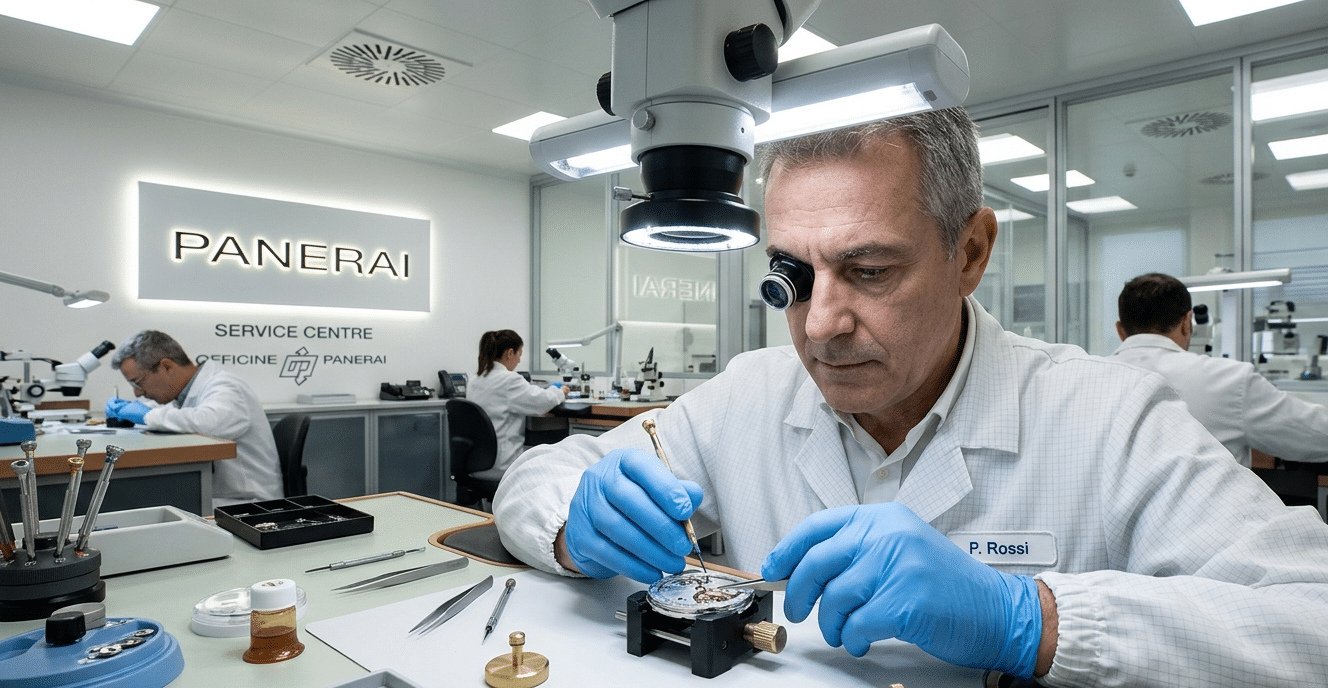
- Standard service timelines: Routine service, such as a full maintenance overhaul, often takes 4 to 8 weeks. Complex repairs or restoration work on vintage watches may take several months or longer. These benchmarks are typically based on brand process standards and actual parts availability.
- Transparent tracking systems: Many brands now provide online service portals that allow clients to track progress from intake and diagnosis through repair, testing, and final return shipment.
- Official communication: Brands generally provide regular updates by email or phone and will often proactively explain unexpected delays and revised completion estimates.
That transparency and predictability can offer real peace of mind, even during a lengthy wait.
A technician in a clean room working on a watch movement with specialized tools, emphasizing the precision and expertise of official service centers.
Expert Authentication Insight
When you collect the watch, always request the official service order documentation. This document should list the replaced part numbers, the exact work performed, such as cleaning, lubrication, polishing, and water-resistance testing, the certification details of the responsible technician, and the post-regulation test results, such as amplitude, daily rate deviation, and water-resistance depth. Cross-reference the listed part numbers with the brand’s official parts documentation where possible to confirm that genuine components were used. At the same time, conduct a genuine finishing comparison to visually verify consistency with factory standards. Also check whether the returned watch includes a renewed post-service warranty, which is often 1 to 2 years from the completion of the repair.
Buying a watch from an unauthorized seller, typically through the gray market or an unofficial retailer, may appear attractive in the short term because of lower prices. But that apparent bargain often conceals substantial risk and long-term financial exposure.
“Store Warranties” and Their Inherent Limitations
To compensate for the lack of official brand coverage, unauthorized sellers often offer so-called “store warranties” or “seller warranties.”
- No manufacturer backing: These warranties are private agreements between seller and buyer and have no recognition or support from the manufacturer. If the seller goes out of business, changes operators, or simply refuses to honor the promise, the warranty becomes effectively worthless.
- Vague terms: The terms are often ambiguous and highly restrictive. They may cover only a narrow set of faults, exclude many common problems, and make no firm commitment about where the watch will be repaired or whether genuine parts will be used. Some simply promise “free repair” without guaranteeing repair quality, turnaround time, or authentic replacement components.
- Difficult enforcement: If a problem arises, you must deal directly with the seller, which can become a slow and frustrating process. Many sellers deflect responsibility or shift blame to the manufacturer. In cross-border transactions, enforcing such a warranty is often impractical.
Compared with an official warranty’s global validity, transparent service workflow, and genuine-parts assurance, a store warranty offers very limited protection. In many cases, it functions more as psychological reassurance than as meaningful coverage.
The Risk of Non-Genuine Parts and Substandard Repairs
When a watch is serviced through unauthorized channels, one of the greatest risks is the use of non-genuine parts and non-standard repair procedures.
- Non-genuine parts: Because unauthorized repairers do not have access to the brand’s official parts supply, they often use generic parts, donor components, low-quality reproductions, or even second-hand parts salvaged from scrap watches. These components may differ from factory parts in dimensions, metallurgy, hardness, or finishing. A non-genuine gasket, for example, can reduce water resistance; a poor-quality balance or mainspring can affect rate stability and accuracy; and a non-genuine sapphire crystal may offer inferior scratch resistance or optical clarity.
- Substandard repairs: Unauthorized workshops usually do not have certified brand-specific tools or full technical documentation. They may use incorrect tools that leave scratches or damage during disassembly, work on the movement outside controlled clean-room conditions that allow dust or debris to enter, or close the case without conducting proper pressure testing, leading to water ingress. These improper procedures can fail to solve the original issue and may introduce new defects, accelerate wear, or cause irreversible damage.
In the end, a watch that has undergone unauthorized repair may suffer severe losses in mechanical integrity, water resistance, and long-term reliability. That does not just affect daily wear; it also meaningfully reduces future resale value.
Voided Manufacturer Warranty and Future Service Rejection
This is one of the most serious consequences of buying through unauthorized channels: the official manufacturer warranty may be voided immediately, and the watch may later be refused by an official service center.
- Warranty voidance: Nearly all major watch brands clearly state that if a watch has been opened, repaired, modified, or fitted with non-genuine parts by an unauthorized party, the manufacturer warranty is void. The reason is simple: the brand cannot assume responsibility for work carried out outside its technical control, especially when that work may introduce unknown risks.
- Future service refusal: If an official service center finds evidence of unauthorized intervention, such as damaged screw heads, non-genuine components, inconsistent serial engravings, or improper sealing practices, it may refuse to service the watch entirely. Even if paid service is still possible, the brand may first require you to pay a substantial amount to restore the watch to factory standard by replacing all non-genuine parts and correcting any damage caused by earlier unauthorized work. That cost can easily exceed the amount you originally saved by avoiding the authorized channel.
That is the real risk behind the “cheaper” purchase. What looked like a money-saving decision can ultimately leave you with a watch that no longer qualifies for official brand support, with both reliability and market value significantly compromised.
A close-up of a damaged watch movement with mismatched screws and signs of improper handling, illustrating the consequence of substandard repairs.
Expert Authentication Insight
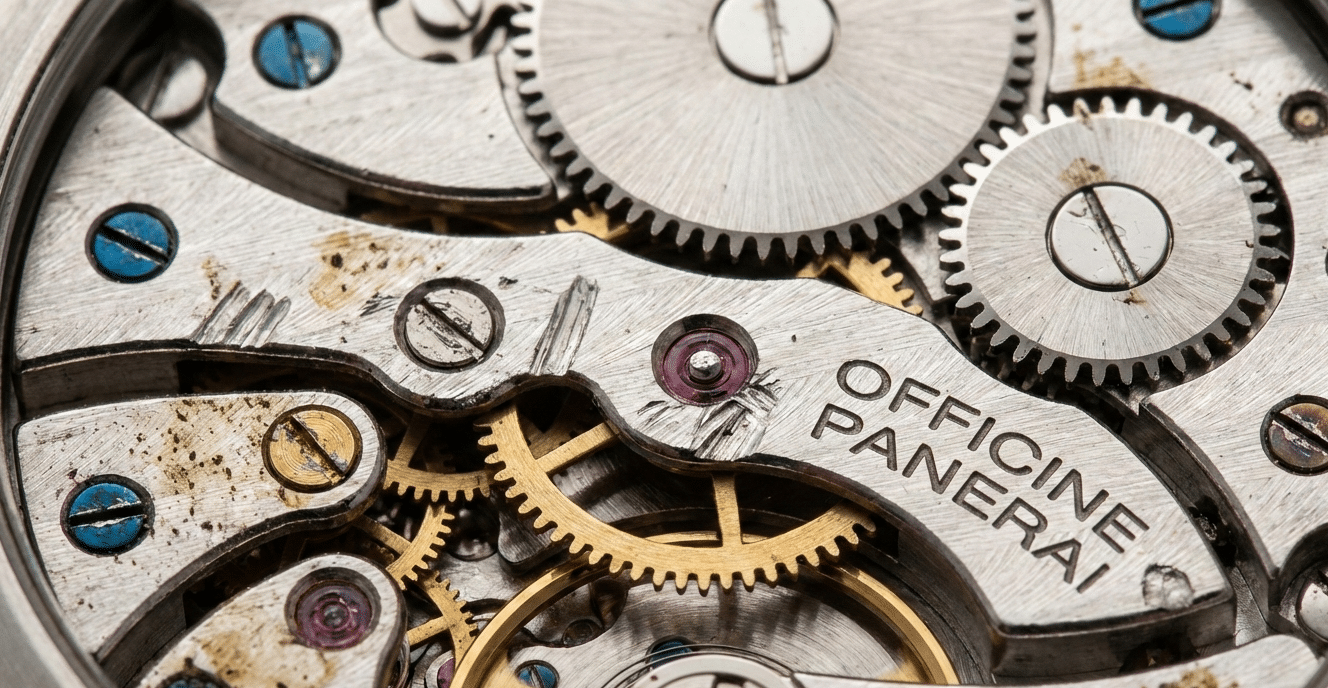
Identifying whether a watch has previously been serviced outside authorized channels requires trained eyes and, in many cases, specialized equipment.
- Movement inspection: Through an exhibition caseback, if present, or by opening the case with professional assistance, inspect the movement carefully. Look for non-factory finishing marks, inconsistent batch codes, or part numbers that do not align with brand standards. Wear patterns on screws, fingerprints or dust on bridges, and scratches along movement edges can all indicate unauthorized opening.
- Material verification: Professional metallurgical analysis, such as XRF testing, can confirm whether the alloy composition of the case or specific components matches factory specification. This usually requires laboratory access, but it can provide decisive evidence in suspected frankenwatch cases.
- Water-resistance testing: Beyond a basic dry pressure test, more detailed testing under varying pressure levels can reveal weaknesses in the sealing system. After unauthorized repair, even if the gasket has been replaced, poor installation or low-quality gasket material can significantly reduce water resistance.
When purchasing a pre-owned watch, if the seller claims the watch has been serviced, always request full service records and a list of replaced parts. Any seller who cannot provide that documentation deserves serious caution.
Lead Time Discrepancies: Official Efficiency vs. Gray Market Delays
When your prized timepiece requires service, the wait can feel interminable. But beyond the emotional toll, the lead time for repairs can significantly impact your watch’s long-term health and value. This section compares the structured, often predictable service timelines of official manufacturer centers against the often opaque and extended delays inherent in unauthorized repair channels.
Official Service Center Logistics and Prioritization
Official service centers operate with a highly structured logistical framework designed to handle a global volume of repairs. They manage extensive repair queues, often categorizing incoming watches by complication level, service type (e.g., routine maintenance, complex repair, warranty claim), and urgency. Warranty work, in particular, often receives priority, ensuring that brand obligations are met promptly. These centers benefit from direct factory support, which means immediate access to proprietary technical documentation, specialized tooling, and a guaranteed supply of genuine, batch-controlled parts. For complex issues, direct communication channels with the brand’s engineers can expedite diagnostics and resolution, leading to a more efficient and reliable turnaround compared to independent shops.
In stark contrast, unauthorized repair shops face significant bottlenecks. Their primary challenge is the lack of direct access to genuine manufacturer parts. Instead, they often rely on a network of third-party suppliers, which can lead to extended delays while waiting for components. These parts may not always be factory-sourced, introducing risks of non-genuine, aftermarket, or even used substitutes. Furthermore, independent shops typically have smaller teams of technicians, who, while skilled, may not possess brand-specific certifications or access to the exclusive diagnostic equipment required for certain complications or unique case designs. This can result in longer diagnostic times, repeated attempts at repair, and a slower overall service cycle, sometimes stretching months beyond what an official center would require.
The Impact of Delays on Watch Value and Owner Frustration
Prolonged repair times don’t just test an owner’s patience; they can diminish a watch’s perceived value. For limited editions or vintage pieces, an extended absence from the wrist can be particularly frustrating, potentially impacting their market desirability if a buyer prioritizes immediate availability. More critically, for a daily wear piece, long delays mean extended periods without a functional watch, forcing owners to seek alternatives or simply go without. The psychological cost of extended separation from a prized possession, coupled with uncertainty about its return and condition, can erode the joy of ownership and lead to significant frustration, undermining the entire luxury watch experience.
Expert Authentication Insight
To accurately assess service lead times and quality, meticulous documentation is key. Always record the exact date your watch is submitted for service and the date it is returned. Upon return, scrutinize the repair report for specific work performed, a detailed list of parts replaced (with part numbers if available), and any calibrated test results (e.g., amplitude, rate deviation, water resistance). Cross-reference the stated turnaround time against the brand’s typical service benchmarks for similar issues. For a deeper understanding of varying quality and process standards, consider a thorough factory comparison. A significant deviation or a lack of detailed reporting should raise a red flag, indicating potential inefficiencies or a less transparent repair process.
The “Gray Market” Dilemma: Price vs. Peace of Mind
The allure of a “deal” on a luxury watch from an unauthorized seller can be powerful. However, this initial price advantage often comes with hidden costs and significant long-term liabilities. This section provides a balanced assessment of the perceived upfront benefits and the undeniable drawbacks of navigating the gray market.
Initial Savings vs. Long-Term Financial Exposure
Gray market sellers often offer watches at a discount, sometimes 10-20% below authorized retail prices. For an $8,000 watch, that’s an immediate saving of $800-$1,600. This seems attractive, but consider the long-term financial exposure. If the watch requires an out-of-warranty service within a few years—a common occurrence for complex mechanical movements—the cost of a full movement overhaul could be $700-$1,500 for a luxury brand. Without an official warranty, that entire cost falls to you. Furthermore, a watch with a compromised service history or one that has been repaired with non-genuine parts will likely fetch a significantly lower resale value, erasing any initial savings and potentially costing you more in the long run. The risk of encountering a counterfeit or “frankenwatch” also means the entire investment could be worthless.
Authentication Challenges and Counterfeit Risks
Purchasing from unauthorized channels dramatically increases your risk of encountering watches with questionable authenticity. This isn’t just about outright counterfeits, which, as the Panerai replica market demonstrates, can be incredibly sophisticated. It also includes “frankenwatches”—timepieces assembled from a mix of genuine and non-genuine, or even different genuine, parts. For example, a genuine case with a replica movement, or a genuine dial with aftermarket hands. These watches may appear genuine at a glance but fail closer inspection and will be rejected by official service centers. Without a clear chain of custody from an authorized dealer, verifying the provenance and originality of every component becomes a significant, often impossible, challenge for the buyer.
The Erosion of Brand Experience and Trust
A luxury watch is more than just a time-telling device; it’s an experience. Bypassing authorized channels often means detaching yourself from the full brand ecosystem. You might miss out on invitations to exclusive brand events, access to dedicated customer service lines, or personalized support that authorized owners receive. More subtly, it erodes the psychological assurance that comes with knowing your watch is genuinely authentic, protected by a manufacturer’s warranty, and serviced by certified experts using genuine parts. This loss of trust in the watch’s integrity and its long-term reliability can diminish the very essence of luxury ownership.
Expert Authentication Insight
When evaluating a watch from an unverified source, a high-resolution loupe (10x or 20x magnification) is your best friend. Scrutinize the dial printing for crispness, examining every numeral, index, and logo for any signs of blurring, uneven ink application, or incorrect font. Inspect case engravings for consistent depth and sharp edges. Through a display caseback, examine movement finishing—look for consistent Geneva stripes, perlage, or anglage, and compare them against known genuine examples and brand specifications. Under UV light, verify that the lume application is uniform in color and intensity across all markers and hands, as inconsistencies can be a telltale sign of non-genuine components or re-luming.
Proactive Measures: Safeguarding Your Investment from Day One
Protecting your luxury watch investment requires diligence and informed decision-making, especially at the point of purchase. By taking proactive steps, you can ensure valid warranty coverage and secure the long-term service integrity of your timepiece.
The Importance of Authorized Dealer Verification
The single most critical step is to purchase your watch only from an authorized dealer. Verify a seller’s authorized status directly through the brand’s official website, which typically features a dealer locator tool. If in doubt, contact the brand’s customer service directly and ask for confirmation. Purchasing from a vetted, authorized source provides comprehensive benefits: a guaranteed genuine product, a valid manufacturer’s warranty, expert sales advice, and a clear path for future service. These dealers have established relationships with the brand, ensuring they adhere to strict quality and service standards, protecting your purchase from the outset.
Documenting Your Purchase: Receipts, Warranty Cards, and Digital Records
Never underestimate the critical role of comprehensive documentation. Insist on an original, itemized sales receipt that clearly states the watch model, serial number, and purchase date. Ensure your warranty card is fully stamped, dated, and signed by the authorized dealer, with the watch’s serial number clearly legible and matching the watch itself. Many brands now offer digital warranty registration; complete this process immediately if available. Maintain secure digital backups (scans or high-quality photos) of all purchase documentation. These records are indispensable for warranty claims, future service, insurance purposes, and proving ownership should you ever need to sell the watch.
Understanding Your Rights and Brand-Specific Policies
Before you commit to a purchase, invest time in researching the specific warranty terms and service network of your chosen watch brand. Understand the duration of the warranty, what it covers (and, critically, what it explicitly excludes), and the process for initiating a claim. Familiarize yourself with the brand’s service center locations, typical turnaround times, and parts availability. Some brands offer extended warranty programs or specific policies for vintage watches; knowing these in advance can influence your purchase decision and long-term ownership strategy. Don’t assume all brands offer the same level of after-sales support; due diligence here can prevent future headaches and unexpected costs.
Expert Authentication Insight
Prior to finalizing any purchase, conduct a thorough physical inspection of all accompanying materials. Verify the presence of the original box, all manuals, and, most importantly, the warranty card. Ensure the serial number on the warranty card precisely matches the serial number engraved on the watch case. For brands that use them, check for tamper-evident seals or holographic authentication features on the warranty card or packaging. These details, while seemingly minor, are crucial indicators of authenticity and a valid purchase, offering peace of mind that your investment is genuine and fully supported.
The dilemma between a tempting upfront discount from an unauthorized seller and the long-term security provided by official channels boils down to a fundamental question: Is the initial saving worth the potential future cost, stress, and compromised integrity of your watch? Our investigation unequivocally points to a clear recommendation: always prioritize authorized channels for purchases. The true value of a luxury watch extends far beyond its initial price tag to encompass the peace of mind, guaranteed authenticity, and long-term security provided by a valid official warranty and access to certified service. Before any transaction, verify the seller’s authorization and thoroughly understand the warranty terms. This proactive approach is not merely a recommendation; it’s a critical checklist for safeguarding your investment and preserving the authentic luxury watch experience.