
Why VC Replicas Age Faster Than Most Brands
Vacheron Constantin replicas rarely announce failure through obvious cosmetic collapse. What gives way first is behavior: alignment that no longer feels settled, hands that lose coherence under motion, and interfaces that begin to resist in subtle but persistent ways. This pattern is not accidental. It emerges from a design language built on low geometric tolerance, exposed dial layouts, and thin vertical stacking, all of which magnify small assembly deviations as the watch accumulates hours rather than years.
Passive wear accelerates this process because the system has little internal buffering. When tolerances are tight and visual space is open, minor drift does not stay hidden inside the movement. It propagates outward, becoming legible on the dial and perceptible through touch. Ownership, in this context, is not about preserving surface condition but about actively managing system behavior as it evolves through use.

Dial Whitespace Turns Minor Drift Into Visible Failure
The defining feature of many Vacheron Constantin dials is restraint. Large fields of negative space are not decorative emptiness; they are structural exposure. With fewer visual anchors and less texture to absorb error, the human eye becomes extremely sensitive to even fractional center-axis drift or hand misalignment. What would pass unnoticed on a dense sports dial becomes disruptive here within months.
As wear accumulates, micro-shifts in seating or axial play begin to express themselves as visual imbalance rather than mechanical noise. The dial does not forgive. This is why owners often report that a watch still “runs fine” while feeling unsettled to look at. The design turns degradation into something immediately visible, effectively converting internal tolerance loss into an external maintenance signal.
Thin Hand Stacks Reduce Error Buffer During Wear
Vertical compression is another quiet amplifier of aging. Thin hand stacks create elegance at rest, but they leave almost no margin once the system begins to move through repeated cycles. Lubricant migration, minute axial play, or slight changes in hand height do not dissipate across space; they collide. The result is not dramatic hand contact but a gradual loss of functional coherence that shows up as uneven clearance and altered motion feel.
This makes hand clearance a wear-sensitive interface rather than a fixed specification. What starts as acceptable alignment becomes fragile under time and motion, especially when the watch is worn daily without corrective adjustment. The system does not catastrophically fail; it slowly loses its internal agreement. Recognizing this early reframes maintenance from reactive repair to ongoing behavioral management, which is the only way these replicas retain long-term usability.
Lubrication Migration: The Silent System Killer
Most long-term failures in Guangzhou-built Vacheron Constantin super clones do not begin with broken parts or obvious malfunction. They begin with oil moving to places it was never meant to occupy. Automatic systems rely on carefully constrained lubrication zones, but over months of gravity exposure and wrist motion, rotor grease slowly redistributes, crossing boundaries that exist only on paper once the watch is in daily use.
This is why so many owners describe a sudden change rather than a gradual decline. A watch can run smoothly for an extended period, then develop winding noise, uneven resistance, or amplitude loss without any obvious trigger. The system has not failed abruptly; it has crossed a lubrication threshold where contamination begins to interfere with friction control. Once that happens, behavior changes quickly, even though the underlying components remain intact.
Rotor Oil Drift Alters Winding Resistance
The first signal usually appears through touch, not timekeeping: as oil creeps toward the reverser wheels and the crown transmission path, resistance loses its continuity and winding no longer feels evenly loaded across the cycle but instead alternates between light slip and sudden drag — a tactile failure onset that maps directly to the tier-based lubrication and component interaction thresholds described in the price stratification in Vacheron Constantin super-clone production quality and functional behavior framework, creating the subtle yet unmistakable “off” sensation experienced users recognize even if they struggle to articulate it.
This tactile change matters because it precedes visible or measurable failure. The rotor is still spinning, the watch is still charging, but the energy transfer is no longer clean. Treating winding feel as subjective or irrelevant misses its diagnostic value. In these systems, feel is often the earliest and most reliable warning that internal discipline is breaking down.
Practical Judgment Tips: Rotor Behavior
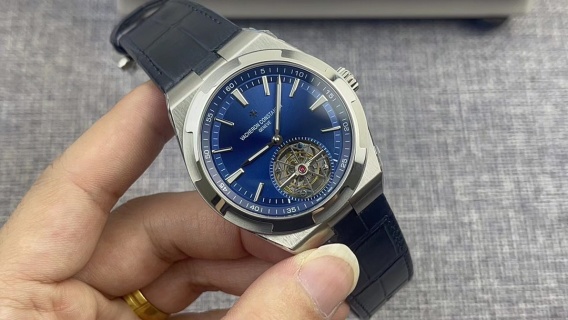
A simple monthly check is enough to surface early drift. Wind the watch slowly through a full cycle and focus on resistance continuity rather than speed or sound. Healthy systems feel consistent from start to finish, with no sudden easing or tightening that breaks rhythm.
Any unevenness that repeats across cycles should be treated as a system signal, not user error. This does not require opening the case or chasing precision metrics. It is about recognizing that alignment behavior and lubrication discipline express themselves first through touch. Catching that change early is often the difference between a stable system and one that quietly degrades beyond recovery.
Calendar Gear Wear: Damage Caused by User Behavior
Calendar failures in Vacheron Constantin replicas are often blamed on build quality, but long-term observation points elsewhere. Most damage accumulates through user interaction during moments when the system is mechanically vulnerable. The calendar train operates under high localized load, and when adjustment is applied during unsafe windows, stress concentrates at the interface between the date jumper and the driving wheel rather than distributing across the system.
What makes this failure mode deceptive is its delayed expression. The calendar may continue to change for weeks or months after damage begins, giving the impression that nothing is wrong. In reality, each improper adjustment removes a small amount of material or distorts engagement geometry, pushing the system closer to failure without producing immediate symptoms. This is why calendar issues in these replicas are better understood as behavioral outcomes rather than random defects.
Why Fast Calendar Adjustment Eats Teeth
Quick-set convenience masks a mechanical compromise. During certain hours, the calendar components are already partially engaged, with force preloaded but not fully released. Applying torque at this stage does not cleanly advance the date; it forces components to slide against each other under load. The result is micro-chipping along gear teeth and deformation at contact points that were never designed to absorb that kind of stress.
The danger lies in the subtlety of the damage. A chipped tooth does not immediately stop the calendar from functioning. It introduces irregular engagement that worsens with every cycle. This is why “it still changes” is not evidence of health. It often means the system is quietly shedding tolerance, one adjustment at a time, until misalignment or skipping finally becomes visible.
Practical Judgment Tips: Calendar Use
Calendar longevity depends less on restraint than on timing discipline. Avoid quick-set adjustments between 9 PM and 3 AM, when internal engagement is most likely to be partial and unstable. During these hours, even gentle input applies force against components that are already under load.
Reverse cycling carries similar risk by reloading interfaces that are designed for unidirectional movement. Treat the calendar as a high-stress subsystem rather than a casual convenience. Consistent, disciplined use does not make the system immortal, but it dramatically slows cumulative damage and preserves functional alignment far longer than passive care ever could.
Monthly Re-Centering: Preventing Accumulated Offset
Alignment in Vacheron Constantin replicas is not a fixed state achieved at assembly and preserved through wear. It is a dynamic condition that drifts as torque loads shift across the system during daily use. Over time, small imbalances in preload accumulate across the gear train, subtly biasing hand position and calendar engagement away from their original center.
Monthly re-centering works because it temporarily resets these biases. A full adjustment cycle redistributes load across the motion works and calendar interfaces, allowing the system to settle back into a more neutral equilibrium. Without this intervention, drift compounds quietly. The watch does not fail outright, but its internal agreement erodes, and visual or tactile misalignment becomes increasingly difficult to reverse.
Why Passive Wear Allows Tolerance Stack-Up
Wearing a watch keeps it running, but it does not keep it centered — daily motion applies torque unevenly, with certain gears carrying more load depending on calendar state, hand position, and winding direction, and these asymmetries create preferential wear paths that slowly pull the system off axis, especially in designs with tight hand stack tolerance, a geometric exposure and systemic discipline issue extensively detailed in the why Vacheron Constantin replicas fail differently through geometry exposure and system discipline analysis.
The assumption that motion equals maintenance confuses activity with correction. Movement sustains operation, but it also reinforces existing bias. Without periodic intervention, the system continues to wear along the same paths, stacking tolerance loss in one direction rather than redistributing it. This is why watches that are worn continuously often show more pronounced alignment drift than those that are actively managed.
Practical Judgment Tips: Monthly Full Adjustment
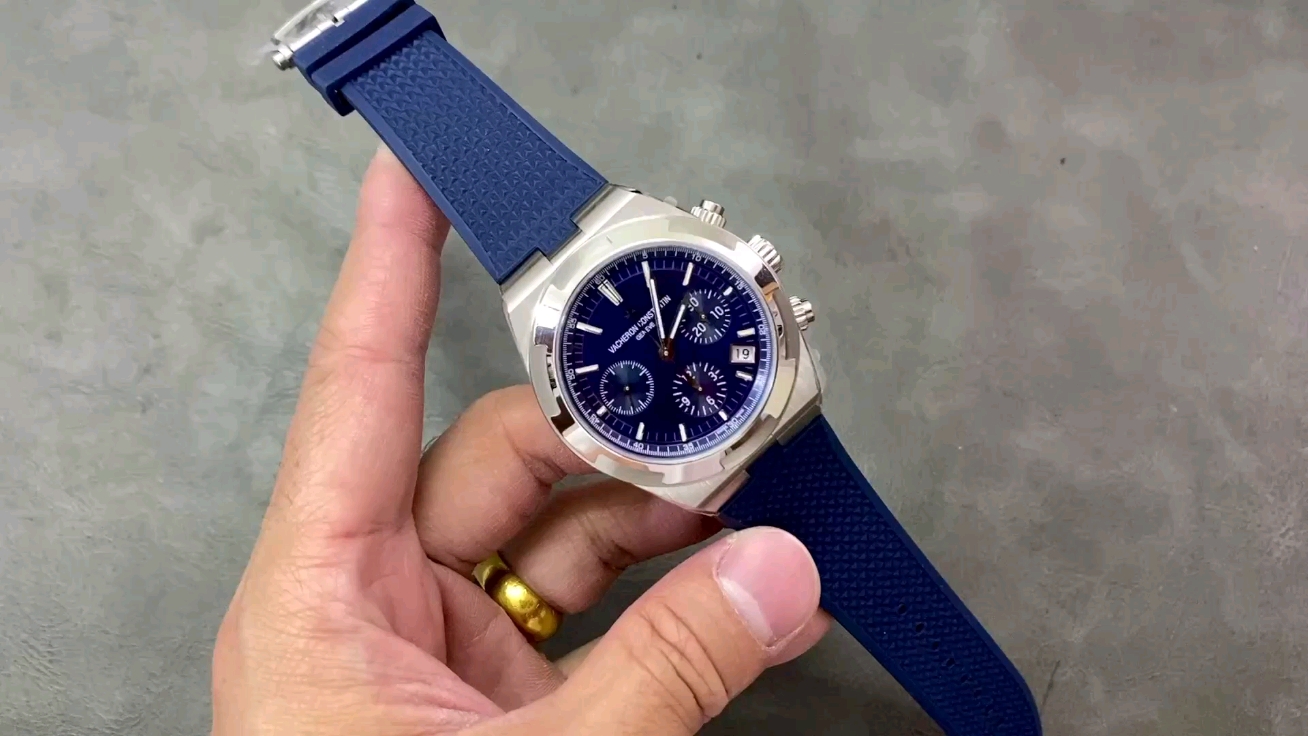
Once per month, perform a complete reset of both time and date rather than incremental corrections. Move the hands through a full cycle and re-establish the calendar from a neutral position. This process re-equalizes preload across the gear train and interrupts the wear patterns that develop through habitual use.
The goal is not improved accuracy but restored balance. Think of the adjustment as structural hygiene rather than calibration. Done consistently, it slows cumulative geometric drift and preserves alignment behavior far longer than passive wear ever can.
Long-Term Storage Is Worse Than Daily Wear
Letting a Vacheron Constantin replica sit untouched feels protective, but extended storage often accelerates decay. When a watch remains static, lubricants settle under gravity instead of circulating, and elastomeric seals begin to dry without periodic compression. The system loses balance quietly, not through use, but through the absence of motion that would otherwise redistribute stress and oil.
Daily wear introduces load, but it also keeps the internal environment active. Oils move, seals flex, and contact surfaces renew their working films. In contrast, long-term storage allows degradation to concentrate in fixed locations. When the watch eventually returns to use, these imbalances surface quickly as noise, resistance changes, or erratic behavior that seems sudden but has been developing the entire time.
Why Idle Rotors Create Uneven Lubrication Fields
Automatic systems depend on repeated redistribution cycles to maintain lubrication discipline. When the rotor remains idle, oil migrates downward and stays there, pooling along gravity-favored paths without the corrective effect of rotation. Over weeks or months, this creates uneven lubrication fields that no amount of gentle initial wear can immediately undo.
This is why storage should be treated as a stressor rather than a neutral state. The system is not resting; it is drifting. Without periodic motion, the internal balance that supports smooth operation dissolves, leaving the watch more vulnerable when activity resumes. Understanding this reframes maintenance as something that happens through controlled use, not avoidance.
Closing Judgment: VC Replicas Reward Active Ownership, Not Passive Possession

Vacheron Constantin super clones expose tolerance failure early by design, and Guangzhou production realities magnify that exposure — a dynamic underscored by the structural fidelity and alignment discipline patterns in the Vacheron Constantin replica structural and alignment performance review — which means these watches remain satisfying only when owners engage with system behavior deliberately rather than assuming cosmetic care or inactivity will preserve them.