
Choosing between a Patek-style super clone and a Rolex-style super clone is less about which name feels more prestigious and more about how the watch behaves in real life. Rolex-style models, especially Submariner-type designs, are usually easier to wear because their proportions, bracelets, movements, and common QC points are more familiar to buyers and repairers. Patek-style sports models can look slimmer and more refined, but they often create more pressure around case shape, bracelet integration, movement route, and social context.
This article helps separate visual appeal from practical ownership. It compares how Submariner, Daytona, Aquanaut, and Nautilus-style replicas differ in daily comfort, attention level, movement risk, finishing demands, and buyer confidence, so the final choice is based on wearability rather than brand image alone.
Editorial Perspective: For this comparison, cleanvsfactory.com treats “Patek vs Rolex” as a use-case question, not a status ranking. A factory name, price level, or attractive seller photo can help narrow the shortlist, but it does not prove the watch will be easy to wear. The more useful judgment is whether the exact model, movement route, case thickness, bracelet or strap fit, and known factory weaknesses match how the buyer plans to use the watch: daily wear, occasional rotation, photos, travel, office settings, or collector-style wrist time.
Evidence Boundary: This guide discusses imitation watches and buyer decision logic, not authorized products from Patek Philippe, Rolex, or any other brand. Because no official brand source can verify the quality, factory origin, movement content, waterproofing, or serviceability of a replica watch, factory names and movement labels should be treated as market descriptions that still need seller confirmation, QC photos, and buyer judgment. Official model facts can explain why authentic designs are recognizable, but they do not prove that a replica is equivalent, endorsed, identical, or built to the same standard.
Brand Reference Boundary: Rolex and Patek Philippe names are used in this article only to identify genuine reference designs and comparison categories. A Rolex-style or Patek-style super clone is not a genuine brand-manufactured watch, is not authorized by the original luxury brand, and should not be represented, resold, or described as an authentic watch.
| Buyer Situation | Easier Choice | Main Reason to Check |
|---|---|---|
| First daily-wear super clone | Rolex Submariner style | Forgiving case, familiar look, clearer QC expectations |
| Wants a Patek-style watch with lower pressure | Aquanaut style | Rubber strap and casual design reduce fit and attention issues |
| Attracted to iconic integrated-bracelet design | Nautilus style, only with careful QC | Thickness, side profile, bracelet fit, and finishing matter more |
| Likes stronger visual impact and chronograph appeal | Daytona style with movement caution | Chronograph movements add ownership and service risk |
| Comparing factory claims | Judge by exact model and batch | Factory name alone does not confirm dial, case, movement, or bracelet quality |
| Paying more for a Patek-style clone | Only if improvements are visible and practical | Higher price should reflect finishing, proportions, movement route, and consistency |
Quick Questions Before You Read
Q: Is a Patek-style super clone automatically more discreet than a Rolex-style one?
Not always. It may be less recognized by the public, but Nautilus and Aquanaut designs can draw more attention from watch-aware people.
Q: Which type is usually easier for a beginner?
A Submariner-style Rolex clone is usually the safest starting point because it is familiar, durable in feel, and easier to evaluate.
Q: Is the Aquanaut easier to wear than the Nautilus?
Usually yes. The rubber strap and casual design make it more forgiving than a thin integrated-bracelet Nautilus-style watch.
Q: Should a higher Patek-style price be trusted by itself?
No. The price only makes sense if it brings better proportions, finishing, movement choice, comfort, and QC consistency.
The Real Difference Is Wearing Pressure, Not Brand Status
For most buyers comparing a Patek Philippe super clone vs Rolex super clone, the Rolex is usually easier to wear in real life. Not because Rolex is less recognizable, and not because every Rolex replica watch is technically safer. It is easier because the design language is more familiar, the ownership expectations are clearer, and the watch fits more ordinary daily settings without asking the wearer to manage the story around it.
This is the part many Rolex super clone owners underestimate when they start looking at a Nautilus or Aquanaut. A Patek Philippe super clone can look quieter in photos. It may have less shine, a thinner case, and a more refined wrist presence than a Submariner, GMT-Master II, Datejust, or Daytona-style clone. But quiet design does not always mean low wearing pressure. In some rooms, a Nautilus says more than a loud Rolex because fewer people wear one casually, and watch-aware people understand what the design represents.
The practical question is not which name has more status. That debate does not help a buyer decide what to wear to work, dinner, the airport, or a casual weekend. The better question is: which watch lets you forget about it after you put it on? A good daily replica watch choice should feel comfortable physically, socially, and mechanically. If you are constantly aware of the watch, checking whether it attracts attention, worrying about the movement, or wondering whether the model fits your lifestyle, it is not truly easy to wear.
A careful comparison should also keep the authenticity boundary clear. Rolex and Patek Philippe are used here as genuine reference designs for visual and wearing comparisons, not as official affiliations, approvals, or manufacturing sources for replica watches. A super clone may borrow the design language of a known reference, but it remains an imitation product and should not be represented as genuine or treated as a substitute for authorized retail.
Why Rolex Feels More Normal in More Situations
Rolex has broad mainstream recognition, but it also has broad mainstream wearability. That combination matters. A Submariner-style watch, for example, is not invisible, yet it fits into a wide range of American daily settings: office wear, jeans and sneakers, travel clothes, business casual, weekend errands. People see Rolex-style sports watches often enough that the wrist presence does not always feel unusual.
This is why many Rolex super clones feel safer to wear even when the brand is more widely known. The watch shape is familiar. The bracelet format is familiar. The bezel and dial layout are familiar. Even a person who notices the watch may not treat it as strange. That lowers the emotional load on the wearer.
There is also a practical replica watch expectation built around Rolex. Buyers already know that Submariner, GMT, Datejust, and Daytona super clones have mature discussions around factory versions, visible checkpoints, and movement routes. That familiarity gives the wearer confidence before the watch even arrives. You know what you are accepting. You know which flaws are normal. You know what should be checked. That makes the watch easier to live with.
Why Patek Can Feel Quiet in Photos but Loud in Context
A Patek Philippe Nautilus or Aquanaut can appear understated in product photos. The case is not usually as thick as a dive watch, the dial can look restrained, and the overall design avoids the obvious flash of some precious-metal Rolex configurations. On the wrist, however, context changes everything.
The Nautilus especially is a rare-looking object. Its integrated bracelet, porthole-style case, horizontal dial texture, and thin profile are immediately recognizable to watch people. The broader public may miss it, but the person who does notice it often notices it with more intensity. That is where Patek wearing pressure comes from. It is not only about shine; it is about rarity and implication.
The Aquanaut is usually easier because its rubber strap and sportier attitude reduce some of that formality. Still, it is not the same kind of casual as a Submariner. A Patek-style sports watch can feel relaxed on the wrist but more specific socially. If your normal wardrobe, work setting, or friend group does not make the watch feel natural, the design may feel louder than its appearance suggests.
The Buyer’s Real Question: Can You Wear It Without Managing the Story?
The simplest test is whether the watch requires explanation. If you can wear it naturally without thinking about who might notice, what they may assume, or whether the model feels out of place, then the watch is easy to wear. If you find yourself adjusting the sleeve, avoiding certain settings, or feeling that the watch needs a backstory, the wearing pressure is higher.
This does not mean a Patek Philippe super clone is a bad choice. It means the buyer needs more self-awareness. A Rolex super clone often works as a straightforward daily object because the designs are common enough and the replica ecosystem is easier to understand. A Patek super clone works best when the model, wrist size, wardrobe, movement route, and personal confidence all line up.
The non-obvious point is that physical comfort and social comfort are different. A Nautilus or Aquanaut may sit beautifully on the wrist, but still feel harder to wear if the buyer is not comfortable with the attention it can invite from people who know watches. For most buyers moving from Rolex to Patek, that is the first adjustment: the watch may look quieter, but it can require more confidence.
Rolex Clone Buyers and Patek Clone Buyers Think Differently
A typical Rolex super clone buyer usually thinks in terms of a safe daily formula. The decision often starts with a familiar model, a known factory route, a proven movement, and a set of visible QC points. A Patek Philippe replica buyer, especially someone choosing a first Patek super clone after owning Rolex-style models, has to think differently. The watch is not only judged by whether the bezel lines up or the dial looks sharp. It is judged by whether the thinness, case shape, bracelet or strap, and overall wearing personality feel believable in daily use.
This shift is easy to miss because Rolex super clone buyers are often already experienced. They may understand Clean Factory versus VS Factory debates, know why a Submariner is more forgiving than a Daytona, and have a decent sense of datewheel, rehaut, bracelet, and movement expectations. That knowledge helps, but it does not transfer perfectly to Patek. Patek-style replicas expose different weaknesses.
The Rolex world rewards robustness and repeatability. The Patek world rewards proportion, restraint, finishing, and context. That difference changes buyer psychology. With Rolex, many buyers ask, “Which version is safest?” With Patek, the better question is often, “Will I actually feel comfortable wearing this watch often?”
Rolex Buyers Usually Want a Safe Daily Formula
Rolex clone buyers tend to like clarity. A Submariner buyer can compare case shape, bezel insert, crystal height, date magnification, bracelet feel, and movement route against a large pool of known examples. GMT and Datejust buyers have their own visual traps, but the discussion is still relatively mature. Even Daytona buyers, despite the added chronograph complexity, usually understand that movement choice and dial execution matter more than generic factory reputation.
That creates replica watch confidence. The buyer knows what a good unit should roughly look like. QC photos are easier to interpret because the checkpoints are familiar. A slightly imperfect detail may still be acceptable if the overall case, bracelet, dial, and movement behavior match the buyer’s expectations. The market has enough history that many Rolex super clone buyers feel they are choosing between known tradeoffs rather than entering unknown territory.
This is one reason Rolex remains easier for many daily users. The watch may be recognizable, but the decision process feels less fragile. You are buying into a mature formula. That does not remove risk, but it reduces uncertainty.
Patek Buyers Often Worry About Whether the Watch Fits Their Life
Patek buyers usually add a more personal layer to the decision. A Nautilus or Aquanaut super clone is not only a technical object; it is a style statement with a narrower social range. The buyer may start asking questions that rarely matter as much with a Submariner: Is this too dressy for my clothes? Does the bracelet look too refined for casual wear? Will the thin case feel delicate? Does this watch make sense in my daily environment?
Those questions are not about pretending to match a genuine-owner profile. They are about comfort and natural use. A replica watch is easier to enjoy when it fits the wearer’s life without creating tension. If a buyer usually wears rugged sports watches, sneakers, and casual clothing, an Aquanaut may feel like a smoother transition than a Nautilus on bracelet. If the buyer already wears dressier watches or is comfortable with integrated-bracelet sports designs, the Nautilus may feel more natural.
At Clean VS Factory, we usually separate visual attraction from daily-wear suitability. A watch can look excellent in photos and still be the wrong first Patek-style choice if it makes the buyer too self-conscious to wear it often.
The Trap: Assuming Understated Means Easier
The common mistake is assuming that a less shiny watch automatically carries less pressure. That works with some designs, but not always with Patek. The Nautilus is understated only if the viewer does not know what it is. Among watch-aware people, the shape is highly specific and strongly associated with rarity, high market value, and collector culture.
This is why moving from Rolex to Patek can feel surprisingly less relaxed. A steel Rolex-style sports clone may be more visible to the general public, but it also blends into a broader world of similar watches. A Patek-style watch may attract fewer total comments, yet the comments it does attract can feel more pointed.
The smarter approach is to judge understated design by context, not by photos. If the watch looks natural with your clothes, your work setting, your social life, and your tolerance for attention, it can be easy to wear. If it feels like a watch you need to justify, the understated look is not doing enough.
Submariner and Daytona vs Nautilus and Aquanaut: The Practical Wearability Split
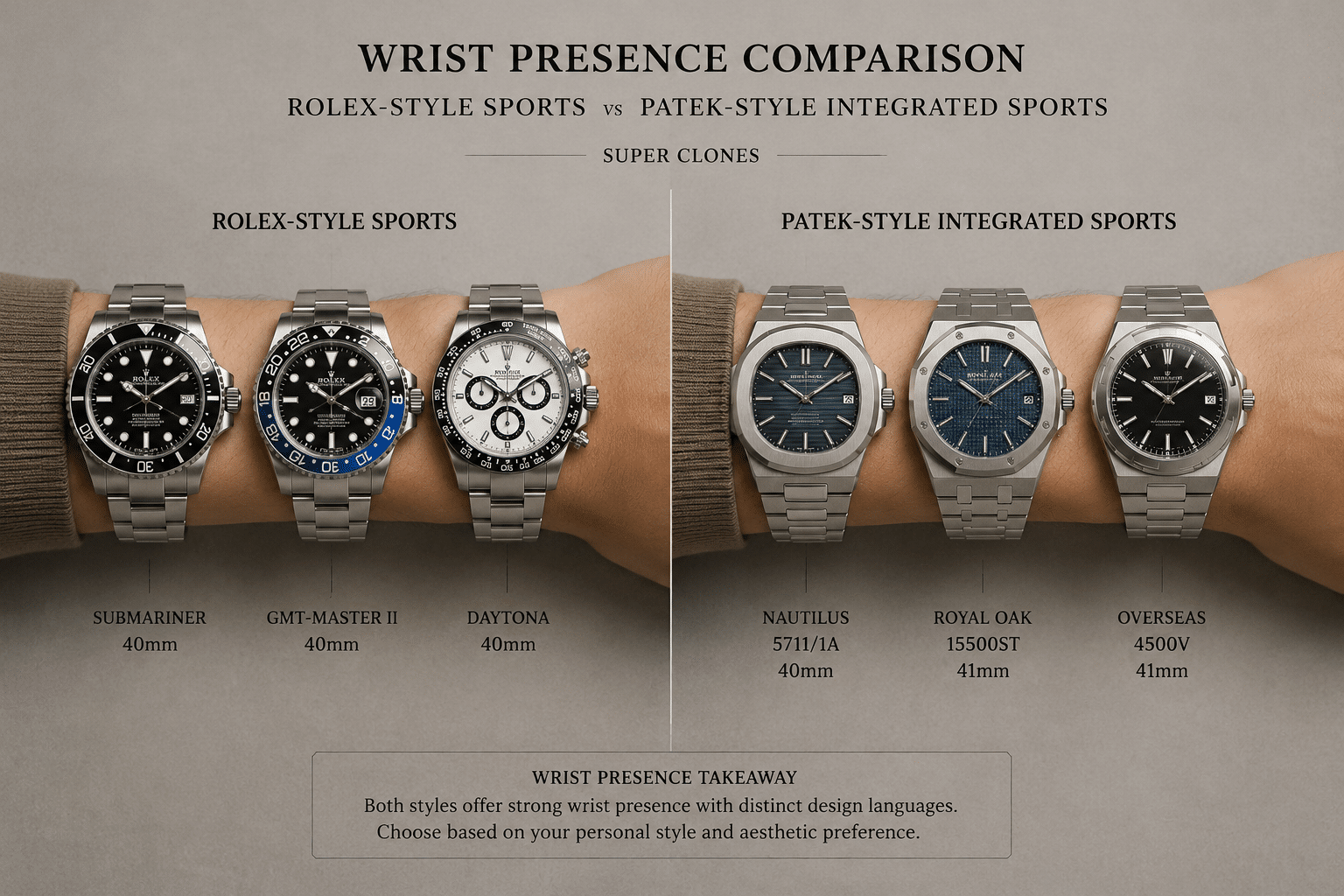
The clearest way to compare daily comfort is not “Rolex vs Patek” as brands. It is to compare the model families buyers actually cross-shop. Submariner vs Nautilus super clone is really a question of familiar tool-watch ease versus integrated-bracelet elegance. Daytona vs Aquanaut replica is a different question: high-energy chronograph presence versus casual Patek sportiness.
The practical judgment is straightforward. The Submariner is generally the easiest daily wearer. The Daytona has stronger wrist appeal but brings more social and mechanical attention. The Aquanaut is usually the easiest first Patek route for a Rolex owner because the rubber strap and casual design reduce pressure. The Nautilus is the most iconic Patek-style choice, but it is also the one that asks the most from case shape, bracelet fit, dial execution, and wearer confidence.
That does not mean the Submariner is “better” than the Nautilus or the Aquanaut. It means the Submariner is more forgiving. Forgiveness matters in daily wear. A watch that looks natural with more outfits, handles more settings, and creates fewer doubts is usually the watch that gets worn more often.
Submariner: The Most Forgiving Daily Formula
A Submariner-style super clone works because the design is casual, durable-looking, and visually familiar. The rotating bezel, black dial, Oyster-style bracelet, crown guards, and sport-watch proportions all communicate practicality. Even as a replica, the watch feels like something meant to be worn, not protected.
It also pairs easily with normal clothing. T-shirt, hoodie, polo, button-down, jacket, denim, travel clothes — the Submariner format rarely feels out of place. That is why it remains one of the safer replica watch choices for buyers who want low daily pressure.
The design is visually forgiving too. A sports bezel, thicker case, and bold markers can absorb small imperfections better than a flat, minimalist, thin luxury sports watch. A buyer should still check QC carefully, but the Submariner does not rely on delicate finishing cues in the same way a Nautilus does.
Daytona: Strong Wrist Appeal, Higher Mechanical and Social Attention
The Daytona is less relaxed than the Submariner. It has stronger enthusiast recognition, more dial information, chronograph pushers, subdials, and a more performance-driven visual identity. Even people who do not know every Rolex reference often recognize the Daytona as a more special watch.
For replica buyers, the Daytona also carries more ownership pressure because chronograph-style movements and dial layouts require more caution. The watch can be very satisfying, but it is not the easiest Rolex-style daily choice. A buyer who wants simple, low-stress wear may find a Submariner or Datejust more natural.
Socially, the Daytona sits closer to the Nautilus than many buyers expect. Both are enthusiast-recognized watches. Both can draw more watch-person attention than their size alone suggests. If you already wear a Daytona comfortably, the visibility of a Nautilus may not feel shocking. If you find the Daytona too “noticed,” the Nautilus may not solve that problem.
Nautilus: Comfortable Shape, High Recognition Among Watch People
The Nautilus has one major advantage: it can wear beautifully. The thinner profile, broad but curved case, and integrated bracelet can feel elegant and balanced when the replica is well executed. On pure wrist comfort, a strong Nautilus-style super clone may feel more refined than many Rolex-style sports clones.
The tradeoff is that the Nautilus leaves less room for weakness. The case ears, bezel brushing, dial texture, bracelet integration, clasp feel, and side profile all matter. A small flaw on a Submariner may blend into the tool-watch design. A small flaw on a Nautilus can disturb the entire impression because the watch depends on clean geometry and controlled finishing.
It is also highly recognizable among watch people. A Nautilus does not need diamonds, gold tone, or a loud dial to carry pressure. The shape alone does that. For buyers who want iconic Patek presence, this can be the point. For buyers who want a relaxed daily replica watch choice, it may be too much too soon.
Aquanaut: The Most Casual Patek Route for Rolex Owners
The Aquanaut is usually the most natural Patek step for someone coming from Rolex super clones. The rubber strap lowers the formality. The case feels sportier. The overall personality is less “integrated-bracelet collector watch” and more casual luxury sports watch. That makes it easier to wear with everyday clothing.
It is still a Patek-style design, so buyers should not treat it like a Submariner substitute. The dial pattern, case shape, strap fit, clasp, and thickness still need to be right. But the Aquanaut creates less visual ceremony than the Nautilus. It does not announce itself with the same bracelet-driven presence.
For many Rolex owners, this is the better first Patek super clone because it changes the flavor of the collection without sharply increasing wearing pressure. It gives the buyer a Patek-style experience while staying closer to casual daily comfort.
Quick Model-Family Decision Rule
Choose the Submariner if you want the lowest daily pressure and the most forgiving sports watch replica formula. Choose the Daytona if you want stronger wrist energy and accept more attention around the dial and chronograph format. Choose the Aquanaut if you want the easiest Patek transition from Rolex because the rubber strap and sportier profile make it feel more casual. Choose the Nautilus only if you specifically want integrated-bracelet Patek presence and are willing to be stricter about QC, finishing, and social visibility.
The safest daily wearer is not always the most impressive watch in photos. For most buyers, the Submariner remains easier than both Patek options. The Aquanaut is the smoother Patek move. The Nautilus is rewarding, but less forgiving. That hierarchy is more useful than asking which brand is more prestigious.
Buyer Expectation Note: No replica watch should be judged by model reputation or factory reputation alone. A better decision usually depends on the specific reference, movement version, case thickness, dial accuracy, bracelet or strap quality, service risk, and how closely the watch will be inspected in real use.
Factory Maturity Makes Rolex Easier to Evaluate
Rolex super clone factories are easier to judge because the market has had more time to correct itself. A buyer comparing a Submariner, GMT-Master II, Datejust, or Daytona usually has a familiar set of reference points: which factory is strong for the case shape, which movement route is commonly used, what the usual datewheel or rehaut issues look like, and which flaws are normal for that model. That does not make Rolex replicas risk-free, but it does make the decision process less vague.
Patek super clone factories can produce very convincing watches, especially in popular Nautilus and Aquanaut references, but the buying logic is less standardized. A factory name like 3KF, PPF, or ZF is useful only after the buyer knows the exact model, version, movement route, case thickness, dial color, and bracelet or strap execution. With Patek, the weak point is often not one obvious detail. It is the way several small details combine: a slightly thick case, a dial tone that looks too flat, a bracelet that does not articulate naturally, or a movement display that does not match the promise of the listing.
This is why Rolex is usually easier for an experienced replica watch buyer to evaluate. The market is more mature, the comparison points are more visible, and the buyer feedback loop is stronger. Patek requires more interpretation. You are not only asking “which factory is safer?” You are asking whether that factory’s current version solves the specific problems of that Patek reference.
Why Rolex Factory Comparisons Are More Established
Popular Rolex super clone models have been discussed by buyers for years. Clean Factory, VS Factory, GMF, BP, and other market-known names are often associated with certain references, and buyers have learned where those associations may apply. Clean Factory may be discussed differently for a Daytona than for a GMT. VS Factory may be judged differently on a Submariner than on another Rolex-style model. The important point is not that one name wins everything; it is that the market has enough repeated buyer comparison for shoppers to approach the decision with more context.
That maturity makes QC easier. A Rolex buyer can usually find repeated discussion around bezel alignment, cyclops magnification, datewheel position, SEL fit, dial printing, bracelet feel, clasp engraving, and movement behavior. These checkpoints are not equally important on every model, but they are familiar. If a Submariner has a slightly imperfect rehaut, many buyers know how serious that is in daily wear. If a Daytona has a questionable chronograph movement route, experienced buyers understand why that changes the risk profile.
Rolex factory maturity also creates clearer expectations around version updates. A buyer may still need to verify the batch, but the language of the market is more developed. People know what “latest version” should mean, what changed from an older batch, and which seller claims deserve extra caution. With Rolex, the buyer is less likely to be evaluating in the dark.
Why Patek Factory Choice Depends More on Model and Movement Route
Patek super clone factories are harder to compare because the watches themselves leave less room for average execution. A Nautilus is not just a dial inside a round sports case. The case ears, bezel brushing, side profile, bracelet flow, dial texture, date position, and movement route all affect whether the watch feels convincing. If one of those elements is off, the watch can look less natural even if the factory name is respected.
The Aquanaut is usually more forgiving because the rubber strap reduces the burden on bracelet finishing and makes the watch feel more casual. Even there, the decision can change depending on the version. A buyer may prefer one route for dial texture, another for case thickness, and another for movement appearance. That is why “best Patek super clone factory” is usually a weaker question than “which factory version handles this exact Aquanaut or Nautilus reference most sensibly?”
Movement route matters more with Patek than many Rolex buyers expect. Some Patek-style replicas prioritize thinner case architecture and display-back appearance. Others use more practical base movements but accept compromises in rotor sound, decoration, date layout, or thickness. A Rolex buyer moving into Patek should not assume factory reputation alone answers that tradeoff.
How to Treat Factory Labels and Seller Descriptions
Factory labels, QC albums, and seller descriptions are useful signals, but they should not be treated as final proof. A listing may say “3KF,” “PPF,” “ZF,” “Clean,” or “VS,” yet the buyer still needs to connect that claim to the exact reference, current batch, movement route, and visible execution. This matters because a respected factory can be strong on one model and less convincing on another, and a newer batch can improve one detail while introducing a different compromise.
The practical way to read a seller listing is to separate verifiable details from marketing language. “Latest version” means little unless the seller can explain what changed: dial color, case thickness, crystal height, bracelet fit, movement construction, date position, clasp finishing, or known flaw correction. A photo can show alignment, tone, and finishing under certain lighting, but it may hide side thickness, rotor behavior, crown feel, bracelet sharpness, or how the watch sits after sizing.
For buyers moving from Rolex to Patek, this discipline becomes more important. A Rolex Submariner-style clone can often survive a slightly vague listing because the model is familiar and easier to cross-check. A Nautilus or Aquanaut listing needs more detail because small differences in profile, strap integration, movement display, and dial texture change the entire ownership experience. The factory name should open the evaluation, not close it.
Factory Name Clarification: Factory names in the replica watch market are commonly used buyer-facing labels. They should be treated as practical market references, not as official brand affiliations, audited manufacturer identities, or guarantees of identical quality across every model.
A factory comparison is most useful when it is tied to the specific reference, version, movement, and visible execution details rather than treated as a universal ranking. For example, a Rolex-style factory route may be well understood for one Submariner generation but less convincing for a GMT or Daytona configuration, while a Patek-style route may look strong from the front yet still need checking for side thickness, bracelet flow, and display-back logic.
For CleanVSFactory, the goal is to make replica watch comparison more traceable by connecting factory names to details a buyer can actually evaluate: case profile, dial execution, bracelet or strap fit, movement route, batch consistency, and QC photos where available. This approach does not make a factory name official proof; it simply helps buyers avoid treating reputation as a substitute for model-specific evidence.
Why Unverified Factory Claims Should Stay Narrow
Factory names in the replica market are not the same as official manufacturer documentation. They are usually practical buyer shorthand for a supply route, version family, or seller-described batch. That shorthand can be useful, but it should not be stretched into claims that a specific watch has a confirmed movement, verified steel grade, certified water resistance, or guaranteed long-term reliability. Without direct inspection or reliable documentation for the exact watch, those details remain claims to verify, not facts to assume.
This matters more when comparing Patek-style and Rolex-style replicas because the same kind of factory claim can carry different risk. A vague factory label on a Rolex-style Submariner may still leave the buyer with many visible checkpoints to review. A vague factory label on a Nautilus can hide more important questions about case thickness, movement architecture, bracelet finishing, and display-back appearance. The safer reading is always specific: exact model, exact batch, exact movement route, exact QC photos, and exact seller explanation.
Version Stability Matters More Than Factory Name Alone
The safest choice is not always the most hyped factory name. A strong, stable batch from a less-discussed route can be more rational than a famous listing with a weak dial tone, inconsistent bracelet fit, or unclear movement claim. This matters especially with Patek, where small changes in case profile and finishing have a larger effect on wrist presence than many buyers expect from photos.
At Clean VS Factory, we usually treat factory reputation as the starting point, not the conclusion. A factory can be excellent in one model family and only average in another. For this Rolex-versus-Patek decision, that distinction is important: Rolex buyers often benefit from a clearer factory hierarchy, while Patek buyers need to slow down and compare the exact version in front of them.
The practical rule is simple: use the factory name to narrow the search, then judge the watch by version stability. Confirm the current batch, movement route, case profile, dial execution, bracelet or strap fit, and known complaints for that model. If those details are unclear, a higher-profile factory name does not automatically reduce risk.
Movement Routes: Rolex Clones Usually Feel Less Complicated to Own
A Rolex clone movement is usually easier for buyers to understand because the major Rolex super clone models have more established movement routes. That does not mean every Rolex-style replica is simple. A Daytona with a chronograph clone movement carries a very different risk profile from a time-and-date Submariner. But for many popular Rolex references, buyers can research common movement behavior, winding feel, date function, power reserve expectations, and service concerns with more consistency.
Patek movement choices are more nuanced. A Patek DD324 movement route can improve the logic of a Nautilus or Aquanaut replica because it supports a thinner, more reference-appropriate build and may look more convincing through a display back where relevant. But that benefit comes with a higher need for verification. The buyer should know what movement is actually inside, whether the case thickness matches the claim, and whether the movement route has enough real-world feedback to support daily use.
Miyota-based Patek clone options can be practical, but they are not always invisible in ownership. A Miyota base may be easier to understand and more familiar to some repair people, yet it can bring rotor noise, different winding feel, thickness compromises, or decorative-plate limitations depending on the model. The better movement choice is not always the one with the most impressive name. It is the one that fits the case design, the buyer’s tolerance, and the intended use.
Movement descriptions in the replica market should be read as configuration references, not as official brand-caliber claims unless there is clear, verifiable evidence. Buyers should distinguish between movement layout, movement decoration, winding behavior, reliability expectation, and actual serviceability. A movement that looks more appropriate through a display back may still be harder to service, while a more common base movement may be easier to understand but less convincing in thickness, rotor sound, or visual architecture.
When sellers use familiar caliber-style language, buyers should avoid reading it as proof of an official Rolex or Patek Philippe movement. In the replica market, a movement name may describe a clone architecture, a decorated bridge layout, a rotor style, or a seller’s shorthand for a configuration. The useful question is not whether the name sounds close to the genuine reference, but whether the specific watch’s movement route matches its case thickness, date position, display-back appearance, expected service access, and daily-use tolerance.
Why Common Rolex Clone Movements Are Easier to Research
Rolex super clone buyers benefit from volume. More people own the watches, more batches have circulated, and more movement issues have been discussed over time. A buyer looking at a VS Factory Submariner, a Clean Factory GMT, or a Daytona-style clone can usually find repeated information about crown feel, rotor sound, date setting, power reserve behavior, and common failure points. The information is not always perfectly reliable, but there is enough pattern recognition to make the risk easier to read.
This matters because ownership confidence is built before the watch arrives. If a buyer knows a movement route is widely used, commonly serviced, and well understood by the market, the watch feels less stressful as a daily replica watch. Even if a problem appears later, the buyer is less likely to face a completely unfamiliar platform.
The exception is the chronograph category. A Daytona can be more complicated to own than a simple Patek time-and-date model because chronograph architecture adds more moving parts, more setting sensitivity, and more ways for misuse or poor assembly to create trouble. Rolex is easier on average, not automatically easier in every reference.
DD324-Style Patek Routes: Better Visual Logic, Higher Verification Need
A DD324-style Patek route is attractive because it addresses the design logic of many Patek Philippe sports models. Nautilus and Aquanaut replicas are judged heavily by thinness, side profile, crown position, and movement presentation. If the movement route helps the case sit closer to the intended proportions, the watch usually feels more coherent on the wrist.
The tradeoff is that buyers need to verify more carefully. A listing may describe a Patek DD324 movement, but the practical questions are more specific: does the movement support the claimed case thickness, does the date sit correctly, does the crown action feel reasonable, and does the display-back appearance match the version being sold? These details affect ownership more than the movement label alone.
DD324-style routes can be the better choice for buyers who care about visual credibility and proportion, but they should not be treated as a guarantee of reliability. The more specialized the movement route, the more important it becomes to buy with realistic expectations about serviceability and long-term parts uncertainty.
Miyota-Based Options: Practical but Not Always Invisible
A Miyota-based Patek clone can make sense for a buyer who values practical movement familiarity over architectural purity. Miyota movements are widely used in the replica market and have a reputation for being understandable, but the way they are adapted into a Patek-style case matters. A good base movement can still feel wrong if the case becomes too thick, the rotor is too loud, or the decorative layout does not suit a display-back model.
Rotor noise is the most common ownership complaint buyers notice quickly. It may not ruin the watch, but it can make a thin, elegant Patek-style replica feel less refined than the design suggests. Winding feel is another point. A Rolex-style sports watch can tolerate a slightly mechanical, tool-like feel; a Nautilus or Aquanaut often exposes roughness more because the whole design is meant to feel slim and controlled.
The smart judgment is not “DD324 good, Miyota bad.” It is more conditional. A DD324-style route may be better for proportion and visual logic. A Miyota-based route may be more familiar but can compromise the wearing experience if the factory uses it poorly. The buyer should choose based on the model’s design demands, not movement marketing alone.
How to Read Movement Evidence Without Overreaching
Movement claims need a stricter standard than style claims. A seller photo of a decorated rotor, a familiar movement name, or a phrase such as “clone movement” does not automatically prove architecture, service compatibility, beat behavior, power reserve, or long-term reliability. Movement specifications can explain what a genuine movement family or commercial base caliber is designed to do, but they do not prove what is inside a specific replica unless the exact watch has been inspected or documented clearly.
For practical buying, the safest evidence is layered. First, confirm what the seller says the movement route is. Second, check whether the case thickness, crown position, date depth, hand height, and display-back appearance are consistent with that claim. Third, treat real ownership feedback as a risk signal rather than a guarantee. This approach is especially useful for Patek-style watches, where a movement route can change the case profile and the whole feeling of the watch.
Movement Route to Verify
Before choosing a Patek super clone, confirm the actual movement route, not only the factory name. Ask whether the watch uses a DD324-style movement, a Miyota-based construction, or another route entirely. Then connect that answer to the watch itself: case thickness, crown position, date behavior, rotor noise, winding feel, and display-back appearance where relevant.
For Rolex, the same discipline still applies, especially with Daytona-style chronographs. But the difference is that Rolex movement routes are usually easier to research and compare. With Patek, the movement choice can change the whole personality of the watch. A Nautilus that looks good from the front but sits too thick from the side may disappoint more than a Rolex with a minor macro-level flaw.
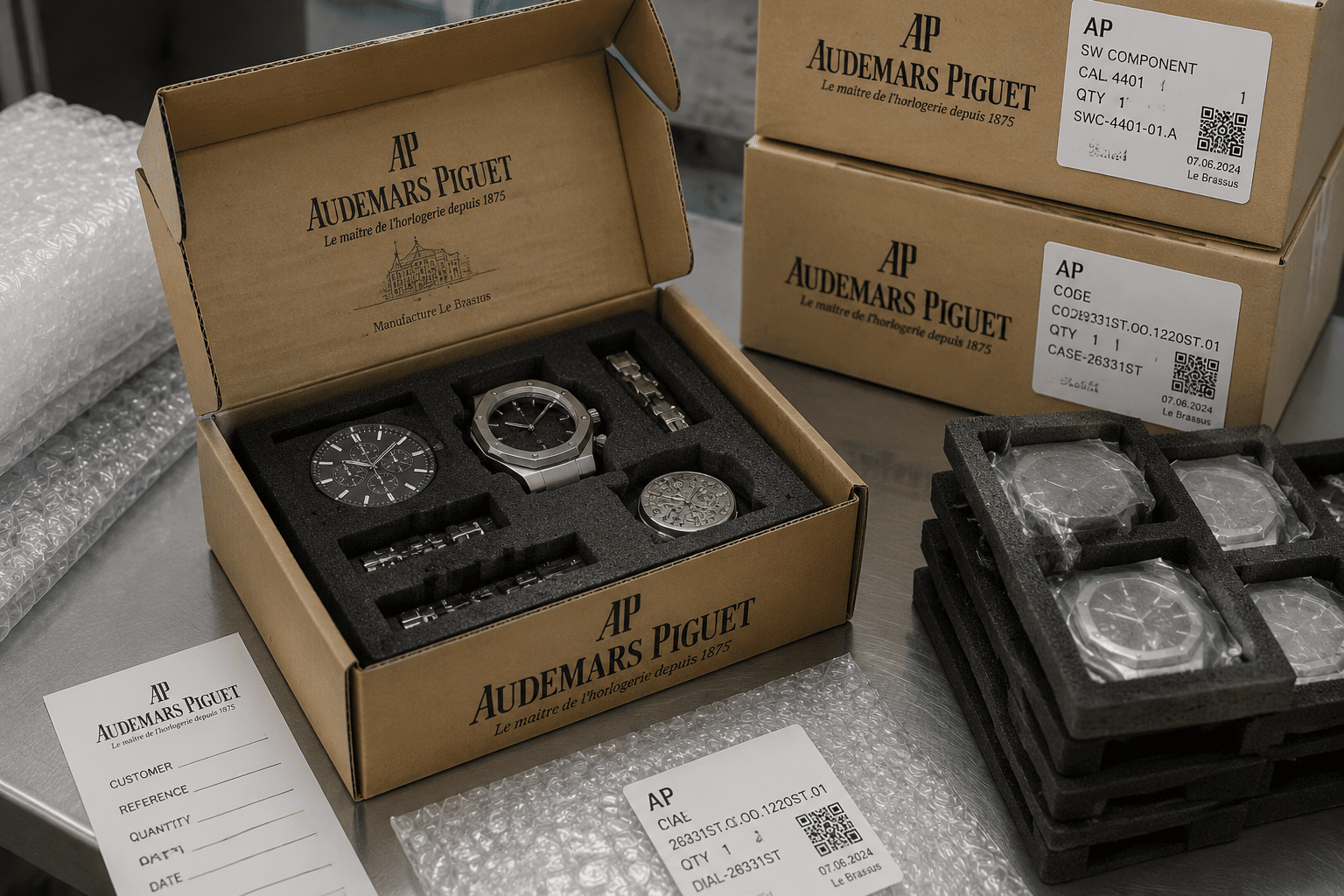
The safest movement route is the one the buyer understands before purchase. If the seller cannot clearly explain the movement, thickness impact, and version details, that uncertainty should be treated as part of the cost.
Social Believability: Rolex Is More Recognizable, Patek Is More Context-Sensitive
Rolex replica recognizability is higher in the general public, but that does not automatically make a Rolex-style super clone harder to wear. Rolex is common enough in everyday American settings that a steel Submariner-style watch may be noticed without creating much surprise. People see Rolex-like watches in offices, airports, restaurants, gyms, and casual weekend settings. The design is visible, but it is also socially familiar.
Patek replica wrist presence works differently. A Nautilus or Aquanaut may look quieter in photos than a polished Daytona or a gold Datejust, but the context is more sensitive. Fewer people wear Patek-style watches casually. Among watch-aware people, the shape of a Nautilus bracelet or Aquanaut case can carry stronger assumptions about rarity, price, and lifestyle. That can make the watch feel more noticeable even when the design is less shiny.
This is the hidden pressure for Rolex owners moving into Patek. The Patek may not attract as many random comments, but it can feel heavier in the specific rooms where people know watches. Easy to wear does not mean invisible. It means the watch fits your normal clothing, environment, and comfort level without making you feel like you are managing a story.
Rolex Gets More Public Recognition but Often Less Surprise
A Submariner-style Rolex replica is one of the easier high-end replica watches to wear publicly because its design language is widely absorbed into normal sports-watch culture. Even people who do not know watches often recognize the general shape, but they may not treat it as unusual. The black bezel, steel bracelet, and practical case profile fit with jeans, business casual clothing, travel outfits, and weekend wear.
The Daytona has more enthusiast energy. It is still a Rolex, so it benefits from broad familiarity, but the chronograph dial, polished surfaces, and stronger collector association can increase attention. A steel Daytona may feel natural for some buyers and too noticeable for others. The point is that Rolex recognition is broad, but the reaction is often predictable.
That predictability lowers pressure. A Rolex-style watch can be visible without feeling rare. For daily wear, that matters more than brand prestige.
Patek Gets Less General Attention but More Watch-Person Attention
A Patek Philippe sports replica can pass quietly through most casual public spaces simply because many people do not recognize the design. But in a watch-aware environment, the reaction can be sharper. The Nautilus case shape, horizontal dial texture, integrated bracelet, and slim profile are instantly meaningful to enthusiasts. The Aquanaut is more casual, but its grenade-pattern dial and strap still register quickly with people who know the category.
This makes Patek more context-sensitive than Rolex. In a normal grocery store or airport lounge, it may attract less attention than a shiny Rolex. At a business dinner, watch meetup, upscale office, or social circle where people understand Patek, it can feel more loaded. The watch may be physically understated but socially specific.
That does not mean a Patek super clone is a bad daily choice. It means the buyer should be honest about where the watch will be worn. If your normal environment makes a Nautilus feel like a conversation piece every time it appears, the Aquanaut may be the more relaxed Patek path.
Metal, Color, and Size Change the Pressure Level
Stainless-style sports models are usually easier to wear than loud precious-metal colors, diamond-style configurations, bright blue statement dials, or oversized high-impact cases. A steel Submariner, a restrained GMT, or a rubber-strap Aquanaut usually feels more natural in daily settings than a rose-gold Nautilus or a highly polished Daytona configuration. Color and metal tone change the social volume of the watch quickly.
Size also matters. A watch that fits the wrist cleanly tends to attract less awkward attention than one that looks oversized or forced. Patek-style watches can be especially sensitive here because their appeal depends on proportion. If a Nautilus-style case flares beyond the wrist or the bracelet does not sit naturally, the watch becomes more noticeable for the wrong reason.
The best social choice is not the most expensive-looking version. It is the one that matches your clothing, wrist size, and normal environments. For most buyers, that means steel before precious-metal colors, simple dials before loud configurations, and casual strap-based Patek models before high-recognition integrated-bracelet pieces.
Comfort and Case Design: Patek Can Feel Better, Rolex Can Feel Tougher
For pure Patek vs Rolex wrist comfort, Patek-style sports super clones can sometimes win the first five minutes. A Nautilus or Aquanaut usually sits flatter, looks thinner from the side, and wraps closer to the wrist than many Rolex-style sports watches. But daily comfort is not only about how the watch feels while sitting still. It is also about how naturally you handle it, adjust it, bump it against a desk, and wear it through a normal day without thinking about the case or bracelet.
This is where Rolex-style clones still have the advantage for many buyers. A Submariner-style super clone may not feel as elegant as a Nautilus, but it feels more forgiving. The case is thicker-looking, the bezel gives it a practical sports-watch identity, and the oyster-style bracelet feels familiar even to people who are not deep into watches. Patek-style replicas often feel more refined, but refinement can also make the buyer more aware of small fit issues, sharp bracelet edges, clasp feel, or case thickness.
The useful distinction is this: Patek can offer better physical elegance, while Rolex usually offers better daily handling confidence. If the goal is super clone daily comfort with the least adjustment in behavior, Rolex is usually easier. If the goal is a lower, sleeker wrist profile and the buyer accepts more sensitivity around fit and finishing, Patek becomes more attractive.
Visual accuracy should be judged through specific details rather than broad claims. Case thickness, lug shape, side profile, dial texture, bezel tone, hand length, date placement, bracelet construction, and clasp fit can all affect how convincing a watch feels in real use. This is especially important with Patek-style watches because a small mismatch in thickness or bracelet transition can change the entire wearing impression more than a minor macro-level dial detail.
Why the Submariner Feels Like a Tool Watch Even as a Replica
A good Submariner-style replica works because the design does not ask to be treated delicately. The case has enough visual mass to feel stable, the rotating bezel creates a functional impression, the crown guards protect the profile, and the bracelet has a simple, proven layout. Even if the watch is not built to genuine durability standards, the format feels practical. That matters more than many buyers expect.
The oyster-style bracelet is also more forgiving than an integrated bracelet. Slight variation in SEL fit, clasp feel, or link finishing can still matter, but the design gives the watch some visual tolerance. The bracelet is supposed to look sturdy. The clasp is supposed to feel mechanical and substantial. A little extra thickness does not immediately ruin the wearing personality because the Submariner already belongs to the rugged sports-watch category.
This is why the Submariner remains such a strong daily replica watch choice. It is not always the most exciting watch in photos, but it is one of the easiest to live with. It pairs with casual clothing, handles wrist movement well, and does not punish the buyer as much for small proportional differences. For many Rolex super clone owners, that “tougher” feeling is part of the comfort.
Why the Aquanaut Often Feels Easier Than the Nautilus
The Aquanaut is often the smoother first Patek-style step because the rubber strap changes the whole experience. It reduces weight, avoids bracelet sizing frustration, and makes the watch feel more casual than a Nautilus. For buyers coming from a Submariner or GMT-style clone, the Aquanaut keeps enough sports-watch personality while introducing the flatter Patek case shape.
The rubber strap also hides some issues that an integrated bracelet would expose immediately. Minor differences in bracelet brushing, link articulation, and clasp integration are not part of the same visual equation. Strap fit still matters, especially where the strap meets the case, but the watch is less dependent on metal finishing from case to clasp. That makes it easier to wear casually and easier to forgive in daily use.
The non-obvious advantage is psychological. A Nautilus often feels like an object the buyer has to protect. An Aquanaut feels closer to a modern casual sports watch. It may not have the same integrated-bracelet drama, but for daily comfort, that is exactly why it works. Buyers who want a Patek super clone they will actually wear often should take the Aquanaut seriously instead of treating it as the less iconic choice.
Integrated Bracelets Make Fit More Important
The Nautilus can be extremely comfortable when the case profile, bracelet articulation, and clasp fit are right. The problem is that an integrated bracelet leaves very little room for poor execution. The bracelet is not just attached to the watch; it is part of the watch’s shape. If the first link sits awkwardly, the bracelet feels too stiff, or the clasp creates a pressure point, the entire wearing experience changes.
This is different from a Rolex-style oyster bracelet, where the bracelet can feel slightly generic and still work. On a Nautilus-style super clone, link finishing, edge softness, brushing direction, taper, and wrist curvature are more exposed. A sharp edge that might be a small annoyance on another watch becomes more noticeable because the Nautilus is supposed to feel smooth and fluid.
Buyers with smaller or flatter wrists should be especially cautious. Integrated bracelets do not always conform as easily as rubber straps or standard bracelets with more flexible end-link geometry. If the sizing lands between links or the clasp sits off-center, the watch may look excellent in QC photos but feel wrong after an hour. For comfort, bracelet fit is not a minor detail; it is one of the main reasons to choose or avoid a Nautilus-style replica.
QC Risk: Patek Leaves Less Room for Small Mistakes
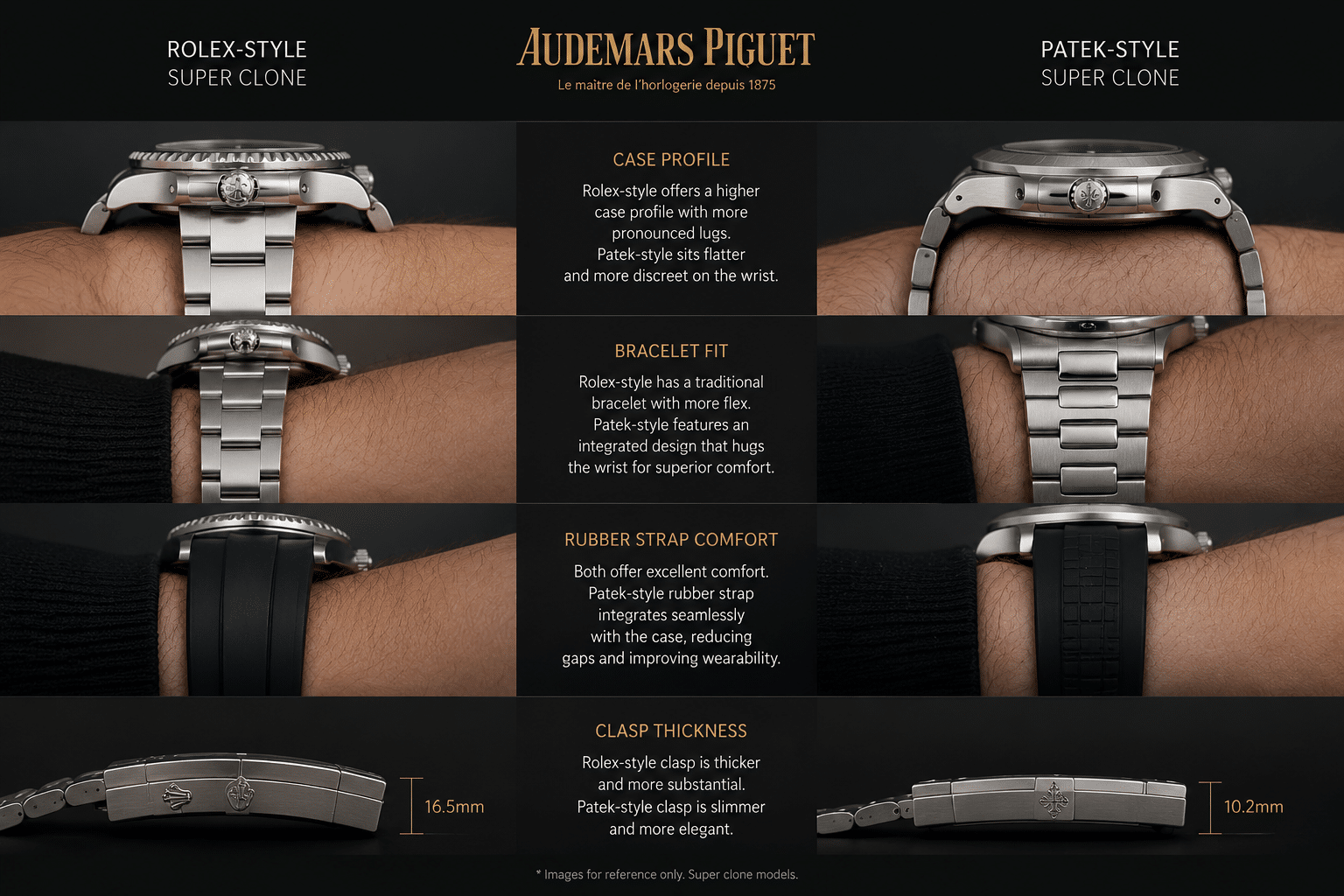
Patek super clone QC is less forgiving than Rolex super clone QC because the watches depend more on clean surfaces, thin profiles, and precise transitions. Rolex replicas have many things to inspect, but the designs are visually busy enough that some small flaws fade into the overall sports-watch language. Patek-style designs, especially Nautilus and Aquanaut models, expose mistakes more directly.
A Submariner can have a slightly imperfect rehaut or a small SEL gap and still look convincing on the wrist to most people. A Nautilus with an awkward side profile, uneven bezel brushing, stiff bracelet, or wrong dial tone feels off more quickly because the design has fewer distractions. The whole watch is a study in proportion. When one proportion is wrong, the buyer feels it even if they cannot immediately name the flaw.
The practical judgment is simple: Rolex QC is broader, but Patek QC is more sensitive. A Rolex buyer checks more obvious checkpoints. A Patek buyer needs to care more about how all the subtle elements work together.
Rolex QC Is Broader but More Familiar
Experienced Rolex super clone buyers usually know what to check first: bezel alignment, rehaut position, cyclops magnification, datewheel centering, dial marker alignment, hand stack, crown guards, SEL fit, clasp engraving, and bracelet screws. These points matter, but they are familiar. There is enough shared buyer experience around Submariner, GMT, Datejust, and Daytona-style replicas that many flaws are easier to classify as acceptable, annoying, or worth rejecting.
Rolex designs also provide stronger visual anchors. A rotating bezel, bold markers, crown guards, polished center links on some models, and cyclops date magnification all give the eye multiple places to land. That does not excuse bad QC, but it does mean the watch can absorb small inconsistencies better in daily wear. A slightly imperfect clasp engraving is usually less important than a crooked marker or badly centered date.
The mistake is treating every Rolex flaw as equally serious. On a daily wearer, bezel alignment, date visibility, dial symmetry, bracelet fit, and crown operation usually matter more than tiny macro-level printing differences. The best QC decision is not “find every flaw.” It is “identify which flaws will bother me on the wrist.”
Patek QC Depends Heavily on Shape, Texture, and Fit
Patek-style sports replicas need a different inspection mindset. For a Nautilus, the case ears, bezel shape, horizontal dial texture, bracelet integration, and clasp feel carry much of the watch’s identity. For an Aquanaut, the case profile, dial pattern, date window, hand alignment, rubber strap fit, and clasp execution matter more than buyers often expect.
The dial is especially important because Patek-style designs often use flatter, cleaner surfaces than Rolex sports models. If the dial texture is too harsh, the printing is heavy, or the date window sits awkwardly, the watch can look less refined even from normal distance. On a Nautilus, uneven brushing on the bezel can be more damaging than a small printing imperfection because the bezel is one of the first things that catches light.
Bracelet and strap integration should not be treated as cosmetic only. A Nautilus bracelet that does not flow naturally from the case affects both appearance and comfort. An Aquanaut strap that leaves an odd gap or does not sit cleanly at the case can make the watch feel cheaper than the dial photos suggest. This is why Patek QC should always include fit and side-angle evaluation, not just a straight-on dial shot.
Side Profile Photos Matter More Than Many Buyers Expect
Side profile photos are often the most underused QC angle for Patek-style replicas. A watch can look strong from the front and still feel wrong because the case is too thick, the caseback protrudes too much, the crystal sits too high, or the bracelet drops awkwardly from the case. This matters because Patek sports designs are supposed to wear low and close to the wrist.
Rolex-style watches can tolerate more visible case height because the design language already suggests strength. Patek-style watches are different. Thickness changes the personality of the watch. A Nautilus that loses its slim visual line becomes less elegant, and an Aquanaut that sits too tall can feel less casual than it should.
Lighting can also mislead buyers. Bright front-facing QC photos may make the dial look crisp while hiding case layering, date depth, or bracelet edge finishing. A darker side photo may reveal more about real wearability than a perfect dial close-up. If a seller cannot provide a usable side angle, the buyer is missing one of the most important comfort and proportion checks.
Which QC Flaws Matter in Daily Wear?
Not every QC flaw deserves the same reaction. A tiny printing difference visible only under macro zoom may matter less than a date window that looks off every time the buyer checks the time. A minor clasp engraving issue may be less important than sharp bracelet edges, weak clasp closure, stiff links, or a case that sits too tall. For daily wear, the flaws that affect comfort, symmetry, operation, and repeated wrist awareness usually matter more than flaws that appear only in extreme close-up comparison.
This distinction is especially useful for Patek-style replicas because buyers can become distracted by front-facing dial beauty. A Nautilus with a strong dial but poor bracelet flow may be less satisfying than a slightly less photogenic unit that fits the wrist better. An Aquanaut with a clean dial but loud rotor or awkward strap junction may disappoint faster than a version with a small visual imperfection that disappears during normal wear.
A realistic QC decision should ask three questions: will the flaw be visible at normal wrist distance, will it affect comfort or operation, and will it bother the buyer every time the watch is worn? If the answer is yes, the issue deserves attention. If the flaw only appears under enlarged photos and does not affect the watch’s feel, it may not be worth rejecting an otherwise stable version.
QC Photos to Request
- Front dial photo: Check marker alignment, hand position, date window placement, dial texture, and printing balance.
- Side profile photo: Judge case thickness, crystal height, caseback protrusion, crown position, and how flat the watch may sit.
- Bracelet or strap fit photo: Look at the first link or strap junction, gaps near the case, link articulation, and whether the bracelet drops naturally.
- Clasp photo: Check engraving, closure alignment, finishing consistency, and whether the clasp looks bulky for the model.
- Date close-up: Confirm centering, font consistency, date window cleanliness, and whether the date sits too deep or too high.
- Crown-side photo: Review crown shape, guard profile where relevant, case layering, and general side finishing.
- Version or movement-route confirmation: Confirm the claimed factory version and movement route when it affects thickness, caseback appearance, or date behavior.
QC photos reduce uncertainty, but they do not remove every risk. Buyers should review real watch photos where available, including dial printing, hand alignment, bezel or case alignment, datewheel centering, bracelet or strap fit, clasp engraving, side thickness, crown position, and overall finishing. Factory labels and stock photos alone are not enough for a reliable judgment.
QC review should also stay focused on buyer protection rather than authentication deception. The purpose of checking dial printing, case shape, bracelet fit, movement photos, and side profile is to understand what is being purchased and avoid overpaying for unclear claims. It is not to prepare a replica watch for resale as genuine, boutique inspection, insurance use, or any situation where the watch may be misrepresented.
At Clean VS Factory, we usually treat QC as a wearability filter, not a hunt for theoretical perfection. The question is whether the watch will feel right in normal use. For Patek-style replicas, that means shape, texture, fit, and side profile deserve more attention than many first-time Patek buyers give them.
Price Logic: Higher Patek Pricing Does Not Automatically Mean Easier Ownership
A higher Patek super clone price can be justified, but it should never be treated as automatic proof of easier ownership. With Rolex, pricing is often easier to understand because the market has more mature factory competition, clearer version ladders, and better-known expectations around popular models. With Patek, the price may reflect a better movement route, cleaner case profile, more refined bracelet construction, improved dial execution, or sometimes just a stronger factory claim attached to the listing.
This is where buyers moving from Rolex can misread the market. A more expensive Nautilus-style replica may look more special than a Submariner-style daily watch, but it may also be more sensitive to QC, bracelet fit, dial tone, and future repair difficulty. Price can buy better finishing or a more convincing profile, but it does not remove the ownership compromises that come with thinner, more design-sensitive watches.
The right way to read Rolex super clone price logic versus Patek pricing is to ask what the money actually changes. If the higher price improves the case profile, bracelet comfort, dial quality, movement route, and batch consistency, it may be rational. If it only buys a more prestigious model name or vague “latest version” language, it is not enough.
When Rolex Pricing Is Easier to Understand
Popular Rolex-style super clones tend to have more predictable pricing logic. A buyer can usually connect the price to factory reputation, movement route, bracelet quality, bezel construction, crystal, datewheel execution, and version update. Clean Factory, VS Factory, and other Rolex-focused options are not interchangeable across every model, but the comparison map is more developed.
This makes Rolex easier for buyers who want value without overanalyzing every tiny construction detail. If two Submariner-style replicas sit at different price levels, the buyer can usually identify whether the gap relates to movement, case shape, bracelet feel, bezel action, crystal quality, or batch consistency. The market does not become risk-free, but it is more legible.
That legibility is part of the value. A cheaper Rolex-style daily watch from a mature route may be easier to own than a more expensive Patek-style watch that needs tighter QC and more careful handling. For daily use, predictable ownership can be more valuable than a more impressive model on paper.
When Patek Pricing Needs More Skepticism
Patek pricing requires more careful questioning because the same model name can hide different priorities. One version may charge more because of a better movement route that supports a thinner case. Another may charge more because the bracelet finishing is improved. Another may simply be positioned as a premium listing without enough visible improvement to justify the difference.
For Nautilus-style watches, the buyer should ask whether the price is buying better case thickness, cleaner bezel brushing, smoother bracelet articulation, stronger clasp finishing, more accurate dial texture, or a more convincing display-back presentation where relevant. For Aquanaut-style watches, strap quality, case profile, dial pattern, date placement, and clasp comfort may explain more than the factory name alone.
The common mistake is paying a premium for the idea of Patek rather than for the execution of that specific replica watch. A higher price is reasonable only when it reduces a real weakness. It should make the watch easier to wear, easier to trust, or more coherent in construction. If it only makes the listing sound more impressive, the value is questionable.
Why Exact Price Claims Can Mislead Buyers
Exact replica pricing can change by seller channel, batch, movement route, finishing level, version consistency, and availability. For that reason, a single price number is less useful than a clear explanation of what the buyer receives for the money. A lower price can be reasonable if the buyer accepts a simpler movement route or less refined finishing; a higher price can be reasonable only if it improves the parts of the watch that actually affect ownership.
This is especially important with Patek-style replicas because the cost difference may not show in a front-facing photo. The real value may be in side profile, bracelet articulation, caseback construction, rotor behavior, clasp comfort, or version consistency. If a seller cannot explain why one version costs more than another, the buyer should treat the price gap as uncertain rather than assuming it reflects better execution.
The Smart Value Question Is Not “Which Costs More?”
The better question is: which watch will the buyer wear more often with less friction? A Submariner-style clone may cost less than a high-tier Nautilus-style replica and still deliver better daily value if it is easier to size, easier to QC, more comfortable in casual settings, and less sensitive to small finishing issues. Value is not prestige divided by price. It is wearability, confidence, QC consistency, serviceability, and actual wrist time.
There are cases where paying more for a Patek-style super clone makes sense. If the buyer specifically wants the slimmer case feel, integrated-bracelet design, or Aquanaut-style casual elegance, a better-executed version can be worth the premium. But the buyer should be honest about the tradeoff: the watch may be more rewarding, not necessarily easier.
For most Rolex super clone owners considering Patek next, the smartest price decision is to separate visual value from ownership value. A watch can photograph beautifully and still be less practical than expected. The strongest purchase is not the most expensive option; it is the version where the price clearly improves the parts of the watch that affect daily comfort, QC confidence, and long-term satisfaction.
Repair and Long-Term Ownership: Rolex Usually Has the Lower Stress Curve
The ownership gap between a Rolex super clone and a Patek Philippe super clone usually becomes clearer after the watch arrives. In first photos, a Nautilus or Aquanaut may look cleaner and more refined than a Submariner-style watch. Six months later, the easier watch is often the one with fewer questions around adjustment, movement behavior, bracelet comfort, and repair access. On that measure, Rolex-style clones usually carry the lower stress curve.
This does not mean every Rolex replica is simple to maintain or every Patek replica is fragile. It means the common Rolex clone platforms are better understood. More buyers have lived with them, more problems have been documented, and more watchmakers are familiar with the general case and movement formats. Replica watch repair difficulty is always relative, but familiarity reduces uncertainty.
A replica watch should be evaluated with realistic ownership expectations. Even a strong super clone can have limits in water resistance, long-term movement stability, parts availability, servicing convenience, and close inspection compared with a genuine reference. The easier watch is often the one whose limitations are already understood before purchase, not the one that looks most impressive in seller photos.
Why Familiar Rolex Clone Platforms Reduce Uncertainty
A Submariner, GMT-Master II, Datejust, or even many Daytona-style super clones benefit from a large ownership base. Buyers know what normal winding feel should be like, what rotor sound is acceptable, how the clasp should close, and which small issues are common rather than alarming. That shared experience matters because it helps separate a real problem from normal replica movement behavior.
Rolex-style cases and bracelets are also easier to live with mechanically. Oyster-style bracelets are straightforward to size, clasps are familiar, and replacement-style parts are more commonly discussed in the market. If a screw backs out, a clasp feels loose, or an SEL fit looks slightly uneven, the problem is usually easier to describe and diagnose than a fit issue on a thin integrated-bracelet Patek design.
Movement serviceability is not guaranteed, but common Rolex clone movement routes tend to be easier to research. Buyers can usually find more information about date change behavior, crown feel, power reserve expectations, rotor noise, and known weak points. That does not remove super clone ownership risk, but it makes the risk more readable. A problem you can identify clearly is less stressful than a problem nobody can explain.
Why Patek Clones Can Be More Delicate to Own
Patek-style replicas often create stress in quieter ways. The watch may not fail dramatically; it may simply feel more sensitive. A thin case leaves less margin for rough handling. A decorated movement route may look better through a display back but may be less familiar to local repair options. An integrated bracelet can be comfortable when executed well, yet frustrating if one link is sharp, stiff, loose, or difficult to size cleanly.
The Nautilus is the clearest example. Its charm depends on a thin side profile, clean bezel lines, fluid bracelet drape, and restrained finishing. Those same qualities make ownership less forgiving. A slightly uneven bracelet link, weak clasp snap, noisy rotor, or awkward crown action stands out more because the watch is supposed to feel refined. With a Submariner-style replica, a slightly tool-like feel can still make sense. With a Nautilus-style replica, roughness feels more out of character.
Aquanaut-style models reduce some of that pressure because the rubber strap removes much of the integrated-bracelet maintenance concern. Still, movement route matters. DD324-style Patek routes may support better thickness and visual logic, while Miyota-based options can be practical but may introduce rotor noise, different winding feel, or caseback compromises depending on the model. The buyer should not treat “Patek super clone” as one ownership category; the movement and construction route decide much of the long-term experience.
Water Resistance and Durability Should Not Be Assumed
Daily-wear confidence should not be confused with verified durability. A replica watch may look like a sports watch, have a screw-down crown, or use a case design inspired by a water-resistant authentic model, but that does not prove the individual replica is safe for swimming, showering, rain exposure, or heavy activity. Water resistance should be treated as unverified unless the specific watch has been pressure-tested after purchase by someone capable of testing it properly.
This caution applies to both Rolex-style and Patek-style replicas. A Submariner-style case may feel tougher, but the practical risk still depends on gasket condition, crown tube fit, caseback sealing, crystal installation, and assembly consistency. A Nautilus or Aquanaut-style watch may feel refined and comfortable, but thin construction and strap or bracelet integration do not remove the need for verification. For most buyers, the safer habit is to keep replica watches away from water unless testing has been performed on that exact unit.
Seller Policies Should Be Confirmed Before Ordering
Ownership comfort also depends on terms that are not visible in a watch photo. Before ordering, buyers should confirm return terms, repair options, water-resistance testing expectations, shipping communication, customs risk, payment process, and after-sales support directly with the seller. Those details should not be assumed from a factory label, model name, or attractive QC album.
Daily Wear Is Also About How Much You Worry
The best daily replica watch is not always the one that looks most impressive in close-up photos. It is the one you actually wear without constantly thinking about the movement, bracelet, clasp, case thickness, or social setting. This is where Rolex-style clones usually win. They feel more replaceable, more familiar, and more tolerant of normal daily routines.
At Clean VS Factory, we usually separate visual attraction from ownership comfort. A Patek Philippe super clone can be more interesting as a collection piece, but if the buyer worries every time the bracelet brushes a desk or the rotor sounds slightly different, it becomes less easy to wear. Ownership stress is part of wearability, even though it does not show in QC photos.
The practical judgment is simple: if you want the lowest repair anxiety and the most familiar long-term daily wear, Rolex-style super clones are usually safer. If you want a Patek-style watch, choose the model and movement route with the same seriousness you would give the dial or case shape. The wrong Patek replica may look elegant on day one and feel complicated by month three.
Legal, Disclosure, and Authenticity Boundaries
Replica watches can raise trademark, customs, import, resale, and disclosure issues depending on jurisdiction and context. This article is not legal advice, and buyers should not treat any replica watch purchase as universally risk-free. The important practical point is that a super clone is still an imitation product, not an authorized Patek Philippe, Rolex, or brand-approved watch.
That distinction matters in daily ownership. A replica should not be represented as genuine in resale, trade, authentication, insurance, or service situations. It should also not be described as “the same as genuine” simply because it looks convincing in photos. Even a strong replica can differ in movement construction, finishing tolerance, water resistance, materials, service access, and legal status. Clear disclosure protects the buyer from unrealistic expectations and keeps the comparison honest.
Best Patek Paths for Rolex Owners Moving Up Without More Wearing Pressure
For a Rolex owner considering a first Patek Philippe super clone, the smartest move is not automatically the most famous watch. The best Patek super clone for a Rolex owner is usually the one that adds variety without adding too much wearing pressure. That is why the Aquanaut often makes more sense than the Nautilus as a first step.
Rolex super clones are generally easier to own, easier to explain to yourself as daily sports watches, and easier to match with casual clothing. Patek-style replicas can be rewarding, but they ask for better model selection. The question is not “which brand is higher status?” The better question is: which watch will you wear often without feeling like you are managing the watch all day?
If You Want the Lowest Pressure: Stay Near the Submariner Formula
If your favorite part of a Rolex super clone is relaxed daily use, the Submariner formula is still hard to beat. It has a familiar case shape, a rugged visual language, a practical bracelet, and a level of public recognition that does not always feel unusual. For long-term daily wear, it remains easier than most Patek-style options.
This is especially true for buyers who wear jeans, polos, casual jackets, office basics, or travel clothes most of the time. A Submariner-style replica fits naturally into those settings. It does not require the outfit, wrist size, and personal style to align as carefully as a Nautilus-style watch. If low pressure is the priority, moving to Patek may not be an upgrade in daily comfort; it may simply be a more delicate ownership experience.
If You Want a Patek That Feels Casual: Start With the Aquanaut
The Aquanaut is usually the easiest Patek replica to wear for someone coming from Rolex. The rubber strap lowers visual formality, the case feels sportier, and the watch does not carry the same integrated-bracelet drama as the Nautilus. It still has Patek identity, but it feels less like a watch that needs a controlled setting.
For many buyers, an Aquanaut super clone is the cleaner transition because it behaves more like a casual sports watch. It can work with weekend clothing, travel outfits, and relaxed office wear without feeling as staged. The strap also removes several ownership irritations: fewer bracelet links to size, fewer sharp-edge complaints, and less concern about bracelet drape.
The main caution is movement route. A good-looking Aquanaut can still disappoint if the rotor is loud, the crown feel is rough, the date behavior is inconsistent, or the case thickness looks off from the side. For a first Patek replica, the Aquanaut is the safer path, but only if the buyer verifies the movement and construction instead of buying on dial photos alone.
If You Want Iconic Patek Presence: Choose the Nautilus Carefully
The Nautilus is the emotional choice. It is the Patek most Rolex owners recognize first, and it delivers the strongest integrated-bracelet presence. But it is also the Patek-style super clone that demands the most restraint. The case shape, bezel brushing, dial tone, bracelet flow, clasp feel, and side profile all matter because the design has very little visual noise to hide mistakes.
A Nautilus super clone makes sense for a buyer who specifically wants that thin, elegant, integrated sports-watch look and accepts higher QC sensitivity. It is not the lowest-pressure daily wearer. It is better treated as a more deliberate watch, especially in environments where people know watches. If you expect it to feel as carefree as a Submariner, it may disappoint even if the external execution is strong.
The non-obvious issue is that comfort and pressure move in opposite directions here. A well-executed Nautilus can sit beautifully on the wrist, often better than a chunky sports Rolex. But because the watch is rarer, thinner, and more design-specific, it can feel socially louder than it looks. Buyers who understand that tradeoff tend to enjoy it more.
If You Already Wear Daytona Comfortably: Nautilus Pressure May Feel Familiar
A Daytona owner may adjust to the Nautilus more easily than a Submariner-only buyer. Both watches attract more enthusiast attention than simpler daily models. Both depend on dial balance, case proportion, and movement confidence. Neither is the most relaxed choice if the buyer wants a watch that disappears into normal daily routines.
The difference is the type of pressure. Daytona pressure comes from chronograph complexity, recognizable hype, and a busier dial. Nautilus pressure comes from rarity, thin-case expectations, integrated bracelet execution, and the assumption that the wearer made a very intentional choice. If you already feel comfortable wearing a Daytona-style super clone in public, the Nautilus may not feel shocking. If the Daytona already feels like too much, the Nautilus probably will not feel easier just because the dial is cleaner.
Final Decision Framework
Choose a Rolex-style super clone if your main goal is the easiest ownership experience, the lowest repair anxiety, and the most natural daily wear. The Submariner remains the safest formula for buyers who want a watch they can wear often without overthinking it.
Choose an Aquanaut super clone if you want your first Patek replica to feel casual, comfortable, and less formal. It is the most sensible Patek transition for many Rolex owners because the strap-based design reduces both physical and visual pressure.
Choose a Nautilus super clone if you want iconic Patek presence and are willing to accept higher sensitivity around bracelet fit, case profile, dial execution, and movement route. It can be rewarding, but it is not the easiest Patek to wear casually.
Choose a Daytona-style super clone only if you already accept chronograph complexity, stronger enthusiast recognition, and more mechanical ownership risk than a simple three-hand sports watch. In real life, a Daytona and a Nautilus can create a similar level of attention, even though they express it in very different ways.
Before making the final choice, buyers should compare the exact version being offered rather than relying on a factory name, stock photo, or broad model reputation. The most traceable decision connects the reference, batch, movement configuration, case and bracelet construction, visible QC evidence, and realistic daily-use expectations. That process is slower than choosing by status, but it usually leads to a watch that is easier to understand and easier to live with.
The practical answer is clear: Rolex is usually easier to own, Aquanaut is usually the easiest Patek step, Nautilus is the stronger design statement, and Daytona belongs to buyers who are comfortable with higher visibility and more complicated mechanics. Moving from Rolex to Patek can be satisfying, but it should be treated as a shift in daily-wear behavior, not simply a step up in brand name.
Disclosure: This article is for general educational and comparison purposes only. Replica watches are not genuine products from the original luxury brands, and brand names are used only to identify reference designs or comparison topics. Factory names, movement descriptions, prices, availability, QC details, seller policies, and version information can change, so readers should verify important details with the seller before making a purchase decision. Replica watches should not be represented, resold, or used as genuine watches.