
This guide does not teach counterfeiting. It teaches interpretation. Every visible surface on a Vacheron Constantin super clone is a manufacturing output, and those outputs tell a coherent story when you learn how to read them together. Unlike many sports watches that hide small errors inside rounded profiles and forgiving proportions, Vacheron layouts amplify tolerance immediately. Flat planes meet sharp facets. The Maltese-cross bezel introduces angular reference points. Dial typography sits inside wide negative space. These choices make micro-deviations accumulate into visible imbalance faster than most brands.

Meaningful judgment does not come from finding a single flaw. One soft edge or one slightly crowded index can be incidental. Real evaluation begins when independent signals converge. When bezel geometry, dial spacing, hand stack behavior, and interface alignment all lean in the same direction, you are no longer observing isolated defects. You are reading a system.
Bezel Geometry as the First Tolerance Amplifier
The Maltese-cross bezel is not decorative. It is a structural amplifier. Each arm introduces an angular checkpoint, and each facet transition creates a hard boundary that must register cleanly against its neighbors. On vacheron constantin replica watches, this geometry exposes assembly drift earlier than rounded sports designs because there is nowhere for misalignment to hide. Edge symmetry, facet continuity, and angular registration across the perimeter form a closed loop. If one element breaks, the loop reveals it.
This is why bezel inspection belongs at the beginning of any evaluation. Small angular errors here usually point to deeper system misalignment. When dial geometry later appears questionable, the bezel has often already warned you. Alignment behavior starts at the case, not the typography.
Edge Sharpness vs Facet Continuity
In a correctly indexed bezel, sharpness feels consistent as your finger travels across opposing facets. Junctions meet crisply, mirrored edges present comparable length, and light breaks evenly as you rotate the case under ambient illumination. When one quadrant feels softer or a facet appears to decay sooner than its opposite, that softness rarely originates in polishing alone. It almost always traces back to uneven CNC referencing before finishing.
This is a mechanical story, not an aesthetic one. If one arm of the cross carries a rounded shoulder while its counterpart remains crisp, the bezel was indexed imperfectly during machining or re-indexed during finishing. That unevenness becomes the first visible marker of alignment behavior drifting off center.
Cross-Point Symmetry Around the Dial Axis
The Maltese cross also exposes center-axis displacement — opposing bezel points at 12–6 and 3–9 should present equal radial distance to the dial perimeter, and when one pair crowds inward while the opposite opens up you are seeing dial geometry and case geometry disagree about where the center actually is, a surface-stress signal amplified by finish and plating effects in the dial colors, surface treatments, and how color choice becomes manufacturing stress testing in Vacheron Constantin super-clones evaluation.
Unequal cross-point spacing almost never stands alone. It usually coincides with subtle shifts elsewhere: a minute track that breathes on one side, or applied markers that feel fractionally compressed in a single quadrant. These are not independent accidents. They are geometric consequences of center-axis drift.
Practical Judgment Tip: Four-Point Bezel Rotation Test
Rotate the watch in 90-degree increments and repeat the same tactile pass across each bezel arm. Pay attention to where light breaks along the facets and how edge feel changes by quadrant. If tactile sharpness or visual continuity varies as the case turns, tolerance is already uneven. This simple field check surfaces alignment behavior without tools, magnification, or speculation.
Dial Text Spacing as a Center-Axis Indicator
Vacheron’s restrained typography leaves generous negative space. That restraint magnifies micro-offsets in dial seating, especially on a vacheron constantin super clone where tolerances stack across multiple interfaces. Brand text does not fail alone. Minute tracks do not wander independently. When spacing begins to feel asymmetric, you are usually observing upstream positioning error rather than isolated printing issues.
Dial geometry here functions as a measurement instrument. The more minimal the layout, the louder small shifts become. This is why experienced evaluators look first at distances, not fonts.
Logo-to-Minute-Track Distance Mapping
Compare the vertical distance from the brand text baseline to the minute track at 12, then repeat at 6. In a centered dial, these distances remain perceptually balanced. When one compresses and the other opens, the dial has rotated or seated off axis.
This mapping works because typography and track share a common reference plane. Asymmetric spacing indicates that plane has moved. Once you see it, you will usually find corroboration at 3 and 9 as well.
Peripheral Index Drift
Applied markers reveal cumulative tolerance because they sit at the perimeter where small angular errors multiply. If indices crowd one side while opening on the opposite, the entire dial plane has shifted. This is alignment behavior expressed through hardware.
Do not isolate a single marker. Scan the cardinal points. When index-to-track gaps vary in a directional pattern, you are no longer looking at decoration. You are reading displacement.
Practical Judgment Tip: 12/3/6/9 Quadrant Spacing Check
Visually compare radial distances at the four cardinal positions. You do not need numbers. Your eye will detect imbalance faster than calipers. Unequal spacing across these points confirms center-axis misregistration and reinforces what the bezel already told you.
Hand Stack Clearance Reveals Vertical Assembly Discipline
Hands in Vacheron designs sit in layered planes that tolerate very little vertical error. Minute-to-hour clearance, second-hand stability, and parallelism between planes collectively report on the quality of the movement-to-dial interface. On a china super clone vacheron, this stack becomes a direct readout of assembly discipline.
Vertical errors announce themselves through behavior — shadows converge where they should remain parallel and reflections bend along edges that should remain straight, cues that emerge during motion, not just at rest, exactly the kind of stack-sensitivity and interface exposure documented in the three-hand vs chronograph in Vacheron Constantin super-clones performance and structural interaction analysis.
Parallelism Between Hour and Minute Planes
Observe the hands under oblique light. In a well-seated stack, reflected highlights run in parallel, and shadow gaps remain consistent as the hands sweep. When planes appear to converge or diverge, uneven seating has already occurred.
This is not a cosmetic defect. It indicates that vertical tolerances are compromised at the interface, setting up future interference as components expand, contract, and settle with use.
Second-Hand Stability as a Stack Integrity Signal
Watch the seconds hand during continuous sweep. Micro-bounce, lateral shimmer, or momentary hesitation often point to clearance conflicts within the stack. Visible instability usually means stacked tolerances are colliding.
Timing accuracy can remain acceptable while structural integrity degrades. Behavior matters more than numbers here. The hand is telling you how much vertical margin remains.
Practical Judgment Tip: Side-Light Hand Separation Test
Introduce low-angle light and observe the separation between hand layers. Uneven reflections expose height inconsistency immediately. This lighting test turns invisible clearance into visible contrast.
Crown Alignment as a Stem-System Diagnostic
Crown position is not cosmetic. It is a readout of stem geometry and case drilling accuracy, and it reflects cumulative error across multiple operations inside guangzhou replica watch production. Crown misalignment almost always signals compounded assembly drift.
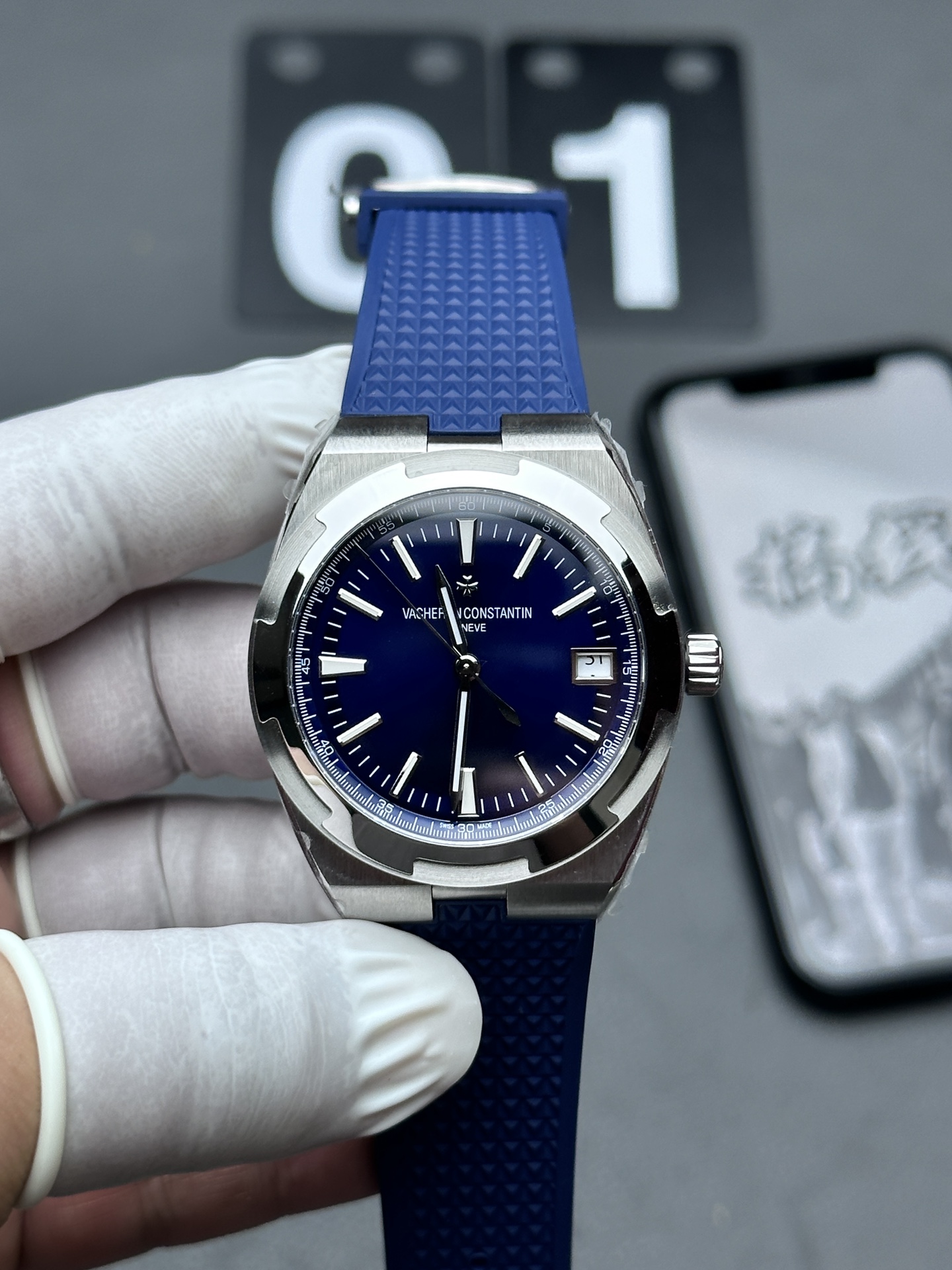
A straight stem returns straight. A stressed stem telegraphs its condition through tilt, resistance, and inconsistent seating.
Axial Straightness at Neutral Position
At rest, the crown centerline should remain square to the case flank. A tilted crown indicates internal interface stress. That stress originates upstream, where stem, movement, and case failed to agree on a shared axis.
Once this misalignment exists, wear accelerates. Components begin to load unevenly, and return consistency degrades over time.
Return Feel After Time Setting
Pull, set, and push the crown while paying attention to re-seating resistance and micro-play after engagement. Inconsistent return predicts future alignment drift because it reveals elastic deformation within the interface.
This tactile feedback is one of the most reliable system assembly discipline indicators available without disassembly. Your fingers register what your eyes may miss.
Practical Judgment Tip: Three-Cycle Crown Reset Test
Perform three full pull–set–push cycles. Observe alignment after each and note resistance changes. Variation across cycles confirms systemic inconsistency rather than a one-off anomaly.
Case–Bracelet Interface as a Lateral Tolerance Map
End-links and lugs translate hidden case geometry into visible gaps. Left/right spacing, lug flare, and seating symmetry collectively expose horizontal assembly errors. Bracelet behavior often surfaces misalignment before the dial does.
This interface acts like a mechanical level. When the case centerline shifts, the bracelet reports it through unequal engagement.
End-Link Gap Distribution
Inspect the junctions where bracelet meets lugs. Uneven gaps mean the case centerline is already displaced. These asymmetries rarely correct themselves and tend to widen with wear.
Comfort is irrelevant here. What matters is symmetry. The gaps are mapping lateral drift.
Lug Plane Consistency
Compare upper and lower lug planes for parallelism. Non-parallel lugs point to case machining drift that propagates through every attached component. Once present, this twist influences strap fit, bracelet seating, and visual balance simultaneously.
Practical Judgment Tip: Three-Strap Rotation Test
Rotate through steel, rubber, and leather while observing gap behavior — if alignment shifts across straps, the issue is systemic; if it remains constant, the problem is localized to a single interface, a multi-condition alignment check rooted in the geometric evaluation methods of the Vacheron Constantin Overseas replica guide with geometry-based inspection methods.
Multi-Signal Convergence: When Visual Noise Becomes System Failure
Single defects are weak evidence. Clustered anomalies are decisive. When bezel geometry, dial spacing, hand stack behavior, crown alignment, and bracelet seating all deviate in compatible directions, you are observing system assembly discipline breaking down.
Three concurrent deviations almost always trace back to upstream process control rather than isolated parts. This is the moment where china super clone vacheron evaluation moves from inspection to judgment.
Pattern Recognition Across Independent Surfaces
Link radial indicators from the bezel, vertical cues from the hands, and lateral signals from the bracelet into one narrative. Independent flaws converging mean the process failed, not the finish. This cross-referencing turns visual noise into a coherent diagnosis.
Avoid romanticizing craftsmanship stories. Systems produce patterns. Your task is to recognize them.
Why Guangzhou Outcomes Stratify by Execution, Not Parts
Component similarity across guangzhou replica watch production is high. Outcomes diverge because assembly sequencing, fixture control, and tolerance management diverge. Materials do not explain why one piece reads balanced while another feels unsettled in the hand.
Execution does. Discipline does. The watch tells you which one it received.
Practical Judgment Tip: Three-Zone Confirmation Rule
Require anomalies in at least three zones before concluding systemic failure. This prevents overreaction to single defects while honoring convergence when it appears.
Conclusion: Trust clustered signals over isolated flaws, read surfaces as system outputs, and let your judgment—grounded in convergence—decide whether a piece deserves acceptance.
Dial Text Spacing as a Center-Axis Indicator
Vacheron Constantin dials leave a lot of air between elements, and that restraint is precisely why micro-offsets become visible so quickly on a vacheron constantin super clone. The brand text sits inside generous negative space, the minute track traces a wide perimeter, and applied indices occupy clearly separated positions. When the dial plane shifts even slightly during seating, those distances stop agreeing with each other. You do not need magnification to see it. Your eye reads imbalance instinctively because the layout offers no visual noise to hide it.
Typography does not drift by itself. When spacing starts to feel uneven, the cause almost always lives upstream in dial positioning rather than in printing quality. Center-axis error propagates outward. The logo-to-track distance changes, peripheral markers begin to crowd one side, and the entire composition starts leaning without any single element looking “broken.” This is why dial geometry functions as an early structural signal on a Vacheron Constantin super clone. It turns invisible alignment decisions into visible surface behavior.
Logo-to-Minute-Track Distance Mapping
The simplest way to expose dial rotation or seat offset is to compare vertical spacing at opposing points. Look at the distance from the brand text baseline to the minute track at 12, then repeat the same observation at 6. In a correctly centered dial, these two gaps feel perceptually balanced. When one compresses while the other opens, the dial plane has shifted relative to the case.
This method works because the logo and minute track share the same reference axis. Any deviation between them reveals movement at the interface where the dial meets the movement and case. Asymmetric spacing here rarely remains isolated. Once you see it at 12 and 6, you will usually find corroboration at 3 and 9, or in how the applied markers distribute themselves around the perimeter.
Peripheral Index Drift
Applied indices sit at the outer edge of the dial, where small angular errors multiply. They act as tolerance amplifiers. When the dial plane moves off center, markers begin to crowd one side while opening up on the opposite. The effect is subtle at first, but it follows a directional pattern rather than appearing randomly.
This drift reflects cumulative alignment behavior. Individual markers are not misbehaving independently. The entire dial has translated or rotated, and the indices are simply reporting that displacement. Once peripheral gaps stop matching across cardinal points, you are no longer evaluating decoration. You are reading the geometry of the assembly.
Practical Judgment Tip: 12/3/6/9 Quadrant Spacing Check
Perform a quick visual sweep of the four cardinal positions and compare radial distances between markers and the minute track. You do not need tools. Unequal spacing across these points confirms center-axis misregistration. When this pattern appears, it almost always aligns with other signals elsewhere on the watch, reinforcing that the issue is structural rather than cosmetic.
Hand Stack Clearance Reveals Vertical Assembly Discipline
Vacheron’s layered hands tolerate very little vertical error. Hour, minute, and seconds planes sit close enough that small height inconsistencies immediately translate into visible behavior. On a china super clone vacheron, this stack becomes a direct readout of how well the movement, dial, and hands were brought together. Minute-to-hour clearance, second-hand stability, and vertical parallelism all report on the same interface.
Hand stack tolerance is not about aesthetics. It is about whether components occupy the planes they were designed to inhabit. When vertical discipline holds, reflections remain parallel and motion looks calm. When it fails, shadows converge, highlights bend, and sweep behavior starts to reveal hidden interference. These cues appear during ordinary use, not just under inspection.
Parallelism Between Hour and Minute Planes
Observe the hour and minute hands under oblique ambient light. In a properly seated stack, reflected highlights run in parallel and shadow gaps remain consistent as the hands pass each other. When those planes appear to converge or diverge, uneven seating has already occurred at the interface.
This loss of parallelism signals compromised vertical tolerances. Even if nothing is scraping yet, margin has been consumed. Over time, thermal expansion and daily motion tend to magnify these early inconsistencies, turning subtle visual cues into functional conflicts.
Second-Hand Stability as a Stack Integrity Signal
The seconds hand exposes height conflict through motion. Watch its sweep for micro-bounce, lateral shimmer, or brief hesitation. Visible instability usually means stacked tolerances are colliding somewhere along the vertical axis, even if timing accuracy still looks acceptable.
This behavior matters more than rate. A hand that cannot maintain a calm, centered sweep is telling you that clearance is uneven and that internal components are loading against each other. That dynamic signal often precedes audible contact or visible wear.
Practical Judgment Tip: Side-Light Hand Separation Test
Introduce low-angle light across the dial and observe how reflections travel along each hand. Uneven highlights or inconsistent separation between layers expose height inconsistency immediately. This simple lighting check turns invisible vertical relationships into readable contrast and gives you a fast, repeatable way to assess hand stack tolerance in real conditions.
Crown Alignment as a Stem-System Diagnostic
Crown position is not a cosmetic detail. It is a direct readout of stem geometry, case drilling accuracy, and cumulative alignment decisions made during assembly. On pieces coming out of guangzhou replica watch production, the crown often becomes the most honest mechanical witness because it sits at the intersection of movement, case, and user interaction. When those three systems agree, the crown presents itself square, returns cleanly, and feels predictable. When they do not, misalignment appears first here.
Crown misalignment almost never exists in isolation. A crown that leans, binds, or returns inconsistently is usually reflecting compounded assembly drift upstream. Small angular errors in case drilling, slight offsets in stem seating, or uneven compression at the movement interface all resolve themselves at this single control point. This is why crown feel consistency matters more than surface finish. The crown translates invisible internal stress into something you can both see and feel.
Axial Straightness at Neutral Position
Begin by observing the crown at rest. The centerline of the crown should sit perpendicular to the case flank, presenting a neutral, balanced stance when viewed from the side. If the crown appears tilted upward, downward, or skewed laterally, that deviation is not decorative variance. It signals internal interface stress where the stem is being forced to compensate for misaligned components.
This visual cue often correlates with other subtle behaviors. A tilted crown usually accompanies uneven resistance during setting or a faint sense that the crown wants to “spring” in one direction when released. These are early indicators that the stem is operating under load rather than along its intended axis, and that load tends to accelerate wear across the entire keyless works over time.
Return Feel After Time Setting
Pull the crown to set the time, then push it back to its neutral position. Pay attention to how it reseats. In a disciplined assembly, the crown returns with uniform resistance and settles into place without hesitation or lateral play. When the return feels inconsistent—sometimes firm, sometimes soft, sometimes accompanied by a slight sideways shift—you are feeling system assembly discipline breaking down.
That inconsistency predicts future alignment drift. Micro-play after push-in indicates that elastic deformation already exists somewhere along the stem path. Each interaction compounds that deformation. What begins as a barely perceptible wobble often evolves into visible crown tilt or erratic engagement after months of regular use, even if the watch initially appears acceptable.
Practical Judgment Tip: Three-Cycle Crown Reset Test
Perform three complete pull–set–push cycles in succession. Observe crown alignment after each cycle and note any change in resistance or seating behavior. If the crown returns differently across cycles, or if alignment subtly shifts from one reset to the next, you are not dealing with a one-off imperfection. Variation across cycles confirms systemic inconsistency at the stem interface.
Case–Bracelet Interface as a Lateral Tolerance Map
The junction between case and bracelet acts like a mechanical level. End-links and lugs convert hidden case geometry into visible gaps, making lateral assembly errors impossible to ignore. When the case centerline drifts, the bracelet reports it through uneven seating and asymmetric spacing. This is why alignment behavior becomes so readable once the bracelet is attached.
Bracelet behavior translates internal geometry into surface evidence. Even when the dial appears centered and the bezel feels acceptable, the case–bracelet interface can reveal horizontal displacement that other surfaces mask. Lug flare, end-link engagement, and seating symmetry together form a structural coupling analysis that exposes whether the case was machined and assembled around a true center.
End-Link Gap Distribution
Examine the gaps where the end-links meet the lugs on both sides of the case. In a balanced assembly, left and right spacing feel equivalent, and the bracelet appears to emerge from the case symmetrically. When one side opens while the other tightens, the case centerline has already shifted.
These asymmetries do not self-correct. Uneven gaps typically widen with wear as the bracelet articulates against misaligned lugs. What starts as a subtle visual imbalance often becomes a tactile one, with one side of the bracelet feeling looser or more mobile than the other during daily use.
Lug Plane Consistency

Next, compare the upper and lower lug planes. They should remain parallel, presenting a coherent geometry when viewed from multiple angles. If one lug plane appears twisted relative to its counterpart, you are seeing case machining drift expressed in three dimensions.
Non-parallel lugs influence everything downstream. Bracelet seating becomes uneven, strap fit grows unpredictable, and visual balance degrades even when individual components look well finished. This twist is not a bracelet problem. It is a case geometry problem that propagates through every attached element.
Practical Judgment Tip: Three-Strap Rotation Test
Rotate through steel, rubber, and leather while observing how gaps and seating change at the lugs. If alignment behavior shifts across straps, the issue is systemic, rooted in case geometry. If it remains constant, the deviation is localized to a single interface. This rotation test isolates lateral tolerances quickly and turns configuration changes into diagnostic tools rather than styling choices.
Multi-Signal Convergence: When Visual Noise Becomes System Failure
Single defects are weak evidence. A soft bezel edge, a slightly crowded index, or a crown that feels marginally off can each exist in isolation without condemning the whole build. What matters is correlation. When bezel geometry, dial spacing, hand stack behavior, crown alignment, and bracelet seating begin to deviate in compatible directions, you are no longer looking at surface noise. You are observing system output.
On a china super clone vacheron, three concurrent deviations almost always trace back to upstream process control rather than isolated parts. These watches share broadly similar components across the ecosystem. What separates a coherent piece from an unsettled one is how those components were referenced, sequenced, and locked together. Once multiple zones start echoing the same imbalance, the conclusion becomes structural. Assembly discipline has already failed, even if each individual flaw still feels small.
Pattern Recognition Across Independent Surfaces
The skill here is learning to link unrelated-looking symptoms into a single mechanical narrative. Radial indicators appear first at the bezel and dial perimeter. Vertical indicators emerge through hand stack behavior and reflected light. Lateral indicators surface at the crown and case–bracelet interface. Each lives on a different surface and belongs to a different subsystem, yet they converge on the same underlying geometry.
When these independent signals align, they stop being coincidences. A dial that drifts toward one quadrant often pairs with unequal end-link gaps. A tilted crown frequently accompanies non-parallel lug planes. Hand stack instability tends to coexist with asymmetric logo-to-track spacing. These are not parallel failures. They are the same failure expressed through different interfaces. Independent flaws converging mean system assembly discipline broke somewhere upstream, long before any single surface was finished.
This is why experienced evaluation never fixates on one defect. It cross-references. It asks whether radial, vertical, and lateral cues agree. When they do, the watch is telling a consistent story about how it was built.
Why Guangzhou Outcomes Stratify by Execution, Not Parts
Across guangzhou replica watch production, component similarity is high. Cases come from the same machining networks. Dials share suppliers. Movements follow comparable architecture. Yet outcomes diverge sharply. Some pieces feel centered and calm in the hand. Others feel subtly tense, as if internal forces never quite resolved.
That divergence comes from execution. Assembly sequencing determines whether tolerances stack constructively or destructively. Fixture control decides whether the case, dial, and movement agree on a common axis. Cumulative tolerance management governs whether vertical clearances remain parallel or begin to collide. Material sourcing does not explain why one watch reads balanced while another presents a cascade of small misalignments. Process discipline does.
Once you understand this, visual convergence makes sense. Multiple surface anomalies are not random quality lapses. They are downstream artifacts of how references were established and how components were allowed to settle during assembly. Guangzhou does not stratify by parts. It stratifies by control.

Practical Judgment Tip: Three-Zone Confirmation Rule
Before concluding systemic failure, require anomalies in at least three zones—typically one radial (bezel or dial), one vertical (hand stack), and one lateral (crown or bracelet). This prevents overreacting to single defects while honoring convergence when it appears. When three zones agree, trust the pattern. It reflects system assembly discipline, not surface coincidence.