Introduction
“Richard Mille China” has become an inevitable search term because the market itself forces the question. Richard Mille is one of the most technically aggressive watch designs ever commercialized, and people quickly discover that no meaningful replica—or reconstruction—exists outside of China. The search is not driven by curiosity alone; it is driven by confusion. If these watches are so complex, why does China sit at the center of the conversation?
The contradiction appears obvious on the surface. China is the global production center, yet it is still widely associated with low-cost manufacturing and visual imitation. Richard Mille exposes the weakness of that assumption. The brand’s watches are not built around traditional hand-finishing narratives or heritage techniques. They are built around structural solutions, composite materials, and tolerance-driven assembly. When people search “Richard Mille China,” they are really asking whether advanced engineering and Chinese manufacturing can coexist at the same level.
This article takes a clear position. It does not sell watches, endorse dealers, or defend replicas as a category. It explains, from an industrial standpoint, why every serious Richard Mille super clone originates from China, and why Guangzhou sits at the center of that reality. What follows is not marketing language, but an examination of how complex objects actually get built.
China Does Not Mean Low Quality — Especially for Richard Mille
Why Richard Mille Is Not a Traditional Luxury Watch
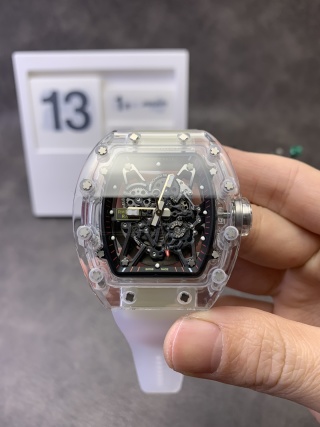
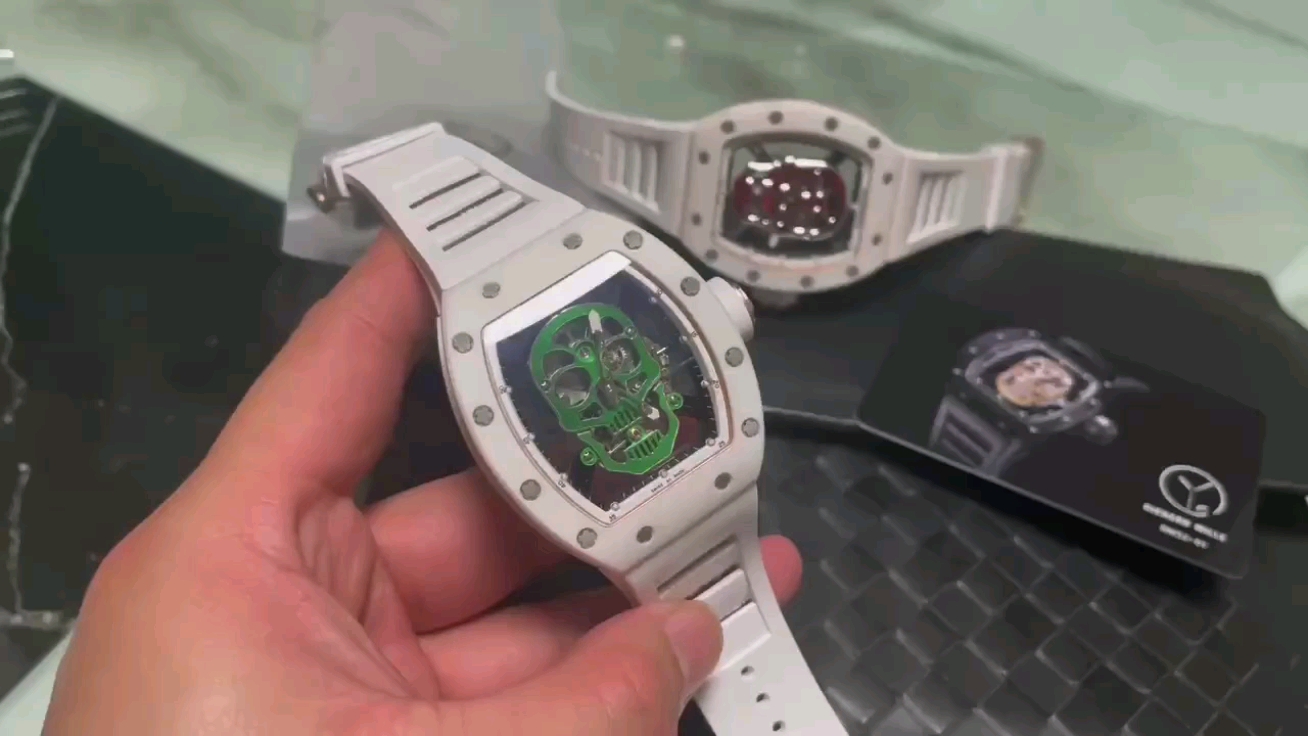
Richard Mille does not behave like a conventional luxury watch, and judging it through that lens leads to constant misinterpretation. Its defining features are not polish techniques or artisanal decoration, but structural decisions. The tonneau-shaped case is not an aesthetic flourish; it is a load-bearing form. The skeletonized movement is not about visual openness; it is about weight reduction, shock resistance, and spatial efficiency. Even the exposed screws and suspended components serve mechanical purposes before visual ones.
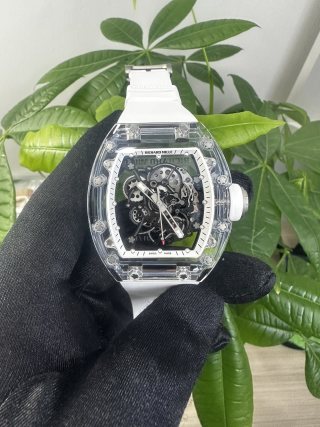
In practical terms, a Richard Mille functions more like an industrial prototype than a classical wristwatch. The movement architecture, case geometry, and material interfaces are designed as a single system. Change one element and the entire balance collapses. This is why brand storytelling matters less here than execution. The object either works as a structure, or it fails outright. That reality shifts the discussion away from heritage and toward engineering competence.
Seen from this perspective, “Richard Mille China” is not a downgrade. It is a reflection of where high-complexity manufacturing ecosystems actually exist. The question is not who can imitate the look, but who can reproduce the structure with tolerances tight enough to survive real use.
The Fundamental Misunderstanding of “China-Made” Watches
The dominant public narrative still equates “China-made” with outsourcing and cost reduction. That view is anchored in consumer goods and fashion accessories, not in high-precision mechanical systems. It ignores what modern Chinese manufacturing actually specializes in: multi-axis CNC machining, composite material processing, sapphire shaping, and small-batch iterative production where failure is expected and absorbed.
Richard Mille depends on exactly these capabilities. NTPT carbon is not decorative; it is layered, directionally stressed material that fails frequently during processing. Tonneau cases require consistent curvature across multiple axes, not simple stamping or casting. Skeleton movements demand spatial accuracy that leaves no room for cosmetic shortcuts. These are not artisanal problems, but industrial ones.
China’s role in the Richard Mille super clone world is not accidental, and it is not purely economic. It reflects where the concentration of tools, technicians, material suppliers, and iterative manufacturing experience already exists. The mistake is assuming that “China-made” describes a quality level. In the case of Richard Mille, it describes the only environment capable of sustaining the work at all.
Why Low-End RM Replicas Fail by Design
Richard Mille Cannot Be Simplified Without Breaking the Watch
Richard Mille does not tolerate simplification because its design is already at the edge of mechanical feasibility. Unlike traditional round watches, where visual compromises can be hidden behind solid dials and closed cases, RM exposes every structural decision. When corners are cut, the failure is not subtle. It shows immediately in proportion, balance, and wearability.
The first collapse usually appears in thickness. Reduce cost by switching movement architecture or case construction, and the watch gains two or three millimeters almost instantly. On a Richard Mille, that change destroys the side profile and shifts the entire visual mass upward. The second failure follows at the balance wheel. If its position drifts even slightly from the correct geometry, the illusion breaks because RM’s skeleton layout is not forgiving. The third failure is proportional. Bridges thicken, openings shrink, and the movement begins to look crowded rather than suspended. At that point, the watch may still resemble an RM at a distance, but structurally it has already failed.
Low-end replicas are not flawed because they are poorly finished. They are flawed because the RM concept itself cannot be reduced without collapsing. The design does not scale downward.
The Structural Red Flags of Cheap RM Replicas
Fake Skeleton Movements
The most obvious warning sign is the skeleton movement that does not function as a skeleton. Many low-end RM replicas rely on standard automatic movements hidden under decorative plates. The visible gears do not engage with the train, the balance wheel oscillates without correct load paths, and nothing behaves as a unified system. What looks complex is mechanically hollow.
In these watches, skeletonization is visual theater. The movement is not designed to be open; it is disguised to appear open. Over time, this leads not only to visual inconsistency but also to reliability problems, because the added plates and false components interfere with serviceability and balance.
Incorrect Case Thickness and Curvature

A Richard Mille case is not thick by accident. Its dimensions result from the interaction between movement height, crystal curvature, and caseback geometry. Cheap replicas typically miss this relationship. Add two or three millimeters, and the case no longer wraps the wrist. The curvature flattens, the lugs lose their tension, and the watch begins to sit awkwardly rather than integrate with the arm.
This is not a minor tolerance issue. On a tonneau case, side profile defines identity. Once that profile is wrong, no amount of surface finishing can recover the design.
Decorative “Carbon” Instead of Structural NTPT
Perhaps the most misleading shortcut is decorative carbon. Many replicas use surface-applied patterns or shallow composite skins that imitate the look of NTPT carbon without carrying any structural load. The layers are cosmetic, not directional. They exist to be seen, not to function.
True NTPT carbon is a structural material. Its layering direction, compression, and thickness determine strength and failure points. When carbon is reduced to a visual texture, the case may look similar under certain lighting, but it no longer behaves like a Richard Mille case. That distinction matters, because RM’s identity is built on material behavior, not appearance alone.
Guangzhou Is Not a Factory — It Is a System
The Myth of “One Guangzhou RM Factory”
One of the most persistent misconceptions in the market is the idea of a single “Guangzhou RM factory.” This belief comes from how simpler replica products are made, where one facility controls most steps. Richard Mille does not fit that model. Its complexity exceeds the capability of any single workshop.
No factory independently masters tonneau CNC machining, NTPT carbon layering, sapphire shaping, movement reconstruction, and final regulation at the required level. Attempting to centralize all of this would increase failure rates beyond sustainability. The RM ecosystem works precisely because it is distributed, specialized, and tightly coordinated.
The Real Guangzhou RM Ecosystem Explained
Case Manufacturing and Multi-Axis CNC
The tonneau case is the foundation of the entire watch. Producing it requires multi-axis CNC machining with consistent curvature across complex surfaces. Even minor deviations cause asymmetry that becomes obvious once the crystal and bezel are installed. In Guangzhou, specialized CNC workshops focus exclusively on this problem, refining tooling paths and tolerances through repeated failure and correction.
This is not mass production. It is iterative machining where rejected cases are an accepted cost of accuracy.
NTPT Carbon Fiber Layering
NTPT carbon introduces a different type of difficulty. The challenge is not shaping, but layering. Fiber orientation, compression timing, and thickness control determine whether the material holds or delaminates. Failure rates are high, and visual success does not guarantee structural integrity.
Only a handful of facilities are capable of producing NTPT carbon components that behave consistently under machining and assembly. Their work feeds into the broader Guangzhou system rather than standing alone.
Sapphire Crystal and Complex Geometry
Richard Mille uses front and rear sapphire crystals with non-standard curvature and edge geometry. These are not flat discs that can be sourced generically. Cutting and polishing sapphire to fit a tonneau case without stress fractures requires experience, not just equipment.
This step alone eliminates most low-cost attempts, because sapphire rejects are expensive and unavoidable.
Movement Sources and Final Assembly
Movement foundations typically originate from Dandong or Shanghai, where base calibers and components are produced. Guangzhou’s role begins after that. Movements are restructured, skeletonized, rebalanced, and assembled to fit RM architecture. Regulation, alignment, and quality control happen at the final stage, where case, movement, and crystal meet.
This is where the system converges. The value is not in any single component, but in the ability to bring all components together without forcing compromises that break the design.
Guangzhou matters not because it labels a factory, but because it coordinates a system capable of sustaining failure until the structure finally holds.
What Defines a True Chinese Richard Mille Super Clone
Movement Architecture Comes First
Integrated RM-Style Movement
A true Richard Mille super clone begins with movement architecture, not decoration. The defining requirement is an integrated RM-style movement built as a single structural system. This means the bridges, gear train, and balance are designed to exist in open space, not hidden beneath cosmetic plates. The movement must carry load through its own architecture rather than relying on a conventional base caliber disguised with cutout layers.
Decorative sandwich constructions fail this test immediately. When plates exist only to create visual depth, the movement loses mechanical coherence. Integrated architecture behaves differently in use. Power delivery feels consistent, shock response is predictable, and the visual openness aligns with mechanical reality. Without this foundation, nothing else qualifies as a super clone.
Correct 5 O’Clock Balance Wheel Position
The balance wheel position is not a styling detail. On a Richard Mille, the placement near five o’clock defines the visual and mechanical rhythm of the watch. It determines bridge geometry, gear spacing, and the entire skeleton layout. If the balance wheel is moved, raised, or visually simulated, the watch loses its identity.
This is where most replicas fail quietly. They appear convincing until the eye tracks the balance relative to the case and dial opening. When the position is wrong, the watch feels unsettled even to non-experts. Correct placement is difficult because it cannot be faked without redesigning the movement itself. That difficulty is precisely why it matters.
Case Construction, Not Appearance
Structural NTPT Carbon
NTPT carbon in a real RM structure is a load-bearing material. Its layered construction carries stress, defines rigidity, and influences how the case responds to machining. In a true super clone, NTPT carbon is not applied for appearance. It is engineered to hold shape under tension and compression.
Surface carbon patterns are irrelevant here. They may look similar in photos, but they do not behave like NTPT. Structural carbon resists deformation during assembly and maintains consistency across temperature changes and impact. Without that behavior, the case is only pretending to be an RM.
Original-Range Case Thickness
Case thickness is not negotiable. A true super clone must fall within original tolerance ranges, not approximate them. Being slightly thicker is not a small flaw; it changes wrist integration, crystal height, and sidewall proportion. On a tonneau case, those changes cascade visually and physically.
Correct thickness indicates that the movement, case, and crystal were designed together rather than forced into compatibility. When thickness is right, the watch settles on the wrist naturally and retains the tension that defines RM’s profile. Anything outside that range signals compromise elsewhere.
Assembly and Quality Control
High-end Richard Mille super clones do not behave like mass-produced watches. They resemble small-batch engineering builds more than commercial inventory. Assembly involves fitting components that were never designed to be forgiving. Tolerances stack quickly, and minor deviations lead to rejection rather than adjustment.
Quality control at this level is about refusal, not correction. Cases are discarded, movements are rebuilt, and components are reworked until alignment holds. This process limits volume by necessity. A watch that survives this process carries the defining trait of a true super clone: it exists because the system allowed failure until the structure finally worked.
That is the line separating appearance from substance, and it is the only line that matters.
The Role of APS, ZF, BBR Inside the Guangzhou System
APS: Movement Refinement and Structural Accuracy
APS occupies a role centered on movement architecture and structural correctness rather than visual novelty. Its contribution to the Guangzhou system lies in pushing integrated RM-style movements closer to mechanically coherent forms, with correct balance placement, bridge geometry, and load paths that behave as a unit rather than as staged decoration. APS work tends to expose problems early: if a movement cannot support the case and skeleton layout without distortion, it is rejected rather than cosmetically patched. This bias toward structural accuracy limits output but raises the baseline for what qualifies as a serious RM build.
ZF: Stability, Consistency, and Production Discipline
ZF’s role is less about radical experimentation and more about system reliability. Within the Guangzhou ecosystem, ZF represents production discipline—repeatable tolerances, predictable assembly outcomes, and controlled variation across batches. This matters because RM projects are prone to cascading failures when components vary even slightly. ZF’s strength is not in redefining architecture, but in making complex builds behave consistently over time, which stabilizes the ecosystem as a whole and reduces downstream waste.
BBR: Transitional Innovation and Cost Breakthroughs
BBR operates at the boundary between ambition and accessibility. Its role is transitional, exploring ways to reduce cost without fully abandoning structural logic. Some attempts succeed, others expose limits. That experimentation matters because it tests where simplification breaks the RM concept and where it can be cautiously tolerated. BBR’s presence pressures the system to innovate pragmatically, even when outcomes remain uneven.
They compete, but they exist inside the same ecosystem.
Replica vs Engineering Reconstruction: The RM Difference
Why High-End RM Clones Are Not “Imitations”
High-end RM builds are better understood as engineering reconstructions rather than imitations. The work begins with reverse analysis of load paths, spatial relationships, and material behavior, not with copying visual surfaces. Skeleton layouts are rebuilt to function, not just to appear open. Case geometry is derived from interaction with movement height and crystal curvature, not from traced outlines.
Imitation copies appearance first and hopes function follows. Reconstruction accepts that function defines appearance. That difference explains why many visually convincing RM replicas fail in use, while fewer, structurally honest builds survive despite imperfect cosmetics.
Why RM Is the Ultimate Test of a Replica System
Richard Mille exposes every weakness in a replica system simultaneously. Movement architecture, material science, CNC accuracy, sapphire processing, and assembly discipline must all align. There is no isolated success that compensates for failure elsewhere. A system that can build RM coherently has already solved problems that simpler watches never reveal.
This is why RM functions as a benchmark rather than a product category. If a system can produce a structurally correct RM, it has earned the right to claim high-end capability. If it cannot, claims about quality elsewhere remain unproven.
Final Perspective: Understanding Richard Mille China Correctly
China Is Not the Shortcut — It Is the Requirement
China’s role in Richard Mille super clones is not a matter of cost advantage but of capability concentration. The skills required—composite processing, multi-axis machining, iterative failure tolerance—are not distributed globally. They are clustered where industrial density allows repeated attempts without collapse.
Guangzhou Is Not a Label — It Is the Infrastructure
Guangzhou matters because it coordinates specialization into a functioning whole. It aligns movement sources, material processors, machinists, and assembly teams into a system that can absorb failure until structure holds. Remove that infrastructure, and RM projects do not migrate elsewhere—they simply stop existing.
Understanding Richard Mille China correctly means recognizing that Guangzhou is not copying a watch, but sustaining the only environment where such a reconstruction can realistically occur, whether one agrees with the outcome or not.