
Understanding Audemars Piguet Replica Factories
In the replica world, a “factory” is not a physical location in the way most people imagine. It is a production system built around specific decisions: how much effort goes into case geometry, how movements are engineered or adapted, how strict quality control is between batches, and how much inconsistency the factory is willing to tolerate to push visual accuracy. Two watches labeled with the same brand and model can feel completely different on the wrist depending on which factory’s system produced them.
This distinction matters more for Audemars Piguet than for most mainstream luxury brands. Rolex replicas live or die by dial printing, bezel proportions, and movement reliability, all of which have become relatively standardized. Royal Oak replicas, by contrast, depend on a far more fragile balance. The octagonal bezel has no margin for sloppy finishing. The case alternates between brushed and polished planes that expose even minor errors. The bracelet is integrated, not forgiving, and immediately reveals stiffness or poor articulation. Add to that ultra-thin automatic movements like the AP 3120 or 4302, and the technical burden rises sharply.
This is why no single AP replica factory is universally “the best.” Each one makes trade-offs. Some prioritize long-term stability and conservative tolerances. Others chase closer visual alignment with genuine watches at the cost of higher variance. Understanding factories as systems rather than names is the only way to make sense of VS, APS, ZF, or any other option without falling into oversimplified rankings.

Key Factors That Define a Top AP Super Clone Factory
Judging AP super clone factories only by reputation leads to bad decisions. The meaningful differences appear when watches are worn, handled, serviced, and compared over time. The factors below are not theoretical criteria; they are the dimensions where real-world ownership separates acceptable replicas from frustrating ones.
Case & Finishing Accuracy (Royal Oak Complexity)
Royal Oak cases punish shortcuts. The bezel’s eight edges must remain sharp without looking crude, and the polished bevels between brushed surfaces must stay consistent in width. Factories that round these transitions too aggressively produce cases that feel soft and indistinct on the wrist. Those that push sharpness too far risk uneven reflections and visible machining marks.
Mid-case thickness is equally critical. Even a fraction of a millimeter changes how the watch sits and how the bracelet flows into the case. Experienced wearers notice this immediately, especially on 41 mm models. A well-executed case feels flat, tense, and architectural rather than bulky or padded.
Movement Architecture & Stability
Genuine AP movements like the 3120 and 4302 are compact, well-balanced, and visually structured around symmetry. Replicas cannot reproduce them one-to-one without massive cost, so factories choose between two imperfect paths. One is the use of base movements with decorative plates, prioritizing reliability while accepting visual compromise. The other is attempting more integrated architectures that better resemble genuine layouts but introduce higher complexity and potential instability.
Neither approach is inherently superior. What matters is whether the factory understands the limits of its movement strategy and builds the rest of the watch around those limits. Thinness, winding feel, rotor noise, and long-term serviceability all stem from this choice.
Dial, Markers & Hands Details
The Royal Oak dial looks simple until examined closely. Tapisserie patterns vary in depth, spacing, and light response. Shallow grids flatten the dial; overly deep ones exaggerate texture unnaturally. Marker proportions and hand length must align with the dial’s geometry, not just match reference photos.
One of the most common tells lies at the center: hand stack thickness and cannon pinion diameter. Factories that neglect this create a subtle but persistent imbalance that becomes obvious with repeated wear, even if it passes casual inspection.
Bracelet, Screws & Wearing Experience
The Royal Oak bracelet defines the watch more than the case itself. Poor articulation leads to stiffness, uneven weight distribution, and discomfort during extended wear. Properly executed links taper smoothly, flex naturally, and maintain consistent brushing direction across each segment.
Screw alignment is not a cosmetic detail. Misaligned screws often indicate loose tolerances beneath the surface, which can translate into long-term durability issues. A bracelet that feels calm and settled on the wrist usually reflects disciplined manufacturing upstream.
Quality Control & After-Sales Risk
The final difference between factories appears after purchase. Batch consistency determines whether two watches ordered months apart feel interchangeable or entirely different. Higher rejection rates, while inconvenient, often signal stricter internal standards. Lower prices sometimes hide the cost of increased after-sales risk, especially for newer buyers without access to skilled servicing.
For Audemars Piguet replicas, quality control is not a bonus feature. It is the boundary between a watch that quietly integrates into daily rotation and one that demands attention for the wrong reasons.
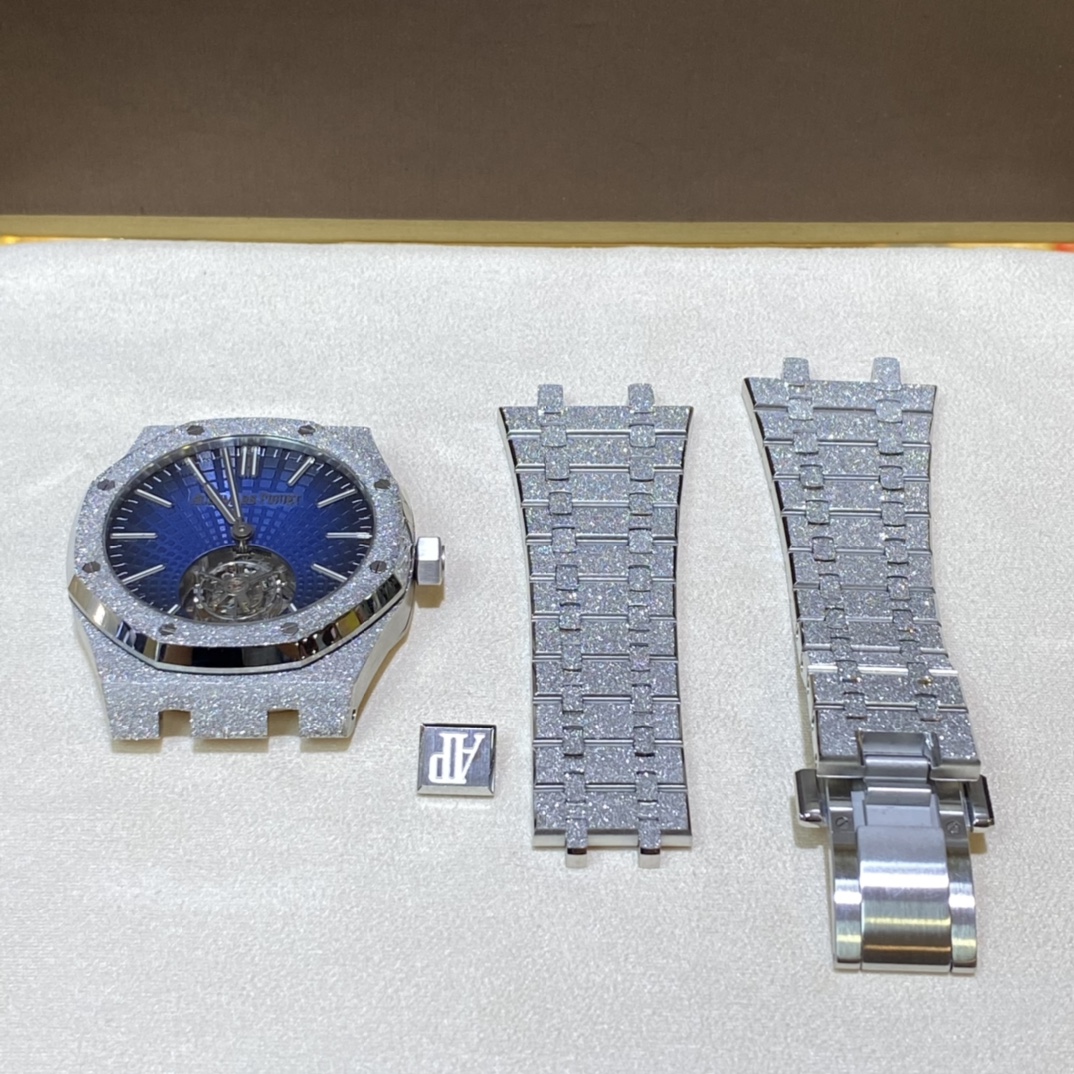
VS Factory Audemars Piguet Replica Review
VS Factory Background & Positioning
VS Factory has never tried to be everywhere at once, and that restraint defines its position in the Audemars Piguet replica space. Unlike factories that chase broad catalog coverage, VS limits its AP output to a small number of Royal Oak references where it believes structural stability can be controlled. This selective approach explains why VS rarely leads visual hype cycles but consistently maintains a reputation for watches that behave predictably over time.
In practice, VS operates closer to an engineering mindset than a design-driven one. The goal is not to win side-by-side photo comparisons under perfect lighting, but to produce watches that survive daily wear without constant adjustment or surprise failures. This philosophy appeals to users who value consistency over novelty, especially those who rotate watches frequently or expect their Royal Oak replica to function as a normal, low-maintenance watch rather than a display piece.
VS Factory Movement Strategy
VS Factory’s movement strategy reflects its broader priorities. Instead of aggressively pursuing decorative complexity, VS focuses on integrated movement solutions tuned for stability. While these movements are not true one-to-one reproductions of AP’s 3120 or 4302, they are designed to preserve correct proportions, acceptable thickness, and reliable power delivery.
Rotor noise is typically controlled, winding resistance feels even, and long-term accuracy tends to remain within predictable ranges. Visual detailing on the movement side is competent but restrained. Bridges, engravings, and finishing are adequate rather than ambitious, which is a deliberate choice. VS accepts that most owners value a calm ownership experience over opening the caseback to admire perfect cosmetic symmetry.
This approach makes VS movements particularly suitable for long-term wearers. They tolerate daily motion, occasional shocks, and extended service intervals better than more aggressive architectures that push closer to visual authenticity but operate closer to mechanical limits.
VS Factory Best AP Models
VS performs best on modern Royal Oak references where balance matters more than extreme thinness. Models such as the Royal Oak 15500 sit comfortably within VS’s technical comfort zone, allowing the factory to maintain correct case proportions without overstressing the movement. These watches tend to feel composed on the wrist, with predictable behavior after weeks or months of use.
Older or transitional models that demand tighter tolerances or more intricate dial work are less consistent from VS. In these cases, the factory’s conservative movement and finishing choices can result in watches that feel slightly underwhelming to detail-focused owners. VS is not the right choice for buyers chasing the sharpest bezel edges or the deepest Tapisserie texture at all costs.
VS Factory Pros & Cons
VS Factory’s strengths are clear once the watch leaves the box. Stability is its defining advantage. Quality control across batches remains relatively tight, and serious defects appear less frequently than with factories that push visual limits. For many owners, this reliability outweighs cosmetic compromises that only emerge under magnification.
The trade-off is coverage and refinement. VS does not offer a wide AP catalog, and collectors seeking rare references or maximum visual aggression may find its output too conservative. Detail-focused enthusiasts sometimes feel that VS leaves performance on the table in pursuit of safety.
Who Should Choose VS Factory?
VS Factory suits wearers who treat their Royal Oak replica as a daily object rather than a project. It fits those who prefer to wear the watch, not constantly inspect it, and who value predictable servicing and lower ownership friction. Newcomers to AP replicas often find VS reassuring, while experienced users who have cycled through more volatile factories may return to VS for its calm, dependable character.
APS Factory Audemars Piguet Replica Review
APS Factory Background & Core Strength
APS Factory exists almost entirely for Audemars Piguet. Unlike multi-brand operations that treat AP as one line among many, APS was built with the Royal Oak as its core problem to solve. This narrow focus explains both its strengths and its volatility. Every major decision at APS, from case machining to movement layout, is judged against how closely it can approach the visual and structural character of a genuine Royal Oak.
That single-brand commitment gives APS an edge in areas where generalist factories hesitate. Case geometry, bezel proportions, and overall silhouette receive disproportionate attention. APS is willing to discard acceptable solutions in pursuit of marginal gains, even when those gains introduce new risks. As a result, APS watches often look exceptionally convincing out of the box, especially to experienced eyes familiar with genuine Royal Oak references.
APS Factory Movement & Case Accuracy
APS takes a more aggressive stance on accuracy than most competitors. Case thickness, bezel edge definition, and mid-case tension are pushed closer to genuine specifications, particularly on modern 41 mm references. The watch tends to sit flatter and feel more architectural on the wrist, with less of the softened profile seen in safer builds.
This pursuit of form extends to movement presentation. APS prioritizes visual coherence and layout alignment, sometimes at the expense of long-term forgiveness. Decorative elements, bridge shapes, and rotor aesthetics are closer to what collectors expect when viewing an AP caseback. The trade-off is a narrower operating margin. These movements reward careful handling and regular checks, but they are less tolerant of neglect than conservative alternatives.
For models like the Royal Oak 15500 and 15510, this balance works in APS’s favor. The case and movement architecture align naturally, allowing APS to showcase its strengths without pushing beyond reasonable mechanical limits.
APS Factory Best AP Models (15500 / 15510 Focus)
APS’s strongest work appears in the Royal Oak 15500 and 15510 series. These references sit at the intersection of modern proportions and manageable complexity, giving APS room to deliver sharp case lines, convincing dial depth, and correct wrist presence. In these models, APS’s aggressive case machining translates directly into a more authentic wearing experience.
Outside this core range, results become less predictable. When APS applies the same philosophy to models with tighter tolerances or older design language, the gains in appearance do not always justify the increased variability. The factory shines brightest when it stays within the territory it understands best, rather than stretching for completeness.
APS Factory Pros & Cons
APS’s appeal lies in how close it gets to the genuine Royal Oak’s visual tension. Cases look right, proportions feel intentional, and details reward close inspection. For collectors who prioritize appearance and are comfortable managing minor uncertainties, APS offers a level of realism that safer factories rarely reach.
The downside is inconsistency. Quality control can fluctuate between batches, and not every watch arrives equally refined. This variability places a higher burden on the owner, who must be willing to inspect, evaluate, and occasionally intervene. APS is not careless, but it operates closer to the edge, and that edge is not forgiving to inexperience.
Who Should Choose APS Factory?
APS Factory is best suited to owners who already understand Royal Oak replicas and know what they are looking for. It appeals to those who value visual accuracy above operational peace of mind and who accept that higher realism comes with higher responsibility. For experienced collectors willing to manage some risk in exchange for a more convincing Royal Oak, APS remains one of the most compelling options available.
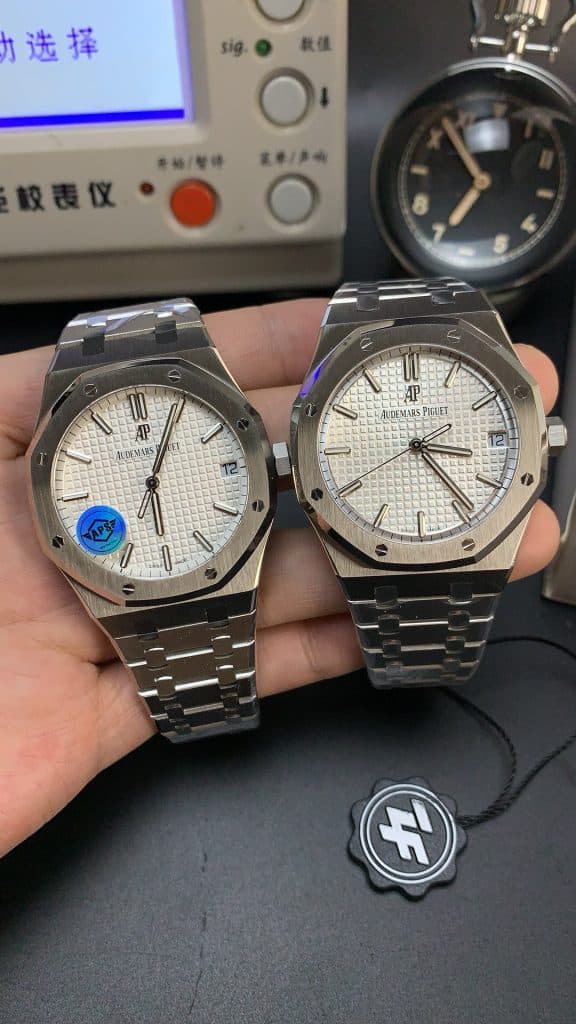
ZF, 3KF & Other AP Replica Factories (Secondary Options)
Not every Audemars Piguet replica discussion needs to end in a binary choice between VS and APS. Other factories still exist in the ecosystem, and ignoring them entirely creates unnecessary gaps in understanding. That said, their relevance today is narrower, and treating them as equals to the top-tier options leads to misplaced expectations.
ZF Factory Overview
ZF Factory played a meaningful role in the earlier phase of Royal Oak replication. At a time when options were limited, ZF delivered cases and dials that felt competitive, especially on older generations of Royal Oak references. For many collectors, ZF represented a noticeable step up from entry-level replicas and helped define what “high-end” AP replicas could look like at the time.
The landscape has shifted. As VS refined stability and APS pushed case accuracy forward, ZF’s AP offerings began to feel dated. Finishing that once appeared crisp now reads softer by comparison, and movement solutions no longer stand out in a field that has advanced quickly. This does not mean ZF watches are unusable or fundamentally flawed. On certain older models, particularly where expectations around thinness and dial depth are lower, ZF can still produce acceptable results.
However, for buyers actively seeking a modern “super clone” experience, ZF rarely delivers the level of refinement now considered baseline. Its relevance today is situational rather than general.
3KF & Other Factories
Factories such as 3KF and various smaller or less specialized operations occasionally offer Audemars Piguet models that fill gaps in the catalog. These watches often exist because the reference is obscure, discontinued, or unattractive to factories focused on mainstream demand. In that sense, they serve a functional role in keeping niche models available.
What they do not offer is a true super clone experience. Case geometry, bracelet articulation, and movement integration tend to lag behind the standards set by AP-focused factories. These watches can satisfy curiosity or short-term ownership goals, but they rarely withstand prolonged comparison or extended wear without revealing their compromises.
For collectors chasing completeness or specific references, these factories may have limited value. For anyone prioritizing realism, long-term satisfaction, or deep Royal Oak authenticity, they are better understood as peripheral options rather than serious contenders.
Best AP Replica Factory by Model
Choosing an Audemars Piguet replica factory only makes sense when tied to a specific reference. Factories do not perform evenly across the Royal Oak family, and treating them as interchangeable leads to disappointment. The recommendations below reflect where each factory’s strengths align with the technical demands of the model.
Royal Oak 15500 / 15510
For the 15500 and 15510 generation, APS holds a clear advantage over VS. These references reward sharp case geometry, precise mid-case thickness, and a flatter wrist profile, all areas where APS’s aggressive machining pays off. The visual tension of the bezel, the clarity of the dial layout, and the overall stance of the watch tend to feel closer to genuine examples.
VS remains a viable alternative for owners who prioritize predictability, but side-by-side, the APS versions capture the architectural character of these models more convincingly. For buyers focused on appearance and modern Royal Oak proportions, APS is the stronger choice.
Royal Oak 15400 / Older Models
Older Royal Oak references such as the 15400 place less emphasis on extreme thinness and more on balanced wearability. In this context, VS often proves more stable over time. Its conservative movement choices and tighter quality control reduce the risk of long-term issues, making it a safer option for extended ownership.
APS can still perform well here, but the gains in visual sharpness are smaller, while variability becomes more noticeable. For these models, VS’s calmer approach aligns better with the design and ownership expectations.
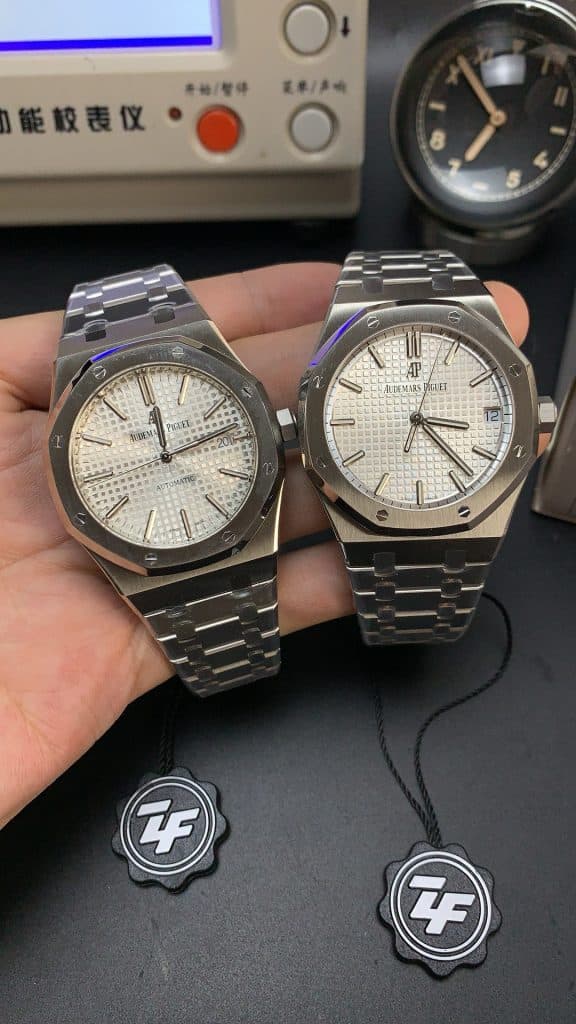
Extra-Thin / Jumbo Style Models
Ultra-thin and Jumbo-style Royal Oak replicas occupy a high-risk category regardless of factory. These watches push tolerance limits even in genuine form, and replicas magnify every compromise. Case thickness, movement reliability, and bracelet integration all operate with minimal margin.
No factory consistently delivers a worry-free solution in this segment. Buyers should approach with caution, accept visible and mechanical compromises, and resist promises of perfection. These models are best treated as experimental rather than dependable daily watches.
How to Choose the Right AP Factory for You
The most reliable way to choose an AP replica factory is to work backward from personal priorities. If long-term stability and low maintenance matter most, factories that favor conservative engineering will feel easier to live with. If visual fidelity and case accuracy define satisfaction, more aggressive factories may justify their risks.
This is not a linear ranking. It is a decision tree shaped by tolerance for variability, experience level, and how the watch will actually be worn. No factory solves every problem, and forcing a single “best” answer ignores how different ownership goals produce different outcomes.
Common Mistakes When Choosing AP Replica Factories
One of the most frequent errors is assuming factory names guarantee consistency. Fake VS or APS labels circulate freely, often attached to lower-grade watches designed to exploit brand recognition. Another trap lies in price-driven decisions, where marginal savings conceal increased defect rates or compromised components.
Equally damaging is chasing specifications without understanding trade-offs. A watch that looks impressive in photos may demand constant attention once worn. In the AP replica space, inflated promises usually signal misplaced priorities rather than hidden value.
Final Verdict: Which Audemars Piguet Replica Factory Is the Best?
There is no universal best factory, but VS remains the most dependable choice for stability-focused wearers while APS delivers the strongest visual authenticity for experienced owners willing to accept higher risk.