
VS Factory Rolex Grey Dial Datejust Versions Comparison: V1, V2, ARF, and C+ (Complete Professional Guide)
The VS Factory Grey Dial Datejust has become one of the most scrutinized and technically dissected replica models in 2026, largely due to the model’s complex dial finishing, evolving movement structures, and the fierce competition among top-tier factories.
This guide provides the most authoritative and comprehensive comparison of the four dominant versions on the market today: VS Factory V1, VS Factory V2, ARF, and C+.
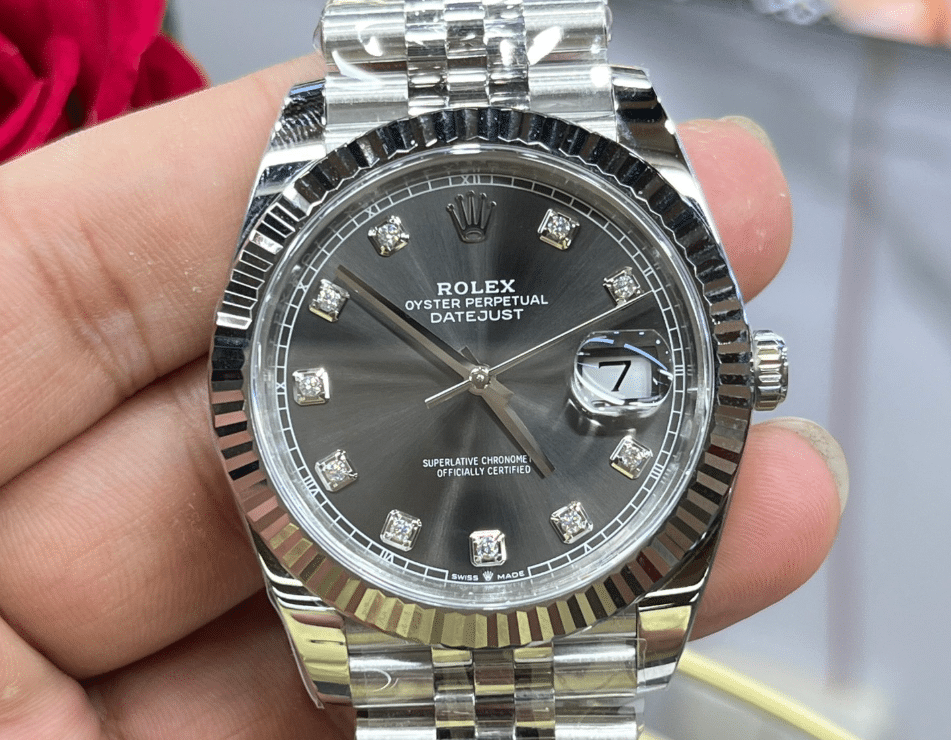
From bezel plating quality, weight accuracy, and dial tone calibration, to movement coding and finishing, each version differs in critical ways that directly affect realism, durability, and collector value.
Whether you are a buyer, reseller, or replica watch analyst, understanding these distinctions is essential for making an informed decision in 2026’s rapidly shifting clone 3235 market.
Why the Grey Dial Datejust Became 2026’s Most Competitive Replica Model
The Grey Dial Datejust—often referred to as the “grey diamond” or “grey tone” Datejust—continues to dominate replica demand in 2026. This trend is driven by three major forces:
1. Viral Popularity and Social Media Amplification
Over the last two years, the grey dial’s popularity has surged across TikTok, Xiaohongshu, YouTube, and global watch communities.
The cultural “grey tone” wordplay trend significantly boosted exposure, helping the model evolve from a niche preference into a mainstream symbol of minimalism and luxury.
2. Multi-Factory Competition Creates Better Products
Since 2024, multiple factories—VS, ARF, C+, and other Dongcheng-based 3235 manufacturers—have simultaneously released their own Grey Datejust versions.
By 2026, competition has reached its peak, pushing factories to improve:
- plating durability
- dial sunburst texture
- weight precision
- movement authenticity and engraving
This market pressure resulted in the VS Factory V2 becoming the benchmark, with ARF and C+ acting as high-production alternatives.
3. Grey Dial Finishing is One of the Hardest to Replicate
Unlike black or white dials, a grey sunburst dial requires:
- perfectly balanced radial brushing
- controlled metallic reflectivity
- accurate tone under daylight vs indoor lighting
- smooth varnish application without “patchy” reflections
Even slight deviations make the replica look “off,” which is why collectors in 2026 pay exceptional attention to tone accuracy and plate finishing.
Why This Matters for Buyers in 2026
Because the grey dial is so unforgiving, it has become the highest-stakes testing ground for replica dial manufacturing.
The factories that excel here—especially VS with its V2 evolution—tend to dominate the entire 3235 replica category.
Overview of the Main Factories Producing Grey Dial Datejust 3235 Replicas
If you follow the replica watch scene in 2026, you’ll notice how a few factories shape almost everything around the Grey Dial Datejust. They don’t compete in the same way, and understanding their roles makes the later comparisons much easier to read.
VS Factory usually sets the pace. When a new Datejust appears, many collectors won’t buy anything until they know whether VS has touched it. The factory works slowly, but there’s intention behind that. They care about movement consistency, predictable finishing, and especially the kind of dial work that exposes differences under real daylight. Their models often feel “settled,” as if nothing was rushed. ARF sits in a different lane. Think of them as the factory that keeps the market supplied. Their watches rarely chase extreme upgrades, but they remain steady, and the quality doesn’t swing too far from batch to batch. People who don’t want to wait for VS often turn to ARF because they know what they’re getting. With a grey dial, ARF’s work is clean, although it doesn’t always match the subtlety that more experienced collectors look for. C+ is newer, and its rise basically tells you one thing: demand for the Grey Dial Datejust outgrew what the older factories could produce. C+ has some similarities to early VS models in material choices and movement structure, but the gap becomes clear when you study a dial in natural light. Their pieces are fine for daily wear, but they don’t yet carry the same quiet confidence you see in a VS release.
There are also smaller Dongcheng-based 3235 suppliers filling the lower-production tiers. They exist to keep the pipeline open. Their work is more practical than ambitious. These factories give the market volume, while VS, ARF, and C+ shape expectations.
If you carry this background into the next sections, the differences in bezels, weight, dial tone, and movement codes will make far more sense. Every version comes from a different logic, and that logic explains why each watch feels the way it does.
VS Factory V1 vs V2 — Full Technical Comparison
Bezel Plating and Texture Differences
For most people, the bezel is the easiest place to tell V1 and V2 apart, not because it’s the brightest spot on the watch but because light exposes everything. Hold a V1 near a window, and you’ll see a shine that looks a bit thin, as if the reflection doesn’t settle fully onto the surface. That comes from its single-layer platinum plating. It works, but it doesn’t carry weight in the way real bezels do.
VS changed that with the V2. The bezel feels denser, almost like the surface has more grip on the light. You don’t see an obvious brightness jump; instead, you notice the glow holds longer as you tilt your wrist. The triple-layer plating doesn’t shout—it gives the bezel a deeper register. In outdoor light, the V2 gives off a more even reflection and avoids that slightly “hollow” look V1 sometimes shows.
This is why most collectors check the bezel first. It’s the one detail you don’t need tools for. Light does the comparison for you.
Weight Accuracy and Case Finishing
When you pick up the two versions, the difference becomes clear before you even check the numbers. V1 sits around 129 grams, while V2 usually lands between 133 and 135. It’s a small gap on paper, but your wrist knows. Lighter Datejust replicas can feel empty, as if the case has more air than metal. Heavier ones often drift into “overbuilt” territory.
VS tuned V2 to sit closer to the weight of the real piece, and that small shift changes the character of the whole watch. Tap the case or the bracelet, and the sound carries more weight. The links don’t rattle as freely. When you wear it throughout the day, the watch settles on the wrist instead of sliding around. All of these little cues feed into why collectors take weight seriously. It isn’t about chasing numbers—it’s about whether the watch convinces you the moment you put it on.
Dial Color Tone – Deep vs Light Grey
Photographs rarely capture the true difference between V1 and V2 dials. You only see it when you compare them side by side under daylight. V1 has a deeper tone. It pulls in more shadow, and that gives it a heavier presence. Some collectors still like this look because it feels rooted and traditional.
V2 pushes the tone lighter. The grey opens up, especially when sunlight hits the sunburst pattern. The reflections stretch farther and feel more controlled. On cheaper grey dials from other factories, you sometimes see small patches where the color breaks or where the radial pattern loses rhythm. V2 avoids that. The surface stays clean as you move the watch around, and the transition between light and shadow feels smoother.

This is why dial tone matters so much in a grey Datejust. Grey exposes mistakes. If the tone shifts unevenly or the texture breaks in one direction, you notice it immediately. And once you notice it, you can’t unsee it.
Clasp Engravings & “A” Code Differences
The clasp code is a tiny detail, but it says a lot about how much attention went into the watch. V1 uses a pointed “A.” It looks thin and slightly sharp at the ends, almost like the engraving cut deeper in some spots than others. When you zoom in or hold it close, the shape gives away the version instantly.
V2 switches to a flat-head “A.” The engraving sits more evenly in the metal, and the edges don’t flare. It isn’t a dramatic change, but it fits the calmer, more balanced approach VS used in V2 overall. If you’ve handled enough replicas, you can often tell the version from this detail alone, even without checking the dial or weight. Many buyers ignore the clasp at first, but after owning a few pieces, this small engraving becomes part of how you judge the care behind each release.
Movement Comparison — ES Code Explained
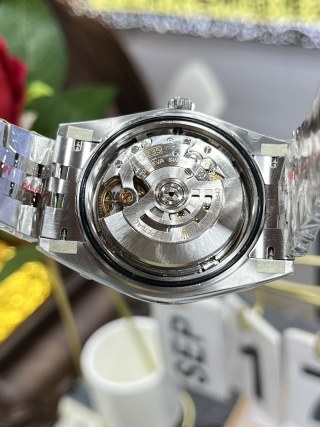
The movement is where VS separates itself from other 3235 clones. When you open the caseback, the first thing people check is the code. VS uses an ES prefix, and the bridge below it carries a clear brushed pattern. You can spot the difference within seconds. ARF and C+ use 9X codes, and their bridges are smoother with fewer details. But the real giveaway is the clutch wheel. On a true Dongcheng 3235 architecture—the one VS builds around—you can feel a slight jump when you pull and push the crown. It’s subtle, but it’s there. The wheel responds instead of staying frozen, and that reaction tells you the movement is built the way it should be.
Movement codes matter because they’re one of the few points that can’t be faked cheaply. Anyone can print a dial or polish a bracelet. Very few factories bother perfecting the small mechanical cues that separate a convincing replica from something you’ll regret buying. If you’re the type of buyer who wants peace of mind, the ES-coded VS movement gives you that. But whether it’s worth the wait or the premium—that’s your call, not mine.
ARF and C+ Grey Datejust — How They Compare to VS V1 & V2
When you move away from VS and look at ARF and C+, the tone of the conversation changes. These factories do not chase the same ceiling as VS, but they fill a space many buyers rely on. In 2026, the Grey Dial Datejust often sells out faster than factories can produce it, and ARF and C+ keep the market breathing by offering versions that are easier to buy and easier to replace. Both rely on the same 9X-coded 3235 movement structure, which gives their models a familiar feel if you’ve handled mid-tier replicas before. The bezels use a single round of plating, much like the original VS V1. It doesn’t carry the deeper glow you see in V2, but it still holds up under regular wear. Their dial tone leans darker, which hides small flaws but also lacks the airy, open reflection that makes the V2 stand out.
People often describe ARF and C+ as “playable.” The word fits. They are dependable watches that look the part in most situations. You can put one on your wrist, walk into a meeting or a bar, and it will hold its own. They just don’t have the refinement that makes a collector lean in and take a second look. That gap isn’t a failure; it’s simply the role they play. And for many buyers, especially first-timers, that role is enough.
Spend time with ARF and C+ side by side, and it becomes obvious that they follow the same blueprint. Their 9X movement codes, the plating style on the bezels, and the deeper dial shades give them a stable but familiar identity. They sit in the mid-tier of the replica market, where consistency matters more than pushing boundaries. If your goal is a watch that wears well and keeps the look without demanding the patience needed for VS drops, ARF and C+ feel like two versions of the same answer.
Why ARF & C+ Are Essentially Equal to VS V1 Level
When you compare ARF and C+ to the VS lineup, the closest match is the V1. The structure, the single-layer bezel plating, and the general weight distribution fall into the same neighborhood. They lack the triple-layer bezel of V2, which is where the newer VS model gains much of its presence. And because their dial tones sit deeper, they also miss some of the subtleties that make V2 the standout variant in natural light. The weight tells a similar story. ARF and C+ usually fall short of the V2 range, and while the difference isn’t glaring, it changes how the watch settles on the wrist. Many buyers won’t notice the nuance right away, but collectors do. They can feel when a case has the correct density and when the bracelet carries the right balance.
This is why many long-term collectors group ARF and C+ with the V1 tier. It’s not a criticism. It’s an honest acknowledgment of where their limits are. They produce watches that work and look convincing, but they don’t reach the level of refinement VS achieved with its upgrade. Whether that matters depends on what kind of buyer you are.
Quick Identification Checklist: How to Tell V1, V2, ARF, and C+ Apart
Weight Test
Weight is the simplest cue. A V1, ARF, or C+ tends to sit around 129 grams. Pick up a V2, and you’ll feel those extra few grams instantly. The watch feels settled, less airy, and the bracelet carries a firmer presence. You don’t need a scale to sense it—your wrist tells you first.
Clasp “A” Shape
The clasp engraving is a quiet giveaway. V1 uses a pointed A, as do ARF and C+. It looks sharp, almost narrow at the tips. V2 moves to a flat-headed A, and once you’ve seen it up close, you won’t confuse the two versions again. It’s a small detail, but it marks the step VS took toward a more refined release.
Dial Tone
Grey is unforgiving. V1, ARF, and C+ lean darker, which hides inconsistencies but dulls the play of light across the surface. V2 lifts the tone. Under daylight, the dial feels more open, and the sunburst lines carry farther without breaking. You see the difference the moment you hold both versions side by side.
Movement Code
Open the caseback, and the story becomes clear. ES codes belong to VS. The bridge has a brushed finish that gives away the factory’s hand. ARF and C+ rely on 9X codes, and the difference in surface treatment is noticeable even to beginners. It’s one of the few details that can’t be imitated easily.
Clutch Wheel Movement
When you pull the crown and feel the slightest jump in the clutch wheel, you’re dealing with a true Dongcheng-architecture 3235, the one VS builds around. ARF and C+ also have this feature, but cheaper factories often don’t. If you’re buying from an uncertain source, this tiny movement tells you more than a photo ever could.
Which Version Should You Buy? (Expert Recommendation)
If you’re trying to decide where your money should go, the answer usually depends on time, tolerance, and how much joy you expect from the watch. VS V2 remains the peak of the Grey Dial Datejust scene in 2026. It brings the most convincing bezel work, the cleanest dial tone, and the weight that feels right the moment you put it on. That’s why collectors wait for it. If you don’t want to wait—or if you want a solid entry point—VS V1, ARF, and C+ all do a good job. They look correct on the wrist and carry the familiar charm of a mid-tier replica. They aren’t show-stoppers, but they are dependable choices for everyday wear.
A simple rule many buyers follow:
If you care about subtle details, go V2.
If you care about convenience or price, the others will serve you well.
Only you can decide which of those matters more.
Final Verdict — Why the VS Factory V2 Remains the Benchmark
VS V2 holds its position for reasons that become clearer the longer you wear the watch. The bezel reflects light more naturally. The ES-coded movement gives confidence. The weight lands in the zone that feels right, not too light, not engineered for drama. And the dial—especially under bright daylight—carries the restraint and refinement that set it apart. Collectors don’t call it the benchmark because of hype. They call it that because it answers the small questions that linger after you’ve worn enough replicas to know what feels real. Whether those details matter to you is something only you can decide.