
VSF’s Reputation: Why the Name Carries So Much Weight (And Why That’s Dangerous)
When you type “VS Factory Richard Mille” into a search bar, you’re not starting from zero. You’re operating on a powerful, pre-existing assumption: that VS Factory (VSF) represents the pinnacle. For Rolex and Omega replicas, this assumption is correct. Their reputation is hard-earned and specific, a benchmark often explored in detailed Richard Mille replica legacy and super clone analysis. It’s built on the back of movements like the VS3135 and VS3235—clones so mechanically robust and visually accurate they reset the entire super clone standard. It’s in the case construction of a VSF Submariner that feels unnervingly correct in the hand, and the crystal clarity that makes a Datejust’s cyclops disappear. VSF didn’t just make good replicas; they engineered a blueprint for reliability and accuracy in the most popular watch categories on earth.
The VSF Super Clone Blueprint: Movement-First Dominance
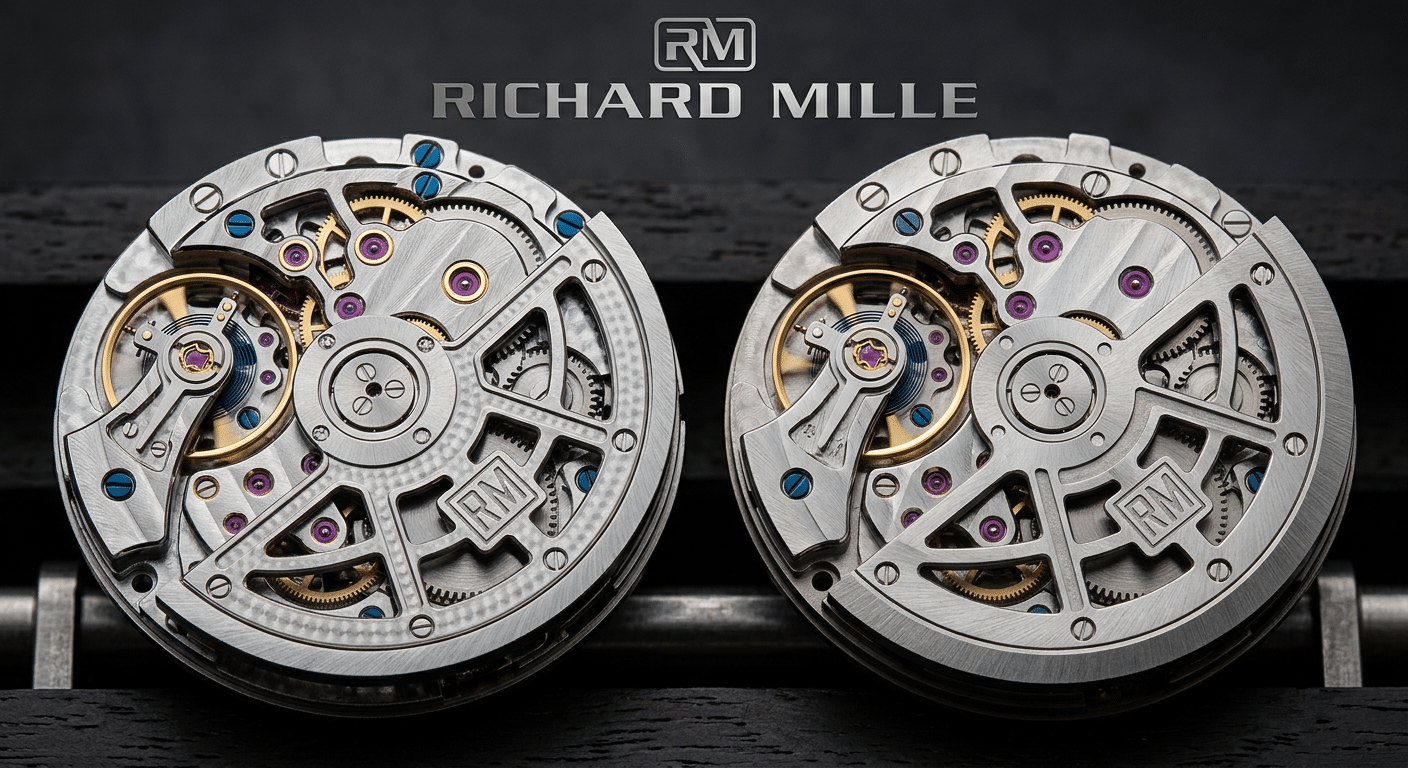
VSF’s dominance isn’t about vague “quality.” It’s a precise, repeatable formula. They identify a high-demand model—like the Rolex Submariner 126610LN or the Omega Seamaster Diver 300M—reverse-engineer its genuine movement to a functional degree, and then mass-produce it with shocking consistency. The movement is the heart. Everything else—the case, dial, crystal—is built to that new, higher standard. This “movement-first” strategy created a trust shortcut for buyers: if it’s from VSF, the fundamental mechanics are sorted. You’re buying a known quantity.
The Halo Effect: When a Factory Name Becomes a Marketing Token
This is where the danger begins. VSF’s formidable reputation in the Rolex and Omega spaces casts a long shadow, a halo effect that other sellers are desperate to stand under. The name “VS” or “VSF” has become synonymous with “top-tier” in a buyer’s mind. For a seller with a Richard Mille replica to move, slapping a “VS” label on it is the fastest way to communicate “this is the good one” and command a premium price. The core question you must confront shifts immediately. It’s no longer “Is VS good for RM?” That presupposes VS is even in the RM business. The real question is: “Is this *actually* a VS project for RM, or am I just buying the *idea* of VSF?”
Expert Authentication Insight
Physical diagnostic: For a true VS project, expect a proprietary, decorated movement clone as the centerpiece. The absence of a uniquely engineered, VS-branded movement for a specific RM model is the first major red flag that you’re dealing with a label loan, not a factory project. VSF’s identity is its movements. No unique movement, no legitimate VSF project.
Richard Mille Replica Landscape: A Game of Specialists, Not Generalists
To understand why the “VS” label is so problematic here, you must first understand that the Richard Mille replica market operates on a completely different set of rules than the Rolex world VSF conquered. This isn’t a market for generalists. It’s a playground for specialists.
Rolex vs. RM: Mass Production Logic vs. Niche Project Logic
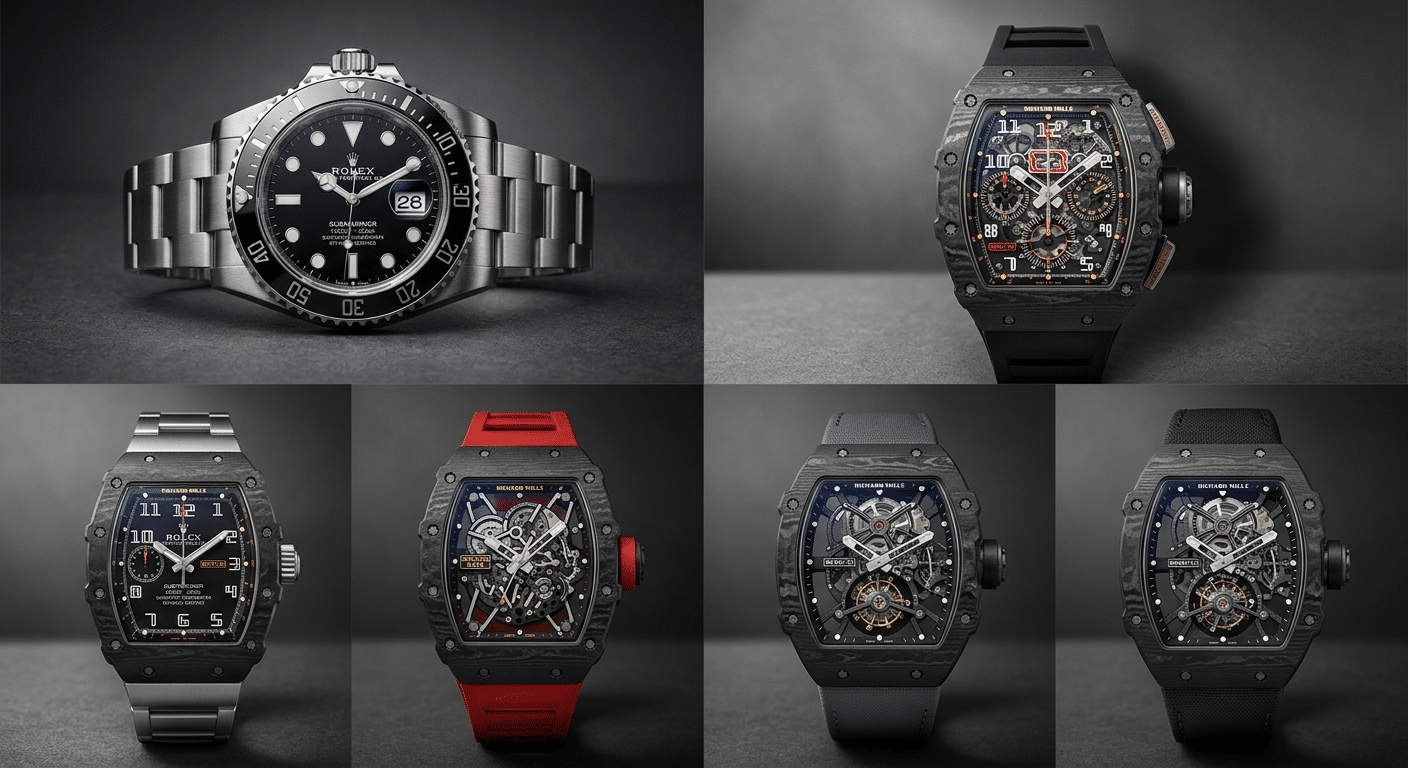
Think of the Rolex replica market as an exercise in mass production efficiency. The goal is to perfect a handful of iconic, mechanically similar designs—the Submariner, the GMT-Master, the Daytona—and sell them in volume. A factory like VSF can build an entire business around perfecting a few movements (the 3135, 3235, 4130) and cases. The logic is scalability.
Richard Mille is the antithesis of this. It’s a universe of extreme, low-volume niche designs. The RM 011 chronograph, the RM 035 “Rafa,” the ultra-thin RM 67-02, and the tourbillon-laden RM 027 share almost nothing in common. Each has a unique tonneau case geometry, a distinct skeletonized movement layout, and specific material challenges (NTPT carbon, ceramic, titanium). Expecting one factory to master them all is like expecting a master violin maker to also produce perfect grand pianos and electric guitars. The economics and expertise don’t translate.
The Specialist Workshop Model: ZF, KVF, and Project-Specific Builds
This is why the RM replica landscape is fragmented into specialist workshops. You have factories like ZF that excel at specific models like the RM 035-02, investing in multiple version iterations (V3 through V7) to incrementally improve that one watch. You have others like the older KVF (now KU) that focused on the RM 011 chronograph. Their expertise is deep, but narrow. They operate on a project-based model: they acquire a genuine watch, deconstruct it, and pour resources into replicating that specific reference, often partnering with different movement and case specialists. There is no “unified VS standard” across the RM catalog. Therefore, if you see a seller listing ten different RM models all under the “VS Factory” banner, your skepticism should be immediate and profound. It’s a logistical impossibility that betrays a marketing fiction.
Expert Authentication Insight
Physical diagnostic: Examine the movement decoration and case finishing for model-specific specialization. A true specialist build will have finishing tailored to that specific RM reference’s openworked plates and bridges. A generic, borrowed-label “VS” RM will often have simpler, less accurate finishing or a generic Seiko NH base movement awkwardly fitted into a complex case, a clear sign of parts-bin assembly, not dedicated engineering.
Deconstructing “VS Factory Richard Mille”: The Four Types of Label You’ll Actually Find
So, if a “VS Factory Richard Mille” isn’t what you initially hoped, what is it? The term is a chameleon. It can mean four distinctly different things in the wild, and only one is remotely close to the VSF reputation you know. Your first job as a buyer is to figure out which of these four categories the watch in front of you actually falls into.
Category 1: The Mythical Unified Project (Why It Almost Doesn’t Exist)
This is the holy grail: a specific RM model (say, the RM 035) developed from the ground up by VS Factory with the same integrated, movement-first approach they use for Rolex. It would feature a custom-decorated, proprietary movement clone, not a modified generic one. If this existed, it would be a major event in replica forums, with consensus from all trusted dealers. The reality? As of now, this category is largely theoretical for Richard Mille. VSF’s business is built on volume, and the RM market is the definition of low volume. The investment required doesn’t match their core competency or economic model.
Category 2: The Prestige Loan (The Most Common Market Reality)
This is, by far, the scenario you are most likely encountering. A watch is produced by an unknown workshop or a mid-tier specialist. To quickly establish credibility and justify a price hike, a seller labels it “VS Factory.” The watch itself might be decent—it could even be a good replica from a known workshop like ZF or BBR—but the factory affiliation is pure fiction. You are paying a “VS tax” for marketing. The danger is twofold: you overpay, and you have no reliable benchmark for quality or consistency because the “factory” behind it is a ghost. This is precisely where understanding specialized JB Factory super clone builds becomes crucial for proper evaluation, as such detailed guides dissect authentic factory benchmarks, movement specifics, and finishing standards that separate true high-tier productions from marketing fiction.
Category 3: The Parts-Bin Hybrid (A Technical Truth Stretched into a Lie)
This is a more nuanced misdirection. Here, a builder might actually use a genuine VS3135 movement (salvaged or sourced) and place it inside an RM-style case. A seller might then honestly say “contains a VS movement” but disingenuously let you believe it implies “VS Factory watch.” It doesn’t. This is a frankenswatch—a technically interesting hybrid, but a mislabeling of the highest order. A Rolex movement in an RM case guarantees nothing about the case quality, finishing, or overall integrity of the build. It’s a component, not a cohesive project.
Category 4: The Linguistic Shortcut (Confusion Born from Good Intentions)
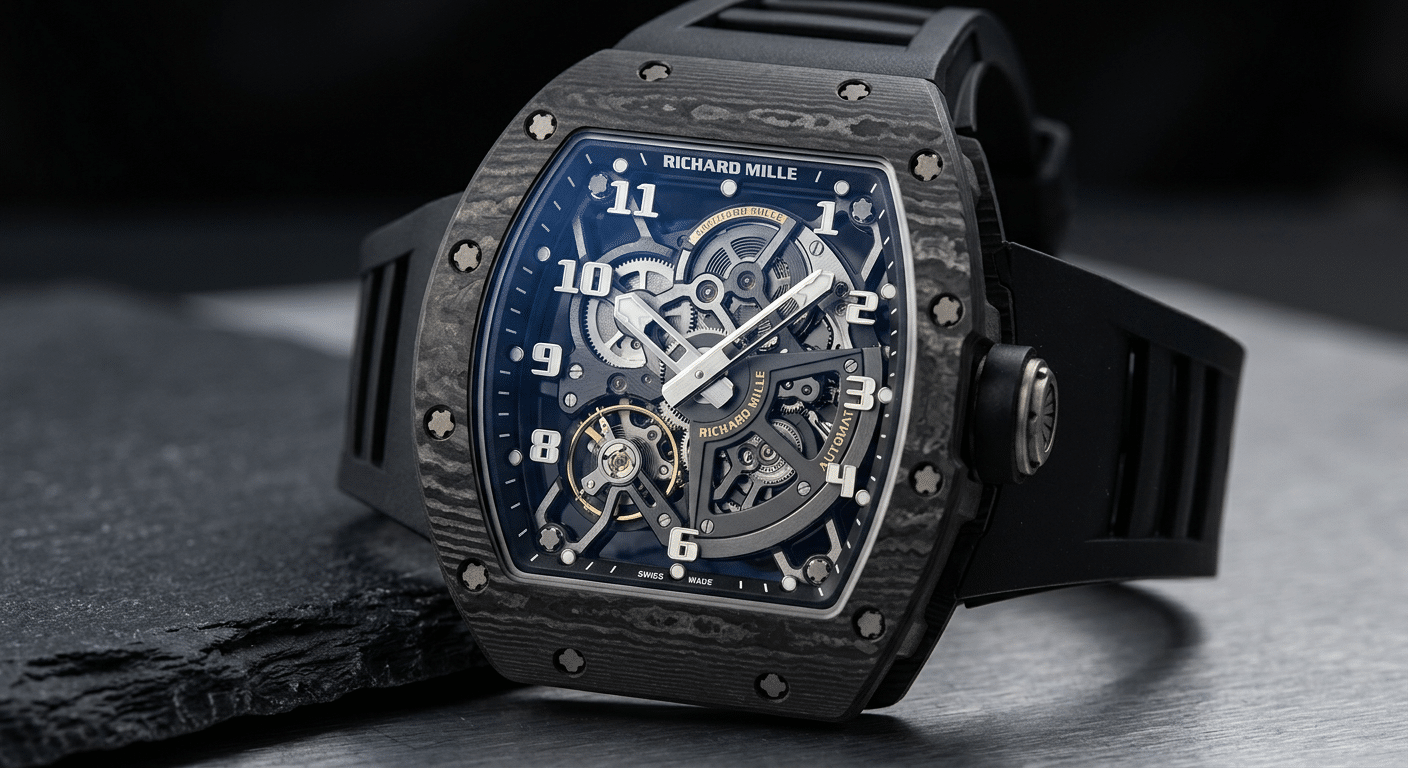
Sometimes, the mislabeling isn’t malicious. A seller, especially a newer one, might use “VS” as a shorthand for “super clone” or “top quality tier.” They see buyers associate “VS” with excellence, so they apply it to any high-quality RM rep to communicate its standing. While well-intentioned, this creates immense confusion. It dilutes the specific meaning of a factory name and trains buyers to use the wrong search terms and evaluation criteria. It turns a proper noun into a fuzzy adjective, which benefits no one in the long run.
Expert Authentication Insight
Physical diagnostic: To distinguish between these, demand specific factory origin proof. A real project has consistent batch codes, specific movement photos, and forum/trusted dealer consensus. A borrowed-prestige label will have vague “VS” claims but generic, non-proprietary parts. The component hybrid can be spotted by identifying a VS movement (e.g., decorated like a 3135) crudely adapted to a non-Rolex case. When in doubt, the absence of independent community verification is the loudest answer.
How to Interrogate the “VS” Claim: A Buyer’s Interrogation Checklist
Armed with the knowledge that the “VS” label is often a marketing token, your goal shifts from finding a “VSF RM” to protecting yourself from mislabeling. This isn’t about confrontation; it’s about clarification. When a seller uses the term, treat it as a hypothesis to be tested. Your toolkit is a set of precise, non-accusatory questions designed to separate substance from smoke.
Question 1: Testing for Market Consensus and Reality
Ask: “Which specific VS Factory RM model is this? Can you show me the factory photos or videos that other trusted dealers are also posting for this exact same model?”
This question cuts to the heart of a legitimate project. A real factory release has a product identity. It will have specific factory photography—often watermarked or stylized—that circulates among multiple trusted dealers. A legitimate answer will include a model code (e.g., “VSF RM035-02 V2”) and links to those standardized photos.
The Red Flag: A vague response like “It’s the VS version” or “It’s from their RM line,” coupled with generic, unbranded photos you could find anywhere. If only one seller has this “exclusive” VS project and it’s absent from community discussions, you’re likely looking at a borrowed-prestige label.
Question 2: Demanding Technical Specifics, Not Buzzwords
Ask: “What is the specific base movement inside, and how has VS modified or decorated it for this Richard Mille?”
VS Factory’s reputation is built on its movement work. A genuine project would center on a proprietary, modified caliber. This question forces technical disclosure. A truthful answer might be: “It uses a decorated Seiko NH05 base with a custom skeletonized bridge plate to mimic the RMUL2 layout.”
The Red Flag: Evasiveness or generic terms like “Japanese automatic,” “skeleton movement,” or “high-beat clone.” If they cannot or will not name the base movement and describe the specific modifications, there are none. This signals a generic build with a slapped-on label.
Question 3: Benchmarking Against Known VSF Hallmarks
Ask: “Apart from the name, what specific aspects of this watch—like case thickness, carbon fiber pattern, or screw head shape—match the known quality standards of VS Factory’s Rolex work?”
This cleverly uses VS’s own legendary benchmarks against the claim. It moves the conversation from abstract branding to tangible quality metrics, a methodology often detailed in a comprehensive Richard Mille replica factory guide. A seller representing a true high-tier project should be able to articulate these details: “The case finishing is to the same standard, with sharp, clean edges, and the crystal has a comparable anti-reflective coating.”
The Red Flag: A return to vague praise about “great quality” or “best version” without concrete, observable traits. It reveals the seller is selling a name, not a demonstrable engineering philosophy.
Expert Authentication Insight
The most reliable diagnostic tool isn’t in your dialogue with the seller, but in the community around you. Before any purchase, take the model reference (e.g., RM 055) and search replica forum threads for it alongside “VS.” If you find only one seller promoting it with no independent reviews, discussion, or QC photos from other buyers, it’s almost certainly a label loan. Consensus is the market’s immune system; a real project generates it, a fake claim avoids it.
What You’re Probably Actually Buying: The Real Factories Behind Good RM Replicas
So if “VS Factory Richard Mille” is largely a mirage, what are you actually looking at—and what *should* you be looking for? The good news is the real market is vibrant, specialized, and often produces astounding work. You just need to know the real players. Forget the generalist; here, specialists reign.
Model-by-Model Breakdown: RM 011, 035, 055, and Their Actual Sources
The key is to think model-first, factory-second. Quality is not consistent across a factory’s entire RM catalog; it’s concentrated in specific projects.
- RM 035-02 (Nadal): This is the battleground. As of late 2025, the top contenders are APS Factory (APSF) and ZF Factory. APSF is credited with superior movement finishing and case thinness on recent versions. ZF has a long evolution (V3 through V7) and is renowned for its NTPT carbon pattern. The old leader, BBR, has faded from the scene.
- RM 055 (Bubba Watson): For the NTPT version, APSF is currently the top recommendation. For ceramic models, BBR (if still available) and ZF have been strong. The critical tell across all replicas is the balance wheel—genuine uses free-sprung, while most reps use a standard regulator.
- RM 011 Flyback Chronograph: This is the domain of KV/KU Factory. It uses a modified Shanghai 7750 movement, making it inherently thicker (~18mm) than the genuine article. It’s a capable replica but exists in a different, more affordable tier than the super-clone 035/055 models.
- RM 052 Skull Tourbillon: For a real working tourbillon, EUR Factory is the undisputed specialist, commanding prices near $1,000. For a non-tourbillon “fantasy” version that simulates the look, ZF offers an alternative.
Understanding “Project-Based” Quality vs. “Factory-Wide” Consistency
This is the crucial mindset shift. ZF isn’t “the VSF of Richard Mille.” Instead, ZF allocated resources to master the RM 035-02 project. APSF invested deeply in the RM 055 NTPT project. EUR dedicated itself to the tourbillon project. Their excellence is project-bound. A factory can have a champion-level RM 035 and a mediocre RM 056. This is why your research must drill down to the specific reference. You’re not buying “from ZF”; you’re buying “ZF’s version of the RM 035-02 V7,” which is a very different thing.
Expert Authentication Insight
For a reputable specialist build like a ZF RM 011 or APSF RM 055, the quality is in the dedicated execution. The physical tells of a good replica are model-specific: achieving near-genuine case thickness (a constant struggle), using high-quality forged carbon with a deep, irregular pattern, and ensuring the decorated movement plates correctly mimic the silhouette and finish of the genuine RM caliber. The movement might be a Seiko base, but the artistry is in making it look the part.
The Final Verdict: Abandon the “VS” Search, Embrace the Model-Specific Deep Dive
Here is the unequivocal conclusion: your search for a “VS Factory Richard Mille” is not just futile—it’s counterproductive. It directs you toward the most common form of market mislabeling and away from the actual quality available. The factory name you know from a different world has no passport here. To navigate this niche successfully, you must adopt a new, more powerful strategy.
Step 1: Choose the Genuine Reference First, Not the Factory Name
Start your journey on Richard Mille’s official website or a reputable database. Fall in love with a specific watch: the RM 035-02 in NTPT, the RM 055 in white ceramic, the RM 67-02 in blue quartz. Understand its dimensions, its movement layout, its aesthetic quirks. This reference becomes your North Star. Your desire is now for a specific object, not a vague badge of quality.
Step 2: Research the Model, Not the Mythical Factory
With your reference in hand, you now conduct targeted research. Your search terms become: “[RM 035-02] replica review 2025” or “[RM 055 ceramic] best version forum.” You scour RWI, RepTime, and trusted dealer sites for that exact model. You look for consensus: which workshop’s name consistently comes up in relation to this specific watch? That consensus—not a pre-packaged factory label—is your true guide.
Expert Authentication Insight
The ultimate proof lives in comparison. Your final quality check is a side-by-side analysis with genuine photos and reviewed replica examples of your target model. Scrutinize the case thickness from the side profile. Compare the shape and finish of the screw heads. Study the skeletonization pattern of the movement bridges. The right replica will win on these granular, model-specific details. Its origin factory is just a footnote.
The path forward is clear. Your new search term is not “VS Factory RM.” Your new search term is “RM [Model Number] best replica version forum review.” In the high-stakes, specialist world of Richard Mille replicas, accurate knowledge of a single model is the only real currency. The borrowed prestige of a factory name from a different realm is just noise. Trade the label for the deep dive, and you’ll find what you’re actually looking for.