
Panerai looks incredible in photos. On the wrist, it can turn into a quiet disaster if the size choice is wrong. This isn’t about taste or confidence. It’s about physical fit risk. Replica Panerai watches amplify that risk because their cases are thick, their lug-to-lug spans are unforgiving, and small differences in strap setup change how the watch sits more than most people expect. This guide focuses on the wearing reality of replica Panerai, not catalog imagery or brand mythology. The question isn’t whether a Panerai looks good. It’s whether you can actually live with it on your wrist.
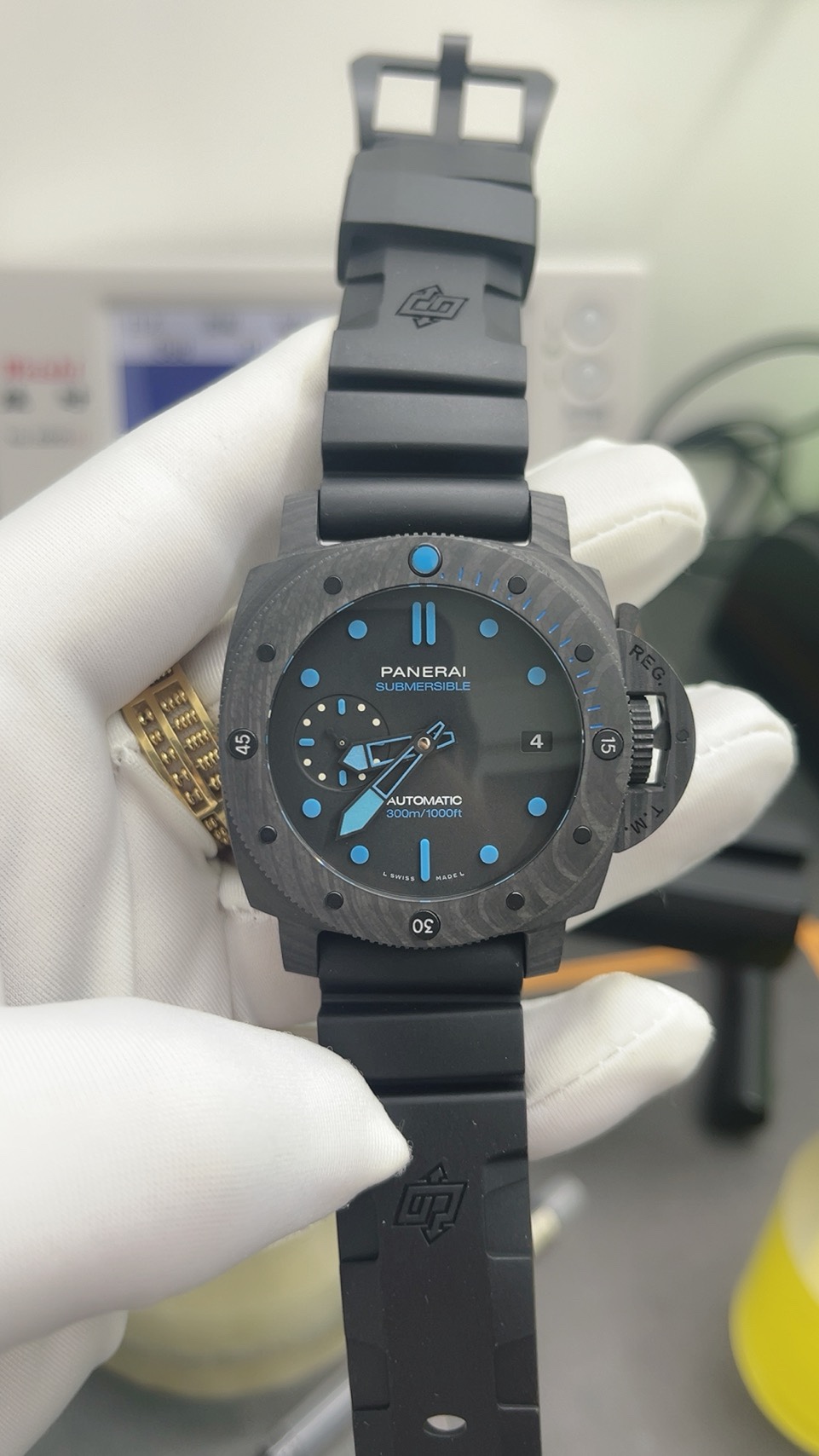
Why Size Matters More in Panerai Replicas Than Most Watches
Most Panerai wearing failures have nothing to do with design preference. They come down to size, and in replica Panerai watches that problem shows up faster and harsher than in most other brands. From repeated ownership cycles and long-term wear, roughly ninety percent of “this doesn’t work for me” outcomes trace back to fit, not finish or accuracy.
The first reason is case thickness. Replica Panerai cases, especially automatic models, carry their height high off the wrist. Even when the diameter sounds manageable on paper, the vertical mass creates leverage that makes the watch feel larger than expected. This isn’t about millimeters on a spec sheet. It’s about how much the case resists settling into the wrist over hours of wear.
The second reason is lug-to-lug length. Panerai lugs are long and straight, and they do not curve down aggressively to follow smaller wrists. On a replica case, that geometry is often slightly less forgiving than on genuine pieces. When the lugs extend past the flat area of your wrist, the watch doesn’t just look big. It becomes unstable, shifts constantly, and wears you instead of the other way around.
The third reason is strap dependence. Panerai watches rely heavily on strap choice to function well on the wrist. A thick case paired with a stiff or oversized strap magnifies discomfort quickly. In replicas, straps often start thicker and less pliable, which means a poor strap choice can ruin an otherwise acceptable case size. This is why two people with similar wrist measurements can have completely different experiences with the same Panerai model.
Wrist Size vs Panerai Case Size – The Reality (Not Marketing)
Marketing language tends to flatten everything into diameter numbers. Real wearability doesn’t work that way. Wrist shape, bone structure, and flat surface area matter more than raw circumference, especially with large, rigid cases like Panerai. For replica buyers, understanding your realistic wearing range matters more than chasing iconic sizes.
How to Measure Your Wrist Properly (Replica Buyer Method)
Forget averages and ignore online claims about what size “most people” can wear. Measure your wrist with a soft tape or string, snug but not tight, at the point where you normally wear a watch. Record the measurement in centimeters and inches. Then look at the flat width of your wrist from the top, not the circumference alone. This flat surface determines how much lug-to-lug length you can actually support.
Instead of asking what size you should wear, define the range you can tolerate. A watch that technically fits but feels awkward after two hours is not wearable in practice. Replica Panerai buying works best when you accept a comfort window rather than aiming for the maximum size you can survive.
Wrist Size Ranges and Recommended Panerai Sizes
For wrists under 16.5 cm (about 6.5 inches), 47 mm Panerai cases are almost always a mistake. Even many 44 mm models will feel large unless the lug-to-lug is short and the strap is soft and well-fitted. This range benefits most from 42 mm Panerai options or carefully chosen 44 mm models with restrained proportions.
For wrists between 16.5 and 18 cm (roughly 6.5 to 7.1 inches), 44 mm becomes the realistic sweet spot. It delivers the Panerai presence without crossing into constant instability. In this range, 47 mm is possible but risky. It works only if the wrist is flat, the strap is compliant, and the wearer accepts reduced comfort in exchange for visual impact.
For wrists over 18 cm (above 7.1 inches), both 44 mm and 47 mm can work. Even here, 47 mm should not be treated as automatic. Case thickness, lug length, and strap setup still decide whether the watch feels commanding or cumbersome. Large wrists reduce risk, but they do not eliminate it.
The key takeaway is simple: Panerai sizes are not aspirational targets. They are structural limits. Choosing within them determines whether the watch becomes part of your daily wear or stays in the box after the initial excitement fades.
44mm vs 47mm Panerai – Real-Life Wearing Comparison
The difference between 44mm and 47mm in Panerai is not a three-millimeter detail. It is a completely different wearing experience. On paper the gap looks small. On the wrist, it changes balance, stability, comfort, and how often the watch actually gets worn instead of admired in a mirror.
44mm Panerai – The Realistic Daily Wear Size
44mm is not small. On a Panerai case, 44mm already delivers the full visual identity: broad dial, heavy presence, and unmistakable wrist dominance. What it adds, compared to 47mm, is control.
In daily wear scenarios—office work, commuting, driving, typing—the 44mm Panerai sits closer to the wrist and moves less. The case still has weight, but it settles instead of fighting gravity. Sleeves catch less often. The watch doesn’t constantly rotate toward the outside of the wrist. These are not theoretical advantages; they are the reasons people actually keep wearing a watch after the first few weeks.
From long-term observation, 44mm is the size that survives real life. It works with jackets, casual wear, and even slightly dressier outfits without becoming awkward. This is why it converts better than any other Panerai size. Buyers may admire 47mm, but they keep 44mm. The watch feels intentional rather than excessive, and that distinction matters once novelty fades.
47mm Panerai – Iconic but High-Risk
47mm Panerai is the image most people fall in love with first. It is historically iconic and visually dramatic. It is also the size most likely to disappoint once worn outside controlled conditions.
This size is not suitable for smaller or average wrists, and it is especially unforgiving on wrists with a rounded profile. If your wrist has limited flat surface area, the lugs will extend beyond the wrist edge. The result is instability, constant shifting, and pressure points that appear after an hour or two of wear. No amount of confidence fixes that.
47mm is also a poor choice for anyone who spends the day at a desk, drives frequently, or wears long sleeves. The height and leverage of the case make it collide with cuffs and surfaces constantly. Many first-time buyers underestimate how tiring that becomes.
This is not a size to buy impulsively. It works best for large, flat wrists, casual environments, and wearers who accept reduced comfort as the cost of visual impact. For everyone else, it becomes a watch that looks incredible for photos and disappointing for daily use.
42mm Panerai – The Overlooked Option
42mm Panerai rarely gets attention, and that is exactly why it deserves consideration. It does not try to compete with the iconic oversized look. Instead, it preserves the Panerai design language in a format that more wrists can actually support.
For smaller wrists or for anyone who has tried 44mm and found it borderline, 42mm functions as a rescue option. The case still feels substantial, but it behaves better over long periods. Lug overhang is reduced, balance improves, and strap choice becomes less critical.
This size is not for people chasing maximum presence. It is for people who like Panerai aesthetics but want a watch they can forget about while wearing. In practice, that often leads to more wrist time than larger, more dramatic alternatives.
In real-world use, size decisions determine whether a Panerai becomes a daily companion or an occasional experiment. The smartest choice is rarely the largest one you can technically wear.
Thickness Reality – Why Panerai Feels Bigger Than Numbers Suggest
Panerai rarely wears according to its diameter alone. Thickness changes everything. Two watches with the same case size can feel completely different on the wrist, and Panerai is one of the clearest examples of this effect. Replica versions amplify it further because internal construction and weight distribution are less forgiving than people expect.
Case Thickness vs Wrist Comfort
A thick Panerai doesn’t just sit on the wrist. It presses down on it. Over time, that pressure becomes noticeable as a constant downward pull, especially when the case sits high and doesn’t settle into the wrist’s natural curve. This is what many wearers describe as a heavy or “pressing” sensation, even when the total weight isn’t extreme.
Sleeve interaction is the second problem. Thicker cases catch cuffs easily and resist sliding under jackets or shirts. This isn’t a style issue; it’s a friction issue. The watch interrupts movement instead of adapting to it. Over a full workday, that interruption adds up, and many people quietly stop wearing the watch rather than consciously deciding they dislike it.
The key point is that thickness affects comfort long before diameter becomes the issue. A watch that looks manageable in size can still feel intrusive if the case stands tall and refuses to integrate with the wrist.
Which Panerai Models Feel Top-Heavy (Replica Reality)
In replica Panerai watches, top-heaviness often comes from movement structure rather than case size alone. Automatic models, especially those with larger rotors and full bridge layouts, tend to concentrate weight higher in the case. This creates a sensation of imbalance, where the watch constantly wants to roll outward unless the strap is tightened more than ideal.
Manual-wind models usually feel more neutral. Without the rotor mass, the case distributes weight more evenly and settles better, even when the dimensions are similar. This difference becomes obvious after extended wear, not during a brief try-on.
This is why some wearers report that one Panerai feels comfortable at first but becomes tiring after hours, while another of similar size remains stable. The internal architecture quietly dictates that outcome. Ignoring it leads to disappointment that feels hard to explain until you’ve experienced it.
Lug-to-Lug Length – The Hidden Panerai Fit Killer
Diameter sells watches. Lug-to-lug determines whether they actually fit. With Panerai, this distinction is critical. Many fit failures blamed on “big cases” are actually lug-to-lug failures in disguise.
Why Lug-to-Lug Matters More Than Case Diameter
Lug-to-lug length defines how much horizontal real estate a watch occupies on the wrist. When that length exceeds the flat area of the wrist, the lugs hang in the air. This creates instability, visual imbalance, and pressure at the strap connection points.
On Panerai cases, the lugs are long and relatively straight. They do not curve sharply downward to hug smaller wrists. When they overextend, the watch no longer sits flat. Instead, it balances on the center of the wrist, with the edges unsupported. This is why some watches feel like they float rather than rest.
This effect has nothing to do with confidence or posture. It is structural. If the lug-to-lug length exceeds what your wrist can support, the watch will never feel right, no matter how much you want it to.
Panerai Models with Manageable Lug-to-Lug
Rather than listing specific references, it’s more useful to think in terms of case types. Panerai models with shorter, more compact lug designs tend to wear better across a wider range of wrists. These include cases with integrated lug profiles or softened transitions between the case and strap.
Models designed around balanced proportions, rather than maximum presence, are consistently more wearable. They allow the strap to drop naturally and keep the watch centered instead of suspended. These are the types of Panerai watches that survive long-term ownership and daily rotation.
Understanding lug-to-lug behavior separates wearable Panerai choices from speculative ones. It’s a detail many guides ignore, but in practice it decides whether the watch becomes part of your routine or remains an occasional experiment.
Strap Choice Changes Everything on Panerai Replicas
On a Panerai, the strap is not an accessory. It is a structural component of how the watch wears. Case size, thickness, and lug geometry set the limits, but the strap determines whether those limits are tolerable or punishing. In replica Panerai watches, strap choice has an even stronger effect because factory straps tend to start stiffer and less adaptive.
Leather Strap vs Rubber Strap – Wearing Difference
Leather straps create a warmer, more traditional look, but their real impact is on how the watch settles against the wrist. A well-fitting leather strap softens the contact between case and skin and can improve the feeling of the watch “sitting down” rather than hovering. However, leather needs time to break in. Early on, it may resist curvature, which can exaggerate lug overhang and make the watch feel larger than it is.

Rubber straps behave differently from the first wear. They flex immediately and follow wrist movement more naturally. This creates a tighter, more secure contact and reduces side-to-side shifting. For heavier Panerai cases, rubber often feels more stable, especially during long wear. The trade-off is that rubber highlights thickness more clearly. The watch feels firmly attached rather than softly supported, which some wearers find more honest but less forgiving.
The choice between leather and rubber is less about style than about how much control you want over the case. Leather cushions. Rubber locks in.
Thick Straps vs Thin Straps on Big Panerai Cases
Strap thickness is one of the most common mistakes new Panerai buyers make. A thick case paired with a thick strap multiplies bulk instead of balancing it. The result is a watch that feels rigid, heavy, and resistant to the wrist’s natural movement.
Thick straps reduce flexibility at the lug junction, which is exactly where Panerai cases need give. When both the case and strap are stiff, the watch sits high and refuses to settle. This is where discomfort shows up as pressure, rotation, or constant readjustment.
Thinner straps often work better, even on large cases. They allow the lugs to drop, reduce leverage, and help the watch conform to the wrist instead of fighting it. This doesn’t make the watch look smaller. It makes it wearable.
The practical rule is simple: the larger and thicker the Panerai case, the more restraint the strap needs. Ignoring this turns an already demanding watch into a daily struggle, and that’s how otherwise good watches end up unworn.
Common Panerai Wearing Mistakes Replica Buyers Make
Most Panerai wearing problems are predictable. They repeat because buyers focus on how the watch looks in isolation rather than how it behaves on the wrist over time. These mistakes are rarely about lack of taste. They come from incomplete information.
The first mistake is blind commitment to 47mm. Many buyers equate Panerai authenticity with maximum size and assume that going smaller compromises the experience. In practice, 47mm is the size most likely to fail once the watch leaves controlled conditions. It overwhelms average wrists, shifts constantly, and becomes tiring long before its visual appeal wears off.
The second mistake is ignoring lug-to-lug length. Diameter feels intuitive, so buyers anchor on it. Lug-to-lug feels abstract, so it gets skipped. This is how watches end up with lugs hanging past the wrist edge, creating instability and discomfort that no strap adjustment can fix. When this happens, the watch never truly fits, even if the case size sounds reasonable.
The third mistake is pairing a demanding case with the wrong strap. Thick, stiff straps on thick cases amplify every fit problem. Instead of stabilizing the watch, they lock it into an awkward position. Many buyers assume discomfort means they need time to “get used to it.” In reality, the setup is wrong.
None of these mistakes mean the buyer chose poorly as a person. They mean the decision was made without seeing how Panerai behaves outside photos and short try-ons.
How to Choose the Right Panerai Size (Quick Fit Decision Guide)
Choosing the right Panerai size is not about finding the biggest watch you can tolerate. It’s about finding the size that disappears into your routine instead of interrupting it. The simplest way to do that is to filter your choice through three practical questions.
Choose by Wrist Size
If your wrist is under 16.5 cm, prioritize control over presence. Smaller Panerai cases or restrained 44mm models are far more likely to work long term. If your wrist falls between 16.5 and 18 cm, 44mm becomes the safest and most versatile option. If your wrist exceeds 18 cm and has a flat profile, both 44mm and 47mm are possible, but only if other factors align.
Wrist size sets the boundary. It does not guarantee comfort on its own.
Choose by Wearing Scenario
Think about how you actually wear watches. Desk work, driving, frequent movement, and long sleeves all punish oversized cases. If Panerai will be part of your daily rotation, favor stability over drama. If it’s an occasional, casual piece worn in relaxed environments, larger sizes become more realistic.
A watch that only works on weekends is not wrong, but it should be chosen intentionally.
Choose by Risk Tolerance
Some people accept discomfort in exchange for visual impact. Others don’t. Neither approach is incorrect. What matters is honesty. If you know you dislike adjusting your watch, catching sleeves, or feeling constant wrist pressure, avoid high-risk sizes. If you enjoy bold presence and accept trade-offs, you can push further.
The mistake is pretending there are no trade-offs.
Size-Based Panerai Model Recommendations (Replica-Friendly Picks)
If you are in the smaller wrist range, look toward Panerai case types that emphasize balance rather than scale. These models preserve the design language without demanding structural compromises from the wrist.
If you fall into the mid-range wrist category, focus on classic 44mm Panerai profiles. These offer the highest success rate across different body types, straps, and daily use scenarios. This is where most long-term satisfaction lives.
If you have a large, flat wrist and favor bold aesthetics, larger Panerai case types become viable. Even then, prioritize models known for manageable proportions rather than chasing maximum dimensions.
Thinking in terms of size ranges and case behavior leads to better outcomes than chasing individual references blindly.
Final Advice – In Panerai Replicas, Fit Beats Visual Impact
The best-looking Panerai is useless if you can’t wear it comfortably.
| Section Anchor | Core Judgment | Practical Reality | Decision Impact |
|---|---|---|---|
| Panerai Size Reality | Panerai size is not forgiving | Diameter alone never predicts comfort | Wrong size leads to fast regret |
| 44mm vs 47mm | 44mm survives daily wear, 47mm doesn’t for most | Stability beats visual dominance | 44mm has the highest long-term success rate |
| 42mm Option | Smaller Panerai is not a compromise | Preserves style with lower fit risk | Best rescue size for smaller wrists |
| Case Thickness | Thickness magnifies size perception | High cases press down and catch sleeves | Comfort fails before size looks wrong |
| Top-Heavy Feel | Movement structure affects balance | Automatic rotors increase wrist leverage | Manual models often feel more stable |
| Lug-to-Lug Length | Lug span matters more than diameter | Overhanging lugs cause instability | Fit fails even when size seems acceptable |
| Strap Choice | Strap is structural, not decorative | Stiff or thick straps worsen balance | Wrong strap ruins good case choices |
| Common Mistakes | Most failures are predictable | Blind 47mm choice, ignoring lugs | Education reduces returns and frustration |
| Fit Decision Logic | Size choice is a risk decision | Wrist size, scenario, tolerance matter | Honest filtering leads to satisfaction |
| Final Principle | Wearability beats visual impact | A watch must disappear into routine | Comfort decides ownership longevity |