
Panerai is not for everyone — especially in the replica world.
That statement alone filters out more bad purchases than any checklist ever could.
This guide is written with one priority: avoid mistakes first, buy second. If you approach Panerai replicas with the same mindset used for Rolex or other mainstream models, disappointment is almost guaranteed. The watches are larger, heavier, mechanically more exposed, and far less forgiving of shortcuts. Most regret does not come from choosing the “wrong model,” but from misunderstanding what Panerai replicas demand over time.
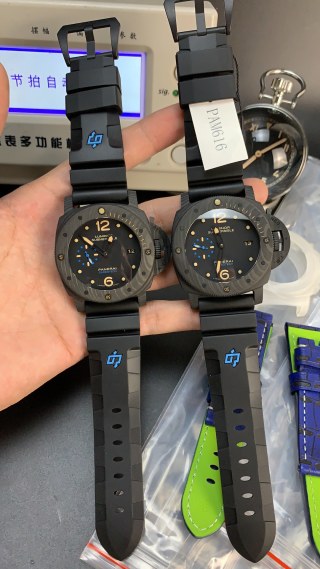
Guangzhou is the center of Panerai replica production, but that fact alone explains very little. Two watches can come from the same city, carry the same marketing language, and perform completely differently after six months of wear. This guide exists to help you understand why.
Why Buying a Panerai Replica Is Different From Other Watches
Panerai is a high-risk replica brand by nature. That risk does not come from legality or availability, but from structure.
With brands like Rolex, most replica decisions are visually driven. Case shape, bezel color, dial print, and bracelet finish dominate the buying process. Minor internal compromises often remain hidden because the watches are compact and visually dense.
Panerai works the opposite way. The design is intentionally simple, which exposes everything else. Large cases amplify tolerances. Flat dials leave nowhere for printing flaws to hide. Crown guards turn small machining errors into obvious functional problems. Transparent casebacks reveal movement architecture that cannot be faked with surface decoration alone.
In a Panerai replica, the movement is not a background component. It defines case thickness, crown position, hand stack height, power reserve behavior, and long-term reliability. Structural accuracy matters more than first-glance appearance, and shortcuts tend to surface with use rather than immediately.
This is why Panerai replicas require more research than most buyers expect. You are not just choosing how a watch looks on day one. You are choosing how it behaves on day three hundred.
Fake “Super Clone Panerai” Marketing Traps You Must Avoid
Most Panerai replica mistakes start with language, not hardware. Certain phrases are designed to stop buyers from asking the questions that actually matter.
“1:1 Super Clone” Claims That Mean Nothing
“1:1 Panerai replica” has no technical definition. There is no measurement standard, no certification, and no agreed reference point behind the claim. It does not describe movement architecture, material composition, or manufacturing process.
What matters instead is specific, verifiable structure. Case thickness relative to movement height. Crown guard lever geometry and spring tension. Movement layout consistency across production batches. Power reserve behavior after real-world wear, not bench testing.
When sellers rely on ratio language rather than physical explanation, it usually signals that there is nothing concrete to explain. The goal is belief, not understanding.
Fake Factory Names and Misused Labels
Factory names circulate faster than factories themselves. Some names once represented real production standards, then became generic labels copied by resellers after the original output changed or stopped entirely.
Hearing a familiar factory name does not guarantee the watch came from that source, nor that it represents the same quality tier as earlier versions. In the Panerai replica market, names often survive longer than the processes that earned their reputation.
A serious buyer focuses on build traits and consistency, not brand-like labels. If a seller cannot explain what differentiates one factory’s output structurally from another, the name is being used as camouflage.
Over-Decorated Movements Disguised as Real Clones
One of the most common traps in Panerai replicas is visual movement decoration. Engraved plates, gold-colored text, and faux bridges can look convincing in photos while hiding incorrect layouts underneath.
A real Panerai-style clone movement is defined by architecture, not decoration. Balance wheel position, gear train flow, and plate geometry must match the original design intent. Decorative overlays do not fix mismatched proportions, and they often make servicing more difficult.
Movement appearance and movement structure are not the same thing. In Panerai replicas, confusing the two is one of the fastest paths to long-term regret.
Panerai Replica Price Ranges Explained (Why Cheap Is Almost Always Wrong)
Panerai replicas are expensive for reasons that have nothing to do with branding and everything to do with physics. Large cases magnify machining error. Heavy crown guards stress tolerances. Wide dials expose finishing shortcuts immediately. Most of the cost sits where buyers cannot see it at first glance.
When a Panerai replica is priced unusually low, something structural has been removed. It may be material density, movement architecture, assembly time, or post-assembly inspection. Those omissions rarely show up in seller photos. They show up after months of wear, when crowns loosen, hands drift, or movements lose amplitude under normal daily use.
The replica Panerai market does not punish buyers for spending too much. It punishes buyers for assuming that visual similarity equals mechanical equivalence.
Entry-Level Prices vs True Super Clone Costs
There is no “good and cheap” Panerai replica. That combination does not exist in practice.
A true Panerai-style clone requires a movement that fits the case correctly without filler plates, a crown guard that locks with consistent pressure, and a caseback alignment that does not rely on cosmetic tricks. Each of those elements adds cost long before branding or margins are considered.
Entry-level prices usually mean one of three compromises. The movement is adapted rather than designed for the case. The crown guard is cast or loosely milled instead of precisely machined. Or quality control stops after assembly instead of after testing. None of these shortcuts are catastrophic on day one. They become problems after repeated winding, temperature change, and wrist movement.
Price is not a quality guarantee, but it is a reality filter. If the cost does not reflect the physical demands of the watch, the watch will eventually reveal where corners were cut.
Why Extremely Cheap Panerai Replicas Fail Long-Term
Cheap Panerai replicas fail quietly, not dramatically. The failure pattern is predictable.
Movements that rely on decorative plates rather than correct architecture tend to develop amplitude loss. Hands begin to lag during power reserve drop-off. Crown stems loosen because the guard applies uneven leverage. Casebacks develop alignment issues after servicing because tolerances were never designed for repeated opening.

From a seller’s perspective, these watches generate the highest repair and return rates. Not because they break immediately, but because they degrade just fast enough to fall outside short-term guarantees. From a buyer’s perspective, they feel acceptable at first, then slowly become unreliable.
Long-term failure is rarely caused by abuse. It is caused by mismatched structure trying to behave like a purpose-built system.
Which Panerai Clones Are Actually Worth Buying
Not every Panerai model makes sense in replica form, and not every buyer benefits equally from owning one. The watches that hold up best share a few common conditions.
Models That Make Sense in the Replica World
Replica-friendly Panerai models tend to be mechanically mature designs with long production histories. Simpler layouts age better. Cases that have been produced across multiple generations are easier to reproduce consistently. Dial designs that rely on geometry rather than texture hide fewer errors and demand fewer cosmetic compensations.
Wearability matters more than novelty. Extremely thick cases, experimental materials, or limited-run designs often magnify small inaccuracies into daily annoyances. Models that were designed for regular use in the original lineup tend to behave more predictably when replicated.
If a Panerai model feels extreme even in its genuine form, it usually becomes fragile in replica form.
Movements That Are Proven and Stable
A reliable Panerai clone movement is defined by layout, not decoration. Correct gear train positioning, realistic power reserve behavior, and stable balance placement matter more than engraving or color.
Movements that follow original architecture closely tend to regulate more predictably and survive routine servicing. Movements that rely on visual mimicry often look impressive until they are worn daily. Structure determines longevity. Finish only determines first impressions.
Buyers who focus on how a movement is built rather than how it looks make fewer long-term mistakes.
Buyers Who Benefit Most From Panerai Super Clones
Panerai super clones work best for buyers who already understand what the watch demands. People comfortable with larger cases, heavier wrist presence, and occasional maintenance tend to enjoy them. Buyers who value mechanical honesty over decorative polish adapt more easily.
These watches reward patience and informed expectation. They are not impulse purchases and do not suit buyers who want zero involvement after purchase. For the right person, a well-chosen Panerai replica feels purposeful and satisfying. For the wrong person, it feels inconvenient.
Knowing which side you fall on matters more than choosing any specific model.
Who Should NOT Buy Panerai Clones (Be Honest)
Not every watch is meant for every buyer, and Panerai replicas make that mismatch obvious. Most regret comes from buyers who were never aligned with what these watches demand, not from choosing the wrong version.
If You Expect Small, Lightweight Watches
Panerai cases are large because the design requires it. Even the more restrained models wear bigger and heavier than most modern watches. Replica versions follow the same proportions, and there is no shortcut that makes them feel slim or discreet without breaking the design entirely.
If wrist presence feels intrusive rather than reassuring, Panerai replicas will become uncomfortable long before they become impressive.
If You Want Zero Maintenance
Panerai clones are mechanical objects under constant physical stress. Large crowns, long stems, and heavy hands place real load on the movement over time. Even well-built versions benefit from periodic regulation and inspection.
Buyers who expect a watch to function indefinitely without attention tend to feel frustrated, not because the watch is poorly made, but because expectations were misplaced.
If You Are Extremely Price-Sensitive
Panerai replicas punish budget pressure. Saving a small amount upfront often leads to disproportionate long-term cost through repairs, replacements, or simple abandonment.
If price is the dominant factor in every decision, Panerai replicas will always feel like a compromise rather than a solution. That is not a moral failure. It is a mismatch of priorities.
How to Buy a Panerai Replica Step by Step (Low-Risk Path)
A low-risk purchase is not about speed or confidence. It is about narrowing decisions until fewer things can go wrong.
Step 1 – Decide the Right Model and Size First
Model choice comes before quality tier. Case size, thickness, and dial layout determine daily comfort and long-term satisfaction more than any factory name ever will.
A watch that fits poorly will never feel right, regardless of how accurate it looks. Eliminating unsuitable sizes early removes most future regret.
Step 2 – Understand the Movement, Not the Label
Ignore labels and focus on structure. Ask how the movement fits the case, where the balance sits, and how power reserve behaves in real use. A movement that follows correct architecture tends to age predictably.
When explanations drift toward decoration or branding language, clarity is being avoided.
Step 3 – Verify What You’re Actually Paying For
Price should correspond to tangible attributes. Case material, movement type, assembly method, and quality control all have physical costs. If those elements are vague, the price is disconnected from reality.
A buyer who understands what they are paying for rarely feels misled, even when compromises exist.
When It Makes Sense to Contact a Seller (And When It Doesn’t)
Contacting a seller should feel like asking for clarification, not placing an order. If you are still unsure about size, movement structure, or long-term ownership expectations, it is too early to buy.
The right moment is when your questions are specific and grounded, not exploratory.
What Questions a Serious Buyer Should Ask
Serious buyers ask how a watch behaves, not how it compares. They ask about movement layout, service tolerance, and known limitations. They ask what usually fails first, not what looks most impressive.
These questions signal intent without pressure and invite honest answers.
Red Flags in Seller Responses
Evasion is louder than refusal. If answers rely on repetition of marketing phrases, avoid specifics, or redirect toward urgency, clarity is missing.
A seller worth engaging will slow the conversation down, not rush it forward.
Final Advice – Buy Panerai Replicas With Clear Expectations
A Panerai replica makes sense only when you understand why you want it, what compromises you are accepting, and how the watch will behave after the novelty fades.
Replica Panerai Buying Guide – Key Judgments & Real-World Implications
| Section Anchor | Core Judgment | Practical Reality | Long-Term Impact | Buyer Takeaway |
|---|---|---|---|---|
| Panerai Is Not for Everyone | Panerai replicas amplify mistakes | Large cases and exposed structure leave no margin for error | Small flaws become daily annoyances | Self-filter before shopping |
| Why Panerai Is High-Risk | Structure matters more than looks | Movement layout defines case behavior | Poor architecture degrades over time | Research is mandatory, not optional |
| “Super Clone” Marketing | Labels have no standard | Terms replace explanations | Belief replaces verification | Ignore claims, inspect structure |
| Factory Name Traps | Names outlive processes | Same label ≠ same quality | Inconsistent outcomes | Judge output, not branding |
| Decorated Movements | Appearance ≠ architecture | Fake bridges hide real flaws | Servicing becomes problematic | Ask how it’s built, not how it looks |
| Price Logic | Cheap means something was removed | Cost reflects machining, QC, assembly | Savings convert into repairs | Price filters risk |
| Cheap Panerai Reality | No “good and cheap” option | Entry-level cuts are structural | Failure is delayed, not avoided | Budget pressure = regret |
| Models That Make Sense | Mature designs survive replication | Simpler layouts age better | Stable ownership experience | Choose proven designs |
| Movement Selection | Architecture beats engraving | Correct layout regulates predictably | Fewer long-term issues | Structure first, finish second |
| Buyer Fit | Not everyone benefits equally | Size, weight, maintenance matter | Satisfaction depends on expectations | Match watch to lifestyle |
| Who Should Not Buy | Expectation mismatch causes regret | Lightweight, zero-care buyers struggle | Frustration replaces enjoyment | Walk away if misaligned |
| Buying Path | Fewer decisions reduce risk | Size → movement → value | Controlled outcomes | Slow down before buying |
| Contacting Sellers | Consultation beats ordering | Good sellers explain limitations | Trust forms before purchase | Ask questions, don’t rush |