
Not “Which Brand Is Better,” but Which Brand Is More Punishing
Most conversations around high-end replicas still start with prestige. That framing misses the real issue. What matters in daily ownership is how aggressively a design exposes manufacturing tolerance, and how quickly small errors turn into visible or tactile problems. When you evaluate vacheron constantin replica watches alongside other top-tier builds, the difference is not status or finishing style. It is where each brand concentrates mechanical stress and how that stress surfaces in use.

Some designs fail quietly. Others announce problems the moment you touch the crown or glance at the dial. Vacheron Constantin belongs to the second category. Its layouts amplify alignment behavior long before cosmetic fatigue or movement wear becomes obvious. This is why many china super clone vacheron pieces look impressive on arrival yet feel unsettled after only brief handling: the geometry itself refuses to hide upstream imprecision.
Understanding this distinction changes how you judge quality. You stop asking which brand looks best under studio lighting and start asking which architecture is most unforgiving to imperfect system assembly discipline.
Three Brands, Three Failure Modes
Every major luxury design stresses a different manufacturing subsystem. That stress determines where replicas reveal weakness first. Some concentrate load at interfaces, some distribute it vertically through layered construction, and some expose everything on a single plane. Once you recognize these patterns, defects stop feeling random. They become predictable outcomes of where tolerance accumulates.
This is why crown feel consistency matters on one brand, while case symmetry dominates another, and dial geometry becomes decisive on a third. Each architecture acts like a diagnostic tool. The watch tells you, through behavior, which part of the production chain lost control.
Seen this way, Vacheron Constantin is not simply “harder to copy.” It is geometry-first. Its designs place visual and mechanical references on the same plane, forcing alignment behavior into immediate visibility.
Comparative framing (Rolex / AP / VC)
Rolex — Interface-dense systems
Rolex replicas usually expose problems where human interaction meets mechanical boundaries. Crown tube fit, bezel detent geometry, and bracelet articulation carry most of the load. If tolerances drift upstream, you feel it first as uneven winding resistance, vague bezel clicks, or stiff end links. These are not isolated annoyances. They are signatures of interface surfaces that were never normalized to the same reference.
With Rolex-style layouts, surface alignment can look acceptable while internal interfaces already disagree, which is why experienced handlers read crown feel consistency as a proxy for system health — a gritty or asymmetric resistance curve often points to cumulative error across tube alignment, stem seating, and keyless works positioning, so the watch tells you about system interfaces before it tells you about timekeeping, exactly the assembly sequencing and interface integrity logic laid out in the buying a Vacheron Constantin replica: a process-first framework.
Audemars Piguet — Structurally layered builds
Audemars Piguet replicas fail differently because their architecture stacks complexity vertically. Case sandwiching, gasket compression planes, and bezel torque distribution form a layered load path. When something slips, it tends to surface as case asymmetry, uneven bezel seating, or fastener stress rather than immediate dial issues.
Here, system assembly discipline reveals itself through how evenly those layers compress. Small inconsistencies in torque or spacer height propagate across the case, creating subtle warping that only becomes obvious under oblique light or during strap changes. The errors live in the structure, not the face. AP teaches you to look at load paths, not center alignment.
Vacheron Constantin — Geometry-exposed layouts
Vacheron Constantin removes those buffers. Its calm dials, generous negative space, and strict axial references put everything on display. Dial spacing, center axis orthogonality, and hand stack height sit directly in the viewer’s line of sight. When something drifts, it shows up as misproportioned text, uneven index-to-track distances, or hands that refuse to land cleanly across quadrants.
This is why VC defects appear visually before they appear mechanically. A slight hand stack tolerance issue becomes visible shadow drift. A minor seating error turns into minute hand landing variance. These are not cosmetic accidents. They are geometric consequences. In alignment behavior, Vacheron Constantin acts like an amplifier: it converts sub-millimeter assembly deviations into immediately readable signals.
That exposure is the core premise of this article. VC super clone attempts rarely fail because of polishing. They fail because center axes drift, fonts lose proportion, and hand stacks violate vertical geometry. These outcomes trace directly back to system assembly discipline. Once you internalize this, you stop judging Vacheron Constantin replicas by shine and start reading them as planar systems that either agree with themselves—or don’t.
VC Designs Expose Tolerance Faster Than Most Brands
What separates Vacheron Constantin from most replica platforms is not finishing ambition but planar honesty. VC layouts place visual references—indices, minute tracks, logo baselines, and hand centers—on a single, calm plane with very little structural distraction. In vacheron constantin super clone production, that planar symmetry turns into a tolerance amplifier. Small positional errors that would be visually absorbed by busier designs surface immediately as alignment behavior.
Negative space is the accelerant. When a dial carries wide breathing room between markers, every deviation gains contrast. The eye does not need magnification to catch it. This is why VC doesn’t hide mistakes. Its architecture broadcasts them, converting sub-millimeter assembly drift into visible geometry problems that appear long before mechanical wear or cosmetic fatigue.
The practical consequence is simple: VC replicas announce upstream process discipline through dial geometry. You don’t have to wait for long-term performance signals. The watch tells you its story the moment you look straight at it.
The “Open Dial” Problem: Negative Space as an Error Multiplier

VC’s calm dials function like measurement grids. Index spacing becomes a ruler. Minute track proximity becomes a reference edge. The logo baseline becomes a straightedge running across the face. In this environment, even slight shifts in print placement or applied marker position break visual harmony.
This is why small print deviations or uneven index gaps become immediately visible on VC while remaining tolerable on more crowded layouts. The negative space removes visual camouflage. What appears as a “minor cosmetic issue” on other replicas reads as structural misalignment here, because the dial offers no visual noise to dilute the error.
Once you internalize this, dial geometry stops being decoration and starts acting as a diagnostic surface. These visual defects are not isolated. They are upstream manufacturing signals, pointing back to fixture accuracy, dial seating order, and reference alignment during assembly.
Practical judgment tips: reading dial geometry
Start with index-to-track distance consistency. Scan the circumference and look for compression on one side and expansion on the opposite; that asymmetry usually indicates center drift rather than random print variance. Then check logo baseline parallelism against the minute track. If the text appears to climb or sink across the dial, you are seeing planar disagreement, not just sloppy printing.
Use these two references together. When both spacing and baseline lose parallel alignment, the probability shifts toward structural offset at the center stack. This lets you identify alignment behavior without opening the case, long before timing stability or crown feel gives you confirmation.
Center Axis Integrity: Where VC Usually Breaks First
Most VC replica failures originate at the center, not the case. Cannon pinion verticality, dial spacer concentricity, and movement seating all converge at a single point: the axis that carries the hands. When that axis loses orthogonality to the dial plane, everything downstream inherits the error.
Hand stack tolerance becomes the visible symptom — minute hands stop landing evenly across quadrants, hour hands begin to cast asymmetric shadows, and seconds hands trace slightly eccentric paths, behaviors that reflect system assembly discipline more than component quality and align directly with the dimensional fidelity and build evaluation criteria in the how to evaluate the build quality of Vacheron Constantin replica watches framework, because the parts may be fine while the geometry is not.
Because VC exposes this stack directly on an open dial, the center axis becomes the earliest failure narrator. You are watching vertical alignment problems translate into planar distortion in real time.
Practical judgment tips: detecting axis offset
Set the time slowly through a full rotation and observe hand shadow drift as light moves across the dial. Consistent clearance at one angle but tightening at another usually signals axis tilt. Then watch minute hand landing variance across quadrants. If it overshoots markers in one sector and undershoots in the opposite, you are seeing hand stack tolerance issues amplified by dial geometry.
These checks require no instruments. They convert basic setting behavior into structural insight. When both shadow behavior and quadrant landing disagree, you are no longer evaluating cosmetics. You are reading the consequences of compromised system assembly discipline, expressed through VC’s geometry-first design.
Guangzhou Output Stratifies by System Discipline, Not Parts
In Guangzhou replica watch production, the visible spread in VC outcomes rarely comes from component access. Movements, cases, dials, and hands circulate through the same industrial ecosystem, often sourced from overlapping suppliers. What separates a coherent china super clone vacheron from an unstable one is not steel quality or sapphire clarity, but how consistently each step of assembly references the same geometric targets.
VC designs make this distinction unavoidable. Because their layouts expose alignment behavior directly on the dial plane, any lapse in system assembly discipline becomes immediately legible. One watch will present calm symmetry across indices and hands, while another—built from near-identical parts—will show drifting baselines and uneven spacing. That divergence reflects process control, not inventory.
This is why parts availability is never the bottleneck. The constraint lives in workflow: how cases are fixtured, when dials are seated, how torque is normalized, and whether rework thresholds are enforced or quietly bypassed. Guangzhou does not lack materials. It lacks uniform discipline across production chains.
Process Control Beats Component Quality
The decisive variable is sequence. A casing operation performed before dial reference locking produces a different outcome than one performed after. A hand stack pressed before movement seating behaves differently than one installed against a stabilized center axis. These ordering choices determine whether geometry converges or fragments.
Fixture accuracy compounds the effect. If the case holder introduces even slight rotational bias, that bias propagates through dial alignment and hand placement. Torque normalization matters just as much. Uneven fastener pressure distorts seating planes, shifting the relationship between movement, spacer, and dial. None of this is visible in a parts list, yet all of it governs whether alignment behavior stabilizes or deteriorates.
This is why better steel does not solve VC inconsistency. Only disciplined workflows do. Consistent geometry emerges from controlled assembly order, calibrated fixtures, and defined rework limits. Without those, cosmetic excellence simply rides on top of structural disagreement.
Practical judgment tips: inferring discipline from one watch

You can often infer system assembly discipline from two simple observations. First, compare rehaut symmetry against the dial baseline. When the rehaut appears centered but the dial text climbs or sinks, you are likely seeing dial seating drift rather than case machining error. When both are misaligned together, fixture bias upstream is the more probable cause.
Second, test repeatability after multiple settings. Cycle the time through several full rotations and watch whether the hands return to the same landing positions relative to indices. Consistency suggests controlled seating and stable hand stack tolerance. Variability indicates that components are settling differently under light load, a classic sign of loose process control.
These checks translate visible defects into upstream conclusions. You are not judging appearance in isolation. You are reading alignment behavior as evidence of how rigorously the system was built. In the VC context, that translation—from surface signal to process reality—is the core skill, and it reveals far more about quality than any catalog of parts ever could.
How Series Design Changes Replication Difficulty Inside VC
Within Vacheron Constantin, replication difficulty is not evenly distributed across collections. The architecture of each series decides where tolerances accumulate and how quickly those tolerances become visible. In practice, this means a vacheron constantin super clone can feel either forgiving or brutally transparent depending on whether the design emphasizes negative space, balanced complication density, or sports-oriented geometry.
Three-hand minimalism concentrates judgment on a single plane. Calendar layouts redistribute visual load across multiple references. Sports designs introduce additional interfaces that partially mask planar error while creating new mechanical ones. These are not stylistic distinctions; they are structural choices that determine which failures surface first and how loudly they announce themselves.
The result is asymmetry in risk. Some VC replicas betray upstream process drift through immediate dial geometry problems. Others delay that revelation by spreading attention across subdials, bezels, and applied elements. If you evaluate all series with the same expectations, you misread the signal. Design dictates failure visibility.
Minimal Dials vs Complicated Layouts
Minimal collections such as Patrimony and Traditionnelle operate like optical test benches. Large expanses of negative space force the eye to reconcile index spacing, minute track proximity, and logo alignment against a quiet background. With so few visual anchors, any center drift or baseline deviation becomes dominant. These watches expose alignment behavior early because there is nowhere for it to hide.
By contrast, designs with distributed features—most notably FiftySix and Overseas—reallocate attention. Subdials, date apertures, applied numerals, and bezel geometry introduce multiple reference points that absorb small planar disagreements. The same level of assembly variance that looks unacceptable on a Patrimony can appear tolerable on an Overseas because the eye is asked to resolve more information at once.
This redistribution does not eliminate error. It changes how you perceive it. Complications and sports geometry dilute single-axis scrutiny, allowing moderate tolerance drift to pass unnoticed while shifting risk toward interface consistency and hand stack behavior. Simpler dials do the opposite: they strip away distraction and turn dial geometry into the primary diagnostic surface.
Practical judgment tips: choosing designs that match your risk tolerance
Start by counting visual references. A watch with few markers, wide spacing, and a dominant center axis demands tighter geometry because every element reports against the same plane. If your acceptable tolerance drift is low, recognize that minimal VC designs will challenge replicas sooner and more visibly.
Then consider how much redistribution you are comfortable with. Complicated layouts and sports cases spread attention across subdials, bezels, and applied structures, which can soften first impressions but introduce other sensitivities. Decide whether you prefer early, obvious feedback from dial geometry or delayed signals that emerge through hand stack tolerance and interaction behavior.
This framing keeps expectations aligned with architecture. Rather than chasing reputation, you select designs based on how much geometric exposure you are willing to accept in vacheron constantin replica watches. That alignment of design sensitivity with personal risk tolerance is what turns series choice into an informed decision, not a leap of faith.
Interpreting Visible Defects as Upstream Manufacturing Signals
Once you accept that VC designs externalize tolerance, surface defects stop being cosmetic annoyances and start behaving like telemetry. Alignment behavior, uneven hand clearance, or inconsistent crown feel are not isolated flaws. They are compressed summaries of assembly order, spacer geometry, seating accuracy, and torque control. Every visible problem is a downstream echo of how the watch was built.
This perspective changes inspection from checklist thinking to causal reading. Instead of asking whether something looks “off,” you ask what sequence failure could plausibly create that outcome. A drifting logo baseline suggests dial seating bias. Uneven minute hand landings imply axis verticality loss. A crown that tightens in one quadrant and loosens in another points toward compounded interface misalignment. These signals rarely originate where they appear. They originate upstream, in fixture reference, press depth, or normalization discipline.
When read this way, a VC replica becomes a process artifact. Its geometry records the decisions made during assembly. The goal is not perfection. The goal is coherence—evidence that the system assembly discipline converged on a single set of references instead of negotiating between competing ones.
From Symptom to Process
Most defects fall into two broad categories: fixture-driven errors and stack-driven errors. Fixture issues reveal themselves through planar disagreement—dial elements that lean together, rehaut symmetry that conflicts with text baselines, or indices that compress on one side of the dial. These patterns point toward rotational bias introduced during casing or dial seating. The parts themselves may be accurate; the reference frame was not.
Hand stack tolerance problems present differently. They show up as variable hand clearance, quadrant-dependent landing error, or shadows that migrate as the hands rotate. These behaviors indicate loss of orthogonality at the center axis, usually tied to spacer concentricity, cannon pinion verticality, or movement seating depth. In other words, the stack is no longer perpendicular to the dial plane.
The critical move is to stop treating each symptom as a standalone defect. A tilted logo, a hesitant crown, and a minute hand that refuses to land evenly often share a single cause: competing reference planes inside the assembly sequence. Once you trace symptoms back to likely process breaks, dial geometry and hand behavior become readable evidence rather than frustrating surprises.
Practical judgment tips: a three-signal rule
If you need a fast structural read, use three signals together. First, check center alignment by watching minute hand landing across all quadrants. Consistency suggests axis stability; directional variance suggests stack drift. Second, evaluate crown resistance through a full setting cycle. Smooth, even torque implies coherent interface alignment, while changing resistance curves usually reflect compounded seating error. Third, observe hand clearance at opposing points—typically around 3 and 9—to see whether vertical geometry holds or collapses under rotation.
Any one of these can mislead in isolation, but together they form a minimal framework—when all three agree—clean alignment behavior, stable crown feel consistency, and uniform hand clearance—you are likely holding a structurally sound VC super clone; when two or more disagree, you are seeing the fingerprints of weak system assembly discipline, a structural evaluation logic repeatedly emphasized in the Vacheron Constantin replica structural and alignment performance review.
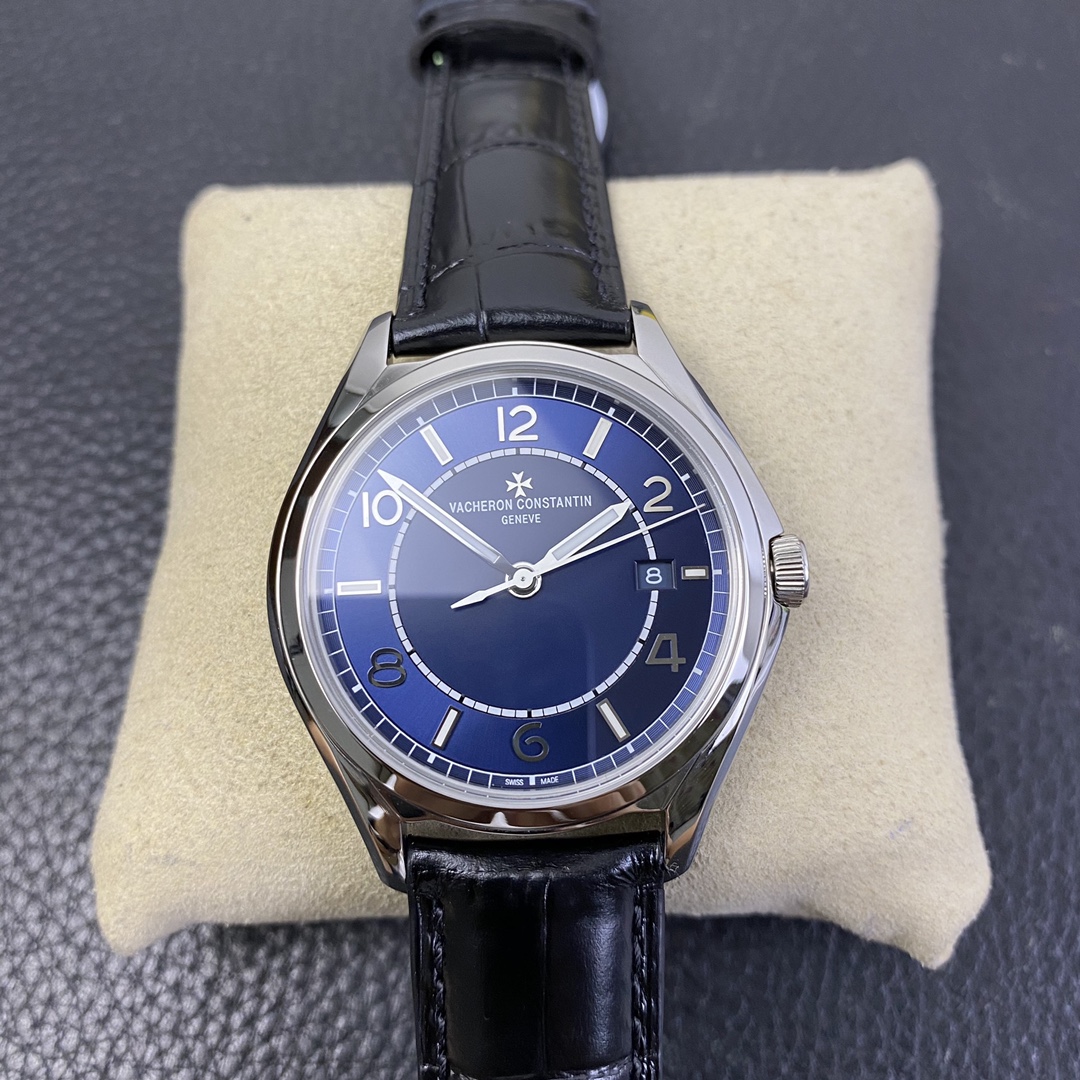
This approach collapses inspection time while preserving depth. You are no longer chasing surface flaws. You are deciding, with a small set of repeatable observations, whether the watch’s geometry reflects a controlled build or a negotiated one.