
Why VC Replicas Split Into Distinct Price Tiers (Not Gradual Quality Slopes)

Price separation in Vacheron Constantin replica watches does not behave like a smooth quality curve. It breaks into structural tiers because VC layouts concentrate tolerances in places that either hold together as a system or collapse as a group. Once dial spacing, center axis visibility, and hand stack height fall outside a narrow control window, defects stop diminishing with incremental spending and begin compounding across the watch. That is why vacheron constantin super clone pricing feels abrupt rather than progressive: you cross thresholds of process discipline, not layers of cosmetic refinement.
This is also why guangzhou replica watch production shows sharp clustering by execution tier. At lower process control, every adjustment introduces a new offset somewhere else—minute tracks drift while indices stay fixed, dates land acceptably while hands rise too close to the crystal, crowns feel smooth on first wind but develop uneven resistance after a week of wear. Above a certain discipline level, those same interfaces stabilize together because geometry is managed as a closed loop. The money follows that loop: fixture accuracy, rejection volume, and rework time, not shinier surfaces.
VC designs expose these limits faster than most brands. Their clean three-hand geometry leaves wide negative space on the dial, the center axis sits in full view, and the hand stack operates with shallow margins. When alignment slips by fractions of a degree, there are no subdials or aggressive bezels to absorb the error. The watch either presents coherence or it doesn’t, which is why vacheron constantin replica watches segregate into distinct price tiers instead of drifting upward by small improvements.
VC Design as a Tolerance Multiplier
VC layouts amplify small manufacturing errors because every reference line is visible at once. The minute track reads directly against applied indices, the seconds hand sweeps a naked center axis, and the vertical stack has little room to hide height mistakes. In busier sports designs, clutter can mask drift; in VC, the geometry stands alone. That simplicity becomes a multiplier: a marginal case fixture error turns into a dial registration problem, which then becomes a hand clearance issue that the wearer feels during setting.
This is why alignment behavior fails earlier on VC replicas than on chronographs or diver layouts. Dial geometry demands that print baselines, index jigs, and casing fixtures converge on a single center, not three approximations. Hand stack tolerance must remain consistent across batches, not just on a good day. When those constraints are treated as independent steps, the watch may pass visual inspection while accumulating latent instability. When they are treated as one system, the result is a piece that resets to the same alignment after repeated adjustments and maintains crown feel consistency across its full winding range.
The practical consequence is straightforward: VC replication difficulty is not about copying shapes, it is about sustaining geometry through assembly. That distinction defines the boundary between assembly outcomes and system outcomes, and it explains why price jumps correspond to manufacturing discipline rather than decoration.
Practical Judgment Tip: Spotting Early Geometry Failure
Early collapse shows up where references disagree — watch the minute track against the indices under natural light; if the track appears to “walk” relative to markers as you rotate the wrist, you are seeing fixture drift expressed on the dial plane, and when you check the date window baseline against dial text a subtle tilt usually traces back to inconsistent casing pressure rather than a bad date disc, while observing the seconds hand at rest after several resets for a faint wobble points to vertical stack error that will later translate into uneven crown resistance, all of which are geometric exposure and systemic discipline failure modes laid out in the why Vacheron Constantin replicas fail differently through geometry exposure and system discipline analysis.
These surface symptoms are not cosmetic annoyances. They are upstream signals of center axis consistency breaking down inside the build. When you learn to read them as system indicators—alignment behavior as a proxy for fixture accuracy, hand motion as a proxy for stack control—you stop judging by appearance alone and start diagnosing production tier from interaction. That shift is the difference between reacting to defects and understanding why they appear.
The Three Production Tiers: Assembly, System, Geometry Control
Across Vacheron Constantin replicas, price bands align cleanly with process architecture rather than parts quality. There are three operational realities in china super clone vacheron output: assembly-type builds, system-coordinated builds, and geometry-controlled production. Each tier reflects how far a workshop has progressed from stacking components to managing interfaces as a closed loop. The practical implication is simple but uncomfortable for buyers: behavior reveals tier faster than any label ever will.
Assembly treats the watch as a collection of parts that merely need to fit together. System production treats it as a set of subsystems that must agree with one another. Geometry control treats it as a single spatial problem, where case, dial, hands, and crown torque are referenced against the same center and rejected aggressively when they drift. Those differences explain why prices jump in steps instead of climbing gradually, and why system assembly discipline—not surface polish—decides whether a piece stabilizes in wear.
Entry Tier: Assembly-Type Builds
Entry-tier VC replicas are built by aggregating mixed suppliers and resolving conflicts by eye. Casing happens manually, alignment is judged visually, and rework thresholds are kept low to move volume. These watches often look acceptable in photos because a single example can be nudged into place long enough to pass inspection. Over time, however, small offsets begin to surface as interaction problems rather than obvious visual defects.
The plateau arrives quickly because there is no feedback loop between case geometry, dial registration, and hand stack height — each correction introduces a new error somewhere else, and the watch slowly trades apparent alignment for unstable behavior, a systemic coordination deficiency that explains why Guangzhou replica watch production at the assembly tier degrades in wear: you are not watching parts fail so much as watching a lack of structural discipline express itself, as detailed in the process-first assembly and quality coordination framework in the buying a Vacheron Constantin replica: a process-first framework.

Practical Judgment Tip: How Assembly Builds Reveal Themselves
Assembly-tier output announces itself through interaction long before it does through appearance. The crown resistance curve feels uneven across a full wind, with soft spots followed by abrupt stiffness. Hands fail to return to identical alignment after repeated time-setting, and date centering varies noticeably across two samples of the same configuration. These are not finishing issues; they are alignment behavior leaking out of an unmanaged stack.
When you see those signs together, you are looking at visual-only alignment and minimal rework thresholds in action. The watch may still keep time, but it will not keep geometry. That distinction matters more than any single cosmetic flaw.
Mid Tier: System-Coordinated Builds
System-coordinated builds introduce partial synchronization between suppliers. Case fixtures become standardized, dial batches are normalized, and hand stack height is controlled within a narrower window. Limited rework loops appear, allowing assemblies that fall slightly out of spec to be corrected rather than pushed downstream. The result is a watch that feels stable at first and presents a coherent face on the wrist.
Batch-to-batch variance remains because the system is not yet closed. Dial geometry can still drift between runs, and hand clearance can change subtly when upstream tolerances move. This is the tier where buyers feel progress but still encounter surprises months later. System assembly discipline improves consistency, but without geometric referencing across the entire build, it cannot eliminate it.
Practical Judgment Tip: Differentiating System Tier From Assembly Tier
The fastest way to separate system builds from dressed-up assembly pieces is to test repeatability, not single-watch appearance. Compare two samples for rehaut symmetry, then check hand clearance at 3 and 9 to see whether vertical stack remains consistent across the dial. Finally, inspect uniform date font placement across both pieces. When these three agree, you are likely inside a coordinated system rather than a one-off alignment.
If they diverge, you are still in assembly territory, regardless of how clean the dial looks. Consistency across samples is the signature of a system; isolated perfection is not.
High Tier: Geometry-Controlled Production
High-tier VC super clone manufacturing begins when geometry becomes the governing variable. Closed-loop casing fixtures reference the dial and movement to a shared center, assembly follows a torque-controlled order, and rejection thresholds rise sharply. Parts that would pass in lower tiers are discarded here, not corrected, because correction introduces asymmetry. This is where cost concentrates: not in materials, but in acceptance rates.
At this level, the watch behaves like a single structure rather than a negotiated compromise between subsystems. Crown feel remains stable across a full wind, hands land in the same place after every reset, and the dial sits in a uniform spatial relationship to the case. The price reflects the volume that never ships. That is what qualifies as “high-end” in vacheron constantin super clone work.
Practical Judgment Tip: Confirming Geometry Control Without Disassembly
True geometry control can be validated through interaction. Wind the crown slowly from empty to full and note whether resistance remains consistent throughout. Reset the hands multiple times and confirm that alignment returns to the same positions, not approximate ones. Finally, observe the shadow gap between dial and rehaut around the full circumference; uniformity here signals that the entire stack is referenced, not merely assembled.
When these behaviors converge, you are seeing geometric discipline expressed at the surface. When they do not, no amount of finishing can compensate. The watch will tell you which tier it belongs to if you let it.
More expensive VC replicas cost more because fewer of them survive this process, and that reality—not ornamentation—defines value in this segment.
Where the Money Actually Goes: Cost Sources Inside Guangzhou VC Production
In Guangzhou replica watch production, price does not rise because materials become exotic or finishing suddenly turns luxurious; it rises because process discipline tightens, with fixture machining, dial supplier qualification, assembly labor time, and—most critically—rejection and rework rates consuming the margin, and once geometry becomes the governing variable every upstream shortcut multiplies downstream waste, so expensive in this context means low tolerance for drift, a production-tier logic underscored throughout the Vacheron Constantin replica structural and alignment performance review.
System discipline changes the economics immediately. Accurate fixtures take time to machine and calibrate. Qualified dial suppliers require batch validation rather than spot checks. Assembly slows because torque order matters and hand stack height gets verified instead of eyeballed. Most of all, inventory gets discarded. Watches that would ship in lower tiers never leave the bench here. That is where the money goes: into time spent preventing compounding error and into units that fail quietly before they ever reach a wrist.
Case Geometry and Fixture Accuracy
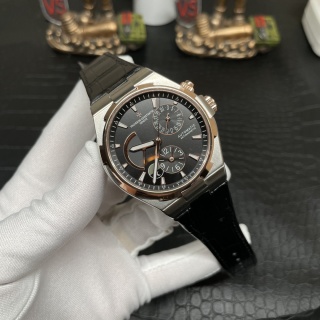
Case work dominates VC clone cost because it defines the reference frame for everything that follows. Lug symmetry sets how the watch sits. Bezel plane flatness determines whether the dial appears level under changing light. Center axis alignment decides whether hands sweep true or begin their life already biased. When these three agree, dial registration becomes easier and hand clearance stabilizes. When they do not, every subsequent correction becomes a compromise.
Imperfect cases cascade into dial and hand failures because they force the assembly to solve geometry with pressure instead of reference. A slightly twisted mid-case invites the dial to be nudged, which then requires hands to be bent for clearance, which finally shows up as uneven crown resistance during setting. None of this is visible in isolation. Together, they define whether a build behaves like a system or like a negotiated truce between parts.
Practical Judgment Tip: Reading Case Errors on the Wrist
You can read fixture drift without opening the watch. Look for a subtle visual tilt at 12 o’clock as you rotate the wrist under natural light. Watch how bezel reflections break—flat planes reflect evenly; warped planes stutter. Compare lug shadows on both sides; asymmetry there almost always traces back to casing alignment rather than strap fit.
These cues translate directly to manufacturing precision. When reflections stay coherent and shadows mirror each other, you are seeing a case that was referenced, not coerced. When they do not, the rest of the stack will spend its life compensating.
Dial Supplier Discipline and Print Registration
Dial work separates mid and high tiers because it exposes coordination across suppliers. Index placement jigs must land consistently on the same baseline. Font registration has to hold across runs, not just on a good batch. Lacquer thickness needs to remain uniform so applied markers seat without tilt. When any one of these slips, alignment behavior degrades even if the case is sound.
Dial variance is rarely a standalone problem. It usually signals weak supplier synchronization: print baselines wander because jigs differ between shifts, indices creep because adhesive cure times change, lacquer pools because viscosity control drifts. High-tier production absorbs these variables by qualifying suppliers and rejecting entire lots. Mid-tier production absorbs them by nudging individual dials. The difference shows up later as either repeatable geometry or creeping inconsistency.
QC Thresholds and Rework Economics
Rejection policy defines final price more than any visible feature. Acceptance criteria for hand alignment, crown torque curves, and date centering determine whether a watch advances or returns to the bench. Tight thresholds force slow assembly and high scrap. Loose thresholds move volume and externalize instability to the wearer.
This is why higher prices reflect discarded inventory, not added decoration. When system assembly discipline is in place, rework becomes the exception and rejection becomes routine. Crown feel consistency gets verified across the full wind, not sampled. Hand landing must repeat, not approximate. Date centering has to agree across multiple resets, not pass once. Every one of those requirements removes units from the pipeline.
Replace “expensive equals luxury” with “expensive equals low rework tolerance,” and the structure of VC replica pricing becomes legible. The watches that cost more do so because fewer of them survive a stricter process, and that discipline—more than any surface treatment—is what you feel after months of wear.
Interpreting Visible Defects as Upstream Manufacturing Signals
Surface defects on Vacheron Constantin replicas are not random annoyances. They are compressed summaries of upstream decisions. Misalignment, rough setting feel, and uneven spacing each correspond to specific failures in fixture control, stack management, or supplier coordination. When you stop treating these signs as isolated cosmetic problems and start reading them as alignment behavior and hand stack tolerance expressed at the surface, production tier becomes legible.
The mistake most buyers make is evaluating defects in isolation. A tilted minute track is judged separately from a stiff crown. A wandering seconds hand is dismissed as “minor.” In practice, these symptoms almost always arrive as a bundle because they originate from the same structural gaps. Case geometry that drifts forces dial compensation. Dial compensation forces hand bending. Hand bending alters vertical clearance. Vertical clearance changes crown torque feel. What appears as a collection of small issues is usually a single process failure propagating forward through the build.
This is where systems diagnosis replaces cosmetic judgment. Instead of asking whether a watch looks acceptable, you ask which interface lost control first. Did the center axis slip during casing? Did dial registration drift across a batch? Did the stack exceed its clearance window and force the hands to ride higher? Each answer points to a different tier of production maturity. Once you learn that mapping, visible defects stop being frustrating surprises and start functioning as evidence.
Common Failure Patterns by Tier
Each tier fails in a distinct way, and that failure style is more reliable than any marketing label.
Assembly-tier output exhibits random variance. One piece may look straight while the next shows obvious drift. Crown feel changes unpredictably from watch to watch. Date placement might be acceptable on Monday and off by Thursday. This randomness reflects mixed suppliers and visual-only alignment, where every unit is effectively a fresh negotiation between parts.
System-coordinated builds fail by batch drift. Within a run, watches behave similarly. Across runs, geometry shifts. You will see consistent rehaut symmetry on one batch, then a subtle dial offset on the next. Hand clearance may be stable for weeks, then suddenly tighten. This pattern tells you subsystems are synchronized internally but not locked to a single geometric reference over time.
Geometry-controlled production fails rarely, and when it does, it fails consistently at a micro level. Deviations are small, repeatable, and usually confined to one interface. A fractionally higher hand stack might appear across several pieces, or a barely perceptible dial shadow may persist until fixtures are recalibrated. The key difference is predictability. When failures become uniform rather than chaotic, you are seeing a closed loop that caught most errors before assembly and allowed only narrow residuals to escape.
Learning to recognize these patterns matters more than memorizing specifications. China super clone vacheron output can look similar on the surface, but its behavior over time exposes whether it was assembled opportunistically, coordinated partially, or controlled geometrically.
Judgment Layer: Why “More Expensive” Means “Lower Rework Rate”
Price in vacheron constantin replica watches tracks one variable above all others: how much imperfect inventory gets discarded before shipment. Geometric control increases rejection volume. Higher rejection volume raises unit cost. That relationship defines the upper tiers of guangzhou replica watch production.
When fixtures are referenced instead of improvised, fewer cases make it past casing. When dial suppliers are qualified instead of sampled, entire lots disappear. When crown torque curves and hand alignment must repeat, not merely pass once, assemblies return to the bench or go to scrap. None of this adds visible ornamentation. It subtracts unstable watches from the pipeline.
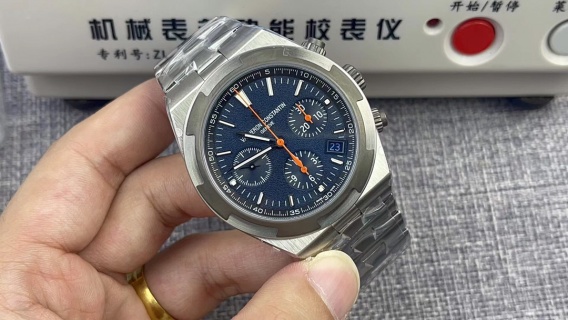
That is why “more expensive” does not mean prettier. It means fewer compromises survived. It means process maturity replaced downstream correction. Once you internalize that price equals rework tolerance, the VC replica landscape stops looking mysterious and starts reading like a manufacturing map—and from there, every subsequent model choice becomes a question of how much geometric discipline you are willing to pay for.