
Executive Summary
The Vacheron Constantin Patrimony series represents the zenith of minimalist horology, presenting a significant engineering challenge for the 1:1 Super Clone industry due to its ultra-thin silhouette. While factories like KZ and MKS have attempted to replicate the iconic Ref. 81180 and 85180, the discrepancy between the genuine 6.8mm profile and the common 9mm Replica thickness remains a primary focal point for collectors. This technical audit examines how variations in the 36mm, 40mm, and 42mm chassis impact the mechanical integrity and aesthetic fidelity of these high-end iterations.
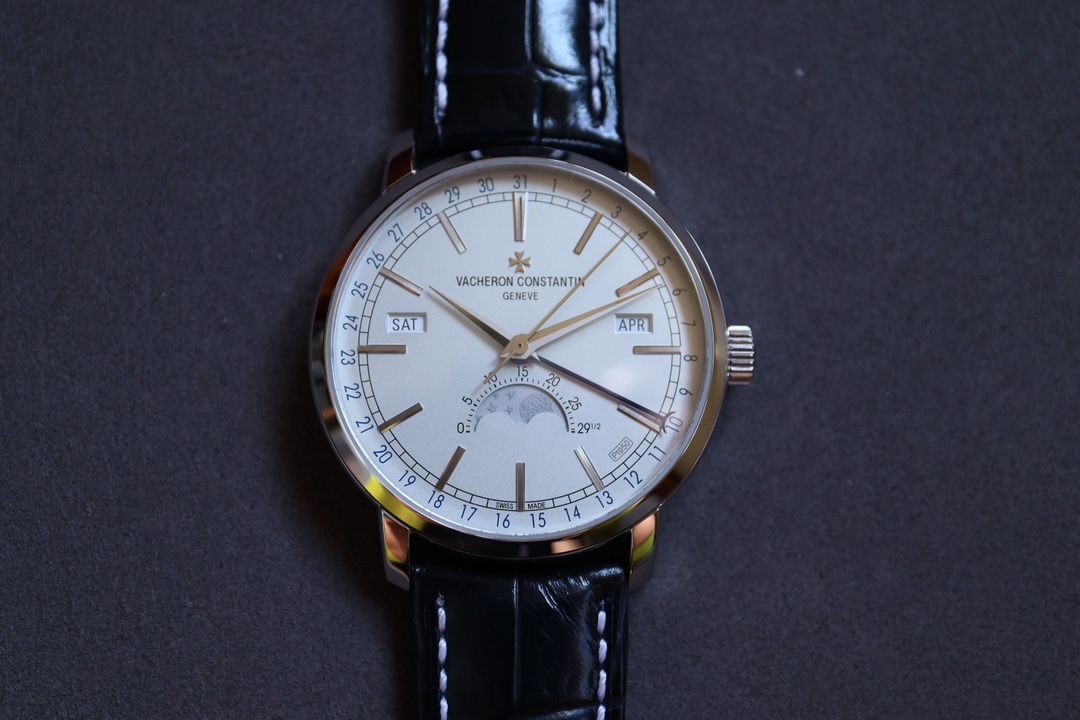
Structural Overview of the Patrimony Reference Dimensions
The 36mm Mid-Size Category (Ref. 81530/41150)
The Reference 81530 and 41150 serve as the foundation for the mid-size Replica category, catering to enthusiasts who prioritize classical proportions and formal elegance. Specifically, these models utilize a 36mm chassis that demands extreme precision in dial printing to maintain the galvanized opaline aesthetic. Because the movement must fit within a smaller radius, factories often struggle with the arbour friction and component spacing within the tighter case walls. Consequently, the balance between the pivot points and the outer minute track determines the success of the 1:1 Super Clone execution.
Expert Authentication Insight
Inspect the handset length relative to the “pearl” minute indices; a common engineering “tell” in lower-tier 36mm versions is a shortened minute hand that fails to reach the track due to standardized part usage.
The 40mm Standard (Ref. 81180/85180)
The Reference 81180 and 85180 are the most prolific models in the 40mm category, serving as the industry benchmark for “modern vintage” sizing. These models typically house the Miyota 9015 movement, which operates at a high-beat 28,800 vph to provide a smooth sweep despite the movement’s 3.9mm thickness. Specifically, the expansive dial opening of the 40mm variant amplifies any deviation in the retrograde tension of the date change or hand alignment. In contrast, the increased real estate allows for more visible perlage on the movement plates if the caseback is transparent, though most 40mm Patrimony models utilize a solid back.
Expert Authentication Insight
On the Ref. 85180, verify the date window displacement; a common diagnostic is the window sitting too far from the 3 o’clock edge because the Patrimony vs Traditionnelle movement architecture inspection confirms the Miyota 9015 date wheel diameter is smaller than the genuine Calibre 2450 Q6.
The 42mm Complication Chassis (Moonphase & Perpetual)
The 42mm chassis is reserved for high-complication models like the Moonphase and Perpetual Calendar, where dial legibility is paramount. In the Replica market, factories such as 8F utilize modified movements to accommodate these features, often resulting in a thicker 11.2mm profile. Specifically, the larger diameter is necessary to prevent the sub-dials from appearing cluttered, which would compromise the galvanized opaline finish. Consequently, the increased amplitude required to drive multiple hands across a wider span can lead to higher beat error if not calibrated by a Senior Engineer.
Expert Authentication Insight
Measure the “effective dial opening” with a caliper; a genuine 42mm Patrimony will have a significantly larger glass diameter compared to a 42mm Overseas, which is restricted by its thick Maltase Cross bezel.
The 36mm vs. 40mm Visual Dynamics in Replica Execution
Perceived Dial Real Estate
The expansive and sterile dial of the Patrimony makes the 40mm version appear significantly larger than its physical specifications suggest. Specifically, the lack of a thick bezel allows the galvanized opaline surface to extend to the very edge of the 316L stainless steel case. In contrast, the 36mm version feels more contained, mirroring the proportions of mid-century dress watches. Consequently, the choice between these two sizes often depends more on the visual weight of the dial rather than the literal lug-to-lug measurement.
Expert Authentication Insight
Under a 10x loupe, examine the “pearl” minute markers; on 40mm Replicas, these indices often show slight misalignment with the hour markers due to the difficulty of printing on such a large, flat surface.
Lug Geometry and Wrist Hug
The lug architecture of the Patrimony is designed with a short, downward curve to accommodate formal attire and varying wrist shapes. Specifically, the 36mm version is engineered to accommodate wrists under 16cm by ensuring the lugs do not protrude past the wrist bone. In contrast, the 40mm model features a 48mm lug-to-lug distance that provides a more commanding presence on larger wrists. Consequently, the anglage on the lug edges must be sharp and consistent to prevent the watch from appearing as a generic “round” case.
Expert Authentication Insight
Check for light refraction along the lug’s chamfering; a 1:1 Super Clone from KZ will show a crisp, mirrored edge, while lesser versions will have rounded, soft transitions.
Hand-Length Proportions
Correct hand-length proportions are critical in maintaining the 1:1 Super Clone aesthetic, especially when scaling between different case diameters. Specifically, the 36mm dial requires a handset that is perfectly scaled to avoid “stubby” visual artifacts that ruin the watch’s elegance. In contrast, the 40mm hands must be long enough to gracefully sweep over the elongated hour markers without creating excessive arbour friction. Consequently, the factory must use diameter-specific handsets rather than a “one-size-fits-all” approach to ensure technical accuracy.
Expert Authentication Insight
Use a macro lens to observe the tip of the minute hand; in the highest quality Replicas, the hand will have a slight downward curve at the tip to match the contour of the domed dial.
The Thickness Variable: How Replication Constraints Affect Wearability
Genuine Ultra-Thin vs. Clone Movement Height
The primary technical hurdle in replicating the Patrimony is the 6.8mm genuine profile versus the 9mm reality of most clones. Specifically, the Miyota 9015 movement, while reliable, adds nearly 2.2mm of height when including the necessary spacer rings and dial clearance. In contrast, the genuine Calibre 1400 is a manual-wind masterpiece designed for extreme thinness. Consequently, the Replica industry often struggles to maintain the “wafer-thin” feel that defines the Patrimony’s market position.
Expert Authentication Insight
Measure the total thickness with a digital caliper; any Ref. 81180 exceeding 7.2mm is using a standard automatic movement rather than the ultra-thin manual-wind architecture found in the KZ factory’s premium offerings.
The “Hockey Puck” Effect
When a 40mm dress watch exceeds a certain thickness threshold, it suffers from the “hockey puck” effect, where the vertical case walls become too prominent. Specifically, the MKS factory’s Ref. 85180 at 9.2mm can appear disproportionate compared to the sleeker 36mm models. In contrast, the 36mm chassis can actually hide additional thickness more effectively because the smaller diameter masks the side-profile height. Consequently, the ratio of diameter to thickness is more aesthetically pleasing in the mid-size Replicas than in the standard 40mm versions.
Expert Authentication Insight
Check the side profile for Côtes de Genève or decoration on the movement through the caseback (if applicable); if the movement sits too deep within the case, it indicates a thick spacer ring was used to mask a smaller movement.
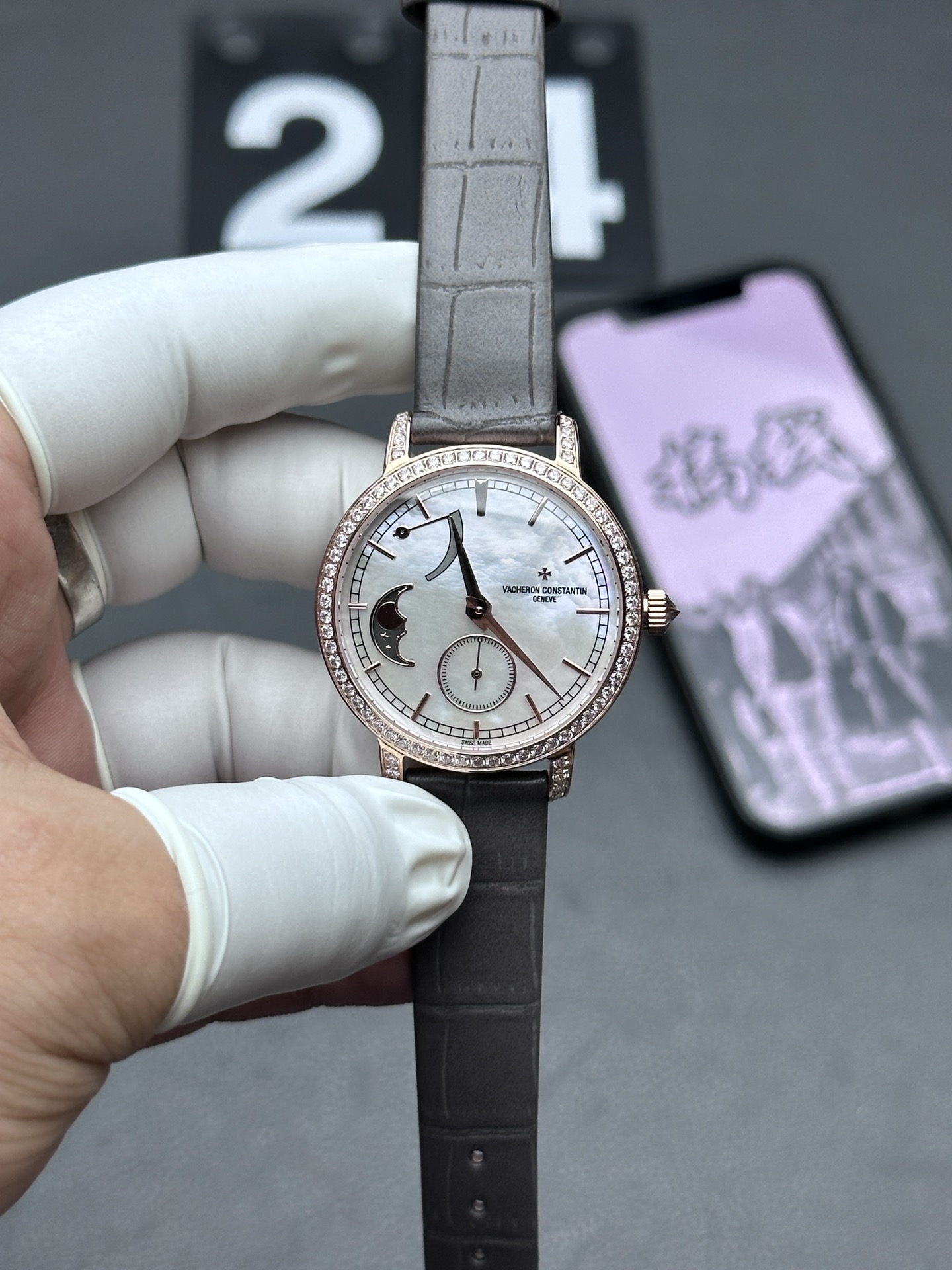
Caseback Curvature and Wrist Clearance
Factories like KZ and MKS employ specific engineering tricks, such as altering the caseback curvature, to mask the height of the Miyota 9015. Specifically, a more rounded caseback can “sink” into the wrist, creating the illusion of a thinner profile from the side view. In contrast, a flat caseback will cause the watch to sit high, potentially catching on Italian-cut shirt cuffs. Consequently, the chamfering of the caseback edge is a vital technical detail that affects both the comfort and the visual fidelity of the 1:1 Super Clone.
Expert Authentication Insight
Perform a “cuff test” with a formal dress shirt; if the watch resists sliding under the cuff, the caseback geometry is likely too bulbous, a deviation often identified during Patrimony Moonphase 4010U profile thickness benchmarking and a common trait of Replicas using un-modified automatic movements.
Wrist Circumference and Diameter Matching Matrix
The 15cm-17cm Range (The 36mm Sweet Spot)
For enthusiasts with a wrist circumference between 15cm and 17cm, the 36mm Patrimony Mid-Size maintains what is technically regarded as the “Golden Ratio” of dress watch aesthetics. Specifically, this diameter allows the minimalist dial to occupy approximately 60-70% of the wrist’s upper plane, preventing the watch from appearing visually overbearing. In contrast, larger references on a smaller wrist often suffer from a distorted perspective where the galvanized opaline surface dominates the entire forearm. Consequently, the 81530 1:1 Super Clone remains the preferred choice for those seeking the understated elegance of a traditional formal timepiece.
Expert Authentication Insight
Use a caliper to measure your wrist’s top “flat” width; if the lug-to-lug of the watch exceeds this width, the fit will look amateurish and likely indicate a replica that hasn’t accounted for anatomical scaling.
The 18cm+ Range (The 40mm/42mm Domain)
Individuals with a wrist span exceeding 18cm are better suited for the 40mm standard or the 42mm complication chassis to maintain proper horological proportions. Specifically, the increased surface area of an 18cm wrist prevents the Patrimony from looking like a “dinner plate” on the arm, a common issue when larger dials are paired with slender bone structures. In contrast, a 36mm case on a larger wrist can often appear diminutive, losing the architectural impact of the 316L stainless steel case. Consequently, the 81180 or the moonphase 42mm variants provide the necessary presence to balance the wearer’s physical stature.
Expert Authentication Insight
Evaluate the visual “negative space” on either side of the lugs; if more than 15mm of bare wrist is visible on each side, the 36mm is too small and you should transition to the 40mm 1:1 Super Clone.
Evaluating Wrist Span (Lug-to-Lug)
The 48mm lug-to-lug distance on the 40mm Patrimony model is the ultimate deciding factor for mechanical and aesthetic fit. Specifically, this measurement determines how the watch head interacts with the pivot points of the wrist’s radial and ulnar bones. If the lugs overhang the wrist, the strap will drop at a 90-degree angle, creating an unsightly gap and increasing arbour friction on the spring bars. Consequently, ensuring that the 48mm span sits entirely within the flat section of the wrist is critical for achieving a 1:1 profile.
Expert Authentication Insight
Observe the watch from a “down-the-arm” perspective in a mirror; if the lugs are seen protruding past the curvature of the wrist, the 40mm chassis is too large for your specific anatomy.
Geometric Sensitivity: Dial Spacing and Case Symmetry
Date Window Displacement
Analyzing the 40mm 85180 often reveals a specific displacement in the date window position compared to the genuine Reference or the 36mm variant. Specifically, the use of the Miyota 9015 requires the date wheel to sit at a fixed radius, which may not perfectly align with the expansive dial of a 40mm case. In contrast, the 36mm models often hide this discrepancy better as the window naturally sits closer to the minute track. Consequently, the displacement creates a “tell” where the date appears too centered, exposing the underlying movement’s smaller diameter relative to the case.
Expert Authentication Insight
Inspect the “negative space” between the center axis and the 3 o’clock marker; larger sizes often have awkward gaps if the movement is too small for the case, indicating a non-native caliber integration.
Minute Track Alignment at the Periphery
The printing of perfectly concentric “pearl” indices on the larger 42mm dials presents a significant manufacturing challenge for factories like 8F. Specifically, any micro-deviation in the sink-holes or the pad-printing process is amplified across the wider diameter of the complication chassis. In contrast, the shorter radius of the 36mm dial allows for higher tension in the printing plates, resulting in sharper alignment. Consequently, enthusiasts must scrutinize the 12, 3, 6, and 9 o’clock positions for any radial drift that compromises the watch’s symmetry.
Expert Authentication Insight
Rotate the watch under a single-point light source to check the reflectivity of the pearl indices; uneven heights or misaligned “dots” are a common diagnostic of secondary-tier manufacturing tolerances.
Crown Proportions Relative to Case Size
The winding crown’s scale is a vital yet often overlooked component in maintaining the symmetry of the Patrimony 1:1 Super Clone. Specifically, a crown that is oversized on a 36mm case can interfere with the anglage of the lugs and cause discomfort during wrist extension. In contrast, an undersized crown on a 40mm or 42mm model makes hand-winding the Miyota 9015 difficult due to insufficient grip. Consequently, the factory must ensure the crown’s diameter and fluting are precisely calibrated to the specific reference being replicated.
Expert Authentication Insight
Measure the crown diameter; a genuine Ref. 81180 crown is intentionally slim to preserve the ultra-thin profile, whereas VC Patrimony and Traditionnelle hardware fidelity assessment indicates that many replicas use a thicker, generic crown to accommodate the sturdier winding stem of the Miyota movement.
Modern Trends vs. Classical Standards in Dress Watch Sizing
The Shift Toward “Casual-Formal”
The current market preference for the 40mm Patrimony stems from the industry’s shift toward “casual-formal” attire. Specifically, the 40mm diameter allows the watch to be paired with polo shirts or knitwear, expanding its versatility beyond the traditional tuxedo. In contrast, the 36mm remains strictly within the formal domain, often feeling too delicate for contemporary business-casual environments. Consequently, the 40mm 1:1 Super Clone has become the primary volume driver in the Guangzhou market due to this increased utility.
Expert Authentication Insight
Observe the strap width at the lugs; the 40mm version typically uses a 20mm lug width, which offers more aftermarket strap options compared to the more restrictive 18mm width of the 36mm model.
The Purist’s Choice
The 36mm variant remains the “true” tribute to the 1950s Vacheron Constantin aesthetic, specifically referencing the proportions of the vintage Ref. 6179. For the purist, the smaller diameter represents a commitment to horological history and the galvanized opaline minimalism of the mid-century. In contrast, larger modern interpretations are often viewed as concessions to current fashion trends rather than engineering necessities. Consequently, the 36mm 1:1 Super Clone is frequently sought by collectors who prioritize heritage over modern wrist presence.
Expert Authentication Insight
Check the caseback engravings; purist-grade Replicas of the 36mm will often feature the correct historical hallmarks and serif-font serial numbers found on vintage-inspired References.
Legibility and Ageing
The 42mm dial offers a distinct practical advantage for users who prioritize high-contrast visibility and legibility. Specifically, the larger surface area allows for longer hands and more prominent indices, which reduces the visual effort required to read the time. In contrast, the tighter dial of the 36mm can appear cluttered if complications like a power reserve or moonphase are added. Consequently, as enthusiasts age, the larger chassis often becomes a functional requirement rather than a purely aesthetic choice.
Expert Authentication Insight
Choose the 36mm if you want the watch to “disappear” until needed; choose the 40mm or 42mm if you want the watch to be a primary visual statement and a high-legibility tool.
Quick Selection Guide: The 30-Second Decision Framework
The “Small Wrist” Protocol (<16cm)
Enthusiasts with a wrist measurement under 16cm should strictly adhere to the 36mm protocol and prioritize the 81530 clones. Specifically, the smaller case prevents the lugs from overextending, ensuring the 316L steel stays centered on the wrist. In contrast, attempting to wear a 40mm Patrimony on a small wrist often results in the strap pulling away from the case at an awkward angle. Consequently, the 36mm mid-size provides the only technically correct fit for this demographic.
Expert Authentication Insight
Verify the buckle size; a 1:1 36mm replica should feature a smaller 14mm or 16mm Maltese Cross buckle to match the tapered strap, rather than the standard 18mm version.
The “Safe Bet” Protocol (16.5cm – 18cm)
For those in the 16.5cm to 18cm range, the 40mm 81180 (no-date) provides the cleanest and most balanced silhouette. Specifically, the absence of a date window eliminates the displacement issues common in the 85180 while maximizing the dial’s symmetry. In contrast, the 36mm might feel slightly too small for a 17.5cm wrist in a modern context. Consequently, the manual-wind KZ factory 40mm remains the “Gold Standard” for the majority of luxury watch collectors.
Expert Authentication Insight
Test the winding resistance; a high-quality manual-wind clone will have a smooth, consistent feel with a definitive “hard stop” once the mainspring is fully tensioned.
The “Complication” Protocol
If the acquisition goal is a Moonphase or Perpetual Calendar, one must accept the 42.5mm footprint and ensure the wrist is at least 17.5cm. Specifically, the complexity of these movements requires a larger chassis to maintain amplitude and prevent the mechanical components from crowding the pivot points. In contrast, attempting to cram these features into a 38mm or 40mm case often leads to poor reliability and frequent beat error. Consequently, the larger size is an engineering necessity for any high-complication 1:1 Super Clone.
Expert Authentication Insight
When in doubt, go smaller. A dress watch that is slightly too small looks “vintage”; a dress watch that is too large looks “replica.”