
The Economic Reality of Factory Version Updates
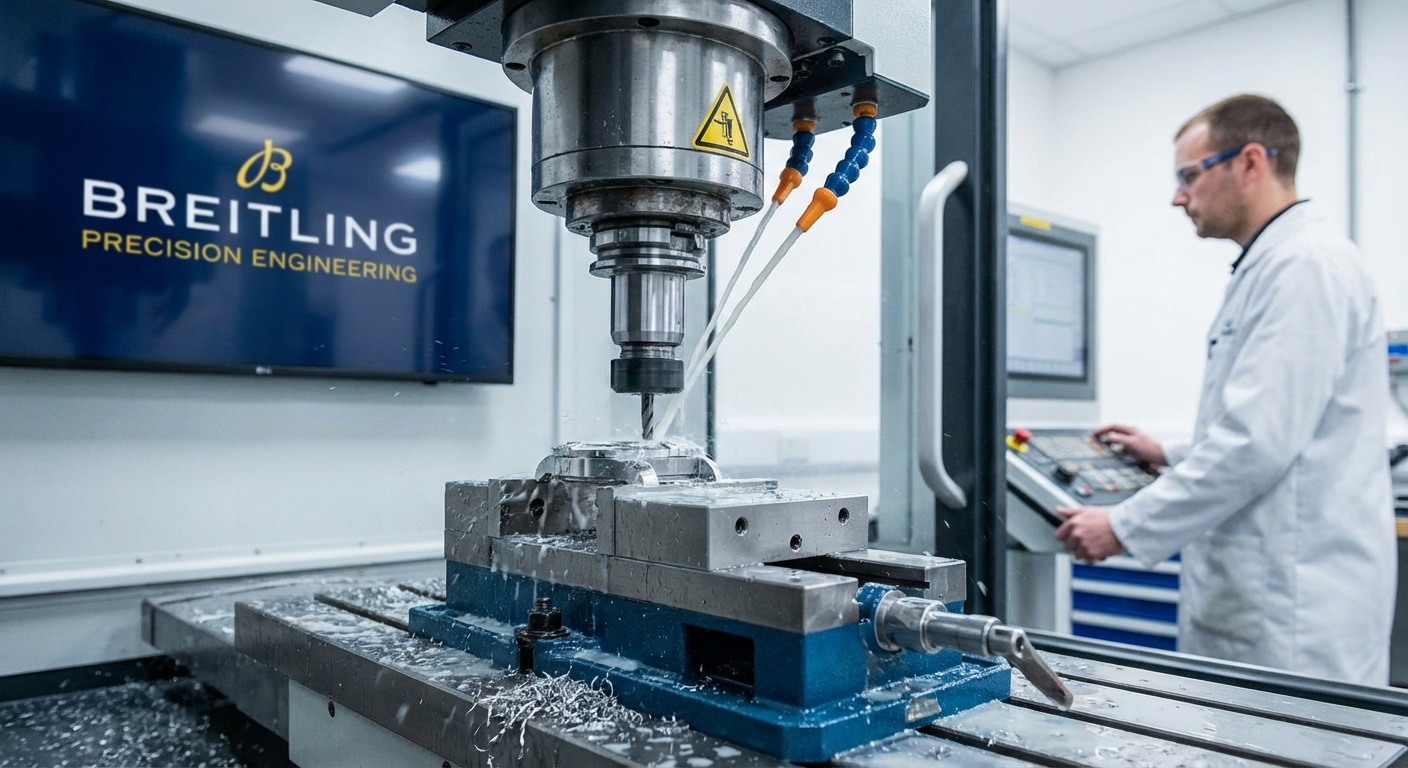
Factories in Guangzhou are not charities; they are businesses operating on thin margins within a high-risk industry. When you see a listing jump from V3 to V5, it is rarely an act of philanthropy aimed at improving your wrist experience. It is a calculated response to financial pressure. The narrative of continuous improvement is marketing copy designed to justify price hikes. In reality, version updates occur only when the cost of maintaining the old production line exceeds the cost of retooling based on 316L vs 904L titanium costs. Understanding this economic baseline is crucial for separating genuine upgrades from inflated pricing structures.
Profit Margins vs. Tooling Costs
Retooling a factory line is expensive. A single set of precision molds for a Breitling Navitimer case can cost upwards of $15,000 USD when accounting for high-grade steel and CNC programming time. Factories will absorb defect rates up to a certain threshold before pulling the trigger on new tooling. Industry data suggests this break-even point sits around a 15 percent defect rate. If a batch of V1 cases has minor polishing inconsistencies, the factory will ship them rather than scrap the inventory. Updates only happen when functional failures—such as movement compatibility issues or case cracking—threaten return rates that erode profit margins. Amortization of new equipment is spread over thousands of units, meaning early adopters of a new version effectively subsidize the factory’s R&D.
Market Pressure from Competitors
Competition drives iteration more than quality control does. If BLS Factory releases a updated movement holder that fixes a known wobble issue, competing factories like TF or V9 must respond within six months or risk losing U.S. dealer contracts. This arms race creates the illusion of rapid progress. Often, a V4 release from Factory B is simply a reaction to Factory A’s V3, rather than an organic improvement cycle. In the U.S. sector, where dealers demand consistency, losing market share due to perceived obsolescence is a greater threat than minor technical flaws. This dynamic forces factories to announce updates even when the changes are negligible, ensuring their product remains visible in dealer catalogs.
The Lifecycle of a Reference Model
A typical reference model enjoys an 18-month production cycle before a version update becomes economically viable. This timeline aligns with the depreciation of initial tooling and the accumulation of user feedback from Western markets. Some models remain at V1 for years because the demand volume does not justify new molds. Conversely, high-volume sellers like the Superocean Heritage rush to V5 because the sales velocity supports frequent incremental changes. A model staying at V1 is not necessarily inferior; it often means the initial design was robust enough to avoid costly revisions. Buyers should view long-lived V1 models as stable investments compared to frequently updated lines where consistency varies batch to batch.
Expert Authentication Insight
Physical diagnostic: Check the case back engraving depth. Early versions often have shallower engraving due to worn tooling. V5 updates usually involve fresh molds with sharper edges measurable under 10x loupe. Look for crisp corners on the Breitling logo wings; softened edges indicate an older mold cycle regardless of the claimed version number.
Decoding the V1 to V5 Naming Convention
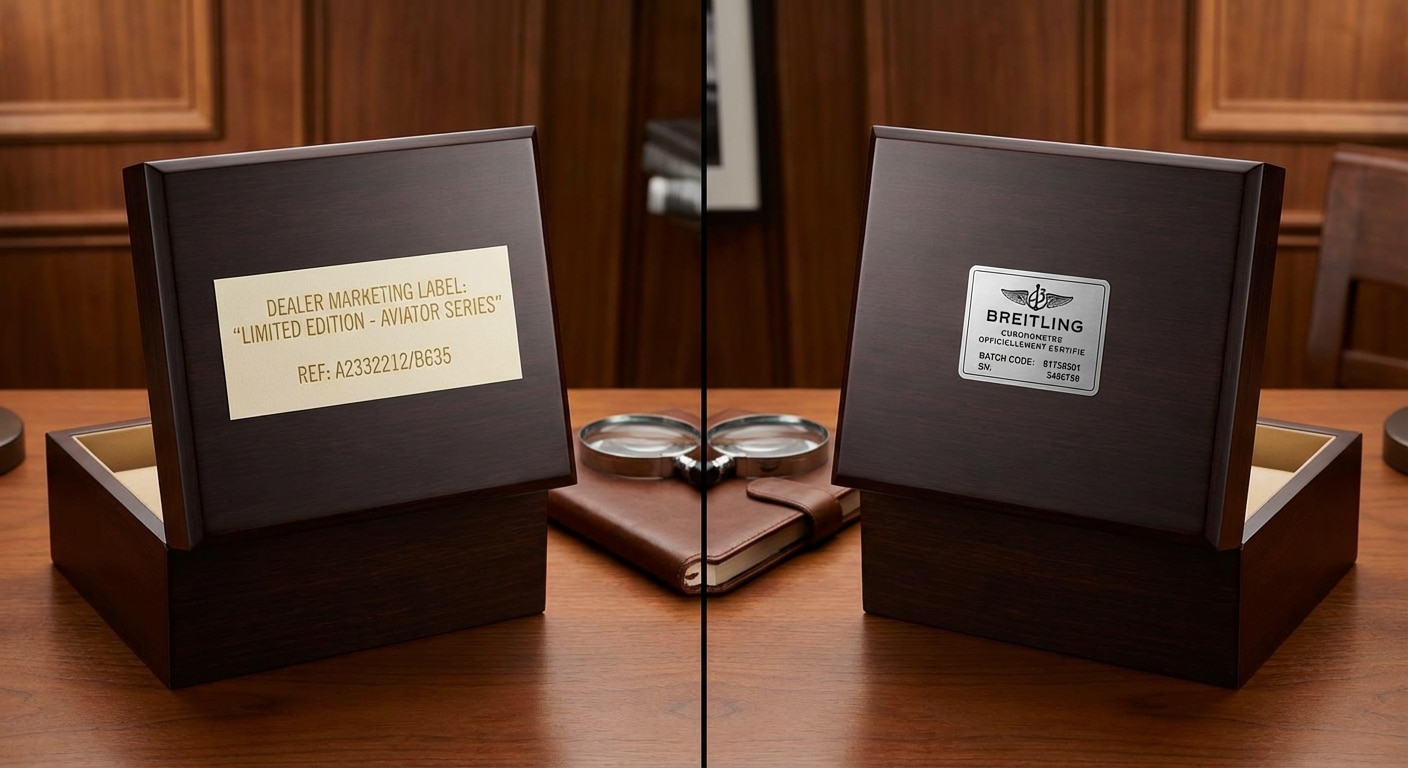
The versioning system used in the replica market is unregulated and largely fabricated. There is no ISO standard for watch replicas. A V5 from one dealer may be identical to a V3 from another. This lack of standardization allows sellers to manipulate perception. Collectors must understand that version numbers are semantic tools used to differentiate inventory tiers, not official technical specifications. Treat every version claim with skepticism until verified through physical inspection or community consensus.
Dealer Inflation of Version Numbers
Sellers frequently label stock as V5 to justify higher prices, sometimes inflating the cost by 20 to 30 percent over V3 equivalents. Investigation into batch codes reveals that many dealers simply rebox existing inventory with new paperwork. A watch sold as a 2026 V5 might carry a movement serial number from 2024. This practice preys on buyers who equate higher numbers with better quality. Always compare the dealer’s version claim against independent community teardowns. If multiple trusted sources identify a specific batch as V3, a seller claiming V5 is likely engaging in price gouging without substantive product changes.
Standardized Milestones in 2026
Despite the chaos, the market has converged on certain expectations for late-stage versions. In 2026, a legitimate V5 Breitling replica should demonstrate specific traits: correct date font weight, proper bezel action with minimal backplay, and movement decoration that matches genuine reference photos under magnification. These are not optional features but baseline requirements for the price point. If a V5 listing lacks these attributes, it is mislabeled. The standard has risen; what was acceptable in V2 is now considered a defect in V5. Buyers should demand evidence of these milestones before committing funds.
The Absence of Official Factory Documentation
Factories do not publish changelogs. There is no official document stating what changed between V4 and V5. All version knowledge comes from dealer feedback loops and community teardowns. This information asymmetry puts the buyer at a disadvantage. Reliance on dealer word alone is insufficient. Verification requires cross-referencing multiple sources, including forum discussions and independent reviewer comparisons. The lack of transparency means version numbers are essentially marketing trademarks owned by the seller, not technical guarantees from the manufacturer.
Expert Authentication Insight
Physical diagnostic: Request the movement serial number photo. Cross-reference with known batch production dates. A V5 claim with a 2023 movement serial is a red flag for repackaged old stock. Verify the font style of the serial engraving against known genuine and replica databases to confirm production era.
Technical Corrections in Early Iterations V2 and V3
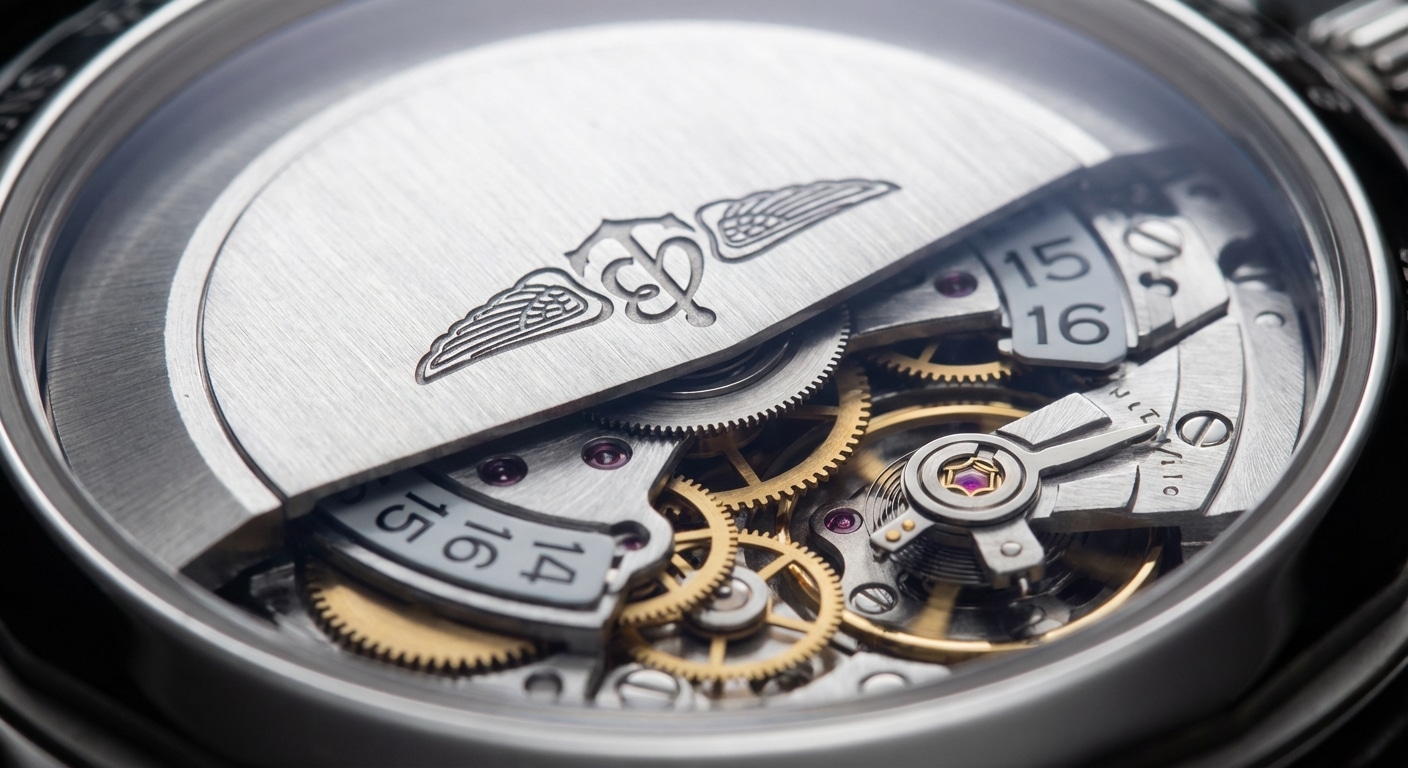
Early iterations focus on functionality rather than aesthetics. V1 models are essentially beta tests released to the public. V2 and V3 updates address mechanical failures that hinder daily wearability. These versions are about making the watch work correctly, ensuring basic reliability before pursuing cosmetic perfection. Buyers seeking a daily wearer should prioritize V3 stability over V5 cosmetic tweaks, as the functional foundation is more critical than minor dial variations.
Correcting Date Wheel Alignment
One of the most common V1 defects is misaligned date windows. Early batches often display cut-off numerals, where the number sits too high or low within the aperture. V2 and V3 iterations typically center the numeral using adjusted movement holders or modified date wheels. This correction requires precise machining of the movement ring. If a listing shows a date window where the number touches the edge, it is likely an early version regardless of the seller’s claims. Proper alignment is a primary indicator of a matured production cycle.
Bezel Action and Click Spring Tension
Loose bezels are a frequent complaint in first-generation replicas. V1 bezels often exhibit excessive play or misaligned markers that drift over time. V3 updates usually introduce tighter tolerances in the bezel mechanism to reduce play. The click spring tension should feel firm, not mushy. In 2026, a high-quality replica bezel should align within 0.5mm of the marker indices. Auditory feedback is also key; a crisp click indicates proper tension, while a silent or gritty rotation suggests internal wear or poor assembly. This mechanical integrity is more valuable than superficial polishing improvements.
Movement Stability and Power Reserve
Early versions often suffer from inconsistent power reserve due to unstable Asian clone movements. V2 and V3 transitions mark the shift toward more reliable calibers capable of sustaining a consistent 40-hour power reserve. Initial batches may stop prematurely if the mainspring barrel is not properly lubricated or if the rotor winding efficiency is low. Later iterations address these issues through refined assembly protocols and better quality control on the movement sourcing. Stability in timekeeping, measured by daily deviation rates, is a hallmark of these mid-cycle updates.
Expert Authentication Insight
Physical diagnostic: Perform a date change test between 9 PM and 3 AM. Early versions often struggle with instant jump mechanisms. V3 should show crisp transition without hesitation. Listen for the snap of the date change; a slow creep indicates worn gears or improper alignment in the movement train.
The Pursuit of 1:1 Accuracy in Late Iterations V4 and V5
By the time a factory reaches version V4 or V5, the functional bugs are usually dead. The date jumps correctly, the bezel clicks with authority, and the movement holds time within acceptable deviations. At this stage, the iteration logic shifts from engineering survival to cosmetic obsession. This is where the watch attempts to pass the visual inspection of a knowledgeable owner under social lighting conditions. The goal is no longer functionality; it is deception through perfection.
In 2026, the definition of a V5 Breitling implies a specific set of aesthetic benchmarks. It is not merely a marketing label but a designation that the case profile has been slimmed down to match genuine tolerances, and the finishing techniques have moved beyond basic polishing to include complex brushing patterns. However, buyers must understand that diminishing returns set in aggressively here. The price premium for a V5 over a V3 often exceeds 40 percent, yet the visual improvement might be measurable only in microns.
Case Thickness and Weight Optimization
The most immediate giveaway of an early version replica is the case height. V1 models often suffer from excessive bulk, primarily because factories use generic movement holders that add unnecessary millimeters between the caliber and the case back. For a Breitling Navitimer, where the genuine profile is tightly constrained by the B01 movement architecture, a V1 replica might stand 0.8mm taller than specification. This is visible from a side profile and creates a top-heavy wearability issue.
V5 iterations address this through case back thinning and optimized movement rings. Factories like BLS have managed to reduce the total thickness to within 0.1mm of genuine specifications on certain models. This level of precision within the Guangzhou supply chain ecosystem requires recutting the entire case mold, a significant capital expenditure that explains the price jump. Weight distribution is also corrected; early versions often feel hollow because the solid links are lighter to save on steel costs. V5 batches typically restore the correct mass, ensuring the watch hangs on the wrist with the proper gravitational pull.
Bracelet End Link Fitment
Nothing destroys the illusion of authenticity faster than a gap between the case lug and the bracelet end link. In V1 and V2 productions, these gaps are common due to stamped metal end links that lack precise curvature. They rattle against the case during wrist movement, creating an audible tinny sound that genuine steel does not produce.
V5 standards mandate CNC machined end links. These are carved from solid blocks of steel rather than stamped, allowing for a curvature that matches the case lug exactly. When you run your fingernail across the junction on a V5 model, there should be no catch point. The integration is tight enough that dust accumulation becomes a minor issue, but the visual seamlessness is critical. On the Breitling Superocean heritage models, where the bracelet integrates directly into the case design, this fitment is the primary differentiator between a mid-tier and a top-tier iteration.
Dial Printing and Lume Application
Under direct sunlight, dial flaws become glaring. Early versions often suffer from logo thickness issues—the applied Breitling anchor might be 0.05mm too high, casting a shadow that genuine pieces do not. Font weight on the minute track is another common failure point; V1 dials often use printing pads that spread ink slightly, making the text look bold and fuzzy under magnification.
In 2026, V5 iterations utilize pad printing techniques that achieve sharper edge definition. The lume application is equally critical. Genuine Breitling uses specific grades of Super-LumiNova, often C3 (greenish) or C1 (white/grayish) depending on the model year. V1 replicas frequently use a generic green lume that glows too brightly and fades too quickly. V5 batches match the charge intensity and color hue more accurately. Under UV light, the difference is stark: older versions glow like neon signs, while V5 applications mimic the subdued, creamy emission of the genuine article.
Expert Authentication Insight
Physical diagnostic: Measure case thickness with digital calipers at the 12 o’clock position, excluding the crystal. V5 should be within 0.2mm of genuine specs. Deviations over 0.5mm indicate older version tooling. Also, check the gap between the case and bracelet end link by holding the watch up to a bright light source; if light passes through the junction, it is not a V5 specification.
Cost Reduction Disguised as Upgrades
Not every version update is an improvement. In the replica ecosystem, profit margins are squeezed by rising material costs and increased shipping scrutiny. Factories often respond by engineering cost reductions into the product while marketing them as refinements. A V4 might be labeled as an upgrade over V3, but in reality, it may represent a strategic downgrade in material quality to protect the factory’s bottom line. Skepticism is required when a new version is announced without a corresponding price increase.
Steel Grade Substitutions
During the V1 to V3 lifecycle, factories often advertise the use of 904L steel to match Rolex and Breitling standards. However, by V4 or V5, supply chain pressures may force a silent switch back to 316L steel. While 316L is still high-quality surgical steel, it lacks the corrosion resistance and polish retention of 904L. Over two years of wear, 316L micro-scratches more easily and loses its luster faster in humid environments.
This substitution is rarely announced. The visual difference is negligible when the watch is new, which allows dealers to sell the V5 as premium while the factory saves approximately 15 percent on raw material costs. For a collector planning to wear the watch daily, this degradation in material integrity means the watch will look aged significantly faster than a genuine piece or an earlier V3 batch made with true 904L.
Sapphire Coating Quality
Anti-reflective (AR) coating is a common area for cost cutting. A genuine Breitling sapphire crystal often features multi-layer AR coating on both the interior and exterior surfaces, rendering the glass nearly invisible under certain angles. V1 replicas might have single-layer coating or none at all, resulting in a blue or purple glare.
Ironically, some V5 iterations appear clearer initially but use cheaper glass substrates with thinner AR layers. This makes the dial look crisp out of the box, but the coating is prone to scratching and peeling within six months of daily wear. The factory saves on the vacuum deposition process time, passing the risk to the consumer. A watch that looks perfect in month one but scratched by month six is a financial loss, regardless of the version number.
Clasp Mechanism Simplification
The clasp is a high-wear component that requires precise machining. Early versions often feature complex micro-adjustment mechanisms that mimic the genuine glide systems. In later versions, factories may simplify the internal locking mechanism to reduce assembly time and failure rates. You might find that the micro-adjustment holes are present but non-functional, or the spring tension is weaker.
This simplification reduces the likelihood of the clasp popping open accidentally, which is a benefit, but it also removes the fine-tuning capability for wrist swelling during summer months. The engraving inside the clasp also tends to degrade in later batches. Laser engraving might be replaced by cheaper acid etching, resulting in shallower, less crisp lettering that fills with dirt more quickly.
Expert Authentication Insight
Physical diagnostic: Use a steel testing pen or observe weight difference. 904L steel has a slightly different density and polish retention. Check clasp inner engraving sharpness which often degrades with cost cutting. If the engraving looks shallow or filled with residue under a loupe, suspect a material downgrade in the V5 batch.
Identifying the Version Trap
The most dangerous aspect of the replica market is not the quality of the watch, but the honesty of the seller. Version numbers are not regulated; they are marketing tools created by dealers to move inventory. A V5 sold by one dealer might be identical to a V3 sold by another. Understanding the traps involved in version verification is essential to avoid paying premium prices for obsolete stock.
Repackaging Old Inventory as V5
A common practice involves dealers taking unsold V1 or V2 stock and placing them in new boxes with updated warranty cards. The watch itself remains unchanged, but the packaging suggests a newer generation. This allows the dealer to increase the price by 20 percent without incurring any acquisition costs. The watch might function perfectly, but you are paying V5 prices for V1 engineering.
This is particularly prevalent with models that have subtle updates, such as a dial color change. If the factory updates the blue dial hue from navy to azure, dealers may label any blue dial model as the new version. Without physical verification of the case dimensions or movement type, the buyer has no way to distinguish the repackaged old stock from the genuine new iteration.
Minor Cosmetic Tweaks Labeled as Major
Factories sometimes release a batch with a minor change, such as a slightly different hand shape or a revised logo font, and dealers amplify this into a major version jump. They will claim the movement has been upgraded or the water resistance improved, when in reality, only the dial print pad was changed.
Distinguishing between genuine movement upgrades and superficial dial changes requires knowledge of the specific model’s history. For example, if a V5 claim is based on a new date font, but the movement remains the same noisy 7750 clone from the V3 era, the functional value has not increased. You are paying for cosmetics, not performance. In some cases, the V3 with the proven movement is a smarter buy than the V5 with untested cosmetic revisions.
The Danger of Pre-Order Hype
Dealers often solicit pre-orders for upcoming versions, such as a promised V6 that claims to fix all known flaws. These pre-orders carry significant risk. Factories frequently delay tooling indefinitely if the costs become prohibitive, or they may cancel the run entirely. Your money sits tied up for months, and when the watch finally arrives, it often differs from the prototype photos provided during the sales pitch.
In the 2026 market, patience is a financial asset. Buying a confirmed in-stock version allows you to verify the goods before payment clears. Pre-ordering based on renderings or dealer promises is speculative gambling. If a factory cannot produce the tooling within a standard cycle, it usually indicates the economic viability of the model is declining, suggesting the final product will likely suffer from the cost-cutting measures discussed previously.
Expert Authentication Insight
Physical diagnostic: Compare the movement rotor engraving with known V5 reference photos. Old stock often retains previous generation rotor designs even if the dealer claims an upgrade. Request macro photos of the movement bridge before payment. This is the only undeniable proof of version generation regardless of marketing claims.
Physical Diagnostics for Version Verification
Marketing claims are free; verification requires tools. Dealers will tell you a watch is V5 because it sounds better on an invoice, but physical evidence does not lie. To move beyond hearsay, you need a basic toolkit: digital calipers accurate to 0.01mm, a timegrapher capable of reading beat error, and a precision scale. These instruments separate speculative buying from informed acquisition. When a seller hesitates to let you measure a piece before payment, consider that hesitation a data point in itself.
Caliper Measurements for Case Dimensions
Case dimensions are the easiest metric to falsify on paper and the hardest to fake in metal. A genuine Breitling Superocean Heritage 42mm sits at approximately 13.5mm thick. Early V1 replicas often ballooned to 14.5mm due to cheaper movement holders. By V5, factories claim to have shaved this down. Take three measurements: lug width, case diameter at 3 and 9 o’clock, and thickness at 12 o’clock. A V5 claim should hold within a 0.1mm tolerance of genuine specifications. If you measure 14.2mm on a watch sold as V5, you are holding revised V3 tooling with a new price tag.
Timegrapher Performance Metrics
Movement stability tells the story of internal regulation. V1 batches using standard Seagull 2824 clones often exhibit beat errors exceeding 1.5ms and amplitude drops below 250° after 12 hours. A legitimate V5 upgrade should demonstrate consistency. Look for a beat error stabilized below 0.5ms and amplitude holding above 270° in the dial-up position. While these numbers do not guarantee longevity, they indicate that the factory spent time regulating the movement rather than simply assembling it. High beat error suggests poor assembly quality control, regardless of the version number stamped on the box.
Weight Distribution Analysis
Steel density and gold plating thickness alter the overall mass. A genuine Breitling Chronomat 42 in steel weighs approximately 155 grams. Replicas often deviate by 10 to 15 grams due to hollow end links or thinner steel grades. Use a precision scale to weigh the head only, without the bracelet. Version updates sometimes add tungsten weights to the rotor or solidify end links to match the genuine feel. If a V5 model claims improved materials but weighs 10 grams lighter than the V3 predecessor, suspect material substitution rather than enhancement.
Expert Authentication Insight
Physical diagnostic: Shine a flashlight through the case back at the movement bridge. V5 versions often have refined finishing on hidden parts that V1 leaves rough to save machining time. Look for perlage or Geneva stripes on surfaces that are not visible without removing the rotor. Factories rarely waste time finishing hidden areas on early batches. If the hidden bridges look like cast sand rather than machined steel, the version claim is likely inflated.
Market Lifecycle and Depreciation
Treat a replica watch as a depreciating asset, not an investment. The moment a new version is announced, the previous generation loses value. Understanding this cycle allows you to buy strategically rather than emotionally. Factories operate on inventory turnover, not collector value. They need to clear V4 stock to make room for V5 tooling. This creates predictable windows where high-quality versions become available at reduced rates, provided you know when to look.
Price Stability After New Release
When a factory announces a V6 update, the market price for V5 models typically drops by 15 to 20 percent within thirty days. For example, a V5 Navitimer listed at $550 may settle around $450 once the new batch hits the dealer network. The functional difference between V5 and V6 is often negligible—perhaps a slightly sharper font on the sub-dials. Buying the previous version immediately after a new release offers the best value proposition. You get 95 percent of the performance for significantly less capital outlay.
Inventory Clearance Cycles
Factories in Guangzhou operate on specific fiscal calendars. The weeks leading up to Chinese New Year see aggressive pushes to clear inventory. Dealers are motivated to convert stock into cash before the holiday shutdown. This is the optimal time to negotiate for higher versions at lower prices. A dealer holding V5 stock in January may be willing to accept $400 for a watch they listed at $500 in November. Patience during these clearance windows yields better hardware than paying premium prices during peak demand.
Resale Value of High Versions
While replicas do not hold value like genuine luxury goods, version hierarchy matters in the secondary market. A documented V5 sells faster and at a higher price than a V1 when you decide to exit. Collectors in the enthusiast community track batch improvements. They are willing to pay a premium for verified upgrades like corrected date wheels or improved bezel action. However, expect to lose 30 to 40 percent of the purchase price upon resale regardless of version. The liquidity is higher for V5, but the depreciation curve remains steep.
Expert Authentication Insight
Physical diagnostic: Check the warranty card date. If the card is older than the claimed version release date, the watch is likely old stock regardless of dealer claims. Factories do not backdate cards. A V5 claimed release of March 2026 paired with a warranty card dated August 2025 indicates repackaged inventory. This discrepancy is a reliable indicator of version inflation.
Final Verdict on Version Hype
The pursuit of the highest version number is often a trap set by marketing departments. Factories and dealers benefit from the narrative that newer equals better, but the data suggests diminishing returns. Your goal should be functional reliability and visual accuracy, not chasing the highest digit on a version chart. Smart buying involves identifying the point where additional cost no longer yields proportional improvement in quality.
Diminishing Returns Beyond V3
Analysis of teardowns and market feedback indicates that V3 offers approximately 90 percent of the functional value of a V5. The jump from V1 to V3 usually fixes critical flaws like date alignment and bezel tension. The subsequent jump to V5 often focuses on cosmetic nuances like lume hue or bracelet gap reduction. These are visible only under scrutiny. Paying a 40 percent premium for V5 over V3 is rarely justified unless you intend to display the watch under macro photography. For daily wear, V3 represents the efficiency peak of the production cycle.
When to Wait for Next Iteration
There are specific scenarios where waiting for a new version is prudent. If community reports highlight a systemic movement failure in the current batch, such as a high rate of date mechanism jams, hold your purchase. Similarly, if a known case shape error exists—for example, a lug profile that is too thick—wait for the factory to address the tooling. Do not buy a known flawed version hoping for individual quality control to save you. Factories fix systemic issues in subsequent batches, not on the assembly line.
Trusting Verified Dealers Over Claims
Dealer reputation outweighs version numbers. An honest dealer selling a verified V3 is a safer investment than a unknown seller promising a V5 with no proof. Established dealers stake their reputation on consistency. They will admit if a batch has issues rather than selling defective stock as premium. Build a relationship with a seller who provides unedited macro photos and accepts returns for specification mismatches. Their transparency is more valuable than any version label.
Expert Authentication Insight
Physical diagnostic: Final recommendation to always request macro photos of the movement bridge before payment. This is the only undeniable proof of version generation regardless of marketing claims. Compare the bridge finishing and rotor engraving against known reference images for that specific factory batch. If the dealer refuses to provide these images, walk away. The refusal indicates they are hiding the actual generation of the movement inside the case.