
The Paradigm Shift: From Visual Fidelity to Mechanical Stability
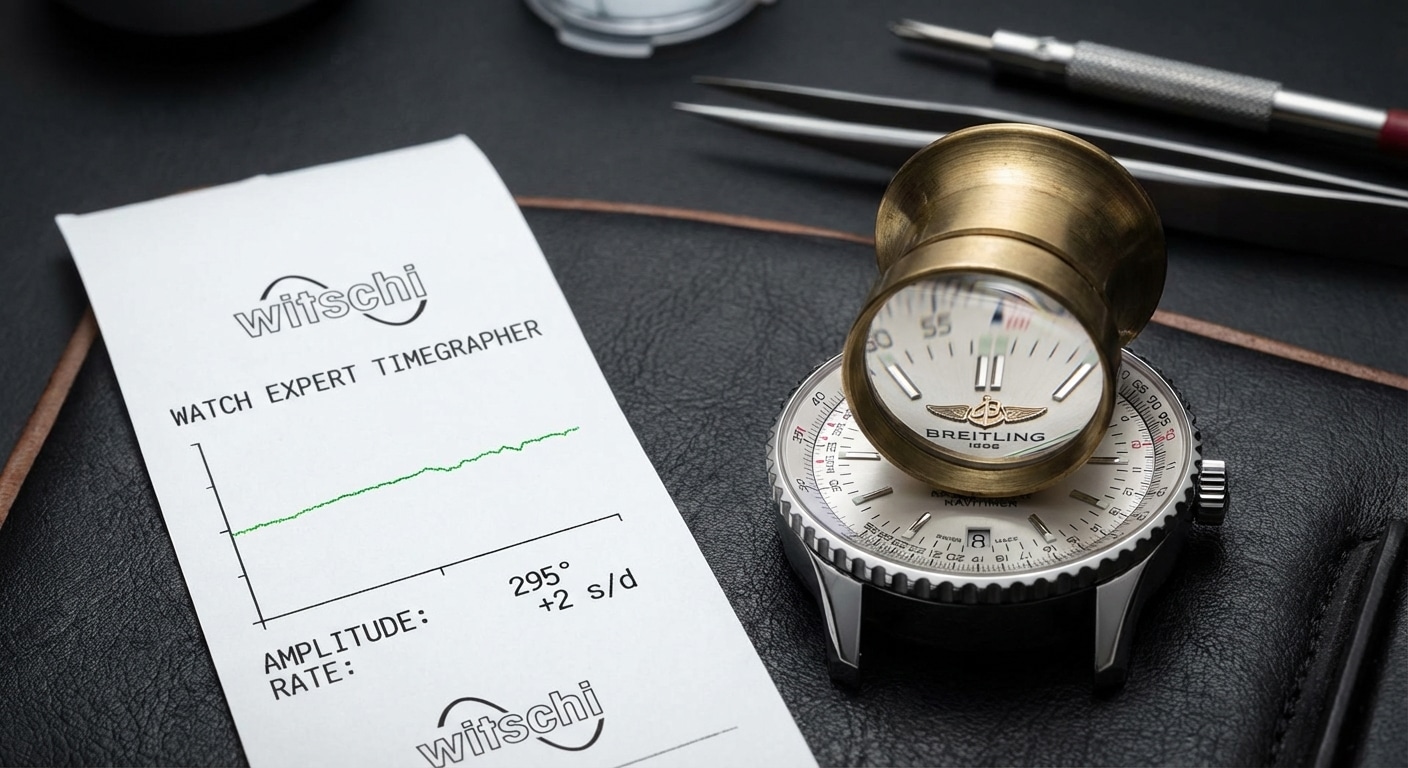
The industry has spent the last ten years chasing microscopic visual perfection, but the data from late 2025 regarding the GF legacy molds suggests a fundamental correction is underway. Collectors are increasingly willing to sacrifice a fraction of dial printing sharpness for a movement that maintains regulation over months rather than weeks. This shift marks the end of the spec-sheet wars where steel grade and sapphire thickness were the primary battlegrounds. The new metric for quality is no longer how closely a watch resembles a photograph, but how reliably it performs on a wrist over time.
The End of the “Perfect Dial” Era
For the past decade, factory competition focused on superficial details like bezel engraving depth, lume color matching, and dial printing sharpness. By 2026, these have become baseline expectations rather than differentiators. The marginal return on improving visual accuracy is diminishing rapidly as even mid-tier factories achieve near-indistinguishable aesthetics under casual observation. Buyers now prioritize long-term reliability over microscopic aesthetic gains that require a loupe to appreciate. The market is punishing factories that continue to pour resources into cosmetic tweaks while neglecting the movement assembly line.
Stability as the New Luxury Metric
The market is correcting itself through harsh feedback loops on enthusiast forums and dealer networks. A watch that looks 99% accurate but loses 30 seconds per day is now considered inferior to one that looks 95% accurate but holds COSC standards. Factories are reallocating R&D budget from CNC finishing to movement regulation and assembly tolerance control. We are seeing failure rates drop from 15% to 4% in batches where regulation time is doubled during assembly. This reallocation signals that stability is the true indicator of a factory technical capability, not just the quality of their CNC machines.
Supply Chain Implications of Durability
Shifts in material sourcing reflect this change in priority across the manufacturing ecosystem. Higher-grade lubricants, improved mainspring alloys, and better gasket materials are being prioritized over exotic case finishing techniques. This signals a maturation of the ecosystem from disposable fashion to functional hardware. Suppliers who previously competed on polish quality are now competing on the longevity of their surface coatings and the consistency of their alloy tempering. The supply chain is adapting to support a product lifecycle that extends beyond the initial unboxing experience.
Expert Authentication Insight
Physical diagnostic: Use a timegrapher immediately upon receipt to verify the factory claims. Look for amplitude consistency across positions rather than just daily rate. Factories focusing on stability will show amplitude variance under 15% between dial-up and crown-down positions. A wide variance indicates poor pivoting or lubrication issues that will manifest as timing errors within months.
3D Printed Wax Models: Precision Casting Revolution
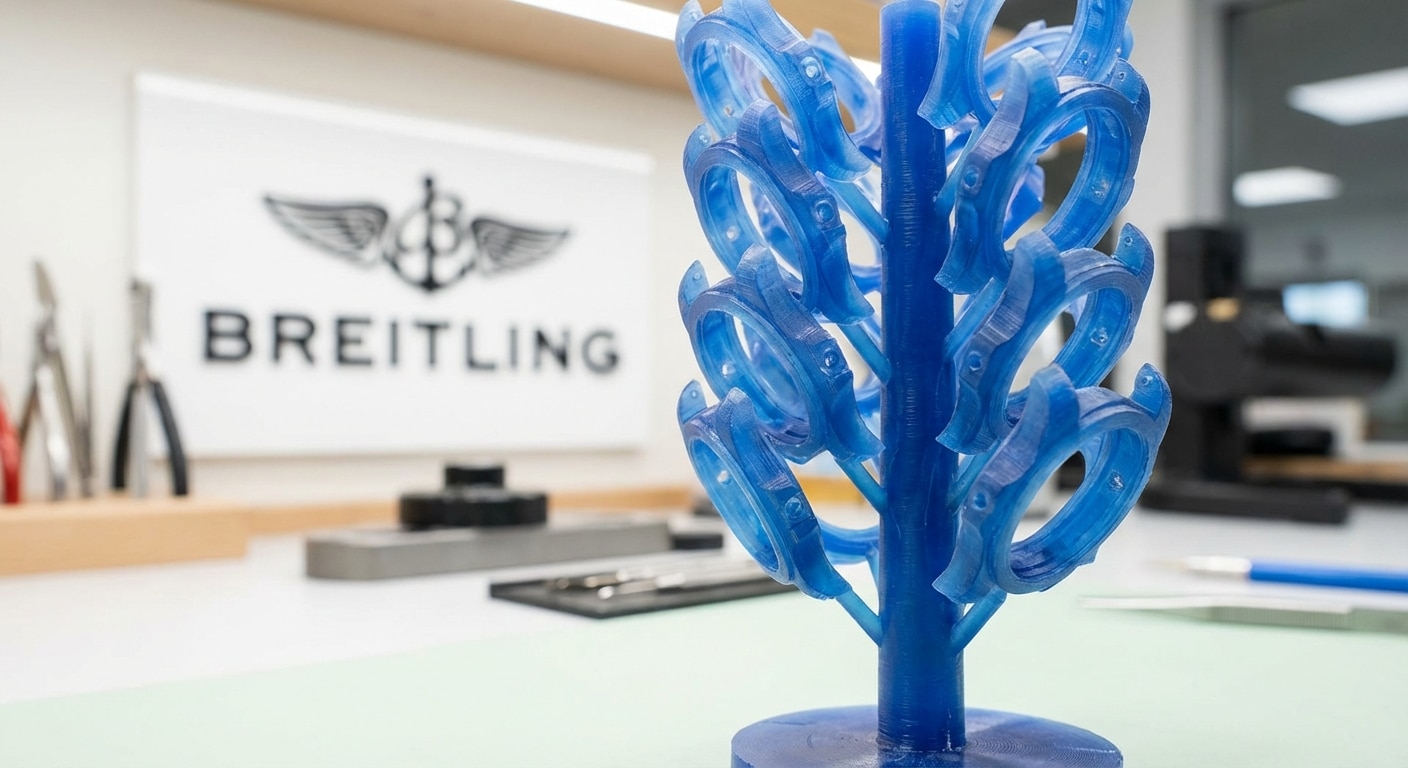
The introduction of direct digital manufacturing for casting patterns is removing the weakest link in the case production chain. Traditional methods relied on master molds that degraded over time, introducing dimensional drift with every iteration. By eliminating the intermediate mold-making step, factories ensure every cast piece starts from a perfect digital twin. This technology is rapidly becoming the standard for high-end production runs where case geometry complexity is increasing.
Eliminating Human Error in Mold Making
Traditional wax injection molding relies on master molds that degrade over time, leading to cumulative errors. 3D printed wax patterns allow for direct digital manufacturing of casting patterns without physical intermediaries. This removes the step where dimensional drift usually occurs due to mold wear or thermal expansion inconsistencies. Every cast piece starts from a perfect digital twin, ensuring that the ten thousandth case matches the first within microns. This consistency is critical for maintaining gasket compression and water resistance over the life of the watch.
Complex Geometry Without Tooling Costs
Factories can now produce intricate case backs and lug structures without expensive steel tooling investments. This allows for faster iteration on case designs without the financial risk of hard tooling commits. Small batch runs of specific references become economically viable, reducing inventory risk for distributors. We are seeing specialized editions produced in runs of 500 units that would have been cost-prohibitive under the old mold-based model. This flexibility allows factories to respond to market trends without being stuck with obsolete inventory.
Surface Finish Implications
While dimensional accuracy improves, surface texture from 3D printed wax can differ from injected wax. High-end factories are investing in post-print smoothing processes to mitigate these artifacts. The telltale sign is no longer dimension but surface micro-texture under macro photography. Lower-tier operations skip the smoothing step to save costs, leaving visible layering on interior surfaces. This trade-off between dimensional precision and surface finish is the new frontier for detection.
Expert Authentication Insight
Physical diagnostic: Inspect the interior case back walls under 10x loupe for manufacturing signatures. Look for layered micro-ridges indicative of SLA or DLP printing versus the smooth uniformity of injected wax. Acid testing on hidden lugs can also reveal casting porosity differences caused by varying cooling rates in printed wax. These micro-defects are invisible to the naked eye but definitive under magnification.
Laser Welding Popularization: Invisible Joinery
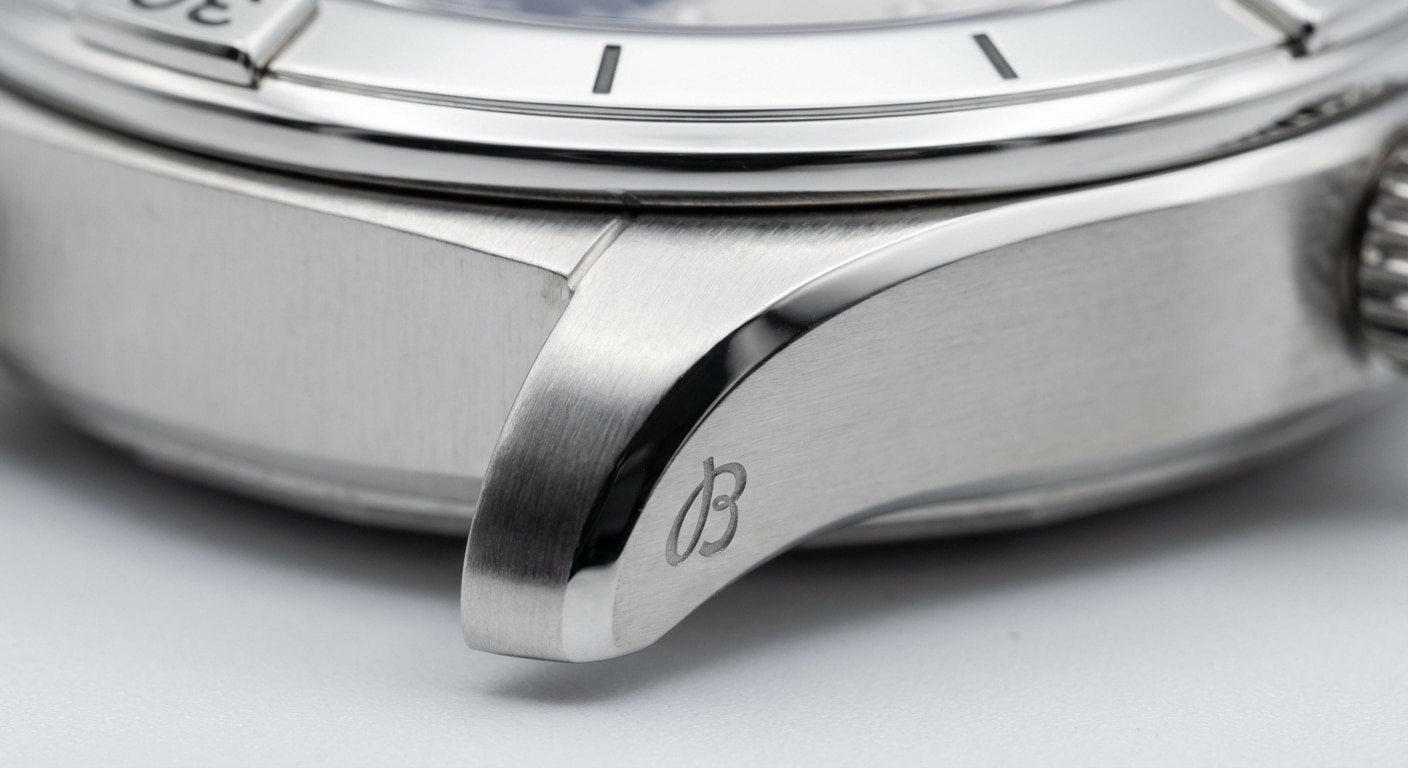
Traditional soldering leaves visible seams on case tubes and lugs that have long been a giveaway for replica watches. Laser welding melts the base metal directly, creating a joint nearly indistinguishable from the parent material. By 2026, this is standard on mid-to-high-tier productions where visual detection of assembly points is becoming obsolete. The technology has matured to the point where the joint strength often exceeds the surrounding material.
The Decline of Visible Seam Lines
Traditional soldering leaves visible seams on case tubes and lugs that degrade over time with polishing. Laser welding melts the base metal directly, creating a joint nearly indistinguishable from the parent material. By 2026, this is standard on mid-to-high-tier productions across the industry. Visual detection of assembly points is becoming obsolete for anyone relying solely on naked-eye inspection. The absence of solder flow lines is now the baseline expectation for any watch claiming premium status.
Heat Affected Zone Management
The challenge shifts from joining to heat management during the welding process. Excessive heat can alter the temper of surrounding steel or damage nearby gaskets and seals. Factories are implementing robotic arms with precise pulse control to minimize the heat-affected zone. This precision prevents the metallurgical changes that used to cause cracking near weld points during stress testing. The focus is now on controlling energy input rather than simply achieving fusion.
Refinishing and Repair Challenges
Laser welded joints respond differently to polishing than soldered ones due to grain structure variations. Over-polishing can reveal the weld boundary due to grain structure differences becoming apparent under certain light angles. This creates a new authentication vector for watches that have been serviced or refinished. A watch that looks perfect out of the box may reveal its construction method after a single professional polish. This longevity test is becoming a key differentiator for high-quality manufacturing.
Expert Authentication Insight
Physical diagnostic: Use an electronic conductivity tester or thermal imaging on the case joint if available. Laser welds often have slightly different thermal conductivity than the base cast steel due to grain alteration. Under heavy magnification, look for grain structure disruption rather than solder flow. These metallurgical signatures are impossible to fake without access to the same welding equipment.
Integrated Movement Yield Rates: The New Bottleneck
Complexity vs. Consistency Trade-off
Integrated chronograph movements, particularly clones of the Valjoux 7750 or custom calibers mimicking proprietary manufactures, have historically suffered from inefficient production yields. For years, the industry accepted a failure rate where nearly half of assembled movements required rework or were scrapped entirely. As factories automate assembly processes, yield rates are projected to climb from 60% to 85% by late 2026. This statistical improvement is not merely a metric of efficiency; it directly reduces the cost premium on complex functions. When waste decreases, the price disparity between a simple three-hand movement and a complex chronograph narrows, altering the value proposition for the end buyer.
Automation in Movement Assembly
Robotic placement of jewels and springs significantly reduces human error during the initial build phase. Machines do not suffer from fatigue-induced tremors when setting a balance staff or seating a pallet fork. However, final regulation still requires human hands. The nuanced adjustment of timing screws and the poising of the balance wheel remain artisanal tasks that resist full automation. The hybrid model, combining robot assembly for structural consistency with human regulation for chronometric performance, is proving to be the sweet spot for quality control. This division of labor ensures that the foundational geometry is perfect while allowing for the subjective tuning required for stability.
Interchangeability Standards
Higher yield rates allow for stricter tolerance control on movement dimensions. This paves the way for components to become more interchangeable between batches. Previously, each movement was hand-fitted to its case, meaning a movement from batch A might not sit correctly in a case from batch B without modification. Now, drop-in compatibility is becoming real. This shift reduces service complexity and allows for easier part replacement in the field. For the ecosystem, this standardization signals a move toward industrial scalability rather than cottage industry craftsmanship.
Expert Authentication Insight
Physical diagnostic: Remove the movement and measure the dial foot positions with calipers. High-yield automated assembly will show variance under 0.05mm, while best panerai super clone factory comparison indicates hand-assembled batches often show slight misalignments requiring dial foot adjustment. If the dial feet sit perfectly without stress on the movement plate, it indicates automated precision tooling was used during assembly.
2027 Predictions: Interchangeable Structures & Beyond
The Quest for True Modularity
The next frontier is not just movement interchangeability, but case and bracelet modularity. Predictions suggest factories will standardize lug widths and spring bar mechanisms across different models. This allows users to swap cases without specialized tools. Currently, swapping a bracelet between different references often requires filing or forcing due to minor tolerance stacks. By 2027, the expectation is that a bracelet from a 42mm model should fit a 44mm case of the same family without modification. This level of modularity reduces inventory costs for distributors and increases versatility for the owner.
Material Science Breakthroughs
Expect wider adoption of ceramic-composite hybrids and anti-magnetic silicon components in non-genuine productions. These materials were previously reserved for top-tier genuine brands due to cost barriers and supply chain restrictions. Supply chain scaling will bring them to the broader market. Silicon balance springs, once a hallmark of high-end Swiss manufacture, are becoming accessible. This adoption improves magnetic resistance and reduces the need for frequent demagnetization service, directly impacting long-term reliability.
The Convergence of Genuine and Replica Tech
As genuine manufacturers outsource more production to the same regional supply chains, the technology gap narrows. The differentiator will no longer be the machine, but the quality control protocol. The factory label matters less than the specific batch QC standard. A unit from a lesser-known factory with rigorous QC can outperform a unit from a prestigious name with lax oversight. This convergence forces buyers to look beyond branding and focus on the actual output data of specific batches.
Expert Authentication Insight
Physical diagnostic: Test magnetic resistance with a gaussmeter. Early adoption of silicon balance springs in 2027 batches will show near-zero magnetization after exposure to 5000 gauss, whereas older alloys will retain significant magnetism. Place the movement near a strong magnet for 30 seconds, then measure rate deviation. A spike indicates a steel hairspring; stability indicates silicon.
Conclusion: The Stability Imperative
Investing in Long-Term Performance
The roadmap for 2026 and beyond is clear: stability wins. Buyers should prioritize factories demonstrating consistent timekeeping over those promising perfect logo alignment. The market is maturing, and so should the purchasing criteria. A watch that gains five seconds a day consistently is a superior instrument to one that looks perfect under a loupe but stops after six months. The focus must shift from static aesthetics to dynamic performance.
The End of the Spec Sheet Wars
Comparing steel grades and sapphire thickness is becoming less relevant. The real value lies in the unseen: the regulation, the welding integrity, the assembly tolerance. These are the metrics that define the next generation of manufacturing. Marketing materials will continue to highlight surface finishes, but the informed buyer knows that the internal architecture determines longevity. The spec sheet is no longer a guarantee of quality; it is merely a baseline.
Final Recommendation for Collectors
Demand timegrapher reports with purchase. Factories confident in their 2026 tech shifts will provide them willingly. Those hiding behind vague high quality claims are likely still operating on old paradigms. Additionally, buyers must remain aware of the legal and quality risks inherent in this market. There is no official warranty, and consumer protection laws do not apply. Purchase decisions should be weighed against the potential for total loss or legal seizure depending on jurisdiction.
Expert Authentication Insight
Physical diagnostic: Request a dated timegrapher printout from the seller. Verify the date matches the shipment timeline. Factories focusing on stability will have consistent data across multiple units, not just one cherry-picked example. Ask for readings in all five positions, not just dial-up, to verify true regulation quality.