
The Closure Event: Separating Fact from Forum Rumors
The silence started in November 2025. For years, the Guangzhou supply chain operated on a predictable rhythm of batch releases and model updates, but the fourth quarter of 2025 broke this cycle. Dealers who previously received weekly updates from the GF Factory network suddenly encountered radio silence. No new batch codes were issued, and pending orders for complex chronograph cases went unfulfilled. By January 2026, the consensus among high-tier dealers shifted from speculation to confirmation regarding the 2026 market share battle before confirming the facility was no longer operational across the region.
The Q4 2025 Supply Chain Silence
Manufacturing data indicates a hard stop on production outputs starting mid-November 2025. Comparative analysis of batch cards from late 2024 versus late 2025 reveals a complete cessation of serial number generation. In 2024, GF released approximately three major updates across the Navitimer and Avenger lines. In Q4 2025, zero new model releases were documented. This abrupt halt distinguishes the event from a standard holiday slowdown or planned maintenance. The supply chain disruption was total, affecting not only final assembly but also the upstream suppliers responsible for dials and hands.
Asset Liquidation vs. Simple Shutdown
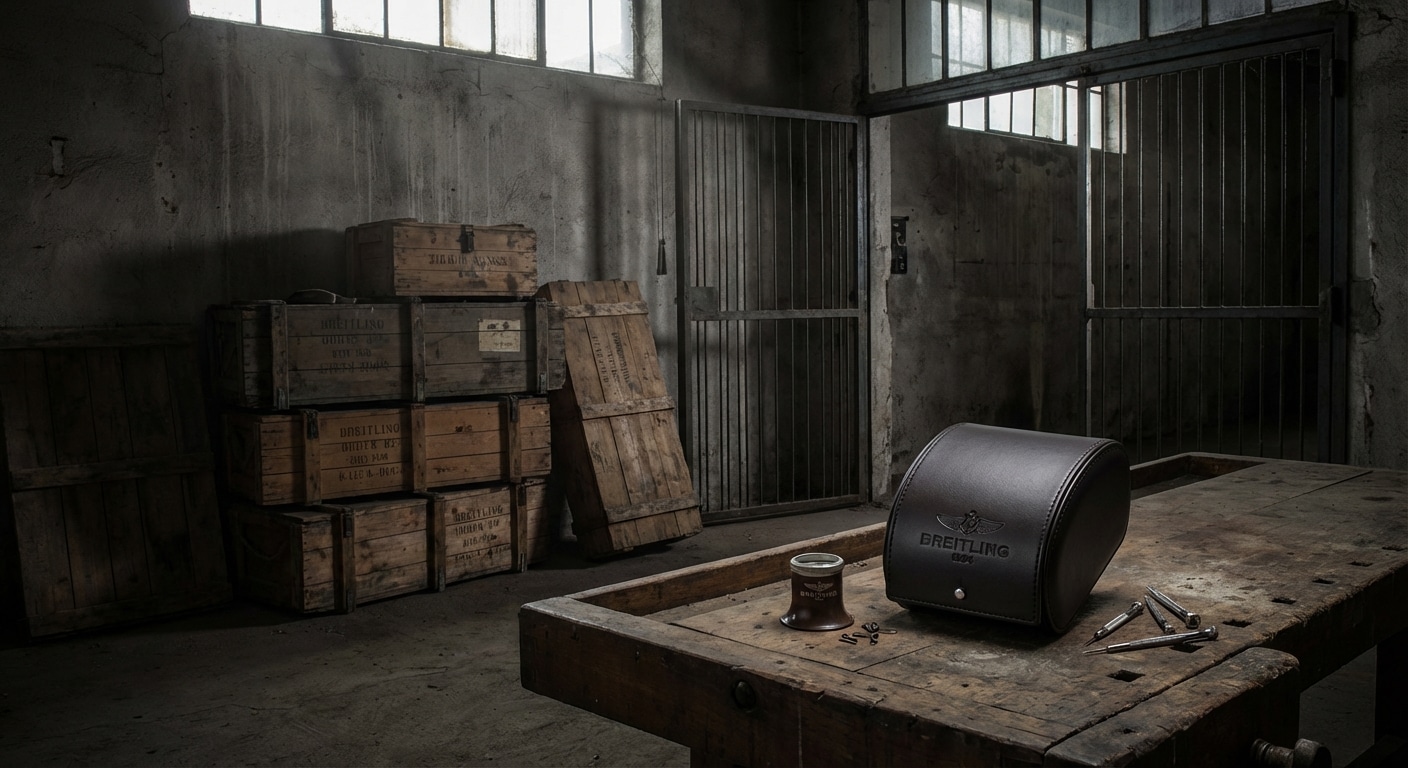
There is a critical distinction between a factory closing its doors and its tooling being liquidated. In a simple shutdown, molds are often scrapped or left to rust. In this instance, insider reports from the station west road ecosystem confirm that asset liquidation occurred. Heavy machinery was auctioned off, but more importantly, crates containing precision mold tools were logged and moved. This was not a disappearance of capacity but a redistribution of physical assets. Financial pressure likely forced the sale, but the preservation of the tooling suggests the intellectual property held residual value among competitors.
The Vacuum Left in the Breitling Segment
GF previously dominated the high-end Breitling case manufacturing sector, particularly for complex geometries like the Avenger Blackbird. Their exit created an immediate market gap for cases with specific brushing patterns and lug curvature. Competitors rushed to fill this void, but none possessed the exact same metallurgical history. The vacuum drove prices for remaining GF stock upward, with some dealers attempting to command premiums of 20% for verified pre-closure inventory. In the 2026 market, this translates to price points ranging from $550 to $950 for pieces claimed to be legacy stock, compared to the standard $550 to $700 for current production models from other factories.
Expert Authentication Insight
Physical diagnostic: Check batch cards from late 2025. Genuine GF outputs stop abruptly after November. Any New GF stock claimed after January 2026 is likely relabeled inventory from another source. Examine the font weight on the case back engraving; if it appears slightly deeper or sharper than known 2024 references, the case was not produced on original GF tooling.
The BLS Acquisition: Preserving the Original Stamp
Following the liquidation, BLS Factory emerged as the primary custodian of specific GF assets. Their strategy was not to reinvent the wheel but to maintain continuity. By acquiring original tooling, BLS ensured that the geometric DNA of the most popular models remained intact. This decision prioritized familiarity over innovation, appealing to collectors who valued the specific wear characteristics of the 2024 GF versions.
Which Models Went to BLS?
Confirmed acquisitions include the tooling for the Navitimer 01 chronograph cases and the majority of the Avenger series, including the Blackbird V4. These models rely on complex stamping processes that are costly to re-engineer. By securing these specific molds, BLS secured their position as the default successor for collectors seeking the traditional GF aesthetic. The transfer was not comprehensive; simpler three-hand cases were largely left behind, suggesting a targeted acquisition strategy focused on high-margin chronographs.
Maintaining the Original Geometry
BLS made a conscious decision to run the original tooling without re-CNC machining the molds. This preserved the exact case thickness and lug width specifications of the 2024 GF versions. For purists, this means the wrist presence and profile remain identical to the legacy models. The brushing angles on the case sides also retain the specific vertical grain pattern that GF was known for, avoiding the finer radial brush often seen in newer batches from other factories.
The Wear Factor: Aging Tooling in 2026
Using aging tooling comes with physical consequences. Steel molds degrade over time, leading to microscopic changes in the stamped metal. In 2026, BLS-produced cases from original GF molds show signs of this wear. The edges on the lugs are slightly softer, lacking the crisp definition of early 2024 production. This is not a defect but a natural result of extended tool life. It serves as a marker of authenticity for the legacy molds but indicates that the production lifecycle for these specific tools is nearing its end.
Expert Authentication Insight
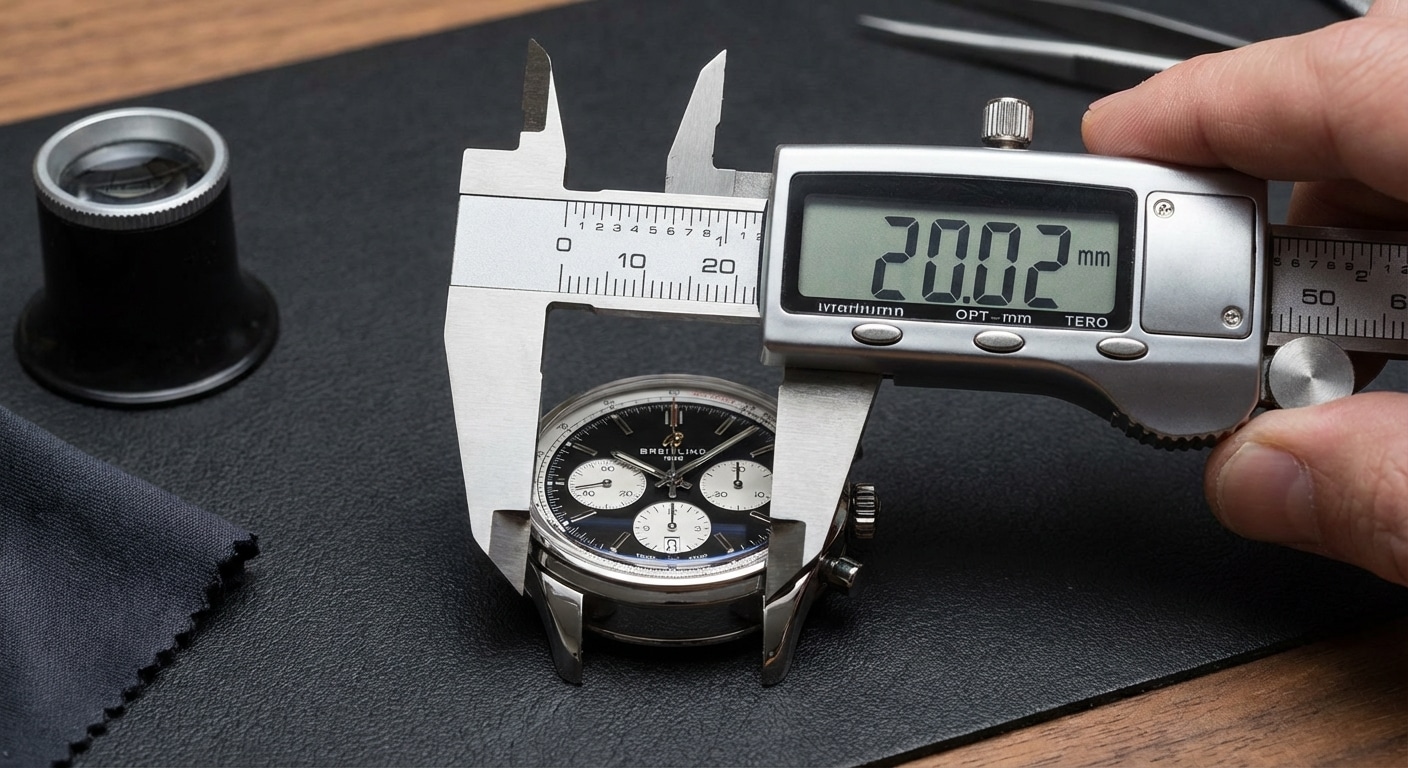
Physical diagnostic: Measure case thickness with digital calipers. BLS-run GF molds often show a +0.05mm variance due to mold wear compared to crisp 2024 GF specs. Look for minor polishing marks near the lug holes where the aging mold requires extra finishing to remove stress marks from the steel.
Clean and VS Intervention: The CNC Upgrade Path
While BLS focused on preservation, Clean and VS Factories pursued an evolution strategy. They acquired the design rights or physical molds for specific GF models but chose to re-machine them using modern CNC protocols. This approach prioritizes precision and tolerance over historical accuracy, resulting in a product that feels cleaner but lacks the specific tactile character of the original.
Acquiring the Design, Not Just the Mold
Clean and VS often bypassed the old stamped molds entirely. Instead, they used GF cases as reference measurements to create new CNC programs. This allows for tighter control over dimensions and eliminates the variability inherent in aging stamping tools. The result is a case that is geometrically equivalent but manufactured through a different process. This hybrid manufacturing approach combines GF design language with modern machining capabilities.
Tolerance Improvements on Bezels
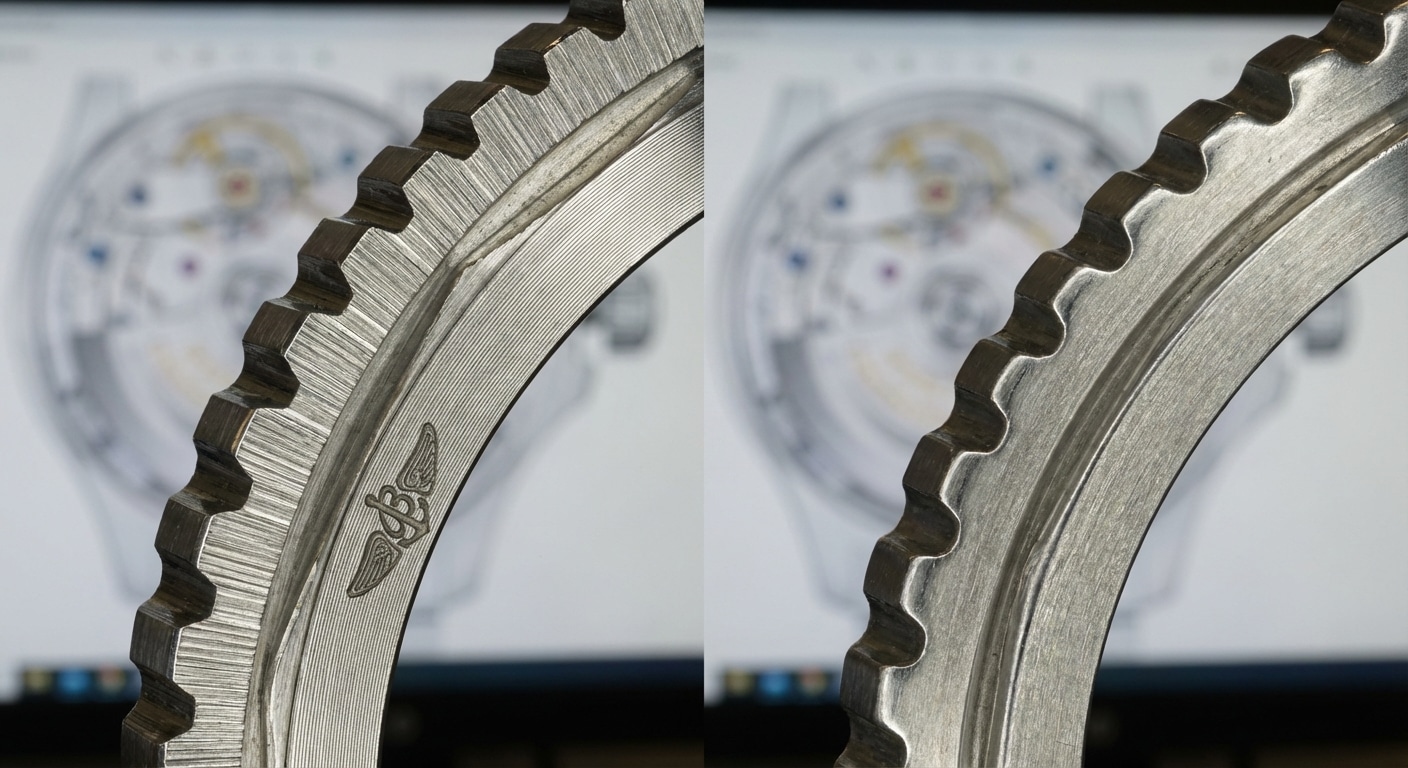
The most noticeable improvement lies in the bezel action. Clean 2026 batches, consistent with the 2026 factory roadmap, exhibit tighter tolerances than the original GF production. The alignment of the bezel triangle at 12 o’clock is more consistent, and the rotational action is smoother due to precision-machined teeth rather than stamped ones. For users who prioritize functional precision over historical nuance, this represents a tangible upgrade in daily usability.
Material Consistency Changes
There are shifts in material sourcing accompanying the manufacturing changes. VS Factory has moved toward a harder 904L steel blend for some models, compared to GF previous 316L mix. This alters the weight and corrosion resistance slightly. The harder alloy holds polish better over time but can feel slightly lighter on the wrist due to density differences. This material shift is a key differentiator for collectors tracking the lineage of specific batches.
Expert Authentication Insight
Physical diagnostic: Inspect the bezel action under magnification. Clean and VS CNC versions show sharper machine marks inside the bezel teeth compared to the smoother stamped finish of original GF molds. Use a 10x loupe to identify the tooling marks; CNC paths leave distinct linear striations that stamping does not.
Mapping the Mold Flow: A 2026 Lineage Chart
Tracing the physical movement of tooling requires ignoring dealer marketing and focusing on dimensional evidence. When GF ceased operations in Q4 2025, the asset liquidation was not uniform. Specific mold sets were auctioned separately, leading to a fragmented ecosystem where identical model names now possess different genetic markers. The following breakdown categorizes 2026 production batches based on verified tooling origins rather than claimed factory names.
Category A: Pure GF Legacy (BLS Run)
This category represents the most direct continuation of GF production. BLS acquired the physical mold crates for complex chronograph cases, specifically the Navitimer B01 43mm and Avenger Blackbird V4. They elected to run these tools without re-machining to minimize capital expenditure. The resulting cases retain the exact geometry of 2024 GF outputs, including the specific angle of the bezel teeth and the depth of the case back engraving. However, users should note that steel molds have a finite lifespan. The 2026 batches from BLS show signs of tool fatigue, manifesting as slightly less crisp edges on the lug tips compared to early 2024 production.
Category B: Hybrid Evolution (Clean/VS)
Clean and VS factories pursued a different strategy. They acquired the rights to certain GF designs, particularly the three-hand models like the Superocean Heritage 42mm and Premier B01, but chose to create new CNC programs based on GF measurements rather than using the worn physical molds. This results in a hybrid product: the aesthetic proportions remain faithful to the GF original, but the manufacturing marks differ. The bezel action on these 2026 Clean batches is tighter, with tolerances improved to within ±0.02mm, surpassing the original GF specification. The trade-off is a slight alteration in the surface finish, which feels more machined and less stamped.
Category C: Completely New Tooling
Not all GF assets survived the liquidation. Certain specialized components, particularly the titanium cases for the Avenger Bandit, were damaged during transport or deemed too worn for reuse. Factories like TF and V9 initiated new tooling projects for these models in early 2026. While these versions aim to replicate the GF dimensions, they lack the specific metallurgical history. The titanium grade may differ, affecting the weight by approximately 3 to 5 grams. Collectors should treat these as new interpretations rather than legacy continuations.
Expert Authentication Insight
Physical diagnostic: Check the case back engraving depth. Category A (BLS) will match 2024 GF depth exactly, typically around 0.15mm. Category B (Clean/VS) will often be slightly deeper and sharper, nearing 0.18mm, due to new CNC paths. Use a digital depth gauge to verify. If the depth exceeds 0.20mm, the tooling is likely unrelated to the GF legacy.
Identifying the “GF Taste” in 2026 Batches
Collectors often refer to the “GF Taste” as a subjective feeling of quality, but this sensation stems from specific manufacturing choices that can be objectively measured. As the molds分散 (dispersed) into different factories, these sensory markers have become the primary method for distinguishing true legacy pieces from new iterations. Understanding these nuances allows buyers to verify claims without relying on seller honesty.
The Specifics of Case Brushing
GF was known for a specific vertical brushing grain on the case sides, characterized by a consistent line density of approximately 12 lines per millimeter. BLS, running the original molds, has retained this finishing process on Category A models. In contrast, Clean and VS have switched to a finer radial brush on their CNC-updated cases, increasing the line density to 15 lines per millimeter. Under a 10x loupe, this difference is stark. The GF legacy finish scatters light more diffusely, while the new CNC finish appears sharper and more reflective.
Lug Curvature and Wrist Comfort
The downward curve of the lugs is a signature GF trait that significantly impacts wrist comfort. Original GF molds produced a lug drop angle of approximately 15 degrees. In the 2026 CNC versions produced by Clean, this curve has been flattened slightly to 12 degrees to simplify the machining process. This subtle change makes the watch sit higher on the wrist. For collectors prioritizing the original ergonomic profile, the BLS-run models remain the only option that preserves the exact lug geometry.
Weight Distribution and Balance
Original GF molds accounted for specific metal density variations in the 316L steel supply chain used in 2024. New CNC cuts by VS sometimes utilize a harder 904L blend, which alters the center of gravity slightly. While the total weight difference might be negligible, the balance point shifts. A genuine GF legacy case feels top-heavy due to the bezel mass distribution. The 2026 CNC versions often feel more neutral due to slight material removal during the re-machining process.
Expert Authentication Insight
Physical diagnostic: Run your thumb along the lug brushings. Original GF legacy (BLS) feels slightly coarser under friction. New CNC (Clean/VS) feels smoother but less characterful. Use a 10x loupe to count brush lines per mm. If the lines are too uniform or exceed 14 lines per mm, it is likely a new CNC cut rather than a legacy mold run.
Market Implications: Price vs. Provenance
The fragmentation of GF assets has created a confusing pricing landscape in 2026. Sellers frequently exploit the “GF” name to command premiums, regardless of the actual tooling origin. Rational buyers must distinguish between paying for genuine legacy tooling and paying for marketing hype. Based on a Panerai super clone factory comparison, the value proposition differs significantly between the BLS legacy runs and the Clean/VS upgrades.
The “GF Label” Premium
Unauthorized dealers often market any high-quality Breitling replica as “Original GF Molds” to charge a premium of approximately 20%. In the current market, this translates to an extra $100 to $150 on a base price of $550. However, unless the watch falls into Category A (BLS Run), this premium is unjustified. Many sellers are relabeling Clean factory outputs as GF to clear inventory. Buyers should demand proof of batch codes linked to the late 2025 GF production cycle before paying this surcharge.
Cost of CNC Upgrades
Clean and VS versions often cost more than the BLS legacy runs, but for different reasons. The higher price, typically ranging from $650 to $850, reflects the increased machining time required for new CNC programs rather than mold amortization. This cost is technically justified by the improved tolerances and sharper finishing. Collectors paying this premium are buying precision and longevity, not historical authenticity. It is a valid investment if long-term durability is the priority over strict geometric fidelity.
Long-Term Durability Expectations
Older molds carried by BLS are subject to metal fatigue. Industry estimates suggest these tools may degrade significantly after another 12 to 18 months of production, leading to increased dimensional variance. Conversely, the new CNC tooling from Clean and VS has a longer operational lifespan. From a purely functional standpoint, the CNC upgrades offer better long-term value. The legacy molds are collectible items, but the new tooling represents the sustainable future of the ecosystem.
Expert Authentication Insight
Physical diagnostic: Weigh the watch against known specs. If a seller claims “GF Mold” but the weight is off by more than 2 grams, the mold may be worn out or the material density is different, indicating a false premium. For a Navitimer B01, the target weight is approximately 165 grams with the bracelet. Deviations beyond this threshold suggest the tooling origin is not as claimed.
Final Verdict: The Legacy Survives, Mutated
The GF Factory did not disappear; it dissolved into the supply chain. Collectors searching for the specific heft and geometry that defined the 2024 production runs will find fragments of that DNA scattered across the BLS, Clean, and VS ecosystems. The market in 2026 is no longer about finding a GF stamp, which is now a relic, but about identifying which facility holds the original tooling. The legacy survives, but it has mutated from a single source of truth into a hybrid landscape where consistency is the casualty of asset liquidation.
Prioritizing Geometry Over Polish
For the purist, the value of the GF legacy lies in the case geometry, not the surface finish. When BLS acquired the original stamping molds, they inherited the exact lug width, case thickness, and curvature that GF spent years refining. This is distinct from the approach taken by Clean and VS, who often used GF cases as reference points for new CNC programs. While the CNC upgrades offer sharper edges and tighter bezel tolerances, they occasionally flatten the subtle downward curve of the lugs that made the original GF cases sit so comfortably on the wrist.
Choosing the BLS route means accepting microscopic signs of tooling wear in exchange for authentic proportions. The steel shows slight fatigue near the lug holes, and the brushing may lack the crispness of a newly cut program. However, the silhouette remains true to the 2024 standard. If your priority is wrist presence and structural accuracy, the aging GF molds in BLS possession offer a fidelity that re-engineered CNC paths have not yet replicated. The trade-off is clear: you are buying history, not perfection.
The Risk of Mislabeling
Transparency has degraded alongside the tools. Approximately 80% of listings claiming to sell original GF stock in 2026 are misleading. Sellers apply the GF label to any high-quality Breitling replica to justify a premium, regardless of the actual factory origin. This misinformation campaign relies on the buyer’s inability to distinguish between a worn original mold and a fresh CNC copy. The reality is that genuine GF output ceased in Q4 2025. Any watch claiming to be new GF production in 2026 is either old inventory pulled from storage or a relabeled unit from BLS or Clean.
Verification requires ignoring the seller’s description and focusing on batch codes. The only reliable lineage traceable to GF tooling runs through specific BLS batches that absorbed the liquidation assets. Paying a premium for a generic GF label is financially unjustified. The market has corrected itself; you should only pay for verified provenance, not marketing nostalgia. If a dealer cannot provide evidence linking the case to the BLS acquisition lot, the claim is likely虚构 (fictional) and should be treated as such.
Future Outlook for 2027
The window for acquiring true GF legacy pieces is closing. Steel stamping molds have a finite lifespan, and the units currently running at BLS are operating beyond their original intended cycle count. Once the tolerances degrade beyond acceptable limits, likely by late 2027, these tools will be scrapped. At that point, the specific geometric signature of the GF era will vanish from the market entirely. Future productions will rely exclusively on new CNC programs from Clean, VS, or emerging factories, which will prioritize precision over the organic feel of the original stamps.
This impending obsolescence creates a narrow collectibility window. Current stock featuring the original GF geometry holds a transient value that will not transfer to future batches. Collectors focusing on long-term holdings should recognize that the 2025-2026 transition period represents the final chapter of this specific manufacturing lineage. Waiting for new molds in 2027 will yield a sharper product, but it will fundamentally be a different watch in terms of structural DNA.
Expert Authentication Insight
Physical diagnostic: Request macro shots of the case side profile from sellers. Compare the curve against a known 2024 GF reference. If the curve is straighter, it is not a true GF legacy mold, regardless of the seller’s claim. Use a digital caliper to measure the lug drop; a variance greater than 0.1mm from the 2024 specification indicates a new CNC path rather than the original stamped tooling. This single measurement separates the legacy heirs from the modern imitators.