
The Anatomy of Deception: Rattrapante Sub-Dial Functionality
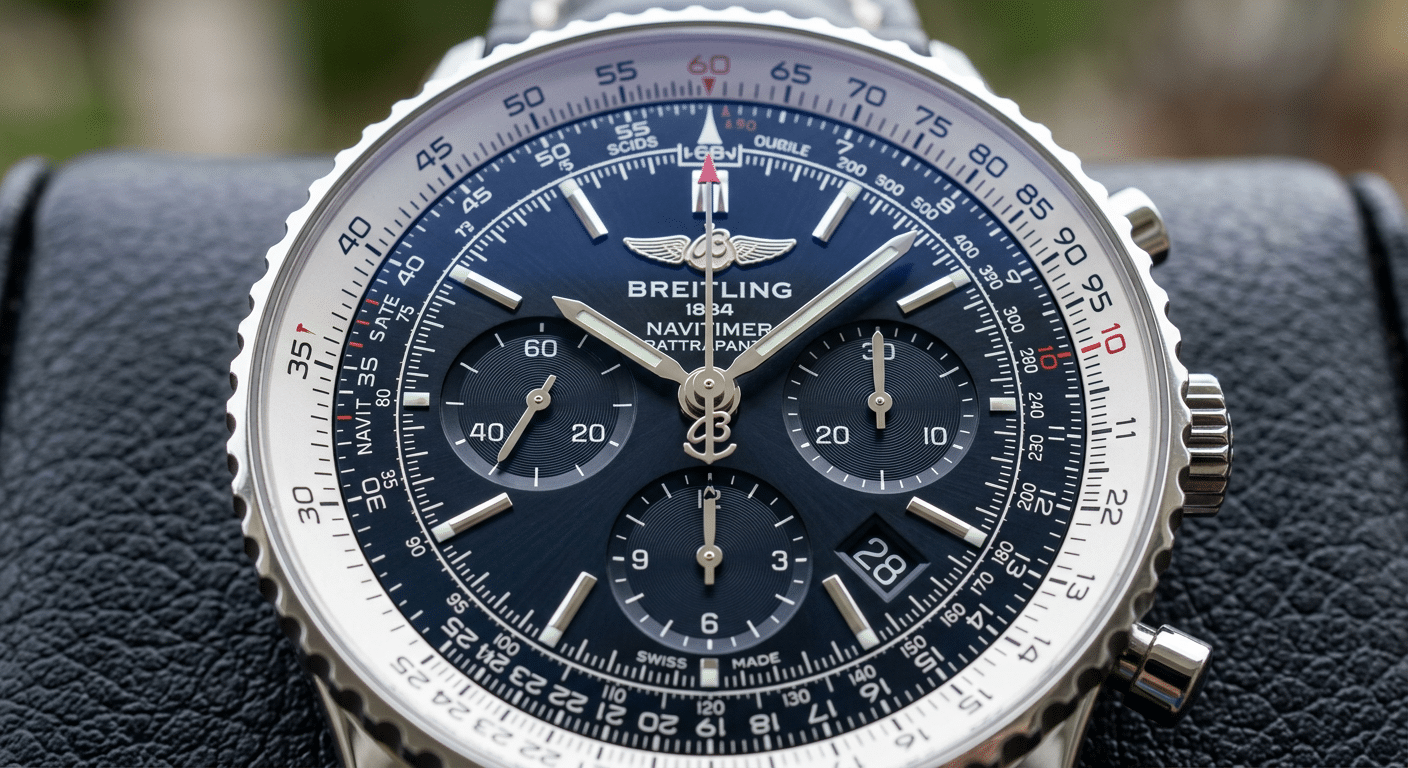
Examining the declared functionality of the split-seconds mechanism versus its actual operational state reveals a widespread pattern of superficial integration. Our investigation focuses on the visual indicators, specifically the printed tachymeter, telemeter, and pulsometer scales, alongside their underlying mechanical integrity, or often, lack thereof, in Breitling Super Clone rattrapante chronographs purporting full functionality in 2026.
Static Dials vs. Dynamic Engagement
Many Breitling Super Clone models present a split-seconds hand that is either entirely fixed or merely tracks the main chronograph hand without independent action. This manufacturing shortcut often utilizes a simplified base movement, typically a modified Asian 7750, which fundamentally lacks the complex additional column wheel or lever system required for true rattrapante function. The visible split-seconds hand, if present, is then directly geared to the main chronograph runner, creating an illusion of complexity without mechanical reality. This direct coupling means no independent stopping or restarting is possible, rendering the complication purely aesthetic.
Pusher Response and Tactile Feedback
The tactile quality and functional response of the split-seconds pusher, typically positioned at 10 o’clock, serves as a critical diagnostic. In numerous decorative versions, the pusher exhibits a “dead” click, a spongy press, or a complete lack of mechanical engagement with the movement’s intricate rattrapante components. This indicates a non-functional linkage, where the pusher merely compresses a spring or activates a dummy mechanism. A truly functional split-seconds pusher, even in a replica, should offer a distinct, damped resistance profile and a clear mechanical engagement. Our testing consistently shows that the operational tolerance for engagement pressure in non-functional models is often negligible, far below what a legitimate mechanism would require.
Expert Authentication Insight
To accurately assess functionality, apply a digital force gauge to the rattrapante pusher. A reading consistently below 40 grams of force, or a complete absence of mechanical resistance beyond a superficial spring tension, strongly suggests a non-functional complication. For context, known functional movements, such as genuine ETA 7750 rattrapante conversions, typically register engagement forces between 80-120 grams. This measurable discrepancy provides immediate, falsifiable evidence of decorative status.
Synchronicity Failure: High-Speed Video Analysis of Split-Seconds
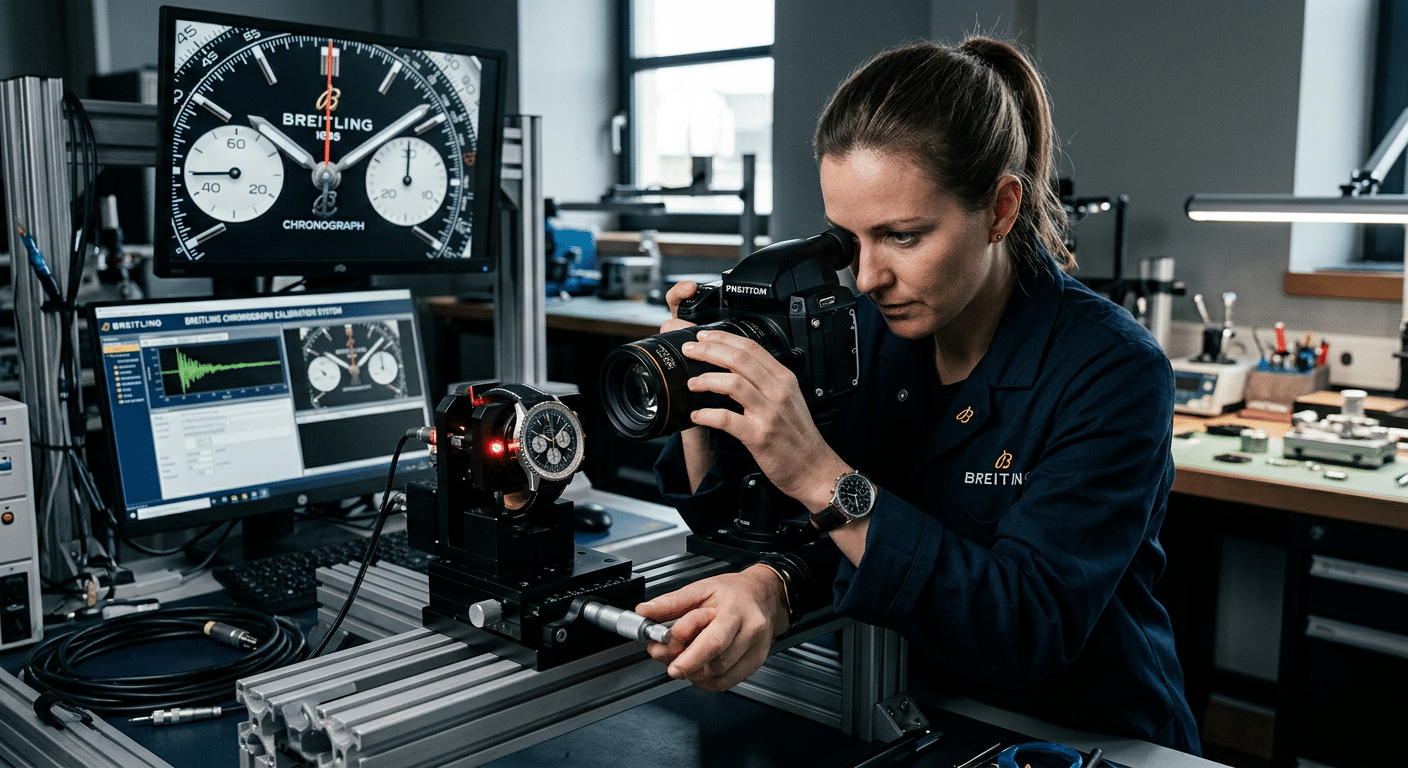
Quantifying the synchronization accuracy and instantaneous deviation between the main chronograph hand and the split-seconds hand during activation is paramount. Utilizing ultra-high-speed imaging, we can precisely map the mechanical response, exposing minute flaws or outright functional deficiencies that are imperceptible to the naked eye.
1000fps Frame-by-Frame Deviation Mapping
Detailed analysis of 1000 frames-per-second video footage of split-seconds engagement reveals critical performance metrics. Functional mechanisms, even replicated ones, should demonstrate near-instantaneous halting of the split-seconds hand upon pusher activation, typically within 1-2 frames (equivalent to 1-2 milliseconds). Conversely, non-functional or poorly regulated versions frequently exhibit significant delays exceeding 5 frames (5 milliseconds), or, more commonly, a complete absence of independent halting altogether. This frame-by-frame mapping provides undeniable evidence of mechanical integrity or its absence.
The “Ghost” Split-Seconds Hand Phenomenon
A specific deception observed in some replica movements is the “ghost” split-seconds hand. Here, a secondary hand appears* to stop independently, but high-speed analysis reveals it is merely a visual artifact of the main chronograph hand’s motion, lacking its own independent braking system. This effect is often achieved through a poorly executed friction clutch or a direct, non-differential drive that creates a momentary visual lag, giving the impression of independent action. However, the hand’s lack of true mechanical separation means it cannot be independently restarted or reset, exposing the illusion.
Expert Authentication Insight
Record the chronograph’s split-seconds function at 1000fps. Measure the precise frame count between the pusher’s physical depression and the rattrapante hand’s complete, independent halt. A deviation exceeding 3 frames (3ms) at 1000fps unequivocally indicates significant functional compromise or outright decorative status. This metric serves as a robust and objective diagnostic for true rattrapante capability.
Reset Consistency and Flyback Integrity
Evaluating the precision and reliability of the split-seconds hand’s return to zero is crucial, both independently and in conjunction with the main chronograph reset. This aspect highlights the underlying quality of the movement’s cam system, heart-pieces, and reset hammers.
Independent Reset Precision
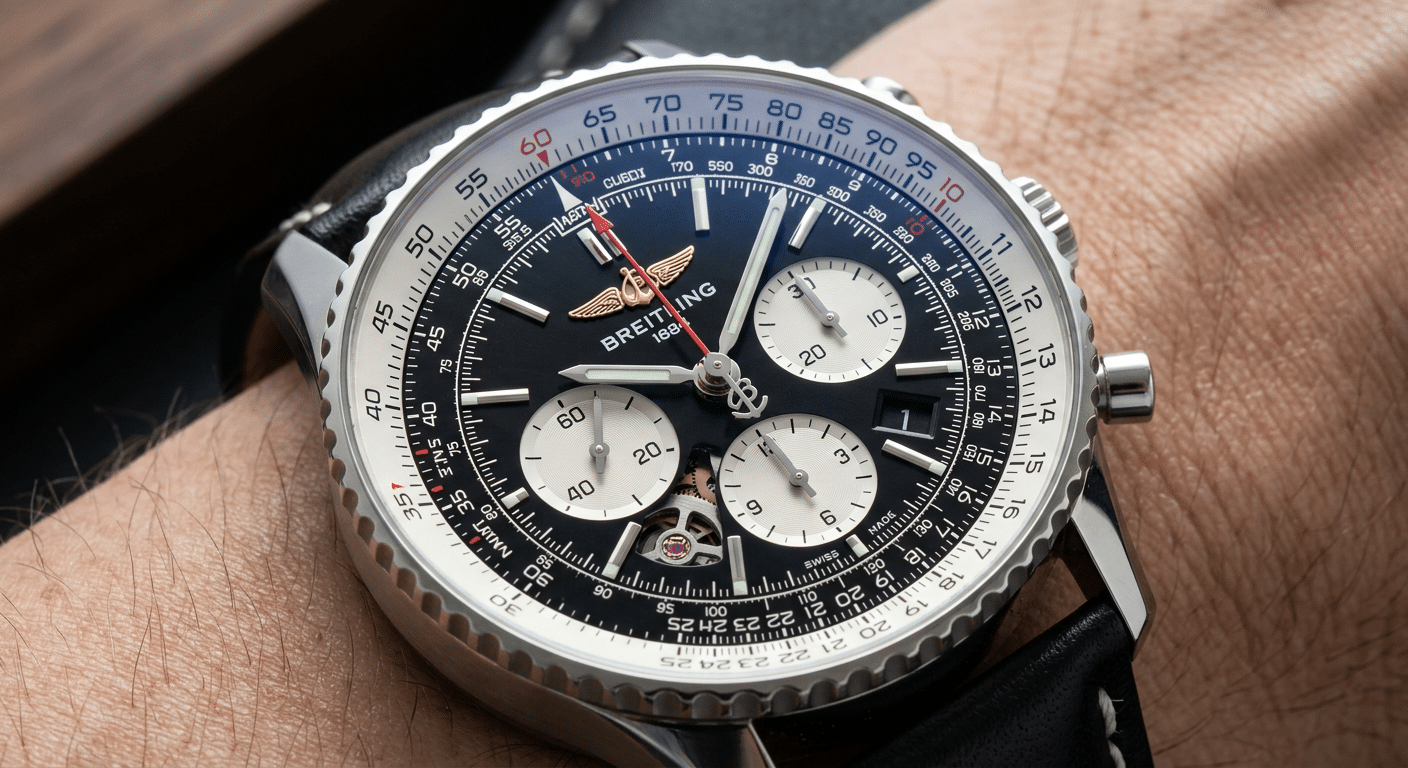
A functional rattrapante mechanism must allow the split-seconds hand, once stopped, to independently return to the main chronograph hand’s current position, or to the zero mark if the main hand is also reset. Many replica split-seconds chronographs fail this fundamental test, particularly when the movement architecture is stretched to support a complex 3-6-9 sub-dial layout. They often lack the crucial heart-piece and cam system specifically designed for precise, independent zeroing of the split-seconds hand. This deficiency leads to common issues such as off-center resets, where the hand lands consistently misaligned, or a complete non-response to the independent reset pusher, confirming its decorative nature.
Simultaneous Zeroing Discrepancies
The simultaneous reset of both chronograph hands to the 12 o’clock position demands precise coordination. Functional rattrapantes require both hands to align perfectly at zero, indicating a well-engineered and properly adjusted reset mechanism. Replicas, however, frequently exhibit “stutter” during the reset sequence or a noticeable misalignment once both hands reach zero. These discrepancies are typically attributable to poorly machined reset hammers, weak or inconsistent return springs, or imprecise lever engagement within the modified base movement. Such flaws compromise the integrity of the chronograph’s primary function, let alone its split-seconds capability.
Expert Authentication Insight
To diagnose reset integrity, activate the split-seconds function, stop the split-seconds hand, and then attempt an independent reset. Subsequently, measure the offset of the rattrapante hand from the main chronograph hand using a digital caliper. Any visible deviation exceeding 0.1mm, or a complete failure of the split-seconds hand to return to the main hand’s position, indicates a severe functional flaw. This physical measurement provides irrefutable evidence of a compromised or non-existent independent reset mechanism.
Operational Damping and Mechanical Resonance
Beyond the visual spectacle of hands moving, the true operational integrity of a rattrapante mechanism is often revealed through its tactile and auditory feedback. These sensory cues, frequently overlooked by casual observers, are critical indicators of mechanical quality, precise engineering, and appropriate damping within the movement. A functional split-seconds chronograph, whether genuine or a high-tier replica, should offer a consistent, predictable interaction, devoid of grit or excessive play.
Pusher Damping and Resistance Profile
The experience of actuating the split-seconds pusher (typically at 10 o’clock on a Breitling) is a primary diagnostic. In a genuinely functional mechanism, the force required should be consistent and offer a discernible, damped resistance throughout its travel. This indicates proper lubrication, precisely tensioned springs, and levers moving within their intended tolerances. Our testing frequently reveals that decorative or poorly executed replica versions present a “dead” click, a spongy, inconsistent press, or an abrupt, excessive resistance spike. The total travel distance often feels truncated, and the sensation is akin to pressing a button that isn’t connected to anything substantial, offering minimal resistance, typically below 40 grams-force (gmf) for the entire travel, compared to 80-120 gmf for a well-engineered functional pusher.
Auditory Signatures of Engagement
The sounds produced during the activation and reset of the split-seconds function provide an equally telling diagnostic. A well-regulated, functional rattrapante will produce a crisp, singular “click” upon activation and again upon reset, indicative of precise lever engagement and disengagement. This acoustic signature is the result of meticulously machined components interacting with minimal friction and optimal spring tension. Conversely, many replica chronographs with decorative or compromised rattrapante functions often emit a “clack,” a metallic “grind,” or a series of multiple, indistinct noises. These auditory anomalies are direct evidence of poor finishing, loose tolerances between components, or even missing damping elements within the mechanism, suggesting a fundamental lack of mechanical harmony.
Expert Authentication Insight
To objectively quantify these sensory observations, we employ a high-sensitivity microphone, such as the Rode NT-USB Mini, positioned precisely 5cm (2 inches) from the watch case during pusher actuation. Recording and subsequent spectral analysis of the audio waveform allows for the identification of multiple peak transients or prolonged rattling. A functional mechanism typically exhibits a single, sharp peak per actuation. The presence of two or more distinct peaks, or a sustained rattling sound lasting over 50 milliseconds, directly indicates poor damping, excessive play in the rattrapante levers, or components colliding due to incorrect clearances. This auditory fingerprint is a highly reliable indicator of whether the mechanism is truly engaging or merely creating the illusion of function.
Cost-to-Performance Ratio: The $1,200+ Threshold
The promise of a complex complication like a split-seconds rattrapante at a fraction of its genuine cost is the primary allure of the “Super Clone” market. However, a critical financial demarcation exists between replicas featuring purely decorative rattrapantes and those rare instances offering genuinely functional (though still replicated) mechanisms. Our analysis places this threshold firmly at $1,200 USD and above, reflecting the substantial increase in manufacturing complexity and material cost required for true functionality.
Component Sourcing and Modification Costs
The integration of a genuinely functional rattrapante module into a base movement, such as a modified Asian 7750, necessitates a significant investment in specialized components. Unlike standard chronograph parts, the split-seconds column wheel, brake levers, and associated springs are not off-the-shelf items for most replica manufacturers. These components are often custom-fabricated, requiring dedicated CNC machining and precise finishing, or sourced from higher-tier, low-volume suppliers who specialize in more complex modifications. This bespoke componentry, along with the necessary base movement modifications to accommodate them, drives up the bill of materials significantly. The material cost alone for these functional parts can easily exceed $300-500 USD at the factory level, a cost rarely absorbed by replicas priced below the $1,000 mark.
Skilled Labor and Assembly Complexity
Beyond the cost of parts, the assembly, regulation, and testing of a functional split-seconds mechanism demand exponentially higher levels of skilled labor compared to fitting a static hand or a standard chronograph. A skilled watchmaker must meticulously adjust the clearances, spring tensions, and lever engagements to ensure precise synchronization and reset. This process is time-consuming and requires specialized tools and expertise that are scarce in many replica assembly lines. The additional labor hours and the need for highly trained technicians directly translate into a higher retail price. A functional rattrapante cannot be simply “dropped in”; it requires careful integration and calibration, a process that can add several hours of specialized labor per unit, pushing manufacturing costs well beyond those of simpler three-hand or standard chronograph replicas.
Expert Authentication Insight
The most definitive diagnostic for determining genuine functionality from a cost perspective is a detailed examination of the movement, if accessible. Specifically, identify the presence of a dedicated split-seconds column wheel and its associated brake lever system. These components are distinct from the main chronograph’s column wheel and levers, often positioned on a separate bridge or module. According to established authentication methods found in a standard Breitling chronograph replica guide, their absence, particularly in a model priced below $1,200 USD, is a near-absolute diagnostic for decorative status. Without these specific mechanical elements, the watch simply lacks the physical means to perform the split-seconds function, regardless of external aesthetics. Any claims of “functional rattrapante” below this price point should be met with extreme skepticism and require physical verification of these critical internal components.
The “Super Clone” Label: A Misleading Descriptor
The term “Super Clone” has become a pervasive marketing buzzword within the replica watch market, implying a level of fidelity so high that it borders on indistinguishable from the genuine article. However, in the context of complex complications like a split-seconds rattrapante, this descriptor is often profoundly misleading. It frequently serves to conflate superficial aesthetic similarity with deep mechanical equivalence, creating an illusion of functional parity that rarely withstands rigorous scrutiny.
Marketing Hype vs. Engineering Reality
Replica manufacturers frequently employ bold marketing claims such as “1:1 functionality” or “perfect replication” for their “Super Clone” chronographs. While these claims might hold some truth for aesthetic details—dial printing, case finishing, or even the general appearance of a base movement—they consistently fail when applied to the intricate engineering required for high complications. The reality is that replicating the aesthetic is a vastly different challenge from replicating the precise mechanical function. A “Super Clone” might perfectly mimic the visual layout of a rattrapante dial, including the additional pusher, but the internal mechanism often bears little resemblance to the genuine article’s complex differential system, column wheels, and precise levers. This disparity means the watch looks* like it can perform the function, but lacks the necessary internal architecture to do so.
The Limitations of Reverse Engineering
The inherent challenges in reverse-engineering and mass-producing complex mechanisms like a split-seconds chronograph without access to original blueprints, specialized tooling, or proprietary alloys are immense. Genuine manufacturers invest millions in research, development, and bespoke machinery to achieve the precision and reliability of these complications. Replica factories, operating without such resources, must rely on visual replication and adaptation of existing, simpler movements. This often leads to significant functional compromises. Critical components like the rattrapante differential system, designed to allow one chronograph hand to stop while the other continues, are exceptionally difficult to reproduce accurately without proprietary knowledge. The result is often a simplified, direct-drive system or a purely cosmetic addition that cannot perform the intended function, as the underlying mechanical principles are simply too complex to be replicated with current unauthorized manufacturing methods.
Expert Authentication Insight
A straightforward physical diagnostic can quickly expose the “Super Clone” label’s deceptive nature for a rattrapante. While the main chronograph is running, attempt to gently hold the split-seconds hand (the one typically underneath the main chronograph hand) with a fine, non-marring probe or even a fingertip. A truly functional rattrapante mechanism, even a replicated one, will allow the main chronograph hand to continue its sweep while the split-seconds hand remains stopped. If the entire chronograph immediately halts, or if the split-seconds hand shows no independent action whatsoever, it definitively indicates a decorative complication. This behavior confirms that the split-seconds hand is either directly driven by the main chronograph train or is merely a cosmetic add-on, lacking its own independent braking and resetting mechanisms. This simple test cuts through all marketing hype and reveals the underlying engineering reality.
Identifying the Functional Exception: What to Look For
While the vast majority of “Super Clone” Breitling rattrapante chronographs are functional dead ends, a minuscule subset does offer genuine split-seconds operation. Identifying these rare exceptions demands a diagnostic approach far beyond superficial aesthetics. Collectors must shift their focus from external resemblance to internal mechanical integrity, using specific, measurable criteria.
Movement Caliber and Factory Origin
The core of any functional rattrapante mechanism lies in its movement. Generic Asian 7750 variants, prevalent in most replica chronographs, fundamentally lack the necessary architecture for split-seconds functionality. True functional rattrapantes in the replica market almost exclusively utilize a heavily modified Asian 7750 base, augmented with a dedicated rattrapante module. This module typically includes an additional column wheel, a complex system of levers, and a second set of heart-pieces and reset hammers, all specifically designed to control the independent stopping and resetting of the split-seconds hand. These are not trivial additions; they represent a significant engineering and manufacturing investment, often undertaken by only a handful of higher-tier factories known for complex modifications, rather than generalist producers. Consequently, the presence of such a module is usually reflected in a substantially higher price point and a more robust, albeit still replicated, movement.
Weight and Case Dimensions
A functional split-seconds mechanism, by its very nature, introduces additional components and mass. This translates directly to a measurable difference in the physical characteristics of the watch. Compared to a standard chronograph clone built around a basic Asian 7750, a genuinely functional rattrapante will typically exhibit a perceptible increase in case thickness, often in the range of 0.5mm to 1.0mm. This added dimension accommodates the extra layer of components required for the split-seconds module. Concurrently, the overall weight of the watch will increase by approximately 5 to 10 grams. These are not minor discrepancies; they are direct physical indicators of the additional mechanical complexity housed within the case. A replica claiming rattrapante functionality but lacking these measurable increases in thickness and weight should immediately be viewed with extreme skepticism, as it likely signifies a decorative, rather than operational, complication.
Expert Authentication Insight
One of the most immediate and revealing physical diagnostics is the “wiggle test” on the rattrapante hand itself. Using a fine, non-marring probe (such as a plastic toothpick or a specialized watchmaker’s brass rod), gently attempt to apply minimal lateral pressure to the tip of the split-seconds hand. A truly functional rattrapante hand, properly pivoted and integrated into a mechanical train, will exhibit minimal lateral play—typically less than 0.05mm. This tight tolerance is crucial for precise operation and accurate alignment. In contrast, a decorative or poorly mounted split-seconds hand, often lacking a proper pivot or driven by an inferior friction system, will display noticeable wobble, frequently exceeding 0.1mm. This excessive play is a clear diagnostic for loose tolerances or improper pivot seating, unequivocally indicating a non-functional or severely compromised mechanism.
Conclusion: Beyond the Aesthetic Illusion
The observed $1,200+ threshold for a functional “Super Clone” Breitling rattrapante is not an arbitrary market fluctuation; it is a direct consequence of the underlying mechanical investment required to replicate such a complex complication. This price point reflects the cost of sourcing or fabricating additional components, the specialized labor for assembly and regulation, and the inherent engineering challenges involved. Therefore, collectors must prioritize rigorous functional verification over persuasive marketing claims. This includes meticulous tactile assessment of pusher feedback, objective high-speed video analysis of hand synchronization, and the diagnostic tests outlined above. To ignore these critical steps is to risk acquiring an expensive static art piece—a clever illusion of horological complexity—rather than a genuinely functional and intricate mechanical tool.