
The Dress Watch Dilemma & Panerai’s Slim Solution
Panerai’s design language is undeniable: bold, distinctive, and instantly recognizable. But for years, that very identity has clashed with the subtle demands of formal wear. The brand’s signature robust cases, born from military utility, rarely played nice with a tailored shirt cuff. The Luminor Due series, and specifically its 40mm variant, emerged as Panerai’s direct answer to this friction. It promised a more refined, cuff-compatible experience without abandoning the core aesthetic. The real question for us, the replica enthusiasts, is whether a “super clone” 40mm Luminor Due’s lug-to-lug dimensions can genuinely deliver on that promise of slim, dress-appropriate elegance.
The Challenge of the Modern Dress Watch
The modern watch landscape is dominated by larger, sports-oriented timepieces. While a 44mm diver might look great with casual wear, integrating it into professional or formal attire often becomes a frustrating exercise. The primary culprits are excessive thickness and diameter, leading to two critical issues: shirt cuff clearance and visual balance. A watch that constantly snags on a cuff, or one that visually overwhelms the wrist, undermines the very elegance a dress watch is meant to convey. It’s not just about fitting under* the cuff; it’s about sliding *effortlessly* under it, disappearing when it should, and emerging gracefully when called upon.
Panerai’s Response: The Luminor Due Philosophy
Panerai understood this dilemma. Their solution wasn’t to abandon the Luminor, but to reimagine it. The Luminor Due series was engineered from the ground up to be significantly thinner and more refined than its predecessors. This wasn’t achieved by simply shrinking existing designs; it involved a deliberate focus on case geometry and movement selection. Panerai opted for slimmer in-house movements and redesigned the case profile, reducing the mid-case height and refining the bezel, all while retaining the iconic cushion shape and crown guard. The goal was to offer the Panerai aesthetic without the traditional bulk, making it a viable option for those who previously dismissed the brand for formal occasions.
Why 40mm Matters for Dress Wear
For a dress watch, size is paramount, and 40mm hits a sweet spot for a wide range of wrists. Specifically, for average to smaller wrist sizes, a 40mm diameter provides optimal comfort and proportionality. It avoids the “dinner plate” effect that larger watches can create, allowing the watch to integrate seamlessly with the wrist rather than dominating it. This diameter, combined with a carefully considered lug-to-lug distance, ensures the watch sits well, doesn’t overhang, and maintains a classic, understated presence. It’s the critical first step in making a Panerai-inspired design truly work as a dress piece.
Expert Authentication Insight
To really test the dress watch credentials of a 40mm Luminor Due replica, a quick physical diagnostic is essential. First, slip on a standard, well-fitted dress shirt. Place the replica on your wrist, then pull the cuff down naturally. Observe the clearance: does it slide freely, or does it snag? For a true “slim” feel, you should be aiming for a total case height, measured from the center of the caseback to the top of the crystal, that is comfortably under 11mm—ideally around 10.5mm or less. Use a digital caliper for this measurement. If it’s pushing 12mm or more, you’re likely dealing with a replica that missed the mark on slimness, regardless of its “Due” designation.
Engineering the “Slim Super Clone”: Case Dimensions
The success of a 40mm Luminor Due replica as a dress watch hinges entirely on its dimensional accuracy. This isn’t just about the diameter; it’s a detailed breakdown of thickness, lug-to-lug, and the overall case profile. These are the critical metrics that determine whether a replica truly captures the “slim” essence of the Due or merely presents a downsized version of a bulky original. Replicating these precisely is a manufacturing challenge, and where super clone factories distinguish themselves.
The Critical Thickness Advantage of the 40mm Luminor Due Replica
The Luminor Due’s defining characteristic is its reduced thickness. For replica factories, achieving this means more than just shaving a millimeter off here and there. It often involves engineering thinner mid-cases, which requires precise machining and careful material selection to maintain structural integrity. Specific crystal mounting techniques are also crucial; a poorly integrated crystal can add unnecessary height, negating other efforts. Super clone factories like VS Factory, known for their P.4000 clone movements, have pushed the boundaries here, achieving case thicknesses as low as 10.8mm for models like the PAM00674 replica, remarkably close to the genuine’s 10.3mm. This is where the replica truly earns its “slim” designation.
Lug-to-Lug: The Unsung Hero of Fit
While case diameter gets a lot of attention, the lug-to-lug measurement is arguably the most critical dimension for how a watch truly wears, especially for a dress watch. Accurate lug-to-lug measurements, combined with the correct curvature of the lugs, ensure the watch sits well on the wrist without excessive overhang. For a 40mm Luminor Due, a lug-to-lug of around 48.5mm (as seen on genuine models like the PAM01274) is ideal. If a replica stretches beyond this, or if its lugs are too straight, it will compromise the watch’s ability to conform to the wrist, creating an awkward, ill-fitting aesthetic that instantly disqualifies it as a true dress watch.
Case Geometry and Wrist Contour
Beyond raw numbers, the subtle curves and angles of the 40mm Luminor Due’s case sides and caseback play a significant role in ergonomic comfort and visual slimness. A genuine Due caseback is often slightly domed or contoured to sit flush against the wrist, distributing weight evenly and reducing perceived height. The precision required to replicate these nuances—the crispness of the bezel edge, the gentle taper of the mid-case, and the seamless integration of the crown guard—is immense. When executed correctly, these details contribute to a watch that not only looks slim but feels naturally integrated with the wrist, making it comfortable for all-day wear under a cuff.
Expert Authentication Insight
Grab your digital calipers. This is where the rubber meets the road. Measure the case thickness at its thickest point (typically across the center, including the crystal). Then, measure the lug-to-lug distance from the very tip of one lug to the other. Compare these figures directly against published genuine 40mm Luminor Due specifications. For instance, a genuine PAM01274 has a stated thickness of 11.5mm and a lug-to-lug of 48.5mm. If your replica comes in significantly thicker—say, 12.5mm or more—or if the lug-to-lug is disproportionately long, you’ve identified a key flaw that will impact its dress watch compatibility. Don’t rely on eyeball estimates; precise measurements are non-negotiable here.
Movement Integration: Powering Thinness in Replicas
The movement inside a watch is often overlooked when discussing external aesthetics, but for the Luminor Due, it’s intrinsically linked to its defining characteristic: thinness. The choice of movement in a 40mm Luminor Due replica directly impacts its ability to achieve or compromise that desired slim profile. Understanding the nuances of large replica watch wearing experience is crucial, as this section dives into the manufacturing challenges and solutions involved in fitting a reliable, yet thin, engine into these super clones.
Gen Due Calibers: Designed for Thinness
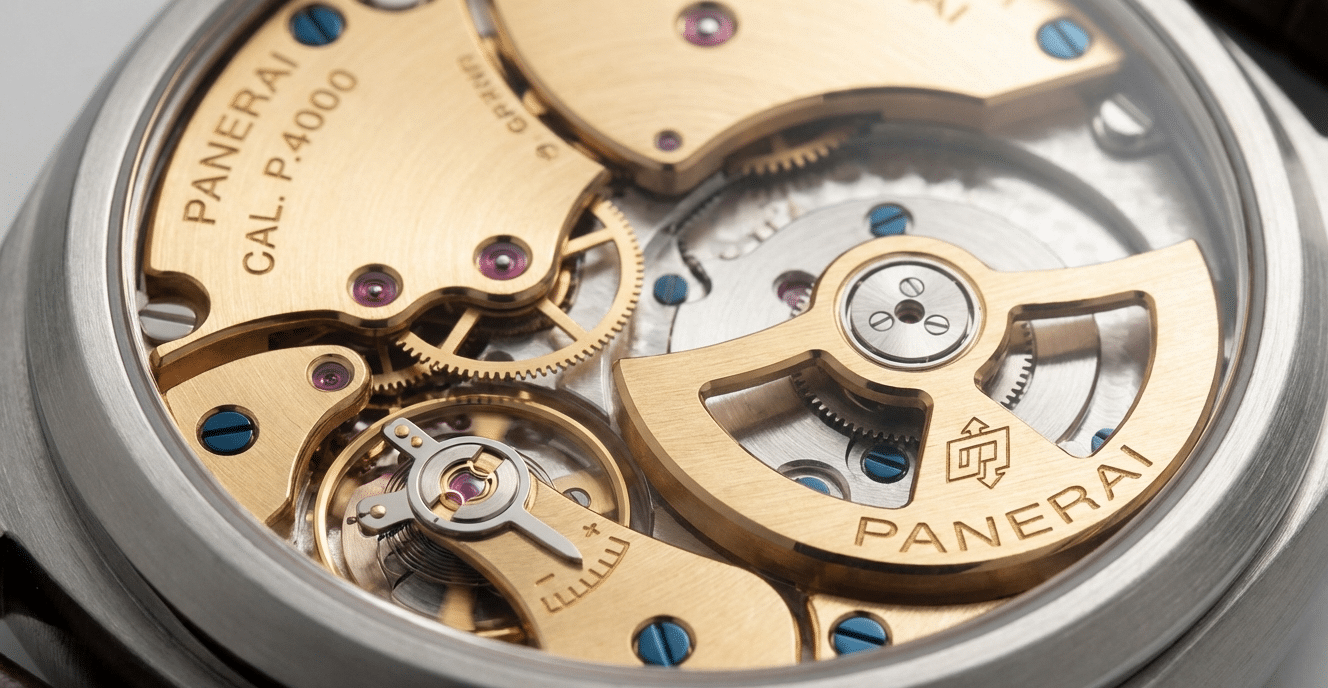
Panerai engineered specific movements for the Luminor Due series with thinness as a core design principle. Calibers like the P.900 (used in earlier Due models) and especially the P.4000 (a micro-rotor movement used in more recent 40mm Due references like the PAM01274) were built with reduced height. The P.4000, with its peripheral micro-rotor, allows for a significantly thinner case profile because the winding weight doesn’t sit on top of the movement, reducing overall stack height. These genuine calibers demonstrate Panerai’s commitment to creating a truly slim watch, setting a high bar for replica manufacturers.
Replica Movement Choices and Their Compromises
Achieving genuine-level thinness in a replica often means making calculated compromises. Early Panerai replicas frequently used modified ETA clones (like the 2824) which, while reliable, were simply too thick for a true Due profile. Super clone factories have since invested heavily in creating more accurate movements. VS Factory’s P.4000 clone, released around 2023 for Luminor Due models, is a prime example. This movement aims to replicate the visual appearance and functional characteristics of the genuine micro-rotor caliber, crucial for maintaining the slim case. However, even these advanced clones might have slightly different dimensions or component arrangements that can add a fraction of a millimeter to the case height compared to the genuine.
Automatic vs. Manual: The Thickness Trade-off
The fundamental difference between automatic and manual-wind movements has a direct impact on achievable watch thickness. Automatic movements require a rotor—the oscillating weight that winds the mainspring with wrist motion. This rotor adds a significant amount of height to the movement, and consequently, to the watch case. Manual-wind movements, which are wound by hand, eliminate the need for a rotor, allowing for a much thinner profile. While most 40mm Luminor Due models are automatic, the decision to go automatic inevitably means a slightly thicker watch than a comparable manual-wind model. Replica manufacturers must carefully balance the desire for an automatic movement (for convenience) with the imperative for thinness in a Due model.
Expert Authentication Insight
If your 40mm Luminor Due replica features a display caseback, your job is easier. Visually inspect the movement: how thick does the rotor appear? Does it look like a genuine P.4000 micro-rotor, or is it a more conventional full-sized rotor? Pay attention to the overall height of the movement within the case. If the caseback is closed, you’ll need a more tactile approach. Gently shake the watch and listen for rotor noise. A loud, clunky rotor might indicate a less refined or thicker automatic movement. A smooth, almost silent operation suggests a better-integrated, potentially thinner caliber. While not definitive, these observations can provide clues about the movement’s impact on the watch’s overall slimness.
Dial, Crystal & Finish: Visualizing the Dress Watch Aesthetic
Beyond raw dimensions, a dress watch’s true elegance often resides in the meticulous execution of its visible components. For the 40mm Luminor Due replica, the dial, crystal, and case finishing are where the illusion of slimness and refinement either holds or crumbles. This section investigates how factories replicate these critical details to achieve a convincing dress watch aesthetic.
Crystal Profile: The Illusion of Slimness
The sapphire crystal, though seemingly minor, plays a disproportionate role in a watch’s perceived bulk. A poorly replicated crystal can instantly undermine the Due’s slim intent. Genuine Luminor Due models often feature a subtly domed sapphire crystal that sits low within the bezel. Replicating this precisely is crucial. If a replica uses a crystal that is too flat, too highly domed, or protrudes excessively above the bezel, it adds visual height and can snag on shirt cuffs, negating the case’s slimness. The goal is a crystal that seamlessly integrates with the case profile, minimizing any “bubble” effect that would compromise its ability to slide under a cuff.
Dial Textures, Indices, and Hands: Subtle Elegance
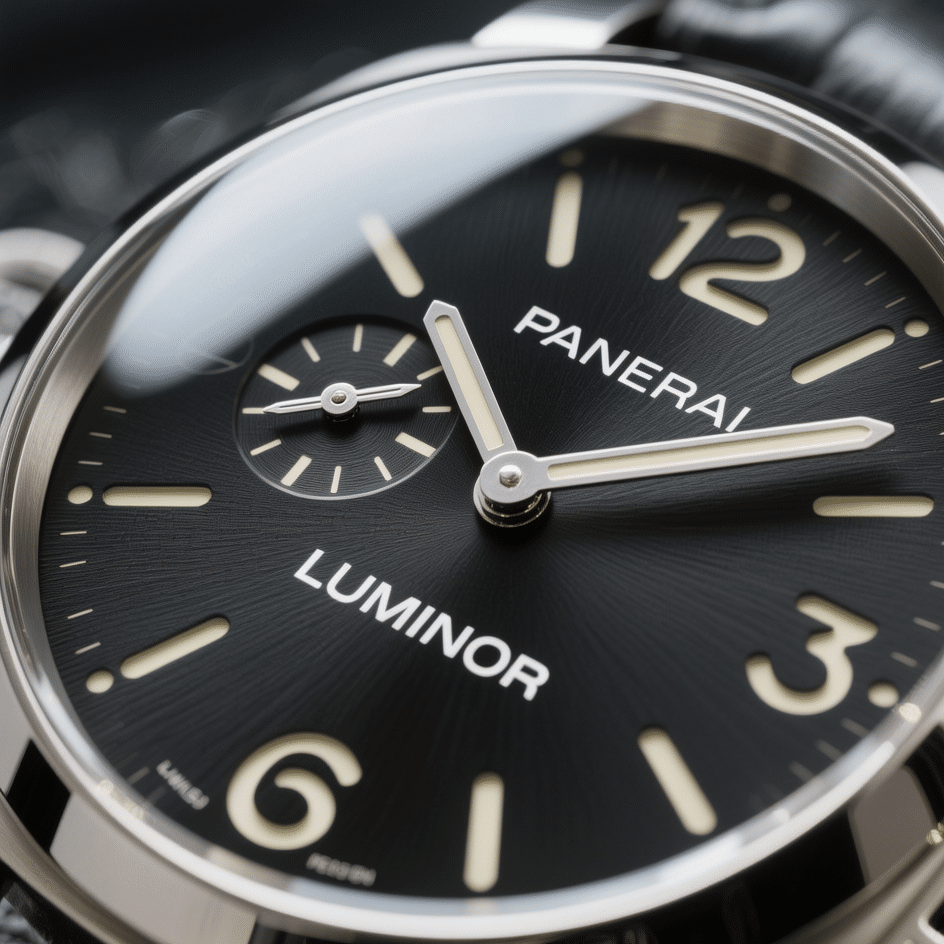
The Luminor Due’s dials are designed for understated sophistication, often featuring sunburst finishes, clean matte surfaces, and minimal text. Replicating these with precision is paramount. A super clone must capture the subtle play of light on a sunburst dial, or the uniform depth of a matte finish, without appearing grainy or flat. The indices, whether applied or part of a sandwich construction, need crisp edges and accurate alignment. The hands, typically slender and polished, demand flawless finishing—no rough edges, no inconsistent brushing, and a perfect length that aligns with the minute track. Any deviation here, from misaligned markers to smudged printing or poorly finished hands, instantly cheapens the watch and betrays its dress watch aspirations.
Case Polishing and Bezel Refinement
The case of the 40mm Luminor Due is a masterclass in contrasting finishes, often combining brushed surfaces with highly polished bezels and flanks. For a replica to pass muster as a dress watch, the quality of this polishing and the sharpness of its edges are non-negotiable. The bezel, in particular, must be flawlessly polished, reflecting light evenly without ripples or distortions. The transitions between brushed and polished sections need to be crisp and defined, without any blurring or soft edges. These details contribute significantly to the watch’s perceived quality and its ability to catch the light in a refined manner, essential for a piece intended for formal wear.
Expert Authentication Insight
To assess these elements, a 10x jeweler’s loupe is your best friend. Inspect the dial printing for crispness, ensuring no bleeding or fuzzy edges, especially on smaller text. Examine the application of indices and hands for perfect alignment and absence of dust or debris trapped underneath. Pay close attention to the crystal’s edge where it meets the bezel; it should be smooth and flush, with minimal height above the case. Finally, scrutinize the case polishing. Look for a uniform, mirror-like finish on polished surfaces and clean, straight brushing where applicable. Any waviness, inconsistent texture, or soft edges on the bezel or case flanks are immediate red flags.
On-Wrist Reality: How the 40mm Due Replica Performs
Ultimately, a dress watch’s true value isn’t just in its specifications or aesthetics, but in how it lives on the wrist. For the 40mm Luminor Due replica, this means evaluating its practical wearability, comfort, as outlined in a comprehensive replica Panerai size guide, and, most critically, its compatibility with formal attire. This section explores how the replica’s dimensions translate into a real-world wearing experience.
Cuff Compatibility: The Ultimate Test for a Dress Watch Replica
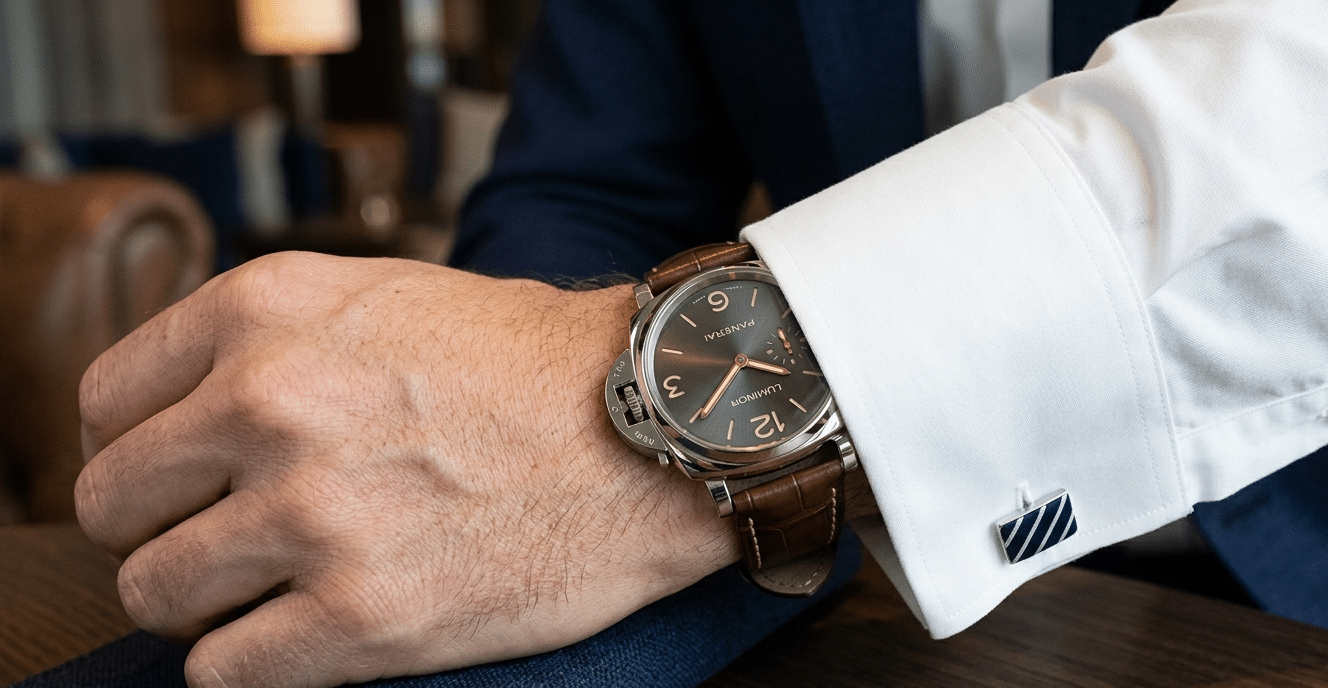
This is where the rubber meets the road for any dress watch, and especially for a Panerai. The 40mm Luminor Due replica’s ability to slide smoothly under a shirt cuff is its defining criterion. This isn’t just about thickness; it’s a dynamic interplay of case thickness, lug angle, and caseback contour. A well-executed replica will have lugs that curve down to hug the wrist, and a caseback that doesn’t protrude excessively. Even if the overall thickness is within spec, a sharp lug angle or a flat, disc-like caseback can cause the watch to catch on the cuff. The ideal is a watch that, with a slight adjustment, disappears beneath the cuff when needed and emerges gracefully when you check the time.
Visual Balance on a Smaller Wrist
The 40mm diameter of the Luminor Due is a strategic choice for wearability. For many, particularly those with average to smaller wrists (6.5 inches and below), a 40mm case provides a sweet spot. Paired with a well-proportioned lug-to-lug distance (around 48-49mm for the 40mm Due), the watch should sit comfortably on the wrist without the lugs extending beyond the wrist’s edges. This prevents the dreaded “lug overhang” that makes a watch look cartoonish and ill-fitting. A visually balanced watch enhances the formal aesthetic, making it appear integrated with the wearer rather than an afterthought.
Weight Distribution and All-Day Comfort
A dress watch should be largely unobtrusive, providing comfort for extended periods. The overall weight and its distribution are critical. A good 40mm Luminor Due replica, typically in stainless steel, should feel substantial but not overly heavy. The balance between the case and the strap (often leather for dress models) is important. If the watch head is too heavy relative to the strap, it can feel top-heavy and shift on the wrist. Conversely, a too-light watch can feel cheap. Factories like VS Factory, known for their quality, generally use 316L stainless steel, which contributes to an appropriate weight. The P.4000 clone movement, with its micro-rotor, also helps maintain a thinner, more balanced profile than bulkier movements.
Expert Authentication Insight
The best test is a practical one: wear the replica with a variety of fitted dress shirts. Observe how easily the cuff slides over the watch—does it catch, or does it glide? Take profile photos of the watch on your wrist from multiple angles. Look for any lug overhang, ensuring the lugs don’t extend past the natural curve of your wrist. Pay attention to how the watch feels after several hours; any discomfort, excessive flopping, or pressure points can indicate poor ergonomics or weight distribution. This real-world test provides invaluable feedback beyond mere measurements.
Identifying Flaws: Authentication of the Slim Profile
While super clones aim for perfection, manufacturing realities mean flaws can exist. For the 40mm Luminor Due replica, specific errors can compromise its slim profile and dress watch credentials, turning a potential success into a visible failure. Knowing what to look for is key to authenticating a truly “slim super clone.”
Overtly Thick Cases: The Dead Giveaway
The most immediate red flag for a Luminor Due replica aspiring to be a dress watch is an overtly thick case. The genuine 40mm Luminor Due (e.g., PAM01274) measures around 11.5mm thick, with VS Factory’s P.4000 clone achieving a commendable 10.8mm. If a replica measures 13mm, 14mm, or more, it fundamentally defeats the “Due” purpose. This excessive thickness often stems from using generic, thicker movements (like modified ETA clones) that require a bulkier case to accommodate them, or simply poor machining tolerances. Such a watch will never sit right or slide under a cuff, regardless of other qualities.
Incorrect Caseback Profile and Engravings
The caseback, though often unseen, contributes significantly to a watch’s on-wrist comfort and its perceived slimness. A genuine Luminor Due caseback is designed to integrate smoothly with the wrist. Replicas can falter here by having a caseback that is too flat (making the watch sit higher), too domed (creating a pressure point), or simply poorly finished. Incorrect or shallow engravings on the caseback can also be a tell. Beyond authenticity, a poorly profiled caseback directly impacts wearability and how the watch contours to your wrist, affecting its slim presentation.
Misaligned or Poorly Finished Dials
Even if the case dimensions are spot-on, a flawed dial can destroy the dress watch aesthetic. The Luminor Due relies on precision and understated elegance. Flaws like misaligned indices, blurry or inconsistent dial printing (especially on “Luminor Due” or “Panerai” text), or hands with visible tool marks or uneven polishing are unacceptable. Dust trapped under the crystal, or uneven lume application on the markers, are also common tells. These imperfections detract from the refined look crucial for a dress watch, making the replica feel cheap despite its dimensional accuracy elsewhere.
Expert Authentication Insight
A direct side-by-side comparison with high-resolution images of the genuine 40mm Luminor Due is indispensable. Pay meticulous attention to the case profile: the gentle curve of the mid-case, the slimness of the bezel, and the recessing of the crown guard. Use a macro lens (or a loupe) to inspect the dial. Check for any misalignments in the indices or hands, and verify the crispness of all text and logos. Examine the lume application for uniformity. Finally, feel the edges of the case and bezel; they should be smooth and refined, not sharp or unfinished. These detailed inspections will reveal whether the replica truly embodies the slim, refined character of the Luminor Due.
When considering a 40mm Luminor Due replica for formal wear, prioritize meticulous dimensional accuracy above all else. Focus your inspection on the actual case thickness and the lug-to-lug measurement; these are non-negotiable for true cuff compatibility. Verify the quality of the case finishing and ensure the crystal profile doesn’t add unnecessary bulk. A truly successful super clone will not just look like a Luminor Due in pictures, but will wear like a genuine slim dress watch, solving the long-standing problem of integrating Panerai’s iconic design into your formal wardrobe.