
The Comfort Imperative for Panerai Replica Straps
For anyone dipping their toes into the world of Panerai replicas, the initial thrill often revolves around nailing that iconic cushion case, the signature crown guard, or the distinctive sandwich dial. But let’s get real: once the novelty wears off, it’s the strap that makes or breaks the daily wearing experience. This isn’t just about aesthetics; for a substantial watch like a Panerai, comfort, which is heavily influenced by factors like Panerai replica thickness and cuff clearance, transitions from a luxury to an absolute necessity. The nuances of replica manufacturing, from material sourcing to finishing, mean that strap comfort isn’t a given. It needs to be understood, scrutinized, and prioritized.
Beyond Aesthetics: Why Comfort Trumps Looks for Daily Wear
It’s easy to get caught up in the visual fidelity of a replica Panerai. The perfect lume, the crisp dial text, the robust case finish—these are the details that often drive an initial purchase. Yet, a strap that looks period-correct or perfectly matches the watch’s aesthetic can quickly become a source of daily frustration if it’s not comfortable. We’ve all seen those stunning vintage leather straps that promise rugged charm, only to discover they’re stiff as cardboard and chafe the wrist. Or perhaps a sleek rubber strap that looks great in photos but causes a persistent rash. For a watch that commands wrist presence like a Panerai, an uncomfortable strap means the watch spends more time in the box than on your wrist, undermining the entire point of ownership. In the replica world, where material quality can be a variable, prioritizing wearability over mere visual appeal is a decision you’ll thank yourself for every single day.
Defining “Comfort”: Weight, Breathability, and Skin Sensitivity Explained
True strap comfort isn’t a single metric; it’s a trifecta of ergonomic factors that interact with your body and environment. First, there’s weight perception. A heavy watch paired with a poorly balanced or excessively heavy strap can lead to wrist fatigue, especially for larger Panerai models. The material’s density and how it distributes the watch’s mass across your wrist play a huge role here. Second, breathability is critical. Your skin needs to breathe, and a strap that traps moisture against the wrist can lead to discomfort, stickiness, or even skin issues. This is where material porosity and design features like channeling become important. Finally, skin sensitivity is often overlooked. Some materials, or the chemicals used in their processing (like certain glues or tanning agents), can cause irritation, redness, or allergic reactions. Understanding how different materials interact with your skin type is paramount for long-term comfort, especially if you have sensitive skin.
The Replica Factor: Material Quality & Manufacturing Consistency
Unlike genuine Panerai straps, which adhere to strict material and finishing standards, replica straps introduce a layer of variability. The “replica factor” means that material sourcing, finishing processes, and quality control can differ significantly between factories and even batches. A replica factory might use a cheaper grade of leather, a stiffer compound of rubber, or less refined steel for a bracelet, all of which directly impact comfort. Poorly finished edges on a leather strap, sharp molding lines on rubber, or stiff, unarticulated links on a bracelet are common tells of lower-quality manufacturing. These imperfections, while sometimes minor visually, can create persistent points of friction or pressure, turning what looks like a great strap into an ergonomic nightmare. Understanding these potential inconsistencies is key to making an informed choice that prioritizes actual wearability.
Expert Authentication Insight
When assessing a replica strap for comfort, start with a basic tactile assessment. Hold the strap, feel its pliability. Does it feel supple and flexible, or stiff and resistant? Perform a “finger-slide test” along all edges, both top and bottom. Are they smooth and rounded, or do you feel any sharpness, rough spots, or unfinished seams? A quick initial bend test—flexing the strap into a curve—will reveal its inherent flexibility. A good strap, regardless of material, should have a certain amount of give and resilience. Stiff, unyielding straps or those with rough edges are immediate red flags for potential long-term discomfort.
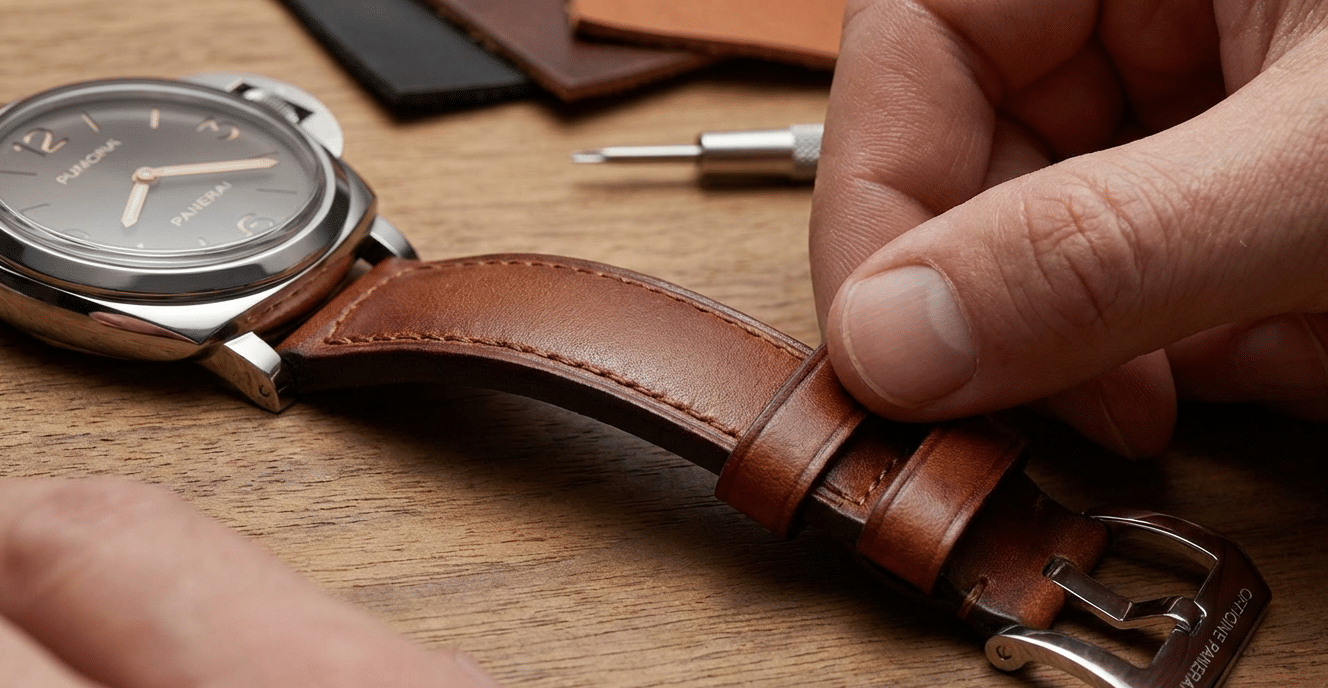
Rubber Straps: The Sporty & Practical Choice for Panerai Replicas
Rubber straps have become synonymous with Panerai’s tool-watch heritage, offering a blend of ruggedness and practicality that often makes them a go-to choice for replica owners. Their ergonomic properties, particularly their water resistance and relative light weight, make them ideal for active lifestyles, though they come with their own set of comfort considerations, especially in the replica market.
Lightweight & Waterproof: Ideal for Active Lifestyles
The inherent properties of rubber, whether it’s FKM (fluorocarbon elastomer), NBR (nitrile rubber), or silicone, make it a natural fit for Panerai’s robust aesthetic and functional demands. First and foremost, rubber is virtually impervious to water, sweat, and oils, making it the ultimate companion for swimming, diving, or any activity where a leather strap would quickly degrade. This waterproof nature means easy cleaning and maintenance, which contributes to long-term hygiene and comfort. Furthermore, rubber straps are generally lighter than steel bracelets and often lighter than thick leather straps. Replica manufacturers leverage these properties to offer straps that complement the often-substantial weight of a Panerai case, contributing to a more balanced feel on the wrist and reducing overall wrist fatigue during prolonged wear. Higher-quality replica rubber straps, particularly those made from FKM, can feel remarkably supple and comfortable right out of the box.
Breathability Challenges: Trapped Moisture and Skin Irritation
While rubber excels in water resistance, its non-porous nature presents a significant breathability challenge. Unlike leather, rubber doesn’t absorb sweat or allow air to circulate freely against the skin. This can lead to trapped moisture, especially in warmer climates or during physical activity, resulting in a sticky, uncomfortable feeling or even skin maceration and rashes. Replica strap designs often attempt to mitigate this issue through various strategies. Many feature inner channeling—grooves or raised patterns on the underside of the strap—designed to create small air pockets and allow sweat to evaporate. Some incorporate a textured finish to reduce the surface area in direct contact with the skin. The effectiveness of these design elements varies widely in the replica market; poorly executed channeling might offer little relief, while some generic silicone straps might feel perpetually clammy. When evaluating a replica rubber strap, always check the underside for thoughtful design elements aimed at improving airflow.
Material Quality Variations: Soft FKM vs. Stiff Silicone
The term “rubber strap” covers a wide spectrum of materials, and their quality significantly impacts comfort. At the higher end, you’ll find FKM rubber, a premium fluorocarbon elastomer known for its exceptional softness, durability, and resistance to chemicals and UV light. FKM straps tend to be highly pliable, conform quickly to the wrist, and maintain their comfortable feel over time. They are often found on higher-tier replica Panerais or sold as aftermarket upgrades. On the other hand, many replicas utilize more common, stiffer silicone or generic synthetic rubber. These materials can feel rigid, sometimes have a sticky or “dust-magnet” texture, and may take longer to break in, if they ever truly do. The difference in comfort between a supple FKM strap and a rigid, generic silicone one is immediately noticeable. A stiff rubber strap can put undue pressure on the wrist, fail to articulate properly around the wrist’s curve, and generally detract from the wearing experience.
Expert Authentication Insight
To quickly gauge the quality of a replica rubber strap, perform the “Snap-Back” elasticity test. Bend a section of the strap (ideally near the lug end) into a tight 90-degree angle, hold it for a few seconds, then release it. Observe how quickly and completely the strap returns to its original flat shape. Higher-grade FKM rubber will exhibit a rapid, almost instantaneous snap-back with minimal, if any, lasting deformation or crease marks. Generic silicone or lower-quality synthetic rubber, by contrast, will often recover more slowly, or you might see a faint crease line that takes longer to disappear. This test is a reliable indicator of the material’s inherent elasticity and resilience, directly correlating to its long-term comfort and ability to conform to your wrist without feeling stiff.
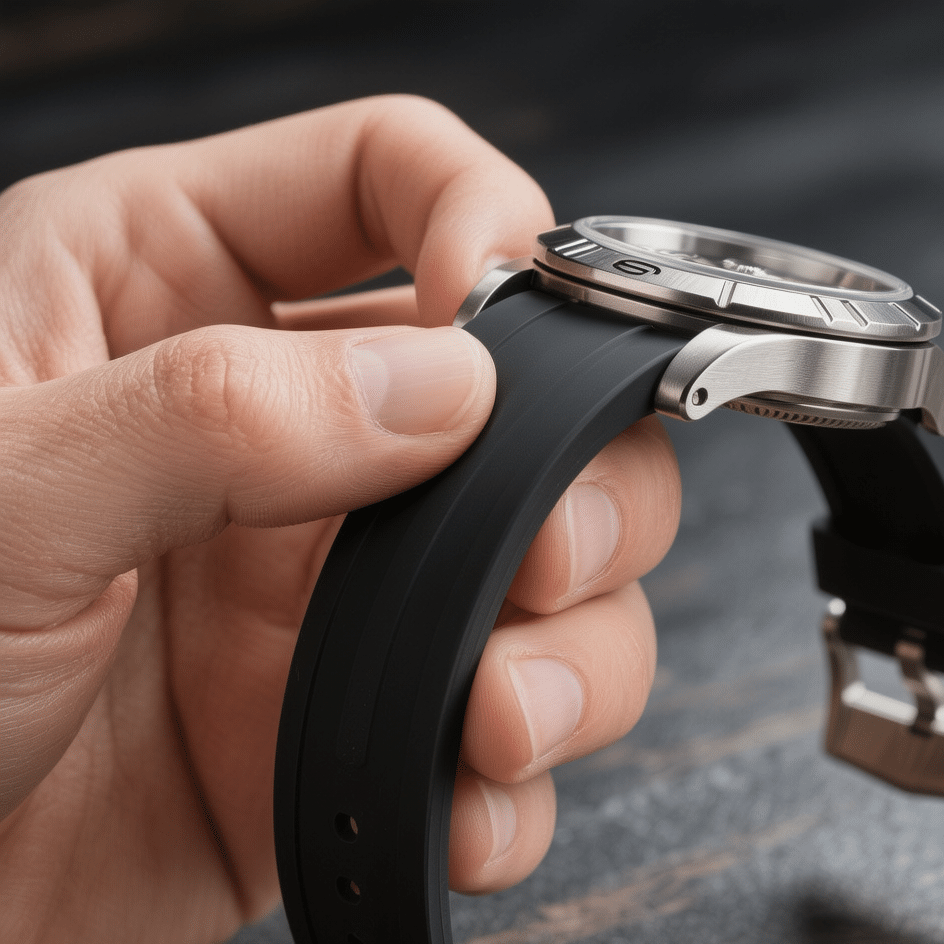
Leather Straps: The Classic & Versatile Panerai Replica Option
Leather straps offer a timeless appeal and a warmth that complements the Panerai aesthetic beautifully. From rugged distressed hides to elegant alligator, leather provides a versatile option, but its comfort dynamics are deeply tied to material quality, break-in period, and how it manages moisture. In the replica world, these factors are even more critical, often influencing the perceived quality and wrist comfort, which is also significantly impacted by the lug to lug distance and overall case dimensions of the Panerai replica.
Conformity & Patina: Adapting to the Wrist Over Time
One of the most cherished qualities of a good leather strap is its ability to “break in” and conform perfectly to the wearer’s wrist over time. Genuine leather, particularly high-quality calfskin or exotic leathers like alligator, is a natural material that softens, molds, and develops a unique patina with wear. This process isn’t just aesthetic; it’s a crucial ergonomic adaptation. A well-broken-in leather strap distributes pressure evenly, reduces friction points, and feels like a second skin. However, in the replica market, the quality of leather can vary dramatically. Cheaper replica leather, often heavily treated or made from lower-grade hides, may lack the natural fibers and pliability necessary for proper break-in. Such straps might remain stiff and uncomfortable indefinitely, never truly adapting to the wrist’s contours. The ability of replica leather to achieve this crucial ergonomic adaptation is a direct function of its initial quality and construction.
Breathability & Sweat Absorption: Managing Moisture and Odor
Unlike rubber, leather is a naturally porous material, which allows for some degree of breathability. This porosity enables it to absorb a certain amount of sweat, helping to wick moisture away from the skin, at least initially. This can make leather straps feel more comfortable in moderate temperatures compared to non-porous alternatives. However, this same absorption capacity can also be a double-edged sword. If a leather strap becomes saturated with sweat and isn’t allowed to dry properly, it can become a breeding ground for bacteria, leading to unpleasant odors and potential skin irritation. The tanning processes and any waterproofing treatments applied to replica leather can significantly affect its breathability and how it manages moisture. Poorly tanned or heavily coated replica leather might offer minimal breathability, while overly absorbent leather, without proper care, can quickly become unhygienic and uncomfortable.
Lining Materials & Skin Reactions: Hypoallergenic vs. Irritating Glues
The comfort of a leather strap isn’t solely about the exterior material; the lining that sits against your skin is equally, if not more, important. High-quality leather straps often feature soft, breathable, and sometimes hypoallergenic lining materials like nubuck, zermatt (a specific type of calfskin lining), or even rubberized leather for added sweat resistance. These linings are chosen for their comfort, breathability, and ability to minimize skin reactions. In the replica world, however, the lining material and the adhesives used in the strap’s construction can be a significant source of discomfort or irritation. Cheaper replica straps might use synthetic linings that don’t breathe, or worse, glues that contain irritants. It’s not uncommon for individuals with sensitive skin to experience redness, itching, or contact dermatitis from low-quality replica leather linings or the glues beneath them. Always inspect the lining carefully and consider any unusual smells, which might indicate problematic chemicals.
Expert Authentication Insight
To assess the pliability and quality of replica leather, perform the “Crease Line Retention” test on the strap’s underside. Gently press your thumb firmly against the leather, creating a distinct fold or crease. Hold for a few seconds, then release. Observe how quickly the crease line disappears or fades. High-quality leather, with good natural oils and fibers, will show the crease mark dissipate relatively quickly, indicating good resilience and pliability. Stiffer, lower-grade replica leather will retain the crease line for a longer period, sometimes permanently, or the leather might even crack slightly. This test offers a practical insight into the leather’s ability to flex and recover, which directly translates to how well it will conform to your wrist and maintain comfort over time.
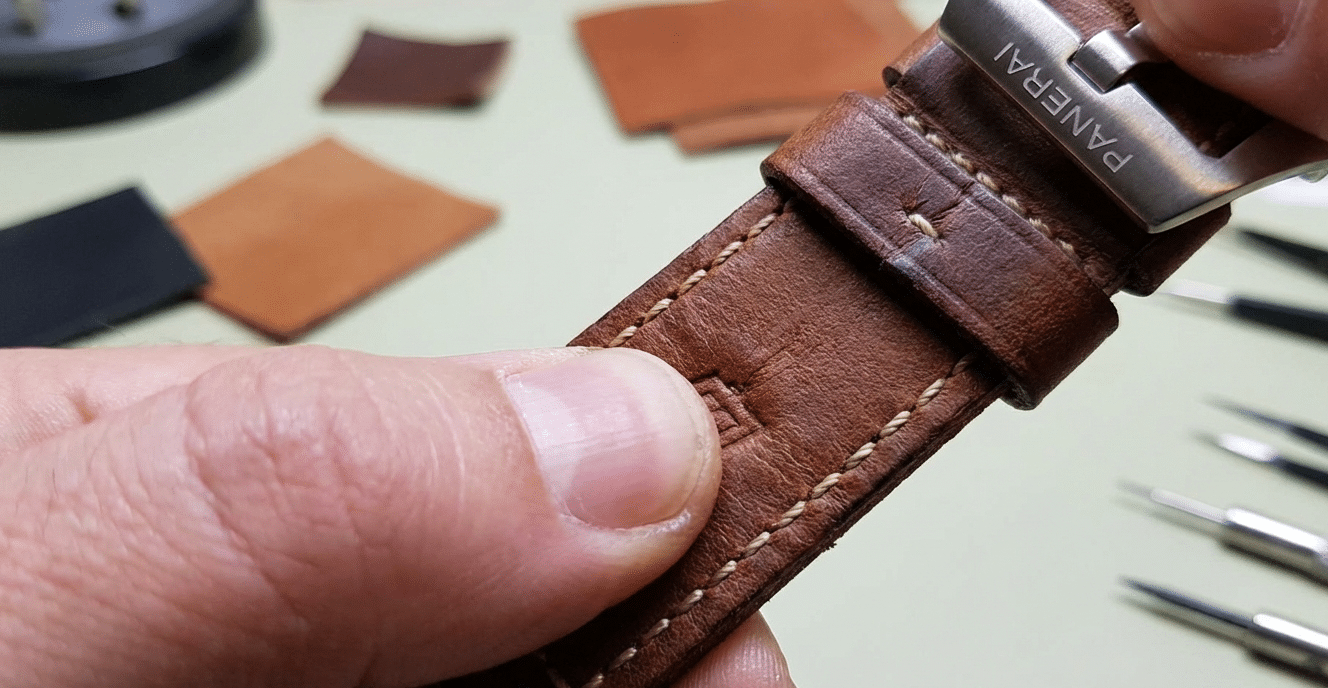
Steel Bracelets: The Robust & Integrated Feel for Panerai Replicas
Steel bracelets offer a distinct aesthetic and a robust, integrated feel that can dramatically change a Panerai replica’s wearing experience. However, their comfort is highly dependent on manufacturing precision, making them a nuanced choice for replica owners. We’ll evaluate how weight, articulation, and clasp design contribute to or detract from comfort.
Weight Distribution: The Impact of Mass on Wrist Fatigue
Panerai watches are inherently substantial, and pairing a large case with a steel bracelet further amplifies its presence on the wrist. For replicas, the perceived weight can vary. Top-tier replicas from factories like VS or XF typically use 316L stainless steel, resulting in a weight profile close to genuine, often in the 155-160g range for a Luminor with a bracelet. This heft can feel reassuringly solid to some, but for others, especially those with smaller wrists or during prolonged wear, it can lead to wrist fatigue. The key is not just the overall mass, but how it’s distributed. Poorly constructed replica bracelets, sometimes with hollow links (though less common in higher-end Panerai reps), can feel unbalanced, making the heavy watch head feel even more pronounced and less integrated with the bracelet.
Articulation & Hair Pulling: Link Design and Ergonomics
The flexibility and smoothness of a steel bracelet’s individual links are paramount for comfort. A well-articulated bracelet drapes fluidly around the wrist, conforming to its contours without creating pressure points. In replica bracelets, this is often a major differentiator. Inferior manufacturing can result in stiff, rough, or “sticky” links due to less precise machining or lower-quality pins. This lack of fluidity prevents the bracelet from molding properly, leading to discomfort. The most common complaints include skin pinching or the notorious “hair pulling,” where wrist hair gets caught between poorly finished or gappy links. Even subtle friction points can become irritating over an entire day of wear.
Clasp Comfort & Micro-Adjustments: Achieving the Perfect Fit
The clasp is the final point of contact and critical for securing the watch comfortably. Panerai-style deployant clasps on replicas can replicate the visual design, but their internal mechanics and finishing dictate actual comfort. Sharp edges on the inner components of a replica clasp can rub against the skin, causing irritation. A weak or imprecise spring mechanism might lead to accidental openings, compromising security. Crucially, the presence and effectiveness of micro-adjustment features are often overlooked. Without the ability to fine-tune the bracelet’s length by a millimeter or two, achieving an optimal, comfortable fit is challenging. A bracelet that’s too tight will restrict blood flow and feel constricting; one that’s too loose will slide around, causing the heavy watch head to shift and potentially leading to fatigue or even knocks. High-quality replica clasps will offer smooth operation and precise adjustments.
Expert Authentication Insight
Physical diagnostic: “Articulation Smoothness” test
To gauge a replica steel bracelet’s comfort potential, hold it horizontally and gently bend it into a tight U-shape. Observe how smoothly the links move against each other. A high-quality bracelet will bend with a fluid, almost chainmail-like motion, with minimal resistance or audible friction. If you feel significant stiffness, hear grinding, or notice individual links sticking, those are red flags. For a comprehensive understanding of how Panerai replicas should fit and wear, including bracelet comfort, refer to a replica Panerai size and wearing guide. This indicates manufacturing tolerances that could lead to discomfort, pinching, or accelerated wear over time. The ideal is a bracelet that feels supple and pliable, not rigid.
Direct Comparison: Panerai Replica Strap Materials in Key Comfort Metrics
Moving beyond the individual characteristics, let’s stack up rubber, leather, and steel bracelets head-to-head for Panerai replicas. The “best” choice isn’t universal; it depends on your priorities, environment, and activities. This comparison aims to provide a practical framework for decision-making.
Weight Perception: Which Material Feels Lightest or Heaviest?
- Steel Bracelets: Undeniably the heaviest option. While this can convey a sense of quality and robustness, it’s also the most likely to cause wrist fatigue, especially when paired with a substantial Panerai case. The “integrated” feel can be appealing, but be prepared for the added mass.
- Leather Straps: Offer a moderate weight profile. The leather itself adds minimal mass, allowing the watch head’s weight to be the primary factor. A well-fitted leather strap distributes this weight comfortably, feeling less imposing than steel.
- Rubber Straps: The lightest option by a significant margin. A quality FKM rubber strap can make a large Panerai feel much more manageable on the wrist, reducing the overall perceived bulk. For those sensitive to heavy watches, rubber is the clear winner for lightness.
Skin Interaction: The Best for Sensitive Skin, The Worst for Sweat
- Steel Bracelets: Generally hypoallergenic and good for sensitive skin, provided the articulation is smooth and doesn’t pinch. They can feel cool in cold weather and warm up with body heat, but if worn too tightly, they can trap sweat against the skin in humid conditions, leading to clamminess.
- Leather Straps: A mixed bag. Natural leather offers decent breathability and molds to the wrist, but it also absorbs sweat. In replicas, the quality of the lining material and the adhesives used are crucial. Poor-quality linings or glues can cause irritation, and excessive sweat absorption can lead to odor and premature degradation of the strap itself.
- Rubber Straps: Excellent for water resistance and durability in wet conditions. However, their non-porous nature means they can trap sweat against the skin, especially stiff silicone variants. This can lead to skin maceration, rashes, or general discomfort in hot, humid climates if worn tightly. Higher-grade FKM rubber, often with inner channeling, offers better comfort and is less prone to irritation than generic silicone.
Activity Suitability: Matching Strap to Lifestyle (Desk Diver vs. Outdoors)
- Desk Diver / Office Wear: Leather straps excel here, offering a classic, refined look that pairs well with business attire. Steel bracelets also work, providing a more formal and robust presence. Rubber, while comfortable, can sometimes look out of place in very formal settings.
- Outdoor / Active / Water Sports: Rubber straps are the undisputed champions. Their water resistance, quick-drying properties, and durability make them ideal for swimming, diving, or any strenuous activity where sweat and moisture are factors. Steel bracelets can handle water but will get scratched and potentially feel uncomfortable when wet or sweaty. Leather is generally not recommended for prolonged exposure to water or heavy perspiration.
- General Daily Wear: This is where personal preference and climate play the biggest role. Many Panerai replica owners adopt a multi-strap strategy, switching between materials to suit their activities and mood, leveraging Panerai’s easy strap-changing system.
Expert Authentication Insight
Physical diagnostic: The “All-Day Wear Simulation” test
Before committing to a specific replica strap material, try a simulated wear test. If possible, wear a watch with a similar strap material for at least two hours, focusing on how it feels against your skin. Pay close attention to areas of potential localized pressure (e.g., under the clasp, where links bend, or where the strap meets your skin). After removing the watch, inspect your wrist for redness, indentations, or any signs of irritation. This simple test, though not perfectly replicating a Panerai replica, will give you invaluable insight into your personal tolerance for different materials and their interaction with your skin.
Choosing Your Panerai Replica’s Perfect Companion for Comfort
Ultimately, the “best” strap for your Panerai replica isn’t a universal truth; it’s a personal revelation. But armed with the right insights, you can make an objectively informed decision that prioritizes your comfort and enhances your ownership experience. It’s about moving beyond marketing and understanding the practical realities of replica materials.
Self-Assessment: Understanding Your Wrist, Climate, and Activities
Before you even look at straps, look at yourself:
- Your Wrist: Is it flat or round? Wide or narrow? A flat, wider wrist often handles the weight and drape of a steel bracelet more effectively. A smaller, rounder wrist might find a large Panerai case with a steel bracelet unwieldy, making a lighter rubber or conforming leather a better choice. Be honest about whether the Panerai case size truly suits your wrist, as this will heavily influence strap comfort.
- Your Climate: Do you live in a hot, humid environment? Rubber or steel might be practical for water and sweat, but consider breathability. A dry, temperate climate opens up more options, including various leathers.
- Your Activities: Are you mostly at a desk? Leather or steel can work. Are you active, outdoors, or frequently exposed to water? Rubber is the obvious choice. Don’t force a strap to fit a lifestyle it wasn’t designed for, especially with the variable durability of replica materials.
The Multi-Strap Strategy: Why One Isn’t Always Enough
For many Panerai replica owners, the ideal solution isn’t choosing one* strap material, but rather embracing the versatility of multiple straps. Panerai’s quick-change strap system is a significant advantage. Investing in a high-quality rubber strap for active or casual wear, and a well-made leather strap for more formal or everyday use, allows you to adapt your watch to any situation without compromising comfort. This strategy maximizes the enjoyment of your replica by ensuring it’s always optimally configured for the task at hand, mitigating the drawbacks of any single material.
Common Replica Strap Pitfalls & What to Avoid
Replica straps, while often visually convincing, can harbor comfort-killing flaws. Be vigilant:
- Rough Edges: Particularly common on cheaper leather straps (unsealed edges) or poorly finished steel bracelet links and clasps. These can chafe and irritate the skin.
- Stiff Materials: Low-grade silicone rubber or overly stiff leather often fails to conform to the wrist, feeling rigid and uncomfortable. Leather should soften and mold over time; if it feels like cardboard out of the box, it’s likely to remain uncomfortable.
- Poor Stitching & Adhesives: On leather straps, sloppy stitching or weak, irritating glues (especially in the lining) can lead to premature wear, delamination, and skin reactions.
- Inaccurate Fitment: This includes poorly sized spring bars, imprecise lug holes, or strap ends that don’t sit flush with the case. This creates unsightly gaps, allows the watch head to wobble, and significantly detracts from overall comfort and stability on the wrist.
Expert Authentication Insight
Physical diagnostic: “Lug Gap & Pin Play” assessment
After installing a replica strap, gently push and pull the strap ends where they meet the watch lugs. Then, try to rock the strap up and down. A well-made strap from a quality replica factory should fit snugly with minimal to no visible gap between the strap and the case, and virtually no “play” or wobble. Excessive movement or a noticeable gap (0.5mm or more) indicates poor manufacturing tolerances in either the strap or the spring bars. This not only looks bad but can cause the watch head to shift on your wrist, leading to discomfort and potentially stressing the spring bars and lug holes over time.
The journey to finding the most comfortable strap for your Panerai replica is a personal one, but it doesn’t have to be a shot in the dark. By understanding the inherent properties of rubber, leather, and steel, and critically evaluating the nuances of replica manufacturing, you can make an informed choice. Remember, the “best” strap is the one that allows your Panerai replica to truly disappear on your wrist, letting you enjoy the watch itself without distraction or discomfort. Don’t be afraid to experiment, and consider building a small collection of straps to match every occasion. Your wrist will thank you.