
Richard Mille super clones command prices that rival entry-level luxury watches, leaving many buyers uncertain whether the premium tiers deliver proportional value. The confusion stems from a fundamental mismatch: manufacturers market their most expensive versions as universally superior, yet according to best value Richard Mille super clones, the technical upgrades—tighter CNC tolerances, complex dial layering, and refined skeletonization—only benefit specific use cases. For the majority of wearers, mid-tier alternatives already provide convincing visual presence without the ergonomic penalties or servicing complexities of top-tier clones.
This article dismantles the one-size-fits-all pricing logic by mapping four distinct buyer profiles to appropriate quality tiers. Whether you prioritize silhouette accuracy for social recognition, structural fidelity for close inspection, daily-wear comfort, or mechanical refinement for the enthusiast experience, understanding where your preferences fall prevents overspending on invisible upgrades. The goal is not to identify the “best” replica universally, but to determine which tier’s compromises least interfere with your specific wearing context.
| Your Primary Priority | Recommended Tier | Critical Reality to Accept |
|---|---|---|
| Visual recognition & dial accuracy | Mid-tier | Premium upgrades yield diminishing returns at normal viewing distances |
| Case geometry & structural fidelity | Premium tier | Mid-tier often shows bulky proportions and misaligned profiles under scrutiny |
| Daily-wear comfort & ergonomics | Mid-tier or selected entry | Heavy premium versions with decorative materials often fatigue the wrist faster |
| Mechanical refinement & enthusiast experience | Premium tier with QC verification | Requires acceptance of higher servicing complexity; verify bridge depth and rotor stability specifically |
| General casual use without close inspection | Entry to mid-tier | Overspending on internal finishing invisible during wear wastes budget |
Quick Questions Before You Read
Q: Is the most expensive Richard Mille super clone automatically the best choice?
No. Premium pricing funds internal CNC tolerances and complex dial layering that only benefit buyers who scrutinize case geometry or prioritize mechanical refinement. For visual recognition or daily-wear comfort, mid-tier versions often perform better without the ergonomic penalties of heavier construction.
Q: What specific QC photo details indicate real mechanical quality?
Request specific angles showing bridge depth (not just surface decoration), rotor stability under gentle rotation, and date wheel alignment at multiple positions. Standard marketing photos rarely capture these functional elements that distinguish experience-driven tiers from visually similar alternatives.
Q: Why might a premium replica feel less comfortable for daily wear than a mid-tier version?
Premium tiers often incorporate denser materials and complex case layering that increase wrist presence and weight. For all-day wear, lighter mid-tier constructions with flexible straps frequently outperform heavier “upgraded” versions that fatigue the wrist during extended use.
Q: When is paying for a premium tier actually justified?
Only when your priorities align with structural scrutiny or mechanical appreciation. If you regularly handle the watch under close inspection, require precise case geometry, or value rotor behavior and finishing depth as part of the ownership experience, the premium tier addresses these specific needs that mid-tier versions cannot satisfy.
Clarifying the Replica Market Boundary and Buyer Intent
Richard Mille super clones occupy a distinct segment within the replica watch ecosystem, and it is essential to establish clear boundaries before evaluating tiers or factory versions. Replica watches are replica-market products designed to reference the aesthetic language of genuine luxury timepieces; they are not manufactured, endorsed, or authorized by the original brand. Factory labels, marketing terms like “super clone,” and tiered pricing structures exist solely to help buyers navigate version differences, not to indicate official partnerships, certification, or commercial equivalence to an authentic Richard Mille watch. Understanding this distinction ensures that buyers evaluate these pieces based on realistic replica-market standards rather than genuine-brand benchmarks. Replica watches should be clearly understood as replica-market products, not genuine watches from the original luxury brands.
Defining the Value Boundary for Richard Mille Super Clones
The question of whether a high-tier replica is worth the premium does not have a universal answer. Richard Mille super clone value is not fixed by factory reputation or market hype; it scales directly against what the buyer actually looks at when wearing the watch. Tonneau architecture introduces replication bottlenecks that round-case watches do not face. The curved profile, layered caseband, and open dial require precise internal space allocation. When manufacturers invest more capital into a version, that money is typically spent on tighter case tolerances, deeper dial layering, or movement adaptations that fit the skeletonized layout. But if those engineering improvements do not align with the buyer’s primary viewing habits, the extra cost becomes dead weight.
Replica pricing logic in this segment branches into two distinct paths: visual accuracy and engineering depth. Mid-tier versions often solve the external silhouette, dial printing, and color blocking at a fraction of the premium price. Higher tiers chase bridge finishing, rotor behavior, weight distribution, and case-layer integration. Understanding this split is the only way to answer what justifies paying more for a super clone. The premium does not make the watch universally better; it shifts the compromise point. A buyer who only cares about wrist presence will reach satisfaction long before hitting the premium tier. A buyer who studies the side profile, strap integration, and dial depth will find lower versions frustrating regardless of how clean the dial looks.
Official Specifications vs. Replica Adaptation Realities
Richard Mille officially positions its tonneau collections around high-complication skeletonized movements, graded titanium or carbon composite cases, and extreme shock resistance achieved through proprietary case construction and movement suspension systems. While brand documentation clearly outlines these engineering priorities and design language, it does not translate to replica execution. The authentic RM architecture relies on micro-machined titanium bridges, specialized elastomer shock absorbers, and hand-assembled calibers that are entirely different from the standardized automatic movements adapted for replica production. Buyers should recognize that official specifications define the genuine benchmark, not the replica outcome.
When evaluating a replica, the tonneau shape is often replicated using CNC-milled steel or standard brass cases with decorative coating or carbon fiber veneers, rather than the forged carbon or titanium alloys used in authentic models. Movement adaptation typically involves modifying standard automatic calibers to fit the tonneau window, which inevitably alters the original case thickness and weight distribution. Official brand information can clarify the authentic model’s design language and technical baseline, but it should not be treated as evidence of how closely a replica matches those standards. The gap between official architecture and replica adaptation is why tiered pricing exists: higher tiers attempt to close the dimensional and finishing gap, but the underlying materials and mechanical architecture remain distinct.
Why Factory Reputation Does Not Automatically Transfer to Richard Mille Models
In the replica market, factory names are often treated as universal quality markers, but this assumption breaks down quickly with tonneau architectures. A manufacturer that consistently delivers strong results for round-case sports watches or simple dress calibers may face entirely different bottlenecks when producing Richard Mille replicas. The curved caseband, integrated strap lugs, and skeletonized dial layout require specialized jigs, different CNC routing, and movement adaptation strategies that do not scale automatically from a factory’s standard lineup. As a result, a “top-tier” label for one reference may represent a mid-tier effort for another, depending on which version batch, movement route, and case mold were actually used.
At cleanvsfactory.com, this kind of variation is treated as a model-specific evaluation rather than a brand ranking. The factory name helps narrow the shortlist, but the actual decision depends on verifying the version number, the movement adaptation route, and whether the dial printing and case milling match the specific RM reference the buyer wants. Version changes occur frequently, and a well-reviewed batch from six months ago may share only the marketing name with today’s stock. Buyers who rely solely on factory reputation without checking current version details often receive watches that do not align with the forum photos or initial release claims. Treating the factory label as a starting signal, not a guarantee, reduces the risk of mismatched expectations.
Factory names in the replica watch market are useful buyer-facing references, but they should not be treated as official luxury-brand affiliations or automatic guarantees of quality across every model. In super clone comparisons, the safer judgment is usually version-specific. A manufacturer may perform strongly on one reference and show noticeable variation on another because tonneau milling, movement adaptation routes, and dial layering complexity differ across the lineup. A factory comparison is most useful when it is tied to the specific reference, version, movement, and visible execution details rather than treated as a universal ranking.
How Replica Value Scales Differently Across Buyer Profiles
Evaluating tiered versioning requires buyer priority mapping. Four distinct profiles emerge in the replica market, each weighing accuracy, comfort, and mechanics differently:
Visual-style buyers prioritize silhouette recognition and dial layout. They evaluate the watch from arm’s length or across a room. For this group, Richard Mille dial accuracy and printing sharpness carry the most weight. Internal movement finishing or millimeter-level thickness reduction rarely changes their ownership experience.
Structure-focused buyers care about external architecture. They track case curvature, bezel integration, screw alignment, and how the watch transitions to the strap. Tonneau case accuracy is their primary metric. They will notice if a replica looks bulky on the side or if the layered dial sits too high under the crystal. This group usually requires premium machining to avoid visual compromise.
Daily-wear buyers evaluate comfort over static accuracy. They weigh lug curvature, clasp engagement, rubber strap flexibility, and overall weight distribution. A technically impressive replica can still wear poorly if the case head is too heavy or the strap locks awkwardly. For them, practical ergonomics matter more than dial layering or skeleton depth.
Experience-driven buyers want mechanical engagement. They notice winding resistance, rotor smoothness, bridge milling, and power reserve stability. They are willing to pay for better movement adaptation, a critical factor in Richard Mille replica pricing, because they spend time interacting with the watch, not just wearing it for visual impact.
Movement Naming Conventions vs. Genuine Caliber Architecture
In the replica watch market, movement descriptions often reference layout, decorative finishing, or clone architecture rather than indicating an official brand-manufactured caliber. When sellers describe a replica as containing a “3255-style,” “tonneau skeleton,” or “decorated automatic” movement, they are usually referring to how the base automatic movement has been modified, plated, or layered to visually align with the genuine reference dial. These modified movements serve the purpose of visual replication and basic daily function, but they do not share the micro-engineered shock absorption systems, material composition, or service protocols of genuine luxury calibers. Buyers should verify the actual base movement type and understand that adapted replica movements may require independent watchmaker servicing rather than brand-authorized maintenance. Movement names in the replica market often describe layout, decoration, clone architecture, or seller terminology rather than an official brand-manufactured caliber.
What to Check Before You Decide
Before comparing prices or reading factory claims, answer three questions to lock in your actual priority:
- Primary wear context: Will this watch rotate daily with standard clothing, or will it primarily serve as an occasional statement piece for specific environments? Daily rotation demands strap comfort and clasp reliability; occasional use prioritizes visual presence.
- Tolerance for case thickness: Are you sensitive to bulk, or does the tonneau shape naturally balance out height for your wrist? If the side profile matters to you, you must prioritize versions with thinner case milling and internal space optimization.
- Movement skeleton depth importance: Do you frequently study the dial under normal lighting, or does the watch mostly register as a silhouette? If you rarely look closely at the bridge layout or rotor behavior, paying for internal movement upgrades is an unnecessary expense.
The Visual-Style Buyer: Silhouette Accuracy and Dial Presence
Buyers who purchase for wrist presence and dial recognition rarely benefit from premium movement routes or advanced structural layering. The reality of replica manufacturing is that the most recognizable elements of a Richard Mille watch are solved early in the production chain. Color blocking, subdial spacing, font weight, and hand geometry do not require expensive CNC machining or complex movement integration. They require accurate printing plates, correct paint mixing, and basic assembly calibration.
This is why Richard Mille dial accuracy often plateaus well before premium pricing begins. Mid-tier versions typically nail the printing weight, apply lume consistently, and align subdial markers correctly. From a conversational distance, the super clone silhouette match becomes highly convincing. The human eye processes the overall shape first, then color contrast, then hand position. Minor imperfections in bridge milling, rotor edge polishing, or dial-layer depth disappear under normal indoor or outdoor lighting. Even under direct sunlight, the dominant visual read remains the tonneau profile perception and dial color match.
When a visual buyer asks, “does the watch look right from arm’s length?” the answer is usually yes at the mid tier. Upgrading to a version that focuses on dial details vs movement cost shifts resources toward features that never register in normal viewing conditions. A buyer who values wrist impact should allocate budget toward better strap curvature or clasp finishing rather than chasing internal skeleton depth that stays hidden behind reflections and sleeve movement. The extra cost in premium tiers is engineering-focused, but if the dial and silhouette already meet your expectations, that engineering remains theoretical rather than experiential.
The Structure-Focused Buyer: Tonneau Geometry and Case Layering
Buyers who scrutinize case shape, thickness control, and layered construction will quickly find that lower tiers introduce noticeable compromises. Tonneau architecture is unforgiving. The curved caseband, multi-layer bezel, and integrated strap transition require precise internal milling to maintain the correct proportions. When a replica uses a thicker movement stack or standard case machining, the watch swells outward. This is the origin of the most common complaint: why is the replica case so thick? The answer is not lazy manufacturing; it is a space allocation bottleneck. Standard automatic calibers and thicker dial assemblies simply do not fit inside the original RM case profile without forcing the bezel higher or thickening the midcase.
Premium versions address this by reconfiguring the internal layout. Tighter CNC tolerances, thinner dial bridges, and optimized movement placement allow the case to retain the intended curvature without adding bulk. For a structure-focused buyer, tonneau case accuracy directly dictates whether the watch looks balanced or clumsy on the wrist. Super clone case thickness is rarely a dial-side problem; it is almost entirely a side-profile and rear-case issue. Lower tiers often leave the caseband slightly straighter and the bezel edges sharper, which disrupts the organic flow of the design.
Layer alignment and screw placement act as immediate structural tells. On the genuine reference, the bezel integrates seamlessly with the midcase, and the spline screws sit flush without catching light unevenly. In budget or early versions, the layer stacking shifts slightly, creating visible steps or misaligned screw holes that break the continuous line of the curve. When evaluating which version holds the RM profile, the side view matters more than the front. A dial can look nearly identical across tiers, but the case-to-strap transition, bezel curvature, and lug taper will reveal whether the manufacturer prioritized external geometry or simply focused on printing accuracy.
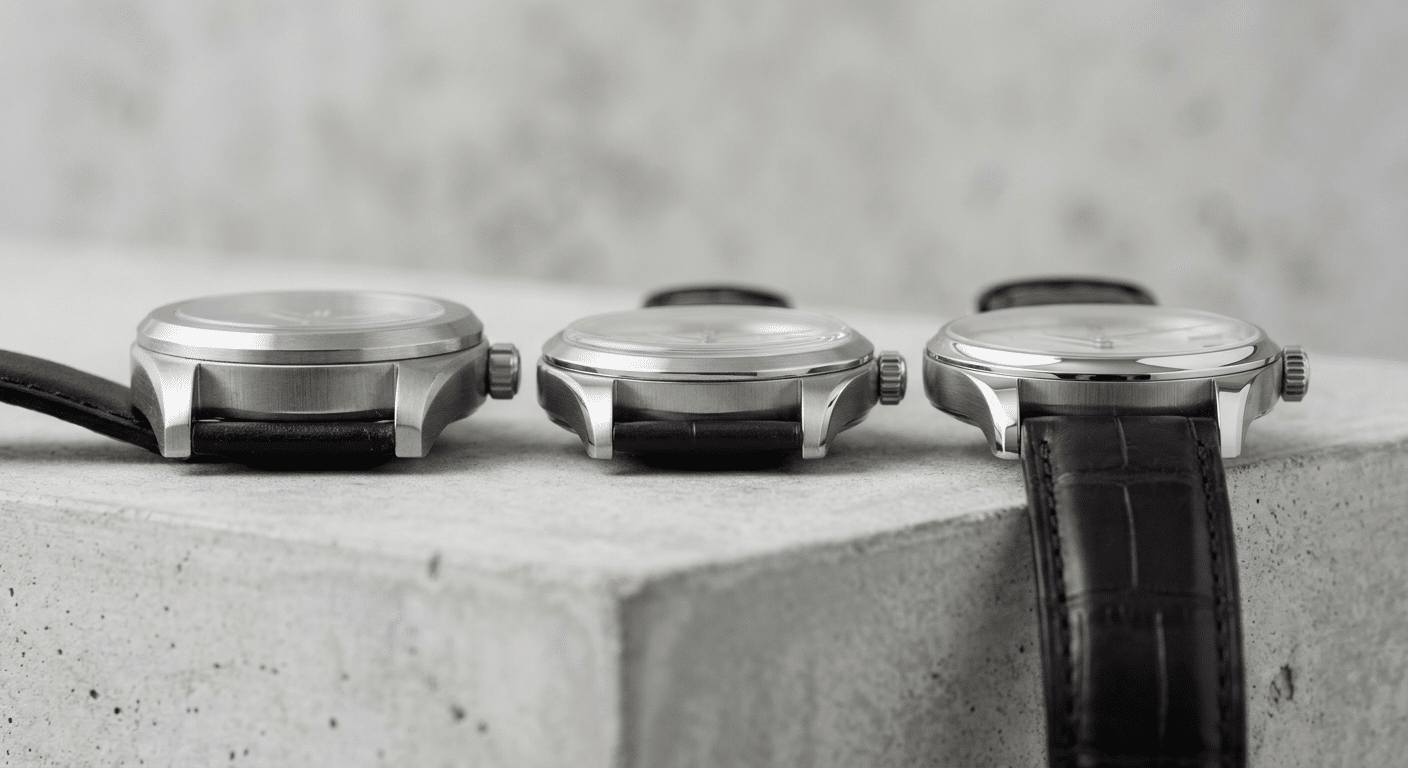
For this buyer type, the premium tier is functional rather than decorative. Paying more buys reduced visual friction, tighter layer alignment, and a case that sits closer to the wrist instead of protruding outward. The extra cost does not eliminate every structural compromise, but it shifts the watch from a dial-forward replica to a profile-forward piece. If the side view and case integration are non-negotiable, mid-tier versions will consistently leave this buyer dissatisfied.
The Daily-Wear Buyer: Weight, Comfort, and Practical Tradeoffs
When evaluating a daily wear replica watch, the priority must shift from static accuracy to dynamic ownership. A tonneau-shaped timepiece that looks proportionate on a display pad can quickly become uncomfortable during regular use if the internal weight balance and ergonomic transitions are poorly managed. Unlike traditional round watches, tonneau cases naturally push mass toward the 12 and 6 o’clock ends. In a replica, this issue is amplified by heavier brass or steel movements substituting for genuine titanium components, creating a noticeable leverage effect on the wrist.
The practical question for this buyer is straightforward: is a heavy replica comfortable? The answer depends on how the case head connects to the strap, not just the raw weight of the watch. A premium tier might feature impressive carbon composite cases, but if the lugs are too flat or the lug-to-strap transition is abrupt, the watch will constantly tip upward. This tipping pulls the crown into the back of your hand during flexion, turning a minor clearance issue into an irritation that makes the watch feel significantly heavier than it actually is. Buyers chasing heavy materials like thick ceramic or solid steel often sacrifice wrist comfort for perceived quality, creating a version that looks strong in photos but fails during a full day of rotation.
At this stage, daily-wear buyers should recognize that cheaper versions sometimes wear better. A mid-tier replica that prioritizes a standard, well-calibrated movement and a softer rubber compound can outperform a higher-tier version burdened by unnecessary density. Satisfaction in this category comes from a secure fit and a forgiving case profile, meaning the smartest purchase is often the one that balances visual presence with ergonomic restraint rather than the one loaded with the most expensive materials.
Strap Fit and Clasp Functionality Across Versions
Richard Mille strap compatibility is a frequent bottleneck for long-term comfort, particularly because tonneau replicas require precise pre-curvature to sit flush against the wrist. Lower-tier versions frequently ship with flat or semi-curved rubber straps paired with standard spring bars. When a flat strap forces itself against a curved tonneau case, it creates visible gaps at the lugs and increases the overall height of the watch on the arm, worsening that tipping leverage effect mentioned earlier. Mid-tier and premium versions address this by integrating tighter curvature or proprietary strap attachment systems that eliminate the gap and lower the center of gravity.
Clasp engagement follows the same logic. On a skeletonized watch, the dial draws the eye, but the clasp determines whether the watch stays in place. Entry-level replicas often rely on standard stamped steel folding clasps with shallow milling and loose tolerances. These clasps can rattle against the bottom case during wrist movement and may fail to lock flush, creating pressure points. Higher-tier versions typically feature milled clasps with tighter hinge tolerances and micro-adjustment mechanisms that allow the strap to hug the wrist more securely. For daily-wear buyers, investing in a version with superior strap curvature and a solid clasp reduces friction far more effectively than paying for decorative movement bridges that remain hidden behind the wrist.
The Experience-Driven Buyer: Movement Route and Skeleton Depth
For buyers who want more than wrist presence, the replica value shifts entirely to mechanical engagement. The experience-driven buyer evaluates a skeletonized super clone caliber by how it interacts with their hand and how convincingly it fills the visual space of the dial. The central question here is whether the movement route actually matters, and for this buyer, it does—but not because it changes the watch’s timekeeping authority. It matters because it dictates the physical feel of winding, the visual depth of the skeleton architecture, and the predictability of daily wear.
Replica manufacturers rarely build a true skeleton movement from the ground up for tonneau cases. Instead, they adapt standard automatic or manual-wind calibers and mill the bridges to mimic the open, layered aesthetic of the genuine article. In premium routes, the factories invest heavily in bridge finishing and tighter rotor bearings. The result is a smoother winding crown, a rotor that spins freely without catching, and a visible depth that aligns perfectly with the front crystal. Lower-tier adaptations often rely on shallower decorative plates or printed elements to create the illusion of depth. While this looks acceptable from a distance, the lack of actual spacing between the bridges and the dial ruins the three-dimensional effect when the watch is tilted under direct light.
Movement Decoration Versus Functional Reliability
For skeletonized Richard Mille replicas, the visual gap between tiers often comes from bridge milling and rotor finishing, but these modifications introduce ownership tradeoffs that many buyers overlook. Deep milling reduces the structural mass of the movement plates, which can slightly decrease power reserve stability and increase sensitivity to positional variance. A heavily decorated skeleton movement may look closer to the genuine architecture under a macro lens, but the thinner bridges and modified gear train often require more precise lubrication and are less forgiving to impacts or magnetization over time.
This is why visual accuracy and daily reliability should be weighed separately when evaluating premium tiers. A mid-tier version that uses a proven, minimally modified automatic caliber may keep time more consistently and endure daily wrist flexion with fewer rotor alignment issues than a heavily skeletonized alternative that prioritizes open-work aesthetics over base movement resilience. Serviceability also plays a role: heavily adapted skeleton movements frequently require specialist parts and disassembly routines that are harder to source and more expensive to maintain. If the watch will rotate regularly or face variable conditions, a less aggressive movement route often provides a more predictable ownership curve, even if it sacrifices some of the dial depth that premium tiers advertise.
Movement descriptions in this context refer to replica-market adaptation routes, not official brand-manufactured calibers. Buyers should distinguish between skeleton decoration, base movement architecture, and actual serviceability. Visual depth and rotor finishing are important for ownership enjoyment, but they do not guarantee identical long-term reliability to genuine high-complication timepieces.
Authentication Limits and Responsible Ownership Boundaries
Regardless of tier or factory label, replica watches should never be represented, resold, or presented as genuine timepieces. While premium versions may reduce obvious visual tells during casual wear, close inspection by experienced collectors or authorized professionals will typically reveal differences in movement finishing, case metallurgy, engraving depth, and component weight distribution. The purpose of tracking factory versions, QC photos, and movement adaptations is to help buyers avoid overpaying for misrepresented quality or mismatched expectations, not to facilitate authentication deception. Responsible ownership means treating replica watches as distinct aesthetic alternatives and maintaining transparent disclosure if questions about origin ever arise. The purpose of factory and movement information is to help readers understand quality and risk, not to represent a replica watch as genuine.
Serviceability and Long-Term Movement Considerations
The skeletonized aesthetic in replica watches is often achieved by milling down existing bridges from standard automatic movements rather than engineering a dedicated tonneau caliber. While this approach successfully mimics the visual openness of genuine RM calibers, it introduces long-term maintenance considerations that differ significantly from authorized service networks. Standard automatic movements adapted for skeletonization often feature modified gear trains and thinner main plates, which can reduce power reserve stability and increase sensitivity to lubrication degradation over time.
Buyers should approach movement claims with careful verification. Official movement manufacturer documentation can confirm baseline specifications for standard automatic calibers, such as jewel count, beat rate, and hand-winding capabilities, but it does not prove which specific movement is installed in a particular replica or how well it has been adapted. Replica skeleton movements rarely align with genuine RM service manuals or part interchangeability. If a replica watch requires maintenance, buyers typically rely on independent watchmakers familiar with standard automatic calibers rather than brand-authorized service centers. Understanding this distinction helps set realistic expectations for long-term reliability, repair costs, and the feasibility of maintaining a heavily adapted movement over several years of wear.
Movement references in this section describe replica-market adaptation routes, Richard Mille super clone vs cheap replica, not official Richard Mille or Swiss-manufactured calibers. Modified automatic bases, decorative skeleton bridges, and adjusted rotor assemblies are engineered for visual alignment and basic daily function, but they should not be interpreted as original equipment or brand-certified components. Buyers should verify the specific movement type installed, understand that adapted calibers may require independent watchmaker servicing, and treat mechanical engagement as a replica-market feature rather than a guarantee of authentic long-term performance.
Mechanical behavior also changes based on adaptation quality. A common issue across replica skeleton watches is rotor noise and inconsistent beat stability. Because replica movements use heavier base materials, the rotor balance differs from the genuine counterpart, sometimes causing the rotor to spin down faster or produce audible winding friction on quiet desks. Higher-tier versions mitigate this by using better lubricants, tighter rotor post tolerances, and slightly modified power reserve layouts that extend the operational window of the watch. Additionally, buyers should verify the date mechanism layout; in rushed skeleton adaptations, the date wheel positioning or window alignment can clash with the open bridges, creating a visual conflict that cheapens the entire dial execution. For buyers who regularly wind their watch and observe the mechanics, a better movement route transforms the replica from a static prop into a functional object that delivers satisfying mechanical feedback.
QC Photos to Request
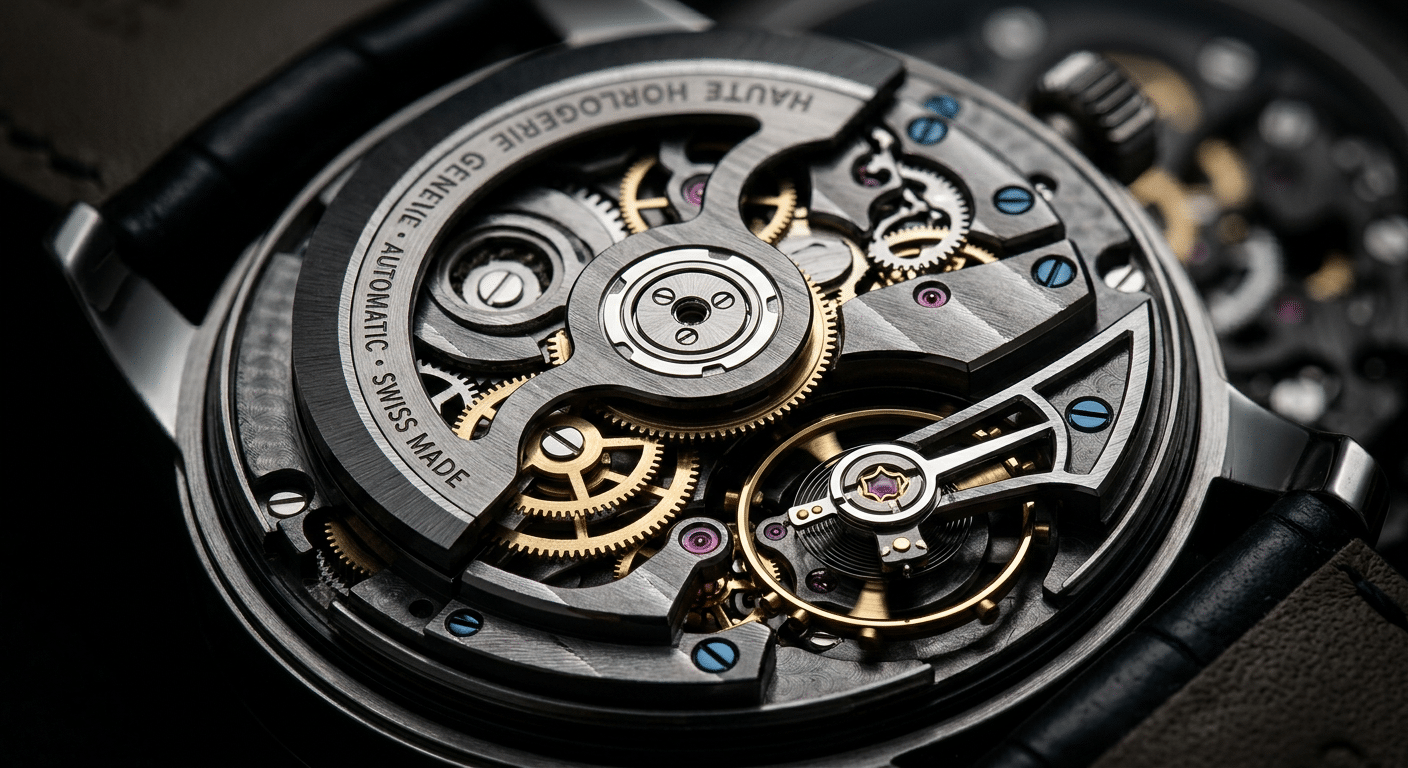
Before committing to a premium skeletonized version, standard wrist photos are insufficient. Buyers should request specific movement angles to verify that the extra cost actually improved the mechanical execution. First, ask for a direct 45-degree angle shot showing the edge of the main bridges to confirm the depth of the milling and ensure the gears actually sit inside the dial cutouts rather than floating above them. Second, request a top-down macro view of the rotor to check the edge finishing and confirm it spins parallel to the movement without visible wobble. Third, ask for a close-up of the balance wheel assembly to see whether the factory is using a standard regulator arm or a free-sprung design, which significantly alters the authenticity of the visible architecture. Finally, a clear side-profile photo of the crown and date wheel will reveal whether the date mechanism is properly aligned with the dial window, preventing the jarring misalignment that ruins the skeleton illusion.
Before making a decision, buyers should review real QC photos where available, focusing on dial printing alignment, case thickness, lug-to-strap transition, and rotor positioning. Factory labels and promotional stock images alone are not enough to confirm consistent version quality; unedited reference shots help align the final piece with your stated priorities.
Interpreting Seller Claims and QC Images for Tonneau Replicas
Product photos and seller descriptions are useful signals, but they rarely capture the full wear profile of a Richard Mille replica. Standard QC sets are typically shot under controlled lighting with macro lenses that flatten depth, making case thickness harder to judge and exaggerating bridge finishing while hiding subtle misalignments. The tonneau shape is particularly sensitive to viewing angle; a side profile that looks tightly integrated in a studio shot can reveal noticeable bezel steps, lug overhang, or strap gaps when photographed in flat daylight or worn with natural wrist flexion.
Before finalizing a purchase, it is practical to request unedited reference photos taken under neutral lighting, focusing on three areas that sellers often underrepresent: the caseband-to-strap transition from a true 90-degree side angle, the clasp engagement mechanism under tension, and the date wheel alignment at the 11:55 to 12:05 jump window. These details reveal whether the movement sits flush in the case, whether the rubber strap curves correctly without forced gaps, and whether the timing mechanism clears the open bridges without visual conflict. Seller language that emphasizes “full skeleton,” “carbon weave match,” or “premium CNC” should be cross-checked against these physical verification points rather than taken as standalone proof of quality. A clean photo proves printing accuracy and basic assembly; it does not prove long-term rotor balance, clasp durability, or ergonomic comfort.
Verification Note: When reviewing replica watch documentation, buyers should request multiple angles under neutral lighting rather than relying on single promotional shots. Critical details such as caseband thickness, lug-to-strap curvature, date window clearance, and clasp hinge stability should be checked carefully before finalizing a selection. Factory batch labels and stock photography alone do not confirm consistent version quality; asking for specific macro views and unedited reference images can help reduce uncertainty and align the final piece with your stated wearing priorities.
Replica Pricing Dynamics and After-Sales Expectations
Replica watch pricing fluctuates based on factory version, movement route, material choices, seller channel, and availability, meaning exact cost comparisons should always be verified at the time of purchase. Unlike the authorized retail market, the replica segment does not operate with standardized warranties, water-resistance certifications, customs guarantees, or brand-backed after-sales support. Buyers should proactively confirm return terms, shipping expectations, water-exposure risks, and repair options directly with the seller before ordering. Treating replica purchases with cautious verification rather than assuming guaranteed policies protects against mismatched expectations and aligns ownership with the realities of the market. Replica watch prices can vary by factory label, version, movement configuration, finishing quality, seller channel, availability, and after-sales support. Buyers should compare like-for-like details before treating one option as better value.
Trademark, Import, and Disclosure Boundaries
The replica watch market operates within a complex framework of intellectual property, customs enforcement, and consumer disclosure standards that vary significantly by jurisdiction. Replica watches are imitation products inspired by the design language of established brands, and they do not carry trademark authorization, brand affiliation, or manufacturer endorsement. Buyers should recognize that terminology such as “1:1,” “indistinguishable,” or “customs safe” often overstates reality and ignores the legal distinctions between genuine and replica goods.
Import regulations in many regions restrict the entry of trademarked imitation goods, and customs agencies routinely enforce intellectual property guidelines that can affect shipment clearance. Additionally, resale markets, insurance documentation, and secondary authentication channels universally distinguish replica watches from authorized timepieces. When purchasing or wearing a replica, maintaining clear awareness of these boundaries prevents mismatched expectations regarding authenticity verification, brand recognition, and long-term asset value. The discussion of replica tiers should always be grounded in transparent buyer education rather than claims of equivalence to genuine, trademark-protected products.
Where Premium Pricing Actually Translates to Replica Value
Premium pricing in the replica market is not a guarantee of perfection, nor does it magically eliminate the fundamental material differences between a replica and a genuine watch. Instead, higher tier pricing buys reduced compromise and tighter version batch consistency. When buyers ask what they get for the extra price, the answer is rarely a flawless product. The answer is usually a narrower gap in the specific areas that require the most expensive manufacturing processes, such as case milling precision, dial layer integration, and rotor finishing quality.
Case milling precision is where premium tiers justify their existence most clearly. Tonneau shapes are notoriously difficult to machine because of their continuous curves and multi-part construction. Entry and mid-tier replicas often struggle to maintain the thin, aggressive profile of the original, adding bulk that changes the wrist presence entirely. Higher-tier factories invest in tighter CNC tolerances and better internal case structuring, shaving millimeters off the profile and bringing the bezel curvature much closer to the genuine reference. For a structure-focused buyer, this precision is the exact difference between a convincing silhouette and a recognizable compromise.
Dial layer integration follows the same trajectory. A super clone that relies on printed graphics or a single flat plate will always look flat under changing light conditions. Premium versions stack actual machined plates, open-worked bridges, and properly seated subdials to create legitimate three-dimensional depth. Does higher tier reduce flaws? Yes, but only if the flaw in question is tied to machining depth and internal assembly. It will not fix the movement weight differential or the carbon layer uniformity. The premium tier refines what is already structurally possible, rather than inventing new capabilities.
The decision ultimately relies on conditional logic. If a buyer values casual wear, wrist comfort, and a strong general silhouette, the premium tier delivers diminishing returns because those priorities are largely satisfied by mid-tier accuracy and basic movement reliability. However, if a buyer obsesses over internal bridge milling, precise case thickness control, and a smooth, well-balanced rotor, the premium tier becomes functionally relevant. When evaluating super clone watches, the team at Clean VS Factory typically advises buyers to separate visual accuracy from mechanical expectations. Paying for a premium version only makes sense when the buyer’s actual priorities align with the specific engineering upgrades the tier provides, rather than paying for a higher price based on forum reputation alone.
When Mid-Tier or Entry Versions Solve the Same Problem for Less
Not every buyer needs a premium tier to achieve their goal. If the primary motivation is wrist impact and casual rotation, a mid tier Richard Mille replica often solves the visual equation without charging for mechanical upgrades that will never be used. Replica economics operate on a simple curve: dial printing, color blocking, and basic tonneau case shaping are mastered well before reaching the highest price levels. Once those external elements hit an acceptable threshold, the remaining cost is spent on internal layering, skeleton depth, and tighter machining tolerances that only matter under specific conditions.
For visual-style and daily-wear buyers, the cost-to-impact ratio shifts sharply. An entry level super clone value proposition rests on delivering a convincing silhouette, readable dial layout, and a strap that stays secure during normal movement. These watches typically run a standard movement route that keeps time reliably enough for weekend wear. The case may carry slightly thicker mid-sections, and the carbon pattern might lack the precise layer alignment of a top-tier piece, but none of these details interrupt the visual flow from arm’s length. When the watch sits on a wrist across a room, acceptable dial spacing, hand geometry, and basic case profile do the heavy lifting.
The mistake happens when buyers assume higher pricing is a mandatory step toward satisfaction. In reality, chasing premium machining for a watch that will mostly live on a rubber strap during casual outings creates a mismatch between investment and actual enjoyment. A mid-tier version still requires basic inspection for alignment and clasp function, but its flaw tolerance aligns naturally with everyday use. The watch is not defective; it is simply purpose-built for a different set of priorities. Casual wear reliability rarely demands macro-level perfection, and stepping past the visual satisfaction point usually means paying for diminishing returns that only show up under a loupe.
Aligning Budget with Realistic Replica Constraints
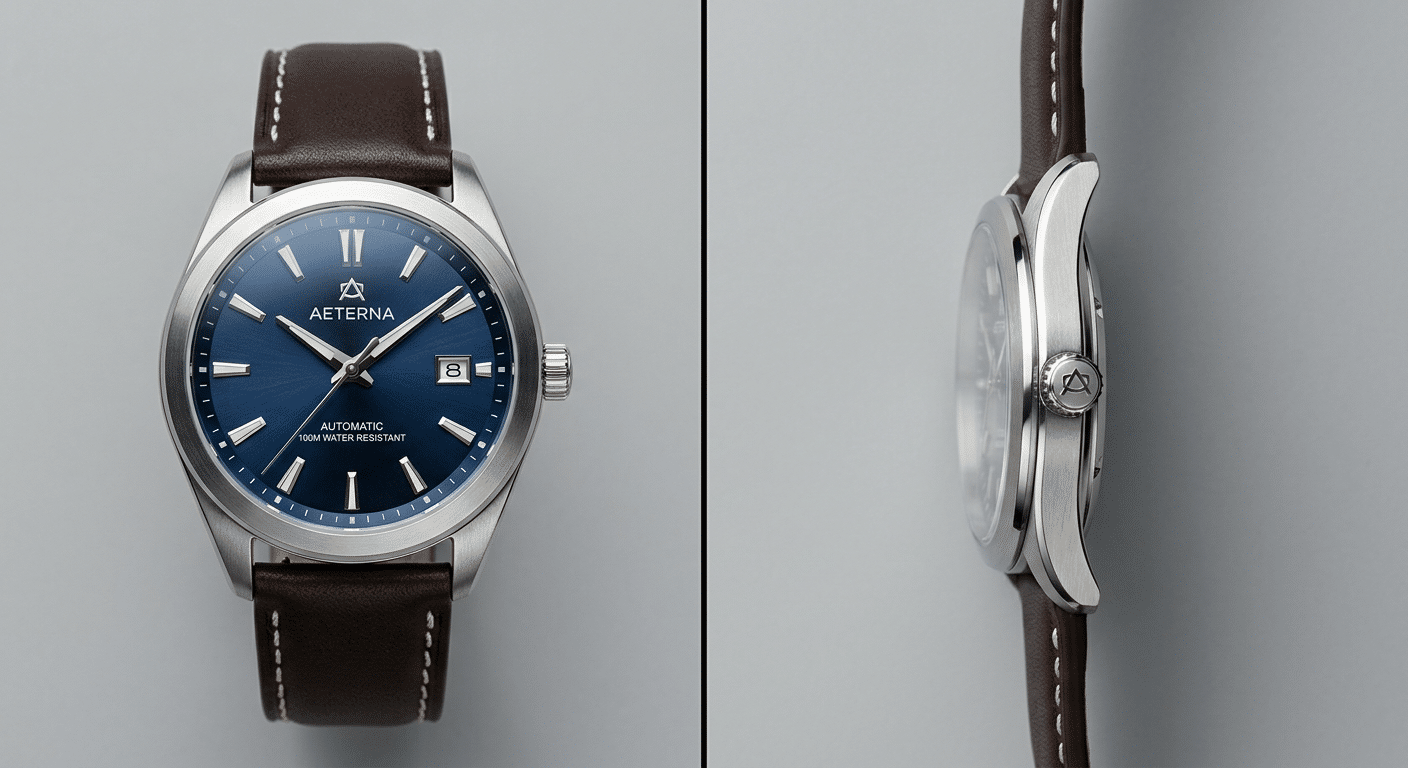
Deciding where to stop in the upgrade chain comes down to separating forum-driven ideals from actual wear patterns. A Richard Mille replica buying guide should not push every buyer toward the most expensive version. Instead, super clone version selection works best when treated as a tier matching strategy that links personal priorities to what each price level actually delivers. The tonneau architecture and skeletonized layouts inherently limit replication precision, meaning every tier carries a different compromise point. Paying more does not remove the constraint; it only moves the flaw further out of the frame.
Budget alignment succeeds when the buyer accepts that tradeoff acceptance is part of the purchase. If the goal is visual recognition and social presence, dial accuracy and overall silhouette are enough to reach satisfaction. If the goal is structural fidelity and case profile matching, premium machining becomes necessary to control thickness and layer integration. If the goal is daily reliability and strap comfort, mid-tier weight distribution often feels more natural than heavier, density-packed versions. The final decision should never be driven by the fear of choosing the wrong tier, but by the clarity of what the watch will actually be used for. Realistic expectations matter more than maximum tier chasing because tonneau proportions leave very little room to hide manufacturing compromises.
Editorial Perspective: The replica watch market is structured around signals, not guarantees. Factory labels, forum rankings, and seller photos are useful starting points, but they do not replace model-specific verification or realistic expectation setting. A replica is not a genuine, authorized, or brand-approved timepiece, and treating it as such invites mismatched comparisons. Value in this category is determined by how closely a watch’s specific compromises align with the buyer’s actual wearing habits, not by chasing universal “best” claims. At its strongest, replica guidance separates visual appeal from mechanical reliability, clarifies what pricing actually reflects, and treats QC images as verification tools rather than final proof. Decisions grounded in version checks, movement route clarity, and honest tradeoff acceptance consistently outperform purchases driven by hype or factory reputation alone.
A replica watch should be evaluated with realistic ownership expectations. Even a well-executed super clone can have limits in water resistance, long-term movement stability, servicing convenience, and close inspection compared with a genuine reference. CleanVSFactory’s editorial approach is to make replica watch decisions more traceable by connecting factory claims to visible details, movement behavior, version differences, and practical QC checks. Visual accuracy should be judged through specific details rather than broad claims. Case thickness, lug shape, dial texture, bezel tone, hand length, date magnification, and bracelet construction can affect how convincing a watch feels in real use.
Final Version Match Checklist
- Visual-Silhouette Priority: Choose mid-tier. Focus on dial spacing, hand geometry, and case color. Accept slightly thicker side profiles and standard carbon patterns.
- Structural-Fidelity Priority: Move to premium. Prioritize bezel curvature, lug-to-strap transition, and tight layer alignment. Be prepared to monitor rotor noise and accept a heavier case.
- Daily-Wear & Comfort Priority: Select entry to mid-tier. Emphasize weight balance, clasp engagement, and rubber strap flexibility. Avoid dense materials that concentrate mass at the case head.
- Mechanical-Engagement Priority: Target premium movement routes. Look for visible bridge milling, stable rotor behavior, and improved power reserve. Treat skeleton depth as a visual bonus, not a functional upgrade.
What This Means for Daily Wear
Expectation alignment removes the friction that usually appears after a purchase. When buyers match their tier to their actual routine, the watch stops being a source of compromise hunting and becomes a functional object that does its job. Casual wear does not require macro-level perfection, and structural precision does not need to be sacrificed for a lower price if the buyer values weight and comfort instead. The right tier is not the most expensive one available. It is the version where the remaining flaws no longer interfere with why the watch was bought in the first place. Understanding that shift keeps the purchase grounded, useful, and aligned with realistic ownership goals.
Disclosure: This article is for general educational and comparison purposes only. Replica watches are not genuine products from the original luxury brands, and brand names are used only to identify reference designs or comparison topics. Factory names, movement descriptions, prices, availability, QC details, seller policies, and version information can change, so readers should verify important details with the seller before making a purchase decision. Replica watches should not be represented, resold, or used as genuine watches.