
Guangzhou Zhanxi is often mentioned in AP super clone watch discussions, but the key point is easily misunderstood: a Zhanxi or Guangzhou connection usually explains market routing, dealer access, stock handling, and presentation, not confirmed manufacturing origin, Shenzhen AP case finishing standards, or automatic quality. An AP-style replica may pass through this market for photos, sorting, part matching, or distribution while still depending on separate factory output, batch details, movement choice, and dealer QC.
This article helps separate useful information from vague selling language. Instead of treating “Guangzhou source,” “latest version,” or a factory name as enough proof, the practical judgment should come from model-specific evidence: case profile, bezel alignment, bracelet integration, clasp finishing, dial texture, date placement, movement layout, and complete QC photos. That distinction matters because Royal Oak-style watches expose small flaws quickly, and price differences are not always explained by quality alone.
Brand names such as Audemars Piguet, Royal Oak, and Offshore are used here to identify the genuine reference designs being discussed. AP-style replica watches and super clone watches are not genuine Audemars Piguet products, are not produced or approved by the original luxury brand, and should not be represented as authentic watches.
Editorial Perspective: For AP super clone watches, cleanvsfactory.com treats Zhanxi as a supply-chain and market-interpretation topic, not as a shortcut to quality. A factory label, Guangzhou route, or seller description can help narrow the context, but it should still be checked against the specific AP reference, movement route, case thickness, bracelet fit, dial execution, and QC angles. This is especially important because an AP replica that looks convincing in dealer photos may still be a weaker daily-wear choice if the bracelet is sharp, the case is too thick, or the movement route creates ownership issues.
Evidence Boundary: This article discusses how Zhanxi is commonly interpreted within the replica-watch trade conversation. It does not claim factory access, supplier confirmation, internal production records, verified movement inspection, waterproof test results, or official authorization from Audemars Piguet. Where factory names, version labels, and market routes are discussed, they should be read as buyer-facing market language unless supported by the actual watch, detailed photos, and a cautious explanation of what can and cannot be verified.
Because no single market phrase can prove the full origin of an AP-style replica, the safest reading is layered: location may explain routing, factory name may explain a claimed production identity, version language may explain an advertised update, and QC photos may show visible condition. None of those layers should be treated as a complete certificate. This is especially important for AP-style watches because case thickness, bracelet integration, and movement architecture can change the ownership experience even when the front-facing dial photo looks convincing.
| Claim or Detail | What It Can Tell You | What to Verify Before Deciding |
|---|---|---|
| “Guangzhou” or “Zhanxi” source | Market route, dealer network, or stock handling | Do not treat it as factory proof or quality guarantee |
| Factory label such as ZF, APSF, or APF | Possible production identity for a specific model | Confirm batch, version, movement route, and visible execution |
| QC photo set | Current visible condition of the actual watch | Check side profile, bezel, bracelet fit, clasp, dial, and date window |
| “Latest version” wording | May suggest an update, but often lacks detail | Ask what changed versus the previous batch or version |
| Higher price | May reflect factory tier, movement, bracelet, QC, or dealer layers | Compare evidence, not price alone |
| AP Royal Oak-style case and bracelet | Small finishing errors are more visible than on simpler designs | Prioritize case shape, bracelet integration, screw alignment, and thickness |
Quick Questions Before You Read
Q: Does a Zhanxi source mean the AP super clone is better?
No. It mainly shows market routing or dealer coordination; quality still depends on the actual watch, version, movement, and QC evidence.
Q: Are factory names enough to trust a listing?
Not by themselves. A factory label is useful only when matched with the exact model, batch, movement route, and detailed photos.
Q: What should buyers check first on an AP-style replica?
Start with case profile, bezel fit, bracelet integration, dial alignment, date placement, and clasp finishing.
Q: Can QC photos prove factory origin or long-term reliability?
No. QC photos help judge visible execution, but they cannot fully prove origin, durability, water resistance, or future comfort.
Why Guangzhou Zhanxi Keeps Appearing in AP Super Clone Discussions
The Guangzhou Zhanxi watch market keeps appearing in AP super clone discussions because it sits at the center of market movement, not because every Audemars Piguet replica part is made there. This distinction matters. Many readers hear “Guangzhou source” and assume it means a direct manufacturing origin, a special factory route, or a guaranteed higher tier. In reality, Zhanxi is better understood as a trading cluster where watches, parts, claims, QC photos, dealer language, and distribution channels often converge.
For AP super clone watches, that concentration is especially visible. Royal Oak and Offshore-style replicas are high-demand products with complicated case and bracelet architecture, so they often pass through Guangzhou-linked dealer networks before they reach overseas buyers or forum discussions. This makes Guangzhou look like the origin of the watch, when it may actually be one stage in the wider replica watch ecosystem.
The practical correction is simple: Zhanxi is important because many things pass through it. That does not mean Zhanxi itself tells you who made the case, which movement route is inside, whether the dial is the newest version, or whether the QC standard is strict. Treat it as a market hub and distribution point first. Treat any quality claim separately.
Zhanxi as a Market Name, Not a Factory Name
“Zhanxi” is often used loosely in buyer conversations, but it is not a factory name in the way buyers discuss APSF, ZF, APF, or older JF-related AP replicas. It refers to a market area and trading environment connected to wholesale watch activity. That environment can include stock movement, dealer coordination, parts handling, photography, repackaging, and communication between different market layers.
This is where many misunderstandings begin. A buyer may ask whether an AP replica is “from Zhanxi” as if that answers the factory question. It does not. A watch can be traded through a Guangzhou-linked channel while still being associated with a separate factory label, movement supplier, or assembly network. The market name describes part of the route. It does not automatically describe the full build.
A useful way to think about Zhanxi is similar to a large exchange point. Goods from different sources become visible there, are described there, and may be redistributed from there. The exchange point has influence, but it is not the same as the production identity of every item moving through it.
Factory names in the replica watch market are useful buyer-facing references, but they should not be treated as official luxury-brand affiliations or automatic guarantees of quality across every model. A ZF, APSF, APF, or other factory-market label can help organize discussion, but it still needs to be connected to the exact AP reference, claimed version, visible construction, and movement configuration before it becomes useful evidence.
Why AP Replicas Are Strongly Associated With Guangzhou
AP replicas are strongly associated with Guangzhou because the city is a major visibility point for Chinese replica watches. High-demand AP models, especially Royal Oak-style references, often circulate through Guangzhou-linked dealer networks because that is where market access, stock awareness, and buyer-facing presentation are concentrated.
This visibility creates a feedback loop. Dealers mention Guangzhou. Buyers repeat Guangzhou. Forum users ask about Guangzhou batches. Photos and descriptions may originate from Guangzhou-connected handling stages. Over time, the location becomes shorthand for the product category itself, even when production is more distributed than the shorthand suggests.
AP watches make this more noticeable than simpler models because small version differences matter. A Royal Oak-style replica depends heavily on case shape, bracelet integration, bezel geometry, dial texture, and movement layout. Because buyers are already nervous about those details, any location claim can start to sound more meaningful than it really is. The market association becomes stronger than the technical evidence.
The Mistake of Treating Location as Proof of Quality
The biggest mistake is treating a Guangzhou connection as a quality certificate. It is not. “Guangzhou source” may tell you something about where a watch passed through, who handled it, or how it entered a dealer network, but it does not prove factory tier, movement route, batch timing, dial execution, bracelet finishing, or QC discipline.
This matters most when the claim is vague. A phrase like “top Guangzhou AP” sounds confident, but it can hide the details that actually decide the watch: which AP model, which factory label, which version, which movement, which dial batch, and what the actual QC photos show. Without those details, the location claim is weak evidence.
For readers trying to understand what Zhanxi actually does, the safer conclusion is this: Guangzhou is central to the AP super clone conversation because it concentrates market activity. It should not be treated as proof that a watch is better, newer, or more accurate. In AP replicas, geography is context. Execution is what needs to be judged.
The Real Role of Zhanxi in the AP Replica Watch Ecosystem
Zhanxi’s real role in the AP replica supply chain is not mysterious, but it is often overstated. It functions as a market layer between production-side output and buyer-facing dealer claims. Watches may leave a factory or production network, enter a wholesale watch market environment, be sorted into different stock categories, photographed, described, and then distributed through broader dealer channels.
That market layer can affect how an AP replica is presented. It can influence which photos are shown, which version language is repeated, how quickly stock moves, and how confidently a dealer describes a model. But it should not be confused with making the entire watch from raw parts. Zhanxi is important because it organizes and circulates product and information. That is different from being the sole manufacturing source.
This is why the same AP model may appear from different dealers with slightly different wording, different photo styles, or different claims about batch and version. The watch may have moved through similar market channels, but the explanation attached to it can change as it passes through hands.
Wholesale Aggregation and Stock Movement
A market cluster like Zhanxi can gather watches from multiple sources and make them available to dealer networks more efficiently than a scattered production system could. This does not mean every piece is identical or that every dealer sees the same stock at the same time. It means the market acts as a concentration point where availability becomes visible.
For AP replicas, this matters because model demand is uneven. A popular Royal Oak-style model may move quickly, while a less common Offshore, skeleton, or complication-style model may appear in smaller quantities or through fewer channels. Zhanxi helps convert that uneven production-side output into market-facing availability.
The non-obvious point is that aggregation can make two different watches look more similar than they are. If two pieces are described under the same broad model name after entering the same market stream, buyers may assume they are the same version. They may not be. Stock movement can compress important differences into simple dealer language.
Assembly Support and Part Matching
Some watches may pass through additional checking, finishing, or part-matching stages before they become buyer-facing inventory. This should be understood carefully. It does not mean there is one visible counter where AP super clones are built from scratch, and it does not prove a private factory process. It means a large market ecosystem can support practical work around watches after factory output: checking fit, matching straps or bracelets, handling clasps, dealing with visible defects, or preparing a watch for photos and onward distribution.
AP-style replicas are sensitive to this kind of handling because the design gives little room to hide rough integration. A bracelet that does not sit cleanly against the case, a clasp that feels loose, or a bezel that appears poorly seated can change the impression quickly. In a simple strap watch, some of those issues may matter less. On a Royal Oak-style case and bracelet, they are front and center.
The judgment here is that market handling can improve presentation, but it cannot rescue a weak base version. A watch with poor case geometry, an incorrect movement layout, or a flat-looking dial texture will not become a top AP super clone merely because it passed through a well-known Guangzhou trading channel.
QC Photo Handling and Dealer Presentation
QC photos usually enter the buyer-facing conversation after the watch has already moved into dealer hands or a dealer-connected handling stage. That is why QC images are useful, but they should not be misunderstood. They can show the actual watch being presented, or at least the watch claimed to be available, but they do not automatically prove every upstream statement about factory origin, version update, or movement route.
Dealer presentation also shapes perception. Lighting can make a blue tapisserie dial look richer than it is. A straight-on front photo can hide case thickness. A bracelet can look acceptable until side and clasp angles reveal rough finishing or poor articulation. A movement photo may confirm a general route, but it may not tell the full story of durability, cleanliness, or service condition.
This is why QC photos are part of the claim chain, not the whole truth. They are stronger than a vague market statement, but weaker than a complete technical evaluation. For AP replicas, they are most useful when they show the areas that the model makes difficult: dial alignment, bezel fit, case side profile, bracelet integration, clasp finishing, and the visible movement layout when relevant.
Verification Note: When possible, buyers should review real watch photos rather than relying only on stock images, Guangzhou-source wording, or broad factory labels. For AP-style replicas, useful photo review should include side profile, bezel seating, screw alignment, bracelet transition, clasp finishing, date position, dial texture, and movement-route information where applicable.
What This Means for Buyer Interpretation
A watch’s path through Guangzhou can affect the claims attached to it, the photos shown to buyers, and the way its version is described. That does not make every claim false, and it does not make every dealer description unreliable. It simply means the information has passed through a market structure before the buyer sees it.
The practical reading is to separate three things: the watch itself, the route it passed through, and the language used to sell or describe it. Zhanxi can explain why certain AP replicas are visible, why similar models appear across dealer networks, and why claims sometimes sound standardized. It cannot, by itself, prove that a specific watch has the newest dial, the best bracelet, or the most stable movement.
For AP super clone interpretation, the better question is not only “Did it come through Guangzhou?” The better question is “What visible version details and QC evidence support the claim being made?” That is the point where market context becomes useful instead of misleading.
Why Zhanxi Is Not the Same Thing as AP Manufacturing Origin
The phrase “from Guangzhou” is one of the easiest phrases to overread in the AP super clone market. It can sound like a manufacturing statement, but very often it is a market-source statement. Those are not the same thing. AP super clone manufacturing can involve distributed component sourcing, separate movement routes, specialized case or bracelet production, and later market handling before a watch is described to buyers.
This distinction matters because AP-style watches are not simple products. A Royal Oak-style replica may involve a case, bezel, crystal, dial, bracelet, clasp, hands, datewheel, and movement that do not all originate from one physical place. Even when a factory label is used, that label may represent an organized production network rather than one single workshop making every component internally.
Zhanxi’s importance is that it concentrates access, sorting, labeling, and distribution. That makes it highly visible in Guangzhou replica watches discussions. It does not mean every AP case, tapisserie dial, bracelet link, or movement was manufactured there from start to finish.
Market Source Versus Production Source
A market source is where a watch is traded, handled, described, or distributed. A production source is where components are made, assembled, finished, or supplied before reaching the market. The two can overlap in some situations, but they should not be treated as identical.
If a dealer says an AP replica is connected to Guangzhou, that may describe the market path. It may mean the watch was sourced through a Guangzhou-linked network, photographed there, sorted there, or distributed from a dealer connected to that area. It does not automatically answer where the movement was made, where the bracelet was finished, or whether the case came from the same supplier as another similar watch.
This is one of the most important distinctions in the whole article. Without it, buyers turn geography into a shortcut for quality. With it, they can read Guangzhou-related claims more calmly and ask better questions about the actual watch.
Why Distributed Production Is Common in Replica Watches
Distributed production is common because replica watches are built from many specialized parts. This is especially true for AP-style replicas. The Royal Oak design puts pressure on the case shape, octagonal bezel, integrated bracelet, dial texture, clasp construction, and movement thickness all at once. Few production networks are equally strong in every one of those areas.
A case supplier may be strong at machining but not responsible for the dial. A dial supplier may handle tapisserie texture and printing. A bracelet may require separate finishing and fitting. A movement route may come from a different production relationship entirely. The final product then enters a trading and distribution system where it is labeled, photographed, and described for the market.
This is why a single location claim is too blunt. AP super clone manufacturing is better understood as a chain of contributions. The finished watch is the result of how those parts and processes fit together, not just the city name attached to the transaction.
The Problem With Overreading a Guangzhou Claim
The problem with overreading a Guangzhou claim is that it gives too much weight to the easiest detail and too little weight to the details that actually matter. “Guangzhou” can describe a route, a dealer network, a market stage, or a point of stock aggregation. It does not provide a complete technical identity.
This becomes risky when the claim is used as a substitute for specifics. If a watch is described only as a “Guangzhou AP” without a clear factory label, version context, movement description, and visible QC evidence, the claim is not strong enough to carry the decision. It may be a real market connection, but it is still incomplete information.
At Clean VS Factory, we usually treat location claims as background context rather than proof. For AP replicas in particular, the more useful evidence, beyond factory name claims, is still the watch’s execution: whether the case profile makes sense, whether the bracelet integrates cleanly, whether the dial texture matches the claimed version, and whether the movement route supports the advertised model. Zhanxi explains part of the market path. It does not replace technical judgment.
How Dealer Networks Turn Factory Output Into Market-Facing AP Listings
By the time an AP super clone appears in a dealer listing, it has usually been translated from a production-side object into a market-facing story. That story may include a factory name, a version claim, a batch claim, a movement description, stock photos, QC photos, and sometimes a few repeated phrases copied from upstream market language. This is where the AP replica dealer network connected to Guangzhou becomes important: it does not simply move watches; it also moves claims.
The point is not that every dealer description is false. Many are directionally accurate. The problem is that information often passes through several hands before the buyer sees it, and each layer can simplify, rename, exaggerate, or misunderstand what came before. A factory may release a batch. A market handler may identify it by factory shorthand. A dealer may describe it as the “new version.” A forum user may repeat that claim as if it were a confirmed technical fact. By the time the listing reaches a U.S. buyer, the watch and the language around the watch may not have the same level of precision.
From Factory Batch to Dealer Description
A watch can begin as a factory batch with a specific build profile: case shape, dial supplier, bracelet finishing standard, movement route, crystal height, clasp engraving, and caseback decoration. Once it enters the Guangzhou-linked market layer, those details are often compressed into a shorter dealer description. Instead of a full technical explanation, the buyer sees a factory label, a reference number, a version name, and a few feature claims.
This compression is where confusion starts. For example, an AP Royal Oak-style model may be described as a newer batch because it has updated dial texture or a revised movement decoration, while another dealer may describe a similar watch using an older version name because that is the label still circulating in their network. Both listings may refer to the same general model family, but they may not be describing the same batch with the same accuracy.
The strongest way to read dealer language is to treat it as a starting point, not a conclusion. A factory label claim tells you what the listing wants to be associated with. It does not, by itself, prove the exact factory output, batch timing, movement route, or whether the watch in the photos is the same version being described.
Why Factory Labels Can Become Blurry
Factory labels become blurry for several reasons. The first is mixed stock. In a fast-moving market, older and newer versions of the same AP model can sit close together in the supply chain. A Royal Oak 15500-style watch with a revised dial may exist alongside an older version with a different movement decoration or bracelet feel. If both are described with the same factory shorthand, the buyer sees one label but not necessarily one product standard.
The second issue is market shorthand. Names like ZF AP, APSF AP, APF Offshore, or similar labels are useful only when they remain tied to a specific model and version. Once the name is separated from the reference, the batch, and visible execution, it becomes too broad. A factory can be strong on one AP family and less convincing on another. A dealer listing that says only “top factory” or “latest Guangzhou version” is weaker than a listing that clearly identifies the model, factory claim, movement route, and visible version details.
The third issue is repeated language. Dealer descriptions often travel across chats, listings, photo albums, and community posts. A claim may be accurate when first written but outdated months later. It may also be copied from a stronger version and attached to a weaker one because the watches look similar in front-facing photos. This is why the same AP model can appear with different claims from different dealers without requiring a conspiracy theory. The information chain itself is messy.
In super clone watch comparisons, the safer judgment is usually version-specific. A factory may be strong on one AP model and weaker on another because case shape, dial printing, bracelet construction, bezel finishing, and movement layout are not equally difficult across every reference. A factory comparison is most useful when it is tied to the specific reference, version, movement, and visible execution details rather than treated as a universal ranking.
How QC Photos Become Part of the Claim Chain
QC photos are useful because they move the discussion from pure claim to visible evidence. On an AP super clone, photos can help confirm dial alignment, logo placement, date window position, bezel screw consistency, case side profile, bracelet integration, clasp finishing, and sometimes the movement route. They are especially valuable because AP designs leave less room to hide poor geometry than many simpler sports watches.
But QC photos do not prove every upstream claim. A front dial photo can show whether the tapisserie pattern looks clean, but it cannot prove the full factory origin. A caseback photo can show movement decoration and rotor style, but it may not prove long-term movement stability. A bracelet photo can show link finishing and fit, but it cannot fully communicate how the bracelet articulates on the wrist. Photos are evidence, not certification.
The non-obvious risk is that QC photos can strengthen a weak claim if the buyer reads them too broadly. A clean-looking dial does not automatically confirm the advertised batch. A movement photo with familiar decoration does not automatically confirm the same movement architecture claimed in the listing. The practical judgment is simple: QC photos should be used to verify visible execution and catch mismatches, not to blindly validate every factory label claim attached to the watch.
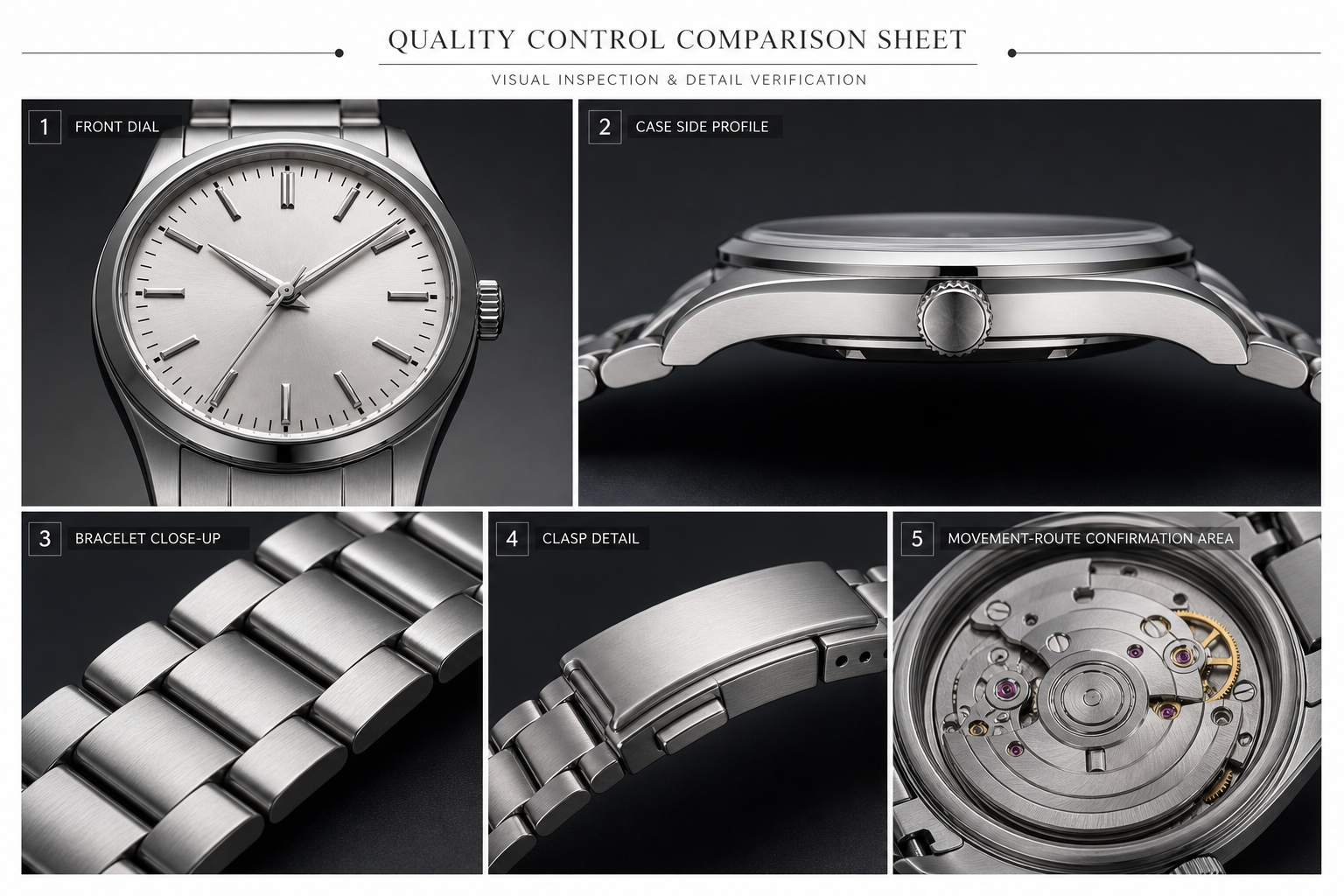
Why the Same AP Super Clone Model Can Appear at Different Prices
AP super clone price differences are often explained too lazily as “seller markup.” Markup exists, but it is not the whole story. Two listings for what looks like the same Royal Oak or Offshore-style replica may represent different factory tiers, different version updates, different movement routes, different bracelet quality, different QC consistency, or simply different market layers between factory output and the final dealer listing.
This matters because AP replicas are construction-sensitive. On a simpler watch, a small difference in bracelet finishing or case profile may be less obvious in daily wear. On a Royal Oak-style case, the bracelet, bezel, side profile, and dial texture are the watch. A cheaper AP replica that looks close in one front-facing image may feel very different once the case thickness, bracelet articulation, clasp quality, and movement behavior are considered.
Prices can change by factory label, version, movement configuration, seller channel, availability, and the level of communication or screening attached to the listing. For that reason, exact comparisons should be verified at the time of purchase, and a higher or lower price should not be read as proof of authenticity, factory origin, or long-term reliability.
Factory Tier and Version Differences
Factory tier affects price because higher-tier AP replicas usually require more careful execution in areas that are difficult to imitate cheaply: integrated bracelet geometry, octagonal bezel finishing, tapisserie dial texture, caseback movement presentation, and case thickness control. A more expensive version may cost more because it reduces obvious visual problems, not because it becomes perfect or equivalent to an authentic Audemars Piguet watch.
Version differences can be even more important than the factory name. A later batch may have a better dial texture, more accurate date placement, improved bracelet edges, cleaner clasp engraving, or a movement route that supports a thinner case. An older batch may still carry a respected factory label but lack the updates that made the newer version desirable. This is one reason price alone is unreliable: a high price can be attached to old stock, while a fair price can sometimes reflect a current version with less hype around it.
Movement route is a major part of replica watch pricing. On some AP models, the difference between a decorated base movement and a more integrated clone-style movement can affect case thickness, rotor noise, balance position, power reserve expectations, and caseback appearance. Buyers often focus on the movement name, but the better question is whether that movement route actually supports the model convincingly. Paying more for a movement claim that does not improve the watch’s thickness, layout, or usability is not automatically a smart upgrade.
Market Layers and Dealer Handling
After factory output enters the market, price can change because of handling. Sorting, screening, photography, communication, rejected pieces, replacement coordination, and distribution all add cost or at least add price justification. A dealer listing may also carry a premium because the watch has been more carefully presented, photographed, or filtered before being offered.
That does not mean a higher price guarantees cleaner QC. It means the final number may include more than the physical watch. The buyer may be seeing a price shaped by factory tier, stock timing, market access, dealer confidence, photo handling, and how strongly the listing is positioned. In a Guangzhou-linked network, the same underlying model can pass through different hands and reach buyers with different descriptions and different price expectations.
At Clean VS Factory, we usually separate price from proof. A higher price may be justified when it is tied to a clearer version, stronger visible execution, and a more credible movement route. It is much less persuasive when the only support is vague language like “best batch” or “top Guangzhou version.”
When a Lower Price May Hide a Different Version
A lower price is not always a bad sign, but with AP replicas it deserves careful interpretation. It may reflect an older batch, a simpler movement route, weaker bracelet finishing, less precise dial texture, looser date alignment, or a case profile that is slightly too thick. These are not small details on a Royal Oak-style watch. The integrated bracelet and flat case architecture make small differences easier to notice than buyers expect.
The cheaper AP replica versus premium version question should therefore be framed around tradeoff, not bargain hunting. If the lower-priced watch uses a simpler movement but has good external execution and the buyer understands the compromise, it may be rational. If the lower price is achieved through a thicker case, rough bracelet, poor bezel screw placement, and vague factory labeling, it is not really the same watch at a discount. It is a different version wearing the same model name.
One common mistake is comparing listings only by dial color and reference style. Blue dial Royal Oak-style replicas, for example, often attract stronger demand, but color popularity does not erase version differences. A cheaper blue dial with weak tapisserie texture and poor bracelet fit is not better value simply because the color is desirable.
Price Signals That Need Verification
Price should be cross-checked against version detail, QC photos, and movement claims. If a listing asks a premium, the visible evidence should support that premium: cleaner case side profile, better bracelet integration, sharper bezel finishing, more convincing dial texture, centered date, and a movement route that matches the stated model logic. If those details are missing or unclear, the price is only a number attached to a claim.
The most useful judgment is this: higher price can reduce risk when it corresponds to a better-confirmed version, but it cannot replace verification. Lower price can be sensible when the compromise is clear, but it becomes risky when the listing hides version identity behind broad factory language. AP super clone price differences make sense only when the watch is read as a combination of factory tier, version, movement route, visible execution, and market handling.
How AP Factory Labels and Version Claims Move Through Guangzhou
AP replica factory labels matter, but they are not complete identities. A label such as ZF AP, APSF AP, APF Offshore, or a reference to JF history can be useful only when it is connected to a specific AP model, version period, movement route, and visible construction. Detached from those details, the factory name becomes market shorthand. Shorthand is convenient, but it is not enough to judge a watch.
Guangzhou-linked market channels amplify this problem because labels move faster than technical detail. A new batch name can spread quickly through dealer chats and listings. An older version name can continue circulating long after the actual stock has changed. A factory comparison context can become simplified into “this factory is best,” even though AP replicas are too model-specific for that kind of blanket claim.
Factory Name Is Only One Part of the Claim
A useful AP factory claim should answer more than “which factory is this?” It should also point to the model reference, the batch timing, the movement route, and the visible features that support the claim. A Royal Oak 15400-style replica, a 15500-style replica, a 15202-style Jumbo, and an Offshore-style chronograph do not create the same manufacturing problem. A factory name that is meaningful for one may be less meaningful for another.
This is especially true because AP replicas are often judged by a combination of architecture and finishing. Case thickness, bracelet flow, bezel screw position, tapisserie dial texture, date window placement, clasp shape, and movement layout all interact. A factory may have strong case finishing but a weaker dial on a certain batch. Another may have a better movement route but less refined bracelet feel. The correct question is not simply “which factory is this really?” but “does the claimed factory and version make sense for this exact AP model?”
A responsible factory label claim should be testable against what is visible. If a listing claims a newer version, there should be some evidence of the update. If it claims a specific movement route, the case thickness, caseback view, and known model layout should not contradict that claim. If the description relies only on a factory name with no supporting detail, the label is weak evidence.
Factory Name Clarification: Factory names in the replica watch market, including labels such as ZF, APSF, APF, or older JF-related references, should be treated as buyer-facing market language. They can help organize comparison, but they are not official brand affiliations, audited manufacturer identities, or guarantees of identical quality across every AP-style model and batch.
Why Older Batch Names Keep Circulating
Older batch names keep circulating because the replica watch market does not reset cleanly every time a factory updates a model. Stock can remain in circulation. Photo sets can be reused. Dealers may continue using familiar names because buyers recognize them. Forum posts and chat screenshots can preserve outdated language long after the market has moved on.
JF history is a good example of why context matters. JF was historically important in AP replicas, but a modern listing casually invoking JF-style quality or old JF terminology does not automatically identify a current production source or guarantee current execution. The name may be used as a reference point, a comparison, or simply inherited language. Without batch evidence, it should not be treated as a technical certificate.
The same risk applies to “V2,” “V3,” or “latest version” language. Version numbers are not always standardized across every dealer network. One seller’s “new version” may refer to dial changes; another may use similar wording for a movement decoration update; another may simply be repeating the phrase because it sounds current. Version claims become useful only when the claimed change is specific enough to verify.
AP Models Make Factory Claims Especially Sensitive
AP models make factory claims more sensitive than many other replica watch families because the design exposes weak execution. The Royal Oak case is flat, angular, and unforgiving. The integrated bracelet must flow from the case without looking stiff or gapped. The octagonal bezel has visible screw positions. The tapisserie dial gives buyers an easy comparison point. Even a small mismatch in thickness or bracelet finishing can change the entire wrist impression.
This is why a broad AP replica factory label should never be treated like a universal ranking. A factory associated with a strong 15500-style model may not automatically be the safest choice for a 15202-style Jumbo, where thinness is the central challenge. A factory known for Royal Oak models may not carry the same advantage in Offshore chronographs, where movement thickness and chronograph layout create different risks. AP version claims must be model-specific or they lose much of their value.
The practical takeaway is firm: factory names are useful filters, not final proof. For AP replicas, the buyer-facing claim should be read together with reference, batch timing, movement route, case geometry, bracelet execution, dial texture, and QC evidence. If those pieces do not line up, the factory label alone should not carry the decision.
Movement Choice Is Where Visual Accuracy and Ownership Risk Split
In AP super clone discussions, movement choice is often treated as a badge of tier, but it has two different meanings. One meaning is visual: whether the movement layout, rotor, bridge decoration, balance position, and caseback view support the claimed AP model. The other meaning is ownership: whether the movement is likely to be stable enough for daily wear, reasonably serviceable, and not forcing the case to become too thick. A movement can look impressive in a caseback photo and still be a less comfortable ownership choice if it is noisy, difficult to service, or paired with a case that becomes too tall.
This split is especially important in Zhanxi-linked AP listings because movement language can travel through the market as shorthand. A dealer may emphasize “clone movement” or “upgraded movement” without explaining whether the change improves thickness, reliability, power reserve behavior, hand setting feel, or only the visual presentation under the caseback. For a Royal Oak-style watch, the movement route should be judged by what it does to the whole watch: side profile, date position, crown action, rotor noise, and expected maintenance risk. It should not be judged only by the name printed in the description.
Complicated AP-style replicas deserve extra caution. Offshore chronographs, skeleton-style models, perpetual-calendar-style layouts, and heavily decorated open caseback versions can create more risk than a simpler three-hand Royal Oak-style model. More subdials, more plates, more decorative layers, or more modified functions can make the watch more attractive in photos but less forgiving for a first-time buyer. A simpler, stable version with cleaner case and bracelet execution may be a better daily-wear decision than a more dramatic model with uncertain movement behavior.
Movement descriptions in the replica market should be read as configuration references, not as official brand-caliber claims unless there is clear, verifiable evidence. Buyers should distinguish between movement layout, decoration, reliability, and actual serviceability. On AP-style replicas, the movement route is most useful when it explains practical outcomes: whether the case can remain thin, whether the date position is plausible, whether the caseback view matches the claimed model logic, and whether the configuration creates avoidable maintenance risk.
Movement Evidence Note: Movement names should be treated as claims that need watch-specific support. A seller description, rotor engraving, or decorated bridge can help frame the discussion, but it should not be treated as proof that the movement is mechanically equivalent to the authentic AP caliber or that the watch will have the same service expectations. A movement photo may show layout and decoration; it does not prove lubrication quality, regulation, shock behavior, long-term durability, or future parts availability.
For AP-style replicas, the practical question is not simply whether the movement sounds more premium. The question is whether the movement route helps the case stay proportionate, keeps the date and hand positions plausible, avoids an overly thick side profile, and offers a realistic ownership experience. If the movement claim cannot be connected to those visible and practical outcomes, it should be read as marketing language rather than confirmed technical evidence.
What QC Photos Can and Cannot Prove in the Zhanxi Market Structure
AP replica QC photos should be treated as a checkpoint in the Zhanxi market structure, not as a final guarantee. By the time a buyer sees photos, the watch has usually moved beyond the production side and into a dealer-handling stage where it is being presented, described, and filtered for the market. That matters because the photos can show the actual unit in front of the camera, but they do not automatically verify every upstream claim attached to that unit.
This is where many buyers overread QC. A clean front photo of an AP super clone can confirm that the dial is not obviously crooked, the logo is not badly misplaced, and the date is not sitting halfway out of the window. It cannot prove that the watch came from the exact factory claimed, that the movement will run well for years, that the case has been pressure tested, or that the bracelet will feel comfortable after a week of wear. The strongest judgment here is simple: QC photos are useful evidence for visible execution, but weak evidence for origin, durability, and long-term ownership quality.
The Zhanxi QC process, as buyers usually encounter it, is also partly a presentation process. Lighting, angle, compression, and photo selection all affect what the viewer thinks they are seeing. A watch can look thinner from a flattering side angle. A tapisserie dial can look sharper or flatter depending on light. A bracelet gap can disappear if the watch is held at the right position. This does not mean every photo set is deceptive. It means AP replica QC photos should be read as limited visual evidence, not as a complete technical report.
Before making a decision, buyers should review real QC photos where available, including dial printing, hand alignment, bezel position, datewheel centering, bracelet fit, clasp engraving, case thickness, caseback finishing, and overall finishing. Factory labels and stock photos alone are not enough for a reliable judgment, and QC photos reduce uncertainty without removing every risk.
Visible Details QC Photos Can Help Confirm
Good QC photos can still reduce risk in a meaningful way. On an AP-style replica, the front dial image can reveal dial alignment, logo placement, marker positioning, date window centering, and whether the tapisserie texture looks roughly consistent across the dial. The bezel close-up can show whether the octagonal bezel sits evenly, whether the screws look flush, and whether any screw slot or screw head appears obviously different from the others.
Side photos matter more for AP than for many Rolex-style replicas because the Royal Oak design is thin, flat, and architectural. A side profile can show whether the case thickness looks believable for the model family, whether the crystal sits too high, and whether the bezel height makes the watch feel top-heavy. This is not about measuring perfection from a photo. It is about catching the obvious problems that would change the wrist presence immediately.
Bracelet and clasp photos can also be useful. The integrated bracelet is one of the hardest parts of Audemars Piguet replica construction to execute convincingly, so QC images should show the first link transition, bracelet taper, link gaps, clasp finishing, and whether the bracelet appears twisted or uneven. A movement photo, when available, may help confirm the general movement route or decoration style, but it should be interpreted carefully. A decorated bridge or rotor does not prove long-term reliability.
Claims QC Photos Cannot Fully Verify
QC photos cannot fully verify factory origin. They may support a factory claim if the visible details match a known version, but a photo set does not prove the whole sourcing chain. In the Guangzhou-linked market, factory names, version names, and dealer descriptions can travel through several hands before reaching the buyer. A watch may be described as a certain factory or batch, but the photos only allow the reader to compare visible traits against that claim.
Photos also cannot guarantee movement durability. A movement shot can show layout, rotor engraving, bridge decoration, and sometimes whether the movement is an integrated clone route or a plate-modified route, but high-end Audemars Piguet replica origins still matter when judging how consistently those parts are assembled and regulated. It cannot show whether the movement is clean, properly lubricated, well regulated, or free from hidden assembly problems. This distinction is especially important for AP replicas because movement claims often carry a large part of the price difference.
Water resistance is another area where photos prove almost nothing. A clean caseback, tight crown appearance, or neat gasket area in a photo should not be treated as a waterproof guarantee. The same is true for long-term bracelet comfort. A bracelet can look well finished in a photo and still feel sharp, stiff, or hair-pulling in daily use if the link edges and articulation are not well handled. For AP super clones, the ownership experience often lives in these tactile details that photos can suggest but not fully confirm.
Water resistance should not be assumed from a model name, case style, screw-down crown appearance, or dealer photo. If water exposure matters, the buyer should confirm whether the specific watch has been tested and what the seller’s policy actually covers; even then, replica watches should be treated more cautiously around water than genuine watches maintained through official brand service channels.
Why AP Case and Bracelet Photos Matter More Than Buyers Expect
AP replicas punish weak case and bracelet execution more than many simpler sports-watch replicas. A Submariner-style watch can hide some case-side compromises under a rotating bezel, crown guards, and a more conventional bracelet structure. A Royal Oak-style watch gives the case, bezel, and bracelet nowhere to hide. The flat surfaces, sharp transitions, octagonal bezel, exposed screws, and integrated bracelet turn small mistakes into visible geometry problems.
This is why case and bracelet photos should not be treated as secondary images. On an AP super clone, the front dial may look impressive while the side profile reveals too much thickness or an awkward bezel stack. The bracelet may look acceptable from above but show poor integration at the first link. The clasp may photograph well from the outside but show rougher finishing inside. In practice, a watch with a slightly less dramatic dial photo but stronger case and bracelet execution may be more convincing on the wrist than one that only wins in a straight-on image.
At Clean VS Factory, we tend to read AP QC photos from the outside inward: case profile and bracelet flow first, then dial texture and printed details, then movement claims. That order is intentional. AP design is built around structure and finishing, so a watch that fails in thickness, bezel fit, or bracelet integration usually cannot be rescued by a good-looking dial.
AP QC Angles Worth Seeing
The most useful AP QC photo set is not necessarily the largest one. It is the one that covers the right angles. A front dial photo helps with logo placement, tapisserie consistency, marker alignment, and date position. A side profile photo helps judge case thickness, crystal height, bezel height, and the overall flatness of the case. A bezel close-up helps reveal screw consistency and whether the bezel sits cleanly against the case.
Bracelet integration deserves its own view, especially around the first link where the case transitions into the bracelet. Clasp photos can show engraving quality, finishing consistency, and whether the clasp looks roughly aligned. A caseback or movement-route photo can be useful when movement claims are part of the listing, but it should never be treated as a full reliability certificate. The practical goal is not to authenticate the watch or prove every claim; it is to avoid accepting vague AP replica QC claims when the visible evidence is incomplete.
The main red flag is not one imperfect photo. It is a photo set that avoids the areas where AP replicas commonly show weakness: side profile, bracelet connection, clasp interior, bezel close-up, and date window. If those angles are missing, the buyer is being asked to trust the description more than the evidence.
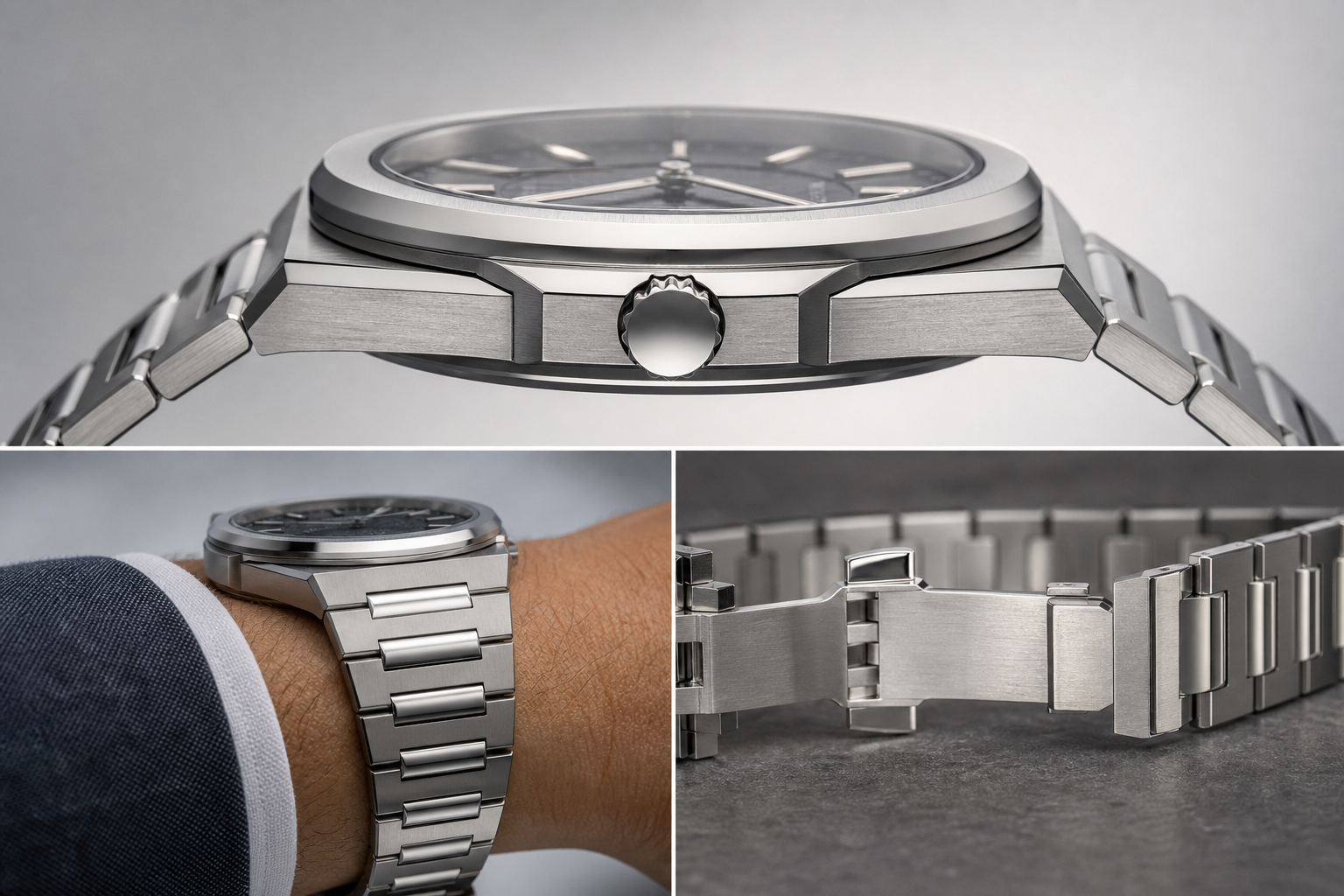
Why AP Super Clones Are Especially Dependent on Market Sorting
AP super clone quality depends heavily on market sorting because Audemars Piguet replica construction is less forgiving than it looks in photos. A Royal Oak-style replica is not just a dial with an AP logo. It is a stack of difficult shapes: thin case, octagonal bezel, visible screws, integrated bracelet, flat crystal, patterned dial, tight bracelet articulation, and alternating brushed and polished finishing. If one layer is off, the whole watch can feel wrong.
This is why version identification and visible screening matter after watches move into a market hub like Zhanxi. Two watches may carry the same general factory label and still differ in dial texture, bracelet feel, date alignment, bezel finishing, or case profile. Some of that difference comes from factory version changes. Some comes from batch variation. Some comes from how stock is sorted and presented before it reaches the buyer-facing market. The important point is that AP replicas require more filtering than many simpler watches because the flaws are easier to see and harder to hide.
A good market layer does not magically improve the watch. It can, however, influence which units are selected, how clearly versions are described, and whether obvious problem pieces are separated from stronger examples. That is the real importance of sorting. It does not turn a weak version into a strong one, but it can reduce the chance that a buyer mistakes a weaker batch or mixed-description piece for a higher-tier AP super clone.
Integrated Bracelet Design Raises the Stakes
The Royal Oak bracelet is not an accessory added to the case. It is part of the case architecture. The first link, bracelet taper, link articulation, edge finishing, and clasp all affect the way the watch wears and the way it looks on the wrist. On a strap-based watch, a slightly average strap can be replaced or ignored. On an AP-style integrated bracelet, poor execution is built into the visual identity of the watch.
This is why market sorting matters. A batch with uneven first-link fit, stiff articulation, sharp link edges, or inconsistent brushing can look acceptable in a front-facing photo but feel noticeably weaker in hand. The bracelet has to drape, not just attach. It has to follow the wrist without looking loose, rigid, or misaligned. For AP replicas, bracelet fit is not a small comfort issue; it is one of the main visual tells of quality.
Buyers often focus first on the dial because it is the easiest detail to compare online. That is understandable, but it can lead to a bad read. A strong tapisserie dial on a bracelet that feels rough or sits poorly will not create a convincing daily-wear object. The more useful question is whether the bracelet and case work together as one structure.
Case Geometry Is Hard to Hide
AP case geometry is unusually exposed. The Royal Oak case does not use soft curves to conceal thickness. It has flat planes, a defined mid-case, a visible bezel stack, and a bracelet that flows directly out of the case. If the case is too thick, the bezel too tall, the crystal too proud, or the side profile too blocky, the watch loses the low, sharp stance that makes the design recognizable.
This is one reason AP version differences matter more than casual buyers expect. A fraction of a millimeter in thickness may sound like a forum obsession, but on a flat integrated-bracelet watch it can change the wrist impression. The watch may look heavier, taller, or less refined, even if the dial photo looks clean. Market sorting becomes relevant because the side profile is one of the fastest ways to separate a more mature AP replica from an older or lower-tier execution.
The same applies to bezel fit and lug transition. The octagonal bezel should not look like a separate cap sitting awkwardly on the case. The case-to-bracelet transition should not look pinched or loose. These are not luxury-theory details. They are the parts of the watch the eye reads immediately when the wrist turns.
Dial Texture and Bezel Screws Create Easy Comparison Points
The tapisserie dial and bezel screws are the details most buyers notice first because they are easy to discuss in photos. They also create easy comparison points between versions. Tapisserie texture can look too flat, too sharp, too uniform, or poorly aligned with the dial furniture. Logo placement can sit slightly high or low. The date window can show a datewheel that is off-center or mismatched in font weight. None of these details alone tells the whole story, but together they help identify whether a watch belongs to a stronger or weaker execution tier.
Bezel screws are similarly sensitive. On an AP-style design, the screws are not hidden hardware; they are part of the face of the watch. Inconsistent screw appearance, uneven seating, rough finishing, or odd positioning can make the watch look less refined even from normal viewing distance. This is why AP QC is difficult: the design turns functional-looking details into visual checkpoints.
Market sorting matters because these details can vary across batches and presentations. A listing may use the same factory name, but the actual watch may show an older dial texture, a different bezel execution, or a less convincing date alignment. For AP super clones, the buyer should assume that the factory label begins the evaluation, not ends it.
How to Interpret “Guangzhou Source” Without Overtrusting It
A Guangzhou source replica watch claim should be read as context, not proof. It may tell the reader that the watch passed through a major trading and distribution network, but it does not automatically identify the factory, version, movement route, or QC standard. This distinction is the cleanest way to understand AP replica market claims without turning a location into a quality certificate.
The practical hierarchy is straightforward. A location claim is the weakest evidence by itself. A factory label is more useful, but only when tied to a specific model and batch. Version detail is stronger when it matches visible construction. QC evidence is stronger still for what can be seen, though it remains limited. Movement and durability claims require the most caution because they often cannot be fully verified from photos or market shorthand.
The mistake is treating “Guangzhou” as if it answers the whole question. It does not. Guangzhou can describe where the watch was traded, sorted, photographed, or distributed. It does not prove that the watch is the latest version, that the movement claim is accurate, or that the bracelet finishing is equal to another example with the same description.
Location Is Context, Not Proof
Guangzhou matters because many AP replicas, dealer descriptions, QC photo sets, and market claims move through that ecosystem. But a Guangzhou connection is not the same as factory identity. A watch can be routed through Guangzhou-linked channels while still involving distributed production, mixed stock, dealer relabeling, or older batch language.
This is especially important for AP replicas because buyers often use regional claims as shorthand for quality. Phrases such as “Guangzhou source,” “Zhanxi version,” or “top Guangzhou batch” may sound specific, but they can be vague unless they are supported by model, factory, version, and visible evidence. The stronger interpretation is this: Guangzhou tells you something about market path, not necessarily about technical quality.
A location claim may be useful as one clue in the larger story. It should not be the reason a buyer accepts a movement claim, ignores missing QC angles, or assumes a higher price is justified. If the claim cannot be connected to visible details, it remains market language.
Version Details Matter More Than Market Shorthand
For AP replicas, version detail matters more than broad market shorthand because different models expose different weaknesses. A Royal Oak 15400-style watch, a 15500-style watch, a 15202-style thin model, and an Offshore-style chronograph do not create the same problems. Case thickness, movement route, dial layout, bracelet structure, and chronograph architecture all change the evaluation.
This is why a useful AP replica claim should include more than a regional source. It should make sense as a model-specific statement: factory label, model reference, batch timing, movement route, and visible construction should not contradict one another. If a listing claims a premium integrated movement but the case thickness, movement photo, or version details suggest an older route, the location claim does not solve that conflict.
Factory labels can still matter. ZF, APSF, APF, and other names are not meaningless. The problem begins when the label is detached from the actual watch in front of the camera. A factory name without version detail is incomplete. A version claim without QC evidence is thin. A Guangzhou claim without either is mostly market shorthand.
Strong Claims Should Have Specific Evidence
Strong claims should be supported by specific evidence or clearly stated limits. If a watch is described as a newer version, the visible details should reflect that: updated dial texture, improved case profile, cleaner bracelet integration, more consistent bezel work, or a movement route that matches the claim. If the claim is about movement, a movement photo may help, but it still does not prove service condition, power reserve, or long-term reliability.
The same standard applies to upgraded parts. Claims about improved bracelet finishing, corrected dial color, thinner case, better datewheel, or stronger clasp should not be accepted only because they sound current. They should be visible somewhere in the photo set or explained with enough specificity to be judged. Vague improvement language is common in fast-moving replica markets because it is easy to repeat and hard to verify.
Our team usually treats these claims as a consistency test rather than a yes-or-no guarantee. Does the factory label fit the model? Does the version claim fit the visible details? Do the QC photos show the areas where AP replicas usually fail? If those pieces do not line up, the safest interpretation is caution, not confidence.
Red Flags in Vague Market Claims
The most common red flag is the phrase that sounds premium but says almost nothing: “top Guangzhou version,” “best market batch,” “latest AP super clone,” or “same factory quality” without a model-specific explanation. These phrases may be attached to good watches or weak watches. By themselves, they do not tell the reader enough.
Unclear factory names are another warning sign. If the description shifts between factory labels, uses outdated batch names without context, or avoids saying which version is being shown, the claim needs more scrutiny. Reused photos also weaken the evidence, especially if the watch being discussed is supposed to be a specific unit. Missing side-profile images are particularly concerning for AP because case thickness and bezel height are central to the design.
Inconsistent model descriptions should also slow the reader down. A listing that mixes references, claims a movement route that does not fit the case architecture, or describes a chronograph, diver, and standard Royal Oak with the same generic language is not providing strong evidence. For AP replica market claims, specificity is not decoration. It is the difference between a useful claim and a sales phrase.
Legal, Disclosure, and Authenticity Boundaries
Replica watches can raise trademark, customs, import, resale, disclosure, and platform-policy issues depending on jurisdiction and transaction context. This article does not give legal advice, and it should not be read as saying that any replica watch is authorized, risk-free to import, or acceptable to resell in every market. The safer interpretation is that AP-style replicas are imitation products and should not be described, traded, or presented as authentic Audemars Piguet watches.
This boundary matters because supply-chain language can blur the reader’s perception. A phrase such as “AP super clone,” “factory version,” or “Guangzhou source” may describe a replica-market category, but it does not create brand authorization or genuine status. A watch may imitate the visual profile of a Royal Oak or Offshore-style model, but buyers should still expect differences in movement behavior, finishing tolerance, warranty access, serviceability, durability, and legal status compared with an authentic watch.
Disclosure is also part of responsible interpretation. If a replica watch is discussed, photographed, gifted, sold, or serviced, it should not be represented as genuine. The same caution applies to boxes, cards, serial-style markings, and factory labels. These details may be used in the replica market to complete the presentation, but they should not be treated as proof of authenticity or as permission from the original trademark owner.
Claims such as “perfect,” “same as genuine,” or “guaranteed to pass inspection” should be treated with caution. A more reliable comparison looks at the actual model version, movement configuration, finishing details, and available QC evidence. The safest use of factory and movement information is to avoid misunderstanding quality or overpaying for vague claims, not to misrepresent a replica watch as genuine.
Seller policies should also be verified directly rather than assumed from market language. Return terms, repair options, shipping expectations, customs risk, water-resistance testing, payment handling, and after-sales support can vary by seller and situation. A Guangzhou route, factory label, QC photo set, or CleanVSFactory-style comparison note should not be read as a promise about any seller’s policy unless that seller states the terms clearly.
Guangzhou as the Nerve Center, Not the Whole AP Replica Industry
The cleanest conclusion is this: the Guangzhou AP replica market matters because it concentrates the flow of watches, information, photos, dealer language, price signals, and distribution. It does not mean Guangzhou alone explains the full technical identity of an AP super clone. Treating Zhanxi as the whole industry makes the market easier to talk about, but less accurate to understand.
That distinction is not academic. A watch can pass through Guangzhou-linked channels and still depend on production-side decisions made elsewhere, a movement route from a separate supplier, a bracelet finish from a different production layer, and a dealer description that simplifies the story by the time the buyer sees it. Zhanxi is important because it is where many of those layers become visible to the market, not because it automatically proves where every case, dial, bracelet, or movement was made.
The Cleanest Way to Think About Zhanxi
Zhanxi is best understood as a coordination point. Factory output enters a market structure, dealer networks interpret and present that output, QC photos become part of the buyer-facing evidence, and price differences start to reflect both real version differences and market handling. That is why the same AP model can appear with similar photos but different claims, different confidence levels, and different pricing logic.
The strongest way to read a Zhanxi-related claim is to ask what kind of evidence it actually provides. A Guangzhou connection may explain the market path. It may suggest the watch moved through a known trading and distribution center. It may also explain why the listing language sounds familiar across multiple dealers. But it is not a quality certificate, a factory certificate, or proof that the watch belongs to a specific technical tier.
This is where many discussions become too casual. “Guangzhou source” sounds specific, but in practice it can describe market routing more than manufacturing origin. “Factory version” sounds technical, but without model context and visible execution it can become shorthand. “QC passed” sounds reassuring, but it usually confirms only what the photos can reasonably show. The AP super clone supply chain becomes easier to interpret when each claim is kept in its proper lane.
What Buyers Should Take Away From the Supply-Chain View
The main value of understanding the AP replica market structure is not finding a shortcut. It is avoiding false confidence. Geography is weak evidence by itself. Factory labels are more useful, but only when tied to a specific AP reference, batch timing, movement route, and visible construction. QC photos are stronger buyer-facing evidence for surface execution, but they still do not prove long-term reliability, water resistance, or every upstream claim.
A careful reader should treat the chain like this: location explains market movement; factory and version claims explain the claimed production identity; QC photos show the actual unit’s visible condition; price reflects a mixture of version, handling, risk, and positioning. None of these points should be used alone. The mistake is not believing too little or too much. The mistake is letting one piece of information do the work of all the others.
At Clean VS Factory, we usually frame this as version interpretation rather than source worship. A factory name or Guangzhou connection can start the conversation, but the real judgment comes from whether the watch’s case shape, dial execution, bracelet integration, movement route, and QC evidence make sense together. If those details conflict, the regional claim should not rescue the watch.
For CleanVSFactory, the goal is to make replica watch comparison easier to understand by connecting factory names, movement claims, visible QC details, and realistic ownership limits. That approach does not turn a market label into proof; it simply gives readers a more traceable way to compare what is being claimed against what can actually be checked.
Why This Matters Most for AP Super Clones
This supply-chain view matters especially for AP because Royal Oak and Offshore-style replicas are unforgiving. A Submariner-style case can sometimes hide small compromises because the design is familiar, round, and mechanically straightforward. An AP-style watch exposes more of its construction. The bezel sits flat and geometric. The bracelet is integrated into the case. The tapisserie dial catches light across dozens of small surfaces. The side profile quickly reveals whether the movement route supports the correct thickness.
That is why market sorting, version clarity, and dealer presentation have an outsized effect on AP super clones. Two watches with the same broad factory label may not feel equal if one has cleaner bracelet articulation, a better side profile, sharper bezel fit, or more convincing dial texture. On AP designs, small differences do not always stay small. They often affect the whole wrist presence.
The responsible way to understand Guangzhou is therefore neither to dismiss it nor mythologize it. Zhanxi is a nerve center because trading, sorting, dealer claims, QC presentation, pricing, and distribution intersect there. It is not the whole AP replica industry, and it is not a substitute for evaluating the actual watch. For readers trying to understand what Guangzhou really means, that is the key distinction: Zhanxi explains how many AP super clone claims reach the market, but the watch still has to stand on its own visible execution, version context, and realistic ownership expectations.
Disclosure: This article is for general educational and comparison purposes only. Replica watches are not genuine products from the original luxury brands, and brand names are used only to identify reference designs or comparison topics. Factory names, movement descriptions, prices, availability, QC details, seller policies, and version information can change, so readers should verify important details with the seller before making a purchase decision. Replica watches should not be represented, resold, or used as genuine watches.