
After-sales support for an AP-style super clone is not a magic reset button. Many owners assume that loose screws, clasp tension, rotor noise, date problems, or bracelet discomfort can all be handled later, but the real question is whether the issue is a serviceable fault or a design limitation that should have been rejected during QC, which makes reference-based AP factory comparison more useful than judging the watch by maker name alone. Royal Oak-style replica watches make this judgment especially important because the case profile, bezel alignment, dial texture, bracelet flow, and finishing are highly exposed.
This article helps separate problems that can reasonably be adjusted from flaws that are better avoided before purchase. The practical focus is simple: accept minor serviceable issues only when the core watch is already strong, and do not rely on after-sales repair to correct poor proportions, weak dial architecture, incorrect movement layout, or major bracelet integration problems.
Replica watches should be clearly understood as replica-market products, not genuine watches from the original luxury brands. Brand names such as Audemars Piguet are used here only to identify the genuine reference design being discussed and to explain why certain visual or mechanical details matter. A replica watch should not be represented, sold, or used as an authentic Audemars Piguet watch.
| Issue Type | After-Sales Potential | Buyer Judgment |
|---|---|---|
| Bracelet sizing, loose screws, clasp tension | Usually adjustable if parts are well made | Acceptable if the bracelet shape and fit are already good |
| Rotor noise, rough winding, unstable running | May be serviceable after movement inspection | Check movement type before approving repair |
| Date faults, hand interference, repeated stopping | Potentially fixable, but opening the case adds risk | Do not force functions; request evaluation early |
| Dial texture, index alignment, date centering | Limited repair value unless parts are replaced | Judge carefully during QC photos before acceptance |
| Case thickness, bezel shape, bracelet integration | Not realistic after-sales corrections | Reject if these flaws affect the whole watch profile |
| Chronograph layout or complication routing | Function faults may be serviced; architecture cannot | Avoid models where layout or thickness is already wrong |
Quick Questions Before You Read
Q: Can after-sales service fix most AP super clone problems?
No. It can help with some fit, clasp, screw, and movement faults, but it cannot correct major case, dial, bracelet, or movement architecture flaws.
Q: Should small cosmetic marks always be repaired?
Not always. If a faint mark or dust spot is not visible on the wrist, opening or refinishing the watch may create more risk than benefit.
Q: Which problems matter most during QC?
Check case thickness, bezel alignment, dial layout, date centering, bracelet integration, clasp fit, and obvious movement behavior before accepting the watch.
Q: Are chronograph AP replicas riskier to service?
Often yes. Sticky pushers may be repairable, but incorrect subdial spacing, flawed function routing, or excessive thickness are design issues, not simple repairs.
After-Sales Expectations Should Be Set Before the Watch Arrives
The most important AP super clone after sales rule is simple: after-sales support can usually improve fit, correct small assembly issues, and sometimes solve functional problems, but it cannot rebuild the watch into a better version after you have accepted it. This matters more with an AP replica than with many simpler sports watches because the Royal Oak design exposes proportion, bracelet flow, dial texture, and case thickness immediately.
A buyer should not wait until after receiving the watch to ask, “What can be fixed?” The better question is: “Which problems am I willing to accept if they cannot be fixed later?” AP replica after-sales is useful, but it is not magic. It can deal with certain serviceable issues. It cannot change a weak case profile, a badly executed tapisserie dial, or a movement architecture that forces the case to sit too thick.
This is where many buyers misjudge the category. They see a strong front-facing Royal Oak replica photo and assume any small problem can be handled later. On an AP-style watch, the front photo is only part of the story. The integrated bracelet, octagonal bezel, visible screws, thin-case expectation, and display-back movement presentation all create places where a flaw may be structural rather than adjustable. Once the watch is in hand, the line between “repairable” and “not worth repairing” becomes much clearer, and sometimes more expensive.
A more traceable way to think about after-sales is to separate what can be verified before shipment from what can only be learned in ownership. Photos can show case shape, dial position, bracelet fit, screw seating, and date centering. Short videos can help with crown operation, date change, hand clearance, and obvious rotor behavior. Longer-term stability, lubrication quality, and water resistance still depend on the individual watch, the movement route, and any testing performed after delivery.
Evidence Boundaries for AP Super Clone After-Sales Claims
After-sales discussion in the replica watch market has to be read carefully because much of the available information is based on seller descriptions, buyer experience, QC photos, and repair outcomes rather than formal factory documentation. A factory name, movement nickname, or version label can be useful for organizing buyer expectations, but it should not be treated as official proof of material quality, water resistance, movement origin, or long-term service reliability. For this reason, the safest ownership approach is to judge the individual watch through observable evidence: clear photos, function videos, crown behavior, bracelet fit, and the seller’s willingness to address problems before shipment.
Authentic Audemars Piguet model information can help buyers understand why Royal Oak-style details matter, but it cannot prove that an imitation watch has the same finishing, tolerances, movement construction, water resistance, or service support. Replica comparisons should therefore stay practical rather than absolute. A super clone can be visually convincing in certain areas while still differing in movement behavior, finishing consistency, gasket reliability, bracelet feel, and long-term parts access. Those differences are especially relevant after purchase because a watchmaker can sometimes correct a fault, but cannot recreate the quality-control system, authorized parts network, or factory service structure of the genuine brand.
Water resistance deserves its own caution. Unless the individual replica has been pressure-tested after purchase by someone qualified to do so, owners should treat water resistance as unverified. A screw-down crown, rubber gasket, or caseback engraving is not enough to assume swimming, showering, or water exposure is safe. This matters in after-sales because moisture damage can turn a small complaint into a movement replacement problem, and moisture-related failures are often harder to resolve than a loose screw, clasp adjustment, or ordinary timekeeping issue.
The safest use of genuine-reference information is as a visual comparison point, not as a promise of official equivalence. Case proportions, dial texture, bracelet taper, movement display, and finishing language can be compared to understand what the replica is trying to approximate, but the replica should not be represented as an authentic watch, a substitute for authorized retail, or a product with official Audemars Piguet affiliation.
Factory Name and Price Do Not Decide After-Sales Reality
A common mistake is assuming that a famous factory name automatically means easier after-sales support. Factory reputation is useful as a starting signal, but it does not apply equally to every AP model, every version, or every movement route. A factory may make a strong time-and-date Royal Oak but still have weaker execution on a chronograph, openworked model, perpetual-calendar-style layout, or extra-thin case. The buyer should judge the specific reference, version, and movement inside the watch rather than treating the factory label as final proof.
Price also needs careful interpretation. A higher price may reflect a better movement, more convincing case finishing, limited availability, seller margin, or the seller’s willingness to absorb after-sale risk. It does not automatically mean the watch will be easier to repair or more reliable in daily wear. For AP super clones, the better question is whether the price difference buys something the owner will actually benefit from: better case thickness, cleaner bracelet flow, a more stable movement route, or improved dial execution.
Replica watch prices can vary by factory label, version, movement configuration, finishing quality, seller channel, availability, and after-sales support. Buyers should compare like-for-like details before treating one option as better value, and exact pricing should be verified at the time of purchase rather than assumed from general market comments.
This is especially important for first-time AP buyers. A watch that looks strong in photos may not be the most practical daily-wear choice if the movement is difficult to service, the chronograph system is fragile, or the case architecture is already compromised. Visual accuracy and ownership reliability overlap, but they are not the same priority. A good photo watch can still become a frustrating daily watch if the crown action, rotor behavior, date mechanism, or bracelet comfort is weak.
A factory comparison is most useful when it is tied to the specific reference, version, movement, and visible execution details rather than treated as a universal ranking. Two watches with the same factory-market label can differ because of batch changes, dial suppliers, movement configuration, bracelet finishing, or model complexity. Buyers should use the name as one piece of evidence, then confirm the actual watch through QC photos and function checks.
Factory Name Clarification: Factory names in the replica watch market are buyer-facing reference labels rather than official brand affiliations or guarantees of identical quality across every AP-style model. They can help organize comparisons, but buyers should still judge the exact watch by version, movement route, case profile, bracelet integration, dial execution, and visible QC evidence.
The Three Categories of AP Replica Problems
For ownership expectations, it helps to divide AP super clone problems into three groups.
- Simple adjustments: bracelet sizing, link screws, clasp feel, mild bracelet play, and small comfort issues. These are usually the least alarming problems after receiving the watch.
- Repairable technical problems: winding roughness, unstable running, date behavior, hand alignment, or movement noise that may require evaluation or service. These are not always fatal, but they are more serious than a loose bracelet screw.
- Structural flaws: wrong case thickness, poor case shape, weak dial texture, incorrect bracelet integration, or movement layout problems. These should usually be rejected before QC acceptance because after-sales service rarely makes them meaningfully better.
The strongest buyer judgment is this: accept a serviceable issue only if the core watch is already right. A slightly loose clasp on a good Royal Oak replica is a manageable annoyance. A thick, awkward case with a weak dial is not something after-sales can realistically rescue.
Why AP Replicas Are Less Forgiving Than Many Sports Watches
The Royal Oak is not a forgiving design. A Submariner-style replica can hide small imperfections behind a rotating bezel, a thicker tool-watch case, and a more conventional bracelet. A Royal Oak replica has fewer hiding places. The case, bezel, bracelet, and dial are one visual system. If one part is off, the whole watch can feel wrong.
The integrated bracelet is a good example. On a normal bracelet watch, a slightly imperfect end link may not ruin the impression. On a Royal Oak-style case, the first link must flow from the case cleanly. If the transition is stiff, gapped, or poorly shaped, it affects the entire wrist presence. The same applies to the bezel and dial: the octagonal bezel draws attention to alignment, and the tapisserie pattern makes dial flaws more visible than on a plain black dial.
AP super clone watches also tend to create higher buyer expectations because strong versions can look convincing in casual photos. That visual strength can become a trap. The closer a watch appears from the front, the more frustrating it feels when the side profile, bracelet articulation, or movement behavior disappoints in daily use.
Visual accuracy should be judged through specific details rather than broad marketing language. Case thickness, bezel height, screw seating, hand length, dial grid alignment, date aperture position, bracelet taper, and clasp construction all affect how convincing an AP-style watch feels in real use. A watch can be attractive in a single photo while still showing differences under close inspection or during daily wear.
Why QC Matters More Than After-Sales Promises
QC acceptance is the point where many AP problems should be separated before they become post-purchase problems. After-sales support may help if a screw backs out, the clasp needs attention, or the movement requires evaluation. It is much less helpful if the watch was accepted with the wrong case profile, obvious dial misalignment, or poor bracelet geometry.
At Clean VS Factory, we encourage buyers to separate visual accuracy from ownership experience before approving an AP-style watch. A watch can look attractive in one seller photo but still carry a flaw that will bother the owner every time it is worn. The purpose of QC is not to chase perfection. It is to catch the problems that are expensive, risky, or unrealistic to correct later.
The practical rule is direct: if the issue affects adjustment, comfort, or basic operation, it may be manageable after delivery. If the issue affects the architecture of the watch, the buyer should be cautious before accepting it. After-sales can improve the ownership experience, but it usually cannot change the design quality of the piece you approved.
Buyers should confirm return, repair, shipping, and after-sales terms before ordering because these terms can vary by seller, model, movement, and location. That confirmation is separate from judging the watch itself. Even when a seller is responsive, the buyer still benefits from rejecting structural flaws before shipment rather than relying on later intervention.
Simple Adjustments That Are Usually Manageable
Not every issue after delivery means the AP super clone is defective. Some complaints are normal adjustment items, especially on Royal Oak-style watches with integrated bracelets and visible screws. A Royal Oak replica loose bracelet, a backed-out bracelet screw, or a clasp that feels slightly light can often be handled without opening the movement or treating the watch as a major failure.
The key is knowing the difference between normal adjustment and poor machining. AP replica bracelet adjustment is common because the bracelet is central to how the watch wears. Link sizing, screw security, clasp tension, and wrist comfort may need attention after the watch arrives. These are usually manageable if the parts are properly made. They become more concerning when the links do not seat evenly, the screw threads are damaged, or the clasp construction itself feels weak.
Bracelet Sizing and Link Fit
Integrated AP-style bracelets are less forgiving than standard bracelets because the fit depends on both sizing and articulation. A watch that is one link too loose may feel top-heavy. A watch that is too tight may make the bracelet feel sharper than it really is. Before judging the bracelet quality, the sizing needs to be close to correct.
Link sizing itself is not a serious defect. The concern is whether the links sit cleanly once sized. On a decent AP super clone, the bracelet should articulate without obvious binding, and the link gaps should look reasonably even. It does not need to feel like a genuine hand-finished bracelet, but it should not feel crude, jagged, or unstable.
A non-obvious point: many buyers judge bracelet comfort too early. The Royal Oak-style bracelet has flat surfaces, bevels, screws, and tight link spacing. It can feel different from an Oyster-style bracelet even when properly adjusted. A little unfamiliarity is normal. Uneven link seating, sharp machining, or first-link misalignment is not.
Loose Screws and Minor Bracelet Play
Loose bracelet screws are one of the more common manageable issues. Because AP-style bracelets use visible screws, a backed-out screw looks alarming, but it is often a simple adjustment if the threads are healthy. The mistake is attacking it with the wrong screwdriver or too much force. That can scar the screw head, damage the surrounding brushing, or strip the threads.
Minor bracelet play also needs context. A Royal Oak-style bracelet should not feel like a cheap folded bracelet, but it also should not be completely rigid. Some articulation is necessary for comfort. The problem is not movement itself; the problem is uneven movement, clicking links, visible gaps, or a first link that does not align with the case.
If a bracelet screw backed out after delivery, it should be checked carefully rather than ignored. If one screw is loose, inspect the surrounding links as well. A single loose screw can be an adjustment issue. Multiple loose screws or poor screw seating across the bracelet suggests weaker assembly or machining.
Clasp Tension and Closing Feel
Clasp feel is another area where buyers often overreact or underreact. A clasp that feels slightly light may be adjustable or simply part of the replica’s construction. A clasp that does not stay closed, opens with light pressure, or sits unevenly on the wrist is more serious.
AP-style deployant clasps rely on precise seating. If the clasp snaps shut cleanly and holds during wear, a less luxurious closing feel may be tolerable. If the clasp feels weak because the metal is poorly machined or the locking surfaces do not engage correctly, after-sales adjustment may not fully solve it. The distinction matters because tension can sometimes be improved, but bad clasp geometry usually cannot.
What to Check Before Calling It a Serious Problem
Before treating a bracelet or clasp complaint as a major defect, check a few practical points. Are the bracelet screws seated flush and undamaged? Do the links sit evenly after sizing? Does the clasp snap shut and stay shut during normal wrist movement? Are the gaps symmetrical, or is one side visibly off? Does the issue affect actual wearability, or is it mainly a feel difference compared with a higher-end watch?
The most sensible approach is to fix simple fit issues first and judge the watch after that. A loose bracelet after delivery may be easy to correct. A poorly machined bracelet that never drapes properly is a different category. Buyers should not confuse the two, because one is an adjustment item and the other points toward a deeper quality problem.
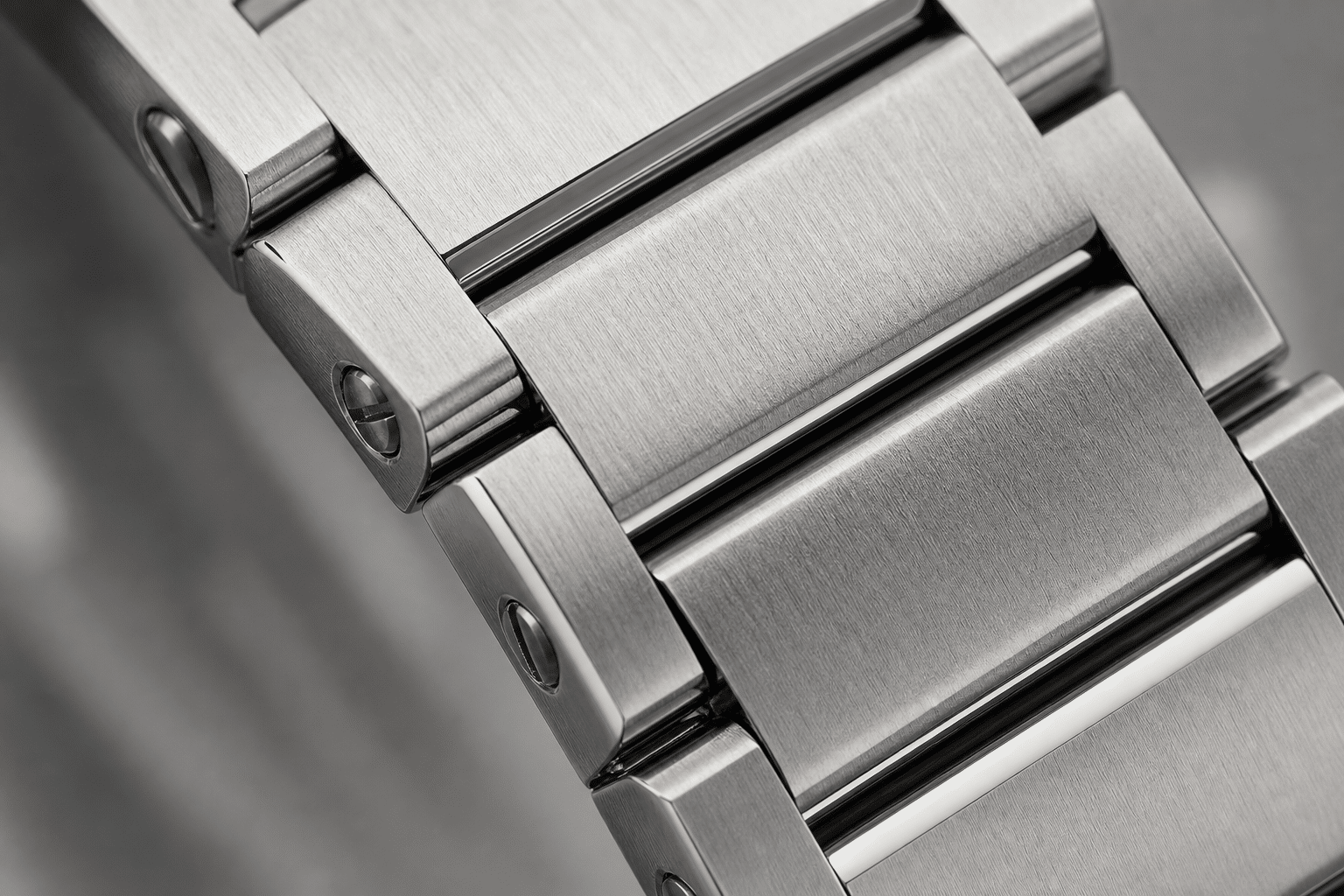
Rotor Noise, Winding Feel, and Other Minor Mechanical Complaints
AP replica rotor noise and AP replica winding feel are two of the most common early ownership complaints. They are also easy to misread. A watch that runs but feels noisy is not automatically defective, but noise and roughness should not be dismissed blindly either. The right response depends on the type of sound, whether it changes, and whether the watch shows other symptoms.
Replica AP watches may use different movement routes depending on the model, factory, and version. Some use clone-style movements designed to support better case proportions. Others use decorated or modified base movements. Because of that, two AP super clones can feel different even if the dial side looks similar. The owner should judge the symptom, not just the factory name.
Movement trust in the replica market depends on understanding what the movement claim actually describes: architecture, decoration, layout, reliability expectation, or simply a market name used by sellers. A movement that looks correct through a display back may still differ in parts quality, lubrication, regulation, and service access, so mechanical symptoms should be judged by behavior as well as appearance.
Movement descriptions in the replica market should be checked carefully because they may refer to layout, decoration, clone architecture, or seller terminology rather than an official brand-manufactured caliber. A movement label should not be read as proof that the watch contains an authentic Audemars Piguet movement or that it will be accepted by official service channels.
When Rotor Noise Is Mostly an Annoyance
Mild automatic rotor sound can be normal in many replica movements, especially in quiet rooms or when the watch is moved quickly near the ear, where expectations shaped by AP super clone water resistance discussions can make normal mechanical feedback seem more alarming than it is. Some movements have a more audible rotor by design, and some cases amplify sound more than others. If the watch keeps time reasonably, winds on the wrist, and the sound is a consistent light whir, it may be more of an ownership annoyance than an urgent repair issue.
The warning signs are different. Scraping, grinding, metallic rubbing, sudden loud changes, or a rotor that feels like it is hitting the caseback should be evaluated. A rotor sound that becomes worse over time deserves more attention than one that has been stable since delivery. The practical question is not “Can I hear the rotor?” but “Does the sound suggest friction, looseness, or damage?”
Owners coming from quartz watches or very quiet Swiss automatics often expect silence. That expectation can make normal mechanical sound feel more serious than it is. On the other hand, using “replicas are noisy” as an excuse for every sound is also a mistake. Mild whirring may be livable. Harsh mechanical contact is not something to ignore.
When Winding Feel Suggests a Real Problem
Winding feel should have some resistance, but it should not feel like metal scraping through sand. Slight unevenness can be acceptable, especially on a new or unserviced replica movement. Heavy resistance, slipping, grinding, or inconsistent engagement points toward a more serious issue than a simple external adjustment.
The crown feel also matters. If the crown is difficult to pull, does not engage positions cleanly, or feels unstable when setting the time, the problem may involve the keyless works or movement-side adjustment. That is a different situation from a bracelet screw or clasp issue. It may require a qualified repair evaluation, and results depend on the movement architecture and parts access.
A sensible buyer should not keep forcing a crown that feels wrong. Repeated rough winding can turn a manageable problem into a damaged stem, crown tube, or winding mechanism. If the winding feels unusually tight or inconsistent from the start, stop treating it as “break-in” and have it checked before regular wear.
Power Reserve Complaints and User Habits
Short power reserve is another area where one short wearing session does not prove much. An automatic watch may stop overnight if it was not fully wound, if the owner had a low-activity day, or if the rotor did not build enough reserve on the wrist. Before assuming a movement fault, fully wind the watch by hand using a careful, moderate number of turns appropriate for the movement, wear it normally, and observe whether the problem repeats.
If the watch consistently stops after a short period despite being properly wound, the issue becomes more serious. It may involve poor winding efficiency, movement dryness, friction, or a mainspring-related problem. Those are not bracelet-level complaints. They move the watch into the category of mechanical evaluation.
The judgment here is practical: mild rotor sound, slightly different winding feel, and one short runtime event are worth monitoring, not panicking over. Repeated stopping, grinding, slipping, or sudden sound changes should not be normalized. AP super clone ownership becomes easier when the buyer separates movement character from symptoms that suggest real service need.
Repairable Technical Problems That May Require Movement Service
An AP replica movement problem sits in a different category from a loose bracelet screw or a clasp that needs minor tension adjustment. Once the caseback has to be opened, the issue becomes a service question, not a simple after-sales tweak. That does not mean the watch is ruined, but it does mean the outcome depends on the movement inside, the availability of parts, and whether the person handling the repair understands replica automatic movement architecture.
The practical mistake is assuming every running issue can be solved with a quick adjustment. Some can. A hand that was installed slightly off-center may be corrected. A dry movement may improve after cleaning and lubrication. A date mechanism that hesitates may be repairable if nothing is broken. But if the movement is poorly assembled, damaged in transit, or built around a difficult modified platform, Audemars Piguet replica repair becomes more uncertain than buyers expect.
For AP-style replicas, this matters because many Royal Oak models use decorated or clone-style movements that are built to support a specific caseback appearance and case thickness. A watchmaker may be comfortable servicing a common automatic movement, but less comfortable with a heavily modified base movement or a clone movement with limited parts access. The watch may be repairable, but it should be evaluated as a mechanical object, not just treated as “another replica watch.”
What Movement Evidence Can and Cannot Prove
Movement claims need extra caution because many replica listings use broad labels such as “clone movement,” “decorated movement,” “Asian automatic,” or “upgraded caliber” without showing enough detail to verify the exact architecture. Even when a seller provides a movement photo, that photo may confirm only visible layout, plates, rotor engraving, or decoration style. It does not automatically prove jewel count, beat rate, lubrication quality, power reserve, parts interchangeability, or service reliability. Buyers should treat movement descriptions as a starting point for questions, not as a guarantee of what a watchmaker will find after opening the case.
The most useful evidence before approval is practical rather than promotional: a clear caseback or movement-route photo when available, a short video of crown positions, a date-change demonstration if the model has a date, and a basic running check. These items still do not guarantee long-term reliability, but they can help catch obvious problems before the watch ships. If the seller cannot explain the movement route beyond a marketing label, the buyer should assume after-sales uncertainty is higher, especially for chronographs, openworked models, extra-thin-style cases, and watches with relocated calendar or subdial functions.
After delivery, movement evidence changes again. A timegrapher reading, winding feel, rotor sound, crown engagement, date behavior, and actual overnight running are more relevant than the original sales phrase. If a repair is being considered, the owner should ask the repair source what was actually observed: dry pivots, loose rotor screw, calendar obstruction, hand contact, debris, weak amplitude, damaged stem, or simple regulation need. Clear diagnosis matters because “service the movement” can mean anything from a small adjustment to a repair that is not economical for the watch.
Movement descriptions in the replica market should be read as configuration references, not as official brand-caliber claims unless there is clear, verifiable evidence. Buyers should distinguish between movement layout, movement decoration, movement reliability, and actual serviceability because those four ideas are often blended together in sales language even though they affect ownership in different ways.
Date Switching Problems
Date switching issues are among the most common functional complaints that may require movement-side attention. If the date does not change correctly, changes halfway, sticks between two numbers, or fails to advance at midnight, the problem is usually not just the printed datewheel. It may involve the calendar driving wheel, date jumper, date disc seating, stem setting position, or a tolerance issue inside the movement.
A slightly off-center date in the window can sometimes be a dial or datewheel alignment issue, but a date that refuses to advance is mechanical. That distinction matters. Cosmetic correction may help a date that sits a little high or low, but it will not fix a calendar mechanism that is not engaging properly. If the owner keeps forcing quickset operation when the mechanism is already struggling, the repair can become worse.
The sensible approach is to stop using quickset if the date feels jammed or unusually heavy. Let the hands pass through midnight manually and observe whether the date advances. If it still fails, the watch likely needs movement inspection. A date issue is often repairable, but it is not the kind of problem to solve by shaking the watch, pushing the crown harder, or repeatedly cycling the calendar.
Hand Alignment and Running Stability
Hand alignment problems can be minor or serious depending on the symptom. If the minute hand does not line up exactly when the seconds hand reaches 12, that may be a hand-setting issue. If the hour hand does not track cleanly with the minute hand, or the hands touch each other, the problem is more serious and can cause stopping or erratic running.
On a Royal Oak replica, the hands are part of the visual appeal, but they are also functional components sitting on delicate posts. If a hand is pressed too low, it can rub the dial, index, or another hand. If it is pressed too high, it can interfere with the crystal or look visibly wrong from an angle. This kind of issue may be corrected by removing and resetting the hands, but it requires care. Rough hand removal can mark the dial, scratch the hand surface, or introduce dust.
Running stability is broader than hand alignment. A watch that stops overnight, loses a large amount of time, gains unpredictably, or runs only when worn may have low amplitude, poor lubrication, weak automatic winding efficiency, or a movement assembly issue. One bad day of timekeeping is not enough to diagnose the movement, but repeated stopping or unstable timekeeping should not be dismissed as normal replica behavior.
A healthy automatic movement should show some consistency. It does not need to perform like a freshly regulated Swiss watch, but it should not randomly stop with a partially wound mainspring or swing from acceptable timekeeping to extreme deviation. If the watch runs but feels fragile, the buyer should treat that as a warning sign rather than waiting until the movement fails completely.
Movement Dryness and Service Need
Movement dryness is often blamed for every rough winding or noisy movement, but it should not be diagnosed without inspection. Still, it is a real concern in AP super clones because some movements leave production with inconsistent lubrication, small debris, or assembly residue. A dry or dirty movement may run at first, then show rough winding, weak power reserve, low amplitude, or inconsistent timekeeping after a short ownership period.
Service can improve this type of problem when the movement is fundamentally sound. Cleaning, proper lubrication, regulation, and checking the automatic winding system can make a noticeable difference. The limitation is that service cannot turn a poor movement design into a better one. It can reduce friction and correct assembly problems, but it cannot guarantee long-term reliability if the movement route itself is weak or parts are unavailable.
This is where buyers should be realistic. If the watch stops overnight because it was barely worn and never fully wound, that is user habit, not necessarily a movement failure. If it stops overnight after a full manual wind, repeatedly, the watch needs evaluation. The difference between “under-wound” and “mechanically unhealthy” is important because unnecessary service also carries risk.
Movement Route to Verify
Before approving a repair or deciding whether a watch is worth servicing, the owner should know what movement route is inside. An AP replica may use a clone-style movement designed to resemble the original architecture, a decorated movement with plates, or a modified base movement adapted to fit the case and dial layout. These routes do not carry the same service profile.
A common base movement may be easier for many watchmakers to understand, but the decoration plates, relocated functions, or modified date system can complicate access. A clone-style movement may look more correct and support better case proportions, but parts availability can be more limited if something specific breaks. Neither route is automatically better after purchase; the better question is whether the problem is adjustable, serviceable, or dependent on replacement parts that may not be easy to source.
At Clean VS Factory, we treat movement information as part of ownership risk, not just a sales specification. If a buyer does not know whether the watch uses a clone-style movement, decorated movement, or modified base movement, it becomes harder to judge whether an AP replica movement problem is a small service job or a repair that may exceed the watch’s practical value.
Movement Transparency Note: Movement references in this article describe replica-market movement routes or configurations, not Audemars Piguet-manufactured calibers unless verifiable evidence is provided. Buyers should check the specific movement version, visible layout, crown behavior, date operation, rotor sound, and service access before assuming that a movement claim means easy repair or long-term reliability.
Editorial Perspective: For AP super clone ownership, the most useful after-sales question is not “which factory is best?” but “which problems belong to this specific watch and movement route?” A factory label, QC photo set, seller description, or higher price can help narrow the decision, but none of them proves that the watch will be simple to service after delivery. At cleanvsfactory.com, this kind of judgment is treated as model-specific: case thickness, bracelet integration, dial execution, crown behavior, rotor sound, and parts availability should be weighed together before assuming a repair is worthwhile.
Chronograph and Complication Issues Are a Different Risk Category
Chronograph and complication-style AP replicas should not be judged like simple time-and-date Royal Oak models. More functions mean more parts, more adjustment points, and more chances for the movement layout to fight the case design. An AP replica chronograph problem may be serviceable when it involves a sticky pusher or reset issue, but it may be effectively permanent when the subdial layout, movement architecture, or case thickness is wrong from the start.
This is the main after-sales reality: service can sometimes improve function, but it cannot redesign the watch. If a Royal Oak Offshore replica repair involves cleaning the chronograph mechanism or adjusting pusher engagement, there may be a path forward. If the watch has incorrect subdial spacing because the movement underneath was never architecturally matched to the reference, no normal repair will make that layout correct.
Complications also change the ownership expectation. A simple three-hand Royal Oak replica can be satisfying if the case, bracelet, dial, and movement are balanced. A chronograph replica asks the movement to support function, dial layout, pusher position, and case thickness at the same time. If one of those areas is compromised, the flaw is often visible or felt every time the watch is used.
Claims about complicated replicas should be read especially carefully because added functions can hide compromises that are not obvious from a single front photo. A buyer should confirm whether subdials are functional, whether the layout matches the intended reference closely enough for their expectations, and whether the movement route is known to be serviceable before treating the watch as a practical daily choice.
Chronograph Reset and Pusher Feel
A chronograph that does not reset cleanly, a pusher that feels sticky, or a start-stop action that feels uneven may be repairable. The issue could be pusher alignment, lubrication, spring tension, a reset hammer problem, or friction inside the chronograph works. These are real mechanical symptoms, not cosmetic complaints, and they require a more careful evaluation than basic winding or date behavior.
The key question is whether the chronograph function worked correctly before and then developed a problem, or whether it never operated properly from the beginning. A reset hand returning slightly off zero may sometimes be adjusted. A chronograph that stalls the entire watch, causes large timekeeping drops, or refuses to engage smoothly suggests deeper movement stress.
Buyers should also be cautious about using the chronograph constantly on replica AP chronograph models, especially when the movement route is not well proven. A chronograph is not just an extra hand on the dial; it is a separate mechanical system added to the timekeeping train. Frequent use can expose weak lubrication, poor adjustment, or marginal parts faster than normal timekeeping use.
Subdial Layout and Movement Architecture
Incorrect subdial spacing is not an after-sales problem. It is a movement architecture problem. If the movement’s chronograph registers do not sit where the original reference places them, the dial has to be designed around the wrong geometry. No watchmaker can service that into the correct layout without changing the movement and dial architecture, which is usually unrealistic.
This is where many buyers misjudge complicated AP replicas. They see a strong front-facing photo and focus on color, bezel, or strap, while missing that the subdials are too close together, too far apart, or assigned to the wrong function. Once the watch is delivered, that issue is not a repair item. It is part of the watch’s design.
The same applies to function routing. If a subdial is decorative, incorrectly assigned, or behaving differently because the movement cannot support the intended complication layout, after-sales service may not have a meaningful solution. A repair can restore a broken function; it cannot create a movement architecture the watch never had.
Why Thicker Complication Cases Are Hard to Correct
Case thickness on complicated AP replicas is often tied to movement height and module construction. If a chronograph movement or added module is taller than the architecture used in the original reference, the case has to grow to accommodate it. Once that happens, the thickness is not a finishing defect or a gasket issue. It is a design consequence.
This matters most on Royal Oak and Royal Oak Offshore replicas because the side profile is part of the watch’s identity. A front photo may look impressive, but a thick case can change how the watch sits on the wrist and how the bezel, midcase, caseback, and pushers relate to each other. A bulky profile is not usually something after-sales service can correct.
Cosmetic Issues: Which Ones Are Tolerable and Which Ones Should Worry You
AP replica cosmetic flaws need to be judged by visibility, not by emotion. A tiny mark that only appears under a phone macro shot is not the same problem as a crooked index, a visibly off-center date, or a weak tapisserie pattern that bothers you every time you check the time. Royal Oak-style watches are less forgiving than many round sports watches because the design is built from straight lines, hard facets, exposed bezel screws, and a dial pattern that naturally draws the eye toward alignment.
The practical rule is simple: if the flaw is hard to find during normal wear, repairing it may create more risk than value. If the flaw sits on the dial, date window, bezel face, or bracelet transition and is obvious at arm’s length, it deserves more concern. Many buyers overreact to harmless dust in a QC photo but underreact to a Royal Oak replica dial issue that will remain visible for the life of the watch.
Minor Marks, Dust, and Finishing Variance
Small handling marks, light brushing variance, or a tiny piece of visible dust near the edge of the dial can be annoying, but they are not always worth chasing after delivery. Opening the watch to remove one speck can introduce new dust, leave tool marks, disturb the gasket, or create a worse cosmetic problem than the original one. This is especially true on AP-style cases, where polished bevels and brushed flats sit close together and poor handling shows quickly.
A tolerable cosmetic flaw is usually one that does not interrupt the overall geometry of the watch. A faint mark on the underside of a bracelet link, a slight difference in brushing intensity between two links, or a tiny blemish only visible under harsh lighting may not affect ownership much. These are the kinds of flaws that often look dramatic in close-up photos but disappear on the wrist.
The mistake is treating every imperfection as repair-worthy. On a super clone watch, cosmetic correction is not automatically an upgrade. If the watch runs well, wears comfortably, and the main visual lines are clean, opening or disassembling it for a minor cosmetic complaint can be a poor trade. The best after-sales decision is sometimes to leave a small flaw alone.
Dial and Date Window Issues That Stay Noticeable
Dial flaws deserve a stricter standard because they are in the owner’s line of sight all day. Misaligned indices, uneven dial printing, a date that sits too high or too low in the window, a key screening point in an Audemars Piguet super clone buying guide, or a tapisserie pattern that looks tilted can reduce daily enjoyment more than a small mark on the caseback. These are not just “macro flaws” if your eye catches them every time the watch is on your wrist.
The Royal Oak dial is especially unforgiving because the tapisserie grid acts like a measuring tool. If the pattern, markers, logo, and date window do not sit cleanly together, the whole dial can feel slightly wrong even if the rest of the watch is strong. A minor variance in printing thickness may be livable; a visibly crooked marker at 12 o’clock or a datewheel that consistently leans in the aperture is more serious.
Date window problems also need careful judgment. A date that is fractionally high in one photo may be a camera-angle issue. A date that is consistently clipped, tilted, or pushed against one edge of the window is different. That kind of visible defect is often more frustrating than owners expect, because the date is checked often and the surrounding dial geometry makes the misalignment easy to notice.
Bezel Screws and Brushing Consistency
The AP bezel is one of the areas where cosmetic tolerance should be tighter than usual. The octagonal bezel, exposed screw heads, and brushed surface create a high-contrast frame around the dial. If one bezel screw sits proud, looks damaged, or breaks the visual rhythm, it becomes more noticeable than a similar screw issue on a less geometric watch.
Some slight variation in bezel screw appearance is common on AP replicas and does not always justify repair. The more important question is whether the issue disrupts the face of the watch. A small difference in slot finish may be acceptable. A visibly uneven screw, a scratched screw head, or a screw that catches light differently from the rest can make the watch feel poorly finished.
Brushing direction matters for the same reason. AP-style finishing depends on clean separation between satin brushing and polished bevels. If the brushing is a little stronger on one bracelet link than another, that may be livable. If the bezel brushing is uneven, swirled, or inconsistent across the main visible surfaces, the flaw is harder to ignore because the Royal Oak design is almost entirely about flat planes and sharp transitions.
How to Decide Whether a Repair Is Worth It
The best AP replica service decision starts with triage, not frustration. Ask what the problem affects first: function, comfort, visible enjoyment, or structural accuracy. Function problems come first. Comfort issues come next if the fix is simple. Cosmetic correction should be selective. Structural flaws should rarely become repair projects after the watch has already been accepted.
An Audemars Piguet replica repair can make sense when the issue is clearly serviceable and the benefit is larger than the risk of intervention. It makes less sense when the repair requires major disassembly for a flaw that barely affects daily wear. The more a repair involves opening the case, removing hands, replacing dial parts, or disturbing the movement, the higher the chance that a small problem turns into a new one.
Function Problems Come Before Cosmetic Annoyances
If the watch stops overnight despite proper winding, the date fails to advance, the crown feels unsafe, or winding becomes rough and inconsistent, those issues deserve priority over a light case mark or a minor brushing difference. A watch that looks clean but does not run reliably will become frustrating faster than a watch with one small cosmetic imperfection.
Function problems also tend to get worse if ignored. Poor winding, unstable running, or date failure may point to movement dryness, poor adjustment, damaged calendar parts, or an assembly issue. Those are not the same as a small scratch on a clasp. If the watch is not operating correctly, the question is not only “is it worth fixing,” but whether continued use could create more damage.
At Clean VS Factory, we usually encourage buyers to separate ownership reliability from cosmetic perfection. A slightly imperfect but stable watch is often easier to live with than a visually impressive piece that constantly needs mechanical attention. For AP super clones, this distinction matters because a strong front-facing photo does not guarantee a low-maintenance ownership experience.
When Opening the Watch Creates More Risk Than Value
Opening a watch is not a neutral event. Even a careful repair can introduce dust, leave small handling marks, affect gasket seating, or change the way the caseback closes. This does not mean a watch should never be opened. It means the reason should be strong enough to justify the risk.
Cosmetic work on the dial side is especially sensitive. Removing the bezel, crystal, hands, or dial to correct a tiny speck or minor print concern can create new alignment issues. Hands can be marked. Dust can return. The dial can be handled poorly. On a Royal Oak replica, where the dial texture and indices already require close visual balance, unnecessary intervention is often a bad trade.
The same caution applies to polishing or refinishing. AP-style brushing and polished bevels are not easy to restore casually. A rough polishing attempt can soften the edges, blur the bevels, or make the case look less convincing than before. If the repair requires changing the original surface geometry, it should be approached with skepticism.
When Replacement Makes More Sense Than Repair
Replacement makes more sense when the flaw belongs to the watch’s version, architecture, or manufacturing quality rather than a single adjustable part. Wrong case thickness, poor case-to-bracelet flow, weak tapisserie execution, badly proportioned bezel geometry, or an incorrect movement layout are not normal after-sales repair problems. Spending heavily to correct them usually leads to disappointment.
This is where buyers need to be honest about ownership value. If a flaw is structural, repair cost and service risk can exceed the practical benefit. A different version, better factory execution, or simpler AP model may be the smarter decision next time. Trying to rebuild a flawed watch into a better version is rarely efficient.
A useful decision ladder looks like this:
- Fix first: stopping, date failure, unsafe crown action, severe winding problems, loose parts that affect use.
- Adjust if simple: bracelet sizing, clasp feel, backed-out screws, minor comfort issues.
- Consider carefully: visible dial dust, date centering, index alignment, bezel screw appearance, brushing inconsistency.
- Avoid repairing heavily: wrong case profile, poor bracelet architecture, incorrect subdial layout, weak dial texture, excessive thickness caused by movement design.
Exact repair cost depends on the movement, parts availability, location, and the skill of the repair source, so it should be verified before committing. The more important point is not the number itself. It is whether the repair actually improves the watch enough to justify the handling risk.
Repair Documentation to Keep Before and After Service
Good documentation can prevent after-sales confusion. Before sending a watch for evaluation, the owner should keep the original QC photos, delivery photos, a short video showing the problem, and a written description of when the symptom appears. For example, “date sticks between 11:50 and 12:20,” “rotor scrapes when tilted caseback-up,” or “crown slips in winding position” is more useful than saying the movement is bad. Specific symptoms help the seller or repair source decide whether the issue is bracelet-level, crown-side, calendar-related, or full movement service territory.
After any repair, the owner should ask what was actually done. Useful notes include whether the case was opened, whether the hands or dial were removed, whether screws were tightened, whether the movement was cleaned or lubricated, whether the crown or stem was adjusted, and whether any parts were replaced. This does not need to be a formal service record, but it helps if the same problem returns later. It also helps the buyer make a better future decision about whether that movement route is worth choosing again.
Documentation is also important for setting realistic expectations with sellers. A clear video of a clasp popping open, a date failing to change, or a rotor scraping is stronger than a general complaint. At the same time, documentation should not be used to chase microscopic imperfections that do not affect wear. The goal is to prove meaningful issues, not to turn every dust speck or photo-angle distortion into an after-sales dispute.
What QC Photos Should Catch Before After-Sales Becomes Necessary
Good AP replica QC photos are not about hunting for perfection. They are about catching the problems that are hard, risky, or unrealistic to fix later. After-sales can often handle a loose screw or a basic adjustment, but it cannot easily correct a poor case profile, a weak dial pattern, or a bracelet that does not flow properly from the case.
Royal Oak replica QC deserves more attention than a simple round watch because camera angles can hide the exact problems that matter most. A straight front photo may make the dial look clean while concealing excessive thickness. A flattering wrist shot may hide first-link gaps. A slightly tilted dial photo may make alignment look better or worse than it is. The buyer should be looking for clear, neutral evidence, not dramatic lighting.
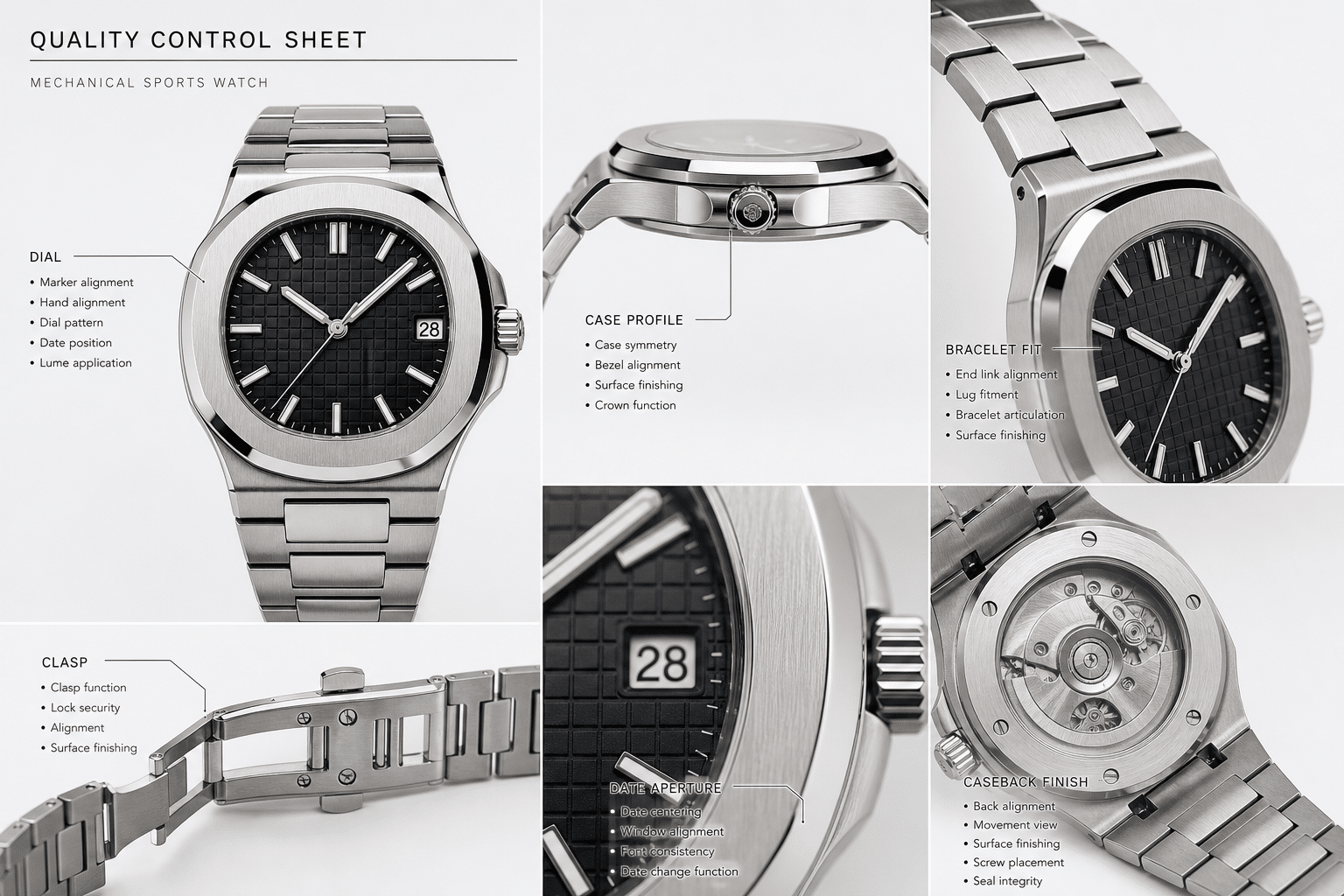
QC photos reduce uncertainty, but they do not remove every risk. Buyers should review real watch photos where available, including dial printing, marker alignment, hand alignment, bezel position, datewheel centering, bracelet fit, clasp seating, case thickness, caseback finishing, and movement photos where relevant, because factory labels and stock photos alone are not enough for a reliable judgment.
Front Dial Photos for Alignment and Tapisserie
The straight-on dial photo should show whether the tapisserie pattern, logo, indices, hands, date window, and chapter layout work together. This is where a Royal Oak replica dial issue is easiest to catch before acceptance. A small amount of photographic distortion is normal, but obvious crooked markers, off-center printing, inconsistent date placement, or visible debris under the crystal should not be ignored.
The tapisserie pattern should be evaluated as a whole, not only in macro detail. The question is whether the grid appears straight, evenly positioned, and visually balanced inside the bezel. If the pattern feels rotated or the markers do not sit cleanly against it, the watch may continue to bother you in daily wear. This is more important than finding microscopic texture differences that only matter under extreme close-up.
The date window should be checked with the date displayed clearly. A date that appears slightly off in one image may need another angle, but a consistently high, low, or clipped date is a QC red flag. Date alignment is one of those flaws that owners often think they can tolerate, then notice constantly after delivery.
Side Profile Photos for Thickness and Case Shape
Side profile photos matter because front photos can make almost any AP-style watch look cleaner than it is. The Royal Oak depends heavily on thinness, case layering, bezel height, and the way the bracelet starts from the case. If the side view looks bulky, slab-sided, or poorly stepped, after-sales service is unlikely to change that.
A useful side photo should show the bezel, mid-case, caseback, crown side, and bracelet transition under neutral lighting. The goal is not to measure the watch from a photo with laboratory precision. The goal is to see whether the proportions make sense. Excessive case thickness or an awkward caseback profile is usually a version or architecture issue, not a repair issue.
Buyers should be careful with angled glamour shots. A low angle can exaggerate thickness; a high angle can hide it. For AP replicas, a plain side shot is often more valuable than the most attractive front image because it reveals whether the watch will have the correct wrist presence.
Bracelet and Clasp Photos for Wearability
The bracelet should be checked for link fit, first-link transition, screw condition, clasp seating, and visible gaps. AP’s integrated bracelet is not just a strap attached to a case; it is part of the watch’s entire shape. If the first link sits awkwardly or the bracelet does not follow the case line, the watch can feel wrong even if the dial is attractive.
Minor bracelet adjustment after delivery is normal. Poor bracelet geometry is different. QC photos should show whether the bracelet hangs naturally, whether the clasp closes evenly, and whether the underside looks clean enough for comfortable wear. A clasp that looks slightly tight or loose may be adjustable. A clasp that appears badly machined, misaligned, or unable to sit flush is a more serious concern.
Visible screw damage should also be taken seriously. A backed-out screw can often be corrected, but stripped screw slots, chewed edges, or uneven seating may suggest careless assembly or rough previous handling. On a Royal Oak-style bracelet, these details are not hidden; they are part of the visual design.
QC Photos to Request
For AP replica QC photos, the most useful set is practical and direct: a straight-on dial photo, a date close-up, a side profile, a crown-side profile, a bracelet integration shot, the bracelet underside, the clasp closed, the clasp open, and a caseback or movement-route confirmation photo when relevant. These angles help separate acceptable small variance from flaws that will create after-sales frustration.
The strongest QC decision is not based on one beautiful photo. It is based on whether the watch looks consistent from the angles that matter in ownership: dial, thickness, bracelet flow, clasp fit, and visible finishing. If those core areas are acceptable, small serviceable issues become easier to manage. If those core areas are wrong, after-sales support is already starting from a weak position.
How to Read Seller Claims Without Over-Relying on Them
Seller descriptions, factory labels, and QC photos are useful signals, but they are not final proof. A listing that says “latest version,” “best factory,” or “upgraded movement” should still be translated into buyer-verifiable points. For an AP Royal Oak-style watch, that means checking whether the case thickness looks controlled, the bezel screws sit evenly, the tapisserie dial is aligned, the bracelet starts cleanly from the case, and the movement route matches the owner’s expectations for daily use or occasional wear.
A buyer should also separate what a photo can show from what it may hide. Photos can reveal dial alignment, date centering, screw damage, bracelet gaps, and obvious case proportion problems. They cannot fully prove winding smoothness, rotor stability, clasp security under wrist movement, water resistance, long-term timekeeping, or whether the movement has been lubricated well. If the concern is mechanical, a short running video, timegrapher reading, or crown-operation confirmation may be more useful than another polished front photo.
This is where “best factory” claims need to be narrowed. A factory may be a strong choice for one AP reference because the case and bracelet are well executed, but that does not mean the same factory is equally safe for a complicated chronograph or a thin-profile model with a different movement. The practical buyer decision is not whether the factory name is famous; it is whether this exact watch, with this movement and this QC evidence, fits the way the buyer plans to wear it.
Claims such as “perfect,” “same as genuine,” or “guaranteed to pass inspection” should be treated with caution. A more reliable comparison looks at the actual model version, movement configuration, finishing details, and available QC evidence. The purpose of this verification is to avoid confusion and overpayment, not to misrepresent a replica watch as genuine.
The Buyer Rule: Service Can Fix Function, Not Design Accuracy
The simplest way to understand AP super clone after sales is this: service can improve how the watch works, but it usually cannot change what the watch is. A loose bracelet screw, weak clasp tension, mild rotor noise, or uneven winding feel may be a serviceable problem. A wrong case profile, poor Royal Oak bracelet flow, weak tapisserie texture, or incorrect movement architecture is a different category. Those issues are not truly “repairs”; they are version-level limitations.
This distinction matters more with an AP replica than with many other sports watches because the Royal Oak design leaves very little room to hide mistakes. The flat bezel, exposed screws, integrated bracelet, thin case expectation, and patterned dial all work together visually. If one core proportion is wrong, after-sales adjustment will not rebuild the watch into a more accurate Royal Oak super clone. It may still be wearable, but the flaw remains part of the watch.
The buyer mistake is assuming every defect is fixable after purchase. Not every issue is a disaster, but not every issue deserves repair. A practical owner should separate small usability problems from design accuracy problems before deciding whether to spend time, money, or risk opening the watch.
The Practical Fixability Ranking
The easiest AP replica issues to deal with are basic fit and comfort items. Bracelet adjustment, link sizing, screw tightening, clasp tuning, and minor bracelet play are usually the most manageable because they do not require changing the watch’s design. These are the problems most buyers can reasonably expect to improve after receiving the watch, assuming the bracelet itself is properly machined.
The middle category is movement behavior. A watch that stops, winds roughly, changes date incorrectly, or runs inconsistently may be repairable, but it becomes a case-by-case decision. Movement repair depends on the movement route, parts access, and whether the problem is a simple adjustment or a deeper mechanical fault. This is where AP replica repair limits become more obvious: a skilled service may improve reliability, but it cannot guarantee that every decorated, modified, or clone-style movement will be easy or economical to restore.
The least practical problems to fix are structural accuracy issues. Case thickness, bezel geometry, dial texture, bracelet integration, subdial layout, and movement architecture should be judged before acceptance, not treated as after-sales tasks. If the Royal Oak case already sits too thick, the bracelet does not flow naturally from the case, or the dial looks flat and poorly aligned, repair is usually the wrong expectation. The better decision was rejecting that example or choosing a stronger version before QC approval.
| Problem Type | Typical Fixability | Buyer Judgment |
|---|---|---|
| Bracelet sizing, loose screws, clasp feel | Usually manageable | Worth adjusting if the underlying bracelet machining is good |
| Rotor noise, rough winding, date behavior, unstable running | Case-by-case | May require movement evaluation or service |
| Wrong case shape, poor dial texture, bad bracelet integration, incorrect architecture | Usually not practical | Avoid before acceptance rather than trying to repair later |
What This Means for Your Next AP Replica Decision
For a future AP super clone decision, small serviceable issues should only be accepted when the core watch is already right enough for your expectations. The case profile, dial execution, bracelet transition, and movement route matter more than whether a screw needs tightening or a clasp needs minor adjustment. A buyer who accepts a structurally weak watch because “after-sales can fix it” is usually misunderstanding what after-sales can actually do.
At Clean VS Factory, we encourage buyers to separate ownership experience from design correction. If the watch has a good case, convincing bracelet flow, acceptable dial texture, and a movement route you understand, then small post-purchase adjustments are normal ownership management. If the main flaw is thickness, architecture, dial quality, or Royal Oak proportion, service is not the solution.
The final rule is direct: fix function when the watch is otherwise worth owning, adjust comfort when the correction is simple, and avoid structural flaws before they become your problem. AP super clone after sales can make a decent watch easier to live with. It cannot turn the wrong version into the right one.
Disclosure: This article is for general educational and comparison purposes only. Replica watches are not genuine products from the original luxury brands, and brand names are used only to identify reference designs or comparison topics. Factory names, movement descriptions, prices, availability, QC details, seller policies, and version information can change, so readers should verify important details with the seller before making a purchase decision. Replica watches should not be represented, resold, or used as genuine watches.