
Panerai Replica Factories – Practical Comparison Table
| Factory | Core Focus | Movement Structure | Best Model Types | Case & Proportion Quality | Visual Accuracy | Batch Consistency | Price Range (Relative) | Reality Check |
|---|---|---|---|---|---|---|---|---|
| VS Factory | Modern Panerai super clones | True integrated automatic movements (P.9000 / P.9010 architecture) | Automatic PAMs, 44mm Luminor, Submersible | Long-term stable, correct thickness & crown guard behavior | High, especially through caseback | Very high across batches | Mid–High | Structural leader; selective by design |
| Noob Factory | Historical only | Outdated modified base movements | None (legacy only) | Inconsistent by modern standards | Acceptable years ago | No longer applicable | N/A | Most “Noob Panerai” today are not real Noob |
| Clean Factory | Brand-agnostic | No dedicated Panerai movement program | Isolated models only | Model-dependent | Varies | Inconsistent for Panerai | Mid | Not Panerai-focused; exceptions exist |
| Small / Unnamed Factories | Opportunistic | Decorative or hybrid movements | Random PAM listings | Often incorrect thickness | Photo-level only | Low | Low | High long-term risk |
| Fake “VS” Builds | Label misuse | Generic movement under false plates | Claims many models | Often too thick or top-heavy | Looks fine online | Unpredictable | Unnaturally low | Logic failures reveal them |
Panerai replicas are not made by dozens of competing factories.
They never were.
Despite the noise created by dealer listings and recycled marketing names, the modern Panerai replica landscape is narrow, centralized, and highly factory-driven. A small number of Guangzhou-based workshops have carried the technical burden for years, refining the same cases, movements, and tolerances across long production cycles. This is not a brand battlefield. It is an optimization path.
If you are already considering a Panerai replica, the real question is no longer which PAM reference looks best, but which factory can actually execute it correctly. In this segment of the replica world, factory choice determines outcome far more than model selection ever will.
Guangzhou remains the operational core of Panerai super clone manufacturing. Not because of scale alone, but because Panerai is structurally unforgiving. You either build it right, repeatedly, or you fail quietly and disappear.

Why Panerai Replicas Are Factory-Driven (Not Brand-Driven)
Panerai is deceptive. On the wrist, the design looks simple: bold numerals, clean dials, oversized cases. In production, it is one of the least forgiving replica categories in existence.
The real difficulty is not cosmetic. It is structural.
Modern Panerai relies on integrated automatic movements with non-standard layouts, strict case thickness tolerances, and unmistakable proportions that collapse instantly when something is even slightly wrong. This shifts the center of gravity away from individual models and directly onto factories.
Three factors explain why.
First, integrated movement development is expensive and irreversible. Once a factory commits to cloning a Panerai caliber architecture, it locks itself into years of tooling, iteration, and yield optimization. This is not something a short-lived workshop can afford to fake or patch together.
Second, Panerai case geometry leaves no margin for error. Lug curvature, mid-case height, bezel slope, crown guard alignment, and caseback depth interact as a system. You cannot correct one without affecting the others. Factories that lack long-term case refinement experience produce watches that look acceptable in photos and wrong in hand.
Third, quality control is cumulative. Panerai replicas do not fail immediately when QC is weak. They drift, bind, misalign, or develop tolerance noise after months of wear. Only factories with sustained production runs can correct these issues across batches rather than chasing them model by model.
This is why Panerai replicas reward factories that stay focused, invest deeply, and refine patiently. The winners are not the loudest names. They are the ones still producing the same references year after year with fewer surprises.
Overview of Panerai Replica Factories (Who Really Matters)
This is not a complete list.
It is the list that actually matters.
Most factory names associated with Panerai today are either historical footnotes, rebrands, or opportunistic labels attached to generic builds. They create confusion but contribute nothing to quality progression.
In practical terms, modern Panerai super clones come from a very small circle of factories that have demonstrated sustained competence with Panerai-specific challenges. These factories either invested early in movement architecture, or inherited and consolidated that capability through restructuring.
Everything else is noise.
Understanding this allows you to ignore endless “factory comparisons” that treat all names as equal participants. They are not. Panerai is not a democratic category. It is path-dependent, and only a few factories stayed on the path long enough to matter.
Tier 1 – VS Factory (The Core of Modern Panerai Super Clones)
VS Factory is not important because it is popular.
It is popular because it solved problems others avoided.
Modern Panerai super clones, as they exist today, are built around the architectural decisions VS Factory made years ago: committing to true integrated movements, stabilizing case proportions across references, and prioritizing long-run consistency over fast model turnover.
VS did not attempt to cover every PAM ever released. It focused on the segment where Panerai replicas historically failed—automatic models with display backs, complex calendar behavior, and unforgiving thickness constraints—and rebuilt that segment from the inside out.
This is why discussions about Panerai factories eventually collapse toward VS. Not out of hype, but out of attrition. When movement layout, case profile, and batch consistency all matter at the same time, very few factories remain standing.
Calling VS Factory “Tier 1” is not marketing language. It is a description of where the modern Panerai replica ecosystem converged after years of trial, error, and quiet exits.
VS Factory Panerai – Strengths, Weaknesses, and Reality
VS Factory Panerai does not dominate this category by accident, and it does not dominate it universally. Its position is the result of long-term structural decisions that align unusually well with what Panerai replicas demand. Understanding where VS excels—and where it deliberately does not compete—is the fastest way to decide whether it is the right factory for your PAM.
Why VS Factory Dominates Panerai Super Clones
The dominance of VS Factory Panerai rests on three hard indicators that remain stable over time rather than peaking in a single release cycle.
The first is integrated movement architecture. VS committed early to cloning Panerai’s automatic calibers as complete systems rather than disguising generic movements under decorative plates. The result is not just visual accuracy through the caseback, but correct hand stack behavior, calendar logic, balance position, and power delivery. These movements behave like Panerai movements over months of wear, not just during an initial inspection. This is where most factories fail quietly, and where VS built its lead.
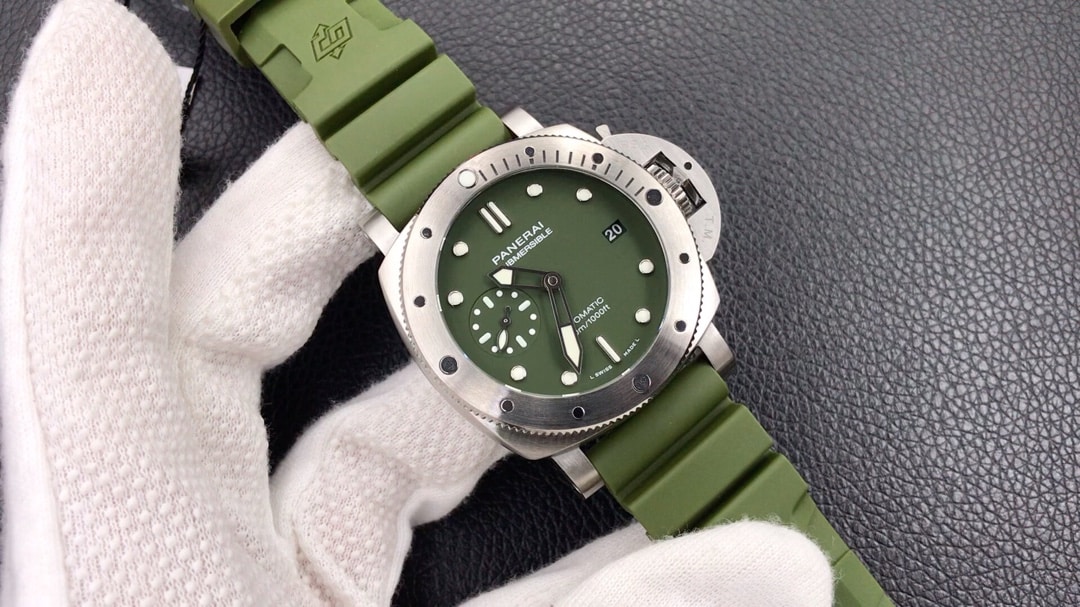
The second indicator is case proportion stability. Panerai cases are unforgiving. Thickness errors compound quickly, crown guards lose tension, and lug geometry looks wrong once the watch is worn rather than photographed. VS cases remain dimensionally consistent across production batches because the factory refined a narrow set of case architectures instead of constantly chasing new references. This stability is visible in how the watch sits on the wrist and how the crown guard engages after extended use.
The third is batch consistency. VS Panerai watches do not rely on “good examples.” The average unit closely resembles the best unit. That matters more than peak finishing because most buyers are not selecting from ten pieces. When a factory’s median output is predictable, ownership risk drops sharply. Over time, this consistency becomes the real definition of quality.
None of these advantages make VS untouchable. They make it long-term proven.
VS Factory Weaknesses (What They Don’t Do Well)
VS Factory does not build every Panerai, and it does not pretend to.
https://www.cleanvsfactory.com/china-replica-watch-factory/It avoids large portions of the historical catalog, especially older hand-wound references that rely on simple Unitas-style movements. This is not a technical limitation. It is a strategic decision. VS invested heavily in integrated automatic movements, and it allocates resources where that investment compounds rather than dilutes.
If you are looking for vintage-feeling PAMs, early logo dials, or purely manual-wind nostalgia pieces, VS is often not the factory producing them. Other factories may cover those models with acceptable results because the mechanical challenge is lower and the tolerance window is wider.
This selective focus sometimes frustrates buyers who assume the strongest factory should produce everything. In practice, this restraint is part of why VS Panerai quality holds together across years rather than collapsing under overextension.
VS builds fewer things. That is part of why the things it builds last.
Which Panerai PAM Models VS Factory Does Best
VS Factory performs best where Panerai replicas are hardest to execute.
Its strongest territory is automatic PAMs built around integrated movements, especially modern references that expose the movement through sapphire casebacks. These watches demand correct architecture, not cosmetic shortcuts, and VS is structurally aligned to deliver that.
Modern 44mm Luminor cases are another clear strength. VS case tooling for this size has matured to the point where thickness, lug stance, and crown guard behavior remain consistent across different references. The result feels balanced on the wrist rather than top-heavy or artificially compressed.
Submersible models with integrated movements are also a natural fit. These watches combine complex case construction with demanding movement layouts and benefit directly from VS’s emphasis on system-level accuracy rather than surface detail alone.
If a Panerai reference relies on modern automatic engineering, realistic thickness, and repeatable production quality, VS Factory is usually operating in its natural habitat. Where those conditions do not apply, VS often chooses not to participate at all.
The Truth About “Noob Panerai” (Historical Context, Not a Current Option)
Noob Panerai was once relevant.
It is not anymore.
Several years ago, Noob Factory played a meaningful role in Panerai replicas, particularly when the market was still dominated by modified base movements and visual approximation was enough to satisfy most buyers. At that time, Noob-built Panerai watches were competitive within the limits of the era.
That era ended.
Noob Factory exited active production long ago. It did not transition into integrated movement development, nor did it evolve alongside the structural demands of modern Panerai replicas. What remains today is the name—reused, recycled, and misapplied.
Most “Noob Panerai” listings you see now are not real Noob products. They are either leftover stock from years past, rebranded third-party builds, or generic replicas borrowing a retired name to create false confidence. The technical gap between those watches and current-generation Panerai super clones is not subtle. It shows up in movement layout, case thickness, crown guard behavior, and long-term reliability.
Treat Noob Panerai as history, not an option. Understanding that distinction alone eliminates a large portion of common buying mistakes.
Clean Factory and Panerai – Limited, Model-Specific Reality
Clean Factory does not revolve around Panerai, and it never has.
Clean earned its reputation by focusing deeply on a small number of other brands, refining case finishing and dial execution within those ecosystems. Panerai has never been its core battlefield. As a result, Clean Panerai replicas exist only in isolated, model-specific cases rather than as part of a coherent Panerai strategy.
In a few references, Clean has produced acceptable Panerai replicas. These are exceptions, not a system. There is no sustained movement program, no long-term case architecture refinement, and no consistent Panerai-specific development cycle comparable to factories that specialize in the brand.
This matters because Panerai punishes shallow involvement. A factory can succeed with one reference and still fail the category as a whole. Clean’s Panerai presence reflects that reality.
Assuming “Clean equals everything” is a mistake. In Panerai replicas, depth matters more than brand reputation, and Clean’s depth here is limited by design.
Common Fake “VS Panerai” Traps You Must Avoid
As VS Factory Panerai gained recognition, imitation followed. Most fake VS Panerai traps rely on logic gaps rather than technical deception.
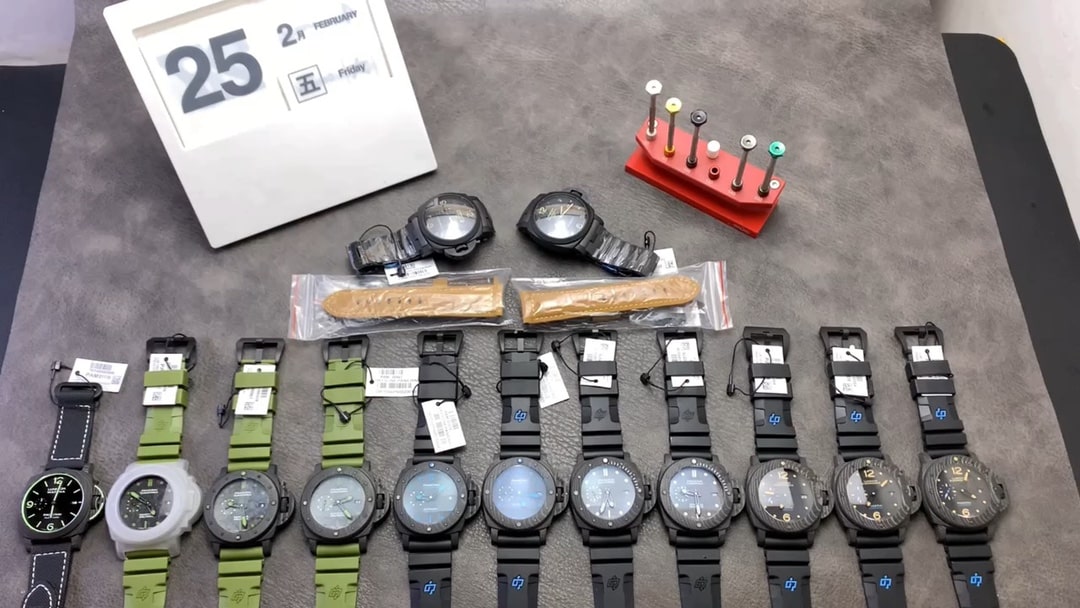
The first red flag is unrealistic pricing. VS Panerai builds carry real structural cost due to integrated movements and stable case tooling. Prices that sit far below the normal range are not discounts; they are substitutions.
The second trap is incorrect movement structure. Many counterfeits use generic movements hidden under decorative plates that vaguely resemble Panerai calibers. The balance position is wrong, the bridges are superficial, and functional behavior—such as calendar adjustment or power reserve response—does not match genuine VS architecture. These differences may not matter in photos, but they surface quickly in use.
The third indicator is abnormal case thickness. Panerai replicas often fail vertically before they fail horizontally. Watches that appear slightly too tall, sit awkwardly on the wrist, or feel top-heavy usually signal incorrect internal stacking. VS cases are proportionally controlled. Deviations here are rarely accidental.
You do not need insider access to avoid fake VS Panerai. You need to apply structural logic. When price, movement behavior, and physical proportions do not align, the label becomes irrelevant.
Why Some Panerai Replica Factories Should Be Avoided
Not all Panerai replica factories fail loudly. Most fail quietly.
The most common problem is decorative engineering—factories that simulate appearance without replicating function. Decorative movements masquerading as clones look convincing until you interact with them. Date changes feel wrong. Power delivery behaves inconsistently. Wear reveals shortcuts that were invisible at unboxing.
Another issue is functional desynchronization. True Panerai replicas require coordinated behavior between movement, dial, and case. When that coordination is missing, hands drift, tolerances stack, and wear accelerates. These failures rarely show up immediately, which is why inexperienced buyers misjudge quality.
Finally, unstable quality control erodes trust faster than any visible flaw. Factories that cannot reproduce the same result twice create a lottery effect. One good example does not redeem ten bad ones. Over time, this unpredictability becomes the real cost.
The safest Panerai replica choices are not defined by how many models a factory claims to make, but by how consistently it executes the few it actually understands.
How to Choose the Right Panerai Factory (Simple Decision Framework)
Choosing the right Panerai factory does not require insider access or endless comparisons. It requires aligning three variables that determine whether a replica will remain convincing after the first week of ownership.
Choose by PAM Model Type
Start with the type of Panerai you are actually considering, not the reference number alone.
If the PAM is a modern automatic model with a display caseback, factory choice becomes critical. These watches expose movement architecture, thickness control, and functional behavior. Only factories with integrated movement capability belong in this category.
If the PAM is a vintage-leaning or manual-wind model, the pressure shifts. These references tolerate simpler mechanics and rely more on dial execution and case shape than internal complexity. Factory specialization matters, but the bar is different.
If the PAM is a Submersible or modern tool-oriented piece, case engineering and internal layout must work together. This eliminates factories that treat case and movement as separable components.
Model type narrows the factory field immediately.
Choose by Movement Complexity
Movement complexity is the fastest way to separate realistic options from theoretical ones.
Integrated automatic movements with calendar logic, balance placement, and power reserve behavior require factories that invested early and stayed focused. These factories build movements as systems, not disguises.
Modified base movements hidden under decorative plates may look acceptable in photos, but they age poorly. Function drifts, tolerances stack, and the illusion fades with use.
If the movement complexity exceeds the factory’s engineering depth, no amount of dial accuracy can compensate.
Choose by Risk Tolerance
Every replica involves trade-offs. The question is where you are willing to accept uncertainty.
Low risk tolerance favors factories with narrow catalogs and consistent output. Fewer models, fewer surprises.
Higher risk tolerance allows exploration of niche references, discontinued styles, or factories that execute one model well but lack broad stability.
Most first-time buyers underestimate how quickly uncertainty becomes dissatisfaction. Predictability is a form of quality.
When these three filters align—model type, movement complexity, and risk tolerance—the correct factory often becomes obvious.
Factory-Based Panerai Recommendations (Without Marketing)
If you are looking at modern automatic PAMs with visible movements, the factory should be one that built its reputation around integrated Panerai calibers rather than borrowed solutions.
If you are focused on contemporary 44mm Luminor references, choose a factory with long-running case tooling rather than frequent redesigns.
If your interest leans toward Submersible models with technical cases and modern movements, factory experience with structural complexity matters more than surface finishing.
If you are considering older hand-wound styles or logo dials, prioritize factories that historically specialized in those references rather than those currently dominating the automatic segment.
The logic is simple: match factory specialization to the mechanical reality of the watch, not to the popularity of the factory name.
Final Verdict – In Panerai Replicas, Factory Choice Is Not Optional
In Panerai replicas, the model may attract you, but the factory determines whether the watch earns its place on your wrist.