
Introduction: Why “Best Factory” is the Wrong Question for Richard Mille
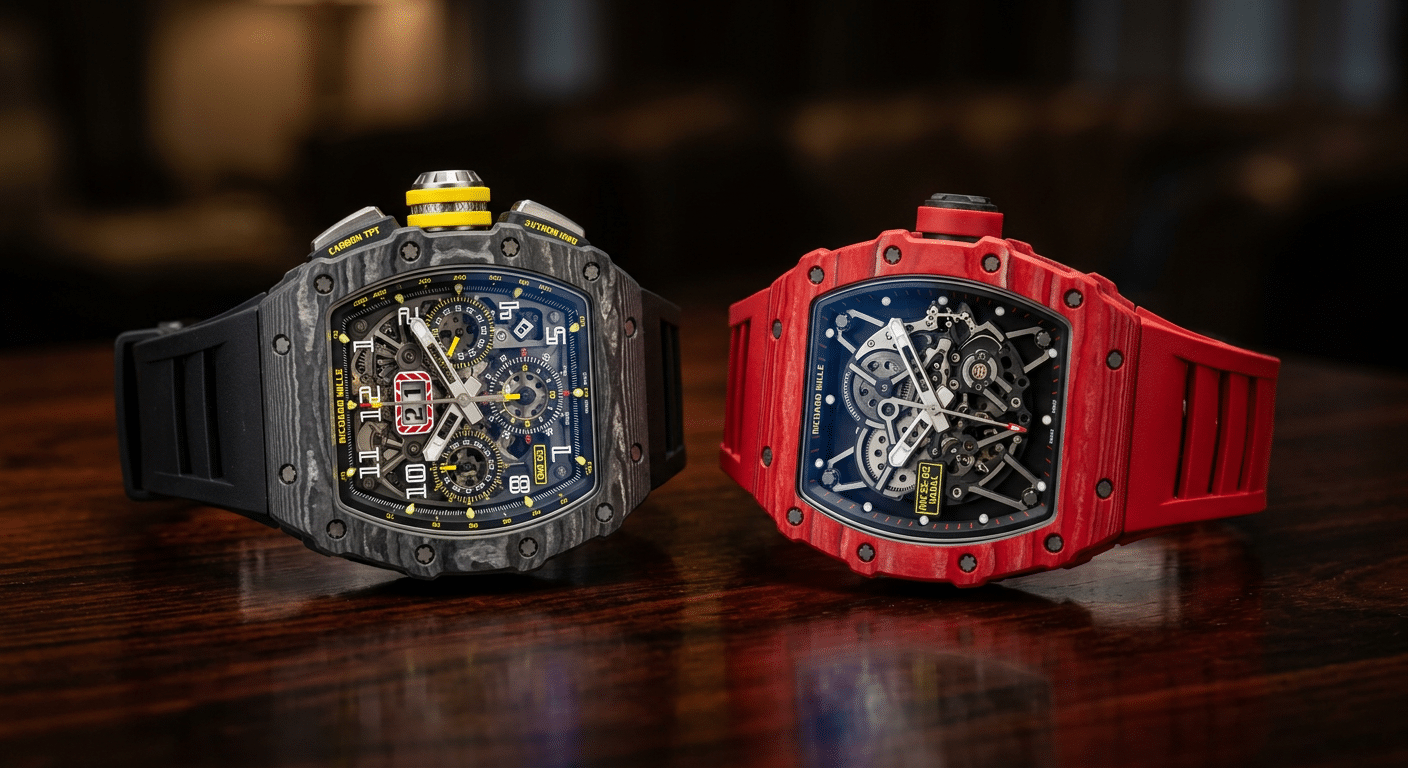
Here’s the frustratingly familiar scenario: you’ve decided you want a Richard Mille super clone. Let’s say it’s the RM055 Bubba Watson. Your next logical step is to search for the “best RM factory.” Immediately, you’re buried in forum debates—ZF versus BBR versus RMF versus APSF, each with passionate advocates and contradictory claims. The noise is overwhelming because the question itself is flawed. A more productive approach is to understand the underlying technical evolution, such as the detailed Richard Mille factory version numbers and movement upgrades, which clarifies what actually changed between versions like V2, V3, and V7. This knowledge cuts through the marketing hype and lets you evaluate factories based on tangible movement improvements and case finishing standards rather than brand loyalty alone.
Asking for the single best Richard Mille super clone factory is like asking for the best vehicle without specifying whether you need to haul lumber, win a Formula 1 race, or commute in a city. The answer is meaningless. No factory masters all models. ZF might nail the case shape for the RM055 but struggle with the thickness of an RM35-02. A factory celebrated for its RM011 might produce a cartoonish RM67-02.
This article operates on a different, more effective logic. Choosing a high-end RM replica is a two-step process. First, fall in love with a specific model—its design, its athlete association, its wrist presence. Second, and only then, begin the search for the factory that best solves that particular model’s unique replication challenges. The “best” factory for an RM055 is judged on completely different grounds—case geometry and dial skeletonization—than the “best” for an RM67-02, where strap integration and print quality reign supreme.
The following sections are not a ranking. They are a matching guide. We’ll break down iconic references like the RM055, RM35-02, RM011, and RM67-02, identifying the one or two non-negotiable criteria for each and pairing them with the factories that currently prioritize those specific battles. Think of it as a model-first decision matrix designed to cut through the generic hype and deliver a strategic, actionable path to your ideal clone.
RM055 White NTPT & Bubba Watson: The Case Shape and Skeleton Dial Litmus Test
The RM055 is a watch defined by its architecture. Before you see the time, you see a distinctive, multi-faceted tonneau shape and an openworked dial. Therefore, its replication is a shape-first endeavor. A clone can have a perfect movement decoration, but if the case profile is off—looking fat, flat, or slab-sided—the entire illusion collapses. The primary goal here is geometric fidelity.
The secondary battle is the skeleton dial. It’s not about having gears (they all do); it’s about their layout, the finishing of the bridges, and achieving a balanced, three-dimensional look rather than a flat, black-hole effect. Fail in either area, and the watch screams “replica” from across the room.
The Non-Negotiable: NTPT Case Profile and Bezel Angles
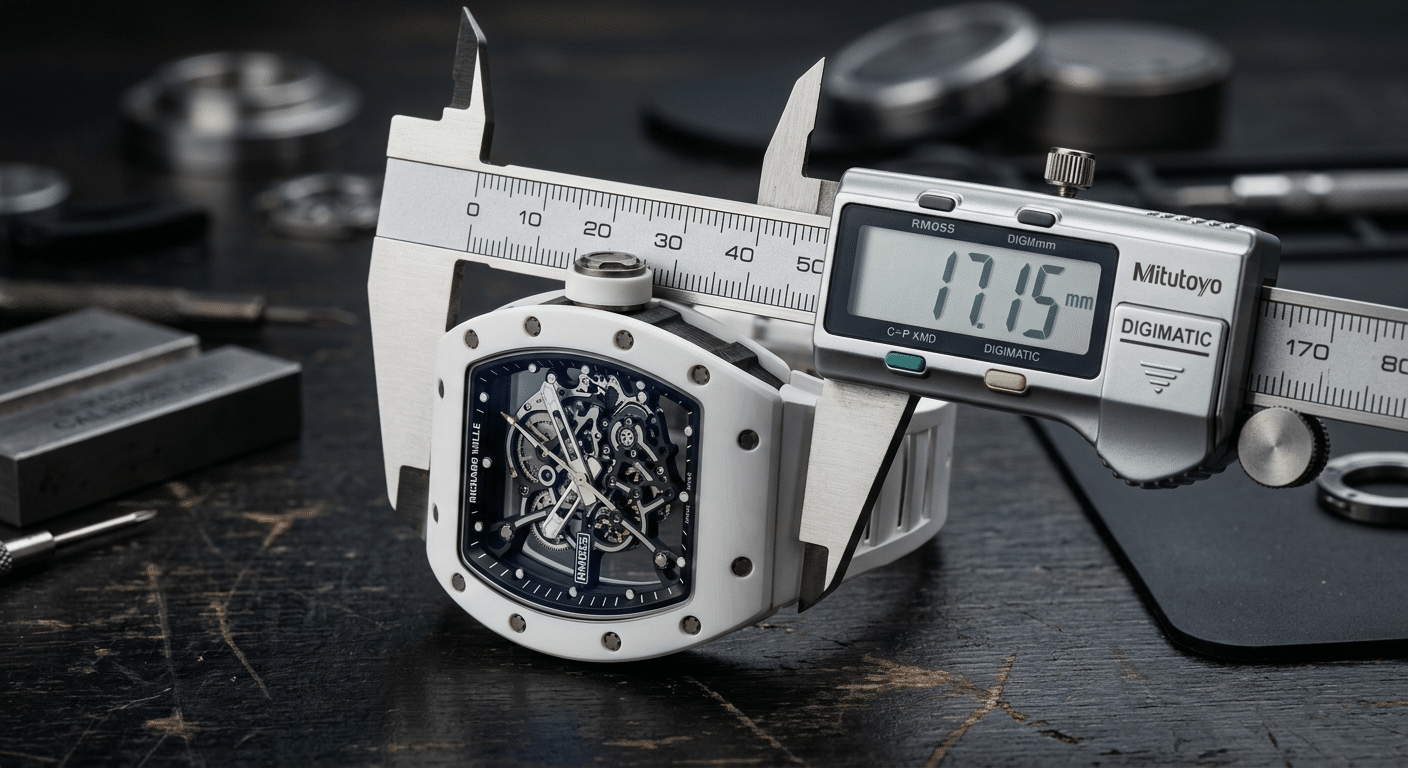
For the RM055, the case is everything. The genuine watch has a complex, sculpted profile that tapers dramatically. The bezel has a specific curvature, and the signature 12-sided “porthole” screws sit at a precise, sunken depth. Many early clones failed here, producing a case that was too thick (over 13.5mm vs. gen ~12.1mm) with a flatter, less dynamic silhouette.
Currently, factories like ZF (and its premium sub-brand, Umi) and APSF have made this their focus. The best versions achieve a case thickness within 0.3-0.5mm of genuine, and more importantly, they replicate the sculpted side curves. The bezel angles are sharper, and the screws are better finished and properly seated. The texture of the NTPT-style carbon is also crucial—top-tier versions use forged carbon with a deep, irregular, organic pattern, avoiding the cheap, printed-on look of lower-tier copies.
Skeleton Dial Credibility: Avoiding the Cartoonish Look
Once the case passes, the dial is your focal point. A common clone flaw is a dial that looks like a flat, dark plate with gears glued on top. The genuine RM055 dial has depth, with a greyish-tone base plate and finely shaped, polished bridges that create visual separation.
Superior clones from APSF and ZF pay attention to this. The gear train is positioned more accurately, and the bridges are thinner and better finished, avoiding a coarse, stamped-metal appearance. The date wheel, a small but critical detail, is correctly positioned at 4:30, and the font is thin and precise. The goal is to avoid a “cartoonish” or cluttered look, instead achieving the legible, technical artistry of the original.
Expert Authentication Insight
The fastest way to spot a low-tier RM055 clone is its silhouette. Place the watch on its side and view its profile. Does it have the genuine’s pronounced, sculpted taper from bezel to caseband, or does it look like a flat-sided block? For a definitive check, use digital calipers to measure the case thickness at its thinnest point, near the lugs. Genuine spec is approximately 12.1mm. Any replica measuring over 12.6mm will have a visibly chunkier presence on the wrist. Secondly, examine the bezel curvature from a three-quarter angle; a bezel that lacks the proper convex curve is an instant tell.
RM35-02 Rafael Nadal: Where Thickness is the Whole Game
If the RM055 is about shape, the RM35-02 is about compression. The genuine watch’s engineering marvel is its relative thinness (approx. 13.15mm) despite housing an automatic movement with a power reserve display. For replicas, this presents the single most critical and difficult challenge. With the RM35-02, you must simplify your decision: thickness is the primary, and often only, metric that matters in the initial filter.
All other qualities—dial color, carbon pattern, strap quality—are secondary. A perfect-looking RM35-02 that is 17mm thick is a fundamental failure; it loses the sporty, integrated feel of the original and becomes a bulky wrist statement. The entire “super clone” landscape for this model is defined by the movement solution each factory chooses and the thickness trade-off it necessitates, a structural capability focus thoroughly detailed in the Richard Mille replica factory tier list. This objective ranking prioritizes engineering over hype, directly influencing the movement guide and case finishing standards critical for evaluating such trade-offs.
Movement Solutions: The Thickness Trade-Off Decoded
Factories approach the RM35-02 with two main movement strategies, creating a clear divide. The first approach, used by some earlier or lower-tier makers, involves a heavily decorated standard automatic movement (like an Asian 23j). This is a simpler, more reliable solution but adds significant bulk, resulting in cases that can be 16.5mm to over 17mm thick. The watch feels tall and loses its sleek profile.
The second approach, employed by leading factories like ZF and APSF, uses a modified, slimmer movement architecture—often based on a customized Seiko NH or a purpose-built clone like the Dandong RMUL3. This is a more complex and expensive path, but it allows them to target a case thickness in the 14.2mm to 15.5mm range. The trade-off isn’t usually in timekeeping (both can be accurate) but sometimes in rotor noise or power reserve. However, for achieving the correct visual proportion, this sacrifice is non-negotiable. The rule is simple: if a factory’s spec sheet lists a thickness over 16.0mm, look elsewhere.
Dial and Case Details: What Matters After Thickness
Once you’ve filtered for factories that tackle the thickness problem, you can evaluate the tie-breakers. Examine the “Nadal” yellow accents on the dial and rotor—are they a vibrant, correct shade, or a muted mustard? Look at the carbon case: does the forged pattern have a natural, deep flow, or does it look overly uniform or printed? Finally, check the finishing of the bezel screws and the caseback engraving. These details separate the good from the great, but they are irrelevant if the watch fails the primary thickness test.
Expert Authentication Insight
For the RM35-02, your most important tool is a digital caliper. Place the watch on a flat surface and measure from the case back to the very top of the sapphire crystal. This is the total thickness. While the genuine measures approximately 13.15mm, even the best clones will be thicker. Your benchmark should be: anything under 15.5mm is in the competitive range; anything over 16.0mm is categorically too tall and will be visually obvious as a replica. This one measurement cuts through all marketing claims and gives you a definitive, objective quality filter.
RM011 Felipe Massa: The Two-Tier Reality of Chronograph Clones
Forget the one-size-fits-all factory ranking here. The RM011 presents a clear fork in the road, forcing you to choose between two fundamentally different approaches to replication. Your choice doesn’t boil down to “best,” but to which compromise you’re willing to live with: a thicker watch with a working chronograph, or a slimmer watch where the chronograph is for show. This is a model that demands you profile yourself as a buyer first.
Tier 1: The Functional Chronograph Compromise
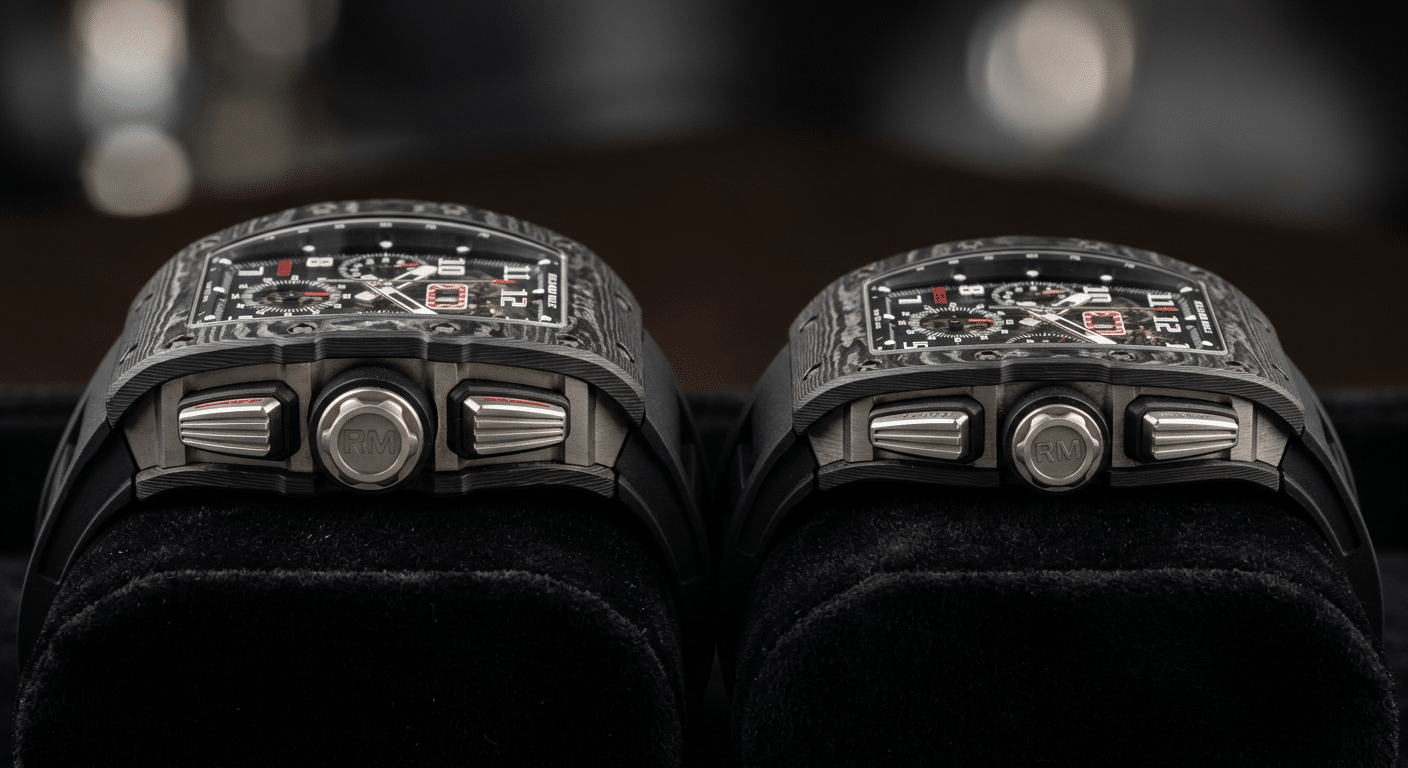
This path is defined by the use of a modified Shanghai 7750 automatic chronograph movement. The primary player here has historically been KV/KU Factory. The benefit is real: you get fully functional chronograph sub-dials at 3, 6, and 9 o’clock. The cost, however, is substantial and threefold. First, thickness: this movement adds 2-3mm, resulting in a case that measures around 18mm tall versus the genuine’s 16.15mm—a difference you can feel on the wrist and see from the side. Second, sub-dial spacing: the 7750’s architecture forces the sub-dials at 3 and 9 o’clock to be placed too close together, eliminating the distinct, wide gap present on the genuine watch. Third, it can affect the crown and pusher positioning, subtly altering the case’s overall proportions.
Tier 2: The Faux Chronograph Proportions Play
The alternative route prioritizes visual fidelity over mechanical function. Factories here (often smaller or niche operations) use a simple quartz or a slim automatic movement (like a modified Seiko NH series) to drive only the central seconds hand. The chronograph sub-dials are static. This allows for a crucial victory: a case thickness much closer to genuine, often within 1-1.5mm. More importantly, it permits correct sub-dial spacing, accurately replicating the open, balanced look of the authentic dial. The case shape and crown position also benefit from not having to accommodate the bulky 7750. The obvious tell? The sub-dial hands at 3 and 9 o’clock will never move.
Expert Authentication Insight
Your two-step check here is quick and decisive. First, eye the sub-dial spacing. A genuine RM011 has a clear, purposeful gap between the 3 and 9 o’clock sub-dials. If they look squeezed together, you’re almost certainly looking at a 7750-based clone. Second, activate the chronograph. If the central seconds hand starts with a sluggish stutter or the sub-dial hands jump in a way that doesn’t match a true flyback function, it confirms the decorated, compromise-tier movement. The thinner, faux-chrono version will, of course, have non-operational pushers.
RM67-02 Extra Flat: A Different League of Replication Challenges
The RM67-02 operates on a different planet from the RM055 or RM011. This isn’t about rugged, technical skeletonization; it’s about minimalist elegance, fluid integration, and extreme thinness. Factories that excel at the sports models often stumble here because the priorities completely shift. The game is won or lost on the strap and the printing.
The Strap Integration: Make or Break for the Silhouette
This is the single most critical element. The genuine RM67-02’s strap is an integral part of its architecture, flowing seamlessly from the case with no visual break. On replicas, a poor attachment creates a clunky, stepped transition that instantly destroys the watch’s sleek, continuous profile. You must examine how the rubber or composite strap meets the lugs. Is there a gap? Does it sit flush? Furthermore, the strap material itself is a tell; cheap, stiff rubber won’t drape naturally on the wrist like the genuine, pliable elastomer. The buckle’s finish and engraving are also quick giveaways on lower-tier attempts.
Dial Print and Case Finishing: The Devil in the Details
With such a sparse, clean dial, there’s nowhere for flaws to hide. The quality of the printed “RICHARD MILLE” text and minute track is paramount. On the best examples, the printing is razor-sharp, with crisp, opaque edges. On most, it’s slightly fuzzy, with visible bleeding or inconsistent ink density—a glaring fault under any magnification. Similarly, the case finishing on this model is a mix of brushed and polished surfaces. High-end replicas will maintain clean, distinct transitions between these finishes, while cheaper versions will appear muddy or poorly defined.
Expert Authentication Insight
Perform the silhouette test. Lay the watch flat on a table and observe the line from the case, through the lugs, and into the strap. A genuine piece shows one continuous, unbroken curve. A replica will often have a visible angle or “break” at the lug joint. Next, use a loupe or macro lens for the print inspection. For a more comprehensive look at model specifics and production details, consult this Richard Mille replica factory guide. Check for feathering at the edges of the letters and numerals. Imperfect printing is the most common and easily spotted flaw on an otherwise convincing RM67-02 clone.
Less Common Models: Quick Pairing Logic for RM027, RM037, and Others
For models outside the core quartet, the same model-first logic applies, but the research pool is shallower. Here’s a streamlined guide to point you in the right direction for a few other popular references.
RM027 Nadal: Even Thinner than the RM35?
The challenge here is achieving an ultra-thin, manual-wound aesthetic, often in a tourbillon model. The genuine article is shockingly light. Factories like EUR tackle this with actual (though simplified) tourbillon movements, while others may use a decorated ultra-thin base with a fixed, faux-tourbillon cage. The priority is avoiding a watch that feels thick or heavy. The best current attempts come from specialists in complex movements, not the mainstream sports model factories.
RM037: Curved Case and Complicated Dial
This model introduces a pronounced curved sapphire crystal and a more complex, asymmetric dial layout. The replication challenge is twofold: nailing the graceful, bubble-like curve of the crystal without a distorting “bulging” effect, and correctly executing the layered dial elements. Factories that excel with flat crystals and symmetrical skeletons can struggle here. Look for makers known for handling curved sapphire in other brands, as the case shape fidelity is the primary hurdle.
Expert Authentication Insight
For the RM027, the most immediate physical test is weight. Pick it up. The genuine watch, with its minimalist construction, feels almost impossibly light. A replica using a standard movement architecture will have a palpably heavier, denser feel. For the RM037, view the watch from the side. Does the curved crystal distort the dial markings at the edges? A poor-quality crystal will create a warped, magnified effect that the genuine article meticulously avoids.
The Factory Landscape: ZF, BBR, RMF, and Others – What Do They Actually Specialize In?
By now, a clear pattern should emerge: there is no “best” factory, only the right factory for a specific job. The market isn’t a hierarchy with one undisputed king; it’s a landscape of specialists. Your goal isn’t to find the highest-rated factory overall, but to match their core competency with your chosen model’s most critical challenge.
Let’s distill what we’ve learned about the major players:
- ZF (and its sub-brand “U mi”): Think of them as the case shape architects. Their strength lies in nailing the complex, multi-angled geometry of models like the RM055 and RM35-02. They invest heavily in CNC tooling to replicate the sculptural side profiles and bezel curves that define these watches. If the silhouette is paramount, ZF is often the first factory to scrutinize.
- BBR: BBR carved its reputation as the movement integration specialist, particularly for tackling thickness. Their work on the RM35-02 with custom, slimmer automatic movements demonstrated a focus on solving the vertical dimension problem. They prioritize getting the watch to sit correctly on the wrist, even if it means developing a new movement layout.
- RMF/KV (KU): This factory group is the functional chronograph provider. For the RM011, they prioritize a working stopwatch function using the robust (if thick) Shanghai 7750 movement. They specialize in delivering complication at the expense of perfect proportions, catering to buyers for whom a pusher that actually starts the chrono hand is non-negotiable.
- APS Factory: Emerging as a technical leader, APS is the movement finishing and detail contender. They focus on higher-grade movement decoration, better bridge finishes that mimic genuine titanium tones, and incremental improvements to gear train visibility. They compete directly with ZF on models like the RM055 and RM35-02 by offering a more refined, albeit sometimes pricier, mechanical package.
Beyond the Big Names: Spotting Niche Specialists
The most illuminating examples come from outside the usual suspects. For the ultra-thin, integrated RM67-02, the factory that often comes up isn’t ZF or BBR, but AVS—a smaller operation whose entire focus seems to be on achieving that elusive sub-8mm profile and seamless strap integration. Similarly, for genuine tourbillon models like the RM052 skull, EUR Factory dominates because that’s their singular niche. They don’t make mainstream sports models; they make complex, expensive tourbillon replicas. When a model has an unusual priority—extreme thinness, a real tourbillon, a unique case material—the “best” factory is often the one you rarely see discussed for the popular references.
Expert Authentication Insight
You can reverse-engineer a factory’s specialization by studying its version history. Don’t just look at the marketing for “V4.” Look at what changed. Did V3 to V4 of an RM055 focus on sharper bezel edges and deeper screw slots? That factory specializes in case construction. Did the update boast about a thinner movement bridge and reduced overall height? That factory is competing on thickness. The changelog is a direct statement of their priorities and engineering capabilities. A factory that iterates on dial print quality for the RM67-02 is telling you they care about dress-watch finishing, not just sports watch durability.
Your Decision Framework: How to Choose Your RM Clone Step-by-Step
This entire guide boils down to a single, repeatable process. Use this framework to cut through the noise for any Richard Mille model, even those we haven’t covered here.
- Lock the Model First. This is non-negotiable. Decide you want an RM055, an RM72-01, or an RM037. Fall in love with the design, not with a factory’s reputation.
- Identify the Model’s #1 Replication Priority. Ask: What is the single hardest thing to get right on *this specific watch*?
- RM055, RM037: Case shape and geometric fidelity.
- RM35-02, RM027: Overall thickness and movement slimness.
- RM011, RM72-01: Chronograph layout (accept thickness for function, or sacrifice function for proportion).
- RM67-02: Strap integration and case/dial finishing.
- RM052: Tourbillon authenticity and finishing.
- Research with Laser Focus. Now search with purpose. Instead of “[Model] best replica,” search for “[Model] clone thickness comparison,” “[Model] case shape vs gen,” or “[Model] tourbillon movement review.” You’re hunting for data on your specific priority.
- Filter Factories Ruthlessly. Any factory that fails your #1 priority is eliminated, regardless of their reputation for other models. If thickness is the game for an RM35-02, a factory producing a 17mm-thick version is out, full stop.
- Evaluate the Tie-Breakers. With a shortlist of factories that pass the primary test, compare secondary factors: dial texture, date wheel font, strap quality, lume, and movement function (if relevant). This is where you choose the “best among the qualified.”
- Manage Expectations. Acknowledge the inherent compromise. You are buying a replica. There will be a weight difference, a material difference, a longevity question. The goal is to minimize the compromise on the aspect that matters most for your chosen model.
Applying the Framework: A Walkthrough with a New Model
Let’s test the framework on the RM 72-01 Lifestyle Chronograph.
- Model Locked: RM 72-01.
- #1 Priority: This is a flyback chronograph with a distinctive, colorful dial layout. The primary challenge is the chronograph sub-dial arrangement and case proportion. Like the RM011, it faces the thickness vs. function trade-off.
- Focused Research: Search for “RM 72-01 clone sub-dial spacing” and “RM 72-01 thickness vs gen.” You’ll likely find two paths: one with a thicker, functional chronograph movement (likely a modified 7750) and one with a slimmer, faux-chronograph layout for better proportions.
- Ruthless Filter: You must decide your personal line. Is a working flyback essential? If yes, you filter for factories offering that movement and accept the thicker case. If visual fidelity is key, you filter for the factories with the best dial layout and thinnest profile, accepting non-functional pushers.
- Tie-Breakers: Among your filtered options, compare the vibrancy of the colored sub-dial rings, the quality of the case brushing, and the bezel finish.
- Expectations: Understand that neither option will be perfect. One will be too thick, the other’s chronograph hands won’t move. You are choosing which compromise you can live with.
Expert Authentication Insight
The final, most powerful tool is the side-by-side visual audit. Before you approve QC photos or make a purchase, find a high-resolution, straight-on photograph of the genuine reference. Open it next to the dealer’s photos. Don’t look at the watch as a whole; break it down. Compare the silhouette from the side. Compare the spacing between the sub-dials and the minute track. Compare the profile of the case lugs. Your eye, trained by understanding the model’s priority, will be drawn to the mismatches that matter. If the RM72-01’s sub-dials look crowded, you know it’s the wrong movement solution. If the case looks slab-sided, the geometry is off. This direct comparison is your ultimate quality control.
Forget searching for the best factory. Search for the best factory *for your RM model*. Let this be your guiding principle. And here’s a final piece of strategic advice: if you’re torn between two different models, let the availability of a high-quality clone that solves that model’s core challenge be the deciding factor. The satisfaction of owning a near-perfect RM055 that nails its iconic shape far outweighs the disappointment of settling for a compromised RM35-02 that feels like a brick on your wrist. Choose the model where the replica art has most successfully tackled its greatest test.