
When a Super Clone Chronograph Is Worth Owning — and When It Is Not
Understanding Breitling Chronographs Before You Decide to Wear One
Breitling chronographs are not decorative complications added to boost visual drama. They are the structural core of the brand. Long before luxury marketing turned chronographs into symbols of status, Breitling treated them as working instruments meant to be read, operated, and trusted under pressure. That distinction matters, especially when replicas enter the picture.

A Breitling chronograph replica can look convincing at a distance, sometimes even under close inspection, but appearance alone does not satisfy what this brand represents. The emotional pull comes from aviation, precision, and tool-watch credibility. The mechanical reality is far less romantic: chronographs add friction, stress, and long-term risk, particularly in replica form. Before deciding whether to wear one, the buyer has to separate the desire to own the look from the willingness to accept the mechanics.
This guide exists to make that separation explicit.
Why Chronographs Are Breitling’s DNA, Not an Add-On
Breitling as an Instrument Maker, Not a Fashion Watch Brand
Breitling’s identity was shaped in cockpits, not boutiques. From early onboard timers to wrist-worn navigation tools, the brand built its reputation around measuring elapsed time accurately and legibly in environments where mistakes mattered. The chronograph was never an optional flourish. It was the product.
Flight timing and fuel calculations required more than a running seconds hand. Slide rule bezels, oversized pushers, high-contrast registers, and deliberate dial layouts all existed to support real use. The Navitimer is the most obvious example, but the logic extends across the catalog. Even modern Chronomat and Avenger chronographs preserve this pilot-centric ergonomics philosophy, prioritizing tactile feedback and immediate readability over elegance.
Because of this history, a Breitling chronograph carries a different expectation than a chronograph from a fashion-forward luxury brand. It is assumed to function credibly, not just exist visually. That assumption follows the watch even when it is worn casually, and it becomes unavoidable when evaluating replicas.
Why This Heritage Makes Replicas More Complicated
Replicating a Breitling chronograph is harder precisely because the brand’s identity demands more than surface accuracy. A visually convincing dial paired with an unreliable chronograph mechanism creates a disconnect that feels especially hollow here. On a dress watch, that compromise might be tolerable. On a Breitling, it undermines the entire point.
Owners instinctively interact with these watches. They press the pushers. They notice reset alignment. They expect the chronograph seconds to engage cleanly and return decisively to zero. When those expectations are not met, the illusion collapses faster than it would on a non-instrument brand.
This is why Breitling chronograph replicas tend to polarize owners over time. The initial satisfaction is real, driven by strong design language and historical resonance. The long-term experience depends almost entirely on whether the mechanical reality can support that heritage, even imperfectly.
How Breitling Chronographs Actually Work
Understanding how Breitling chronographs function does not require engineering fluency, but it does require abandoning the idea that a chronograph is just a stopwatch layered onto a normal watch. In practice, a chronograph is a second mechanical system forced to coexist with the base movement, sharing power, space, and tolerances. That coexistence is where both the appeal and the risk originate.
Breitling designs its chronographs to feel assertive and deliberate. Pushers are firm. Engagement is meant to be immediate. Reset action is expected to be sharp and exact. These traits are not accidental. They reflect a design philosophy built around operational confidence rather than mechanical delicacy. Replicas inherit the appearance of that confidence, but not always the structural margin that supports it.
Core Chronograph Architecture in Breitling Watches
Most Breitling chronographs rely on a familiar but demanding architecture. A central chronograph seconds hand sits on its own axis, driven independently from the running seconds. Minute and hour totalizers track elapsed time through a cascade of gears that only engage when the chronograph is activated. Even when idle, these components remain mechanically present, adding mass and resistance to the movement.
Historically, Breitling has used both cam-switched and column wheel chronograph systems, depending on era and caliber. Cam systems, derived from the Valjoux 7750 lineage, rely on stepped cams and levers to control start, stop, and reset. They are robust, tolerant of imperfect handling, and easier to manufacture at scale. Column wheel systems use a rotating column wheel to coordinate engagement, offering smoother pusher feel and more precise control, but at the cost of complexity and sensitivity.
Clutch design further complicates the picture. Horizontal clutches slide gears laterally into engagement, which can cause visible chronograph seconds “jump” when started but keeps construction thinner. Vertical clutches stack engagement surfaces axially, allowing smoother starts and continuous running, but they add height and demand tighter tolerances. Breitling’s in-house solutions favor performance and engagement feel, even when that choice increases mechanical load.
In genuine Breitling movements, these systems are engineered as a whole. Power delivery, reset force, and wear surfaces are calculated with long-term use in mind. In replicas, these same architectural ideas are approximated, not recreated.
Why Chronograph Complexity Multiplies Stress in Replicas
Chronographs fail differently than simple automatic watches. The added components introduce additional friction paths that continuously sap energy from the movement, even when the chronograph is not running. In replica movements, where finishing and material consistency vary, that friction accumulates faster.
Reset is the most violent moment in a chronograph’s life. Multiple hands are forced back to zero simultaneously, concentrating force through reset hammers and heart cams. In well-executed systems, this force is absorbed predictably. In replicas, tolerance stacking becomes the quiet enemy. Slight deviations in hand height, cam shape, or lever alignment compound, increasing resistance and wear at precisely the moments of highest stress.
This is why chronograph issues in replicas often appear suddenly rather than gradually. A watch may run well for months, then develop reset misalignment, stuttering seconds, or inconsistent engagement. The base movement is rarely the first thing to fail. The chronograph layer absorbs the damage long before the underlying timekeeping system shows distress.
Understanding this dynamic does not disqualify Breitling chronograph replicas outright. It clarifies the risk profile. These watches are mechanically dense, energetically demanding, and unforgiving of shortcuts. Owning one is less about avoiding failure entirely and more about deciding whether the experience is worth managing the stress that complexity inevitably creates.
The Reality of Chronograph Clones in Breitling Replicas
Chronograph replicas live in a space where optimism often replaces honesty. Product pages highlight movement names, decorative bridges, and functional pushers, but rarely address how these watches behave after months of wear rather than minutes of inspection. With Breitling, that gap between promise and reality matters more than usual, because the chronograph is not optional to the brand’s identity.
A Breitling chronograph replica can deliver a convincing first impression. Whether it continues to satisfy depends on what the owner expects from it and how that expectation evolves with use.
What You Gain by Choosing a Chronograph Replica
The strongest argument in favor of a Breitling chronograph super clone is visual and emotional coherence. These watches look right on the wrist. The dial balance, the aggressive case proportions, and the unmistakable chronograph layout immediately communicate what the watch is meant to be. For many owners, that alone is enough.
There is also genuine emotional satisfaction in wearing a chronograph that aligns with Breitling’s heritage. The presence of working subdials, a central chronograph seconds hand, and tactile pushers reinforces the feeling of owning a proper aviation instrument, even if that use is symbolic rather than practical. A three-hand alternative rarely delivers the same sense of purpose.
Choosing a chronograph replica makes sense when longevity is not the primary goal. If the priority is appearance, historical alignment, and the experience of wearing a tool-inspired watch rather than preserving a movement indefinitely, the compromise is rational. Many owners accept that trade knowingly and remain satisfied.
What You Sacrifice (Whether Sellers Admit It or Not)
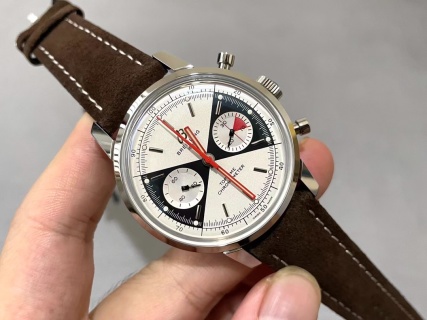
Chronograph replicas are thicker than their non-chronograph counterparts, often noticeably so. This added height affects comfort, cuff clearance, and balance on the wrist. It is not always visible in product photos, but it becomes apparent in daily wear.
Failure probability is also higher, not because the base movement is weak, but because the chronograph layer introduces additional points of stress. Levers, springs, and reset components wear faster than the timekeeping train. When something goes wrong, it is usually the chronograph that fails first.
Service dependency becomes unavoidable. Chronograph replicas demand attention even when used gently. Reset alignment drifts. Engagement becomes inconsistent. At some point, intervention is required. Owners who expect years of uninterrupted, maintenance-free use often grow frustrated, while those who view servicing as part of ownership are less surprised.
Across long-term use, one pattern repeats consistently: chronograph components show wear before the base movement degrades. Timekeeping may remain acceptable while the chronograph function becomes unreliable, effectively turning the watch into a compromised three-hand piece with cosmetic subdials.
A7750 Chronograph Movements in Breitling Replicas
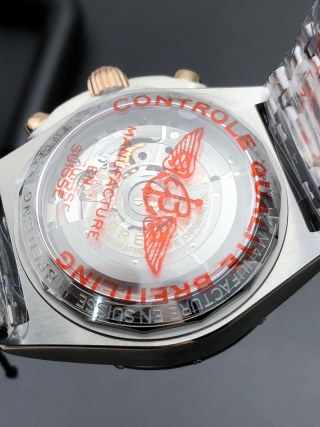
Nearly every modern Breitling chronograph replica relies on the same mechanical foundation. Understanding it is not optional. It defines both the strengths and the limits of these watches.
Why A7750 Became the Default Chronograph Solution
The A7750 exists because it solves practical problems. Derived from the Valjoux 7750 lineage, it offers sufficient torque to drive multiple chronograph registers, supports automatic winding, and accommodates varied dial layouts with relative ease. For replica manufacturers, it represents the only economically viable way to deliver a fully functional chronograph at scale.
Cam-actuated switching makes the movement durable under imperfect handling. Pushers feel firm and decisive, aligning well with Breitling’s tool-watch character. Layout flexibility allows factories to reposition subdials and integrate date windows without redesigning the entire movement, a necessity when replicating multiple models.
Date integration, however, reveals the compromises. The 7750 was never designed for every possible dial configuration. When dates are relocated or angled to match certain Breitling designs, additional gearing introduces drag and sensitivity. These adjustments work, but they increase mechanical load.
The A7750 is not chosen because it is ideal. It is chosen because it is workable.
Long-Term Reliability: What Owners Actually Experience
In real ownership cycles, the A7750 behaves predictably. When the chronograph is used occasionally and reset cleanly, the movement remains stable. Many watches run for years with acceptable accuracy under this pattern of use.
Problems accelerate when the chronograph runs continuously. Constant engagement increases friction and heat, accelerating wear on the cam system and chronograph wheels. This is where replica tolerances show their limits.
The most common failure points repeat across brands and models. Reset hammer fatigue leads to imperfect zeroing. Chronograph seconds hands begin to stutter or hesitate under load. Date change interference appears when chronograph gearing and calendar mechanisms compete for energy during transition periods.
None of these issues are mysterious, and none are rare. They reflect a movement operating near the edge of its tolerance envelope. Owners who understand this and adjust their habits accordingly tend to remain satisfied. Those who expect the chronograph to behave like a simple automatic watch often do not.
Which Breitling Chronograph Models Are Safer Than Others
Not all Breitling chronograph replicas carry the same level of mechanical risk. The difference rarely comes down to factory branding or marketing labels. It comes from how closely the watch’s design aligns with the limitations of the movement inside it. When the architecture and the aesthetics cooperate, longevity improves. When they fight each other, problems surface early.
Safer Chronograph Categories
Chronograph replicas perform best when the dial layout matches the natural geometry of the underlying movement. Subdial spacing that mirrors the native proportions of the A7750 reduces the need for corrective gearing, which in turn lowers friction and stress. These watches tend to reset more cleanly and maintain consistent engagement over time.
Moderate case thickness is another positive signal. When a chronograph does not attempt to hide its mechanical height through aggressive case shaping or visual tricks, it usually means fewer compromises internally. A case that accepts the movement rather than forcing it to fit often wears more comfortably and runs more predictably.
Lower dial congestion also matters. Dials that avoid excessive text, layered scales, or decorative cutouts place fewer demands on hand stacking and alignment. This simplicity improves legibility while reducing the likelihood of interference between hands and registers.
Certain Navitimer chronograph layouts fall into this safer category, particularly those that preserve traditional register spacing and avoid excessive depth tricks. Chronomat designs with balanced, symmetrical subdials also tend to age better, as their layouts were historically designed around robust chronograph movements rather than visual novelty.
A safe Breitling chronograph replica is rarely the most visually aggressive option. It is usually the one that looks slightly restrained compared to its more elaborate counterparts.
High-Risk Chronograph Designs
Risk increases sharply when thickness becomes extreme. Oversized cases stacked around heavily modified movements amplify leverage on chronograph components and magnify wear during reset. These watches may look impressive, but they concentrate stress where replica tolerances are weakest.
Overdecorated movements are another warning sign. Decorative plates, faux bridges, and cosmetic engravings add weight and resistance without improving function. In some cases, they obscure access for servicing, turning minor adjustments into full disassembly events.
Claims of “B01 clone” architecture deserve particular skepticism. While visual imitation of Breitling’s in-house chronograph movement is achievable, true structural replication is not. When a replica advertises in-house-style decoration layered over a modified 7750, the result is often a thicker, more stressed movement with no corresponding gain in reliability.
High-risk chronograph designs are usually easy to spot in hindsight. They promise visual spectacle, technical bravado, and exclusivity. What they rarely deliver is mechanical forgiveness over time.
Chronograph vs Three-Hand Breitling: An Honest Comparison
The choice between a chronograph and a three-hand Breitling replica is not about taste alone. It is a decision about how much mechanical burden you are willing to carry for the sake of identity. Both options can look authentic. Only one consistently behaves like a low-friction daily watch.
Why Many Owners Eventually Move Away from Chronographs
Time changes priorities. What feels exciting in the first months often becomes noise after a year of wear. Chronographs demand attention even when they are not being used, and that reality slowly wears on many owners.
Maintenance fatigue is the most common turning point. Reset alignment drifts. Pushers lose crispness. Small issues accumulate until the watch no longer feels effortless. None of these problems are dramatic on their own, but together they erode confidence. Owners begin to hesitate before engaging the chronograph at all, which defeats its purpose.
Daily comfort also suffers. Chronograph cases are thicker and heavier, especially in replicas. The extra height catches cuffs, shifts on the wrist, and reminds you of its presence during long wear. What once felt substantial can start to feel cumbersome.
Functional use diminishes faster than expected. Most owners rarely time anything meaningful after the novelty fades. The chronograph becomes visual architecture rather than a tool. At that point, many realize they are carrying mechanical risk for a function they no longer use, and the appeal quietly fades.
Why Some Owners Will Always Accept the Risk
Not everyone reaches that conclusion. Some owners never stop valuing what a chronograph represents, even when they rarely activate it.
For these individuals, the connection to aviation instruments is not theoretical. The layered dials, the pushers, and the sense of mechanical readiness matter more than convenience. A three-hand watch feels incomplete, even if it is objectively easier to live with.
Visual drama plays a role as well. Chronographs dominate the wrist. They communicate purpose immediately. For some, that presence outweighs the inconvenience of thickness, servicing, and occasional frustration. These owners understand the trade-off and accept it without resentment.
This group tends to remain satisfied because their expectations align with reality. They never wanted simplicity. They wanted character, even if that character comes with friction.
When You Should Avoid a Breitling Chronograph Entirely
Some buying decisions benefit from restraint. There are situations where a Breitling chronograph replica is simply the wrong choice, regardless of how appealing it looks.
If This Is Your Only Watch
A single-watch collection rewards reliability and comfort above all else. Chronographs struggle here. Their added thickness, mechanical sensitivity, and service needs introduce friction into daily life that a three-hand automatic avoids.
If you plan to wear one watch for everything—work, travel, long days, and casual use—a simpler Breitling configuration will serve you better. It preserves the brand’s design language without asking you to manage unnecessary complexity.
If You Value Low-Maintenance Ownership
Chronographs demand attention even when unused. Oils age. Springs fatigue. Engagement tolerances drift whether or not the pushers are pressed. This is not a defect. It is the nature of the mechanism.
If you prefer a watch that can be worn, set aside, and worn again without thought, a chronograph will eventually disappoint you. A three-hand Breitling replica delivers most of the visual identity with far fewer long-term obligations.
A Breitling chronograph replica is worth buying only when you value the experience of owning a timing instrument more than the convenience of owning a worry-free watch.
How to Own a Breitling Chronograph Replica Intelligently
Owning a Breitling chronograph replica responsibly is less about protecting it from failure and more about not accelerating the failure modes that are already built into the design. These watches can deliver years of satisfaction, but only when treated as mechanical instruments rather than background accessories.
Usage Habits That Extend Chronograph Life
The single most effective habit is avoiding continuous chronograph operation. Running the chronograph permanently turns an already stressed system into a constant load generator. Occasional timing is fine. Treating the chronograph as a permanent seconds display is not. When the function is not needed, let it rest.
Respecting date-change windows matters more than many owners realize. Engaging pushers or adjusting the date during transition periods increases the chance of interference between calendar components and chronograph gearing. This is where seemingly random failures often originate. Simple patience prevents disproportionate damage.
Periodic servicing should be viewed as normal, not exceptional. Chronograph replicas benefit from cleaning, lubrication, and realignment long before the base movement shows obvious wear. Accepting this early avoids compounded problems later. Owners who resist servicing tend to experience abrupt failures. Those who plan for it experience gradual maintenance instead.
How to Read Chronograph Claims on Product Pages
Product descriptions often blur the line between decoration and function. Decorative plates, engraved rotors, and visual references to in-house movements do not improve mechanical reliability. They often do the opposite by adding mass and resistance without strengthening core components.
Architecture matters more than terminology. A watch described as “B01-style” or “in-house inspired” tells you nothing about how force is transmitted, how reset energy is managed, or how tolerances are controlled. Look instead at case thickness, subdial alignment, and movement lineage. These reveal far more about long-term behavior than any naming convention.
A Breitling chronograph replica is worth buying only when you value the experience of owning a timing instrument more than the convenience of owning a worry-free watch.
| Dimension | Key Insight | Practical Judgment | Impact on Ownership |
|---|---|---|---|
| Brand DNA | Breitling chronographs are functional instruments, not decorative complications | Visual accuracy alone is insufficient for this brand | Mechanical flaws feel more disappointing than on fashion brands |
| Core Movement | A7750-based chronograph architecture dominates replicas | Chosen for availability and torque, not refinement | Reliable only under controlled usage habits |
| Chronograph Stress | Reset and engagement create concentrated mechanical load | Chronograph module fails before base movement | Failure appears suddenly, not gradually |
| Case Thickness | Chronographs require additional vertical space | Thicker cases reduce daily comfort | Long-term wear fatigue increases |
| Dial Layout | Natural subdial spacing reduces gearing stress | Navitimer & balanced Chronomat layouts age better | Cleaner resets, fewer stutter issues |
| Decorative Claims | “B01-style” or “in-house clone” language is cosmetic | Decoration adds load, not reliability | Higher risk with no mechanical upside |
| Usage Pattern | Occasional chronograph use preserves movement life | Continuous running accelerates wear | Owner behavior directly affects longevity |
| Servicing Reality | Chronographs require periodic intervention | Avoiding service leads to abrupt failure | Ownership is maintenance-aware, not carefree |
| Visual Payoff | Chronographs deliver unmatched Breitling identity | Emotional satisfaction remains high for enthusiasts | Justifies risk for certain owners |
| Three-Hand Alternative | Same brand language, lower mechanical stress | Better for single-watch or low-maintenance users | Often chosen after chronograph fatigue |
| Factory Tier (General) | GF / TF-tier chronographs outperform small factories | QC consistency matters more than naming | Reduces early failure probability |
| Price Range (Market) | Most Breitling chrono replicas sit mid–high replica tier | Higher price does not eliminate structural risk | Price buys execution, not immunity |