
What Actually Powers a Super Clone Breitling — and What Breaks First
Understanding Super Clone Breitling Movements Beyond Marketing Claims
If you strip a Breitling replica down to its essentials, the movement decides everything that follows. Case finishing can impress for a moment. Dial printing can fool the eye under a boutique spotlight. But over months and years of ownership, only the movement determines whether the watch remains a usable instrument or slowly degrades into an unreliable accessory. This guide is written from that reality, not from how replicas are marketed, photographed, or described in listings.
The replica market often treats movements as interchangeable components, discussed only in terms of names and buzzwords. Breitling is one of the few brands where that mindset consistently leads buyers into problems. Its designs place unusually high mechanical demands on what sits beneath the dial, and those demands expose weaknesses quickly. What follows is not a catalog of calibers, but an explanation of why certain movement choices survive in Breitling replicas—and why others fail predictably.
Why Breitling Replica Movements Deserve a Separate Conversation
Breitling replicas behave differently from replicas of many other Swiss brands because Breitling itself is mechanically demanding by design. Understanding this difference is the first step toward realistic expectations.
Breitling as a Chronograph-First Brand
Breitling built its reputation around timing instruments, not jewelry. Long before the brand became a lifestyle symbol, it was producing cockpit chronographs, slide-rule bezels, and multi-register tool watches intended to be operated repeatedly, sometimes aggressively. That heritage did not disappear when designs became more polished. Modern Navitimers, Chronomats, and Avengers still assume frequent chronograph use and sustained mechanical load.
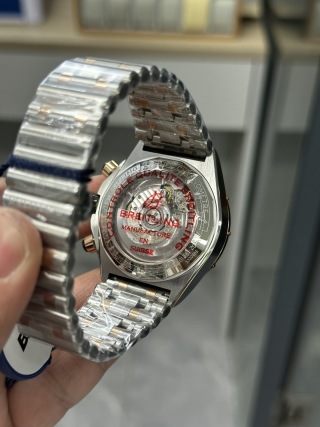
In replica form, this identity becomes a liability. Chronograph mechanisms multiply torque demand, add friction points, and amplify assembly errors. Multi-register layouts require precise gear alignment across the dial plane, and even small deviations increase wear. A replica Breitling chronograph that looks perfect on day one may already be operating close to its mechanical tolerance ceiling. This is why Breitling chronograph replicas fail earlier and more visibly than many visually similar watches from other brands.
The issue is not that chronographs are inherently fragile. The issue is that Breitling’s designs assume an integrated, purpose-built chronograph architecture. Most replicas rely on movements that were never designed for that role in this specific layout, and the mismatch accumulates stress from the first day of use.
Why “Movement Quality” Is the Real Differentiator in Breitling Replicas
Two Breitling replicas can share the same case, dial, hands, and even factory origin, yet have radically different lifespans. The difference almost always traces back to the movement configuration, not cosmetic execution. Finishing flaws are obvious and static. Movement stress is invisible and cumulative.
In long-term ownership, failures rarely originate from poorly applied lume or misaligned markers. They come from chronograph reset systems wearing unevenly, from calendar mechanisms binding under added load, or from rotors and stems suffering shock because the case architecture was stretched to accommodate a movement it was never meant to hold. These problems do not announce themselves immediately. They emerge after months of normal use, often just outside any informal warranty window.
This is why movement choice matters more in Breitling replicas than in many other categories. The brand’s tool-watch DNA exposes mechanical shortcuts quickly. Buyers who treat movement selection as a secondary concern often discover that visual accuracy does not translate into operational reliability. Those who prioritize mechanical compatibility, even at the cost of theoretical authenticity, tend to have watches that remain functional far longer.
The B01 Clone Question
What Is Real, What Is Rebranded, and What Does Not Exist
No term causes more confusion in the Breitling replica market than “B01 clone.” It appears everywhere, usually without context, and almost never means what buyers assume it means. To understand why, it helps to start with what the genuine B01 actually is, not how it is described in listings.
What the Genuine Breitling B01 Actually Is
The Breitling B01 is not just a chronograph movement with a recognizable name. It is an integrated chronograph designed from the ground up as a single system. The chronograph is not added onto a base movement; it is the movement. That distinction matters more than most buyers realize.
At its core, the B01 uses a column wheel to control chronograph engagement and a vertical clutch to transmit power. This combination allows the chronograph to start without the jump or stutter common in horizontal clutch designs, and it reduces wear when the chronograph is left running for extended periods. The architecture is purpose-built to handle sustained load, not occasional timing.
Just as important is what the B01 is not. It is not modular. There is no base caliber hiding underneath a chronograph layer. The gear train, clutch system, and chronograph components were designed together, with spacing, torque paths, and tolerances calculated as a unified structure. This is why genuine B01-based watches tolerate frequent chronograph use far better than most replicas, even when those replicas look identical from the outside.
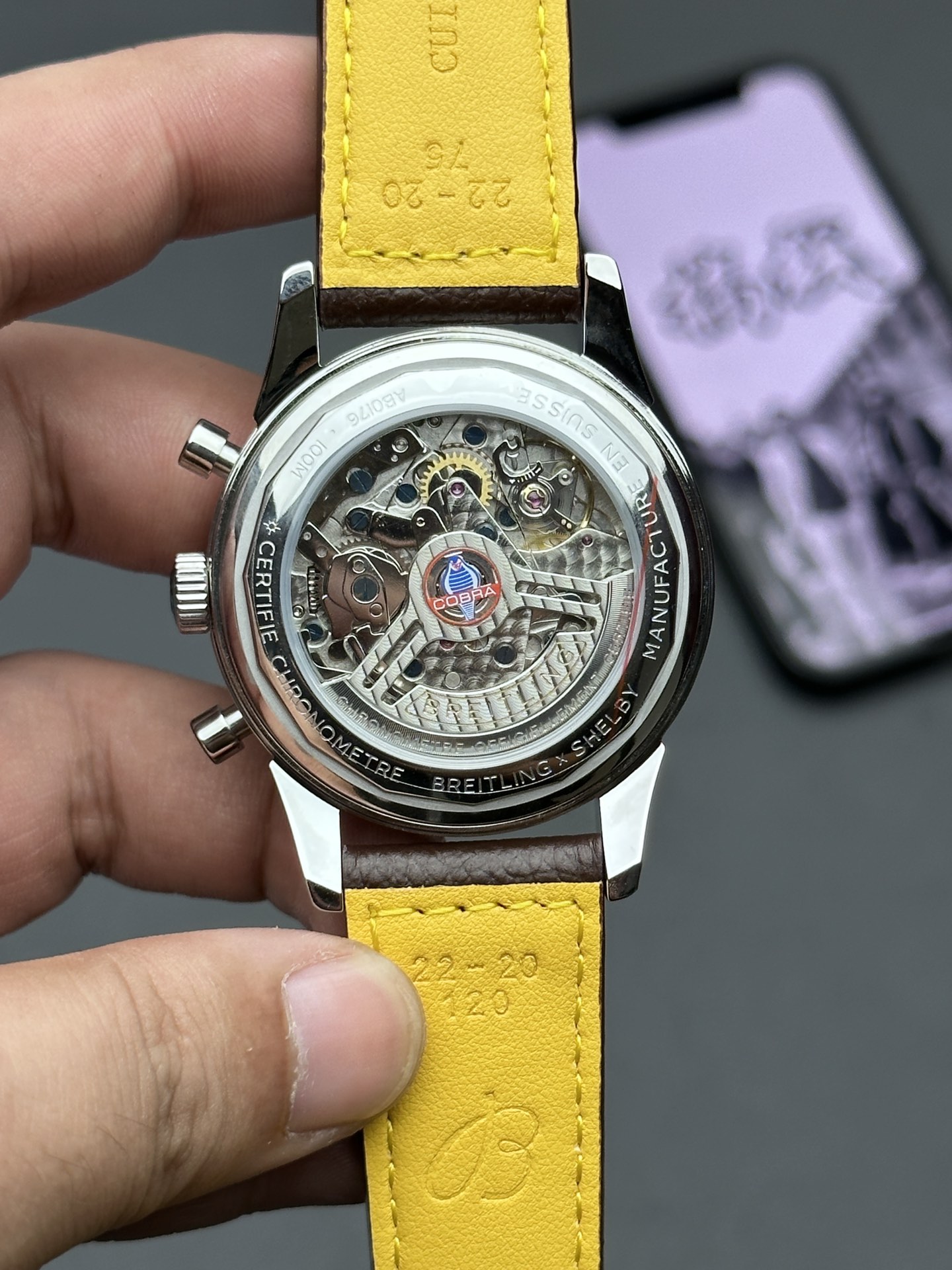
When people talk about a “B01 chronograph replica,” they are usually referencing the appearance or layout of the watch, not the movement architecture that actually defines the B01.
What Sellers Mean When They Say “B01 Clone”
In replica listings, “B01 clone” almost never refers to a true architectural copy. In practical terms, it usually means a decorated A7750 or an A7750 derivative that has been modified to resemble a B01 when viewed through a caseback.
The underlying structure remains the same: a cam-actuated chronograph with a horizontal clutch, based on the Valjoux 7750 layout. No amount of surface decoration changes that reality. The load paths, engagement behavior, and wear characteristics remain those of a 7750, not a B01.
What changes are cosmetic. Decorative plates may be added to mimic the visual mass of an integrated movement. Fake column-wheel components may be installed that do not actually control chronograph engagement. Bridges are reshaped or extended to suggest B01 geometry, even though they serve no mechanical function. In some cases, the rotor is redesigned to obscure the familiar 7750 silhouette.
These modifications can make a movement look convincing in photos, and sometimes even through a sapphire caseback at a glance. They do not change how the chronograph engages, how torque is distributed, or how stress accumulates over time. Calling this a “super clone B01 movement” stretches the term beyond usefulness.
The critical point is that decoration does not equal architecture. A cam system dressed as a column-wheel movement still behaves like a cam system, especially under real use.
Why a True B01 Clone Does Not Exist (Yet)
A true B01 clone does not exist because cloning the B01 is not just expensive; it is inefficient for the replica market as it currently operates.
The tooling cost alone is enormous. An integrated chronograph with a vertical clutch requires precise machining, tight tolerances, and extensive testing. Unlike simpler chronograph architectures, it does not scale well across multiple brands or layouts. Rolex movement clones succeed partly because their base architecture can be reused across many references. The B01 is tightly tied to Breitling’s own design language and case proportions.
There is also a demand mismatch. The majority of Breitling replica buyers prioritize visual accuracy and price over long-term mechanical fidelity. From a factory perspective, investing heavily in a true B01 clone makes little sense when a decorated A7750 satisfies most buyers at a fraction of the cost.
Finally, there is limited cross-brand reuse. A cloned 7750 can serve dozens of models across multiple brands. A true B01 clone would serve a narrow segment of the market and require Breitling-specific case engineering to make full use of its advantages. That kind of specialization runs counter to how most replica factories manage risk and inventory.
Until those economics change, “B01 clone” will remain a marketing phrase rather than a mechanical reality. Understanding that distinction allows buyers to evaluate Breitling replicas more honestly, without chasing a movement that, for now, simply does not exist.
A7750 Chronograph Movements
The Backbone of Breitling Replica Chronographs
For better or worse, the A7750 is the movement that makes most Breitling chronograph replicas possible. It is not exotic, and it is not especially elegant, but it is widely understood, mechanically capable, and strong enough to carry designs that would overwhelm simpler calibers. Any honest discussion of Breitling replica movements has to start here, because nearly every chronograph you encounter in this category depends on it in some form.
What A7750 Does Well
The A7750 descends directly from the Valjoux 7750 lineage, a chronograph architecture that has proven itself over decades of industrial use. Its defining strength is torque. The movement can drive multiple registers, long central chronograph seconds hands, and heavy dial furniture without immediately falling out of spec. That matters in Breitling replicas, where subdials are large, hands are thick, and visual mass is part of the design language.
The cam-actuated chronograph system is less refined than a column wheel, but it is robust. Engagement is firm rather than delicate, and when properly assembled, the horizontal clutch transmits power reliably without complex tolerances. This makes the A7750 forgiving in environments where precision assembly varies. It also means parts availability is excellent. Gears, levers, springs, and balance components are widely produced and relatively easy to replace, which directly affects long-term serviceability.
In practical ownership, a well-assembled A7750 Breitling replica can run consistently for years if the chronograph is used occasionally rather than constantly. When people report positive long-term experiences with Breitling chronograph replicas, the movement underneath is almost always some form of 7750.
Where A7750 Fails Over Time
The A7750’s strengths do not come without trade-offs, and those trade-offs become more pronounced in Breitling cases. The most obvious is thickness. The movement is tall to begin with, and when decorative plates or layout modifications are added to mimic B01 aesthetics, height increases further. That thickness pushes case tolerances, increases leverage on the crown stem, and reduces shock margin.
Wear under constant chronograph use is another predictable issue. The horizontal clutch design means that leaving the chronograph running continuously increases friction across engagement surfaces. Over time, this leads to reset hammer wear, imprecise hand alignment after reset, and the familiar chronograph seconds stutter that owners often mistake for a loose hand rather than a deeper mechanical issue.
Date-change interference is also common, especially in replicas where dial spacing has been adjusted to match Breitling layouts. Poorly aligned calendar components can bind during the date-change window, particularly if the chronograph is engaged at the same time. This is not a flaw unique to the A7750, but the movement’s stacked construction makes it more sensitive to these compromises.
Many of these failures trace back not to the design itself, but to assembly quality. The A7750 tolerates imprecision better than most chronographs, but it does not forgive careless modification. When shortcuts are taken, the movement will reveal them within a predictable ownership cycle.
Why Some Breitling Models Tolerate A7750 Better Than Others
Not all Breitling chronograph replicas stress the A7750 equally. The determining factor is not branding or price, but how closely the dial layout aligns with the natural geometry of the movement.
Models whose subdial spacing closely matches the native 7750 layout place less strain on the gear train. Traditional Navitimer chronograph designs, for example, often sit closer to this natural geometry than heavily reinterpreted layouts. When the movement does not need aggressive re-spacing or added transfer gears, friction decreases and long-term reliability improves.
Chronomat cases styled around B01 proportions can be more challenging. When a case is designed to visually suggest an integrated chronograph while housing a modular one, compromises accumulate. Spacer rings grow thicker, hand stacks increase, and tolerances tighten. The movement may still function well, but it operates closer to its limits.
This is why Breitling chronograph reliability in the replica world varies so widely between models that appear similar on the surface. The A7750 is not inherently unsuitable for Breitling replicas. It simply performs best when the design works with its geometry rather than forcing it to impersonate something it is not.
Three-Hand Breitling Replica Movements
The Quiet Advantage Most Buyers Ignore
In the replica market, three-hand Breitling models are often treated as compromises—choices made by buyers who could not or would not pursue a chronograph. In practice, they are often the most rational option available. When viewed through long-term ownership rather than showroom appeal, three-hand Breitling replicas consistently outperform their more complicated counterparts.
Why Three-Hand Breitling Replicas Last Longer
The advantage begins with mechanical load. A three-hand automatic movement carries far fewer responsibilities than a chronograph. There is no additional gear train for timing functions, no clutch engagement, and no reset mechanism repeatedly absorbing impact. Torque demand remains stable and predictable, which directly reduces wear across the movement.
Movements based on the ETA 2824 architecture, including Sellita SW200 and Sea-Gull ST2130 variants, have a long track record in both genuine and replica watches. They are thin, efficient, and mechanically balanced. In Breitling replicas, this translates into better shock tolerance, smoother winding, and less stress on the crown stem and rotor system. Daily wear that would gradually degrade a chronograph often leaves a three-hand movement unaffected.
Fewer components also mean fewer failure points. When problems do arise, they tend to be straightforward: a worn mainspring, a tired rotor bearing, or degraded lubrication. These issues are well understood and easily addressed. Parts availability is broad, and most watchmakers are comfortable servicing these movements. Over years of ownership, this simplicity compounds into reliability.
For many owners, a three-hand Breitling replica remains accurate and stable long after a chronograph of similar age has begun to show symptoms of mechanical fatigue.
When Simplicity Beats Authenticity
There is an unavoidable trade-off between visual faithfulness and operational longevity. Breitling’s identity is strongly associated with chronographs, and choosing a three-hand model can feel like stepping away from that heritage. Yet replica ownership is governed by different priorities than brand storytelling.
Most owners cycle through watches over time. A piece that runs consistently, wears comfortably, and does not demand frequent attention often provides more satisfaction than one that is mechanically ambitious but fragile. Three-hand Breitling replicas fit naturally into that ownership pattern. They may lack the visual drama of a running chronograph, but they reward the wearer with stability and predictability.
In this context, simplicity is not a concession. It is a strategic choice. For buyers who value daily usability over theoretical authenticity, three-hand Breitling replicas represent one of the safest and most durable paths in the replica market.
Thickness, Case Architecture, and Movement Stress
Thickness in a Breitling replica is often dismissed as a cosmetic inconvenience. In reality, it is one of the clearest indicators of how much mechanical stress the watch will experience over time. Case height reflects internal compromises, and those compromises shape failure patterns long before visible damage appears.
Why Breitling Replicas Often Wear Thicker Than Gen
The primary driver of excess thickness is movement stacking. Many Breitling replicas house movements that are taller than the calibers used in the genuine watches, especially when chronographs are involved. An A7750 already exceeds the height of an integrated B01, and once decorative plates are added to simulate B01 architecture, the movement grows taller still.
Spacer rings compound the problem. To seat a smaller-diameter movement securely inside a case designed for a different architecture, manufacturers rely on thick metal or plastic spacers. These rings raise the movement, force deeper casebacks, and reduce the available margin for shock absorption. Caseback depth increases not for aesthetics, but to create clearance where the movement no longer fits naturally.
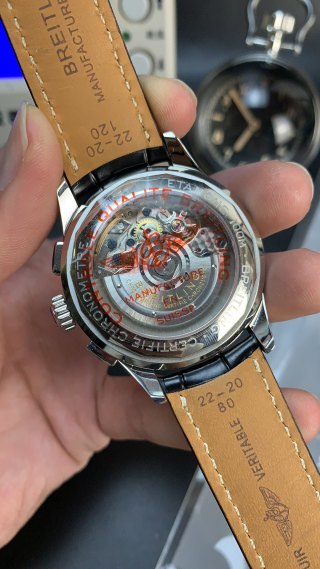
Caseback tolerances also tighten. When vertical space is consumed by movement height rather than structural clearance, there is less room for flex under impact. The watch becomes mechanically rigid in ways the original design never intended. On the wrist, this manifests as a thicker profile. Internally, it manifests as stress.
Measured in millimeters, these differences may seem small. In mechanical terms, they are not. A millimeter of added height changes leverage, impact distribution, and component alignment across the entire movement.
How Thickness Predicts Long-Term Failure Rates
Increased thickness amplifies shock transfer. When a watch experiences impact, energy travels through the case into the movement. A taller stack transmits that energy more directly to sensitive components such as the balance assembly and chronograph levers. Over time, this accelerates wear that would otherwise remain within tolerance.
Crown stem stress is another predictable outcome. As the movement sits higher relative to the case tube, the stem operates at a slightly altered angle. The difference is subtle, but repeated winding and setting gradually load the stem and keyless works unevenly. Stem breakage and setting issues appear more frequently in thick replicas than in slimmer, better-aligned builds.
Rotor clearance issues follow the same pattern. Reduced vertical tolerance means less room for the rotor to move freely. Minor deformation, debris, or bearing wear can lead to scraping, noise, or intermittent winding failure. These problems often emerge gradually, making them easy to ignore until performance noticeably degrades.
Thickness is not just a wearing experience. It is a mechanical signal. In Breitling replicas, a thicker case usually reflects deeper architectural compromises, and those compromises reliably correlate with higher long-term failure rates.
Failure Rates, Service Reality, and Ownership Cycles
Theory explains why certain movement choices are risky. Ownership cycles reveal how those risks actually materialize. Over time, patterns repeat with enough consistency that they are difficult to ignore. Breitling replicas do not fail randomly. They fail along predictable lines shaped by complexity, load, and service accessibility.
Common Breitling Replica Movement Failures by Category
Chronograph replicas fail differently than three-hand models, and they fail earlier. Early-life issues in chronographs often stem from assembly quality: chronograph hands that do not reset perfectly to zero, minute counters that advance unevenly, or intermittent engagement when the start pusher is pressed. These problems usually appear within the first few months and signal marginal tolerances rather than isolated defects.
Wear-out failures arrive later. Power reserve gradually degrades as added friction takes its toll, and chronograph seconds hands begin to hesitate under load. Reset hammer wear becomes visible when hands no longer align cleanly after reset. These symptoms rarely appear in isolation. Once one component shows wear, others tend to follow.
Three-hand Breitling replicas exhibit a different profile. Early-life failures are uncommon unless there is a clear manufacturing defect. Wear-out issues develop slowly and predictably: reduced power reserve, tired automatic winding, or crown tube wear after repeated setting. These are manageable problems, not structural failures, and they align with normal mechanical watch aging rather than premature breakdown.
The contrast is not subtle. Over comparable ownership periods, three-hand models accumulate minor service needs while chronographs accumulate functional compromises.
Serviceability: What Can Be Fixed and What Cannot
Serviceability depends less on brand name than on architectural familiarity. Standard movement designs benefit from abundant parts and widespread technical knowledge. ETA 2824 derivatives and unmodified A7750s fall into this category. When something fails, replacement is usually possible without creative workarounds.
Decorative modifications change that equation. Added plates, non-functional bridges, and altered gear trains complicate disassembly and reassembly. Watchmakers may need to remove cosmetic elements to access working components, increasing labor time and risk. In some cases, parts cannot be replaced without sourcing another donor movement, effectively turning a repair into a partial rebuild.
Certain problems simply cannot be fixed economically. Severe wear caused by chronic misalignment or excessive thickness often affects multiple components at once. At that point, service becomes a question of replacement rather than restoration. This reality shapes ownership decisions, whether acknowledged or not.
Which Breitling Replica Models Are Safest Long-Term
Understanding movement behavior allows risk to be managed rather than avoided entirely. Some Breitling replica categories consistently deliver more stable ownership experiences than others.
Low-Risk Breitling Replica Categories
Three-hand Navitimer models occupy a favorable middle ground. They retain the brand’s visual identity while avoiding the mechanical burden of a chronograph. Superocean automatics follow the same logic, pairing robust cases with uncomplicated movements that tolerate daily wear well.
Avenger GMT models without chronograph functions also perform reliably. The added GMT complication introduces minimal load compared to a full chronograph, and the underlying movement architecture remains serviceable and resilient. In these categories, the best Breitling replica movement is often the simplest one that fits the design without compromise.
High-Risk Models That Require Informed Acceptance
Full chronograph models sit at the opposite end of the spectrum. Their appeal is undeniable, but their dependence on stressed movement architectures shortens reliable ownership cycles. Thick case designs amplify those stresses, increasing the likelihood of cumulative wear.
Claims of decorative or “super clone” movements further elevate risk. When visual simulation replaces mechanical compatibility, serviceability declines and failure rates rise. These models can still be enjoyable, but they demand informed acceptance rather than optimistic expectation.
Choosing a Breitling replica is ultimately a decision about tolerance—for complexity, for maintenance, and for eventual decline. Movement choice determines how that decision plays out over time.
How to Read Movement Claims on Product Pages
Product listings are written to reduce hesitation, not to clarify mechanical reality. Learning to read them accurately does not require cynicism, only a basic understanding of what language signals substance and what signals decoration.
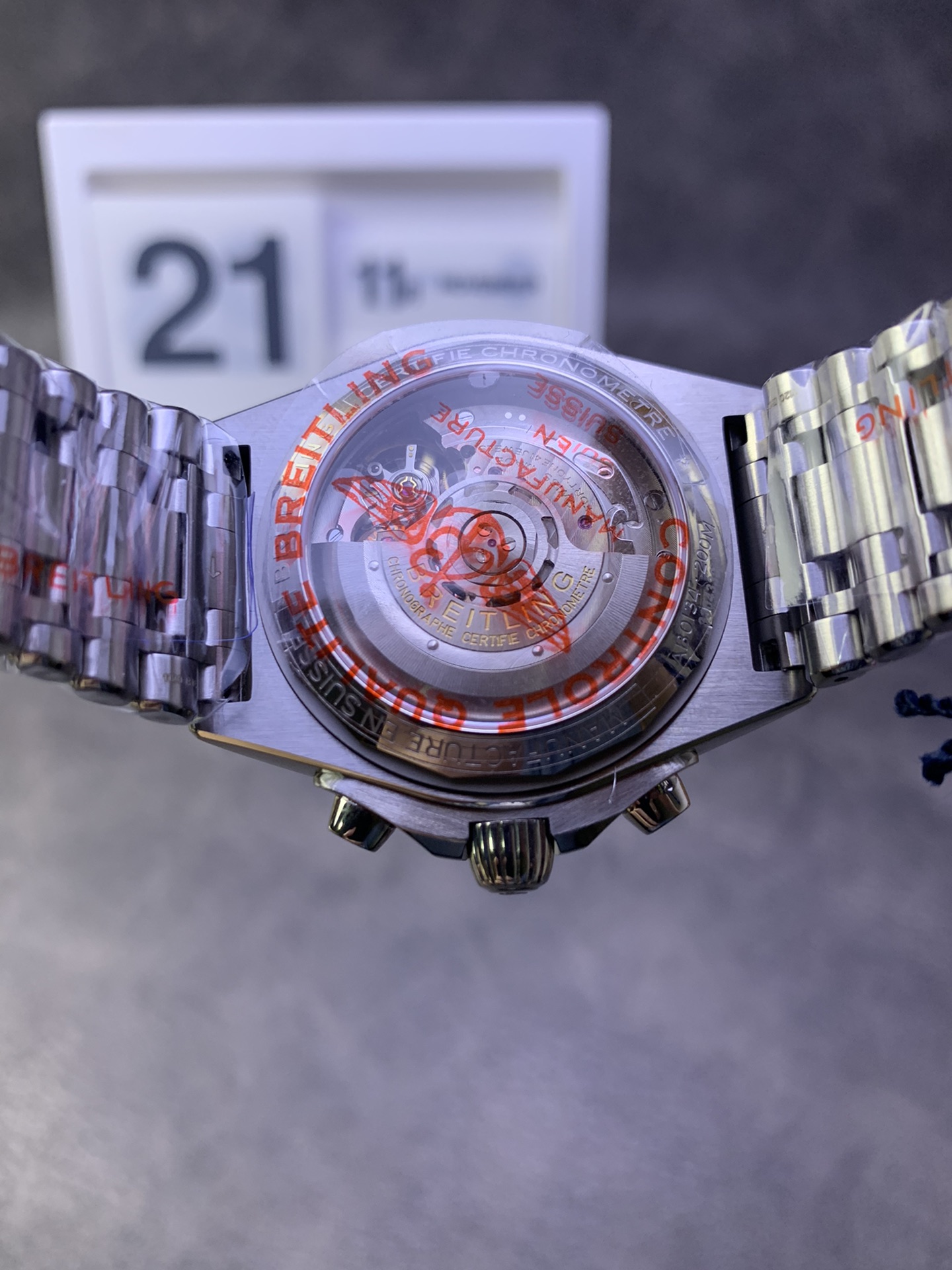
Marketing Language vs Mechanical Reality
The word “clone” is the most abused term in Breitling replica descriptions. In practice, it often means “visually similar,” not structurally equivalent. A movement described as a clone may share dial layout or decorative features with the genuine caliber while retaining a completely different operating system underneath.
“Modified” usually indicates an existing movement adapted to fit a specific case or dial arrangement. This can be benign or problematic depending on the extent of the modification. Minor changes to hand height or calendar position are common and manageable. Extensive cosmetic alterations designed to imitate another caliber’s appearance often introduce unnecessary complexity.
Decoration should never be confused with architecture. Engraved plates, simulated column wheels, and branded rotors affect what you see, not how the movement behaves. Mechanical reality is defined by how power flows, how components engage, and how stress is distributed. Listings rarely address these factors directly, so understanding the implications behind the language becomes essential.
What Actually Matters When Choosing a Breitling Replica Movement
Load paths determine longevity. Movements that transmit power cleanly, without forcing added functions through improvised gear trains, age more gracefully. Geometry alignment matters because movements operate best when cases, dials, and hand stacks are designed around their natural dimensions rather than adapted after the fact.
Service accessibility often decides whether a watch remains usable or becomes disposable. Standard architectures with readily available parts invite maintenance. Heavily decorated or heavily modified movements discourage it. Over time, this difference outweighs any initial appeal of visual fidelity.
A Breitling replica lives or dies by its movement choices, and accepting mechanical reality will always serve you better than believing in perfect clones.
| Movement Type | Common Factories | Typical Breitling Models | Price Range (USD) | Visual Accuracy | Mechanical Reliability | Long-Term Risk Profile |
|---|
| Decorated A7750 (B01-style) | GF, BLS, V9 | Chronomat B01, Navitimer Chronograph | $280–380 | Very high (caseback & dial) | Medium | High — thickness, reset wear, service complexity |
| Standard A7750 | TF, ZF | Avenger Chronograph, Navitimer Chrono | $260–340 | High (dial-facing) | Medium–High (if lightly used) | Medium — depends on chronograph usage |
| ETA 2824 / Clone (ST2130) | GF, TF | Superocean Automatic, Colt Auto | $220–300 | High | Very high | Low — predictable wear, easy service |
| Sellita SW200 | V7 | Navitimer 41 Three-Hand | $350–450 | Extremely high | Very high | Very low — closest to “set-and-forget” |
| GMT-modified 2836 | GF | Avenger GMT | $280–330 | High | High | Low–Medium — GMT adds minimal load |
| “B01 Clone” (Marketing Term) | — | Claimed on Chronomat / Navitimer | N/A | Visual only | Not applicable | Conceptual risk — does not exist mechanically |