
Purchasing a high-complication replica watch often comes with the assumption that local jewelers or independent watchmakers can handle routine maintenance. With tonneau-cased Richard Mille replicas, that assumption quickly breaks down. Custom movement plates, complex skeletonized overlays, and specialized chronograph modules mean most overseas workshops will decline service due to incompatible tooling, missing technical documentation, and liability concerns. The real question isn’t whether a replica can be fixed abroad, particularly given the Richard Mille super clone supply chain, but which movement architecture aligns with your maintenance expectations.
This article breaks down how movement choice, complication type, and case geometry directly impact long-term serviceability. You will learn why standard Asian-based calibers offer the most realistic path for local care, why chronograph and tourbillon variants require full module replacement rather than traditional overhauls, and how to budget for finite ownership cycles. By focusing on mechanical familiarity instead of extreme visual complexity, buyers can make a clearer, more practical purchasing decision.
| Movement Architecture | Service Reality Outside China | Buyer Recommendation |
|---|---|---|
| Standard Asian Caliber | Core mechanism serviceable by independent watchmakers; external overlays remain fragile | Suitable for longer daily wear; verify dial alignment and secure written warranty terms |
| Chronograph Module Clone | Local repair highly risky; modules often degrade within 12–18 months without factory calibration | Treat as short-cycle piece; budget for complete movement replacement rather than overhaul |
| Tourbillon Architecture | Zero parts interchangeability; overseas workshops cannot balance or source proprietary components | Avoid if mechanical longevity is a priority; expect limited functional lifespan |
| Complex Skeleton Dial | Decorative layers prone to dust ingress and adhesive failure; custom case blocks standard access | Prioritize simpler movements; avoid water and shock to delay cosmetic degradation |
Quick Questions Before You Read
Q: Can a local watchmaker service a replica chronograph?
Most will decline due to missing calibration tools and alignment risks. If the chronograph function fails, plan for a full module replacement instead of a traditional repair.
Q: How long should a complex replica movement realistically last?
Intricate chronograph and skeleton designs typically reach their practical limit within three to four years of daily wear. Simpler standard calibers often last five years or more with basic care.
Q: Is it worth paying more for extreme visual accuracy?
Not if serviceability is your priority. Highly detailed skeleton dials and custom plates often compromise mechanical access and durability. Choose a familiar movement architecture for predictable ownership.
Q: What maintenance budget should I set aside?
Plan to reserve 30–50% of the initial purchase price for future module swaps. Replica movements are finite utility purchases, so factoring replacement costs upfront prevents unexpected financial strain.
Factory Reputation Versus Movement Architecture: Why Names Mislead Buyers
Buyers often enter the replica market assuming that a well-known factory name guarantees consistent quality across every model. This assumption holds for standard round-case watches where factories control the full assembly, but it breaks down completely for tonneau-cased Richard Mille replicas. The reality is that RM clones rarely come from the same assembly lines producing mainstream automatic replicas. Instead, they are typically built around specialized Chinese movement suppliers who provide base calibers, decorative bridges, and complication modules to various sellers. A factory or brand channel that excels at Rolex or AP replicas may source its RM movements from a completely different supplier chain, meaning the “best factory” label tells you very little about the actual movement architecture, case machining tolerances, or long-term serviceability inside an RM clone.
At cleanvsfactory.com, this distinction is treated as a fundamental buying rule: evaluate the movement specification first, then consider the seller’s track record for that exact architecture. The factory or seller name should only serve as a filtering tool, not a final quality guarantee. When comparing listings, buyers should ask whether the movement uses a standard documented base, a stacked chronograph module, or a proprietary tourbillon cage. If a seller cannot clearly identify the base caliber or defaults to vague terms like “high-end custom,” the listing is prioritizing marketing language over verifiable mechanics. Recognizing that factory reputation does not automatically transfer to every model prevents buyers from overpaying for visual finishing while underestimating internal maintenance risks.
In the broader replica watch market, factory designations serve as useful reference points for buyer communication, but they should not be interpreted as official quality certifications or consistent performance markers across every reference. This is particularly true for tonneau-shaped complications, where the same seller or market label might source completely different base movements across successive production batches. Version-specific tracking becomes essential: a movement configuration that performed reliably in an early batch may be replaced in a later run without public announcement, altering the long-term serviceability. A traceable purchasing approach requires buyers to treat factory names as starting points for inquiry, while insisting on model-specific confirmation of the base caliber, module type, and current assembly standards.
Official Technical Architecture vs. Replica Assembly Reality
Understanding why overseas servicing fails requires examining the structural gap between official brand engineering and replica assembly methods. Authentic tonneau timepieces from high-complication manufacturers are constructed around fully integrated, proprietary calibers designed with extreme tolerances, specialized shock-absorption systems, and brand-specific lubrication protocols. Official technical documentation outlines precise assembly sequences, torque specifications, and pivot clearances that are strictly maintained within authorized service networks. In contrast, China-made replicas typically assemble around modified, widely available Asian base movements. Manufacturers adapt these standard calibers by adding decorative bridges, custom dial adapters, and external complication modules to mimic the visual profile of the authentic reference.
This fundamental divergence means that genuine service manuals, factory tools, and authorized training hold no practical value for replica maintenance. Local technicians cannot rely on official brand documentation to troubleshoot a clone movement because the internal architecture, gear train layout, and bridge mounting points are fundamentally different. While a replica may visually reference an official model’s design language, its mechanical reality operates outside standardized horological service frameworks. Buyers must recognize that servicing these watches requires evaluating the actual base caliber and module configuration, not referencing the authentic watch’s official specifications or maintenance guidelines.
Why Richard Mille Super Clone Servicing Differs From Standard Replicas
Most buyers approach replica watch ownership assuming that if a watch looks convincing on the wrist, it will be serviced like any other mechanical timepiece. This assumption holds true for standard round-case replicas, but it collapses completely when applied to Richard Mille super clone servicing. The gap between external accuracy and long-term replica watch reliability is not caused by watchmaker bias or brand stigma. It is a direct result of case geometry constraints and architectural fragmentation.
Standard automatic replicas rely on modular, widely documented service paths. A 41mm round case opens with standard case holders, pressure balls, or conventional snap-back knives. The movement footprint follows industry-standard spacing, and replacement gaskets or spacer rings are available from generic supplier catalogs. The tonneau case architecture used in Richard Mille replicas dismantles this entire workflow. The curved lugs and tapered sidewalls prevent standard case clamps from gripping safely, forcing technicians to use custom jigs or risk slipping and scratching the bezel. Opening a tonneau case often requires a specific sequence of specialized spline screws that do not match standard watchmaker drivers, increasing the risk of stripped heads before the movement is even visible.
Once the case is open, the difference between round and tonneau servicing becomes even clearer. Instead of dropping a standardized movement into a universal casing ring, these watches mount the caliber directly to non-standard movement plates that are machined to match the exact curvature of the case. The bridges, dial adapters, and gear train positioning are highly customized. If a mainspring fractures or a balance staff breaks, a local shop cannot simply order a replacement plate or swap the movement into a compatible donor case. Aftermarket watch support for tonneau replicas depends entirely on factory-specific part availability, not on the local technician’s skill. Buyers who expect routine local maintenance are often surprised to learn that external visual similarity does not translate to internal serviceability, and recognizing this architectural reality is the first step toward managing ownership expectations.
Standard Base Movement Upgrades and Overseas Serviceability
When a super clone relies on a widely distributed Asian automatic caliber, the servicing picture changes dramatically. A standard base movement replica represents the most practical path for overseas maintenance, precisely because independent watchmakers already understand the internal architecture. Whether the watch uses a Seagull PT5000 alternative or a similarly documented Chinese automatic caliber, the gear train, shock protection, and winding mechanics follow predictable engineering patterns. Watchmaker familiarity means a local technician can safely disassemble the core, clean the pivots, replace a worn mainspring, and regulate timing accuracy without needing factory schematics.
Base caliber interchangeability is what makes this route viable. If a crown stem breaks or a date-change lever wears out, generic automatic parts can often be sourced from established parts suppliers. This is why a standard base vs custom movement distinction matters far more than the factory name on the dial. The easiest RM clone to fix locally will always be the one that prioritizes mechanical familiarity over extreme visual complexity. Basic automatic movement maintenance remains straightforward as long as the core architecture has not been fundamentally redesigned.
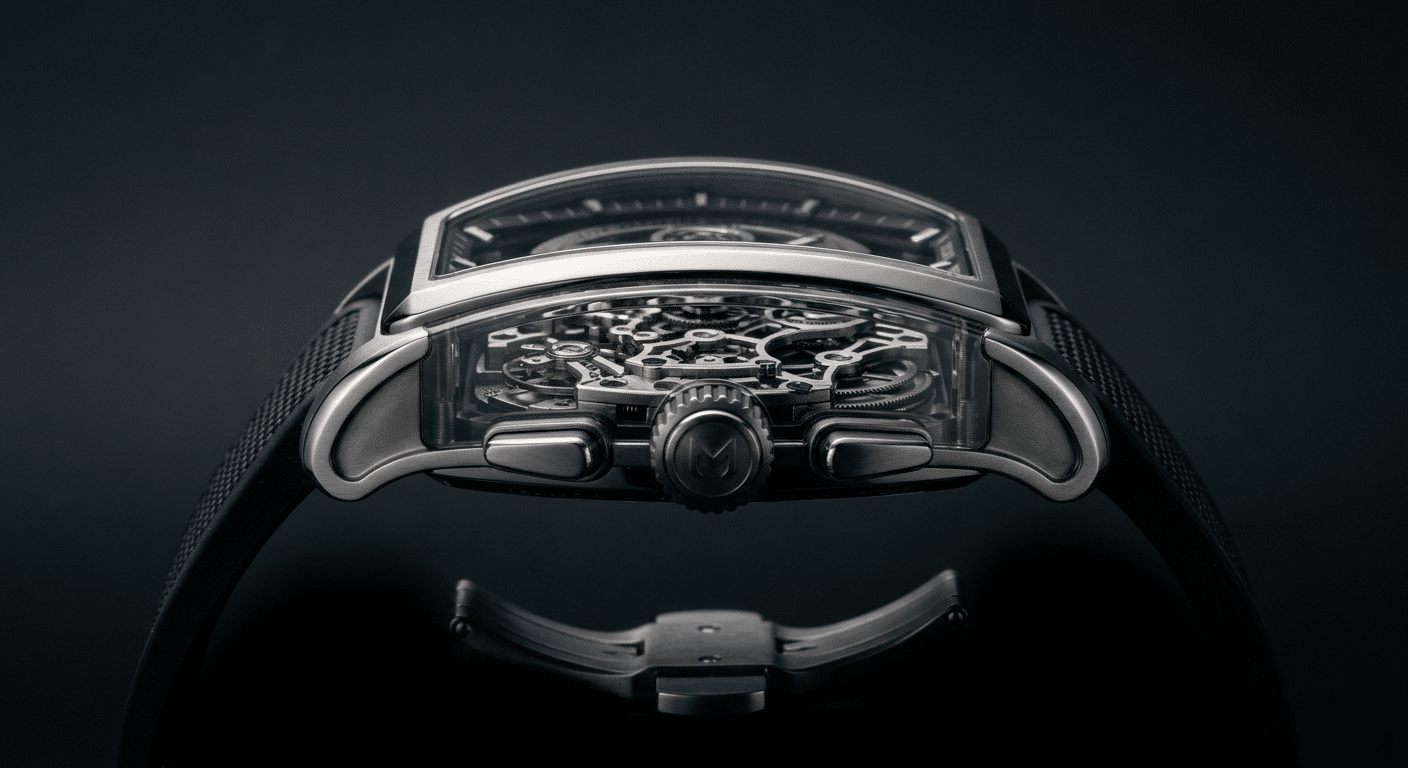
However, buyers must separate movement serviceability from cosmetic overlay fragility. Even when the underlying caliber is standardized, the watch still sits inside a skeletonized dial frame with custom rehaut adapters, modified rotor bridges, and non-genuine datewheel rings. A local watchmaker can successfully overhaul the core automatic mechanism but may struggle to realign the decorative top layers without leaving micro-scratches or shifting the minute track. Standard base does not mean identical to genuine RM service procedures. The movement itself remains highly serviceable, but the cosmetic architecture mounted above it remains a return-to-seller liability. Buyers who plan to wear the watch daily should treat standard base calibers as a pragmatic foundation, while accepting that dial-side components may eventually require coordination with the original seller.
Movement Transparency Note: Movement references in this article describe replica-market movement types and configurations, not official Richard Mille, Rolex, Cartier, or Swiss-manufactured calibers unless explicitly stated with verifiable evidence. Serviceability depends on the specific base caliber version, visible QC details, and module accessibility, not on factory reputation or assumed brand affiliation. Buyers should verify the actual internal architecture through unedited photos and seller documentation before purchasing.
Tracing Movement Claims and Seller Documentation Standards
Establishing a clear mechanical lineage is one of the most effective ways to manage long-term ownership expectations. In the super clone market, movement descriptions are frequently simplified into broad marketing categories such as “high-grade custom” or “seamless upgrade.” From a traceability standpoint, these phrases offer zero diagnostic value. A responsible evaluation requires separating the advertised movement name from its actual physical configuration. Buyers should ask sellers to identify the specific base architecture, the supplier of the decorative bridges, and the exact module type if complications are involved. When a listing lacks this breakdown, it usually indicates that the internal assembly relies on mixed components or undocumented batch variations, which directly complicates future servicing.
Practical movement tracing also means recognizing how replica-market terminology differs from official horological standards. Terms like “integrated chronograph” or “manufacture-style base” are frequently used to describe visually convincing layouts, yet they rarely reflect the structural reality of stacked modules, adapted Asian mainsprings, or cloned escapement geometries. A trustworthy purchase decision hinges on understanding that a movement’s reliability is determined by its gear train spacing, pivot durability, and lubrication quality, not by the terminology used in a product title. Requesting clear, unedited photographs of the actual caliber, along with written confirmation of the movement route, creates a verifiable baseline for future maintenance discussions and prevents reliance on unverified stock imagery.
Movement Nomenclature in the Replica Market vs. Official Horology
Movement names used in replica listings frequently describe visual layout, decorative finishing, or seller-specific terminology rather than an official brand-manufactured caliber. Terms such as “integrated chronograph architecture,” “flying cage escapement,” or “3255-style layout” are often applied to replica-market clones to help buyers visualize the internal structure, but they do not indicate genuine horological origin, Richard Mille batch evolution, licensed production, or compatibility with authorized service networks. In a servicing context, this distinction is critical: a watchmaker’s ability to maintain a movement depends on gear train spacing, pivot standards, and documented friction points, not on the marketing label attached to the dial.
When evaluating long-term serviceability, buyers should separate movement nomenclature from mechanical verification. A reliable approach involves requesting unedited photos that clearly show the base plate stamping, the balance wheel configuration, and the bridge screw layout. If the movement uses a widely recognized Asian automatic base with standard jewel placements and conventional winding mechanics, the terminology becomes less relevant than the visible architecture. Conversely, highly customized or proprietary clone assemblies often lack standardized reference points, meaning the movement name serves primarily as a catalog identifier rather than a technical service guide. Understanding this boundary prevents buyers from assuming that familiar movement labels automatically translate to interchangeable parts or straightforward overseas maintenance.
Movement descriptions in the replica market should always be cross-referenced with visible QC evidence and seller confirmation of the exact configuration. A clone labeled with a specific caliber reference may feature modified gear ratios, adapted mainspring barrels, or non-standard shock protection that diverges from the original design. For buyers prioritizing long-term usability, focusing on documented base calibers with proven spare part availability will typically offer a more predictable maintenance path than chasing exact nomenclature matches. Replica watches operate on clone architectures, and acknowledging this reality from the start helps align servicing expectations with actual mechanical capabilities.
Price, QC Photos, and the Limits of Visual Verification
A common trap for new buyers is equating a higher price point with superior mechanical reliability, or assuming that detailed QC photos prove long-term stability. In the replica market, price differences often reflect seller margins, import logistics, limited batch availability, or cosmetic upgrades like better dial printing, polished case edges, and heavier rotor decoration. These factors can improve initial presentation, but they rarely change the fundamental wear characteristics of the underlying movement. A chronograph clone priced at the top of a seller’s range may still use the same sensitive Dubois-Dépraz style module as a lower-priced version, meaning both will face the same clutch degradation and alignment risks after 12 to 18 months of regular use.
QC photos and seller preview videos are useful signals, but they should not be treated as mechanical proof. Macro images taken under studio lighting highlight dial alignment, bezel finishing, and hand placement, yet they completely hide gear train play, mainspring tension, balance amplitude, or the microscopic tolerances inside a chronograph module. A watch that looks flawless in a preview may still suffer from pusher stickiness or rotor noise once worn daily. The practical approach is to treat photos as a baseline for visual inspection only, and to demand unedited movement photos that show the actual base caliber layout, bridge machining, and rotor attachment. If a seller refuses to provide clear internal shots or relies entirely on stock preview images, the buyer is purchasing visual presentation, not verified mechanical configuration.
Visual documentation plays a critical role in reducing pre-purchase uncertainty, but it must be interpreted with realistic boundaries. Studio-lit preview images and curated seller galleries rarely capture the operational nuances of a replica movement. A traceable verification process focuses on specific mechanical details: the alignment of the center wheel relative to the dial openings, the finish of the chronograph levers, the seating of the balance jewel, and the consistency of the rotor engraving. Stock photos can be recycled across multiple listings or used to represent different versions of the same movement, which is why buyers should request time-stamped, unedited shots of the exact unit being prepared for shipment. Even with thorough QC photos, close inspection after delivery remains necessary, as microscopic tolerances and long-term stability cannot be fully assessed through static images alone.
Decorative Skeletonized Movements and Cosmetic Modifications
Many buyers are drawn to replicas that replicate the deep, open-work aesthetic of genuine Richard Mille watches, but this visual appeal comes at a direct cost to replica watch durability. A skeletonized replica watch movement that prioritizes photography over engineering is fundamentally different from a functionally open-work caliber. In these builds, solid mainplates are replaced with thin, laser-cut decorative overlays designed to mimic complex bridge architecture. The problem is not the movement itself, but how the decorative bridge modification is assembled and secured.
Cosmetic skeleton routes frequently use non-standard micro-screws, tiny retaining pins, or light factory adhesives to hold the open-work dial clone layers in place. During a basic service, removing a single decorative bridge can shift the alignment of the gear train by fractions of a millimeter. Upon reassembly, this misalignment often manifests as minute-hand drag, second-hand wobble, or gear-binding that requires precise shimming to resolve. Independent technicians regularly decline these projects because the margin for error is too small to justify standard hourly rates. When a watchmaker has to guess the original stacking height or realign non-machined decorative layers, the service shifts from routine maintenance to experimental reconstruction.
Beyond alignment sensitivity, decorative skeletonization creates a persistent dust ingress risk. Solid movement plates naturally act as barriers against airborne particles and dried oil migration. Large cosmetic cutouts remove that protection entirely, allowing fine dust to settle directly onto the escapement and balance wheel. Over time, this contamination degrades lubrication and accelerates wear on the pallet fork. Cosmetic watch parts reliability drops sharply after even one teardown, which is exactly why skeleton clones are harder to fix than their solid-dial counterparts. If a buyer values long-term resilience, they must recognize that decorative skeleton movement maintenance is rarely a standard procedure. These watches are engineered for visual impact, not repeated servicing, and treating them as routine mechanical projects will likely lead to costly realignment attempts or compromised accuracy.
Complex Chronograph and Integrated Complication Routes
When a China-made Richard Mille super clone incorporates a stopwatch function, the internal reality shifts from straightforward timekeeping to a highly constrained exercise in module stacking. Unlike genuine Richard Mille calibers that utilize vertically integrated chronograph architectures with specialized column-wheel or cam systems, replica versions typically rely on modified Asian base movements topped with a cloned Dubois-Dépraz style module. This structural compromise is where replica chronograph movement service quickly encounters practical dead ends.
An integrated chronograph clone of this type might function flawlessly out of the box, but the physical stacking of the module drastically alters the service equation. The added height forces the case to run thicker, often compromising the gasket compression required for reliable water resistance. More critically, the clutch and cam system in these replica modules is exceptionally sensitive to alignment. Pusher alignment is not just a cosmetic concern; improper tube seating or lever play can cause the chronograph seconds hand to stutter, drift out of reset position, or bind against the subdial hands under normal operation. These are mechanical friction points that degrade predictably over 12 to 18 months of regular use.
For an overseas watchmaker, chronograph replica repair difficulty stems from the complete absence of factory calibration jigs. Genuine chronograph servicing requires precise micrometric tools to adjust the column wheel drop, reset hammer tension, and minute counter jumper spring pressure. Clone movements use localized, undocumented variations of these springs and levers. When a local shop attempts timing calibration or a partial teardown, they are working blind. A slightly overtightened screw on the module bridge can alter the clearance between the cannon pinion and the hour wheel, instantly causing the hands to drag. This is why pusher mechanism reliability is often cited as acceptable initially but highly volatile post-service.
The realistic outcome for local service for timing watches of this type is a strict division of labor. A competent independent watchmaker may accept a basic time-only movement adjustment or a quick amplitude check, but they will almost universally refuse a full module teardown. The risk of damaging non-replaceable bridge pivots or losing factory-pressed pinions outweighs any standard service fee. For buyers considering a chronograph Richard Mille replica, the operational assumption must be that the module functions as a sealed unit. Once the reset lever fatigues or the flyback spring loses tension, the practical solution is rarely local repair, but complete module replacement.
Real Tourbillon and Highly Customized Movement Architecture
Moving into genuine flying tourbillon complications introduces the absolute ceiling of replica watch servicing difficulty. While a working flying tourbillon clone delivers impressive kinetic visual depth, it relies on a custom movement architecture that operates entirely outside conventional horological service pathways. These calibers are not standardized Asian workhorses with decorative cutouts; they are highly specialized assemblies engineered by specific Chinese movement suppliers, assembled without technical schematics, and built for initial visual impact rather than long-term serviceability.
The fundamental barrier to real tourbillon replica maintenance lies in the cage and escapement assembly. Genuine tourbillons require microscopic balancing of the rotating cage, specialized lubricants for the third-wheel pivot, and factory-grade tension on the hairspring terminal curve. In a replica context, these components are often manufactured to loose visual tolerances. If the rotating cage develops even minor play, or if the bridge alignment shifts from repeated impacts, the entire escapement can halt. Overseas workshops lack the proprietary balancing jigs and micron-level replacement pivots required to restore function. Without technical documentation, high-complication replica servicing becomes guesswork, and a single misplaced screw can permanently damage the bridge posts.
Furthermore, zero interchangeability defines the spare-part ecosystem for these calibers. A cracked tourbillon cage, a bent pallet fork, or a fatigued mainspring barrel cannot be sourced from standard suppliers. The proprietary bridge design often integrates multiple structural supports into a single stamped plate, meaning a localized gear failure frequently necessitates a full movement swap. This reality dictates a clear economic boundary for the buyer. The tourbillon clone servicing cost for intricate cage repair overseas will easily exceed the replacement value of the entire watch, assuming any watchmaker would accept the risk in the first place.
When evaluating custom caliber repair feasibility, overseas buyers must accept that these are fundamentally short-to-medium cycle timepieces. The correct maintenance strategy for a complex replica is module-level replacement, not microscopic overhaul. If the cage stops rotating or amplitude drops below 180 degrees, the only reliable path is returning to the original seller or authorized channel for a complete movement exchange. Asking who can fix complex replica movements in North America or Europe usually yields the same answer: no independent technician possesses the proprietary tooling, and attempting local disassembly guarantees a non-functional result.
Aligning Movement Choice With Actual Wear Patterns
Choosing a Richard Mille replica movement should start with a clear definition of how the watch will actually be worn, rather than which complication looks most impressive. The mechanical reality of these calibers varies drastically, and mismatching a complex architecture with a demanding daily routine is the fastest way to accelerate wear and force premature module replacement. Standard base movements, which follow familiar Asian automatic layouts, are the most forgiving for regular rotation. They tolerate normal wrist impact, maintain consistent power delivery, and can often be regulated or cleaned by independent technicians without requiring factory-specific jigs.
Decorative skeleton builds and true tourbillon architectures belong to a different ownership category. Skeleton overlays prioritize open-work aesthetics and photographic impact, but the exposed gear trains and adhesive-mounted bridges leave the movement highly vulnerable to dust, moisture, and micro-impacts. Tourbillon clones deliver kinetic visual appeal, yet their custom cages, non-standard escapement pivots, and undocumented tolerances make them functionally short-cycle pieces. For first-time buyers or those seeking a reliable daily wearer, starting with a simpler three-hand base caliber reduces mechanical risk and aligns expectations with actual service availability. Complicated chronograph and integrated complication routes are better suited for collectors who understand the 12-to-24-month functional window and are prepared for module-level replacement rather than traditional overhaul. Matching the movement to your actual wearing habits, rather than chasing extreme visual complexity, is the most effective way to control maintenance costs and extend usable ownership time.
Why Independent Watchmakers Outside China Decline These Movements
Understanding independent watchmaker replica refusal requires looking past brand stigma and examining the basic economics of modern watch servicing. For a legitimate independent technician, accepting a China-made Richard Mille super clone is rarely a matter of personal bias; it is a calculated risk assessment that almost always returns a negative value. The combination of missing technical documentation, unpredictable non-standard watch parts, and extreme case geometry creates a liability profile that standard hourly rates simply cannot cover.
The first friction point is mechanical access. Genuine Richard Mille tonneau cases require specialized torque specifications and sequential spline screw loosening to prevent bezel distortion or crystal chipping. Replica tonneau cases often utilize softer alloys and inconsistent threading. The tonneau case-opening risk is immediate: applying standard workshop tools can strip the screw heads, crack the sapphire crystal, or permanently deform the mid-case, rendering the watch unsellable even before movement work begins. When a watchmaker calculates the hourly rate vs research time, they quickly realize that spending three hours diagnosing a non-standard bridge alignment yields a fraction of the revenue earned servicing a standard automatic base caliber in half the time.
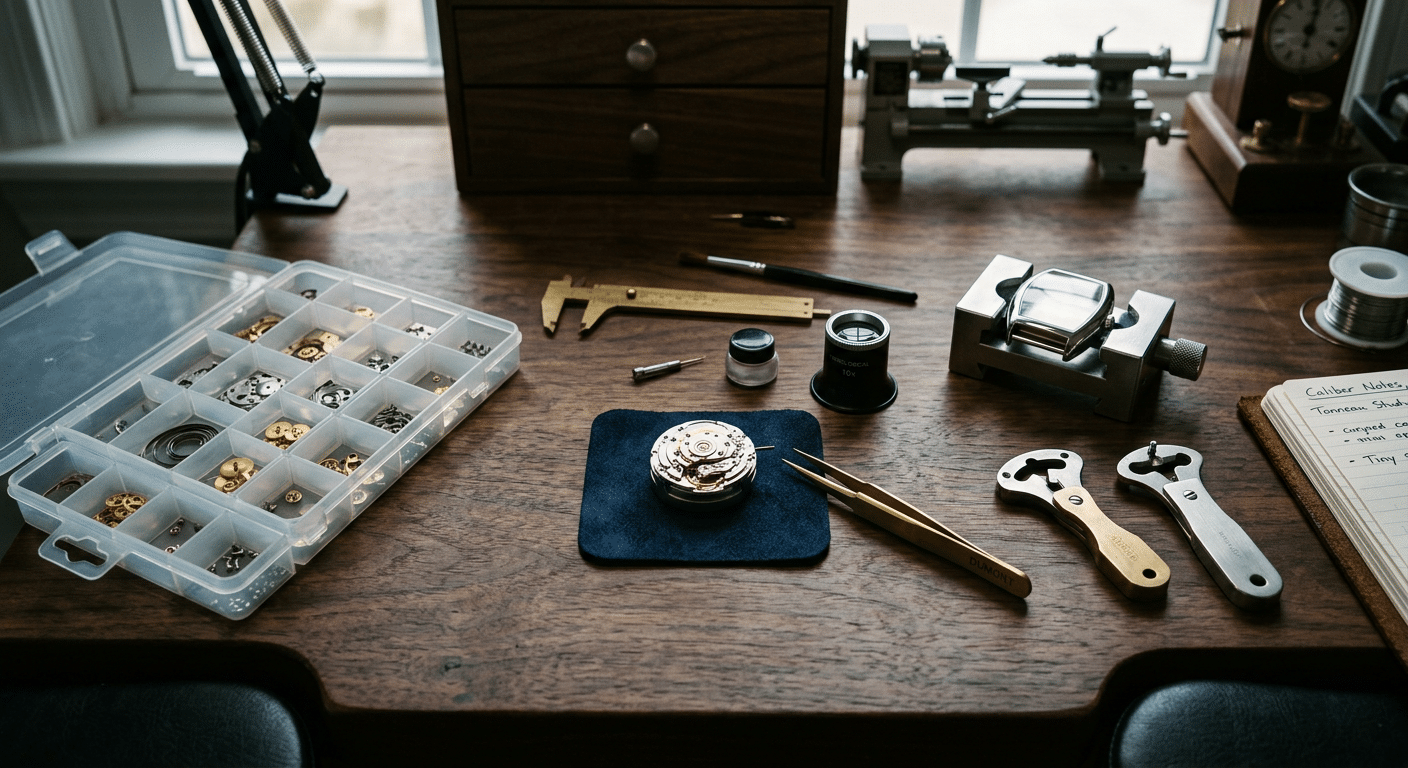
Compounding the access issue is the absolute lack of service documentation. Genuine calibers come with factory technical sheets detailing lubrication points, torque values, and gear train sequences. Clone movements provide none of this. Without schematics, every teardown becomes a forensic exercise. If a watchmaker inadvertently overtightens a bridge screw or misaligns a minute wheel, the resulting damage is irreversible because replacement components cannot be sourced from legitimate distributors. The replica watch warranty limits offered by local shops reflect this uncertainty; they will typically offer a short-term guarantee on a basic cleaning but will explicitly exclude any liability for subsequent gear train failure or module collapse. This is standard industry practice, not negligence.
When buyers ask why watchmakers won’t touch my watch, the answer is almost always rooted in replica service liability. A professional workshop assumes full financial and reputational risk the moment a case back is removed. If a non-standard replica movement stops running after a basic service, the shop is expected to cover the cost of a replacement movement or return the watch at their own expense. Given that clone calibers often operate at the edge of their design tolerances, introducing standard cleaning solvents or re-lubricating synthetic jewels can sometimes alter friction coefficients enough to cause immediate failure. Setting realistic watchmaker expectations means acknowledging that overseas independent shops are structured to service standardized, parts-available architectures. Expecting them to absorb the research time and liability of a highly customized, non-documented clone movement is fundamentally misaligned with how their businesses operate.
The Economic and Technical Reality of Independent Service Refusals
Independent watchmakers operate within a strict operational framework defined by tooling costs, parts availability, and service liability. Genuine horological service protocols assume access to manufacturer-issued case clamps, movement holders, and calibrated torque wrenches that match specific reference geometries. However, technicians often find that replica tonneau cases, which are typically produced following the specifications of Richard Mille super clone manufacturing, frequently deviate in thickness, curvature, and screw thread consistency, rendering standard workshop holders ineffective or unsafe. When a technician cannot secure the case firmly, the risk of cracking the sapphire crystal or stripping screw heads increases dramatically during routine case opening.
Furthermore, the absence of factory technical documentation transforms routine maintenance into a speculative process. Without schematic diagrams indicating pivot depths, lubrication points, and gear train sequencing, an independent watchmaker must reverse-engineer the movement during each service attempt. This diagnostic research time is rarely billable at a rate that justifies the effort, and the financial liability for post-service complications falls entirely on the technician’s business. Consequently, declining complex replica projects is a standard industry practice driven by resource allocation, tooling limitations, and risk mitigation. Buyers should view this refusal as a practical indicator of the watch’s serviceability limits, adjusting their ownership strategy and maintenance expectations accordingly.
Service Documentation Boundaries and Third-Party Support Limits
The absence of official technical documentation is the primary reason independent watchmakers outside China frequently decline tonneau replica projects. Genuine high-complication timepieces are supported by manufacturer-issued service manuals that specify exact torque values, lubrication points, pivot depths, and gear train sequencing. These documents are tightly controlled and only distributed through authorized service networks. Replica movements, by design, operate outside this framework. They are typically reverse-engineered or adapted from alternative base calibers, meaning the internal clearances, bridge mounting angles, and escapement geometries rarely match official specifications. Attempting to service a replica clone using genuine brand manuals or standard horological assumptions can easily lead to over-torqued screws, misaligned pallet forks, or irreversible gear train damage.
This documentation gap creates a practical ceiling for third-party support. Even highly skilled independent technicians rely on traceable service histories and manufacturer guidelines to guarantee post-repair performance. When a watch is brought into a workshop without schematics, the technician must rely on observational disassembly and generalized watchmaking principles. While this approach can sometimes resolve basic timekeeping issues, it carries significant risk for complex chronograph modules, integrated calendar mechanisms, or multi-layered skeleton architectures. A single miscalculated clearance can disrupt amplitude, cause hand drag, or trigger premature clutch wear. Buyers should recognize that replica maintenance is inherently experimental when performed outside the original supply chain, and treating it as a standardized overhaul often leads to higher costs and reduced functionality.
For overseas owners, the most realistic maintenance strategy acknowledges these documentation limits upfront. Instead of expecting boutique-level service protocols, buyers should prioritize sellers who provide clear module replacement pathways, retain backup assemblies for quick swaps, and offer transparent diagnostic terms. If a watch requires hands-on intervention, the goal should be stabilizing the core timekeeping function or replacing the entire module rather than attempting a full teardown and re-lubrication cycle. Accepting the documentation boundary does not diminish the value of the watch; it simply aligns maintenance planning with the actual mechanical reality of non-standardized replica architectures.
Pre-Purchase Verification Checklist for Long-Term Maintenance
Visual accuracy means nothing if the internal architecture leaves you stranded after a minor failure. A practical replica watch pre-purchase checklist should filter out cosmetic-only builds and expose whether the watch has a viable service path before any money changes hands. The goal is not to find a flawless movement, but to confirm that the specific caliber powering the watch has a documented fallback when lubrication dries, a gear strips, or a chronograph module jams.
Movement Route to Verify
Request clear photos of the base caliber, rotor, and bridge layout. Ask the seller to specify whether the movement uses a standard Asian base, a stacked chronograph module, or a proprietary tourbillon architecture. Confirm in writing whether replacement bridges, date wheels, or clutch levers are available if needed later.
Standard base movements remain the most straightforward to document. If a seller cannot show you an unedited movement photo or hesitates to name the base caliber, treat it as a red flag. Module-based and highly customized movements require explicit confirmation of what happens when a specific lever breaks. Movement route verification is not about memorizing technical specs; it is about forcing the seller to acknowledge the exact internal configuration and its real-world failure points.
Spare Part Availability and Module Architecture
Ask directly about spare gear and pinion availability. Independent watchmakers outside China rarely stock replica-specific bridge assemblies, date wheels, or chronograph clutch components. When a seller claims a watch is fully serviceable, push for specifics: can the movement be sourced as a single replacement module, or does repair require sending individual gears and levers back to China? If the answer leans toward individual part sourcing, overseas maintenance will likely stall. If the seller confirms a complete module swap is possible, you have a realistic path forward. Module-level replacement is almost always faster, cheaper, and less risky than attempting to hunt down isolated replica components abroad.
Written Service Confirmation and Return Logistics
Vague lifetime warranty or free maintenance promises collapse the moment a watch needs hands-on repair. Replace chat assurances with a clear seller after-sales policy document. You need written terms that cover diagnostic timeframes, who pays for international shipping during a repair, and the maximum turnaround window. Return-to-seller logistics often introduce the biggest hidden risk: customs holds, lost packages, or prolonged diagnostic delays. A transparent seller will outline a realistic repair protocol and clarify whether they retain backup movements for quick swaps. If a dealer refuses to put service terms in writing, assume you are buying the watch as-is.
Separating Visual Conviction from Mechanical Reality
Many buyers assume that because a dial looks sharp and a bezel aligns perfectly, the watch is built for long-term replica watch support. In reality, decorative skeleton overlays, cosmetic bridges, and printed carbon patterns often mask a fragile internal layout. How to verify movement before buying comes down to asking the right questions early and accepting that aesthetic success rarely guarantees mechanical resilience. If a seller focuses entirely on dial texture and case finishing while dodging questions about clutch wear or balance wheel replacement, the watch is likely optimized for initial impact, not sustained ownership. Treat the verification process as a filter: if the architecture cannot be supported locally or swapped predictably through the seller, adjust your purchase decision accordingly.
Buyer Expectation Note: No replica watch should be judged by factory reputation alone. A better decision usually depends on the specific movement route, case geometry constraints, module replacement availability, and how closely the watch will be inspected in real-world use. Buyers should plan for finite maintenance cycles and prioritize mechanical familiarity over extreme visual complexity when evaluating long-term serviceability.
CleanVSFactory’s editorial approach is to make replica watch decisions more traceable by connecting factory claims to visible details, movement behavior, version differences, and practical QC checks. Rather than treating market names as absolute guarantees, the focus remains on model-specific execution, transparent movement documentation, and realistic ownership boundaries. By evaluating each piece through verifiable mechanical logic and documented service pathways, buyers can navigate the replica market with clearer expectations and fewer uncertainties.
Realistic Ownership Expectations and Risk Management
Treating a China-made Richard Mille super clone as a permanent heirloom guarantees frustration. These watches operate on a different lifecycle curve than genuine luxury timepieces or standard round-case replicas. Replica watch long-term ownership requires planning around predictable wear timelines, localized intervention limits, and eventual component replacement. The most rational approach frames the purchase as calculated utility: you are paying for specific visual presence and mechanical function over a finite period, not indefinite precision.
For standard base movements, basic servicing remains viable. Local independent watchmakers can regulate timekeeping, replace mainsprings, and address common regulator issues. Expect maintenance intervals of roughly eighteen to twenty-four months under regular wear. Complex chronograph modules, decorative skeletonized architectures, and integrated complication routes shift the calculus entirely. These movements accumulate wear faster due to stacked gear trains, non-standard pivot placements, and lubrication degradation under heavy rotor mass. Managing ownership risk for these watches means accepting that intricate local overhauls are rarely practical. When a chronograph clutch fails or a skeleton bridge shifts, attempting a full teardown abroad often costs more than a complete movement replacement and carries a high risk of misalignment or lost components.
The most reliable strategy focuses on service vs module swap rather than traditional restoration. Budget for a complete caliber replacement when critical failures occur. High-end replica suppliers often retain stock movements for quick swaps, which bypasses the need for individual part sourcing and reduces downtime to a matter of days instead of weeks. Factor in international shipping, potential customs delays, and the reality that repeated module purchases will eventually exceed the initial watch cost. This is not a flaw in the market; it is the mechanical reality of non-standardized architectures. Planning for replica watch maintenance costs should include setting aside a reserve equal to thirty to fifty percent of the original purchase price for future module swaps, battery replacements if applicable, and strap degradation.
Daily wear introduces compounding variables. Tonneau cases distribute impact forces differently than round designs, making them more vulnerable to lug stress, crystal edge chipping, and gasket compression fatigue. Realistic clone expectations acknowledge that water resistance claims on these builds rarely survive routine temperature swings or prolonged moisture exposure. Keep the watch away from washing, swimming, and high-shock environments. If your usage pattern involves heavy rotation, outdoor activity, or unpredictable magnetism, prioritize standard base calibers and plan for end-of-life replacement rather than repair.
Understanding how long does a replica RM last depends entirely on movement route, wear habits, and maintenance discipline. A standard three-hand caliber with moderate use and periodic regulation can function reliably for five or more years. Highly customized chronographs, true tourbillon replicas, and heavily modified skeleton builds typically reach their practical limit within three to four years under daily wear. Recognizing this timeline does not diminish the value of the purchase; it aligns your expectations with actual engineering constraints. The smartest buyers approach China-made watch risk management with a clear exit strategy: document the movement route at purchase, secure written service terms, maintain a spare parts reserve, and accept module replacement as the standard maintenance protocol. Transparency about these tradeoffs prevents disappointment and turns a visually striking purchase into a predictable, manageable ownership experience.
Import Boundaries, Customs Scrutiny, and Trademark Reality
Beyond mechanical considerations, buyers must account for the regulatory environment surrounding high-complication replicas. The tonneau case geometry, combined with explicit brand styling and trademarked design elements, naturally draws heightened attention during international customs processing. Replica watches may raise trademark, customs, import, resale, and disclosure issues depending on the buyer’s jurisdiction and the declared nature of the shipment. Many countries enforce strict intellectual property boundaries that restrict or prohibit the commercial import of items bearing protected design trademarks, even when sold through unofficial channels.
For personal purchases, customs agencies routinely inspect parcels containing tonneau-cased timepieces due to the distinctive silhouette associated with specific luxury brands. If a shipment is flagged, outcomes can include seizure, return to sender, or additional scrutiny on future orders from the same address. This regulatory reality means that return-to-seller logistics for repairs or module swaps are not merely a matter of shipping fees and transit time; they carry a measurable risk of border intervention. Buyers should factor in these customs variables when evaluating long-term maintenance plans, particularly if the purchase requires returning the watch overseas for diagnostic work. Water resistance should also not be assumed on these builds unless the specific watch has been pressure-tested after purchase, as gasket degradation from temperature swings and humidity can accelerate during international transit.
Ownership Boundaries, Personal Use, and Resale Expectations
Replica watches should be clearly understood as replica-market products, not genuine watches from the original luxury brands. This distinction is essential not only for legal and ethical compliance but also for setting realistic ownership and maintenance expectations. The replica market operates as a parallel ecosystem focused on visual reference and mechanical experimentation, and it does not integrate with the official resale, authentication, or warranty networks of genuine watch manufacturers. Buyers who approach replica timepieces with the expectation of secondary-market liquidity or boutique-level acceptance will inevitably encounter friction. Authenticity screening processes, dealer buyback evaluations, and professional appraisal services are designed to verify original brand-manufactured components, and a replica watch will not pass these checks under standard industry protocols.
The purpose of factory and movement information is to help readers understand quality and risk, not to represent a replica watch as genuine. When purchasing a Richard Mille super clone, the focus should remain on personal enjoyment, mechanical curiosity, and predictable wear cycles. Representing a replica as an authentic piece in resale transactions, insurance claims, or professional evaluations introduces significant legal and financial liability. Furthermore, the secondary replica market itself lacks standardized pricing, verified condition grading, or guaranteed buyer protection, meaning that resale value is highly unpredictable and often falls well below initial purchase cost. Treating these watches as finite-use personal items rather than appreciating assets helps avoid disappointment and aligns maintenance spending with actual usage.
For long-term ownership, transparency with the local watchmaking community and within personal collections remains the most sustainable approach. If a replica movement requires servicing, clearly communicating its replica status and clone architecture to the technician allows for more accurate risk assessment and appropriate tool selection. Many independent workshops will still assist with basic regulation or mainspring replacement when the mechanical parameters are openly discussed and liability boundaries are agreed upon. Ultimately, a successful replica ownership experience depends on clear expectations: prioritize mechanical familiarity over extreme complication, verify the exact internal architecture before purchase, accept module-level replacement as the standard maintenance route, and maintain a personal-use boundary that respects both intellectual property norms and horological service realities.
Disclosure: This article is for general educational and comparison purposes only. Replica watches are not genuine products from the original luxury brands, and brand names are used only to identify reference designs or comparison topics. Factory names, movement descriptions, prices, availability, QC details, seller policies, and version information can change, so readers should verify important details with the seller before making a purchase decision. Replica watches should not be represented, resold, or used as genuine watches.