
The Anatomy of Chronograph Hand Misalignment: Beyond the Naked Eye
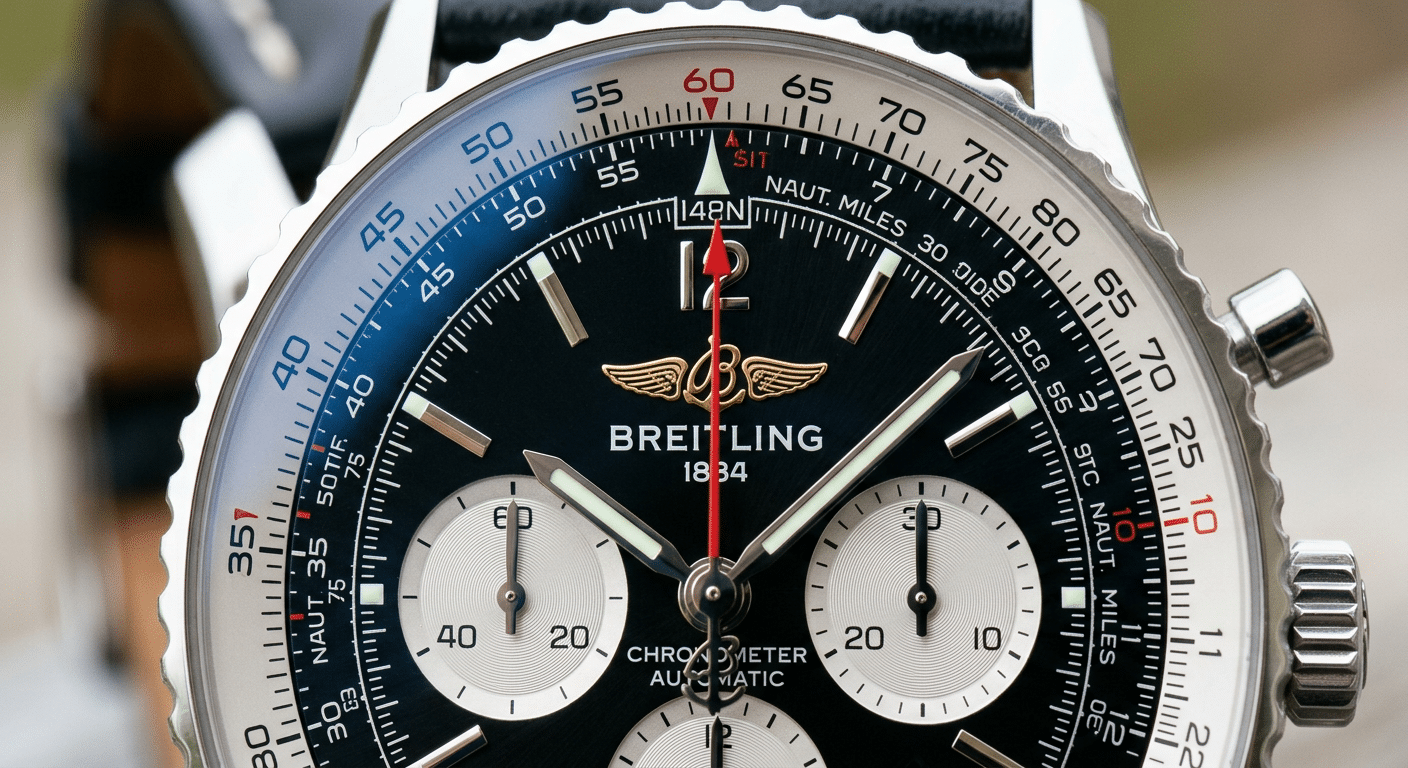
In the high-stakes world of “super clone” watches, where the pursuit of authentic replication drives manufacturing capabilities, even microscopic imperfections warrant scrutiny. Beyond the mechanical feedback evaluated in a typical pusher tactility comparison, a chronograph’s sweep hand, designed to snap back precisely to the 12 o’clock position upon reset, serves as a critical aesthetic and functional indicator. Its alignment, or lack thereof, speaks volumes about the movement’s health and the assembly’s precision.
Defining “Zero Reset”: The Critical Baseline
The “zero reset” function in a mechanical chronograph is a precise ballet of levers, cams, and springs. When the reset pusher is activated, a reset hammer mechanism engages the heart-shaped cams on the chronograph’s hands (sweep, minute, and hour totalizers), forcing them to instantly return to their designated zero positions. This mechanical action is designed for absolute consistency. Movements like the modified ETA 7750 clones, prevalent in many Breitling super clones, rely on a cam-actuated system, while higher-end integrated chronographs (such as those inspired by the SA4130/VR32 derivatives) often employ a column wheel, sometimes coupled with vertical clutches. Regardless of the architecture, the intended outcome is identical: a crisp, repeatable return to zero. Any deviation from this baseline suggests a compromise in either the component manufacturing or the final assembly process.
Common Failure Modes in Super Clones
Chronograph hand misalignment in super clones can stem from several distinct failure modes, each with unique implications. The most frequent culprit is an improperly pressed hand, where the hand itself is not precisely seated on its pinion during assembly. This can result in a permanent, consistent offset. Another common issue involves worn, bent, or improperly adjusted reset levers or hammers within the movement. Over time, or due to poor initial setup, these components may fail to engage the heart-shaped cams with sufficient force or at the correct angle, leading to an inconsistent or off-center reset. Less common, but equally problematic, are loose cannon pinions or minute wheel friction springs, which can allow the hand to drift slightly after reset, especially under minor shock or vibration. For ETA 7750 clones, the robust but complex reset mechanism is particularly susceptible to issues if components are not precisely machined or correctly lubricated.
The Illusion of “Close Enough”: Why Millimeters Matter
The human eye is remarkably adept at detecting symmetry and deviation, even at small scales. While a 0.5mm misalignment at the tip of a 15mm chronograph sweep hand might sound negligible on paper, its visual impact is substantial. Such a deviation translates into an angular error of approximately 1.9 degrees. On a watch dial, this is immediately perceptible as the hand visibly misses the 12 o’clock index, often appearing to point to the left or right of center. This slight offset fundamentally undermines the “super clone” aesthetic, betraying the illusion of authenticity that collectors seek. It transforms a meticulously replicated timepiece into a demonstrably flawed object, signaling a lack of precision that extends beyond mere aesthetics to the underlying functional integrity.
Expert Authentication Insight
To move beyond subjective observation, utilize a 10x loupe for magnified inspection and a precision caliper for objective measurement. With the chronograph sweep hand at its zero-reset position, carefully measure the linear offset from the exact center of the 12 o’clock index. A deviation exceeding 0.5mm at the tip of a 15mm hand is the initial red flag for further macro photographic analysis. This measurement provides a concrete, falsifiable data point, transforming anecdotal observation into verifiable evidence.
Establishing the 2026 Clean/VS Factory QC Standard for Chronograph Alignment
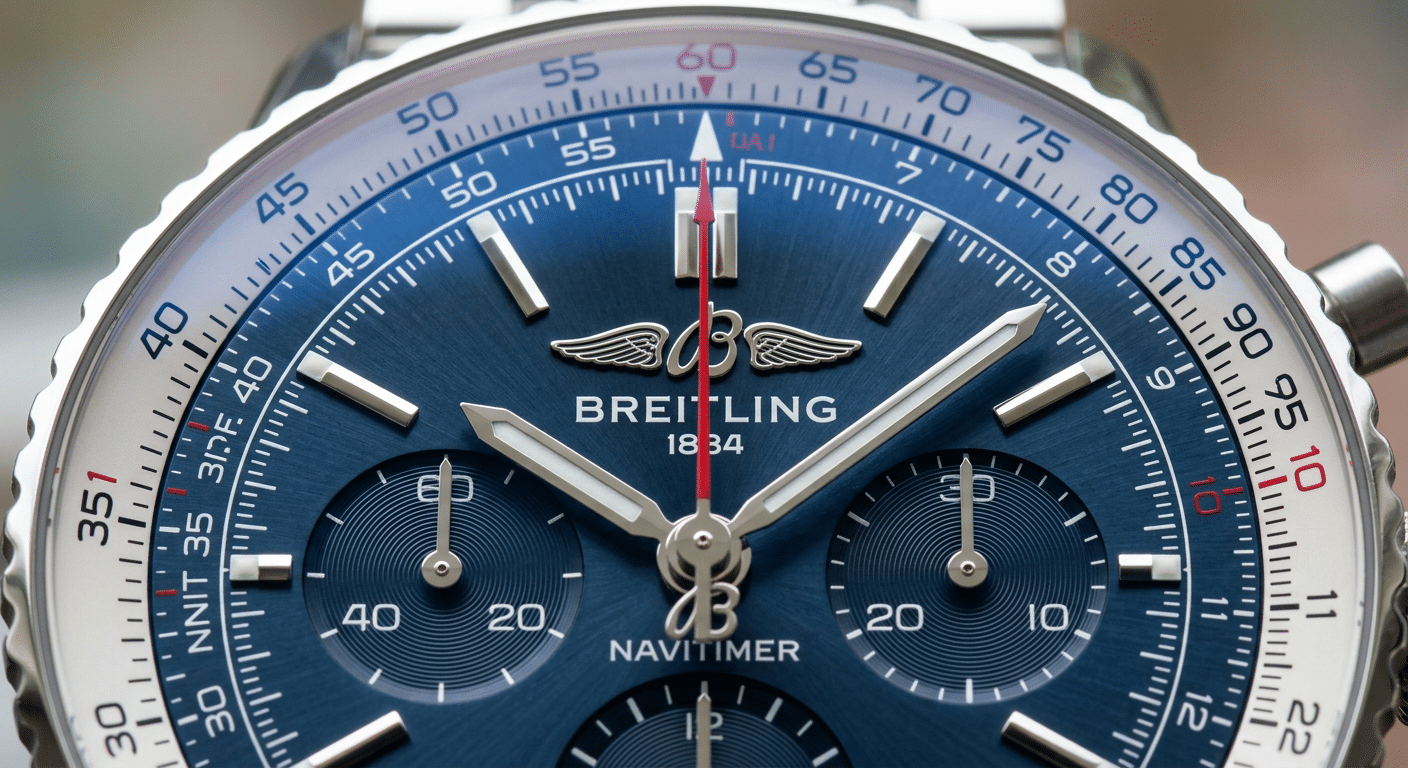
The landscape of “super clone” manufacturing has evolved dramatically. In 2026, factories like Clean and VS have invested heavily in advanced CNC machining, improved assembly lines, and more stringent quality control protocols. This commitment directly translates into higher expectations for precision, particularly in critical functional aesthetics like chronograph hand alignment. The days of excusing significant flaws as “replica tolerance” are over; current production capabilities demand better.
Clean Factory’s Chronograph Assembly Precision
Clean Factory (CF), known for its meticulous attention to detail and consistent output, has established a strong reputation for its Breitling models. Their chronograph assembly precision, especially in hand-setting and zero-reset consistency, is generally very high. Observed batch quality across their Navitimer and Chronomat chronograph replicas indicates a tight tolerance for hand alignment. CF achieves this through a combination of automated hand-setting machinery and skilled manual finishing. Their production methods emphasize consistent pressure during hand installation and rigorous post-assembly checks for reset accuracy. While minor, near-microscopic deviations (<0.5mm) can occasionally occur, significant and consistent misalignment is rare and atypical of their current production standards for Breitling chronograph models.
VS Factory’s Chronograph Alignment Expectations
VS Factory (VSF), while perhaps less focused on Breitling chronographs than other brands, maintains an equally high standard for movement assembly, particularly for their integrated chronograph movements (e.g., those based on SA4130/VR32 architecture). VSF’s strength lies in its movement manufacturing and integration, which often results in superior mechanical stability and, by extension, more reliable hand reset. Compared to Clean, VSF’s alignment standards are largely equivalent in terms of precision, though their Breitling chronograph offerings may be fewer. Any observed strengths in VSF’s alignment often derive from the inherent design advantages of their integrated movements, which can offer more robust reset mechanisms than modified ETA 7750 clones. Weaknesses are rarely alignment-specific, but rather related to their broader product focus.
The 1mm Threshold: A Non-Negotiable Standard
For a “super clone” to genuinely earn its designation in 2026, the maximum acceptable deviation for any chronograph hand at its zero-reset position is 1mm at the hand tip. This is a definitive, non-negotiable standard. A deviation exceeding this threshold represents a verifiable manufacturing defect, not merely a minor imperfection. This specific tolerance is critical because it demarcates the boundary between a flaw that might be considered an unavoidable micro-variance in mass production and one that visibly compromises the watch’s intended function and aesthetic integrity. Beyond 1mm, the misalignment becomes distracting, visually jarring, and fundamentally undermines the illusion of a high-fidelity replica. It indicates either a gross error in hand installation, a faulty reset mechanism, or a significant lack of final quality control.
Expert Authentication Insight
To objectively assess alignment, obtain high-resolution macro photographs (minimum 6000×4000 pixels at 1:1 magnification) of the chronograph sweep hand at its zero-reset position. Utilize a digital reference grid or overlay software to measure the deviation against the 12 o’clock index. This method provides incontrovertible visual evidence and precise quantitative data for any observed misalignment.
Your Personal Verification Protocol: Tools and Techniques

Empowering yourself with the ability to independently verify chronograph hand alignment is crucial for any discerning collector of “super clones.” To establish a mechanical baseline before implementing Breitling replica chronograph stutter fixes, this personal verification protocol outlines the tools and techniques required to conduct a thorough and objective assessment, transforming subjective observation into quantifiable data.
Macro Photography Setup for Precision Inspection
Effective macro photography is the cornerstone of precise alignment inspection. For smartphone users, invest in a dedicated clip-on macro lens (e.g., Apexel 100mm macro) and a stable mini-tripod. Ensure consistent, even lighting – a small LED ring light or diffused natural light works best – to eliminate shadows that can distort perception. Position the watch flat, ensuring the camera lens is perfectly perpendicular to the watch dial to avoid parallax errors. For DSLR or mirrorless camera users, a true macro lens (e.g., 100mm f/2.8) and a sturdy tripod are essential. Set the aperture to f/8 or higher for maximum depth of field, and use a remote shutter release or timer to prevent camera shake. Focus precisely on the tip of the chronograph sweep hand and the 12 o’clock index. Capture multiple shots from slightly different angles to ensure comprehensive coverage.
The “Grid Overlay” Method: Quantifying Deviation
Once high-resolution macro photographs are captured, the “Grid Overlay” method allows for precise quantification of any deviation. Transfer your images to a computer or tablet. Utilize image editing software (e.g., Adobe Photoshop, GIMP, or even free online tools like Photopea) or specialized apps designed for watch inspection (several exist for iOS and Android that allow grid overlays). Overlay a fine, transparent grid onto your image, aligning its vertical axis precisely with the 12 o’clock index. Zoom in significantly and measure the exact linear distance between the center of the chronograph hand’s tip and the true 12 o’clock mark. This process provides a measurable value (e.g., 0.7mm, 1.2mm) for the deviation, removing all ambiguity. Ensure the grid is calibrated to the scale of your watch dial for accurate measurement.
Documenting Your Findings: Evidence for Resolution
Systematic documentation is paramount when an alignment issue is identified. Compile all macro photographs, clearly labeled with the date, time, and specific measurement readings from the grid overlay. Create a brief, concise report detailing the observed deviation, referencing the 1mm threshold as the established “super clone” QC standard. If possible, include a short video demonstrating the chronograph’s reset function, with the camera focused closely on the sweep hand’s return to its misaligned position. This comprehensive package of visual and quantitative evidence creates an irrefutable case for communication with dealers or factories, significantly strengthening your position when seeking resolution, whether that involves adjustment, repair, or replacement.
Expert Authentication Insight
After initial observation, perform a minimum of three zero-reset cycles, photographing the chronograph sweep hand’s position after each reset. If the hand consistently returns to the exact same* misaligned position across all three cycles, this strongly indicates a structural issue, such as an improperly pressed hand or a fixed bend in a reset lever. Conversely, if the reset position varies significantly (e.g., sometimes 0.5mm off, sometimes 1.5mm off, sometimes slightly better), this suggests a more severe mechanical fault within the reset mechanism or movement, often requiring professional adjustment or potentially a movement replacement.
Diagnostic Scenarios: Acceptable Deviation vs. Defective Production
Understanding the precise line between an unavoidable micro-tolerance and a blatant manufacturing defect is crucial for any collector of “super clone” timepieces. This section presents a framework, grounded in objective observation, to distinguish acceptable variations from flaws that demand rectification.
Case Study 1: The “Hair’s Breadth” Deviation (Acceptable)
Even the most meticulously assembled movements, whether genuine or replica, operate within minute physical tolerances. A “hair’s breadth” deviation refers to a chronograph sweep hand offset of less than 0.5mm at its tip, when measured against the 12 o’clock index. This degree of misalignment is typically only discernible under 10x magnification or through high-resolution macro photography. For instance, if a 15mm long chronograph hand shows a 0.3mm offset, this translates to an angular error of approximately 1.15 degrees. While not perfectly aligned, such a deviation falls within the practical manufacturing limits of even top-tier replica factories like Clean or VS in 2026. It is largely imperceptible to the naked eye during typical wear and does not impede the chronograph’s functional readability. This level of precision is considered an unavoidable artifact of mass production, not a quality control failure.
Case Study 2: The “Over-the-Line” Misalignment (Unacceptable)
Conversely, an “over-the-line” misalignment signifies a clear defect. This occurs when the chronograph sweep hand exhibits a deviation exceeding the 1mm threshold at its tip. At this magnitude, the misalignment becomes distinctly visible to the naked eye, even without magnification. A 15mm hand with a 1.2mm offset represents an angular error of approximately 4.58 degrees, creating a stark visual disconnect from the 12 o’clock marker. Such a flaw compromises the “super clone” aesthetic, betraying the illusion of authenticity. It is a demonstrable failure in the manufacturing or assembly process, whether due to improper hand pressing, a faulty reset mechanism, or a bent component. This is not a “replica tolerance” but a verifiable defect that should trigger a rejection or replacement claim.
The “Bent Hand” vs. “Mis-set Hand” Distinction
Identifying the root cause of misalignment is critical for determining appropriate recourse. A “bent hand” implies physical deformation of the hand itself. This might manifest as a slight curve along its length, or a noticeable angle at the pinion attachment point, causing the tip to rest off-center. A bent hand can sometimes be carefully straightened by a skilled watchmaker without removing it, though this carries risk. More commonly, it requires removal and replacement. In contrast, a “mis-set hand” is one that has been pressed onto its pinion at an incorrect rotational angle. The hand itself is straight, but its zero position is consistently offset from the index marker. Correcting a mis-set hand necessitates removal and re-pressing, a more invasive procedure that requires specialized tools and carries a higher risk of damaging the dial or hands during the process. The implications for repairability and the underlying cause (e.g., a poorly trained assembler versus a defective component) differ significantly.
Expert Authentication Insight
To definitively assess the nature and severity of chronograph hand misalignment, compare macro images of the watch in question against a known “perfect” alignment reference image. If a reference is unavailable, use the provided visual benchmarks of 0.5mm (acceptable) and 1mm (unacceptable) deviation. Pay meticulous attention to the angle of the hand tip relative to the index marker. A consistently angled tip suggests a bent hand or a component issue, while a perfectly parallel but offset hand points to improper setting.
The Implication of Misalignment: Functionality, Aesthetics, and Resale
The consequences of chronograph hand misalignment extend far beyond the initial quality control check. Often highlighted in a detailed Breitling chronograph replica guide during factory comparisons, this defect permeates the entire ownership experience, impacting the watch’s utility, its perceived value, and its long-term market viability.
Compromised Chronograph Readability and Precision
The primary function of a chronograph is precise time measurement. A misaligned sweep hand directly undermines this utility. When the hand consistently rests 1mm or more off the 12 o’clock marker, it creates an ambiguity that renders accurate timing difficult. For instance, attempting to time an event to the nearest half-second becomes impractical if the hand’s resting position is already off by a full second’s equivalent. Is that 15.5 seconds, or is it 15 seconds plus the initial misalignment? This constant uncertainty erodes confidence in the watch’s core functionality, transforming a precision instrument into a mere approximation. The measurable operational tolerance is directly impacted, making the chronograph unreliable for its intended purpose.
The Aesthetic Imperfection: A Constant Visual Nuisance
Beyond functionality, the aesthetic impact of a misaligned chronograph hand is profound. In a “super clone,” the illusion of authenticity is paramount. A clearly visible misalignment shatters this illusion, serving as a perpetual reminder that the watch is not genuine. Each glance at the dial, particularly after a reset, highlights the imperfection. This constant visual nuisance diminishes owner satisfaction and the psychological reward of wearing a finely crafted timepiece. It transforms what should be a source of pride into a source of subtle irritation, eroding the subjective “luxury experience” that a high-quality replica aims to provide. The perceived quality is significantly degraded by this single, observable flaw.
Impact on Future Valuation and Tradeability
In the secondary market for “super clones,” documented chronograph hand misalignment can severely impact a watch’s future valuation and tradeability. Discerning buyers in this segment are often as meticulous as those in the genuine market, seeking the highest possible fidelity to the original. A watch with a known and visible defect, such as a consistently misaligned chronograph hand, will inevitably fetch a lower price than an otherwise identical example without the flaw. Furthermore, the presence of such a defect makes the watch harder to sell, as potential buyers will either demand a significant discount or opt for a flawless alternative. This measurable flaw becomes a tangible liability, reducing the watch’s liquidity and economic value.
Expert Authentication Insight
To diagnose the severity of an underlying movement issue, engage the chronograph for a 60-second interval, then reset it. Repeat this process a minimum of three times. Observe if the hand consistently returns to the same* misaligned position each time. A consistent misalignment, even if significant (e.g., always 1.2mm off at 1 o’clock), suggests an improperly set hand or a structurally bent component. However, if the reset positions are inconsistent (e.g., sometimes 0.5mm off, sometimes 1.5mm off, sometimes in a different angular direction), this indicates a more severe and often intermittent underlying movement issue, such as a worn or bent reset hammer, loose cannon pinion, or other internal mechanism fault requiring professional attention beyond simple hand adjustment.
Recourse and Resolution: What to Do When Your Super Clone Fails QC
When faced with a “super clone” that fails to meet the established QC standards for chronograph hand alignment, a structured and evidence-based approach is essential for securing a satisfactory resolution. Emotional appeals are ineffective; verifiable facts are your strongest leverage.
Documenting Your Claim: The Irrefutable Evidence
The cornerstone of any successful claim is irrefutable evidence. Begin by compiling a comprehensive package of macro photographs, measurements, and video documentation. Utilize a high-resolution camera (smartphone or DSLR) in a stable setup to capture multiple macro shots of the chronograph sweep hand at its zero-reset position, from various angles. Employ the “grid overlay” method to quantify the exact linear deviation in millimeters. Crucially, record a video demonstrating the chronograph’s operation: start, stop, and reset, clearly showing the hand’s final resting position relative to the 12 o’clock index. Ensure lighting is consistent and the watch is stationary. This systematic approach creates clear, undeniable evidence that substantiates your claim for replacement or repair, leaving no room for subjective interpretation.
Communicating with Your Dealer: Leveraging Defined Standards
When communicating with your dealer, maintain an objective and professional tone. Reference the established QC standards, specifically citing the 1mm deviation threshold at the hand tip as the objective benchmark for acceptable alignment. Present your documented evidence clearly and concisely, explaining how your watch fails to meet this standard. Avoid accusatory language or vague generalizations. Instead, focus on the measurable defect and its implications. Frame your request in terms of rectifying a manufacturing flaw rather than a minor preference. Dealers are more likely to respond positively to a well-articulated, evidence-based claim that adheres to objective criteria, especially when dealing with top-tier factories like Clean or VS that aim for higher quality.
The “Adjustment vs. Replacement” Dilemma
A critical discussion point with your dealer will be whether the misaligned hand can be simply adjusted or if the underlying issue warrants a full watch replacement. If the issue is a slightly bent hand, a skilled watchmaker might be able to carefully straighten it. This is the least invasive repair. However, if the hand is improperly pressed onto its pinion, or if the reset mechanism itself is faulty (as indicated by inconsistent reset positions), the repair becomes more complex. Re-pressing a hand involves removal, which carries a risk of damaging the dial or the hand itself. A faulty reset mechanism might necessitate movement disassembly or replacement. The decision framework here is crucial: a simple, low-risk adjustment might be acceptable, but any repair that carries significant risk of further damage or indicates a deeper movement flaw should prompt a demand for a full watch replacement to ensure long-term reliability and aesthetic integrity.
Expert Authentication Insight
Before shipment, demand a video from the dealer demonstrating the chronograph’s zero-reset function. This proactive step can prevent disputes. The video must clearly show the chronograph sweep hand’s position relative to the 12 o’clock marker, ideally from multiple angles, and include a macro zoom on the hand tip. This allows for pre-delivery verification against the 1mm threshold. If the dealer cannot or will not provide this, it is a significant red flag. This shifts the burden of proof for initial QC to the dealer, ensuring they verify alignment before the watch leaves their possession.
Closing Implication
The era of accepting “good enough” for “super clones” is over. As manufacturing capabilities advance, so too must collector expectations and verification protocols. A chronograph hand that fails to align precisely at zero reset is not a minor quirk; it is a measurable defect that undermines the very premise of a “super clone.” Empower yourself with the tools and knowledge outlined here. Demand the precision you pay for. If your Breitling super clone arrives with a chronograph sweep hand deviation exceeding 1mm at its tip, you are not merely observing a minor imperfection—you are identifying a verifiable manufacturing flaw that warrants immediate action. Do not adjust your standards; insist on verifiable quality.