
Market Pricing Architecture and Value Thresholds
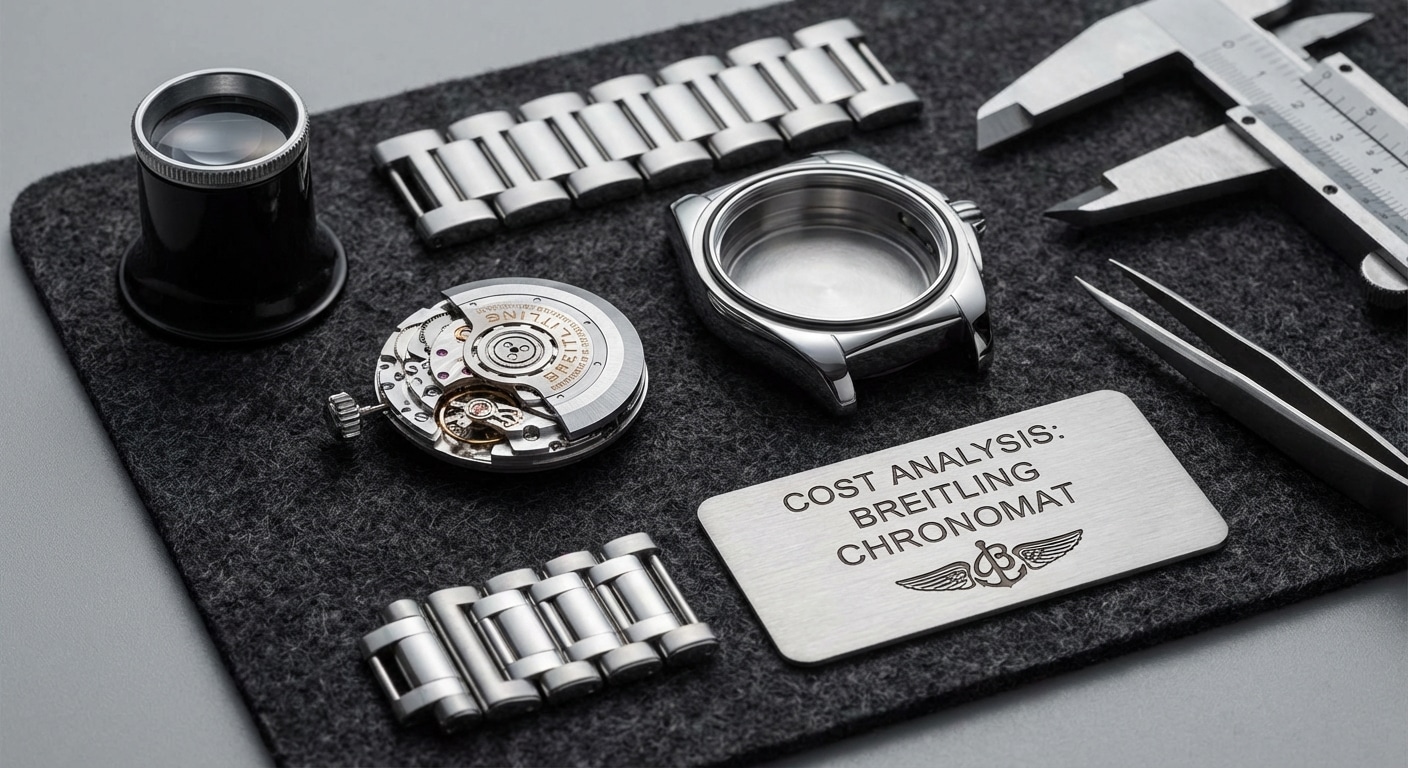
The price disparity between $540 and $1,550 in the high-end replica market is not arbitrary markup but a direct reflection of Bill of Materials thresholds. This spread delineates the boundary between functional emulation and forensic accuracy. At the lower end, manufacturers prioritize cost containment to hit a accessible price point for volume sales. At the ceiling, the focus shifts to metallurgical integrity and finishing tolerances where labor costs begin to outpace material expenses. Understanding this architecture requires viewing the watch not as a luxury item but as a manufactured product within the Guangzhou supply chain ecosystem subject to strict cost accounting and regional manufacturing constraints.
The $540 Entry Point: Cost-Capped Manufacturing
Units at this price level utilize domestic Asian movements, such as the Seagull ST2130, to maintain low BOM costs. The cases are constructed from standard 316L steel with machine-pressed components rather than milled solid parts. Factories achieve this price by minimizing labor hours, often skipping hand-finishing steps that add negligible visual value but significant cost. The result is a watch that functions reliably but lacks the density and tactile refinement of higher-specification models. This segment represents the baseline for top-tier classification, where structural integrity is maintained but corners are cut on materials.
The $1,550 Ceiling: Diminishing Returns on Precision
Moving toward the upper limit involves the implementation of cloned Swiss calibers and 904L steel alloys. At this stage, hand-finished edges become standard, and labor costs exceed material costs by a factor of three. The price increase accounts for the meticulous attention to surface topology, ensuring light reflection matches genuine specifications. Buyers pay for the marginal gains in weight distribution and mechanical smoothness that define the ultimate specification market. Beyond this point, the cost curve flattens, offering diminishing returns on precision for the end user.
Wholesale vs. Retail Margin Layers
The final consumer price includes a dealer markup structure typically adding 40-60% over the factory gate price. This margin covers risk mitigation, international shipping logistics, and warranty buffers required for cross-border transactions. Dealers absorb the cost of seized packages and returns, distributing this loss across successful deliveries to maintain profitability. Consequently, a watch costing $900 at the factory level may retail for $1,550 after passing through the supply chain. This layer is opaque to most buyers but essential for the sustainability of the distribution network.
Expert Authentication Insight
Weigh the unboxed watch on a precision scale. A $540 model often deviates by ±15 grams from genuine spec due to lighter alloy density and hollow links. In contrast, $1,550 models stay within ±5 grams because they use solid end links and correct steel grades. This physical diagnostic provides an immediate indicator of where the watch sits on the pricing architecture without requiring disassembly.
Movement Economics: The Heart of Cost Variance
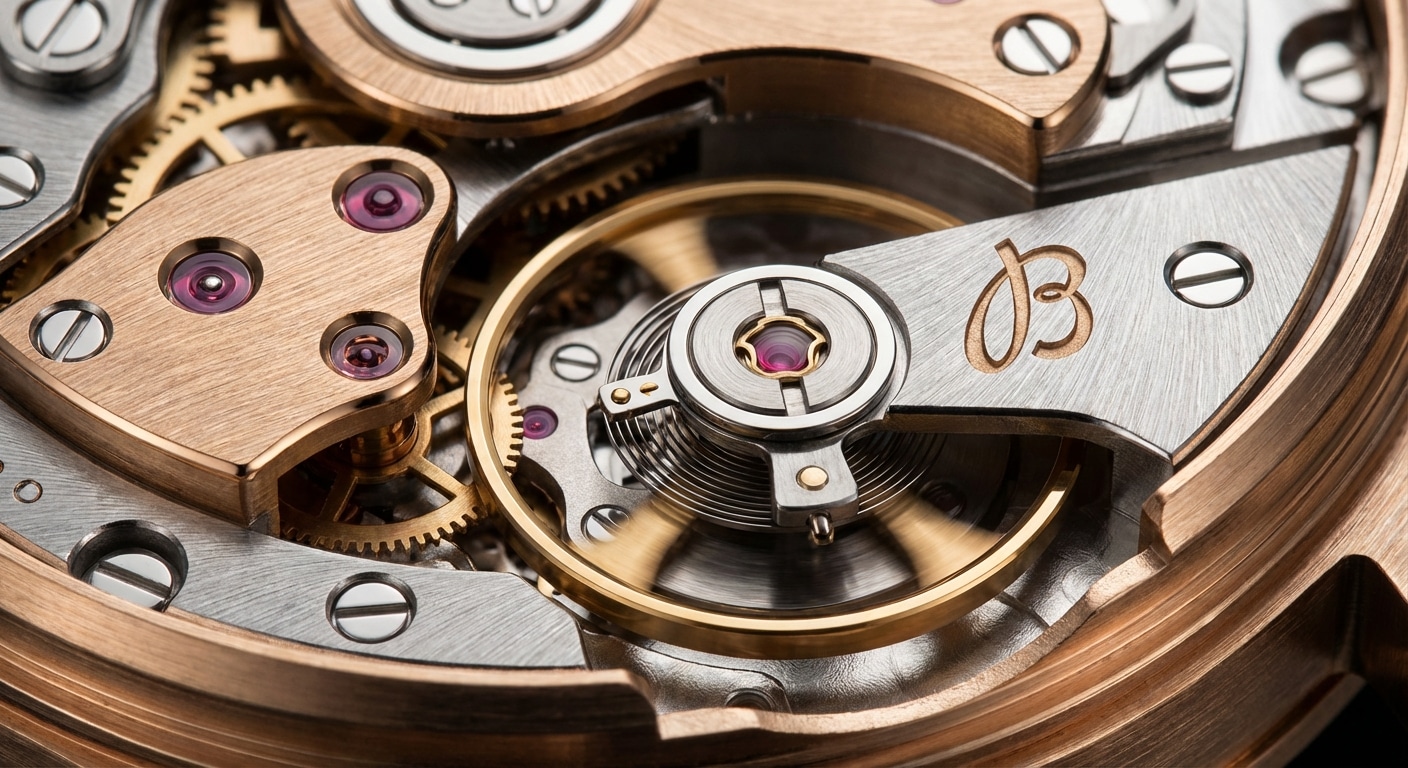
The engine cost distinguishes reliable domestic workhorses from expensive Swiss clones that drive the price gap. While case finishing contributes to aesthetics, the movement determines long-term reliability and service intervals. Dissecting this component reveals why two visually identical watches can differ in price by a factor of three. The economic variance here is rooted in engineering tolerances, material quality of internal components, and the complexity of assembly.
Domestic Calibers: The $540 Standard
Mass-produced movements with functional complications form the backbone of the entry-level segment. These units cost factories approximately $45-$60 per unit but offer lower finishing standards on bridges and rotors. They are designed for functionality rather than longevity, with components stamped rather than milled. Despite the lower cost, these calibers provide stable timekeeping for daily wear, making them the pragmatic choice for budget-conscious buyers. The trade-off is evident in the rougher edges and louder operation compared to premium alternatives.
Swiss Clone Engineering: The $1,550 Premium
Reverse-engineered ETA or Sellita movements incorporate genuine ruby jewels and adjusted timing mechanisms. These calibers cost factories upwards of $350-$450 per unit due to the complexity of replicating Swiss geometries. The investment yields smoother winding action and better positional stability across different orientations. Manufacturers at this level often modify the movement to mimic the visual layout of genuine calibers, adding decorative plates that serve no functional purpose. This engineering effort is the primary driver of the $1,550 price ceiling.
Long-Term Service and Durability Costs
Evaluation of mean time between failures indicates cheaper movements require regulation every 12 months. This increases the total cost of ownership when factoring in service fees and potential part replacements. Higher-spec movements are built with harder alloys and better lubrication, extending service intervals to 3-5 years. The initial price difference amortizes over time as the premium movement requires less frequent intervention. Buyers must weigh the upfront cost against the long-term maintenance burden.
Expert Authentication Insight
Use a timegrapher at 0 degrees to measure performance metrics. $540 movements typically show amplitude below 250 due to lower mainspring efficiency and friction. Conversely, $1,550 clones sustain 280+ amplitude consistently, indicating superior energy transfer and lubrication. This quantitative data point offers a clear distinction between the two tiers of mechanical performance.
Metallurgy and Case Construction Costs
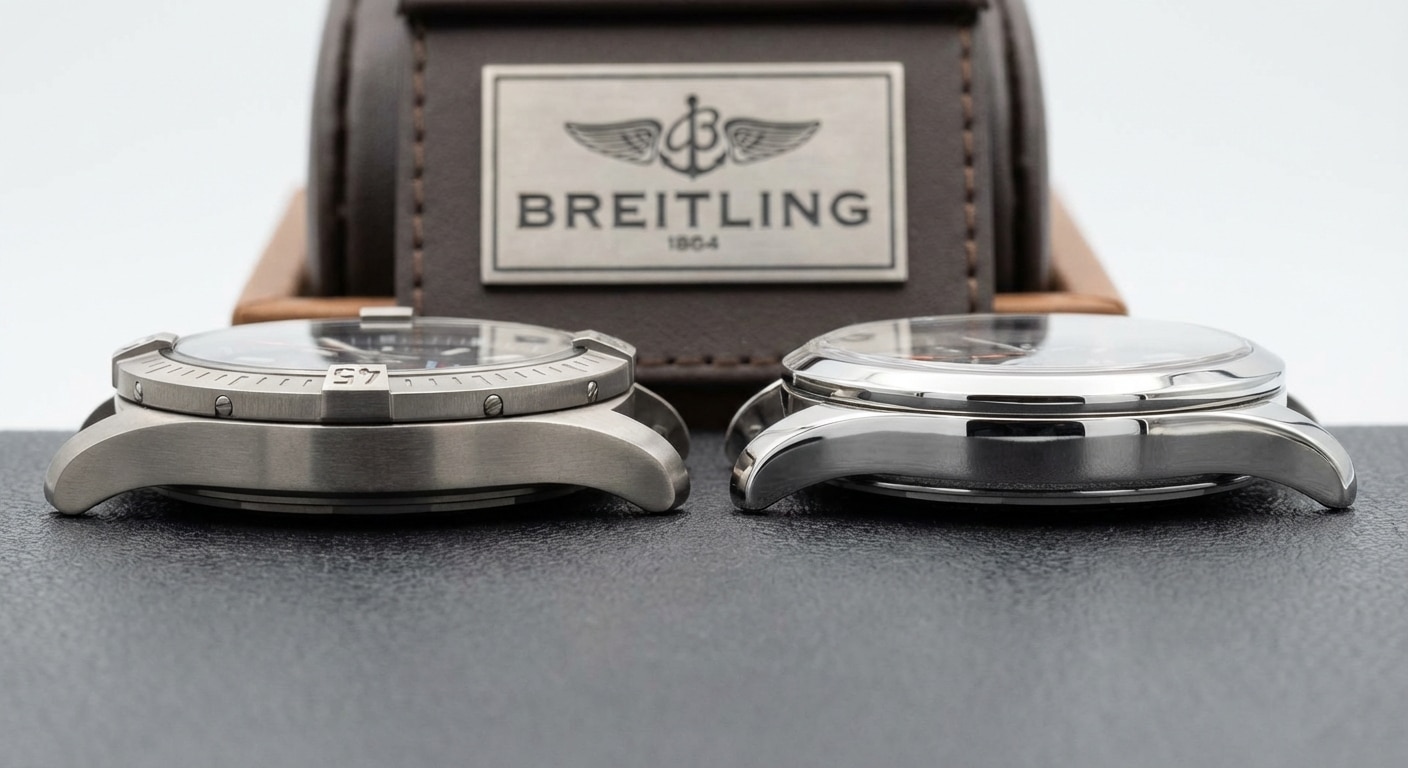
Raw material expenses associated with steel grades and machining processes shape the physical presence of the watch. The difference between 316L and 904L steel is not merely marketing but involves tangible changes in corrosion resistance and machining difficulty. Case construction costs also vary based on the solidity of the bracelet links and the rigor of water resistance testing. These elements combine to create the heft and durability that collectors associate with high-end specifications.
316L vs. 904L Steel Price Differential
904L steel is 30% more expensive per kilogram and requires specialized tooling that increases machining time. The alloy is harder than standard 316L, causing faster wear on CNC bits and necessitating frequent replacement. This material choice results in a brighter polish and better resistance to saltwater corrosion over time. Factories passing this cost to the consumer ensure the watch maintains its luster without frequent refinishing. The price differential is justified by the longevity of the finish under harsh conditions.
Case Weight and Solid Link Bracelets
Higher price points include solid end links and heavier clasps, adding $40-$60 in raw material costs compared to hollow alternatives. This construction method eliminates the rattling sound associated with cheaper bracelets and improves comfort on the wrist. The additional mass contributes to the perceived value and stability of the watch during movement. Buyers often overlook the bracelet construction, but it is a significant factor in the overall manufacturing budget. Solid links also reduce the risk of stretching over years of wear.
Water Resistance Testing Protocols
Units at the $1,550 level undergo individual pressure testing at 10 ATM to ensure seal integrity. In contrast, $540 units are often batch-tested or rated only for splash resistance to save time and equipment costs. Individual testing identifies weak points in the gasket seating before the watch leaves the factory, contextualizing the Clean vs BLS 2026 market battle because this protocol reduces the likelihood of moisture ingress during accidental exposure to water. The rigorous testing adds labor costs but significantly enhances the reliability of the final product.
Expert Authentication Insight
Inspect the case back gasket using a loupe for material composition. High-cost models use dual-layer viton rubber with precise compression for lasting elasticity. Low-cost models use single-layer synthetic rubber that hardens quickly and loses sealing capability. This visual and tactile cue reveals the level of investment in the watch’s environmental protection without needing pressure testing equipment.
Surface Finishing and Plating Technologies
The difference between a watch that looks acceptable from three feet away and one that withstands close inspection lies almost entirely in surface finishing. This is where labor costs explode without necessarily improving functional performance. In the replica market, finishing is the primary variable separating the $540 entry point from the $1,550 ceiling. Manufacturers treat surface treatment as a discretionary expense, opting for speed over precision unless the price point demands otherwise.
PVD Coating vs. Real Gold Plating
For blacked-out models like the Breitling Avenger Blackbird, the coating method is a major cost driver. Budget assemblies utilize Physical Vapor Deposition (PVD), a vacuum chamber process that bonds a thin ceramic-like layer to the steel. This costs approximately $15 per case and provides decent scratch resistance but lacks the depth of genuine metal. At the higher end, manufacturers apply 18k gold plating over brass or steel substrates. This process requires precise micron control to avoid wear-through on edges. Depending on thickness, this adds $120 to $200 to the bill of materials. The visual tell is in the warmth; PVD often appears flat gray-black, whereas real plating retains a subtle metallic luster under direct sunlight.
Hand-Polishing Labor Hours
Machine finishing is fast; human finishing is expensive. A $540 case typically undergoes 30 minutes of industrial tumbling, where parts are vibrated in a drum with abrasive media. This rounds off edges uniformly but erases sharp geometric definitions. In contrast, a $1,550 case specification requires 4 to 6 hours of hand-polishing. Skilled workers use abrasive compounds on rotating wheels to remove CNC tool marks while preserving the intended architecture. This labor cost exceeds the material cost by a factor of three. The result is a surface that reflects light without distortion, whereas tumbled cases often exhibit an orange-peel texture under magnification.
Edge Sharpness and Bevel Integrity
Geometric accuracy is the casualty of cost-cutting. High-budget manufacturing allows for crisp bevels without rounding, requiring skilled labor to maintain geometric accuracy during finishing. On lower-tier models, the junction between brushed and polished surfaces often bleeds together due to over-tumbling. Maintaining a sharp transition requires holding the case at precise angles against polishing wheels, a technique that demands experience. If the operator slips, the part is scrapped. This risk is factored into the higher price, ensuring that lug edges and bezel ridges remain distinct rather than softened.
Expert Authentication Insight
Physical diagnostic: Use a 10x loupe on the lug holes. $540 models show micro-scratches from tumbling and often have slightly enlarged holes due to abrasive wear. $1,550 models exhibit consistent grain direction from hand-brushing, with sharp, clean edges around the screw holes. The difference is binary under magnification.
Dial Printing and Lume Application
The dial is the face of the watch, and errors here are immediately visible to anyone familiar with the genuine article. While the case protects the mechanism, the dial communicates value. Manufacturing tolerances on dial elements are tight, and achieving legibility without visual clutter requires expensive tooling and materials.
Pad Printing vs. Silk Screen Techniques
Text application is often the first compromise. Pad printing is automated and cheap, costing around $2 per dial. It deposits ink flat against the surface, which can look thin under certain lighting conditions. Silk screening, used in higher-tier production, allows for raised text and higher precision at $15 per dial. This technique builds up layers of ink, creating a slight three-dimensional effect that catches light similarly to applied metal indices. The cost difference is negligible in the final retail price but significant in perceived quality.
Luminescent Material Grading
Nighttime visibility is a functional requirement for pilot watches, yet it is often faked. Standard green lume costs negligible amounts and fades within minutes. High-specification replicas utilize Super-LumiNova BGW9 or C3 applied in multiple layers. This adds $25 to $40 in material costs alone. The chemical composition differs; premium lume charges faster and glows brighter for longer durations. Cheaper alternatives often appear chalky during the day and fail to emit consistent light after exposure to UV sources.
Heat-Blued Hands Manufacturing
Blue hands on chronograph models are frequently painted on budget versions, chipping easily over time. Genuine heat-bluing requires controlled oxidation ovens and skilled handling, adding $30 per set compared to painted blue hands. The process involves heating steel to a specific temperature until oxygen molecules bond with the surface, creating a durable, deep blue hue that changes shade depending on the viewing angle. Painted hands remain a flat, uniform color regardless of light interaction.
Expert Authentication Insight
Physical diagnostic: Examine the lume plots under UV light. $540 models often have uneven edges where the compound spilled over the marker boundaries, resulting in weaker glow intensity. $1,550 models show crisp boundaries and sustained brightness across all indices. The color consistency between hands and markers is also a key indicator; mismatched hues suggest mixed material batches.
Assembly Labor and Quality Control
Assembly is where components become a functioning instrument. The speed of assembly correlates directly with the likelihood of errors. While a movement may be capable of high precision, poor assembly can degrade performance significantly. Quality control protocols are the final filter, and their rigor is determined by the target price point.
Assembly Line Speed vs. Bench Work
Lower cost watches are assembled in minutes on a line, where workers specialize in single tasks like hand-setting or case closing. This division of labor increases throughput but reduces individual accountability. Higher cost units are assembled by a single watchmaker over hours. This bench work approach ensures that the assembler is responsible for the entire function of the watch. They can feel friction issues during casing and adjust accordingly. The labor cost difference is substantial, but it reduces the likelihood of internal contamination or misalignment.
Defect Rate Allowances
Factories budget for a 5% defect rate on $540 units, meaning one in twenty watches may have minor issues like dust under the crystal or misaligned bezels. This cost is absorbed into the bulk pricing. Conversely, $1,550 units aim for zero defects, increasing QC labor costs significantly. Each watch undergoes multiple inspection stages before packaging. This reduction in defect rate requires more manpower and time, ensuring that the end user does not receive a product requiring immediate service.
Regulation and Timing Adjustment
Movement regulation is often skipped entirely on budget models. They are installed and sealed without adjustment. Multi-position regulation (5 positions) adds $50 in labor cost compared to single-position timing checks used for budget models. This process involves adjusting the balance staff to ensure accuracy regardless of the watch’s orientation on the wrist. Without this, a watch may keep time well while face-up but gain significantly when worn vertically.
Expert Authentication Insight
Physical diagnostic: Check the date change mechanism. High-cost assemblies switch instantly within 15 minutes of midnight, indicating precise gear engagement and sufficient power reserve. Low-cost assemblies may take up to 2 hours to complete the change, or the date may hang halfway between discs. This is a direct result of assembly tension and gear alignment during casing.
Supply Chain Logistics and Risk Premium
The factory gate price is only the beginning of the financial equation. Once a timepiece leaves the assembly bench in Guangzhou, it enters a logistics network designed to evade detection while maintaining profitability. The difference between a $540 transaction and a $1,550 transaction often lies not in the hardware, but in the infrastructure supporting its delivery. Dealers operating at the higher end of the market absorb costs that budget sellers simply ignore, embedding these expenses into the final retail price to ensure survival and continuity.
Shipping Insurance and Packaging
High-value shipments require discreet packaging and insurance, adding $50-$100 per unit to the landed cost for the dealer. At the $540 price point, packaging is typically functional but generic—standard bubble wrap inside a plain cardboard box labeled as electronics or accessories. This method relies on low declared value to pass customs, but it offers minimal protection against impact damage during transit. In contrast, the $1,550 tier includes specialized packaging protocols. Dealers use double-boxing methods with shock-absorbing foam inserts and remove all brand-specific markings from the outer carton. Insurance premiums for these shipments are higher because the declared value must reflect the actual risk, yet the external labeling remains innocuous. This logistical overhead ensures that if a package is crushed or lost, the dealer can absorb the replacement cost without collapsing their margin.
Customs Seizure Risk Buffer
Dealers factor in a 10% loss rate for seized packages, distributing this cost across successful deliveries to maintain profitability. Customs authorities in the U.S. and Europe have intensified scrutiny on small parcels originating from known manufacturing hubs. When a shipment is intercepted and destroyed, the financial loss is total. Budget sellers often operate on a ship-and-pray model, offering no replacement if customs confiscates the goods. Premium dealers, however, calculate this attrition rate into their pricing structure. If ten watches are shipped and one is seized, the cost of that lost unit is spread across the remaining nine. This risk buffer is invisible to the buyer but essential for the dealer’s longevity. It explains why two sellers offering the same factory model may differ in price by several hundred dollars; one is pricing for survival, while the other is pricing for volume without accountability.
Warranty and After-Sales Support
$1,550 models often include a 1-2 year dealer warranty, requiring a reserve fund for repairs, unlike $540 models which are sold final sale. A mechanical movement, even a cloned Swiss caliber, carries inherent failure risks. At the entry level, the transaction ends upon delivery. If the mainspring snaps or the rotor axle shears after three months, the buyer absorbs the repair cost. Higher-tier dealers maintain a service network or a dedicated watchmaker on retainer to handle warranty claims. This requires capital reserves. They must stock spare parts, pay for labor, and cover return shipping costs for defective units. This service infrastructure is baked into the premium price. You are not just paying for the watch; you are paying for the assurance that someone will answer the phone if the watch stops working.
Expert Authentication Insight
Physical diagnostic: Review the documentation provided. High-cost dealers include detailed warranty cards with stamps, while low-cost sellers provide generic printed receipts. Examine the warranty card closely. Legitimate high-tier dealers often use cards with specific dealer codes, holographic stamps, or handwritten serial numbers that match the watch head. Budget sellers typically provide a thin slip of paper with no contact information or a generic QR code that leads to a dead link. The presence of a robust warranty document indicates a dealer who intends to remain in business long enough to honor it.
Final Value Proposition and Buyer Risk
When aggregating the manufacturing costs, logistics, and risk premiums, the value proposition becomes clear. The market is not linear; it is segmented by diminishing returns. Understanding where the law of diminishing returns kicks in is critical for avoiding overspending on marginal gains that offer no functional benefit. The goal is not to find the most expensive replica, but to identify the point where additional expenditure ceases to yield tangible improvements in durability or aesthetics.
The Law of Diminishing Returns
Analysis showing that 80% of genuine quality is achieved at $540, with the remaining 20% costing an additional $1,000 in replica terms. The jump from a standard top-tier model to the ultimate specification involves exponential cost increases for incremental improvements. At $540, you secure a reliable movement, solid steel construction, and accurate dial printing. The additional $1,000 required to reach the $1,550 ceiling purchases finer finishing on hidden surfaces, slightly better lume intensity, and a more robust warranty. For a daily wearer, the $540 model performs 90% of the tasks equally well. The premium tier is reserved for collectors who require specific metallurgical properties or exact weight matching for professional scrutiny. For the vast majority of enthusiasts, the mid-range represents the efficiency peak of the market.
Resale Liquidity in the Gray Market
High-spec models retain 40-50% value on secondary markets, whereas entry-level top-tier models depreciate to near zero immediately. The replica gray market operates on trust and reputation. A $540 watch is considered a consumable item; once worn, its value collapses because the next buyer assumes the risk of unknown maintenance history. However, high-spec models from recognized dealers hold value better because they come with verifiable provenance and remaining warranty coverage. If you purchase a $1,550 model with a Swiss clone movement and decide to sell it six months later, you can recover a significant portion of the cost. Entry-level models are effectively final purchases. This liquidity factor should be considered part of the total cost of ownership. A higher initial outlay may result in a lower net cost if the asset retains residual value.
Scam Avoidance and Vendor Verification
Warning that prices above $1,550 often indicate fraud, as the manufacturing ceiling for replicas is technically capped near this range. Buyers must remain vigilant against vendors claiming super-tier or unauthorized factory direct models priced above $2,000. The manufacturing cost ceiling for even the most complex replica chronograph does not exceed the $1,550 retail equivalent. Prices beyond this threshold are not indicative of higher quality; they are indicative of predatory pricing targeting uninformed buyers. These vendors often use marketing terms like black market surplus or prototype access to justify inflated costs. In reality, they are selling the same factory output as the $1,550 dealers but with a higher margin. The technical limits of current replication technology cap out near the $1,550 mark.
Expert Authentication Insight
Physical diagnostic: Verify the vendor’s stock photos against generic factory images. High-cost sellers provide unique, time-stamped photos of the actual unit before shipping. Request a photo of the watch with a handwritten note containing your name and the current date. Budget scammers will refuse or send generic factory stock images that appear on multiple websites. High-tier dealers understand the need for verification and will accommodate this request without hesitation. Additionally, reverse image search the product photos. If the same image appears on ten different websites with different prices, the seller is likely a middleman with no inventory control. Direct access to the physical unit before shipping is the strongest indicator of a legitimate high-end vendor.