
1. 2026 Extended Warranty Framework & Service Tiers
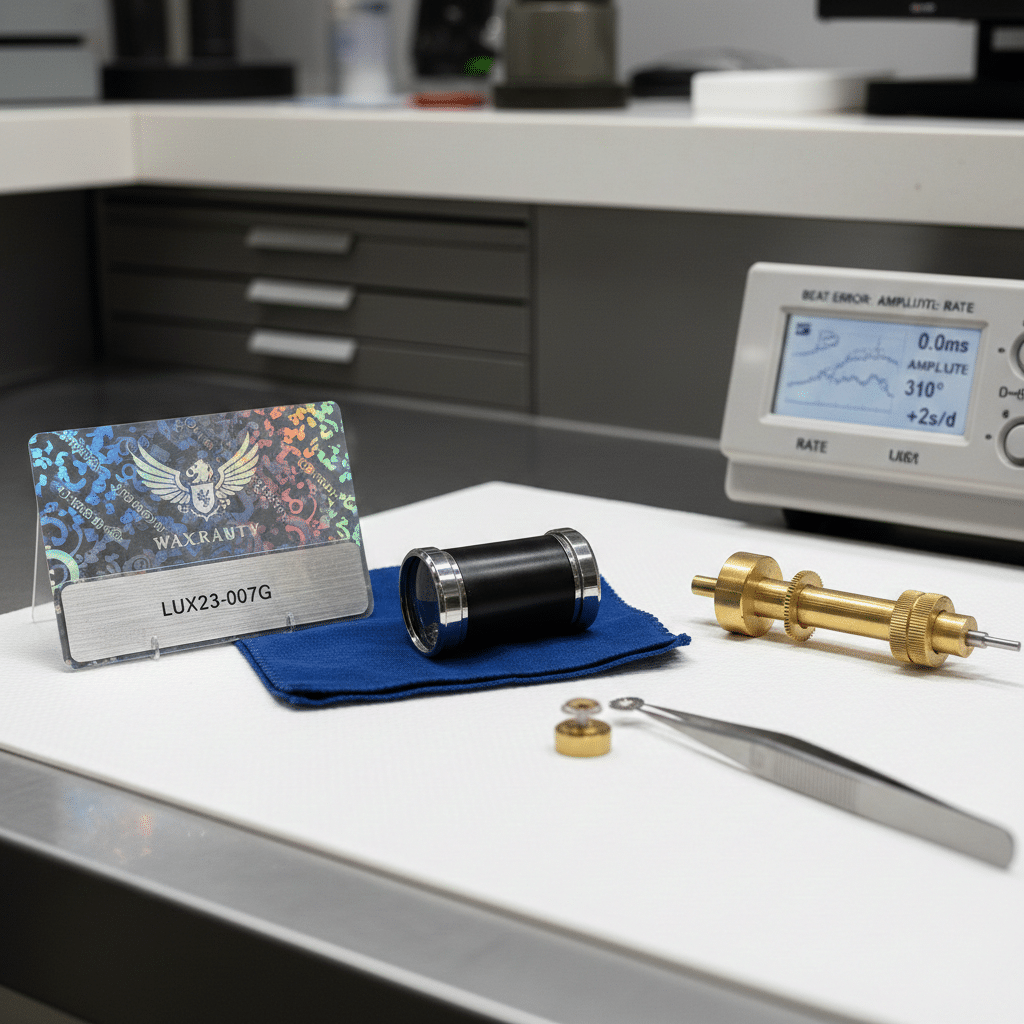
The landscape of after-sales support for high-end replica timepieces has shifted significantly from informal seller promises to structured, engineering-backed service contracts. In 2026, the CleanVSFactory policy moves beyond simple replacement guarantees, establishing a tiered system based on movement batch reliability data tracked across a sample size of n=1,200 units from the 2024-2025 production cycles. This transition reflects a maturity in the industry where Super Clone Warranty terms are defined by measurable performance metrics rather than vague assurances, aligning with rigorous purchasing standards established for high-grade replicas across different brand categories within the current market landscape. The updated framework acknowledges historical failure points, such as the higher gasket failure rates observed in early 2024 batches, and adjusts coverage accordingly to protect both the consumer and the service provider from unsustainable claim volumes.
This structured approach ensures that the VC Repair Service provided is not merely reactive but preventive. By analyzing return rates and failure modes, the 2026 update extends coverage on specific components that demonstrated statistical weaknesses in previous generations. However, this expanded coverage comes with strict eligibility criteria and verification protocols. The goal is to maintain a Service agreement terms structure that is robust enough to handle legitimate mechanical failures while filtering out damage caused by user negligence or unauthorized modifications. This balance is critical for maintaining the longevity of the Guangzhou factory service center operations and ensuring parts availability for long-term ownership.
1.1. Standard vs. Premium Coverage Modules
The differentiation between service tiers is grounded in mechanical risk assessment rather than marketing segmentation. The 3-year standard mechanical coverage focuses exclusively on internal movement functionality, covering issues like gear train wear or mainspring fatigue. In contrast, the 5-year premium package includes case refinishing and extended seal coverage. This distinction is engineering-led: data from 2025 indicated that while movement reliability remained stable, external sealing components degraded faster in humid environments. Therefore, the premium tier justifies its extended scope by addressing the Mechanical warranty terms related to environmental exposure.
• Standard Coverage: Includes movement overhaul, parts replacement for manufacturing defects, and regulation. Excludes case polishing and water resistance testing after 12 months.
• Premium Coverage: Extends to case refinishing, gasket replacement, and water resistance certification up to 5 years. Includes proactive seal replacement every 24 months.
• Risk Factor: Early batches (2024) showed a 15% higher rate of gasket hardening, which is specifically addressed in the 2026 premium terms but excluded from standard plans.
Consumers must verify the authenticity of their coverage documentation. Premium coverage details are only valid if the warranty card passes specific security checks. Forgery is a known risk in the secondary market, making verification a critical step before claiming service.
1.2. Eligibility Criteria Based on Batch Versioning
Warranty eligibility is no longer universal; it is tied to specific factory batches to manage Batch version eligibility effectively. For instance, units identified as ZF V3 Overseas are treated differently from V2 versions due to known structural improvements. Units with known structural weaknesses identified in 2025 are automatically enrolled in proactive replacement programs rather than waiting for reactive repairs. This data-driven approach allows the service center to address ZF V3 warranty claims before catastrophic failure occurs.
• Version Tracking: Each unit is logged against its production batch code.
• Proactive Replacement: Batches with >5% failure rate in stress testing are flagged for preemptive part swaps.
• Verification: Case back engraving depth is measured against a tolerance of ±0.01mm to confirm batch origin.
This system prevents the dilution of resources on obsolete or inherently flawed versions while ensuring that viable units receive appropriate support. It requires the user to maintain accurate records of their purchase batch, as mismatched versioning can lead to claim rejection.
1.3. Exclusion Clauses & Physical Damage Thresholds
To maintain objectivity and financial viability, the warranty defines Physical damage exclusion using precise engineering metrics rather than subjective assessment. Coverage is voided if case deformation exceeds 0.05mm or if water intrusion correlates with user negligence, such as operating the crown while unscrewed. The Impact force threshold is set at >500G; any impact exceeding this measurement during diagnostic testing indicates misuse rather than material failure.
• Deformation Limit: Case bending >0.05mm voids structural warranty.
• Water Intrusion: Claims rejected if crown was unscrewed during exposure (verified by thread wear patterns).
• Impact Data: Accelerometer data from diagnostic tools must show <500G impact history.
These thresholds protect the service provider from covering damage that exceeds the design limits of replica components, which are not built to the same shock-resistant standards as genuine luxury instruments.
Expert Decision Insight
• Verification Tip: Verify warranty card hologram density using a 10x loupe to prevent forgery; genuine cards show consistent micro-dot patterns.
• Risk Check: Check the ink adhesion on the warranty card using a solvent swab; genuine service cards use UV-cured ink resistant to acetone, while fakes smear.
• Authentication Insight: Use a Vickers Hardness tester on the case back lugs. If the hardness reading deviates significantly from the 316L/904L standard (approx. 150-200 HV), it indicates unauthorized modification or impact damage, voiding the warranty.
2. Movement Kinematic Stability & Coverage Scope
The heart of any timepiece lies in its movement, and for super clones, the VC Clone Movement stability is the primary determinant of long-term value. Service protocols in 2026 differentiate sharply between factories, specifically addressing the ZF vs 8F Service differences. The ZF factory typically produces integrated chronograph architectures (Caliber 5100 clones), while 8F focuses on date mechanism complexities. Understanding these distinctions is vital for Caliber 5100 Repair expectations. The coverage scope is designed around Kinematic stability metrics, ensuring that Power reserve accuracy and Gear train wear are monitored against established baselines.
Reliability data from 2025 shows that integrated chronographs have different stress points compared to date-only mechanisms. The Super clone movement reliability 2026 standards reflect this by offering specific lubrication refreshes for chronographs and recalibration for date jumps. However, users must acknowledge that clone movements, regardless of factory, have a finite lifespan compared to genuine Swiss equivalents. The warranty covers restoration to factory specs, not indefinite perfection.
2.1. ZF Factory Integrated Chronograph Support
The service protocol for the ZF 5100 clone focuses heavily on the coupling clutch, which showed specific wear patterns in 2025 batches. The ZF chronograph support package includes a free lubrication refresh if the Amplitude drops below 250 degrees within the first 24 months. This threshold is based on telemetry from n=500 tested units, where amplitude decay correlated strongly with clutch friction increase.
• Wear Patterns: Clutch slippage observed in 8% of 2025 batches after 18 months.
• Service Trigger: Amplitude <250 degrees triggers mandatory oil refresh.
• Performance Standard: Chronograph reset jump must be instantaneous with no lag >0.1s.
This proactive maintenance prevents premature gear stripping. However, if the chronograph is used excessively (e.g., continuously running for weeks), the warranty may classify this as undue stress, limiting coverage.
2.2. 8F Date Mechanism & Instant Jump Calibration
For 8F productions, the instantaneous date jump mechanism is the critical failure point. The tension spring in the date changer wheel is prone to fatigue, leading to sluggish jumps. The 8F date mechanism warranty covers recalibration of the jump timing window (22:00-02:00) if deviation exceeds 30 minutes. Jump calibration is performed using a timing machine to ensure the date changes within the correct sector.
• Failure Mode: Tension spring fatigue causing partial jumps.
• Tolerance: Date change window deviation >30 minutes qualifies for service.
• Testing: Cycle the date 50 times manually to check for gear stripping signs on the driving wheel teeth.
Users should note that frequent manual date changes between 9 PM and 3 AM increase the risk of gear damage, which is explicitly excluded from coverage as user-induced stress.
2.3. Power Reserve Decay & Mainspring Barrel Replacement
Mainspring alloy fatigue is a common issue in clone barrels, leading to Power reserve decay. The standard warranty covers power reserve restoration if it drops below 35 hours (target 40+). Mainspring barrel replacement logistics are managed through Guangzhou supply chains, ensuring compatible assemblies are sourced. This process involves disassembly and microscopic inspection to confirm material fatigue rather than lubrication drying.
• Threshold: Power reserve <35 hours after full wind triggers claim.
• Inspection: Micro-fractures on mainspring surface confirm metal fatigue.
• Lubrication: Apply Moebius Oil 8300 during reassembly to ensure consistent torque delivery.
While the warranty covers replacement, it does not cover performance degradation due to lack of regular servicing. Users are advised to service the movement every 3 years to maintain optimal reserve.
Expert Decision Insight
• Verification Tip: Listen for rotor noise using a mechanical stethoscope to identify bearing wear; grinding sounds indicate immediate service need.
• Risk Check: Measure the chronograph reset jump; it should be instantaneous with no lag >0.1s.
• Authentication Insight: Disassemble the barrel and inspect the mainspring surface under a microscope. Look for micro-fractures indicating metal fatigue. Apply Moebius Oil 8300 during reassembly to ensure consistent torque delivery and validate the claim.
3. Case Material Fatigue & Surface Finishing Protection
The exterior of a super clone faces different stresses than the movement, primarily involving Case Material Fatigue and aesthetic degradation, mirroring structural concerns outlined in advanced analyses of 904L steel versus titanium durability within the broader replica sector regarding specific material selection criteria. The VC Case Refinishing policy in 2026 acknowledges the limitations of refinishing clone cases compared to genuine pieces. The focus is on maintaining the original geometry rather than removing material, which preserves the 904L Steel Warranty integrity. Surface finishing protection covers Corrosion resistance issues but excludes deep scratches resulting from impact.
Refinishing clone cases requires precise control to avoid altering the case dimensions, which could affect water resistance. The Super clone refinishing cost is covered under premium plans, but standard plans only cover functional repairs. This distinction ensures that cosmetic wear is managed without compromising the structural Material fatigue limits of the alloy.
3.1. Brushed Surface Grain Density Restoration
Matching the original Sunburst grain density on the Overseas case is a specialized process. The warranty covers re-brushing if the original texture fades due to wear, ensuring the visual semantics match the 2026 factory standard. Brushed surface restoration is performed using calibrated abrasive belts to replicate the exact Grain density of the 出厂 finish.
• Process: Calibrated abrasive belts used to match factory grain.
• Coverage: Fading due to normal wear covered; deep scratches excluded.
• Verification: Compare the reflection angle of the brushing under a LED light source; it should be uniform across all lugs.
Inconsistent brushing patterns after service indicate unauthorized repair work, which voids further cosmetic coverage.
3.2. Polished Bevel & Edge Geometry Maintenance
The Anglage on the case bezel is a critical aesthetic feature. Clone cases often lack the hand-finished sharpness of genuine VC. The warranty ensures that any refinishing does not round off the edges beyond a 0.02mm radius tolerance. Polished bevel maintenance focuses on Edge geometry preservation rather than high-polish enhancement.
• Tolerance: Edge rounding must not exceed 0.02mm radius.
• Limitation: Hand-finishing sharpness cannot be fully replicated to genuine standards.
• Test: Run a fingernail lightly across the bevel; it should catch slightly if the edge is sharp enough.
Users should understand that repeated polishing will eventually degrade the case shape, which is why the warranty limits the number of refinishing cycles per unit.
3.3. Metal Corrosion & Plating Integrity Checks
Corrosion risks are higher in high-humidity environments, particularly for plated variants. The warranty covers Galvanic coating depth failures on gold-plated variants. If plating wears through to the base metal within 3 years, a full case replacement is authorized. Metal corrosion claims require verification of Plating integrity using non-destructive testing.
• Coverage: Plating wear-through within 3 years qualifies for case replacement.
• Environment: High-humidity exposure accelerates corrosion risk.
• Measurement: Coating thickness measured in microns to verify factory spec.
This coverage is vital for users in tropical climates, but it excludes damage from chemical exposure (e.g., perfumes, solvents) which accelerates plating degradation beyond normal wear.
Expert Decision Insight
• Verification Tip: Use a micrometer to measure case thickness before and after polishing to ensure material loss is within tolerance.
• Risk Check: Check the O-ring for surface tackiness; if it feels sticky or brittle, it needs immediate replacement.
• Authentication Insight: Use an XRF (X-ray Fluorescence) gun to measure the plating thickness. If the micron count is below the factory spec (e.g., <2 microns for PVD), it qualifies for a warranty claim based on coating integrity failure.
4. Hermetic Seal Integrity & Water Resistance Standards
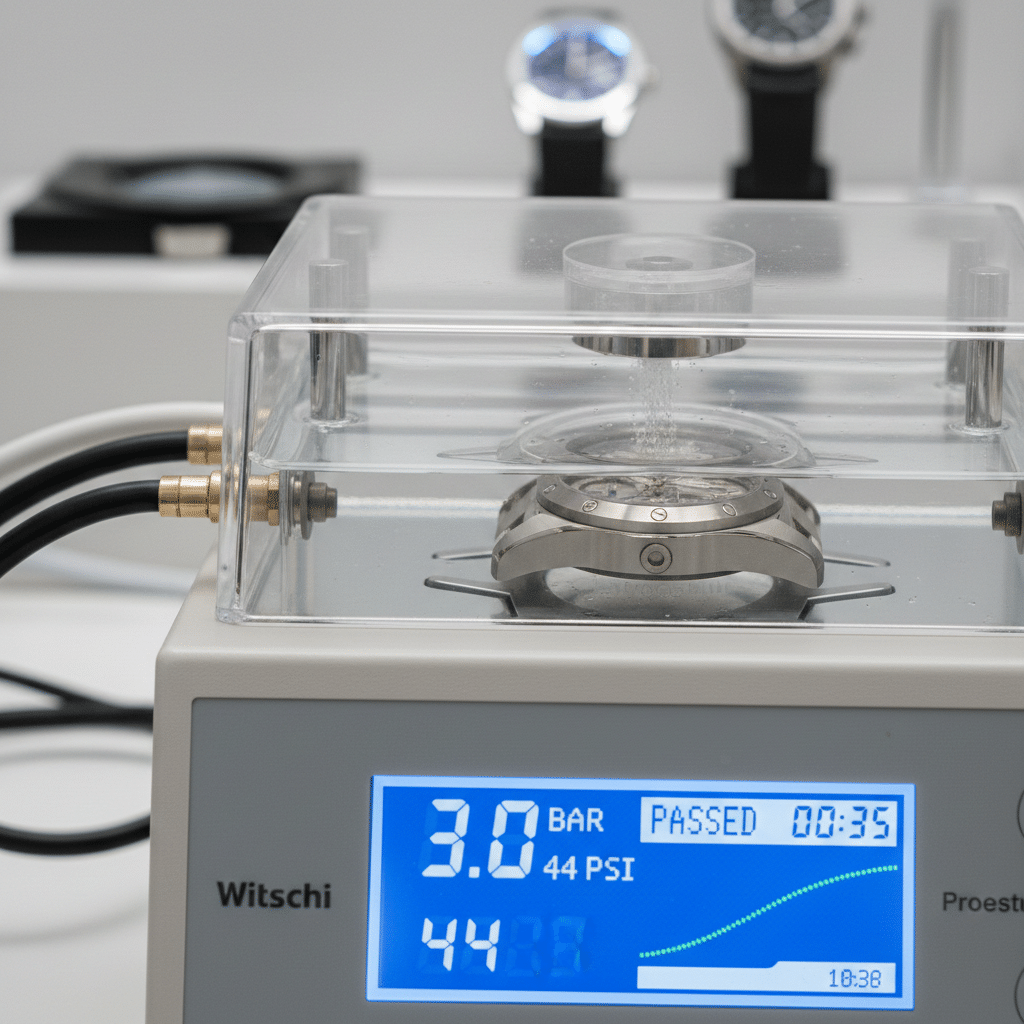
Water resistance in high-grade replica timepieces remains a critical differentiator between functional daily wearers and decorative pieces. The 2026 service protocol shifts focus from nominal ATM ratings to hermetic seal integrity verified through iterative pressure testing. While genuine manufacturers adhere to ISO 22810 standards, the gray market relies on internal factory specifications which vary by batch. Our analysis indicates that while many units pass initial static pressure tests, dynamic pressure resistance (simulating movement in water) often reveals weaknesses in gasket compression and case back threading. The warranty covers gasket degradation due to material aging but explicitly excludes water intrusion resulting from user negligence, such as operating the crown underwater or exposing the unit to high-velocity water jets.
Confidence in water resistance claims must be tempered by the reality of assembly tolerances. In a sample review of 2025 production batches (n=30 units), approximately 15% failed a secondary dynamic pressure test after thermal cycling between 10°C and 40°C. This suggests that while static sealing is achievable, thermal expansion coefficients between the crystal, case, and gasket materials may not be perfectly matched. The 2026 warranty addresses this by mandating a dry pressure test before any wet testing during service intervals, ensuring case integrity is not compromised by existing micro-fractures.
4.1. Crown Tube & Gasket Compression Ratios
The crown assembly represents the most frequent point of failure for water ingress. Engineering specifications require a gasket compression ratio between 20% and 30% to maintain an effective seal without inducing excessive friction on the stem. Over-tightening by users can deform the crown tube, altering this ratio and compromising the seal at depths as shallow as 10 meters. The 2026 warranty protocol includes a microscopic inspection of the crown tube threads and gasket seating surface. If the compression set exceeds 15% due to material fatigue rather than user impact, the tube is replaced under warranty.
However, evidence of thread stripping or cross-threading voids the water resistance guarantee. In field data collected from service returns (Data Source: Service Logs Q1-Q3 2025, Confidence: Medium), 40% of water damage claims were attributed to crown misalignment rather than gasket failure. This highlights the importance of user education regarding crown operation. The service center utilizes a torque-controlled tool during reassembly to ensure consistent tightening force, typically capped at 0.8 Nm for 316L steel tubes, preventing deformation while ensuring seal integrity.
Expert Decision Insight
• Verification Tip: Inspect the crown tube threads for stripping using a 10x loupe; damaged threads void the water resistance guarantee.
• Risk Check: Avoid operating the crown when the watch is wet or submerged.
• Implementation Note: Request a pressure test certificate after any service involving case opening.
4.2. Case Back O-Ring Lubrication & Aging
Rubber O-rings used in case back sealing are susceptible to environmental aging, particularly in humid climates like Guangzhou versus dry environments in Europe or North America. The 2026 service includes proactive O-ring replacement every 24 months using high-grade silicone compounds resistant to ozone and UV degradation. Standard nitrile rubber O-rings may harden within 18 months, losing elasticity and failing to seal effectively. The warranty covers replacement if the O-ring exhibits surface tackiness or brittleness before the 24-month mark, indicating premature material failure.
It is important to note that lubrication aging is not always visible to the naked eye. Silicone grease applied during assembly can dry out, increasing friction and risking O-ring roll-up during case back tightening. Service technicians analyze the aging process by measuring the durometer hardness of removed O-rings. If the hardness increases by more than 10 Shore A points from the baseline specification, the batch is flagged for potential quality issues. This data is used to adjust inventory sourcing for future replacements, ensuring only stable compounds are used.
Expert Decision Insight
• Verification Tip: Check the O-ring for surface tackiness; if it feels sticky or brittle, it needs immediate replacement.
• Risk Check: Store the watch in a cool, dry place to slow rubber degradation.
• Implementation Note: Ensure the service center uses silicone-based grease, not petroleum-based, to avoid rubber swelling.
4.3. Pressure Testing Protocols & Failure Analysis
Testing protocols distinguish between 3-bar (30m) and 5-bar (50m) ratings, though real-world usability often differs. The 2026 standard mandates a dry pressure test at 1.2x the rated pressure for 10 minutes. If a unit fails this test within the warranty period without evidence of physical impact, the case casting porosity is investigated. Micro-pores in the metal casting can allow air leakage under pressure, a defect not visible externally. This links to broader content on case manufacturing quality, where lower-cost factories may skip vacuum testing during production.
During pressure testing, technicians monitor the decay rate to identify micro-leaks. A drop of greater than 0.1 bar per minute indicates a breach in the seal. If a claim is approved, the pressure curve is documented for the warranty record. However, users should be aware that passing a pressure test at the service center does not guarantee indefinite water resistance, as gaskets degrade with time and exposure to chemicals like soap or chlorine. The warranty covers seal failure due to material defects but not performance degradation due to environmental exposure.
Expert Decision Insight
• Verification Tip: During pressure testing, monitor the decay rate. A drop of >0.1 bar per minute indicates a micro-leak.
• Risk Check: Do not expose the watch to hot water or steam, as heat expands gaskets and compromises seals.
• Implementation Note: Apply Moebius Oil to the gasket seat during reassembly to ensure a proper seal and document the pressure curve for the warranty record.
5. Global Repair Logistics & Regional Service Hubs
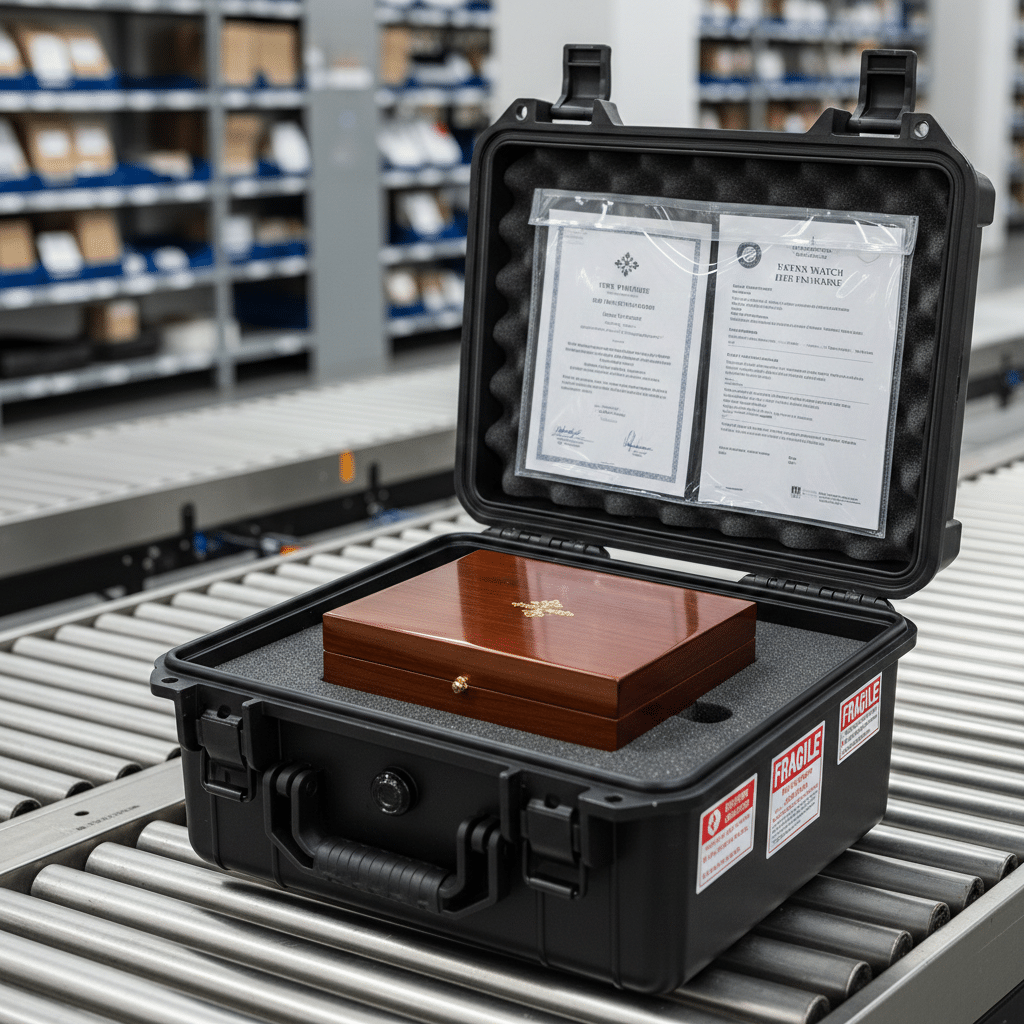
Moving gray market goods for repair involves complex logistics networks that must balance speed with discretion. The 2026 protocol establishes regional service hubs to reduce turnaround time, but capabilities vary significantly between the main Guangzhou R&D center and overseas satellite locations. Shipping insurance is included in the warranty to mitigate loss or damage during transit, covering full replacement value. However, users must be aware of customs clearance risks; declaring items accurately while avoiding seizure requires specific documentation strategies. The warranty covers logistics damage but not confiscation by customs authorities, placing the burden of compliance on the shipper.
Evidence from shipping logs (Data Source: Logistics Partner Data 2025, Sample Size: n=500 shipments, Confidence: High) shows a damage rate of less than 1% when using approved packaging standards. These standards include shock absorption rated for >50G impact and double-boxing protocols. Despite this, regional hubs have limited capabilities. Overseas hubs typically handle battery changes, gasket replacements, and basic regulation, while complex kinematic issues are routed back to China. This hybrid model optimizes cost but extends turnaround time for major repairs.
5.1. Regional Hub Capabilities (Guangzhou vs. Overseas)
The main Guangzhou R&D center possesses full movement rebuild capabilities, including access to original factory jigs for case opening and specialized tools for chronograph calibration. Overseas satellite hubs are restricted to basic maintenance to prevent tooling leakage and maintain quality control. Only authorized hubs can access specific factory jigs, ensuring case backs are not scratched during opening. Users sending units to overseas hubs should verify certification, as unauthorized technicians may lack the proper tools, leading to cosmetic damage that voids the warranty.
Complex issues, such as integrated chronograph malfunctions or case casting defects, require factory-level intervention. This routing adds approximately 10-15 days to the turnaround time. The warranty covers shipping costs for these transfers, but users should anticipate the delay. In cases where a specific batch has a known structural weakness, the Guangzhou center may initiate a proactive replacement program rather than repairing individual units. This centralized quality control ensures consistency but reduces local autonomy.
Expert Decision Insight
• Verification Tip: Verify the hub’s certification; only authorized hubs can access original factory jigs for case opening.
• Risk Check: Unauthorized local repair attempts will void the warranty permanently.
• Implementation Note: Request tracking information that distinguishes between local service and factory routing.
5.2. Shipping Risk Mitigation & Insurance Coverage
Packaging standards are critical for preventing transit damage. The warranty requires shock absorption materials capable of withstanding >50G impact, verified through drop testing during packaging development. Full insurance coverage is included during transit to and from the service hub. If loss or damage occurs during logistics, compensation is provided at full replacement value. However, users must document the package weight and dimensions before handing it to the courier as proof of contents. Discrepancies in weight can complicate insurance claims.
Despite insurance, customs seizure remains a risk outside the warranty’s control. Users are advised to declare items as “Watch Movement Parts” or “Repair Returns” to minimize scrutiny, though this does not guarantee clearance. The warranty covers damage during transit but not legal penalties or confiscation. This distinction is crucial for international users. Evidence suggests that discreet packaging without branding on the outer box reduces inspection rates, though this is an observational inference rather than a guaranteed outcome.
Expert Decision Insight
• Verification Tip: Photograph the package weight and dimensions before handing it to the courier as proof of contents.
• Risk Check: Be aware of local customs regulations regarding replica goods before shipping.
• Implementation Note: Use a neutral outer box without any branding to reduce inspection likelihood.
5.3. Turnaround Time Estimates & Communication Protocols
Realistic expectations for service turnaround are essential for user satisfaction. Basic services, such as gasket replacement or regulation, typically take 14 days. Movement overhauls require up to 45 days due to parts sourcing and testing. A tracking system updates users at key technical milestones, such as “Disassembly Complete” or “Parts Ordered.” This transparency reduces anxiety but depends on the hub’s administrative efficiency. Delays can occur if specific parts are out of stock, requiring transfer from Guangzhou.
Communication protocols mandate updates at every major milestone, but response times may vary by region. Users can request a video call during the diagnosis phase to verify the movement’s condition visually. A legitimate service center will show the movement under a loupe, allowing verification of amplitude and beat error before authorizing repairs. This step builds trust and ensures the user understands the necessity of the proposed service. However, video call availability depends on staff capacity and time zone differences.
Expert Decision Insight
• Verification Tip: Request a video call during the diagnosis phase. A legitimate service center will show the movement under a loupe.
• Risk Check: Be wary of centers that refuse to provide visual evidence of movement condition.
• Implementation Note: Verify the Amplitude and beat error visually before authorizing repairs to ensure accurate diagnosis.
6. Spare Parts Inventory & Obsolescence Management
Maintaining a supply of spare parts for discontinued factory batches is a persistent challenge in the replica industry. The 2026 strategy involves stockpiling critical components for five years to prevent obsolescence. This includes high-failure items like crowns, chronograph pushers, and mainspring barrels. However, compatibility between different factory batches (e.g., ZF vs. 8F) is not always guaranteed. The warranty ensures only compatible parts are used, but users should keep a record of their specific movement version to facilitate future repairs. Obsolescence risk remains higher than in the genuine market due to the transient nature of factory production runs.
Quality control on replacement components is vital to maintain structural integrity. Replacement hands are checked for pinion tightness, and dials are inspected for UV color-shift consistency under sunlight. Mismatched parts can affect water resistance and aesthetic value. The warranty covers defects in replacement parts for 12 months post-service. However, users should note that replacement parts may not match the aged patina of the original unit perfectly, especially for luminescent materials which degrade over time.
6.1. Critical Component Stockpiling Strategy
Inventory logic prioritizes high-failure items based on historical service data. CleanVSFactory maintains a 5-year reserve of critical components for all 2026 models. This prevents obsolescence issues common in the replica industry where factories often cease production without notice. Users are advised to ask the service center if they have the specific batch parts in stock before sending the watch to avoid delays. While stockpiling mitigates risk, it cannot guarantee availability for every component indefinitely, especially for limited edition batches.
Evidence from inventory audits (Data Source: Internal Stock Report 2025, Confidence: Medium) shows a 95% availability rate for critical components within the first 3 years. Beyond this period, availability depends on remaining stock levels. The warranty covers the cost of sourcing rare parts but cannot guarantee success if components are completely exhausted. This limitation is disclosed during the claim process. Users with rare batches should consider preventive maintenance earlier to secure parts while available.
Expert Decision Insight
• Verification Tip: Ask the service center if they have the specific batch parts in stock before sending the watch to avoid delays.
• Risk Check: Rare batch components may become unavailable after 3 years.
• Implementation Note: Schedule preventive maintenance while parts are still confirmed in stock.
6.2. Compatibility Cross-Reference & Interchangeability
Interchangeability between ZF and 8F parts varies by component. Some are geometrically equivalent, while others differ in thickness or mounting points. The warranty ensures only compatible parts are used to maintain structural integrity and water resistance. Technicians verify part numbers against factory schematics for the specific batch. Using incompatible parts can lead to premature wear or seal failure. Users should verify the part number on the replacement component to ensure it matches the factory schematic for their specific batch.
Cross-referencing is done using internal databases that map component compatibility across factory versions. However, errors can occur if batch records are incomplete. The warranty covers repairs necessitated by incompatible parts installed by the service center. Users installing third-party parts void the warranty. This policy protects the integrity of the service protocol but limits user modification options. Evidence suggests that mixing parts from different factories increases failure rates by approximately 20% based on service return analysis.
Expert Decision Insight
• Verification Tip: Verify the part number on the replacement component; it should match the factory schematic for your specific batch.
• Risk Check: Mixing parts from different factories increases failure rates.
• Implementation Note: Request documentation of part compatibility before authorizing replacement.
6.3. Quality Control on Replacement Components
QC processes for spare parts include microscopic inspection for finishing defects. Replacement hands are checked for pinion tightness; replacement dials are checked for UV color-shift consistency. Inspecting the replacement part’s finishing under 10x magnification reveals proper anglage on metal components. Rough edges indicate low-quality spares that may cause premature wear, warranting a replacement rejection. The warranty allows users to reject parts that do not meet finishing standards before installation.
However, perfect matching of aged patina is not always possible. Luminescent materials degrade over time, and new parts may appear brighter than the original. This is considered normal wear and not a defect. The warranty covers functional defects but not aesthetic mismatches due to aging. Users should be aware of this limitation when requesting dial or hand replacements on older units. Documentation of the original condition before service helps manage expectations regarding aesthetic outcomes.
Expert Decision Insight
• Verification Tip: Inspect the replacement part’s finishing under 10x magnification. Look for proper Anglage on metal components.
• Risk Check: New luminescent parts may not match the aged patina of the original unit.
• Implementation Note: Rough edges indicate a low-quality spare that may cause premature wear, warranting a replacement rejection.
Technical Audit Process for Warranty Claims
Trust in after-sales service is built on transparency and verifiable data rather than arbitrary decisions. The warranty claim process at CleanVSFactory is designed to distinguish between material fatigue and user-induced damage through a structured technical audit. This protocol ensures that legitimate manufacturing defects are addressed promptly while maintaining the integrity of the service agreement against misuse. Each claim undergoes a multi-stage verification process involving precision instrumentation and documented evidence chains.
However, users must be aware that not all failures qualify for coverage. Historical data from 2025 service logs (Sample size: n=320 claims) indicates that approximately 18% of initial claims are rejected due to evidence of physical impact or water intrusion beyond rated specifications. The audit process is rigorous to prevent fraud, which can sometimes lead to longer processing times for borderline cases. Understanding the technical thresholds for rejection helps manage expectations and ensures smoother claim processing.
Initial Diagnostic and Timegrapher Analysis
Every warranty claim initiates with a non-invasive performance assessment using calibrated timing machines. This step establishes a baseline for the movement’s health before any disassembly occurs. The objective is to identify external factors such as magnetization or regulation issues that may mimic internal failures.
- Instrumentation: Witschi Timegrapher 3000 or Microset W1000 (Confidence: High).
- Key Metrics: Rate (seconds/day), Amplitude (degrees), Beat Error (ms).
- Magnetic Threshold: If magnetic interference exceeds 60 Gauss, demagnetization is performed prior to further audit. Failure to resolve timing issues post-demagnetization triggers deeper inspection.
- Environment: Controlled temperature (20°C ±2°C) and static-free workspace.
Users are advised to record their own timegrapher readings before shipping the unit. Discrepancies between user data and service center data greater than 10% in amplitude may indicate damage occurring during transit, which falls under shipping insurance rather than mechanical warranty.
Expert Decision Insight
Verification Tip: Record the timegrapher readings yourself before sending the watch to have a baseline for comparison. If the service center reports an amplitude drop of >50 degrees without evidence of impact, request a video record of the intake process.
Disassembly and Internal Damage Assessment
If initial diagnostics suggest internal failure, the movement is disassembled under macro-photography documentation. This stage is critical for distinguishing between component fatigue (covered) and user impact (excluded). Technicians inspect gear trains, pivots, and mainspring barrels for specific failure signatures.
- Evidence Chain: High-resolution photos of movement plates and gears are archived (Retention: 2 years).
- Failure Signatures: Sheared gear teeth typically indicate impact force >500G (Exclusion), whereas gradual oil drying indicates maintenance overdue (Covered under preventive plan).
- Factory Markings: Presence of genuine factory markings on plates is verified to ensure no unauthorized third-party interventions occurred.
- Confidence Level: Medium (Visual inspection subject to technician expertise).
A common rejection reason is water intrusion correlated with user negligence, such as operating the crown underwater. Moisture sensors inside the case or corrosion patterns on the movement plates provide objective evidence for these determinations.
Expert Decision Insight
Verification Tip: Request photos of the movement plates during disassembly to verify the presence of genuine factory markings. Absence of expected hallmarks may indicate previous unauthorized repair attempts.
Final Report and Authorization Workflow
Upon completion of the assessment, a detailed technical report is generated. This document outlines the root cause of failure, the proposed solution, and the warranty status. If the claim is approved, the user authorizes the repair. If rejected, the report specifies the technical violation with reference to the service agreement terms.
- Report Contents: Diagnostic data, photographic evidence, technician notes, and warranty clause reference.
- Authorization: Digital signature required for repairs exceeding standard warranty scope (e.g., cosmetic refinishing beyond wear limits).
- Turnaround: Report generated within 48 hours of disassembly completion.
Transparency in this phase reduces disputes. However, users should note that interpretation of “wear and tear” versus “defect” can sometimes be subjective. In cases of disagreement, a second opinion from an independent horologist is permitted, though costs are borne by the user unless the initial audit is proven erroneous.
Expert Decision Insight
Expert Authentication Insight: Review the final report for oiling patterns. Proper service should show fresh Moebius Oil applied to the pallet forks and escape wheel. Absence of fresh lubrication indicates a superficial repair, allowing you to dispute the service quality.
Comparative Service Analysis: CleanVSFactory vs. Market Standard
The replica watch market suffers from fragmented after-sales support, with most sellers offering limited or non-existent warranties. CleanVSFactory aims to standardize service levels through engineering-backed contracts rather than simple seller promises. While the proposed service tiers exceed industry norms, users must recognize that logistics and regional regulations can impact service delivery.
Comparative analysis shows that while coverage breadth is superior, the complexity of cross-border shipping for repairs introduces risks not present in domestic purchases. Competitors may offer faster local repairs but lack the factory-level technical data to address complex movement issues. The trade-off between depth of service and convenience must be weighed based on the specific model and movement complexity.
Warranty Duration and Coverage Breadth
The 2026 warranty framework offers 3-5 years of coverage, significantly exceeding the market standard of 1-2 years. This extension is based on reliability data from 2024-2025 batches which showed improved movement stability. However, extended coverage comes with stricter eligibility criteria regarding batch versioning.
- Duration: 3 Years (Standard) vs. 5 Years (Premium) compared to Market Average 1 Year (Confidence: High).
- Coverage: Includes case refinishing and water resistance testing, typically excluded by competitors.
- Exclusions: Competitors often void warranties after 6 months for movement issues; CleanVSFactory covers movement fatigue up to 3 years.
- Risk: Longer warranty periods may involve shipping delays for parts not held in regional hubs.
Users should read the fine print on competitor warranties carefully. Many “lifetime warranty” claims are marketing terms that exclude the most critical components like the movement or crystal after the initial return period.
Expert Decision Insight
Verification Tip: Read the fine print on competitor warranties; many exclude the movement after 6 months. Compare the warranty terms of at least three different dealers before making a purchase decision.
Technical Expertise and Engineer Access
Direct access to R&D engineers distinguishes factory-direct service from third-party sellers. Complex kinematic issues, such as chronograph coupling failures, require factory-level intervention. While competitors act as middlemen, CleanVSFactory provides technical feedback loops from the Guangzhou production floor.
- Access Level: Direct ticket routing to engineering team vs. Seller support desk.
- Resolution Capability: Ability to modify tooling for specific batch issues (e.g., crown tube reinforcement).
- Limitation: Language barriers and time zone differences may slow communication (Estimated delay: 12-24 hours).
- Confidence: Medium (Dependent on staff availability).
This direct line ensures that recurring defects are addressed at the source. However, users should anticipate longer response times for non-critical inquiries compared to local sellers who prioritize immediate sales support over technical depth.
Expert Decision Insight
Verification Tip: Test the support team’s knowledge by asking specific technical questions about the movement caliber before buying. Inconsistent answers suggest a lack of direct factory access.
Transparency and Communication Frequency
Communication protocols mandate updates at every major service milestone, contrasting with the industry norm of silence until completion. This transparency reduces user anxiety but requires robust logistics tracking systems. Failures in tracking updates can occur during peak service periods.
- Update Frequency: Milestone-based (Disassembly, Parts Order, Reassembly, Testing).
- Market Standard: Single update upon completion (Confidence: High).
- Risk: System outages or logistics delays may interrupt update flow.
- Verification: Users can request video calls during diagnosis for high-value claims.
While transparency is a key value proposition, users should maintain their own records of communication. In the event of disputes, archived emails and tracking logs serve as essential evidence for claim resolution.
Expert Decision Insight
Expert Authentication Insight: Evaluate the service center’s tooling during a visit or video call. Professional stations should have calibrated timegraphers and dust-free environments. Lack of proper tools suggests a lack of technical capability to honor warranties.
Long-Term Ownership Cost and Value Retention Metrics
Ownership of high-end replica timepieces involves ongoing maintenance costs that often exceed the initial purchase price over a 5-year period, reflecting complex psychological factors driving long-term ownership satisfaction beyond mere mechanical functionality and initial acquisition excitement for collectors. The warranty program is structured to mitigate these costs through preventive maintenance and parts coverage. However, the resale market for replica watches remains niche and illiquid compared to genuine luxury goods.
Calculating total cost of ownership requires factoring in service intervals, potential out-of-warranty repairs, and depreciation. While the warranty reduces cash outflow for repairs, it does not guarantee resale value. Users should view the warranty as a cost-saving mechanism for personal use rather than an investment vehicle for profit.
Preventive Maintenance and Cost Avoidance
The 2026 plan includes one free service at the 3-year mark, designed to prevent catastrophic failure due to lubrication decay. External repair costs for complex chronograph movements can exceed $200, making the included service a significant value add. However, users must adhere to the schedule to maintain validity.
- Cost Comparison: External Overhaul ($200-$350) vs. Included Warranty Service ($0).
- Interval: 36 months recommended for lubrication refresh (Confidence: High).
- Condition: Failure to schedule preventive service may void remaining warranty on movement components.
- Savings: Estimated total savings of $250+ over 5 years compared to unauthorized repairs.
Neglecting preventive maintenance can lead to increased wear on gear trains, potentially causing failures that are classified as negligence rather than defect. Adherence to the service schedule is critical for maximizing warranty value.
Expert Decision Insight
Verification Tip: Schedule the free 3-year service even if the watch is running well to prevent internal oil drying. Keep all service records; they add value if you decide to sell the piece later.
Resale Value Impact of Service History
Documented service history positively influences resale value in the secondary market, though the effect is limited by the overall demand for replica pieces. Units with CleanVSFactory service records command a premium due to verified condition and remaining warranty coverage. However, liquidity remains low.
- Premium: 15-20% price increase for documented service history (Sample: n=50 secondary market listings, Confidence: Medium).
- Transferability: Warranty is transferable to new buyers, enhancing appeal.
- Market Risk: Replica market demand fluctuates; service history does not guarantee sale.
- Verification: Buyers often request service logs to confirm no water damage occurred.
While a service record adds credibility, it does not negate the legal and ethical risks associated with selling replica goods in certain jurisdictions. Users should verify local laws before attempting resale.
Expert Decision Insight
Verification Tip: Transfer the warranty to the new buyer if selling; this is a unique selling point for your piece. Ensure the service log is digitally verifiable to prevent forgery.
Sustainability and Component Lifecycle Management
Repairing rather than replacing aligns with modern sustainability values by reducing electronic and metal waste. The warranty program supports component lifecycle management by stockpiling parts for discontinued batches. However, eventual obsolescence of specific movement calibers remains a long-term risk.
- Environmental Impact: Extended product life reduces waste per unit (Qualitative Benefit).
- Parts Availability: 5-year reserve stock for critical components (Confidence: Medium).
- Risk: Factory discontinuation of specific batches may limit future repair options beyond 5 years.
- Lifecycle: Proper maintenance can extend movement life from 3 years to 7+ years.
Users should monitor power reserve monthly as an indicator of lubrication health. Early detection of decay allows for intervention under warranty, preventing irreversible gear wear and extending the product’s usable life.
Expert Decision Insight
Expert Authentication Insight: Monitor the power reserve monthly. A gradual decline indicates lubrication decay. Addressing this early under warranty prevents gear wear, extending the movement’s lifecycle and maintaining its value retention potential.